Article Contents:
- Architectural role of molding in modern interior
- Formation of visual hierarchy
- Correcting Room Proportions
- Stylistic code of the space
- Selecting molding by style and size
- Stylistic Compatibility
- Determining dimensional parameters
- Color Solutions and Textures
- Methods of mounting and placing molding on the wall
- Wall surface preparation
- Choosing the adhesive composition
- Adhesive application technology
- Element joints
- Additional fixation
- Combining molding with panels and wallpaper
- Creating wall panels
- Horizontal wall division
- Wallpaper and textile framing
- Combination with relief decoration
- Installation practice: from marking to final fixation
- Tools and Materials
- Wall marking
- Molding preparation
- Installation process
- Working with corners and complex areas
- Sealing Joints and Gaps
- Final finishing and painting of molding
- Priming Before Painting
- Choosing paint
- Paint application techniques
- Decorative techniques
- Protective coating
- Advantages of polystyrene molding in modern interior
- Ease and simplicity of installation
- Affordable cost
- Variety of forms and styles
- Water resistance and durability
- Ecological safety
- Typical errors when working with molding and their solutions
- Uneven placement
- Visible joints
- Detachment from the wall
- Material deformation
- Uneven coloring
- FAQ: Answers to popular questions about wall moldings
- Can molding be glued onto wallpaper?
- What width of molding to choose for a standard room?
- How long after installation can you paint the molding?
- How to care for painted molding?
- Can molding be used in a bathroom?
- How to fix gaps between molding and wall?
- Can polystyrene molding be bent?
- How much molding do you need to buy?
- Conclusion

Polystyrene wall molding is a universal decorative profile capable of transforming any living space, filling it with architectural expressiveness and elegance. This wall finishing element does not merely conceal joints and imperfections—it creates visual accents, forms the compositional structure of the interior, and emphasizes the stylistic direction of the room.
Polystyrene wall molding has become a real discovery for modern design. The lightness of the material, ease of installation on walls, and affordable cost make this decoration popular among professionals and amateur enthusiasts. Today, we will thoroughly examine all aspects of working with wall moldings: from architectural philosophy to practical nuances of mounting and finishing.


Architectural role of molding in modern interiors
Why is molding called an architectural element if it does not bear structural load? The answer lies in its ability to organize space, create visual logic, and guide the viewer's gaze. Interior decoration of this level operates at the intersection of art and functionality.
When you enter a room with properly placed moldings, you immediately feel the completeness of the design. Walls cease to be flat surfaces—they acquire depth, rhythm, and dynamism. The decorative profile divides space into logical zones, emphasizes ceiling height, and creates an illusion of classical architectural forms even in a standard apartment.




Formation of visual hierarchy
Molding acts as a frame for a painting, but on the scale of the entire room. It highlights certain wall areas, drawing attention to significant interior details. This can be an accent wall behind the bed headboard, a panel above the fireplace, or an area with artwork in the living room.
Wall molding allows creating multi-level compositions. Imagine: the main perimeter of the room is decorated with a wide profile, while inside this frame are narrower moldings forming symmetrical panels. This play of scales creates an effect of architectural depth characteristic of palace interiors.
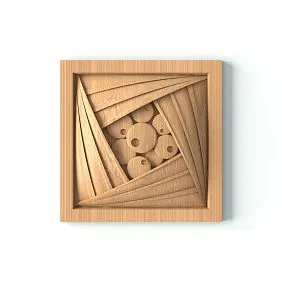
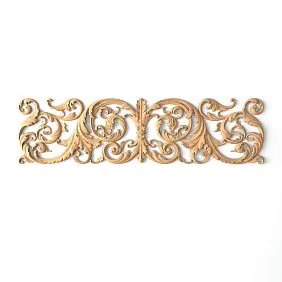
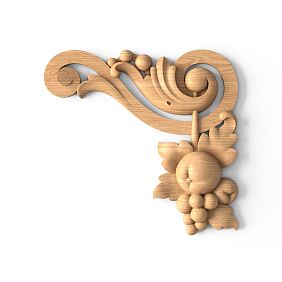
Our factory also produces:

Correction of room proportions
Horizontally placed decorative profiles visually expand space, making the room appear more spacious. Conversely, vertical molding lines visually raise the ceiling, which is especially relevant for rooms with standard height of 2.5–2.7 meters.
If you have a narrow, elongated room, cross-wall division with moldings will help correct the geometry, making the space more harmonious. In a square room, asymmetrical compositions of profiles will add dynamism and interest.
Get Consultation
Stylistic code of the space
Each historical era has left its mark on architectural decoration. Classicism preferred strict symmetrical compositions with straight lines and clear proportions. Baroque leaned toward opulence, curved forms, and rich decoration. Modernism introduced smooth, flowing lines reminiscent of natural forms.
Modern polystyrene wall molding allows recreating any of these styles or creating an eclectic composition combining elements from different directions. A properly chosen profile instantly sets the tone for the entire interior, becoming its architectural foundation.
Selecting molding by style and size
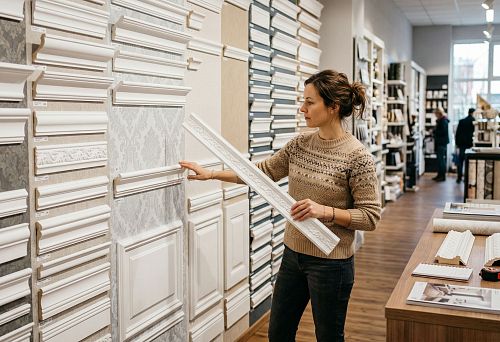
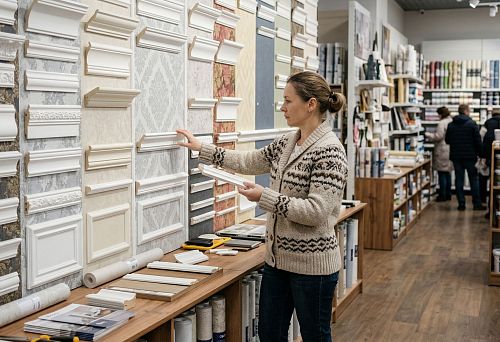
Choosing wall molding is not just a matter of personal preference. It is a complex task requiring understanding of stylistic patterns, room scale, and overall design concept. An incorrectly chosen decorative profile may ruin the entire composition, making the interior disharmonious or overloaded.
Stylistic compatibility
For classical interiors in the styles of Empire, Baroque, or Renaissance, choose moldings with rich relief, complex ornamentation, and botanical motifs. SuchMoldings made of polyurethanecreate an atmosphere of luxury and historical continuity. Wide profiles with deep relief look great in spacious rooms with high ceilings.
Neoclassicism requires more restrained forms. Here, straight profiles with minimalist decoration, clear lines, and symmetrical compositions are appropriate. The width of the molding should match the scale of the room—not overly massive, but not lost on the wall.
Scandinavian style, minimalism, and contemporary prefer simple, smooth moldings without ornamentation. Sometimes, a narrow profile 3–5 cm high is sufficient to create barely noticeable yet expressive wall division. In such interiors, molding installation is performed as delicately as possible, without drawing attention to the decorative element.
Determining dimensional parameters
How to choose molding width? Professionals follow a simple rule: the higher the ceiling and the more spacious the room, the wider the profile can be. For a standard room of 15–20 square meters, an optimal width is 8–12 cm. In smaller rooms, it is better to limit yourself to moldings 5–7 cm wide.
If you plan to create a multi-level composition, combine profiles of different widths. The main perimeter can be decorated with a wide molding, while inner panels can be narrower. This play of scales creates visual interest and depth.
Relief depth also matters. A strongly protruding profile creates dramatic shadows, emphasizing architectural expressiveness. Flat moldings provide a more calm, subtle effect. The choice depends on the overall lighting concept and desired degree of decorative accentuation.
Color solutions and textures
Traditionally, polystyrene wall molding is painted to match the wall color or, conversely, made into a contrasting element. A white molding on a colored wall is a classic solution, adding clarity and graphic quality. Monochromatic coloring (wall and molding in one color) creates a more calm, cohesive look.
Brave designers experiment with gold, silver, and black moldings. Gold profiles look splendid in art deco and palace-style interiors. Black moldings add modernity and graphic appeal. Silver tones suit high-tech and futuristic interiors.
Remember that polystyrene is easy to paint, so you can change the molding's color at any time, refreshing the interior without significant expenses. This is one of the main advantages of the material.
Ways to mount and place molding on the wall
Mounting molding is a technological process requiring precision, care, and understanding of the material's properties. Polystyrene is lightweight and flexible, but precisely these properties require a special approach to installation.
Wall surface preparation
Before mounting on the wall, carefully prepare the surface. The wall must be flat, dry, and free of dust and dirt. If there are old wallpapers, it's better to remove them — the adhesive bond to paper is weaker than to plaster or putty.
Check the wall for unevenness. Even small dips or bumps will prevent the decorative profile from fitting tightly. If necessary, fill problematic areas with putty and let them dry. Priming the wall will improve adhesive bond and prevent future molding detachment.
Choice of adhesive composition
To mount polystyrene molding, use special polymer-based mounting adhesives. It is important that the composition does not contain solvents that destroy the polystyrene structure. Suitable options include acrylic adhesives, solvent-free liquid nails, and specialized polystyrene decor adhesives.
Some masters use finishing putty as an adhesive. This method is good because it allows simultaneously attaching the molding and filling minor wall irregularities, ensuring perfect fit. Moreover, excess putty can be easily wiped off with a damp sponge without leaving marks.
Mounting technology
Start by marking the height for mounting the molding. A classic solution is to divide the wall into three parts, placing the profile at one-third the height from the floor. But this is not a rule — you can mount moldings at any height, creating unique compositions.
Apply adhesive to the back of the molding in a thin line or dots, depending on the adhesive manufacturer's recommendations. Press the profile onto the wall, ensure correct positioning, and hold it for several seconds. If adhesive oozes out from under the molding, immediately wipe it off with a damp cloth.
When installing long sections, use an assistant or temporary supports to prevent the profile from sliding under its own weight until the adhesive sets. Painter's tape can temporarily fix the molding, but remove it carefully to avoid damaging the wall paint.
Element Joints
Corners and joints are the most challenging part of the work. To create neat corner joints, moldings are cut at a 45-degree angle using a miter box. A tenoning saw or a sharp mounting knife will ensure a clean, even cut.
When joining straight sections, use a beveled cut rather than a straight one — this will make the joint less noticeable. Before gluing, try fitting the elements on a dry surface to ensure accurate alignment. Small gaps afterward are filled with acrylic sealant or putty.
Additional fixation
In some cases, especially when working with wide and heavy moldings, additional fixation may be required. Use thin decorative nails or screws, inserting them into inconspicuous areas. After final painting, these fixation points will become invisible.
If the wall has unevenness and the molding is too rigid to replicate all surface curves, use flexible sealant. Apply it in a thin line between the molding and the wall, filling gaps. After drying and painting, these areas will appear monolithic.
Combining molding with panels and wallpaper
Interior decoration reveals its potential through thoughtful combination of various finishing materials. Polystyrene molding on walls becomes a connecting element, uniting different textures and finishes into a unified composition.
Creating wall panels
A classic approach is forming decorative panels using moldings. On a uniformly painted or wallpapered wall, mark rectangular or square sections, attaching decorative profiles along their perimeters. This creates a bouillonnage effect — traditional French wall decoration with wooden panels.
Inside such panels, you can use a different paint color, creating a color contrast. Alternatively, paint everything in one tone, leaving the texture and shadow play of the molding's relief. Another option is to cover panels with patterned wallpaper, while the main wall remains monochromatic.
Panel size and proportions should harmonize with the room's scale. In spacious living rooms, large panels 100–120 cm high are appropriate. In bedrooms and offices, more intimate compositions with medium-sized panels can be created. Hallways and entryways are often decorated with vertical panels, visually raising the ceiling.
Horizontal wall division
Horizontal division of the wall using wall molding is a practical and aesthetic solution. The lower part of the wall, up to 80–100 cm, can be finished with more durable and wear-resistant materials — decorative panels or washable dark-colored wallpaper. The upper part is decorated with light wallpaper or painted in neutral tones.
Molding serves as a boundary between two zones, masking material joints and creating a finished composition. This technique is especially popular in dining rooms, children's rooms, and hallways — areas where walls are subject to increased wear.
The height of the dividing molding may vary depending on the interior style. Classic proportions suggest dividing at one-third the wall height. Modern interiors allow more flexible placement — at the height of the sofa back, headboard, or window level.
Framing wallpaper and textiles
Expensive designer wallpapers deserve proper framing. Molding creates a picture or tapestry effect, transforming a wall section with an attractive pattern into a standalone art object. This is especially relevant for wallpapers with large decorative prints, panoramic photo wallpapers, or textile wall coverings.
Along the perimeter of an accent wall, a wide decorative profile is mounted, visually separating this zone from the rest of the space. If the wallpaper has a saturated color or bold pattern, it is better to paint the molding in a neutral white or cream tone, creating contrast and clear boundaries.
In bedrooms, moldings often frame the headboard area, creating a luxurious niche for the bed. In living rooms, the wall behind the sofa or the TV area stands out. This technique gives the interior a sense of completion and elegance.
Combination with relief decoration
Wall moldings combine beautifully with other polyurethane moldings - rosettes, brackets, corner elements. In classic interiors, you can create a complex multi-level composition reminiscent of palace finishes.
Use rosettes in the center of panels formed by moldings. Place corner elements with plant motifs at profile intersections. Such a composition requires careful planning and a sense of proportion, but the result impresses with its architectural expressiveness.
Installation practice: from marking to final fixation
Now that we've covered the theoretical aspects, let's move to the practical side of the issue. Installing polystyrene molding on a wall is a step-by-step process, where each operation affects the final result.
Tools and materials
For proper molding installation, you'll need a specific set of tools. Measuring tools - laser or water level, tape measure, square. Cutting tools - miter box, fine-toothed hacksaw or circular saw, sharp installation knife. For applying adhesive - putty knife or caulking gun. For fixation - painter's tape, soft cloth for pressing.
Stock up on moldings with a 10-15% reserve for trimming and possible defects. Choose adhesive based on polystyrene characteristics. Acrylic sealant will be useful for filling joints. Wall primer ensures better adhesion.
Wall marking
Start by creating an accurate layout for molding placement. If a symmetrical composition is planned, find the wall's center and measure outward in both directions. For horizontal moldings, use a water or laser level to ensure a strictly horizontal position.
Mark the wall with a pencil, making light, barely visible lines. These marks will serve as guides during installation. If creating a complex composition with intersecting profiles, mark all lines at once to see the overall picture and adjust the composition if needed.
Molding preparation
Before installation, moldings must acclimate to the room. Leave them in the room for 24-48 hours to allow the material to adjust to the ambient temperature and humidity. This prevents deformation after installation.
Inspect each element for damage. Minor chips and scratches can be filled with acrylic putty. Check the ends - they should be flat, without burrs. If necessary, trim them with an installation knife.
Gluing process
Start installation with the most prominent corner of the room - usually the corner opposite the entrance door. Apply adhesive to the back of the molding, spreading it evenly along the entire length. Do not apply too much adhesive - excess will be difficult to remove and may stain the wall.
Attach the molding to the wall, aligning it with the markings. Press firmly along the entire length, paying special attention to edges and corners. Hold for 20-30 seconds, waiting for the adhesive to partially set. If the molding begins to slide under its own weight, support it or temporarily fix it with painter's tape.
Continue attaching the molding in sections, moving along the wall. Align each new element as tightly as possible to the previous one. In corners, use pre-prepared elements with 45-degree bevels.
Working with corners and complex areas
Corners are the most critical part of the work. Internal and external corners require different approaches to cutting. Use a miter box to create a precise 45-degree angle. If walls do not form a perfect right angle (which often happens in older buildings), the cut angle will need adjustment.
Professionals use special corner elements - pre-made moldings with the required configuration. This simplifies installation and guarantees a perfect fit. Such elements can be found in the product range of polystyrene decor manufacturers.
When passing through door and window openings, moldings can be cut or used to frame the opening. The second option is more aesthetic - it creates a finished composition, visually highlighting architectural elements of the room.
Filling joints and gaps
After the adhesive dries, inspect all joints and areas where the molding meets the wall. Fill small gaps and gaps with acrylic sealant. Extrude the sealant in a thin bead, then smooth it with a wet finger or rubber putty knife. Wipe away excess immediately with a damp cloth.
Joints between individual molding elements also require attention. Even with perfect fitting, micro-gaps may remain. Fill them with putty or sealant, then sand lightly with fine-grit sandpaper after drying. After final painting, these joints will be invisible.
Final finishing and molding painting
The final stage - painting and decorating the molding. It is precisely at this stage that the decorative profile acquires its final appearance, integrating into the overall interior concept.
Priming before painting
Although polystyrene accepts paint well, priming improves adhesion and ensures a more even finish. Use water-based acrylic primer - it is compatible with polystyrene and does not contain aggressive solvents.
Apply primer in a thin layer using a brush or roller. Pay special attention to relief areas, indentations, and ornament recesses - the primer may not lay evenly there. Allow to dry completely, usually taking 2-4 hours depending on temperature and humidity.
Paint Selection
Water-dispersible acrylic paints are suitable for painting polystyrene moldings. They are eco-friendly, have no strong odor, dry quickly, and create a durable finish. Latex paints are also good - they have a soft sheen and are resistant to abrasion.
Avoid solvent-based paints - they may deform polystyrene, eating into its structure. Alkyd enamels are also undesirable, although some professionals use them to create an especially durable finish after preliminary surface treatment.
Color selection depends on the overall interior concept. White molding is a classic solution, universal and always relevant. Ivory, cream, and beige shades create a warmer atmosphere. Contrasting colors are used to accentuate and draw attention to architectural decoration.
Paint application technique
Painting molding is easiest with a brush - it allows you to work on all the relief details. Choose a high-quality brush with synthetic bristles that does not leave streaks or marks. The brush width should match the molding width - for narrow profiles, a 3-5 cm brush is sufficient, while wider profiles require a 7-10 cm brush.
Apply paint in thin layers, moving along the molding with long, smooth strokes. Do not load the brush with too much paint - it is better to apply several thin layers than one thick layer with drips. The first layer may be unevenly applied - this is normal. After drying, apply the second layer, and the finish will be perfectly even.
For painting complex relief elements, use the stippling technique. Dip the brush in paint, remove excess, and gently tap to work into all recesses and ornament protrusions. This technique requires time but ensures complete coverage of all details.
Decorative Techniques
To add expressiveness to molding, use the patina technique. Apply a base coat of paint (usually light-colored) normally. After drying, apply a contrasting shade (gold, bronze, dark) into the relief recesses. Immediately wipe off excess with a damp sponge, leaving pigment only in the recesses. This creates an effect of noble antiquity.
Gilding is another popular decorative technique for molding. Use special paint with metallic pigment or gold leaf imitation. Gilded moldings look magnificent in art deco, baroque, and palace-style interiors.
For modern interiors, the ombre effect - a smooth color transition from light to dark along the molding - is interesting. This technique requires skill but creates a unique visual effect.
Protective Coating
After the paint is fully dry, you can apply a protective varnish. It creates a barrier protecting the finish from moisture, dust, and mechanical damage. Use water-based acrylic varnish - matte for classic interiors, glossy for added shine and luxury.
Varnish is applied in a thin layer with a brush or spray. Allow it to dry completely - usually this takes 12-24 hours. After varnishing, the molding achieves a finished look and additional durability.
Advantages of polystyrene molding in modern interiors
Why exactly polystyrene molding on walls has become so popular among designers and homeowners? The answer lies in the unique combination of aesthetic and practical qualities of this material.
Ease and simplicity of installation
The weight of polystyrene decorative molding is several times less than that of plaster or wooden analogs. This simplifies transportation, storage, and, most importantly, installation on walls. One person can install molding in a standard room within one day.
The lightness of the material means that no reinforced fastening is required. A quality adhesive is sufficient to ensure secure fixation. There is no need for anchors, self-tapping screws, or other fasteners that leave marks on the wall.
Affordable cost
Polystyrene wall molding is significantly cheaper than analogs made of polyurethane, plaster, or wood. Visually, it can be indistinguishable from expensive materials, especially after quality painting. This makes luxurious interior decoration accessible to a wide audience.
Savings are achieved not only on material cost but also on installation work. The simplicity of installation allows you to finish wall decoration yourself, without hiring professional craftsmen. This is another saving for your family budget.
Variety of Forms and Styles
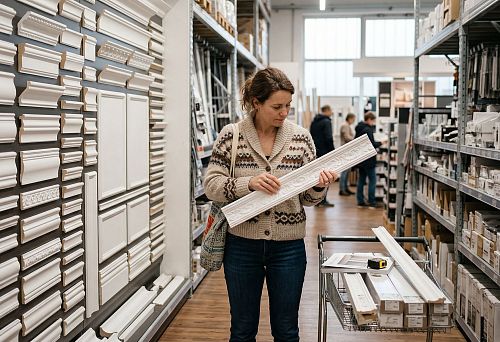
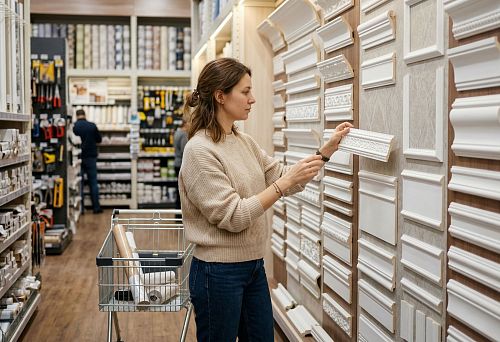
Modern manufacturers offer hundreds of molding options - from simple smooth profiles to complex relief compositions with floral ornamentation. You will find models for any style: classic, neoclassic, modern, art deco, minimalism.
Ability to choose a profile of the required width, height, and configuration allows you to realize the most daring design ideas. By combining different moldings, you create a unique composition reflecting your individuality.
Moisture resistance and durability
Polystyrene does not fear moisture, does not deform under temperature changes, does not rot or decay from mold. This makes it suitable for use in bathrooms, kitchens, and other rooms with high humidity.
The service life of quality polystyrene decor is dozens of years. The material does not crack, does not crumble, retains its shape and appearance. The only thing that may be needed over time is updating the paint finish.
Ecological safety
Modern polystyrene is produced from safe raw materials, does not emit toxic substances, and is approved for use in residential spaces. The material has no odor, does not cause allergies, and is completely safe for residents' health, including children and people with heightened sensitivity.
After installation and painting, the molding becomes an inert interior element, not interacting with the surrounding environment. This is important for those who care about the ecological safety of their home.
Typical mistakes when working with molding and their solutions
Even experienced craftsmen sometimes make mistakes when installing molding. Let's consider the most common problems and ways to solve them.
Uneven placement
One of the common mistakes is uneven installation of molding, when the profile 'wanders' vertically or deviates from the horizontal. The cause is usually insufficiently careful marking or neglecting the level.
Solution: always use a laser or water level during marking. Check horizontal alignment at each stage of installation. If you notice deviation after applying adhesive, while the adhesive is still wet, carefully adjust the position.
Visible joints
Poorly fitted joints ruin the entire decorative appearance. Gaps, height discrepancies, misaligned patterns - all are the result of insufficiently precise trimming of elements.
Solution: use sharp cutting tools that provide a clean cut without chips. Try on elements before applying adhesive. Fill joints with acrylic sealant or putty, then sand and paint after drying.
Peeling from the wall
If the molding has started to peel off the wall, the cause may be poor surface preparation, use of inappropriate adhesive, or application of too thick a paint layer that has overloaded the decoration.
Solution: Before installation, always prime the wall. Choose adhesive specifically designed for polystyrene. If peeling has already occurred, carefully remove the molding, remove the old adhesive, apply fresh adhesive, and reinstall.
Material deformation
Polystyrene may deform upon contact with solvents found in some types of adhesive, paint, or sealant. The material softens, loses its shape, and develops dents.
Solution: Always check compatibility of the materials used with polystyrene. Choose water-based products. If deformation has already occurred, the damaged section will need to be replaced.
Uneven coloring
Streaks, spots, and uncolored areas in relief are the result of improper painting technique or use of low-quality paint.
Solution: Apply paint in thin layers, allowing each layer to dry completely. Use high-quality brushes that do not leave bristles and ensure even paint distribution. For relief areas, use the end-grain technique separately.
FAQ: Answers to popular questions about wall moldings
Can molding be glued onto wallpaper?
Yes, polystyrene molding can be glued onto wallpaper, but this is not the optimal option. Adhesion of adhesive to paper is weaker than to plaster, so over time the decoration may peel off. If gluing onto wallpaper cannot be avoided, use a strong polymer adhesive and additionally secure the molding with painter’s tape until fully dry.
What width of molding should be chosen for a standard room?
For rooms with ceilings 2.5–2.7 meters high, the optimal width for wall molding is 8–12 centimeters. A too narrow profile will be lost on the wall, while a too wide one will look bulky. In small rooms, it is better to limit the width to 5–7 centimeters.
After how much time after installation can the molding be painted?
The time depends on the type of adhesive used. Acrylic adhesives set in 2–4 hours, but full drying takes 24 hours. This is how long you need to wait before painting. If painted earlier, the molding may shift under the weight of the paint.
How to care for painted molding?
Polystyrene decorative profile is low-maintenance. Dust is removed with a dry, soft cloth or vacuum cleaner with a brush attachment. Stains can be wiped with a damp sponge and mild detergent. Avoid abrasive cleaners and stiff brushes — they may damage the paint finish.
Can molding be used in a bathroom?
Polystyrene is moisture-resistant and suitable for humid environments. However, in a bathroom, molding must be coated with moisture-resistant paint and varnish to create a reliable water barrier. Avoid placing molding in areas directly exposed to water — above the bathtub or shower enclosure.
How to fix gaps between molding and wall?
Small gaps are filled with white acrylic sealant or sealant matching the paint color. Squeeze the sealant into the gap, smooth it with a damp finger, and remove excess. After drying, touch up the area if necessary. If gaps are large (over 5 mm), the wall may be too uneven and require preliminary leveling.
Can polystyrene molding be bent?
Standard polystyrene molding is rigid and intended for straight sections. For curved surfaces, there are special flexible moldings made from other materials. Attempting to bend a standard polystyrene profile will result in breakage or deformation of the relief.
How much molding should be purchased?
Calculate the room’s perimeter or the length of the area you plan to decorate. Add 10–15% for trimming and potential defects. Molding is typically sold in 2-meter segments, so round up your calculations to the nearest whole element.
Conclusion
Polystyrene wall molding is a designer’s universal tool capable of transforming any interior. From classic palace compositions to minimalist modern solutions — wall decoration with molding opens boundless creative possibilities.
We have considered all aspects of working with this material: from architectural philosophy to technical nuances of installation. Correct selection by style and size, proper molding installation, neat element joints, and quality final finishing — these are the keys to creating professional interior decoration.
Polystyrene molding is accessible, practical, and aesthetically pleasing. It allows you to realize bold design ideas without excessive costs, creating interiors worthy of magazine covers. The material’s lightness makes wall installation accessible even for non-professionals, while the variety of shapes satisfies even the most discerning taste.
STAVROS Company offers a wide range of decorative profiles in polystyrene and polyurethane to realize any architectural ideas. High-quality materials, diverse models, and affordable prices make STAVROS products the optimal choice for those who value beauty and practicality in interior design.
Create spaces that inspire. Transform ordinary rooms into masterpieces of architectural art. Let polystyrene molding on the wall become your tool for creating the dream interior!