Article Contents:
- What is Mirror Molding and Why is it Needed
- When Molding is the Best Choice
- What to Choose: Ready-Made Mirror Frame or Molding Framing
- When a Ready-Made Frame is Suitable
- When It's More Advantageous to Assemble a Frame from Molding
- When Non-Standard Logic is Needed
- Which Moldings are Suitable for Mirrors
- Wooden Moldings: Why It's Important
- Smooth profiles
- Classical profiles with relief
- Carved moldings
- Moldings by width: how to choose for a mirror
- How to assemble a decorative mirror frame from molding
- Step 1. Profile selection and length calculation
- Step 2. Cutting corners
- Step 3. Corner decor — solving the cutting problem
- Step 4. Gluing and mounting
- Step 5. Final finishing
- Which molding to choose for a mirror based on interior style
- Classic
- Neoclassicism
- Baroque and Palace Decor
- Calm Modern Interior with Classical Details
- Light and Dark Finishes: What to Choose
- What to Buy Together with Mirror Molding
- Corner Decorative Elements
- Wooden Overlays for Frame Center
- Ornaments and Wooden Patterns
- Wooden Molding
- Ready-Made Frames as a Full Alternative
- When to Choose a Ready-Made Wooden Mirror Frame
- Mistakes When Choosing Mirror Molding
- Profile too narrow for a large mirror
- Relief too heavy for a small mirror
- Mixing ornaments from different styles
- Incorrect selection of corner elements
- Buying wall molding without a logical framing application
- Where to buy mirror molding and decorative frame
- What to look for in the catalog
- How to match by style
- How to combine molding, corners, and decor
- When it makes sense to choose a ready-made frame immediately
- FAQ: Answers to popular questions about mirror molding
- What is the best molding for a mirror in a classic style?
- Can a mirror frame be assembled from wooden molding?
- What is better for a mirror: molding or a ready-made frame?
- Are corner elements needed for a molding frame?
- Can a mirror be framed with molding without complex cutting?
- What molding to choose for a large mirror?
- Is wooden molding suitable for a mirror in the hallway?
- Can molding be painted to match the color of the mirror frame?
- What is wooden millwork and how does it differ from molding?
- What are the most common frame sizes made from molding?
- Is a wooden frame suitable for a bathroom mirror?
- How to choose a frame style if the interior is mixed?
- How to know if molding and corner overlays are compatible?
- What are furniture decoration techniques and what do mirrors have to do with it?
- Where to see examples of mirrors in classic frames?
- About the Company STAVROS

There are things in an interior that you notice immediately — and there are those that work subtly but change everything. A mirror in a beautiful frame is from the second category. It doesn't shout about itself, but it is what sets the tone for the space: the hallway, bedroom, living room, bathroom. And if a mirror just hangs there — glued to the wall or inserted into a faceless metal strip — it serves a function but doesn't create an image. This is where the story about molding for a mirror begins.
Molding for a mirror is a profiled wooden element used to create a decorative frame: a border, contour, visual boundary between the mirror surface and the wall. It is a tool that gives freedom: you can assemblethe mirror frameexactly to the required size, in the desired style, with the desired profile width — and get a result you can't buy in a regular store. And if you don't want to bother with cutting and fitting — you can choose a ready-madewooden frame for a mirrorfrom the catalog and simply install it in place.
This guide contains everything you need to know to make the right decision: what to choose, how to calculate, how to assemble, how to avoid mistakes.



What is mirror molding and why is it needed
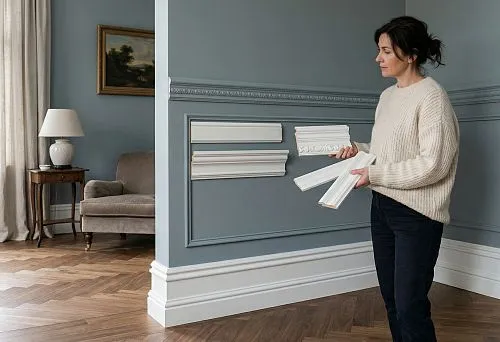
Before choosing, you need to understand what we're talking about.Wooden moldingis a linear profile with a specific cross-section that is cut to length, joined at an angle, and forms a closed contour around the mirror. It is this contour that is called the framing—or the frame, if the result looks complete and self-sufficient.
Mirror molding is needed in several situations:
-
The mirror was purchased without a frame or with a frame that doesn't fit the interior.
-
A non-standard size frame is needed—for example, 90×180 cm or 60×150 cm.
-
You want to make the mirror a style-defining element: classic, baroque, neoclassical.
-
You need to update an old mirror without replacing it—it's enough to mount a new framing over the existing frame.
-
An inset mirror is created in a niche, opening, or above a console—where the size is determined by architecture, not the manufacturer.
In all these cases,Wooden moldingsthey provide what ready-made frames from the store lack: precise fit to size and style.




When molding is the best choice
Molding is especially advantageous where:
-
the mirror size does not match any standard frame;
-
a specific frame width is needed—say, 6 or 10 cm;
-
the frame is planned to be painted exactly to match the wall or furniture color;
-
you want to add corner overlays and carved elements at the corners.
For all this, a ready-made frame is not suitable—you need molding, cutting at 45°, and proper corners. This is exactly the system thatWooden moldingsin combination with corner decorative elements.
Our factory also produces:


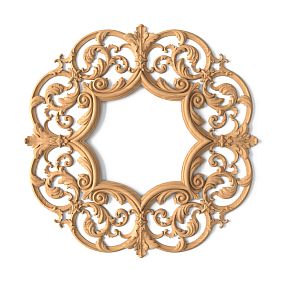

What is better to choose: a ready-made mirror frame or molding trim
This is perhaps the most important practical question. And the answer to it depends not on what is 'better in general,' but on your specific situation.
Get Consultation
When a ready-made frame is suitable
mirror framein ready-made form is a quick and beautiful solution that requires no woodworking skills. You choose the size, style, width—and get a finished product that only needs to be installed. Especially relevant when:
-
the mirror size is standard and matches a ready-made frame from the catalog;
-
you need pronounced carved decor that is difficult to reproduce from molding strips;
-
there is no time or desire to deal with cutting, fitting, and gluing;
-
instant results are important—without the stage of painting and drying.
Ready-madebuy mirror frame— means getting a product with a ready-made geometry, proportions, and decor. This is especially valuable when you want a guaranteed result.
When is it more advantageous to assemble a frame from molding
If the mirror is non-standard — molding is unbeatable. You take the required trim, cut it at 45°, add corner piecesdecorative wooden ornaments— and get a frame that isn't in any catalog. This approach also gives you full control over the profile width, relief depth, and finish.
Another scenario: the mirror is built into the wall or above a mantel shelf — no ready-made frame will work there due to installation reasons. Trim molding in such a case is the only proper solution.
When non-standard logic is needed
Sometimes the task isn't to 'frame a mirror,' but to create a mirror zone — a large decorative panel where the mirror is integrated into an architectural element of the wall. Here, molding works as an architectural profile: it forms pilasters, cornices, and niche contours. This is the highest level of application, but with the right approach — an absolutely achievable result.
Which moldings are suitable for a mirror
Choosing molding is choosing the character of the framing. Different profiles create fundamentally different visual impressions. Let's examine the key categories.
Wooden moldings: why it's important
Wooden moldingBeech or oak is the optimal material for a mirror frame. Firstly, wood is easy to work with and accepts any finish: varnish, enamel, patina, gilding. Secondly, it provides a lively texture and warm material character that plastic and polyurethane cannot replicate. Thirdly, a wooden frame ensures durability: after 20 years, it will look the same or better than on the day of installation.
Beech is light, even, with a fine-pored structure—ideal for white or pastel painting. Oak is more expressive, with a rich texture—beautiful for tinting and clear varnish. Both materials are available in the Stavros assortment.
Smooth Profiles
Smooth molding—without ornamental relief, with clean geometry of the profile. This is a rectangular, stepped, oval, or with a soft rounded cross-section. Such a profile creates a neat, strict frame that looks organic in neoclassical interiors, Scandinavian classics, and modern decor with classical notes.
Smooth molding is the most versatile. It can be painted any color without losing expressiveness. In white—it is lightness and purity. In black—graphic quality and strength. In gold—luxury without pretentiousness.
Classical profiles with relief
Classical profiles are moldings with characteristic historical cross-sections: ogee, torus, scotia, quarter-round projection. They do not carry ornamental patterns but create a complex play of light and shadow due to volume variations in the cross-section.
Exactly such profiles are used in 'pure' classicism: when refined, restrained, but historically accurate framing is desired. A wide molding with several profile variations on an 80×120 cm mirror is already a serious architectural statement.
Carved moldings
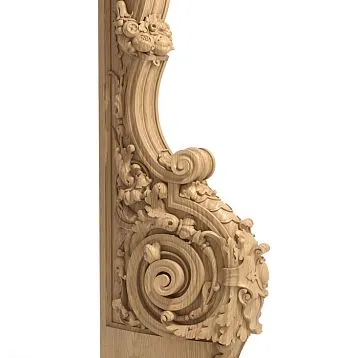
CarvedWooden trimwith applied ornamental relief—laurel leaves, beads, meander, braids, floral ribbons—this is high classicism. Such molding turns the mirror frame into an independent work of decorative art.
Carved trim requires precise alignment with the interior style. It is organic in Baroque, Classicism, Empire, and palace decor. In modern neoclassical interiors—it is used in measured doses, as an accent.
Molding Width: How to Choose for a Mirror
The question of width is not aesthetic, but proportional:
| Mirror Size | Recommended molding width |
|---|---|
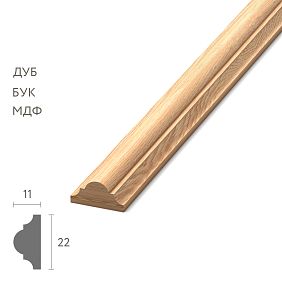
| up to 40 cm | 15–25 mm |
| 40–70 cm | 25–40 mm |
| 70–100 cm | 40–60 mm |
| over 100 cm | 60–90 mm and wider |
For a large wall mirror — 100×160 cm — a narrow 20 mm profile will look anemic and random. A molding with sufficient visual weight is needed.
How to Assemble a Decorative Mirror Frame from Molding
This is a practical scenario — let's break it down step by step.
Step 1. Profile selection and length calculation
First, decide on the molding profile — smooth, classic, or carved. Then measure the mirror and calculate the linear footage. For a frame with 45° angles, add an allowance for miter cuts to each side: for a 60×80 cm mirror, the total linear footage will be about 3.2–3.5 meters including the allowance.
Step 2. Cutting angles
Angles are cut at 45° — strictly and precisely. For this, you need a miter box or a miter saw. An inaccurate angle will create a gap at the joint — and it will be visually noticeable even under several layers of paint. If you are not confident in the precision of the cut — this is exactly where a corner decorative element comes to the rescue.
Step 3. Corner decor — solving the cutting problem
Corner overlays are one of the smartest techniques in frame work. Instead of a complex 45° joint, you lay straight pieces of molding and mount decorative corner elements in the corners. The result is a framing system where the corners become accent points, not a problem. Exactly suchDecorative Wooden Patternscorner overlays are presented in the Stavros catalog — they are specially designed for framing systems.
Step 4. Gluing and mounting
The molding is attached using PVA wood glue or construction adhesive to a wooden or MDF base. If the frame is mounted directly on the wall around the mirror, construction adhesive is used followed by securing with headless finish nails. Joint seams are filled with fine-grain putty.
Step 5. Finishing
After puttying — sanding, priming, painting. The frame is painted together with the putty in a single color — this creates the effect of a monolithic frame. Then, optionally, patina, glazing, gilding, matte or glossy varnish are applied.
Which molding to choose for a mirror according to the interior style
The style of the mirror frame should engage in a dialogue with the interior — not contradict it, but not disappear either. Let's examine the main cases.
Classic
For a classic interior — molding with a pronounced profile and moderate relief. A wide frame made of profiled wood in white or ivory, corner overlays with acanthus leaves or rosette ornament. A mirror in such a frame becomes an architectural accent — it 'holds' the wall.
Want to see how this works in a comprehensive interior solution? A detailed guide to classic furniture will show how moldings, frames, and decor work in a unified system.
Neoclassicism
Neoclassicism — a freer and more modern take on classicism. Here, thin elegant profiles, white frames with minimal decor, corner elements with geometric ornamentation instead of lush baroque are acceptable. A wide smooth frame in white or pearl gray on a mirror in the hallway — this is neoclassicism at its best.
Baroque and palace decor
This is the richest and most demanding style. Wide molding with carved ornamentation — beads, egg-and-dart, acanthus leaves, — corner cartouches, gilding over patina. Such a mirror is a palace-level item, suitable for a living room with stucco ceilings, a formal hall, a bedroom with fabric walls.
For this style, cutting the molding yourself is not necessary —buy mirror frameit's much more convenient to get it ready-made with carved decor.
A calm modern interior with classical details
One of the most popular requests today is 'I want a bit of classic, but without overloading.' For this, smooth or slightly profiled molding of medium width in a neutral color is enough. No gold, no complex ornaments — just the pure geometry of the frame. The result looks stylish and expensive.
Light and dark finishes: what to choose
A white or light frame is universal and works in any interior with light walls and furniture. A dark frame — wenge, walnut, dark oak — creates contrast and graphic strength. It looks better on light walls and next to light furniture. Gold is appropriate in classic and baroque styles — but requires support from other decorative elements (picture frames, lighting fixtures, hardware).
What to buy together with mirror molding
Molding is just the beginning. A full decorative mirror frame is built from several components, and each of them influences the final result.
Corner decorative elements
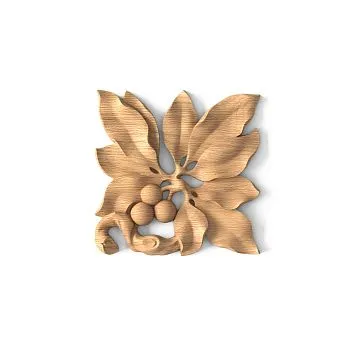
Corner overlays are the most important additional element. They solve two problems at once: they eliminate the need for complex 45° miter cuts and create a decorative accent in the corners of the frame.decorative wooden ornamentswith a floral motif in the corners of the frame — it's a signal of 'high classic' without extra effort.
Wooden frame center overlays
On wide frames — especially on large mirrors — center overlays are often used: rosettes, cartouches, decorative medallions. They are mounted on the center of the frame's top rail or on the center of each side. Such a detail elevates the framing to the level of an author's piece.Buy carved wood decorcan be purchased separately — and selected precisely to match your style and frame size.
Ornaments and wooden patterns
Decorative Wooden Patterns— these are flat or three-dimensional elements with ornamental designs that are mounted on the frame surface. Unlike corner overlays, they can be placed at any point — in the center, in thirds, in the lower part — creating an individual ornamental scenario.
For more on the history and artistic traditions of wooden ornamentation — in the article aboutwooden ornament: there is a detailed database on styles, motifs, and interior applications.
Wooden millwork
In addition to moldings, for framing a mirror, a flatter and widerWooden trim— this is a kind of intermediate solution between pure molding and a beveled board. It works well in Scandinavian and modern classic styles.
Ready-made frames as a full-fledged alternative
If you need a result without self-assembly —wooden framesin the Stavros catalog are available in several standard sizes and styles. These are ready-made solid wood products with pre-applied decor — all that's left is to install them.
When it's better to choose a ready-made wooden mirror frame
There are situations where no self-assembly is needed. A ready-madewooden frame— is the right choice if:
You need pronounced carved decor. Hand or CNC carving on a frame is a level of detail that cannot be reproduced from molding. Ready-made carved frames are independent works of decorative art.
You lack the desire or skills to work with wood. Cutting at 45°, fitting, gluing, puttying, painting — this is at least half a day's work. A ready-made frame saves this time.
You need a guaranteed result. A frame from the catalog is already verified for proportions and decor — the result is predictable. With self-assembly, there is always a risk of error in proportions or joint quality.
Mirror – a gift or an item for sale. In this case, a finished frame with a complete look appears significantly more presentable than a self-assembled framing.
Mistakes when choosing molding for a mirror
Experience is the best teacher, but others' mistakes teach without loss. Here are the most typical blunders when working with mirror frames.
Too narrow a profile for a large mirror
A large mirror – 90×160 cm – with molding 15 mm wide looks as if there is no frame at all. This is visually incomplete and disrespectful to the mirror itself. Large formats require a frame with visual weight – at least 50–60 mm.
Too heavy relief for a small mirror
The opposite story: a small mirror for the hallway – 40×60 cm – with wide carved baroque molding looks caricatured. The frame should not 'swallow' the mirror. Rule: the total width of the frame on both sides should not exceed 30–40% of the mirror's width.
Mixing ornaments from different styles
Corner overlays with baroque acanthus plus molding with Greek meander plus art deco handles – this is not eclecticism, it's chaos. All framing elements must belong to the same ornamental tradition. Styles can only be mixed consciously.
Incorrect selection of corner elements
Corner pieces must be sized to match the specific molding width. If the piece is wider, it will protrude beyond the frame. If it is narrower, a gap will remain. Always verify the piece dimensions against the molding width before purchase.
Purchasing wall molding without considering its use in a framing system
Ceiling cornices, baseboard moldings, wide friezes—all these are intended for walls and ceilings, where the scale is entirely different. On a mirror, such a profile will look as if the mirror has been set into a frame made of ceiling decor. Choose a profile designed for framing systems.
Where to buy mirror molding and decorative frames
What to look for in the catalog
When selecting molding for a mirror frame, consider:
-
Profile width—it should be proportional to the mirror size (see the table above).
-
Relief height—a deep profile creates a rich play of light and shadow, a flat one offers restraint.
-
Wood species—beech for painting, oak for tinting and natural varnish.
-
Relief style—smooth, classic profile or ornamental carved.
-
The availability of compatible corner elements is a key parameter for the system assembly of the frame.
How to match by style
Decide on the interior style before purchasing. Not 'I'll buy the molding and figure it out later' but 'I have neoclassical style, I need a smooth white profile 40 mm with delicate corner decor.' Such a formulation immediately narrows the choice down to 3–5 options instead of fifty.
How to combine molding, corners, and decor
Optimal system: molding of a certain width → corner overlays from the same series → central ornament as desired. All three elements from one catalog are a guarantee of visual unity. Stavros specifically creates compatible series of products where moldings, overlays, and ornaments work as a system, not as a random set.
When it makes sense to choose a ready-made frame right away
If the mirror is a standard size, if a high level of decor and a quick result are needed — ready-madebuy mirror frameimmediately as a finished product is the right strategy. The Stavros catalog features carved frames for mirrors with different types of decor: from restrained neoclassicism to lush baroque.
FAQ: Answers to popular questions about mirror molding
Which molding is best for a mirror in a classic style?
For classic —Wooden moldingwith a pronounced profile: ogee, torus, or astragal. Width — from 40 mm for small mirrors to 70–90 mm for large wall mirrors. Corner appliqués with floral or geometric patterns will enhance the classic accent.
Can a mirror frame be assembled from wooden molding?
Yes, and it's one of the best ways to create a frame exactly to the required size. You cutWooden moldingsat a 45° angle or straight with corner appliqués, glue it onto a wooden or MDF frame, fill, and paint. The result is a custom frame not found in standard catalogs.
What's better for a mirror: molding or a ready-made frame?
Molding — if the size is non-standard or you need complete freedom in choosing width and color. Ready-madewooden frame— if you need a quick result, a high level of carved decoration, or want to avoid DIY assembly. Both solutions are equally valid — the choice depends on the task.
Are corner elements needed for a molding frame?
Not mandatory — but highly desirable. Corner appliqués simplify installation (no need for perfect 45° cuts) and create a decorative accent that elevates the level of the framing.decorative wooden ornamentsClean corners are a sign of professional work.
Can a mirror be framed with molding without complex mitering?
Yes. That's exactly what corner overlays are for. The molding is cut straight (at 90°), and overlay corner elements are installed in the corner areas. The result looks no worse than with a 45° miter cut—and the work takes significantly less time.
What molding should I choose for a large mirror?
For a mirror 100 cm and wider—profile width from 60 mm. The best option is molding with several steps in the cross-section profile: it creates a richer play of light and shadow and visually 'holds' the large plane. On particularly large mirrors, you can create a double frame: the outer molding is wider, the inner one is narrower.
Is wood molding suitable for a mirror in an entryway?
It's an excellent fit. The entryway is one of the most common places for decorative mirrors. Beech molding painted white or a light color creates a light, neat frame. For an entryway in dark tones, oak with tinting or patina works well. It's important to protect the finished frame with varnish from moisture—especially if the entryway is near the entrance.
Can molding be painted to match the color of the mirror frame?
Yes, this is one of the main advantages of wooden molding. It can be easily painted any color with acrylic or alkyd enamel. After filling the joints and sanding, the molding is indistinguishable in texture from the main frame—everything looks like a single piece.
What isWooden trimand how does it differ from molding?
Trim is a general term for any linear (long) wooden products: moldings, baseboards, casings, slats, bars. Molding is a type of trim with a decorative cross-sectional profile.Buy wooden moldingin a broad sense, this is also acquiring a trim product, but with a flatter profile, closer to a picture frame molding.
What frame sizes are most often made from molding?
The most popular formats for mirrors: 50×70, 60×80, 60×90, 70×100, 80×120, and 100×150 cm. Trim is most often selected specifically for these sizes. For non-standard mirrors, molding is the only flexible solution: it can be cut to any length.
Is a wooden frame suitable for a bathroom mirror?
With proper finishing treatment — yes. Wood in the bathroom requires thorough varnishing of all surfaces, including the ends, and good ventilation in the room. Under these conditions, a wooden frame in the bathroom lasts a long time and looks significantly more noble than plastic and aluminum.
How to choose a frame style if the interior is mixed?
In an eclectic interior, a neutral, smooth molding in a calm color — white, gray, walnut — works better. It does not conflict with multi-style elements and looks appropriate. Avoid complex ornamental relief in mixed interiors — it requires a clear stylistic context.
How to find out if molding and corner overlays are compatible?
The width of the corner overlay must exactly match the width of the molding or be slightly wider—so that the overlay completely covers the corner joint. In the Stavros catalog, compatible products are grouped into system series—this eliminates the compatibility question.
What isfurniture decoration techniquesand what do mirrors have to do with it?
Decoration techniques—patination, gilding, crackle, antiquing—work not only with furniture but also with mirror frames. If you want to give the frame a historical character—antiquing and patina techniques will turn an ordinary painted molding into a frame 'with a history.'
Where can I see examples of mirrors in classic frames?
The best source of inspiration is the products in the classic furniture and frames sections of the Stavros catalog. There, finished products with decoration are collected, which can be used as a guide when independently assembling a frame from molding.
About the company STAVROS
Everything written about in this article—moldings, frames, corner overlays, decorative ornaments, trim—is available in one catalog from the company STAVROS. This is a manufacturer and distributor of wooden decor made from natural beech and oak, working with professional designers, furniture makers, restorers, and private customers throughout Russia and CIS countries.
STAVROS is the choice of those who understand: true beauty is in the details. Here you can buy one meter of molding and have it delivered—or order a kit for decorating an entire interior. The catalog always has dozens of molding profiles, several series of ready-made frames, hundreds of types of overlays and ornaments, compatible corner elements for framing systems in stock.
A mirror is the first thing that greets you at home, and the last thing you look at before leaving. It deserves a beautiful frame. And a beautiful frame starts with the right molding. STAVROS will help make this choice precise.