Article Contents:
- What is Kitchen Molding and Where is it Used
- Molding on Kitchen Fronts
- Molding on Cabinet Doors
- Molding on Drawers
- Molding on Tall Units
- Decorative Design of the Upper Kitchen Zone
- Which Moldings are Suitable for the Kitchen
- Wooden Molding for the Kitchen
- Wooden moldings for kitchen: classification by profile
- MDF molding for kitchen
- Decorative profile for painting
- Narrow and wide molding for kitchen fronts
- What's better for kitchen: molding, cornice or overlay decor
- When you specifically need molding
- When overlay decor is better
- When cornice is needed
- When it's better to combine molding + cornice + overlays
- How to choose kitchen molding by style
- Molding for classic kitchen
- Molding for a kitchen in neoclassical style
- Molding for a kitchen in classic style with dark fronts
- Decorative molding for kitchen fronts in Provence style
- Molding for a light kitchen: selection nuances
- Where to place molding on kitchen fronts
- Frame around the perimeter of the front
- Central highlighting of a wide door
- Drawer framing
- Tall unit decoration
- Top line of the kitchen unit
- What elements to buy together with kitchen molding
- Overlay decor for kitchen fronts
- Furniture decor in the form of central ornaments
- MDF cornice and wooden cornice
- Furniture handles
- Furniture decor elements as a set
- Which material is better for the kitchen: comparison of options
- Wood
- MDF
- Polyurethane
- Combined Solutions
- Mistakes when choosing molding for the kitchen
- Too wide profile for a small front
- Overloaded decor
- Conflict between molding and handles
- Mixing different ornaments
- Drift into wall decor instead of furniture decor
- Where to buy molding for the kitchen
- How to choose a profile
- What to buy as a set
- How to combine molding, cornice, overlays and handles
- What to look for: material, style, width, compatibility
- FAQ: Answers to popular questions about kitchen molding
- Which molding is best for the kitchen?
- Is wooden molding suitable for kitchen fronts?
- Can MDF molding be used in the kitchen?
- What is better for the kitchen: molding or cornice?
- How to choose molding for a classic kitchen?
- Is overlay decor suitable for kitchen fronts?
- Can molding for the kitchen be painted?
- Which handles go well with fronts with molding?
- Is a cornice needed if there is molding?
- How to calculate how much molding is needed for the kitchen?
- How to install molding on a kitchen front?
- Can an old kitchen be updated with molding?
- What is wood furniture decor as applied to the kitchen?
- What are furniture decorative elements as applied to the kitchen?
- How to choose a molding profile for an MDF front?
- How do furniture moldings relate to kitchen moldings?
- About the Company STAVROS
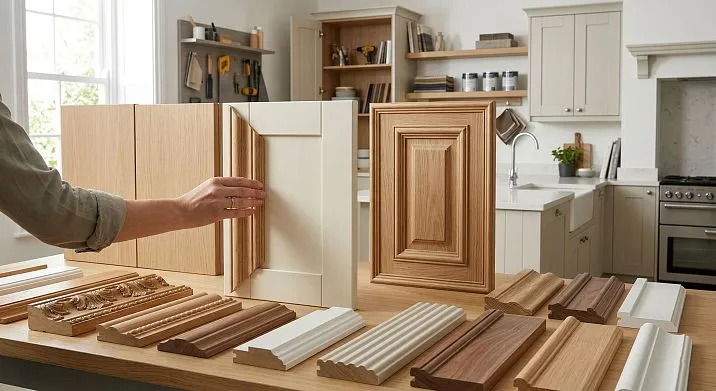
The kitchen is not just a functional space. It's a place where mornings begin with coffee and evenings end with conversation around the table. And when the set is assembled well but looks bland — that's exactly whenkitchen moldingbecomes the touch that changes everything. Not a radical remodel. Not a new set. Just the right decorative profile — and the fronts of ordinary cabinets transform into an architecturally composed ensemble.
The question 'do I need molding for kitchen fronts' is not a matter of taste. It's a matter of understanding how the visual logic of a kitchen interior works. A framed front — with molding around the perimeter — has been the standard for classic and neoclassical kitchens in world design for several centuries. And every time you see a beautiful kitchen in a magazine, at an exhibition, or in a country house with high ceilings — this element is definitely there. You might just not have noticed it separately. Now you will.
This guide contains everything you need to know about kitchen moldings: where to place them, which one to choose, what to buy as a set, and how not to make a mistake.



What is kitchen molding and where is it used
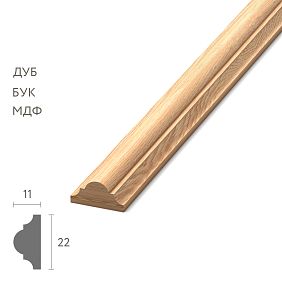
Kitchen front moldingis a profiled decorative element that is glued onto the surface of a furniture front, forming frames, belts, trims, and visual zones. Essentially, it turns a flat panel of MDF or plywood into a framed front, visually indistinguishable from an expensive product with milled or inserted paneling.
The scope of application in the kitchen is significantly broader than many imagine.




Molding for kitchen cabinet fronts
The most obvious and common application. The molding is glued around the perimeter of the cabinet front with an equal offset from the edge—usually 25–40 mm—forming a rectangular frame. This frame creates the effect of a classic paneled door leaf: the surface is no longer just a 'board' but becomes a structured element with readable architectonics.
For kitchens, this technique is a quality standard in the classic and neoclassic segments. It is precisely framed fronts withwooden moldingsthat distinguish a high-end kitchen from mass-produced, budget segment cabinet furniture.
Our factory also produces:


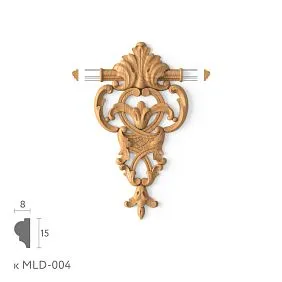
Molding on cabinet doors
Upper cabinets, tall cabinets, display cabinets—all have front doors that benefit from framed design. It is important to maintain uniformity in molding width throughout the kitchen: if the profile on the lower cabinets is 35 mm, then on the upper cabinets it should be identical or slightly narrower—but not different. Uniformity in width and profile is a sign of professional work.
Get Consultation
Molding on drawers
Drawer fronts are a special area often overlooked during decoration. And in vain: it is the drawers that occupy a significant area in the lower part of the kitchen set, and their design affects the overall perception. Molding around the perimeter of each drawer creates a rhythmic decorative structure that unifies the lower line of the set into a cohesive whole.
Molding on tall cabinets
A tall cabinet—a floor-to-ceiling cabinet—is the 'tallest' item in the kitchen. Here, molding works especially expressively: a vertical frame running the full height creates a pilaster effect, while a horizontal band at countertop level and in the upper third divides the surface into architectural zones.
Decorative design of the upper kitchen zone
The upper line of the kitchen — the space between cabinets and ceiling — is designedwith wooden cornices. This is not a pure molding, but an adjacent category that is an integral part of the classic kitchen composition. The cornice completes the upper line of the set and creates an architectural transition between the furniture and the ceiling.
Which moldings are suitable for the kitchen
Choosing a molding is always a balance between aesthetics and practicality. In the kitchen, the second parameter is especially important: humidity, temperature fluctuations, grease vapors — all require careful attention to material and finish.
Wooden molding for the kitchen
Wooden molding made of beech or oak — the best choice for a kitchen in classic, neoclassical, and country style. Natural wood provides a living texture that cannot be reproduced by artificial materials. With proper finishing — high-quality enamel or varnish with moisture-resistant additives — wooden molding serves perfectly in the kitchen for many years.
Beech — neutral, light, ideally accepts painting in white, cream, light gray. Oak — with a pronounced texture, suitable for tinting in walnut, wenge, patination. Both materials are presented in the Stavros catalog in several profile sections.
Wooden moldings for the kitchen: classification by profile
Kitchen moldingsNatural wood moldings are divided into several types based on profile shape:
-
Straight rectangular — the simplest, most austere. Suitable for modern classic and neoclassical styles.
-
With a concave curve — a soft, concave curve in the profile. Creates elegant framing without heaviness.
-
With a torus (rounded convex section) — a convex cross-section, a classic historical profile. Adds depth and play of light and shadow.
-
Complex profile with multiple level changes — for rich classic and baroque styles. Maximum expressiveness.
MDF molding for the kitchen
MDF is an economical and practical alternative to wood. MDF molding takes paint well, does not warp under moderate humidity, and costs less than solid wood. Its weak point is sensitivity to water exposure if the finish is damaged. For the kitchen, MDF profile must be coated with a high-quality, moisture-resistant enamel with thorough treatment of all end grains.
For a kitchen in white or a light color, MDF molding is a rational choice: with proper finishing, it is indistinguishable from wood, and the price difference is noticeable.
Decorative profile for painting
If the kitchen is monochrome — white, gray, coffee with milk color — the molding must be painted the same color as the cabinet front. This is what creates the effect of a monolithic framed front, where the boundary between the front and the molding disappears, leaving only the architectural structure. For such use, smooth profiles made of beech or MDF are ideal.
Narrow and wide molding for kitchen fronts
The rule of proportion is key when choosing width:
| Front height | Recommended molding width |
|---|---|
| up to 450 mm (drawers) | 15–20 mm |
| 500–600 mm (upper cabinets) | 20–30 mm |
| 700–900 mm (lower cabinets) | 25–40 mm |
| 1800–2200 mm (tall cabinets) | 35–55 mm |
Violating these proportions is the main mistake in DIY decorating.
What's better for the kitchen: molding, cornice, or applied decor
This is one of the most common questions — and answering it requires understanding the functional purpose of each element. They don't compete with each other. They work together.
When molding is specifically needed
Molding for kitchen setIt is indispensable where you need to create a frame structure on the surface of the facade. It is responsible for geometry—for how the surface is divided into zones. Without molding, the facade remains flat. With molding, it gains depth, shadows, and architectural character.
Molding is needed for every facade that should look classic or neoclassical.
When overlay decor is better
Overlay decor for kitchen— is an accent element. Corner rosettes in the corners of the frame, a central cartouche on a wide facade, ornamental overlays along the horizontal belt—all of this works within the frame structure created by molding. Overlays enhance and decorate. One without the other is either boring or chaotic.
When a cornice is needed
Cornice for kitchen— is a completely different structural zone: the upper horizontal of the set. The cornice is mounted above the upper cabinets and serves as an architectural cornice in the literal sense—it completes the vertical composition of the set and creates a transition to the ceiling. Without a cornice, the top line of the kitchen looks 'cut off'.
MDF cornice— a rational choice for kitchens under painting. Wooden cornice — for kitchens in natural tones and high class.
When is it better to combine molding + cornice + overlays
For classic and neoclassical kitchens — always. This is not an excess, it's a system. Molding creates the structure of the facades,wooden cornicecompletes the top line,Decorating Kitchen Frontsas overlays creates accents. It is in such a three-level solution that the kitchen acquires a finished look.
How to choose molding for the kitchen by style
Style is not just an aesthetic preference. It is a system of rules that must be followed, otherwise the result will be 'almost good' — which is worse than 'completely simple'.
Molding for a classic kitchen
Classic kitchenis built on symmetry, proportion, and restrained luxury.Molding for a classic kitchen— this is a wide profile (35–55 mm) with a pronounced cross-section, corner overlays with delicate floral or geometric ornamentation, a cornice with a profile in the Ionic order style.
Color — traditionally white or ivory for light kitchens. For dark and two-tone kitchens — contrasting molding in natural walnut or dark oak color. In any case: the molding and cornice are the same color, in the same profile.
A detailed visual database for understanding the principles of classical design — in the article aboutclassic furniture, where examples of ensembles from different historical schools are collected.
Molding for a kitchen in the neoclassical style
Neoclassicism is a modern take on classicism. Here, a thinner, more elegant profile is acceptable, with minimal ornamental relief, an emphasis on pure geometry and neutral color. White molding of medium width (25–35 mm) with a smooth or slightly convex profile is the ideal choice for neoclassicism. Corner overlays are minimalist, with a geometric motif.
Molding for a kitchen in a classic style with dark fronts
Dark classicism is a separate visual scenario. Fronts in anthracite, wenge, dark taupe colors with molding of the same shade or one tone lighter create a rich, heavy, representative look. It is important not to make the molding too light here: the contrast between the front and the molding should be restrained, otherwise fragmentation occurs.
Decorative molding for kitchen fronts in the Provencal style
Provence is light, airy, whitewashed classicism. The molding here should be thin, delicate, with soft curves in the profile. White or cream. With light distressing. No lavish baroque — only a delicate framing touch that hints at classicism without demanding solemnity.
Molding for a Light Kitchen: Selection Nuances
Light kitchens are the most popular format today. On white or cream fronts, molding of the same white color works as a relief structure: it is not visible by color, but visible by shadow. It is precisely this play of shadows that creates the 'expensive' effect. To enhance it, you can slightly tint the molding in a gray-pearl shade compared to the main color of the front.
Where to Place Molding on Kitchen Fronts
Knowing which molding to choose is half the battle. It's also important to understand exactly how to place it so that the result is professional.
Frame Around the Perimeter of the Front
A classic technique is an indentation from the edge of 25–40 mm, with molding glued around the perimeter. 45° corners are a must. This is what creates the framed front effect. A uniform indentation on all kitchen fronts is the key to visual unity and rhythm.
Central Highlighting of a Wide Door
On wide fronts (500 mm and wider), double framing is often used: an outer frame around the perimeter and an inner one that highlights the central zone. A decorative overlay or rosette is mounted in the central zone. This is a Baroque technique adapted for the kitchen.
Framing Drawers
Each drawer is its own frame. A uniform indentation on all drawers, a uniform profile width. A horizontal row of drawers with identical frames creates a rhythmic ornament on the entire lower part of the unit—this is architectural beauty in its purest form.
Penal design
A pencil case 2 m or taller can be divided horizontally with molding: one belt at the countertop level, the second at approximately 1.4–1.5 m. This division creates visual 'floors' and makes the tall object more proportional.
Top line of the set
Here, not molding but a cornice works.MDF Crownor wooden — this is the final architectural element that 'covers' the set from above. The width of the cornice should be slightly greater than the width of the molding on the facades — this creates the necessary visual weight at the top line.
What elements to buy together with molding for the kitchen
Molding starts working at full capacity only in a system. Let's list everything that is logical to purchase together.
Overlay decor for kitchen facades
Decorating Kitchen Frontsin the form of corner overlays — the first priority to purchase together with molding. Corner elements are mounted in the corners of the frame and create decorative accents, simultaneously simplifying installation (no perfect 45° cut required).
Decor for furniture in the form of central ornaments
decor for furnitureIn the form of central overlays — cartouches, rosettes, medallions — it is mounted in the center of the upper rail of the frame or in the center of a wide front. This elevates the design to the level of author's furniture. It works especially well on tall cabinets and wide horizontal fronts with a height from 700 mm.
MDF cornice and wooden cornice
Cornice for kitchen— a mandatory element for a classic and neoclassical set. It is mounted along the upper horizontal of the upper cabinets and visually completes the set. Choose a cornice profile in the same stylistic line as the molding — they should speak the same decorative language.
Furniture handles
Furniture Handles— the final and most noticeable element, which is 'read' immediately. For a classic kitchen with wooden moldings — wooden or metal handles in a historical style. The handle should be proportionate to the width of the molding: a representative handle is needed on a wide frame, a delicate one on a narrow frame.
Decorative elements for furniture as a set
decorative elements for furniture— this is a systematic approach. Molding + corner overlays + central ornament + cornice + handles — all from one catalog, one stylistic series. This is exactly how an ensemble is achieved, which is impossible to obtain by buying parts from different places.
Which material is better for the kitchen: comparison of options
This is one of the most practical sections. The material of the molding affects durability, aesthetics, and budget.
Wood
Natural solid wood — the best material in all aesthetic parameters. Living texture, warmth, ability to accept any finish.Wooden molding for the kitchenMade from beech or oak, it looks significantly more expensive and natural than any alternative. With proper finishing treatment — complete moisture resistance and durability. The only downside: the price is higher than MDF.
Recommended for kitchens in the mid and high price segments, for country houses, for kitchens in historical apartments.
MDF
MDF is a good choice in terms of 'price — quality' ratio. Its smooth, porous surface takes paint excellently. Does not warp from moderate humidity with an intact coating. Inferior to wood in the feeling of naturalness, but with monochrome painting, the difference is minimal.
MDF molding for the kitchen— a rational choice for kitchens painted in a solid color. Especially appropriate in white and light interiors.
Polyurethane
Polyurethane is a moisture-resistant and lightweight material. Handles kitchen conditions well, does not require complex processing. However, it is inferior to wood and MDF in its ability to take quality paint: paint adheres worse, and the surface deforms upon impact. For the kitchen, polyurethane molding is an economical option, but not optimal when high demands are placed on the visual result.
Combined Solutions
An interesting professional practice: wood molding on the fronts, MDF cornice at the top — where it is less 'touched' and is more in the ceiling area. Such a combination allows for savings without losing quality in critical zones. Stavros offers both materials in the same profiles — therefore, system compatibility is guaranteed.
Mistakes when choosing molding for the kitchen
Others' mistakes are the best way to learn without losing money and time. Here are the most typical miscalculations.
A profile that is too wide for a small front
For a cabinet 200 mm high, a 40 mm wide molding is a proportion disaster. The frame will occupy half the surface. Rule: on a small facade — narrow molding, on a large one — wide. Ignoring this principle ruins the result even with expensive material.
Overloaded decor
Corner overlays with lavish baroque pattern + central cartouche + wide carved cornice + voluminous handles — this is overload for 90% of kitchens. Classic implies richness, not chaos. If in doubt — choose less decor: it's always better than more.
Conflict between molding and handles
Wooden molding with a pronounced classic profile plus minimalist-style metal handles — this is a style error. Handles and molding should belong to the same style school. Read about element compatibility in the article about furniture decoration techniques — there, the principles of harmonious selection are analyzed in detail.
Mixing different ornaments
Bead molding + acanthus overlays + meander cornice — this is not eclecticism, it's ornamental chaos. All decor elements on one kitchen should belong to the same ornamental system. If in doubt — choose smooth profiles without ornament: they are always correct.
Diverting to wall decor instead of furniture
This is the most non-obvious but serious mistake. Ceiling skirting boards, facade cornices for walls — they cannot be used on furniture facades. Scale, proportions, profile shape — everything is designed for other surfaces. On a kitchen facade, such molding will look alien. Always choose a profile developed specifically as furniture.
Where to buy molding for the kitchen
How to select a profile
When choosing molding, focus on three parameters:
-
Width — must correspond to the facade size according to the proportion table above.
-
Profile cross-section — smooth for neoclassical, with variations for classic, carved for baroque.
-
Material — wood for high-end, MDF for monochrome painting with savings.
What to buy as a set
Optimal scheme for sourcing kitchen decor from a single source:
-
kitchen molding— frame structure on facades;
-
applied decoration for furniture— corner elements and central ornaments;
-
Cornice for kitchen— finishing the top line of the unit;
-
Furniture Handles— final accent in a unified style.
How to combine molding, cornice, overlays, and handles
The main principle is the unity of style and material. All wooden elements from the same catalog are guaranteed to match in wood species and basic texture. After painting in a single color, the entire kitchen looks like a single piece.
What to look for: material, style, width, compatibility
Consider ceiling height, room size, interior style, and functionality.decorative molding for the kitchenAlways check: whether the corner trims are compatible in width with the chosen molding, whether the cornice style matches the molding style, whether the profile width is proportional to the facade height. These three checks eliminate 90% of errors.
FAQ: Answers to popular questions about kitchen molding
What molding is best for the kitchen?
The best choice isWooden moldingbeech or oak with a profile that matches the kitchen style. For neoclassical — smooth, for classic — with variations in cross-section, for baroque — carved. Beech works excellently for painting, oak for tinting.
Is wooden molding suitable for kitchen facades?
Yes, provided proper finishing treatment. Wooden molding is coated with high-quality enamel or varnish with moisture-resistant additives. All ends and joints must be treated. In this form, solid wood molding lasts in the kitchen as long as the facade itself.
Can MDF molding be used in the kitchen?
Yes.MDF molding for the kitchen— an economical and practical solution for kitchens with monochrome painting. Important: all cuts and edges must be sealed with primer and paint, otherwise MDF swells from moisture.
What is better for the kitchen: molding or cornice?
These are different elements with different functions: molding is for frame decoration of facades, cornice is for finishing the top line of the cabinet. Both are needed for a classic kitchen.Wooden corniceand molding work in tandem, not as substitutes for each other.
How to choose molding for a classic kitchen?
Forclassic kitchen furnituremolding with a pronounced profile — a volute or a cavetto — with a width from 35 mm is needed. Corner overlays are mandatory. The cornice is selected from the same style series. Color — white, cream, or natural wood.
Is overlay decor suitable for kitchen facades?
Yes, and very well.decor for furniturein the form of corner overlays is installed in the corners of the molding frame. Central ornaments are mounted on wide facades of tall cabinets or horizontal cabinets. With proper selection, overlays elevate the kitchen to the level of custom furniture.
Can kitchen molding be painted?
Yes, this is standard practice. Wood and MDF molding are painted with acrylic or alkyd enamel in the same color as the cabinet front. After filling the joints and sanding, the molding becomes indistinguishable from the main finish—everything looks like a monolithic framed front.
What handles go well with cabinet fronts that have molding?
Wooden molding in a classic profile pairs with wooden or metal handles in a historical style. A smooth profile in a neoclassical vein suits wooden rail handles or elegant metal brackets. The main rule: the handle and molding should belong to the same stylistic system.
Is a cornice needed if there is molding?
Yes. Cornice and molding are for different zones. Molding works on the plane of the cabinet front, the cornice is for the top horizontal. A classic kitchen set requires both.MDF Crownor wooden—depending on budget and style.
How to calculate how much molding is needed for a kitchen?
Basic calculation: for each cabinet front, you need 2 × (front height) + 2 × (front width) + allowance for cuts (about 10%). For a typical kitchen with 14–16 standard-sized cabinet fronts, 40–55 linear meters of molding will be required.
How to install molding on a kitchen cabinet front?
Molding is cut at a 45° angle using a miter saw or miter box. It is glued with PVA wood glue or mounting adhesive. Joints are filled with putty, sanded, and the entire facade is painted a uniform color. Important: allow the glue to dry completely before painting — at least 24 hours.
Can an old kitchen be updated with molding?
This is one of the most popular and effective ways to upgrade. Old smooth MDF facades are decorated with molding, repainted in a new color, handles are replaced — and the kitchen looks like new. The cost of such a transformation is incomparable to the cost of a new set.
What is wood furniture decor in relation to the kitchen?
decor for furniture— a general term for applied decorative elements: corner overlays, rosettes, cartouches, ornaments. In the context of the kitchen, these are accent elements that are installed into the frame structure created by molding.
What are furniture decor elements in relation to the kitchen?
decorative elements for furniture— in the kitchen, this is a full set of applied parts: corner overlays, central cartouches, decorative belts, rosettes. Together with molding and cornice, they form a complete decorative ensemble of the kitchen set.
How to choose a molding profile for an MDF facade?
MDF facade accepts any profile. The main thing is to choose molding with a width equal to or narrower than the available facade field after the setback. For MDF facades under monochrome painting, smooth or slightly profiled moldings without ornamental relief are recommended.
How do furniture moldings and kitchen moldings relate?
Moldings for furniture— is a general category that includes kitchen moldings. The specifics of the kitchen are the requirements for moisture resistance of the finish and consideration of intensive use. Otherwise, the principles for selecting the profile, width, and style are the same.
About the company STAVROS
Everything described in this article — moldings, cornices, overlays, handles, wooden decor — is available in the full range from the company STAVROS. This is a Russian manufacturer of wooden architectural decor, working with natural beech and oak wood and offering over 400 types of products for furniture and interior design.
STAVROS is the choice of professional designers, furniture workshops, and private buyers who want to get a result, not just buy a part. Orders from one piece. Delivery throughout Russia and CIS countries. Warehouses in Moscow and St. Petersburg.
If you are faced with the task of transforming your kitchen — start with molding. It is an inexpensive solution with a visible, measurable, and long-lasting result. And STAVROS will help you choose exactly what you need for your project.