Article Contents:
- What is molding for the home and where is it used
- Inside the home: moldings for interior
- Outside the home: moldings for facade
- What types of moldings for the home exist
- Polyurethane moldings
- Wooden moldings
- Wall moldings in interior
- Moldings for exterior decoration
- Decorative profiles for interior
- Moldings for home interior
- Wall moldings: frame systems
- Wall stucco: ornamental layer
- Decorative stucco: full ornamental register
- Polyurethane decor for home interior
- Moldings in combination with furniture and doors
- Moldings for facade and exterior house finishing
- Polyurethane facade decor
- Casing and wooden patterns
- Wooden casing: between history and modernity
- Carved facade decorations: house carving
- When a facade element is needed, not a molding
- What to choose for home: molding, stucco, or decorative elements
- When molding is needed
- When stucco is needed
- When overlays and decorative elements are appropriate
- When external facade decor is needed
- How to choose molding for home by material
- Polyurethane: technological standard for interior
- Wood: natural authenticity
- Combined Solutions
- What is better for dry rooms, what for external finishing
- Which elements to buy together with molding for home
- Stucco: ornamental top layer
- Facade decoration
- Window trims and wooden ornaments
- Molding: complete home set
- 50 home ideas
- Mistakes when choosing home molding
- Mixing interior and facade intent
- Choosing too complex a profile
- Lack of stylistic connection
- Using interior profile for facade
- Mixing series from different manufacturers
- Where to buy home molding
- For polyurethane interior molding
- For moldings and overlays
- For wooden moldings
- For facade decor
- For architraves and house carving
- FAQ: answers to popular questions about home molding
- Which molding to choose for the home?
- What is better for the home: molding or stucco?
- Which moldings are suitable for home walls?
- Can moldings be used on the home facade?
- How does polyurethane decor differ from wooden decor?
- Where to buy moldings for the home?
- How to calculate the amount of molding for the home?
- Can molding be added to an already finished finish?
- Should molding be painted the same color as the wall?
- What is better for a wooden house: polyurethane or wooden molding?
- Which profile to choose for a classic interior in the home?
- How to choose facade decor for the home?
- About the Company STAVROS

Home is the only place where every surface matters. Not because it's written in a design guide, but because it's the home we see every day, it's where we spend most of our lives, and its space shapes our daily feeling—of tightness or spaciousness, coziness or blandness, completeness or incompleteness.
Molding for the home—is one of those tools that literally changes the feeling of a space without rebuilding walls or renovating from scratch. A profiled strip on the wall, a decorative frame around a window, a relief element on the facade—all of this is molding in its various manifestations. And all of this is a home that ceases to be a bland box and begins to speak the language of architecture.
But the query "moldings for the home" is not a single question. It's two different scenarios that need to be clearly separated: interior moldings for the home — walls, ceilings, decorative systems made ofmoldings for wallsand polyurethane decor, — and moldings for exterior finishing — facade decor, trims, wooden ornaments for windows, architectural elements of the house. Both scenarios are real. Both have their own logic for selection.
The article covers both: without detours, without vague recommendations, with specific solutions and links to the correct sections of the catalog. Let's start with the basics — and move on to what's really important. AndMoldings for walls to buydoing it correctly means first answering the right questions.


What is a molding for the home and where is it used
The word "molding" comes from the Latin modulus — measure, module. In architecture, it is a linear profile with a specific cross-section, serving a decorative and structuring function. It creates lines on surfaces — horizontal, vertical, diagonal, framing — and thereby organizes the space of the home on all levels: from interior to facade.




Inside the home: interior moldings
In the home interior, molding works in several registers at once:
-
Wall frames — rectangular or square outlines made of molding, dividing the wall surface into decorative "panels";
-
Horizontal belts — single or double lines of molding, dividing the wall into lower and upper zones;
-
Ceiling transitions — cornice along the perimeter of the ceiling, molding along the light cove, decorative band near the ceiling;
-
Framing of openings — molding around door or arched openings as decorative trim;
-
Stucco in the system —Decorative wall molding in combination with molding geometry.
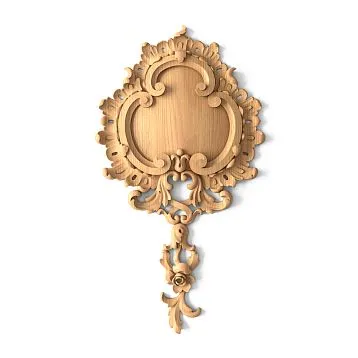
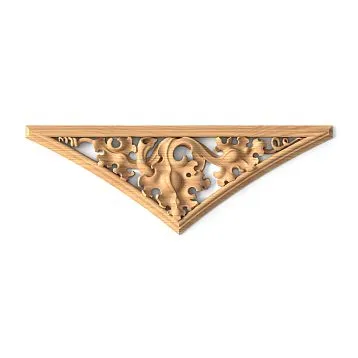
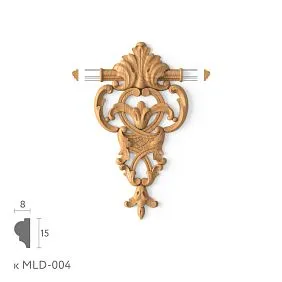
Our factory also produces:


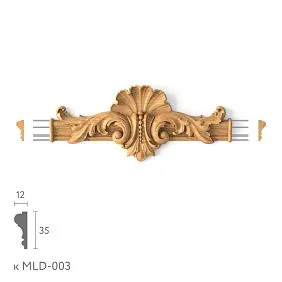
Outside the house: moldings for the facade
On the facade, molding is a different creature. It is an element of external architecture, subject to climatic loads: precipitation, ultraviolet light, temperature fluctuations. Facade profiles frame windows, emphasize floor bands, and create architectural relief on the wall. A separate direction is wooden ornaments and carvings:patterns on wooden house mouldings, carved cornices, decorative bargeboards.
Important difference: interior molding is not used on the facade. They have different requirements for material and execution. Below we will examine both directions in detail.
Get Consultation
What types of moldings for the house exist
Classification of moldings for the house is not theory. It is a practical tool that allows you to immediately understand exactly what you need.
Polyurethane moldings
Polyurethane is the dominant material for interior molding in residential construction. Its key characteristics for the home:
-
Lightweight — installed with adhesive without additional fasteners or special tools;
-
Detail reproduction — polyurethane casting captures the finest profile details;
-
Paintability — after factory priming, accepts any acrylic or latex paint;
-
Climate resistance — does not react to normal indoor humidity and temperature fluctuations;
-
Long service life — a quality polyurethane profile lasts 30–40 years without deformation.
Polyurethane decor for interiors— is not just molding. It is a complete ecosystem: moldings, cornices, baseboards, corner trims, cartouches, medallions, rosettes. All from one material, all for uniform painting, all stylistically compatible.
Wooden moldings
Wooden molding— is a solid or laminated profile made of beech, oak, birch, pine. For the home, wooden molding is especially relevant in two contexts: natural interiors (wood + stone + textiles) and exterior decor for a wooden house.
Wooden molding accepts any finish: paint, varnish, oil, wax, stain. This provides complete freedom in forming tonal and textural solutions.Wooden moldings— in the interior is a material warmth that polyurethane reproduces in form, but not in tactility.
Wall moldings in interior design
Wall moldings are the broadest category. This includes profiles for frame systems, decorative belts, horizontal divisions, and door/window trims. Smooth, textured, classic, modern — all of these are wall moldings. Width: from 20 to 120 mm depending on the scale of the room.
Moldings for exterior decoration
Facade moldings made of weather-resistant polyurethane or wood with protective coating. Window trims, inter-floor belts, decorative profiles along the perimeter of facade panels. This is a different assortment — with different technical requirements.
Decorative profiles for interior
decorative elements— all types of non-wall overlays: rosettes, cartouches, medallions, corner blocks, relief inserts. This is the 'ornamental layer' on top of the molding geometry. In professional understanding: moldings build the architecture, decorative elements embellish it.
Moldings for home interior
This is the main block — and the most commercially substantial. Interior demand for home moldings covers practically all rooms: living room, bedroom, hallway, study, dining room. Let's break it down by purpose.
Wall moldings: frame systems
Wall frames are a classic technique that transforms a flat painted surface into an architectural object. Rectangular or square outlines made of molding, dividing the wall into symmetrical 'panels' — this is the direct descendant of historical wooden wall paneling.
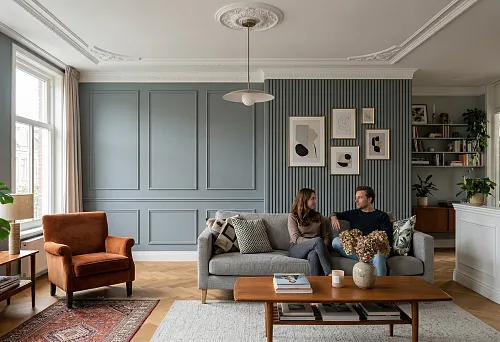
The contemporary application of frame molding is infinitely flexible: a classic multi-tier program in the living room, a delicate single-tier frame in the bedroom, an accent frame in the hallway behind a console. After monochrome painting, the frames 'grow into' the wall in color, remaining active through relief and shadow. This is the 'three-dimensional wall' effect, which is truly felt only in person.
For the correct selection of a profile for the frame system—moldings for the home made of polyurethane: a wide assortment, compatibility with stucco, a unified finish when painted.
Wall stucco: the ornamental layer
wall molding — these are three-dimensional decorative overlays that are mounted at key points of the molding system. Corner rosettes in the corners of frames, a cartouche at the center of the decorative field, a medallion above the sofa—each of these elements works as 'punctuation' in the architectural text.
Polyurethane stucco is the perfect partner for molding: the same material, the same paint adhesion, a unified result after painting. The professional principle: molding creates the geometry →Molding for walls decorates its key points. Stucco without a molding structure is a 'random' ornament. Stucco within a molding system is an architectural program.
Decorative stucco: the full ornamental register
Decorative wall molding includes not only rosettes and cartouches. It also includes: decorative friezes (horizontal relief strips), relief panels for niche surfaces, decorative bracket-consoles under the cornice, relief inserts for fireplace portals.
Each of these elements is not a separate 'accessory,' but part of a unified decorative logic. Professional approach: all elements of stucco and moldings from one catalog — one series, one material, a single result.
Polyurethane decor for home interiors
Polyurethane Decorcovers the entire spectrum of interior decor for the home: from a narrow, delicate 20 mm molding for a modern neutral interior to a wide ornamental 120 mm cornice for a classic living room. Polyurethane reproduces any historical profile with an accuracy previously achievable only with plaster — at a fraction of the weight and labor costs.
This is especially important for the home: interior decor made of polyurethane can be installed in stages, without being tied to a specific phase of renovation. Adding frames to already painted walls is a one-day task.
Moldings in combination with furniture and doors
Molding for the home always exists in context. Wooden floor + wooden furniture + wooden trims + wooden molding = an organic, coherent decorative system made from a single natural material. Polyurethane molding, painted the same color as the walls + white doors = a neutral, clean modern space with architectural structure.
The most important rule of stylistic compatibility: molding should not 'contradict' furniture and doors. Ornate classical molding with minimalist modern doors without decor is a stylistic dissonance. Smooth modern molding with massive classical doors is a scale mismatch. Choosing molding always begins with analyzing what is already present in the home.
Moldings for facade and exterior home finishing
The external appearance of a home is the first thing the world sees. And if inside, molding works through shadow and relief on a closely viewed wall, outside it works through silhouette and volume, perceived from a distance.
Polyurethane facade decor
Facade decoration made of polyurethane— profiles designed for exterior application. Unlike interior polyurethane, facade polyurethane is made from denser, weather-resistant compounds, often with additional external protection.
Application of facade polyurethane decor: window framing (pediments, archivolts, casings), interfloor belts, horizontal rustication strips, corner pilasters, decorative inserts above windows.Polyurethane facade decoration for the house— a modern alternative to plaster architectural details: it installs faster, weighs less, and reproduces complex relief more accurately.
Casings and wooden patterns
Wooden casings are historically the most vivid and recognizable element of Russian wooden architecture.patterns on wooden house mouldings— this is not just decor. It is an architectural language in which each ornament had symbolic meaning. Solar signs, plant motifs, geometric braids—each region of Russia had its own decorative 'dialect' of window adornment.
Today, carved wooden casings are experiencing a revival: they are in demand both for rural and country houses in traditional style, and for suburban homes in 'Russian classic' or 'eco-house' style.patterns on wooden windows of houses— these are ready-made carved elements for framing window openings, which are mounted on the facade without special skills.
Wooden casings: between history and modernity
Wooden casing— in modern execution, is a profiled wooden plank for framing window or door openings. It performs two functions simultaneously: technical (closes the gap between the frame and the wall) and decorative (creates an architectural framing of the opening).
The shape of a wooden casing—from a simple rectangular plank with a bevel to a richly profiled relief framing with applied ornaments. For wooden houses in classic style—a wide casing with carving. For a modern suburban house—a narrow smooth profile without ornament.
About how facade decor and interior connect into a unified stylistic system through wooden window trims and polyurethane elements — in the articleFacade and interior in the same style.
Carved facade decorations: house carving
House carving is a separate category of facade decor for wooden houses.Wooden architecture patterns— bargeboards, under-eave boards, wind boards with carved ornaments, balcony balusters, decorative brackets — all these are details that create the 'face' of a wooden house.
Detailed history and practice of house carving — in the articleCarved decorations of a wooden house: all architectural zones and types of decorative elements from the pediment to the porch steps are analyzed there.
When you need a facade element, not a molding
Facade architecture sometimes requires not a profiled strip, but a three-dimensional architectural element: a keystone above a window, a decorative pediment, a pilaster, a rusticated corner. These elements are not moldings in the usual sense, butfacade decorative elementsmade of weather-resistant polyurethane. They create the architectural character of the facade — monumentality, historical belonging, 'heavy' detailing characteristic of stone architecture.
What to choose for a house: molding, stucco, or decorative elements
A question with no universal answer—because everything depends on the task. Let's establish a clear frame of reference.
When molding is needed
Molding is the choice when the task is to create a geometric structure on a surface: frames, lines, divisions. Molding is an architectural tool. It doesn't decorate—it organizes. If a wall in a house looks 'empty' and 'faceless'—molding is needed. If the wall already has decor (paintings, mirrors, sconces), but the space between them is unstructured—molding is needed.
When stucco is needed
Buy Molded Decorationis needed when the task is to add an ornamental accent to a specific point within an already created decorative system. Stucco doesn't create a system—it decorates it. A corner rosette in the corner of a molding frame. A cartouche at the center of a decorative field. A medallion above a fireplace. Each of these elements works only in context.
Stucco without molding is chaotic ornament. Stucco within a molding program is a classical decorative system.
When overlays and decorative elements are appropriate
You can buy ready-made stucco matching the Baroque style. Calculate the quantity: linear meters of cornices and moldings, number of rosettes, pilasters, consoles, corner elements. Add a ten to fifteen percent allowance for trimming.in the form of overlays and decorative inserts is needed when the task is to enrich a specific architectural detail: a fireplace portal, a niche, a doorway, a ceiling medallion for a chandelier. Decorative overlays work as independent accents, not requiring a molding system around them.
When external facade decor is needed
For facades—never use interior moldings and stucco. Only weather-resistant materials: special facade polyurethane or wood with full external protection (antiseptic + varnish/oil for exterior work).Polyurethane Decorfor facades is a separate category with corresponding technical characteristics.
How to choose house molding by material
Molding material is not a matter of taste. It's a matter of operating conditions, style, and budget. Let's break it down honestly.
Polyurethane: the technological standard for interiors
| Characteristic | Polyurethane |
|---|---|
| Weight | Lightweight (installation with adhesive) |
| Relief | Any, with high precision |
| Paintability | Good |
| Moisture resistance (normal) | High |
| Price | Medium |
| Application | Interior |
Polyurethane is the choice for most interior tasks in the house. Living room, bedroom, hallway, office, dining room — polyurethane works everywhere.Molding for the home.
Wood: natural authenticity
| Characteristic | Wood |
|---|---|
| Weight | Medium (fastening is required) |
| Relief | High precision milling |
| Paintability | Excellent (+ oil, varnish, wax) |
| Moisture resistance | Depends on coating |
| Price | Medium–high |
| Application | Interior + exterior (with protection) |
Wooden molding — a choice for natural interiors, wooden houses, situations where the tactility of natural material is important. For exterior — only with multi-level protection (antiseptic + primer + exterior varnish/oil).
Combined Solutions
In a private house, both materials are often used: polyurethane decor for interior surfaces → wooden architraves and moldings for exterior doors and windows. The main condition: different materials under a unified finish paint work as a system — without visual break.
What is better for dry rooms, what for exterior finishing
Dry rooms (living room, bedroom, study): polyurethane or wood under paint — equally good. Polyurethane — cheaper and easier to install. Wood — more natural and 'warmer' to the touch.
Kitchen, bathroom: polyurethane — preferable. Wood without moisture-protective coating deforms under constant exposure to steam.
Exterior: special exterior polyurethane or wood with full external protection. Interior materials are not used outside.
Which elements to buy together with molding for the house
Professional result is a system, not a set of separate elements. Let's break down the full kit.
Molding: ornamental top layer
decorative elements— corner rosettes, cartouches, medallions — are ordered from the same series as the molding. Rule: one manufacturer, one material, one series — a guarantee of visual unity after painting.
Facade Decoration
facade decorative elements— window pediments, interfloor belts, corner pilasters. All made of facade weather-resistant polyurethane. Ordered simultaneously with the molding to coordinate style and proportions.
Casing and wooden ornaments
Wooden casing— door or window — is a linear element that is purchased as a set with door frame moldings. For a wooden house — with carved ornaments. For a modern one — smooth profiled.Patterns wooden window casingsfrom the house carving catalog — ready-made carved elements for installation.
Trim: complete set for the house
Complete trim set for the house: wall molding + baseboard + ceiling cornice + door casings + corner blocks. All from one series = a decorative system where all the lines of the house 'speak' the same language.
Article on combining moldings and decorative overlays with rules for building complete systems —How to combine moldings and overlays: a detailed breakdown of composition principles for professional and DIY projects.
50 ideas for the home
If you need inspiration for decorating your home with wooden elements — the article 50 ideas for interior decoration with wooden elements provides a comprehensive practical overview from accent walls to architectural details.
Mistakes when choosing molding for the home
Mistakes here are costly. The profile is purchased, installed, painted — and only then does it become apparent that something is wrong.
Mixing interior and exterior intent
Attempting to use interior polyurethane molding on the exterior is a common mistake. Interior polyurethane is not designed for atmospheric loads: after just one or two seasons outdoors, it will begin to deform, crack, and peel. The exterior requires a special material — always.
Choosing too complex a profile
A wide ornamental molding with beads and acanthus leaves in a small house with a 2.5 m ceiling is decorative suffocation. Complex relief in a small space 'swallows' the volume. The tighter the space, the more delicate the profile should be.
Lack of stylistic connection
Relief classical molding + minimalist modern doors + Scandinavian furniture = three different stylistic languages. Molding is always chosen as part of a system: it must 'speak' with the doors, furniture, ceiling decor. Isolated profile selection without considering the rest of the interior is a path to an inconsistent result.
Using interior profile for the facade
Already mentioned above — but this is such a common mistake that it deserves separate mention. Never install interior moldings outside. This is not a matter of taste — it's a matter of physics.
Mixing series from different manufacturers
Molding from one catalog, corner rosettes from another, cornice from a third — and all 'in classical style'. In practice, 'classical style' differs among manufacturers in scale, detail of relief, and character of transitions. After painting, the mismatch becomes obvious. One catalog — one manufacturer — one series.
Where to buy molding for the house
Final practical block: correct catalog sections for the right tasks.
For interior polyurethane molding
Buy molding for home— section of polyurethane moldings, cornices, and baseboards. Here: all wall and ceiling profiles for interior programs of any style.
For stucco and overlays
Polyurethane decor for interiors— section of polyurethane overlays: corner rosettes, cartouches, medallions, decorative friezes. Here — the entire ornamental layer for classical and neoclassical interior programs.
For wooden moldings
Wooden moldings— section of solid wood moldings. Profiles made of beech, oak, birch for painting, oil, or varnish.
For facade decoration
Facade decoration made of polyurethane— section of polyurethane products with facade positions. Weather-resistant profiles for external architectural works.
For architraves and house carving
patterns on wooden windows of houses— section of house carving: ready-made carved elements for window and door decor of wooden houses.
FAQ: answers to popular questions about molding for home
Which molding to choose for a house?
Depends on the application. For interior — polyurethane molding from the catalog of moldings and cornices. For a wooden house with natural finish — solid wood molding. For facade — special facade polyurethane.
What is better for a house: molding or stucco?
They solve different tasks. Molding creates geometric structure: frames, belts, divisions. Stucco decorates key points of the created structure. The best result is a combination: molding as a geometric framework,Molding for wallsas an ornamental accent.
Which moldings are suitable for house walls?
For living rooms with normal humidity — polyurethane or wooden. Smooth profile 25–40 mm for modern interior. Relief 45–80 mm for classic. The choice depends on ceiling height: the lower the ceiling, the narrower the profile.
Can moldings be used on a house facade?
Only special facade moldings made of weather-resistant polyurethane or wood with full external protection. Interior moldings outside deform and deteriorate from atmospheric loads.
How does polyurethane decor differ from wooden?
Polyurethane is lighter, reproduces more complex relief, does not require additional fasteners, and does not deform under normal room conditions. Wood offers natural warmth, the tactile feel of natural material, and the possibility of working with finishing coatings (oil, wax, staining). For most residential interiors, both materials work excellently.
Where to buy moldings for the home?
moldings for the homemade of polyurethane,Wooden moldingsolid wood,decorative elementsMoldings and stucco are in the STAVROS catalog. Different categories for different tasks: interior, facade, wooden house.
How to calculate the amount of molding for the home?
For frames: perimeter of each frame × number of frames + 15% margin. For belts and cornices: perimeter of the room + 10% margin. Standard linear length is 2400 or 3000 mm.
Can molding be added to already finished finishing?
Yes. Polyurethane molding is mounted with adhesive onto an already painted or plastered wall. The only condition: the surface must be clean, dry, and stable (without loose plaster).
Is it necessary to paint the molding the same color as the wall?
Not necessarily, but it is the most sophisticated technique: monochrome painting creates a three-dimensional structure without a color accent. Contrast painting (white molding on a colored wall) is a more theatrical, expressive option.
What is better for a wooden house: polyurethane or wooden molding?
For the interior of a wooden house — both work. Wooden molding creates a unified material language with log or timber walls. For the facade of a wooden house — only wooden elements with external protection:Wooden casingand carved facade decor.
Which profile to choose for a classic interior in a house?
Wide relief molding 55–100 mm with a historical section: ogee, scotia, torus. Three-zone wall division: ceiling cornice + wall frames + baseboard. Corner rosettes fromdecorative wall moldingsin the corners of the frames. Unified white or cream painting of the entire system.
How to choose facade decor for a house?
Determine the facade style → choose the corresponding type of decor (classical — pediments, pilasters, rustication; modern facade — horizontal bands, smooth trims). For wooden houses —Wooden architecture patternsand carved window surrounds. For stone and block houses — facade polyurethane.
About the company STAVROS
A house is a project where every detail matters. Decorative molding on the living room wall, a carved window surround on the exterior window opening, plasterwork in the corners of frames, a wooden cornice along the ceiling perimeter — all these are parts of a single architectural concept. And the correct result is achieved only when all these parts come from one source, are executed in a unified stylistic logic, and from coordinated materials.
Buy molding for homemade of polyurethane,Wooden moldingssolid wood,Polyurethane Decorfor interior programs,Facade decoration made of polyurethaneand wooden carved window trims for exterior finishing — all of this is in the STAVROS company catalog.
STAVROS is a manufacturer and supplier of wooden architectural millwork and polyurethane decor for interiors and facades. Over 500 items: moldings, cornices, stucco, overlays, capitals, trims, house carving — everything for the home, from the windowsill to the roof ridge.
STAVROS works with private clients, architects, design studios, and construction crews. Assistance in selecting a molding kit for the interior, coordinating facade decor with interior finishing, calculating material quantities — this is the standard level of service. Because a home is not just walls and a roof. It's a place where you want to live. And STAVROS helps make it exactly that.