Article Contents:
- 1. Wood: classic, time-tested
- 1.1. Solid wood
- 1.2. Veneer
- 2.1. Laminated particle board (MDF)
- 2.2. MDF (fine particle board)
- 2.3. Plywood
- 3.1. Metal
- 3.2. Glass
- 3.3. Plastic and acrylic
- 4.1. Main types of furniture handles
- 4.2. Wooden furniture handles
- 4.3. Choosing hardware: what to pay attention to
- 5.1. Classic and neoclassic
- 5.2. Scandinavian style
- 5.3. Loft
- 5.4. High-tech and minimalism
When furnishing a home or office, we want furniture to be not only beautiful but also reliable, lasting for many years and seamlessly blending into the interior. However, not everyone considers what material their future table, cabinet, or sofa is made of. Meanwhile, furniture materials are a key factor influencing the strength, durability, appearance, and, of course, the cost of the item. In this article, we will examine the main types of materials used in the furniture industry, discuss their advantages and disadvantages, and also touch upon details often overlooked — for example, furniture handles and other hardware, without which it is impossible to imagine full use of furniture.


1. Wood: classic, time-tested




1.1. Solid wood
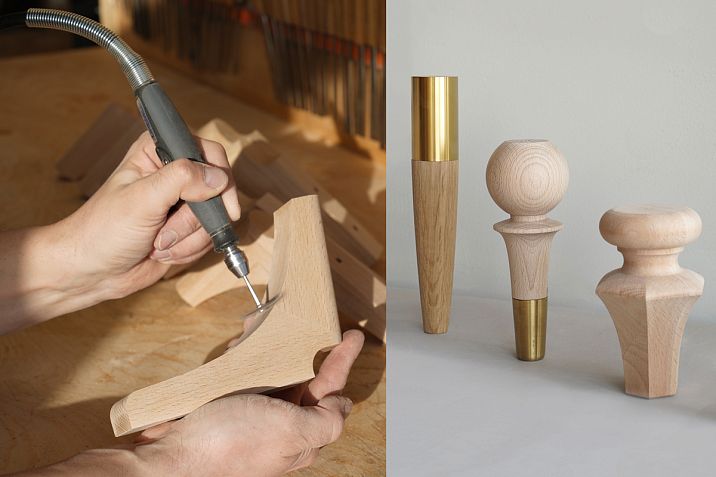
Solid wood is whole wood processed and assembled for furniture making. Historically, it is the oldest and most traditional material. Used in bothclassic furnitureand modern designer models.
● Advantages:
1. High strength and durability.
2. Ecological and 'warm' appearance.
3. Unique texture that becomes a true interior decoration when properly finished.
4. Possibility of restoration (sanding, re-coating with new varnish).
● Disadvantages:
1. High cost (especially for valuable wood species: oak, walnut, beech, ash).
2. Sensitivity to humidity and temperature fluctuations (requires stable conditions, otherwise solid wood may crack or dry out).
3. Heavy weight, which may be inconvenient for frequent rearrangements.
Solid wood furniture looks great in classical and neoclassical interiors, as well as in country, Provence, and Scandinavian styles. Sometimes it is combined with metal and glass, yielding fashionable eclectic solutions.
Our factory also produces:


1.2. Veneer
Veneer is a thin layer of natural wood (0.3–0.6 mm) applied to panels (MDF, plywood, particleboard). Using veneer, you can achieve a 'wooden' surface appearance, although the construction will cost less than solid wood.
● Advantages:
1. Aesthetic of natural wood at a lower cost.
2. Wide selection of veneer species (oak, ash, walnut, exotic varieties).
3. Lighter than solid wood (easier to transport and install in apartments).
● Disadvantages:
1. Less strength than solid wood (may chip under impact).
2. Requires careful maintenance (though less demanding than solid wood).
Veneered furniture often looks very substantial. It is a good compromise for those who appreciate wood grain but are not ready to pay for solid wood.
Get Consultation
2. Panel materials: optimal price-to-quality balance
2.1. Laminated particleboard (Laminated MDF)
Particleboard (wooden fiberboard) is one of the most popular materials. Laminated particleboard is particleboard covered with a protective film (laminate) that can imitate various wood tones, stone, or solid colors.
● Advantages:
1. Low cost.
2. Wide range of decorative finishes and textures (from 'wood-like' to bright shades).
3. Resistance to wear and easy maintenance.
● Disadvantages:
1. If the laminate layer is damaged, the panel may absorb moisture and warp.
2. Not suitable for complex router work on facades (only straight surfaces).
3. Lower strength compared to MDF.
Laminated particleboard is widely used in manufacturing sliding wardrobes, kitchen facades, and office furniture. To prevent edges from swelling due to moisture, it is important to use quality edge banding (2 mm PVC or ABS) and not skimp on hardware.
2.2. MDF (fine particle board)
MDF is a board made of compressed wood fibers with added binding agents. Compared to particleboard, its structure is more uniform and dense.
● Advantages:
1. Ability to rout, create shaped facades, cutouts for %sFurniture Handles and so on.
2. Higher strength and reliability compared to particleboard.
3. Ecological (with quality production, formaldehyde content is minimal).
● Disadvantages:
1. The cost is higher than that of MDF.
2. Under severe impacts, scratches or dents may form.
MDF is the optimal material for kitchen facades, doors, and carved panels where a combination of design and durability is needed. MDF is often covered with enamel, PVC film, acrylic, or veneer.
2.3. Plywood
Veneer consists of layers (veneers) of wood glued together. It is used in furniture manufacturing, though less frequently than MDF or particleboard.
● Advantages: strength, lightness, resistance to deformation. Veneer can serve as a base for upholstery (beds, sofas) and for making chairs and tables (especially in Scandinavian, eco, and loft styles).
● Disadvantages: if an ideal decorative surface is required, veneer must be additionally finished with veneer, paint, etc.
Veneer furniture is sometimes popular in ecological and 'children's' projects, since veneer is considered less toxic in production than particleboard.
3. Metal, glass, and plastic: expanding design horizons
3.1. Metal
Metal (steel, aluminum, brass) is typically used for frames, supports, and hardware. Furniture with metal elements is gaining popularity—this is characteristic of loft, high-tech, and industrial styles.
● Advantages:
1. High strength and durability.
2. Suitable for 'light' constructions (thin legs, forged elements).
3. Looks modern or, conversely, vintage, if the metal is artificially aged.
● Disadvantages:
1. Metal may be susceptible to corrosion (if not protected by a coating).
2. The cold, 'industrial' aesthetic is not always suitable for classic interiors.
3.2. Glass
Glass is often used for countertops, display cabinet doors, and shelves. It can be transparent, matte, tinted, or printed with photos. It gives a sense of lightness and brightness, visually enlarging the space.
● Advantages:
1. Easy maintenance (with special cleaning agents).
2. Visual lightness, suitable for small rooms.
3. Resistance to moisture and temperature (tempered glass).
Disadvantages:
1. Requires careful handling; risk of scratches upon impact (even if it is tempered glass).
2. Fingerprints and stains are visible on transparent surfaces.
3.3. Plastic and acrylic
Plastic (including acrylic panels) is a popular solution for facades of modern styles (high-tech, minimalism). Plastic surfaces can be vibrant, glossy, and easily molded.
● Advantages:
1. Rich color palette, ranging from pastel to acid tones.
2. Easy maintenance (especially glossy acrylic facades).
3. Moisture resistance, non-hygrosopic.
Disadvantages:
1. Minor scratches may appear.
2. Excessive heating may cause plastic to deform or release substances (but this depends on the specific type).
4. Furniture handles and hardware: details that create style and comfort
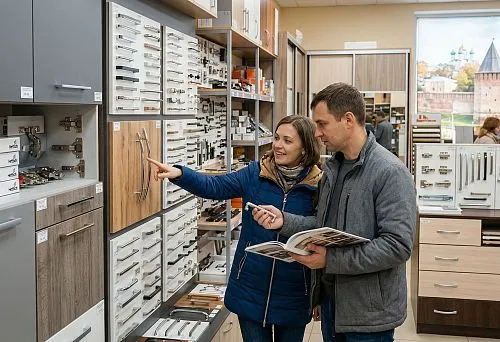
Regardless of the chosen furniture material, attention should be paid to details: hinges, guides, handles, etc. Low-quality hardware can negate all efforts of designers and manufacturers: doors will squeak and sag, drawers will jam, and handles will break with the first sharp pull.
Hooks (arched handles): classic option suitable for almost any furniture. Shape may be straight, curved, S-shaped. Material – metal (steel, zinc alloy, brass).
- Buttons: small round or shaped "buttons" mounted with a single point. Perfectly fit into
- , country, Provence.classic furniture, country, Provence.
- Railings: long cylindrical handles, popular in modern and minimalist styles.
- Inset handles: option for sliding doors or where maintaining a "smooth" surface is required.
- Handle-free systems (push-to-open): in contemporary high-tech style, handles are absent, and doors open by pressing.
4.2. Wooden furniture handles
. They give furniture a special charm and "warmth". Such handles suit eco-style, scandi, country, classic styles, where the natural wood texture will "match" with facades or contrast against MDF.Wooden handles. They give furniture a special charm and 'warmth'. Such handles suit eco-style, scandi, country, classic styles, where the natural wood texture will 'match' with fronts or contrast against MDF.
● Advantages:
1. Ecological and pleasant tactile surface.
2. Possibility to match the shade with facades or, conversely, play on contrast.
3. Excellent choice for those who appreciate natural materials in details.
● Disadvantages:
1. Wood requires careful handling (wet cleaning may become problematic if no protective coating is present).
2. Over time, the finish may wear off, requiring repainting or varnishing.
4.3. Choosing hardware: what to pay attention to
- Material: handles made of metal (brass, stainless steel), wood, plastic, ceramic – each category has its own aesthetics. Combine them with the color and style of the furniture facade.
- Coating quality: cheap handles may peel or scratch. Better to choose items with quality plating (chroming, nickel plating) or durable paint.
- Ergonomics: the handle should be comfortable to grip, without sharp edges. This is especially important in the kitchen or bathroom, where hands may be wet and slippery.
- Style: hardware is a noticeable detail. For classic styles, ornate handles with patina are suitable; for high-tech, simple geometric shapes; for minimalism — hidden systems or push-to-open.
5. How to choose furniture materials and hardware for a specific style
5.1. Classic and neoclassic
● Materials: solid wood (oak, beech, walnut) or MDF with veneer, finish in warm and pastel tones.
● Handles:Wooden handles (carved), bronze, brass with patterns, porcelain inserts.
● Finish: varnishing, patina, possible facades routing, panels, moldings, pilasters.
5.2. Scandinavian style
● Materials: light solid wood, plywood, MDF with wood veneer (birch, beech).
● Handles: wooden knobs, simple metal, or even minimalism push-to-open.
● Colors: white, gray, beige, natural tones. Accents may be pastel or 'warm' (terracotta, olive).
5.3. Loft
● Materials: rough wood, metal, glass, concrete imitation on facades, brick wall as background.
● Handles: metallic, "brutalist", possibly aged to look "vintage". Or, conversely, hidden black profiles.
● Surfaces: matte, sometimes intentionally aged with scratches.
5.4. High-tech and minimalism
● Materials: melamine or MDF laminate, acrylic, plastic, glass, metal.
● Handles: either absent (push-to-open), or thin chrome or satin railings.
● Color palette: white, black, gray, contrasting black-and-white or monochromatic minimalist solutions.
6. Ecological and material safety
Besides aesthetics and price, remember the ecological aspect. Panel materials (MDF, MDF) emit formaldehyde — a volatile compound that can be harmful at high concentrations. Therefore, pay attention to emission class (E0, E1, E2):
● E0 — lowest emission, practically "ecological" panel.
● E1 — acceptable standard for residential spaces (common standard).
● E2 — considered not fully safe for long-term use in homes (more commonly used in non-residential spaces, under compliance with norms).
When choosing solid wood, consider the treatment with paints, varnishes, and adhesives. Prefer certified brands using water-based, safe coatings.
7. Care for furniture depending on material
- Solid wood and veneer: do not place hot items directly on the surface, avoid prolonged contact with moisture, use polishes or oils as recommended by the manufacturer.
- MDF: wipe with a soft cloth, slightly dampened if needed. Avoid aggressive chemical cleaners and abrasive sponges. Ensure moisture does not reach edges.
- MDF with coating: if facades are covered with enamel or PVC film, avoid scratching with stiff brushes. Do not pour boiling water or use acetone.
- Glass: use a special cleaner, non-abrasive. With proper care, glass retains its transparency.
- Metal: wipe with a soft cloth to avoid streaks. If there is residue or stains, use metal cleaners without harsh abrasives.
- Furniture handles: check fasteners every six months, tighten screws. If the handle is metal, you can use metal polish.
8. Practical recommendations for choosing materials and hardware
- Analyze load: if you need a sturdy countertop (for a dining table), better choose solid wood or MDF with a thick layer. For light shelves, you can use MDF.
- Determine budget: solid wood — expensive, MDF — budget-friendly. MDF — the golden middle. Then clarify hardware cost: quality hardware and guides can add significantly to the total, but without them, furniture will lack comfort. Furniture Handles Consider style: if you are building a high-tech interior, an abundance of carved wooden facades would be inappropriate. Conversely, in classic style, glossy acrylic surfaces are not always harmonious.
- Check technical specifications: panel thickness, density, emission class. Do not hesitate to ask the seller for certificates.
- Check edges: especially on MDF and MDF details. Quality edge (PVC/ABS 2 mm) protects panels from moisture and impacts.
- Test mechanics: open drawers and doors, assess smoothness of movement, check for squeaks. Try pulling firmly — quality hardware maintains shape and does not "loosen".
- 9. Conclusion
9. Conclusion
Furniture material is not just a technical aspect, but an important part of the overall design and operation. The material from which a cabinet or table is made determines how long it will last, how pleasant it will be to use, and how stylish it will look in the interior. Combine:
● Reliable base (MDF, particleboard, solid wood);
● Eye-catching finishes (veneer, enamel, acrylic, glass);
● Quality hardware and handles, for example,Wooden handles or metallic – depending on the overall concept.
As a result, you will get furniture that reflects your taste and meets the needs of everyday life. Let it harmoniously blend into the environment, delight the eye, and provide comfort for many years!