Article Contents:
- Historical Aspects of Furniture Design
- Ancient Roots and Centuries-Old Traditions
- The Era of Modernism and Art Deco
- Modernism, Pop Art, and the Influence of Technological Progress
- Minimalism as a Response to an Accelerating World
- Eclecticism: Blending the Past and the Future
- Ecological sustainability and development
- Why Classic Styles Never Go Out of Fashion
- Advantages of Classic Interiors
- How to Choose Classic Furniture for a Modern Home
- The Role of Comfort in Daily Life
- Psychological Aspects of Spatial Perception
- Latest Developments and Trends
- Traditional Materials: Wood, Stone, Metal
- How to Choose a Palette for Your Interior
- Textures, Patterns, and Unique Details
- Individual Approach and Personalization
- Interaction with the Client
Furniture design is more than just creating comfortable interior items. It is a complex and multifaceted process in which art, functionality, ergonomics, aesthetic principles, and psychological impact on people are closely intertwined. One can say that furniture design is a small universe reflecting the culture, history, and aspirations of society across different eras. Styles change, new materials and technologies emerge, yet the main goal remains unchanged: to make human life comfortable, beautiful, and harmonious.
However, what truly drives a real furniture designer? Is it the desire to realize new ideas, the wish to improve the lives of those around them, or perhaps a challenge to oneself and society? Sometimes designers deliberately break established canons, experiment with forms and textures, to draw public attention to new possibilities and ideas. On the other hand, there is also the flip side: some remain faithful to classic lines, preferringClassic Furnituretested over centuries.
In any case, furniture design today is a synthesis of artistic vision, engineering knowledge, marketing skills, and the ability to read the wishes of future owners. Over nearly a century of industrial design’s existence, numerous styles, directions, and technical innovations have emerged. However, the true appeal of furniture lies not only in fashion and technology, but also in its ability to enrich our lives, awaken emotions, and become 'part of the family' in any apartment or country house. And if anyone thinks that furniture is 'merely a chair or a table,' it’s worth digging deeper: behind these items lies a multi-century heritage, refined aesthetics, and engineering precision.


In palace interiors. Finding a balance without turning furniture into a tasteless combination of disjointed elements is a true challenge for a professional. And when a designer manages to create an item that pleases the eye and serves for many years, he feels that his mission is accomplished.
Furniture design as such has existed for more than a hundred years. Humanity has always strived to ensure comfort and coziness in its dwelling, and one could say that the first designers appeared long before the word 'design' was born. Cave dwellers adorned their primitive beds with bones, wooden branches, and painted on walls; Egyptians created carved chairs and stools from precious woods and believed that each object had a special symbolic power. But only with the development of crafts, the emergence of specialized workshops and guilds did furniture firmly enter the world of art and aesthetics.




Ancient Roots and Time-Honored Traditions
In Ancient Egypt, and then in Ancient Greece and Rome, furniture was already perceived not only as a means for sitting or storing things, but also as a symbol of status. Wealthy families commissioned unique pieces adorned with precious metals and stones. In turn, craftsmen strove to incorporate artistic elements into every item. Ancient Greek and Roman chairs with carved legs, adorned with bronze or gold, testify to the highest level of craftsmanship of that time. Until the Middle Ages, the nobility had access to luxurious furniture: massive tables, huge chests, carved beds with canopies. But sometimes craftsmen deliberately experimented, inspired by mythological motifs and religious themes, and such an approach can be considered the beginning of stylistic explorations in furniture design.
Our factory also produces:


The Era of Modernism and Art Deco
A turning point for furniture design occurred at the end of the 19th and beginning of the 20th century, when the styles of modernism and art deco emerged. Modernism (or art nouveau) was characterized by smooth, whimsical lines, luxurious decorative elements, and inspiration from natural forms. At that time, designers gave special attention to ornamentation in the form of flowers, leaves, wavy lines. On the other hand, art deco, which reached its peak in the 1920s–1930s, introduced furniture with straight, almost geometric forms, combined with bright accents, exotic materials, and the gleam of metal. This was a style of luxury and elegance, yet it inspired further experiments with form and content.
Get Consultation
Modernism, Pop Art, and the Influence of Technological Progress
Since the mid-20th century, especially after World War II, furniture design underwent another sharp turn: the smooth lines gave way to functionality and simple geometric forms of modernism. It was then that mass production gained greater influence, making it possible to reproduce designs and make them accessible to an increasingly broad audience. Legendary creations emerged, entering design textbooks: chairs, stools, and sofas that are instantly recognizable. At the same time, pop art, emerging as a branch of artistic movements, inspired furniture designers to create bold, sometimes provocative pieces: bright color schemes, comic prints, use of plastic materials. Technological progress gave designers new opportunities: plastic molding, composite materials, and high-precision CNC machines significantly expanded the scope of ideas.
Today, it may be difficult for us to imagine what our lives would be like without accessible furniture that can be quickly assembled, disassembled, and, if desired, transported to a new location. But it was precisely the 'technologization' of furniture production in the middle of the last century that made furniture a global business and laid the foundation for future innovations. It is not surprising that the idea of combining different styles was already emerging at that time, which will be discussed further.
Modern Trends in Furniture Design
The 21st century has brought many interesting trends in furniture design. Globalization, access to online platforms, the 'revival' of traditional crafts, and the strengthening of ecological concerns—all of this has shaped a variety of approaches to creating furniture. Today, the market combines ultra-modern and classic solutions. Are we afraid to mix this in our homes? On the contrary, most designers believe that harmonious blending of different styles creates uniqueness in space.
Minimalism as a Response to an Accelerating World
The reduction of personal space in megacities and the desire to rid oneself of unnecessary things led to the popularity of minimalist design. Clear lines, simple forms, minimal decoration, and functionality as a key principle—these are the main characteristics of this style. Often, such furniture is created in light or neutral tones, which additionally contributes to the visual expansion of space. People increasingly want to surround themselves with items that can serve multiple purposes: foldable tables, modular storage systems, convertible beds. This not only saves space but also adds elegance to the interior. However, minimalism is sometimes criticized for its 'excessive coldness,' which may deter those who prefer warm, decorated interiors.
Eclecticism: Blending the Past and the Future
Modern designers actively draw ideas from the past and boldly combine them with futuristic elements. This trend is called 'eclecticism' and allows creating truly unusual interiors. Imagine a vintage wooden table surrounded by bright plastic chairs or a brutal metal structure next to a carved baroque-style chest. Eclecticism 'provokes' and gives freedom of self-expression, allowing one to ignore strict canons of a single style. Its advantage lies in the ability to literally 'animate' a space, filling it with emotional contrasts. However, it is important not to overdo it and remember that eclecticism is not merely a collection of different items, but an art of highlighting the best in each element.
Ecological Sustainability
In recent years, more attention is being paid to eco-friendly furniture. Consumers increasingly consider what materials were used in production, their impact on health and the environment. There is growing demand for certified wood, where forests are restored and logging occurs according to strict standards. Furniture made from recycled materials and items created within the zero waste (waste-free production) concept are gaining popularity. This approach meets the needs of modern society, which recognizes the importance of preserving natural resources and strives to minimize harmful effects on the planet. Eco-friendly furniture design is distinguished not only by natural materials but also by durability, repairability, or reusability.
Classic Furniture and Its Boundless Charm
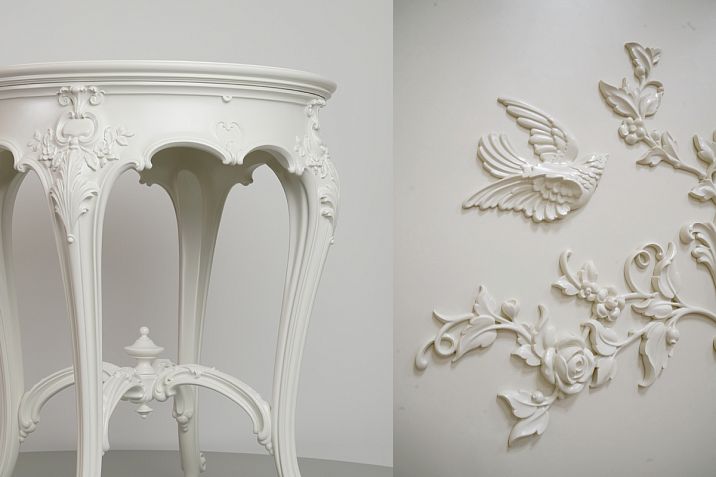
Despite the diversity of modern directions, the classic style remains at the pinnacle of the furniture industry. Many are attracted by elegant forms, refined decorative elements, and the atmosphere of aristocracy that it offers.Classic FurnitureSometimes it seems that time has no power over it: antique chests, ornate upholstered chairs, beautiful wooden tables still decorate our living rooms and bedrooms. But why does classic style never go out of fashion?
Why Classic Style Never Goes Out of Fashion
Firstly, classic forms have been tested by time. Masters of different eras refined the design of chairs, sofas, and tables to perfection, considering both aesthetic and functional requirements. Secondly, classic furniture is usually made from high-quality materials: precious woods, natural fabrics, marble, and metal. This not only gives furniture strength and durability but also a unique charm that is felt in every detail. Thirdly, classic furniture is a symbol of stability and nobility. When we see a carved headboard or a massive wooden wardrobe, we involuntarily feel a touch of history and tradition.
Advantages of Classic Interiors
Classic interiors are often associated with harmony and tranquility. They suit those who prefer calmness, stability, and reliability in their surroundings. Ornaments, soft upholstery, marble tabletops, or exquisite hardware can create an atmosphere of luxury without ostentatious extravagance. Such an interior can be called 'timeless': it will remain relevant today and for decades to come. At the same time,classic interiors fit seamlessly into modern apartments thanks to the possibility of combining them with some elements of minimalism or modern materials. The main secret is to maintain harmony and not drown the natural grandeur of the classic style in excessive decoration or inappropriate accents.
How to Choose Classic Furniture for a Modern Home
When choosing classic furniture, it is important to consider not only visual appeal but also the size of the room, its lighting, wall color, and floor covering. Classic furniture often has more substantial forms, so it may appear bulky in a small room. However, nothing is impossible: modern manufacturers offer lighter versions of classic styles, preserving the overall aesthetic and details. Also, pay attention to materials: hardwoods (oak, beech, walnut) are suitable for those who value true naturalness and are willing to invest in their interiors for years. Do not forget about the quality of finishes and hardware: it is precisely these elements that give classic furniture its flawless appearance.
Functional Features and Ergonomics
Functionality is increasingly taking center stage in modern furniture design. Although the artistic component is always important, the modern pace of life demands higher standards of comfort and practicality. Whether it's a soft sofa, an office chair, or a kitchen stool—everyone wants to feel comfortable in any situation. Ergonomics helps achieve this balance, taking into account the characteristics of the human body and our daily habits.
The Role of Comfort in Daily Life
Imagine an office chair designed without considering ergonomics. Working 8 hours a day at a computer will turn into a daily ordeal, and the lack of back support may lead to pain and chronic spinal conditions. The same applies to home furniture: if a sofa lacks adequate support, or cushions are too soft or too hard, proper rest will be impossible. Manufacturers who care about their reputation inevitably conduct research, testing, and implement modern ergonomic solutions. Quality transformation mechanisms, reliable frames, correct backrest incline angle — all these factors influence the overall perception of furniture.
Psychological Aspects of Space Perception
Interestingly, furniture arrangement affects not only physical comfort but also a person's psychological state. Some studies confirm that balanced proportions and organically chosen colors contribute to reducing stress levels and improving attention concentration. For example, soft pastel tones and rounded shapes can be calming, while sharp angles and contrasting colors stimulate and activate consciousness. The choice of furniture and space layout can even influence how long people spend together in the living room or prefer to isolate themselves in different rooms. Therefore, furniture design is not only about style and beauty, but also about creating a favorable atmosphere for life, work, and rest.
Materials and Technologies in Furniture Production
Advancements in technology and expansion of material options open almost limitless experimentation space for designers. What once seemed impossible — for example, bending a plywood sheet or creating furniture from transparent plastic — is now becoming reality. Meanwhile, traditional materials such as wood, metal, and stone still retain their popularity, rather than being replaced by new solutions.
Latest Developments and Trends
New composite materials are appearing on the market, combining lightness and strength. The introduction of 3D printing allows creating parts of complex shapes, virtually limiting the designer's imagination. The use of smart fabrics with stain-resistant or antibacterial properties is no longer surprising. Additionally, CNC (Computer Numerical Control) technology is becoming increasingly popular, enabling fast and precise carving of parts of any contour. This reduces production time and improves assembly quality. Some companies are integrating LEDs, audio systems, and even built-in gadget charging ports into furniture. This fusion of technology with classic design principles makes modern furniture highly adapted to the needs of the 21st century.
Traditional Materials: Wood, Stone, Metal
Despite the emergence of new materials, wood remains the most popular in furniture production. The warmth, texture, and scent of natural wood cannot be matched by any artificial substitute. Oak, walnut, ash, beech — each species has its own characteristics and shades, which can be emphasized through various finishing techniques. Natural stone, primarily marble and granite, is still used for countertops and decorative inserts, giving products a distinctive solidity and longevity. Metallic elements — steel or aluminum frames — combine strength with minimalist forms, fitting both modern and classic interiors (especially when combined with carved wooden details). Thus, there is no strict division today: "old materials" versus "new." Skilled designers know how to combine wood with metal, concrete with plastic, creating impressive pieces that serve for years.
Color solutions and finishing
Color and finish play a key role in the perception of furniture design. The chosen palette can visually enlarge or reduce space, create a cozy effect or, conversely, a cold, strict atmosphere. Sometimes, color becomes the "signature" of a furniture collection, even if the forms are quite classic.
How to Choose a Palette for Your Interior
First and foremost, it is important to consider the purpose of the room. Soft, pastel tones are ideal for sleeping areas, as they won't stimulate the nervous system. In the living room or dining room, where you host guests and celebrate holidays, you can afford bolder accents. However, avoid overloading the interior with multiple bright colors simultaneously, as this may turn the space into a visual chaos. White, gray, beige tones are considered universal, complementing both dark and bright modern items perfectly.Classic Furniture for the Living RoomIf you wish to experiment, combine contrasting colors and textures, following the rule of balance: a dominant color and several accent colors that highlight it.
Textures, Patterns, and Unique Details
Sometimes, it is the texture that gives furniture its unique character. Natural wood with clearly visible grain or a smooth glossy lacquer surface — each has its own personality. Decorative elements such as carving, metallic hardware, or inlaid inserts can become focal points in the interior. Technologies allow applying various patterns and textures to furniture — from imitation of concrete slabs to stylized prints resembling artistic painting. Everything depends on the concept and mood you wish to create in the room. Some designers recommend starting the room's decoration with choosing an "accent" piece of furniture (whether a designer chair or an eye-catching coffee table) and then selecting the rest of the decor around it.
The Role of the Designer in Creating Unique Furniture
Creating furniture is a collective process. Even if the designer is the author of the concept, a whole team of craftsmen, engineers, technologists, and marketers is required to bring the idea to life and convey it to the final buyer. At the same time, the designer's role cannot be underestimated: he is the "engine" of creativity and innovation, translating vague desires and trends into concrete forms and lines.
Individual Approach and Personalization
In our era of globalization and mass production, individual approach becomes especially valuable. More and more people strive to obtain unique items created according to their personal requests. This may be exclusive upholstery, personalized leg design, or even an entire furniture collection made to specific dimensions and interior style. Here, the designer plays the role of a psychologist, trying to understand which ideas excite the client, which colors and textures suit his personality. The more finely the designer senses the request, the more organically the final result turns out. Not everyone is ready to challenge conventional stereotypes, but those who dare often get a truly "living" and unique interior.
Interaction with the Client
Another important point — the designer's work with the client does not end with sketches. It is necessary to control production, select materials, test finish and hardware options, and ensure that the final product meets all initial requirements. It is especially difficult to satisfy those who hesitate between several styles. Sometimes, a person wants both the strictness of minimalism and the luxury of palace interiors. Finding a balance without turning furniture into a tasteless combination of disparate elements — this is a real challenge for a professional. And when a designer manages to create an item that pleases the eye and serves for many years, he feels that his mission is accomplished.classic furniture Furniture design: art, functionality, and style | Company Stavros
Conclusion and Looking Ahead
Furniture design has undergone a long journey from the first primitive artifacts of antiquity to high-tech masterpieces of modernity. On one hand, traditional styles preserve their magic thanks to the craftsmanship of artisans and public affection for proven forms, such asclassic home furniture. On the other hand, the constant emergence of new materials, technologies, and trends opens doors to the future, where furniture may become not just household items, but high-tech devices helping people lead more comfortable, eco-friendly, and meaningful lives.
The future of furniture design will likely develop along several directions simultaneously. Some designers will continue seeking a balance between eco-friendliness and functionality, creating items capable of "surviving" several generations. Others will dive into experimental realms, bringing wild ideas to life and awakening emotions necessary for societal and cultural development. In any case, furniture will remain an indispensable part of our daily lives, influencing our moods, habits, and even worldviews.
We hope that in another half-century, we will look at the furniture design of our time with the same nostalgic fondness and deep respect for the boldness of those who shaped the era, as we do today with vintage mid-20th century pieces. And if you are currently considering buying new furniture or refreshing your interior, remember that each item has its own "character" and can contribute to shaping the atmosphere. Do not fear mixing styles, study materials, seek reliable manufacturers, and remember that furniture is not just what we sit on or eat from — it is an essential part of culture and our everyday reality.
It is your invaluable ally in creating a harmonious, elegant, and truly cozy home.Classic Furniture In the end, furniture design has always been and will always be a reflection of ourselves — our needs, tastes, views on life and the surrounding space. And if you desire something new and unusual, let your imagination run wild. And if your heart leans toward elegant and "timeless" solutions, then