












































































Article Contents:
- Historical context: how the decorative system was born
- Baroque: exuberance of symmetrical ornaments
- Rococo: asymmetry and playfulness
- Classicism and Empire: strict order
- Modern perspective: is a rigid system necessary today
- Principle of stylistic affinity
- Principle of scale correspondence
- Principle of material unity
- When matching is mandatory
- Classical interiors of high style
- Built-in furniture in classical interiors
- Symmetrical formal interiors
- Custom furniture for a specific interior
- When matching is unnecessary or even detrimental
- Modern eclectic interiors
- Interiors with accent furniture
- Minimalist interiors with moldings
- Different functional zones
- Types of furniture decor and their connection to wall moldings
- Furniture handles: function and aesthetics
- Carved overlays: central role in furniture decor
- Panels and frames: architectural articulation
- Carved cornices on furniture
- Pilasters and columns on furniture
- Materials: wood versus polyurethane
- Polyurethane on walls, wood on furniture
- Polyurethane on walls and on furniture
- Wood on walls and on furniture
- Color and Patina: The Unifying Force
- Monochromatic solution
- Gilding: Luxury and Tradition
- Patination: Depth and Age
- Practical Recommendations for Coordination
- Step 1: Define the interior style
- Step 2: Study the Wall Molding
- Step 3: Select Furniture Decor
- Step 4: Coordinate the Scale
- Step 5: Unify the Finish
- Step 6: Choose Furniture Handles
- Step 7: Evaluate the Overall Result
- Mistakes to avoid
- Mistake 1: Mechanical Copying
- Mistake 2: Inconsistent Scale
- Mistake 3: Different Materials Without Coordinated Finish
- Mistake 4: Ignoring Functionality
- Mistake 5: Overloading with decor
- Frequently Asked Questions
- Is an Exact Match of Wall and Furniture Ornaments Necessary?
- Can Modern Furniture Handles Be Used in an Interior with Classical Molding?
- What to Do If the Furniture is Antique but the Wall Molding is Modern?
- Should Furniture Decor Be Coordinated Across Different Rooms?
- What to Do If Wall Molding Already Exists and Furniture is Only Being Selected?
- Can Molding Be Added to Finished Furniture?
- How to Care for Furniture Molding?
- Does Lighting Affect the Perception of Decor Coordination?
- Is It Worth Ordering Furniture and Molding from the Same Manufacturer?
- Can Wooden and Polyurethane Molding Be Mixed on the Same Piece of Furniture?
- Conclusion: The Art of Harmony by STAVROS

You enter a room and immediately feel: every detail is in its place. Furniture handles echo the wall ornamentation. Furniture molding seems to continue the wall moldings. Carved overlays on cabinet fronts rhyme with decorative ceiling rosettes. This is no accident. This is that rare case when a designer understands the language of a classical interior—a language where each element is connected to another by invisible threads of style, era, and artistic logic.
But when is this connection necessary, and when does it become excessive? Must weFurniture Handlesexactly copy the motifs of wall molding, or is a general stylistic kinship sufficient? Where is the line between harmony and mechanical repetition, between a thoughtful composition and boring uniformity? Today we will examine this subtle matter—the interaction of furniture and wall decor, the rules for their coordination, and cases where it's better to break the rules.



Historical Context: How the Decorative System Was Born
To understand the principles of coordination, one must look at history. A classical interior—be it Baroque, Rococo, Empire, or Neoclassical—has always been a system. Architects and craftsmen of the past did not think separately of walls, furniture, and ceilings. Everything was created as a unified ensemble, where ornaments on different surfaces echoed each other, developed a common theme, and varied a single motif.




Baroque: a riot of symmetrical ornaments
In the Baroque era, interiors transformed into theatrical stages. Walls were covered with stucco featuring plant scrolls, acanthus leaves, putti, and mascaron. Furniture was adorned with exactly the same decor—carved appliqués repeating the wall motifs. Furniture handles were not simple brackets but sculptural elements with the same scrolls and leaves. This created a sense of total decorativeness, luxury, excess—but a meaningful excess, subordinated to a unified composition.
Our factory also produces:


Rococo: asymmetry and playfulness
Rococo went further, adding asymmetry and lightness. Ornaments became more capricious, refined, playful. But the principle remained:Moldings for Furnitureand wall stucco spoke the same language. If a scroll on the wall curled to the left, on a chest of drawers it might curl to the right—a mirror reflection, a variation, but not a break. Furniture handles turned into jewelry miniatures, repeating the overall theme of the interior.
Get Consultation
Classicism and Empire: strict order
With the advent of Classicism, the system became stricter. Symmetry, clarity, antique motifs—meanders, palmettes, laurel wreaths, egg-and-dart. Wall stucco became ordered, furniture decor as well. Stucco for furniture on the fronts of chests, cabinets, secretaries strictly corresponded to wall friezes and panels. Handles—bronze, with patina, with antique lion or dolphin heads—conformed to the overall aesthetic. There was no room for randomness.
Modern perspective: is a rigid system needed today?
Today we live in a different era. Interiors have become more eclectic, freer, more individual. Strict adherence to a historical decorative system may seem museum-like, lifeless. But a complete rejection of the connection between furniture and wall decor often results in chaos, a lack of integrity. Where is the golden mean?
The principle of stylistic kinship
It is not necessary for furniture handles to exactly copy the ornament of wall stucco. But they should belong to the same stylistic family. If the walls have Art Deco stucco with geometric motifs, strict verticals, and stepped forms,decor for furnitureshould also be geometric, graphic. Not necessarily the same trapezoids and ziggurats, but the general spirit—strictness, symmetry, clarity of lines.
If the wall stucco is floral, with roses, grapevines, cornflowers—the furniture decor can be similarly floral. Not necessarily roses to roses, but at least a plant theme. Then a visual rhyme emerges, not literal, but understandable to the eye.
The principle of proportional correspondence
Wall stucco is usually larger than furniture stucco. This is logical—a wall is larger than a cabinet front. But the scale should be proportionate. If there are monumental rosettes 80 cm in diameter with deep relief on the wall, tiny 10x10 cm appliqués on the furniture will get lost, won't work. Larger decorative elements on the furniture are needed—at least 30x30 cm, so they don't look small, random, disproportionate to the overall scale of the decor.
And conversely: if the wall stucco is delicate—narrow moldings, small corner elements—large, massive furniture decor will be excessive. Stucco for furniture should be proportionately elegant, so as not to draw attention, not to create imbalance.
The principle of material unity
This is the most important point.Polyurethane moldingson the walls and wooden carved stucco on furniture are two different materials, with different textures, weight, light reflection. They can conflict, even if the ornaments are similar. The eye perceives materiality: polyurethane is smooth, uniform, plastic. Wood is textured, alive, with natural variations.
It is ideal when the materials are coordinated. Either everything is made of wood (wall panels with carving, wooden furniture with carved decor), or everything uses polyurethane (wall stucco and polyurethane appliqués on furniture). Mixing is possible but requires subtlety: you need to select the finish, paint, patina so that the materials visually converge.
When matching is mandatory
There are situations where furniture handles and stucco for furniture must strictly coordinate with wall decor. This is not a whim but a necessity dictated by style and the logic of the space.
Classical interiors of high style
If you are creating an interior in the Baroque, Rococo, French Classicism, Empire style—the rules here are strict. These are styles with canons, with an established decorative system. Wall stucco and furniture decor must speak the same language. The same ornaments, possibly in different scales. One era, one artistic vocabulary.
For example, in a Louis XV style interior, the walls have stucco panels with asymmetrical rocaille, scrolls, shells. On the furniture—Decorative Insertswith the same motifs, perhaps slightly simplified, but recognizable. Furniture handles—with scrolls in the spirit of rocaille. Everything is connected. Breaking this connection means destroying the stylistic integrity.
Built-in furniture in classical interiors
When furniture is built-in—floor-to-ceiling cabinets, library shelves, boiserie (wall panels)—it becomes part of the architecture. Here the boundary between wall and furniture blurs. And the decor must be unified. If the wall panels have carved raised panels with plant ornament, the cabinet doors should have the same raised panels. If there are rosettes on the panels, on the cabinets—too. Stucco for furniture here is a continuation of wall stucco.
Handles on built-in furniture are also part of the architectural ensemble. They should repeat the style of appliqués, rosettes, moldings. If the wall stucco is gilded, the handles can also be gilded. If the stucco is painted with an antique patina, the handles—with the same patina.
Symmetrical formal interiors
In formal living rooms, dining rooms, and studies, where symmetry and solemnity reign, coordinating the decor is critical. Imagine: in the center of the room—a fireplace with a stucco portal, above it—a mirror in a carved frame, on the sides—symmetrically placed chests of drawers with stucco decoration. If the ornaments of the fireplace, frame, and chests are different, uncoordinated—the composition falls apart. A visual rhyme is needed: identical or related ornaments, identical finishing, identical scale.
Custom furniture for a specific interior
Iffurniture is made to orderspecifically for a particular room where there is already wall stucco—it is logical to coordinate the decor. This is an opportunity to create a holistic work where every detail is thought out. A craftsman can carve overlays that repeat the motifs of the walls, make furniture handles stylistically identical to the ceiling rosettes. This is the highest skill, this is art, this is what makes it worth investing in an individual project.
When matching is unnecessary or even harmful
But there are cases where strict matching of furniture and wall decor is not needed, and sometimes even ruins the interior.
Modern eclectic interiors
Eclecticism is freedom, a mix of eras and styles. Here, wall stucco can be classical, and furniture—modern. Or vice versa. This is a deliberate contrast, a game, a dialogue of times. Trying to coordinate the decor here means killing the idea. Let there be Baroque stucco with putti on the walls, and furniture—minimalist, with simple metal handles. Contrast creates dynamism, modernity, freshness.
Interiors with accent furniture
If there is one piece of accent furniture in the interior—an antique chest of drawers, a designer wardrobe, an art object—it can and should stand out. Its decor can be unique, not matching the wall stucco. Moreover, it is precisely the mismatch that makes this furniture an accent, a focal point. Let the walls have strict Neoclassical stucco, and the chest of drawers—in Art Nouveau style with flowing biomorphic lines. This creates interesting tension, a highlight.
Minimalist interiors with stucco
Contemporary minimalism sometimes includes elements of stucco—not abundant, but pinpoint, as an accent. For example, one molding on the wall framing the TV, or a rosette under the chandelier. Furniture in such an interior is strictly modern, without decoration, with simple handles or even a push-to-open system. Trying to add stucco to furniture here is excess. Minimalism loves emptiness, air, restraint. Stucco on the wall—an accent. Furniture—the background. That's how it should be.
Different functional zones
In a studio apartment or open space, there can be several zones: a living room with classical stucco on the walls, a kitchen—modern, without decoration, a bedroom—soft, textile, without stucco. Furniture in each zone corresponds to its own aesthetic. There's no need to drag stucco from the living room to the kitchen or bedroom. Let each zone live its own life. This is a modern approach—zoning not only in layout but also stylistically.
Types of furniture decoration and their connection to wall stucco
Let's examine specific types of furniture decoration and their interaction with wall elements.
Furniture handles: function and aesthetics
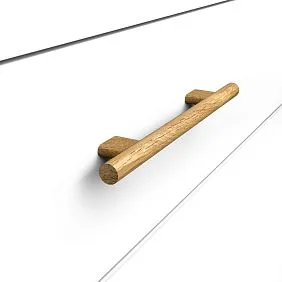
Furniture handles are not pure decoration; they are a functional element. But in classical interiors, function is inseparable from aesthetics. A handle can be a modest bracket or a sculptural work. In Baroque and Rococo, handles were often made of bronze with cast ornamentation—the same acanthus leaves, scrolls, mascaron as on the wall stucco.
Today, furniture handles can be wooden, metal, or combined. If you want to coordinate them with wall stucco, look at the motif. If the stucco is geometric—handles can be rectilinear, angular. If floral—with plant elements. If the handles are wooden, you can even carve a miniature ornament on them that repeats the wall pattern.
Carved overlays: the central role in furniture decoration
Decorative Inserts—these are the main element of stucco for furniture. They are applied to the fronts of cabinets, chests of drawers, doors, creating a three-dimensional relief. It is here that maximum coordination with wall stucco is possible.
If there are rosettes with plant ornamentation on the walls, there can be similar overlays on the furniture, but smaller in size. If there are friezes with a repeating pattern on the walls—there can be a horizontal overlay on the furniture with the same or a related pattern. It's important not to copy mechanically, but to vary, adapt to the scale and form of the furniture.
Panels and frames: architectural articulation
Panels on furniture fronts are frames that divide the surface into zones. They can be simple rectangular or complex, with a carved profile. In classical interiors, panels on furniture often echo wall panels, boiserie. If a wall panel is framed by a molding of a certain profile, the panels on the cabinet can have a similar profile.
This creates architectural unity. The furniture is perceived not as a separate object, but as part of the wall, the architecture. This is especially important for built-in furniture, where such unity is critical.
Carved cornices on furniture
The upper part of a tall cabinet, sideboard, or display case is often finished with a cornice—a horizontal projection with a profile. This is a furniture cornice, an analogue of an architectural one. If there is a wall cornice in the room (under the ceiling), the furniture cornice can repeat its profile or at least its style. Then the top of the furniture and the top of the walls will be visually connected, creating a horizontal rhyme.
Pilasters and columns on furniture
In monumental classical furniture—large cabinets, libraries, sideboards—pilasters (flat half-columns) or even three-dimensional columns are often used on the sides. They can have capitals, bases, fluting. If there are wall pilasters or columns in the interior, the furniture ones can repeat their order. For example, in an interior with Corinthian columns, the furniture pilasters will also be Corinthian, with acanthus capitals.
Materials: wood versus polyurethane
Wall molding today is most often made from polyurethane—a lightweight, practical, and inexpensive material. Furniture decor is traditionally carved from wood. How to coordinate them?
Polyurethane on walls, wood on furniture
This is the most common combination. It's important to achieve visual similarity through painting. If the wallPolyurethane moldingsis painted matte white, the wooden overlays on the furniture are also painted matte white. The materials are different, but the color and texture match—the eye perceives unity.
You can use patina, gilding, silvering—these techniques work on both polyurethane and wood, bringing the materials closer. It's important that the treatment is the same: if the wall molding has a light gold patina in the recesses, the furniture molding should have the same.
Polyurethane on walls and on furniture
Yes,Polyurethane moldingscan also be used for furniture decor. This is less traditional but practical. Polyurethane overlays easily glue onto furniture fronts; they are lightweight, don't weigh down the structure, and don't warp from humidity.
If all the molding in the interior—both wall and furniture—is made of polyurethane, the material unity is absolute. This simplifies coordination: you can even use the same overlay models in different scales. On the wall—a large rosette 60 cm in diameter; on the furniture—the same model, but 30 cm. A perfect rhyme.
Wood on walls and on furniture
This is the path of elite, expensive interiors. Wall panels made of solid wood with carved decor, furniture made from the same wood with similar carving. Complete material and stylistic unity. Such interiors are custom-made by high-class craftsmen with individual sketches.
Here, decor coordination reaches its maximum: a carver can create an ornament for the walls and then adapt it for the furniture, preserving all the nuances, all the details, the master's unified hand. This is bespoke work, it's art, it's not cheap, but the result is an interior as a work of art, where every detail is in its place.
Color and patina: the unifying force
Even if the patterns of the furniture and wall decor don't match, they can be united by color and treatment.
Monochromatic solution
Everything in one color—white, gray, beige, black. Wall molding, furniture overlays, handles—all painted the same. This creates visual unity, even if the forms are different. The patterns may be dissimilar, but color links them, gathering them into a single composition.
White is a universal choice. White wall molding and white furniture with white decor—a classic that always works. But you can be bolder: everything in graphite, dark gray, deep blue. Monochrome creates modernity, graphic quality, strength.
Gilding: luxury and tradition
Gilding is a classic way to highlight and unite decor. Wall molding with gilding and furniture overlays with gilding—this instantly creates a sense of luxury, classicism, historical style. Gilding varies: glossy, matte, patinated, with an antique effect. It's important that the type of gilding matches—if the walls have matte, worn gilding, the furniture should have the same.
Patination: depth and age
Patina is artificial aging, creating an effect of time. Dark tones in the recesses of the ornament, wear on the protrusions, slight darkening. If the wall molding is patinated, the furniture decor can be too. This creates a feeling that the entire interior is antique, with history, even if made yesterday.
Patina works on both polyurethane and wood, so it's an ideal tool for uniting different materials. The same patination technique brings them closer, making them visually related.
Practical recommendations for coordination
How to apply all this in practice? A step-by-step algorithm.
Step 1: Define the interior style
If it's a pure historical style (Baroque, Rococo, Classicism), coordination is mandatory. If it's eclecticism, modernity, minimalism—coordination is optional, sometimes even unnecessary.
Step 2: Study the wall molding
What patterns? What scale? What material? What treatment? Write it down or photograph it. This is your starting point.decorative elementson the walls set the tone for all the decor.
Step 3: Select furniture decor
Look for overlays that are close in style. They don't have to be identical, but related. If the walls have a floral pattern, the furniture should too. If geometric—geometric. Look through catalogs, samples, consult with a designer or manufacturerof furniture and interior items.
Step 4: Coordinate the scale
Wall elements are larger, furniture elements are smaller. But the difference shouldn't be dramatic. If a wall rosette is 80 cm, a furniture overlay of 10 cm—an 8-fold difference—is too much. Better 40-50 cm on furniture—a 1.5-2 times difference, which is more harmonious.
Step 5: Unify the finish
Same paint, same patina, same coating. This is the key to visual unity. Even if the ornaments don't match, the same finish will tie them together.
Step 6: Choose furniture handles
They should support the style. If the decor is Baroque — handles can be with curls. If Classical — strict, symmetrical. If the molding is gilded — handles can be brass or bronze, antique-style.
Step 7: Evaluate the overall result
When everything is installed, look from a distance. Does the unity read? Is it not overloaded? Is it not boring? Adjust if necessary: add contrast somewhere, soften repetition elsewhere.
Mistakes to avoid
Even with the best intentions, mistakes can happen. Here are common pitfalls.
Mistake 1: Mechanical copying
Took an ornament from the wall and repeated it exactly on every furniture facade. The result was monotonous, boring, excessive. Solution: vary, simplify, adapt. Decor should echo, not clone.
Mistake 2: Inconsistent scale
Giant wall molding and tiny overlays on furniture. They don't read together, don't create a dialogue. Solution: bring the scale to a common denominator.
Mistake 3: Different materials without coordinating the finish
Polyurethane on walls is glossy white, wood on furniture is matte natural. The materials conflict. Solution: paint the wood the same color or treat the polyurethane to look like wood.
Mistake 4: Ignoring functionality
Overlays on furniture should be not only beautiful but also practical. Protruding decor will catch hands, collect dust. Solution: choose moderate relief for areas of frequent contact.
Error 5: Overloading with decor
Molding on walls, on the ceiling, on furniture, carved handles, complex panels — and all different, uncoordinated. Visual noise. Solution: choose 2-3 leading motifs and repeat them, and simplify the rest.
Frequently asked questions
Is exact matching of ornaments on walls and furniture necessary?
No, it's not necessary. Stylistic kinship is enough. Ornaments can be different but from the same era, the same aesthetic. Exact matching is only needed in strictly historical or formal interiors.
Can modern furniture handles be used in an interior with classical molding?
Yes, if it's eclectic or contemporary with historical accents. The contrast of simple handles and rich molding can be interesting. But in a purely classical interior, it looks alien.
What to do if the furniture is antique, but the wall molding is modern?
That's fine. Antique furniture is a value in itself; its decor is not changed. Wall molding can be a modern interpretation of the furniture's style — not an exact copy, but a free variation. The main thing is stylistic closeness.
Is it necessary to coordinate furniture decor in different rooms?
Not necessarily. The bedroom can have one decor, the living room another. But if the rooms are open to each other (open space), it's worth creating a visual connection through repeating elements or at least through color.
What to do if wall molding already exists, and furniture is only being chosen?
Start from the molding. Study its style, ornaments, scale. Select furniture and furniture decor based on these parameters. Carry photos of the molding when choosing furniture.
Can molding be added to finished furniture?
Yes,Decorative InsertsPolyurethane overlays easily stick to facades. This is a way to update old furniture, fit it into a classical interior. It's important to properly prepare the surface and use suitable glue.
How to care for molding on furniture?
Wipe with a dry or slightly damp soft cloth. Avoid aggressive cleaning agents. If the molding is painted, touch up wear periodically. If gilded — use special gilding products.
Does lighting affect the perception of decor coordination?
Very much so. Side lighting reveals texture, emphasizes ornaments, and makes them more legible. With proper lighting, even non-identical ornaments can appear coordinated. Use directional lighting fixtures to highlight decorative areas.
Should furniture and moldings be ordered from the same manufacturer?
If possible — yes. This ensures maximum coordination in style, material, and finish. Craftsmen will work within a unified logic, possibly even from the same sketches.
Can wooden and polyurethane moldings be mixed on the same piece of furniture?
Not advisable. The materials are different, and it will be noticeable. It's better to use either all wood or all polyurethane. An exception is if the materials are finished absolutely identically (color, patina, coating), then the difference is erased.
Conclusion: The Art of Harmony by STAVROS
Coordinating furniture handles and moldings for furniture with wall decor is not about mechanical copying. It is the art of creating visual connections, rhythms, and echoes that transform a collection of items into a unified artistic space. It is understanding when to repeat and when to vary. When to follow strict rules and when to consciously break them.
In high-style classical interiors, such coordination is essential — it creates that very atmosphere of a palace, a mansion, a place where every detail is considered. In modern eclectic spaces, it is optional — sometimes contrast is more interesting than unity. But even the decision to forgo coordination should be conscious, dictated by the concept, not by chance or lack of knowledge.
For over 20 years, STAVROS has been creating decor for interiors — and understands these nuances like no one else. The assortment includes solid wood furniture handles: from minimalist to richly carved, from classic brackets to custom shapes. Decorative overlays made of oak and beech — over 400 models in various styles: Baroque, Rococo, Classicism, Empire, Art Nouveau, Modern. Floral ornaments, geometric, symmetrical and asymmetrical, central and corner.
Simultaneously, STAVROS producespolyurethane molding for walls, ceilings, and facades: moldings, cornices, rosettes, brackets, pilasters, capitals. And crucially — all these elements are stylistically coordinated. You can choose a wall rosette and a furniture overlay from the same style collection, confident that they will echo each other and create unity.
Moreover, STAVROS offers custom furniture manufacturing — classical, carved, elite. When furniture is produced in-house, with its own carpentry, carving, and polyurethane workshops — the possibilities for coordination are limitless. You can create furniture where the decor exactly replicates the wall moldings. Or, conversely, develop the furniture first and then create wall elements to match. Individual approach, unified concept, the master's touch in everything.
The quality of STAVROS products — selected solid oak and beech, dried to 8-12% moisture content, undergoing multi-stage processing. Carving — partially handcrafted, giving life and uniqueness to each element. Polyurethane moldings — made from high-density material, with clear relief, lightweight yet durable. A wide range of finishes: from natural oiled wood to painted, patinated, and gilded options.
By working with STAVROS, you get not just a product, but a partner in creating your interior. Experienced consultants will help you select furniture handles and moldings for furniture that harmonize with your wall moldings. Or vice versa — suggest wall decor to match your furniture. Possibility of custom manufacturing from sketches, patination and gilding services, delivery across Russia and CIS.
Create interiors where furniture handles don't just open doors, but continue the artistic theme set by the walls. Where moldings for furniture are not random decor, but a thoughtful part of the composition. Where every detail knows its place and role. Where beauty is not superficial, but deep, structured, and considered. With STAVROS, this is not just a dream — it is a reality, achievable, tangible, and long-lasting.





