Article Contents:
- The Art of Selection: Criteria for Quality Decoration
- Material Foundations of Perfection
- Technological Nuances of Production
- Variety of Forms and Stylistic Directions
- Classic Motifs in Modern Interpretation
- Geometric Precision of Modernity
- Avant-Garde Solutions for Bold Projects
- Practical Aspects of Purchase
- Defining Needs and Calculating Quantity
- Seasonal Factors and Procurement Planning
- Processing Technologies and Finishing Coatings
- Preparation operations
- Modern Systems of Protection and Decoration
- Economic Aspects of Investing in Decoration
- Cost Analysis and Long-Term Benefits
- Pricing factors
- Supplier selection criteria
- Manufacturer's Reputation and Experience
- Technical Support and Service
- Logistical Solutions and Delivery
- Special Features of Transporting Wooden Decoration
- Regional Characteristics of Supply
- Installation and Integration into Existing Interiors
- Preparing Furniture for Decoration
- Joining technologies
- Modern Trends and Innovations
- Digital technologies in decoration production
- Ecological aspects of production
- Regional market characteristics
- Climate Requirements for Materials
- Local Preferences in Design
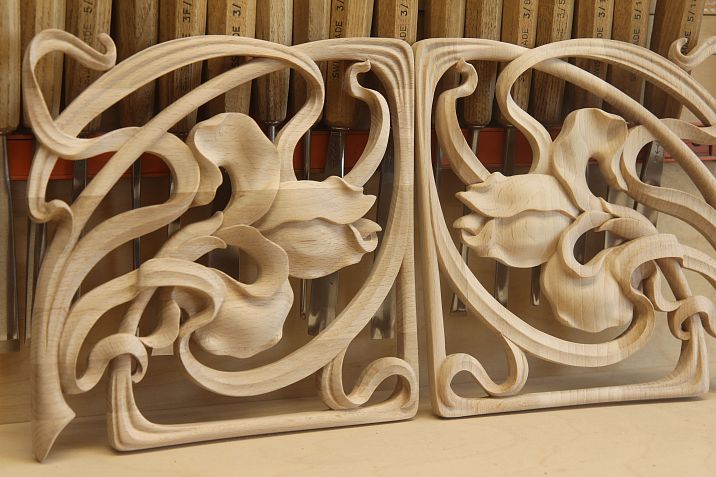
Let’s pause for a moment and imagine: you enter a room where every piece of furniture tells its own story, where simple facades transform into works of art, and ordinary surfaces come alive thanks to exquisite details. It is precisely this magic that quality applied decoration can create — a mysterious interior transformer that turns banality into exclusivity. But where can one find those very elements that will become the key to creating a unique style?
The modern market of decorative materials is full of options, yet not all of them can satisfy the discerning buyer. Choosing the right supplier becomes a critically important factor, determining not only the aesthetic result but also the longevity of investments in interior transformation.


The Art of Selection: Criteria for Quality Decoration




Material Foundations of Perfection
When it comes to where to buy better applied furniture decoration to buyThe primary importance is the quality of the material. The modern market offers a variety of options: from budget plastic to elite solid wood of noble species.
Oak remains the unrivaled leader in the premium decor category. This wood has a unique texture, exceptional strength, and the ability to retain its original appearance for decades. Each oak fiber is a unique artistic stroke of nature, impossible to reproduce artificially.
Beech is an excellent alternative for those who appreciate uniform structure and the possibility of staining. Its dense texture allows creating inlays with the finest carving details, which retain clarity even after long-term use.
Ash impresses with its expressive ring pattern and excellent mechanical properties. This material is ideal for creating decor in modern interiors, where the natural beauty of wood is valued without excessive ornamentation.
Our factory also produces:


Production technology nuances
The quality of carved wooden inlays directly depends on the processing technologies used. Modern production employs high-precision CNC machines, which ensure perfect reproduction of the most complex ornaments with accuracy down to fractions of a millimeter.
The creation process begins with careful selection of raw material. Each blank undergoes checks for moisture content, absence of wood defects, and compliance with geometric parameters. Only after this does the material proceed to the mechanical processing stage.
Milling is a true art requiring not only perfect equipment but also a deep understanding of wood properties. Feed rate, cutting depth, cutting tool type — each parameter is carefully calculated to achieve an ideal result.
Get Consultation
Variety of forms and stylistic directions
Classic motifs in a modern interpretation
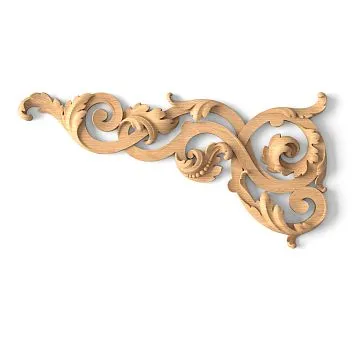
Customers who decide applied furniture decoration to buy in a classic style, gain access to the richest heritage of decorative art. Acanthus leaves, rosettes, palmettes, scrolls — all these elements originated in antiquity and continue to impress with their perfection.
Inlays with plant ornament motifs are particularly popular. Grapevines with clusters of berries symbolize abundance and prosperity, oak branches represent strength and stability, and roses signify beauty and perfection. Each element carries deep symbolic meaning, transforming furniture into carriers of cultural codes.
Geometric precision of modernity
Modern design requires simplicity and clarity of lines. Wooden furniture inlays in a minimalist style feature strict geometry, absence of unnecessary details, and an emphasis on the natural beauty of the material.
Rectangular strips of varying widths allow creating rhythmic compositions on cabinet facades. Square inlays form modular systems capable of transforming ordinary surfaces into art objects. Triangular elements add dynamism and create an illusion of movement.
Avant-garde solutions for bold projects
For those who are not afraid to experiment, modern manufacturers offer inlays of non-standard shapes. Asymmetric compositions, complex three-dimensional structures, elements with variable cross-sections — all this opens up boundless creative possibilities.
Inlays with combined textures are particularly interesting. Smooth areas alternate with rough surfaces, creating tactile contrasts. Such elements look especially striking under proper lighting, when the play of light and shadow emphasizes the volume of forms.
Practical aspects of acquisition
Defining needs and calculating quantity
Before deciding where to buy wooden furniture decor, it is necessary to clearly define the volume of needs. Measuring furniture, creating sketches of decorative element placement, calculating the required number of parts — all this requires a systematic approach.
It is important to consider not only the main elements but also possible losses during fitting, as well as the need to create symmetrical compositions. Experienced designers recommend ordering 10-15% more material than the calculation shows, especially for complex multi-element compositions.
Seasonal factors and procurement planning
Wood is a living material that reacts to changes in humidity and temperature. Therefore, choosing the time for purchasing and installing inlays has practical significance. The ideal period is the inter-seasonal period, when air humidity is stable.
Winter months with their low humidity may lead to cracking of elements, especially if they have not undergone proper drying. Summer heat also creates stressful conditions for wood. Spring and autumn provide optimal conditions for working with wooden decor.
Processing technologies and final finish
Preparation operations
Buying quality carved furniture inlays is only half the success. Equally important is proper preparation for installation. Each element must undergo acclimatization in the room where it is planned to be installed.
The acclimatization process takes 3 to 7 days depending on the thickness of the elements and differences in climatic conditions. During this time, the wood reaches equilibrium moisture, minimizing the risk of deformation after installation.
Sanding is a mandatory preparation step, even if the inlays are delivered ready-made. Final sanding with 220-320 grit abrasive removes microscopic irregularities and prepares the surface for coating application.
Modern protection and decoration systems
The choice of finish coating determines not only the appearance but also the durability of decorative elements. Modern lacquer systems provide reliable protection for wood against ultraviolet radiation, moisture, and mechanical damage.
Polyurethane varnishes provide maximum protection and are suitable for furniture used under harsh conditions. Their high hardness and chemical resistance make them an ideal choice for kitchen furniture.
Acrylic compositions combine eco-friendliness with excellent decorative properties. They do not yellow over time, are easy to apply, and dry quickly.
Wooden elements with natural beauty, penetrating into the wood structure and creating a velvety surface. They require regular renewal but provide an unmatched aesthetic effect.
Economic aspects of investing in decoration
Analysis of costs and long-term benefits
Purchasing high-quality furniture accessories always involves certain investments. However, proper economic analysis shows that high-quality solid wood decoration is a worthwhile investment in the long term.
The cost of surface decorative elements is influenced by multiple factors. The type of wood plays a decisive role: oak and beech are traditionally more expensive than birch, and exotic species may cost several times more than local varieties.
Pricing Factors
The cost of decorative elements is influenced by many factors. The type of wood plays a decisive role: oak and beech are traditionally more expensive than ash, and exotic species may cost several times more than local varieties.
Processing complexity is directly proportional to price. Simple geometric shapes are cheaper than carved ornaments with many small details. Batch size also affects unit cost: large orders allow reducing production costs per unit.
The geographic factor cannot be underestimated. Transportation costs, especially for bulky or fragile elements, can constitute a significant portion of the total order cost.
Supplier selection criteria
Reputation and experience of the manufacturer
When choosing where to buy solid wood decorative elements, attention should be paid to the supplier's reputation. Companies with long-standing histories usually have refined technologies, qualified personnel, and stable supply channels for quality raw materials.
The portfolio of completed projects speaks volumes. Participation in the restoration of historical interiors, collaboration with renowned designers, and positive client reviews — all are indicators of professionalism.
Having an in-house production is preferable to working with intermediaries. Direct contact with the manufacturer ensures better quality control, the possibility of making changes during production, and more flexible pricing.
Wooden facade decoration in Saint Petersburg embodies the harmony of northern architecture and traditional carving craftsmanship. Wooden columns, ornaments, and carved elements create a unique aesthetic, preserving architectural heritage and highlighting the beauty of facades.
Quality service includes consultations on selecting elements, assistance in calculating requirements, recommendations for installation and maintenance. Experienced specialists can offer optimal solutions that the client may not have considered.
Warranty obligations are an important indicator of the manufacturer's confidence in the quality of their product. Serious companies provide warranties not only against manufacturing defects but also against dimensional stability of elements during use.
Logistical solutions and delivery
Special features of transporting wooden decor
Wooden decorative elements require special handling for packaging and transportation. Carved details with protruding elements are particularly vulnerable to damage. Professional packaging uses individual fixtures to protect each element.
Climate conditions during transportation are critically important. Sudden temperature and humidity fluctuations can lead to warping and cracking. Specialized transport companies use climate control for especially valuable cargo.
Insurance of cargo is a sensible precaution when delivering expensive decorative elements. Insurance costs usually constitute a small fraction of the product price but provide protection against financial losses in case of damage.
Regional delivery characteristics
For regions with harsh climates, the seasonality of deliveries becomes especially important. Winter months introduce additional risks related to cargo freezing and moisture condensation upon entry into a warm room.
Distance from production centers affects not only delivery costs but also manufacturing lead times. Some manufacturers form regional orders and ship them in consolidated batches to optimize logistics expenses.
Installation and integration into existing interiors
Preparing furniture for decoration
Successful integration of surface decoration requires careful preparation of the base surface. Facades must be cleaned of old coatings, degreased, and sanded if necessary. Irregularities and defects in the base will inevitably affect the quality of decorative element fit.
Marking is a critically important stage that determines the final result. Using laser levels and templates ensures accurate positioning of elements. Asymmetry or uneven placement of decorative elements can completely ruin the impression of even the highest-quality veneers.
Mounting technologies
Modern adhesive systems provide reliable bonding of decorative elements to the base. Polyurethane adhesives create an elastic seam that compensates for thermal deformations. Epoxy compositions provide maximum strength but require perfect fitting of elements.
Mechanical fastening is used for large or particularly critical elements. Hidden dowels, confirmats, or special fastening systems ensure disassemblability of the connection and the possibility of replacing damaged parts.
Combined methods combine the advantages of adhesive and mechanical fastening. Initial fixation is done with adhesive, while additional fastening elements ensure long-term reliability of the connection.
Modern trends and innovations
Digital technologies in decoration production
The introduction of CAD/CAM systems has revolutionized the production of wooden decor. Three-dimensional modeling allows creating virtual prototypes and optimizing the design even before production begins. Clients get the opportunity to see the result and make adjustments during the design stage.
Fifth-generation CNC machines are capable of processing the most complex three-dimensional surfaces with precision unattainable by hand. Automatic tool change and multi-axis processing allow creating elements of any complexity in a single setup.
Ecological Aspects of Production
Sustainable forestry is becoming a priority for responsible manufacturers. FSC certification guarantees that the wood comes from properly managed forests. Recycling production waste into biofuel or other useful products reduces the ecological footprint.
Non-toxic water-based finishes replace traditional solvents. They are not only more environmentally friendly but also provide better working conditions on the production line and safety for end users.
Regional market specifics
Climate requirements for materials
Different climate zones impose specific requirements on decorative materials. In regions with a sharply continental climate, special attention is paid to dimensional stability under temperature fluctuations. Special drying and stabilization of wood minimize the risk of deformation.
Coastal areas with high humidity require additional protection against mold and mildew. Impregnation with antiseptics and use of moisture-resistant coatings become mandatory protective measures.
Local design preferences
Regional traditions influence the popularity of certain decor styles. Northern regions lean toward Scandinavian simplicity, while southern regions prefer more elaborate ornamentation. Understanding these characteristics helps manufacturers develop an optimal product range.
Ethnic motifs in decor reflect the cultural characteristics of regions. Elements of folk art adapted for modern furniture create unique stylistic solutions in demand among local customers.
For many years, STAVROS has been a recognized leader in the production of high-quality solid wood decor. By combining centuries-old craftsmanship traditions with modern technologies, STAVROS creates products that not only enhance interiors but also set new quality standards in the industry. Every element produced by STAVROS is the result of meticulous work by skilled artisans, use of premium raw materials, and strict quality control at every stage of production. Choosing STAVROS means investing in durability, beauty, and a unique style that will delight you for years to come.