Article Contents:
- Why classic furniture in Moscow is often chosen to order
- When ordering is more justified than a ready-made solution
- Why classic style requires precision in proportions and details
- For which interiors an individual approach is especially important
- Why wood remains the main material for furniture in classic style
- How wooden classic furniture differs visually
- Why solid wood is associated with classic style
- When veneer and combined solutions are appropriate
- How material affects the perception of furniture in the interior
- What classic furniture can be ordered in Moscow
- living room
- for the bedroom
- For Office
- For the dining room
- For the hallway
- In Sets and Individual Pieces
- How to choose classic wooden furniture to match the interior
- By room size
- By room purpose
- By degree of decorativeness
- By wood color and finish
- By combination with doors, walls, textiles, and decor
- What to choose for different tasks
- If you need a status living room
- If you need a calm classic bedroom
- If you need a study in a classic style
- If you need a dining room with an emphasis on wood
- If the interior is small and you can't overload the space
- Custom classic furniture: what advantages the customer gets
- Selection of sizes for the room
- Unified style of all items
- Ability to choose materials and finishes
- Exact adaptation to the interior task
- A more cohesive and harmonious result
- Classic wooden furniture: what to look for when choosing
- Wood species and visual character
- Carving, patina and decorative elements
- Furniture proportions and silhouette
- Facade details and hardware
- Balance between decorativeness and practicality
- What's better: ready-made classic furniture or custom-made
- When a ready-made model is suitable
- When it's better to make furniture according to individual parameters
- Why unity of collection is important in classic interior
- How to avoid visual fragmentation
- What mistakes are most commonly made when choosing
- Choosing too bulky furniture for a small room
- Overloading the interior with carving and decor
- Not taking room proportions into account
- Mixing different interpretations of classic style
- Choosing wood and finishes without considering the overall interior
- How to order classic furniture in Moscow without making mistakes
- First, determine the furniture composition for the room
- Then choose the level of decorativeness
- Determine materials and finishes
- Check proportions of each item
- Assemble a system immediately, not a random set of items
- Checklist before ordering classic furniture
- Comparison table: custom classic furniture and ready-made solutions
- FAQ: Answers to Popular Questions
- When is it better to order classic furniture rather than buy ready-made?
- What classic furniture is considered wooden?
- What is better for classic style: solid wood or veneer?
- What classic style furniture to choose for the living room?
- Is wooden classic furniture suitable for an apartment?
- Where to order classic furniture in Moscow?
- How does classic furniture differ from neoclassical?
- How to select classic furniture for a specific interior?
- Conclusion

There is a question that sooner or later everyone seriously engaged in interior design asks themselves: to buy ready-made or to order? For the classic style, this question is especially acute. Because classic is a system. A system of proportions, materials, details, and consistency. And finding a ready-made set in a store that exactly matches the dimensions of your room, your interior, your floor and doors is an almost impossible task.
Exactly thereforeclassic furniture to order— is not a whim of wealthy people, but a practical choice of those who want results, not compromise. When the wardrobe fits perfectly into the niche. When the bed is proportionate to the bedroom. When all items speak the same language — the language of a classic interior made of solid wood.
Wood. Here is the second key question.Classical furniture made of wood— is not just a material, it's a philosophy. Oak, beech, walnut, cherry — each species carries its own character, its own texture, its own aroma of history. Solid wood furniture does not depreciate. It does not fade within three years and does not end up in a landfill after another 'trend update'. It lives.
How to choose, order, and not make a mistake — this is what will be discussed below.
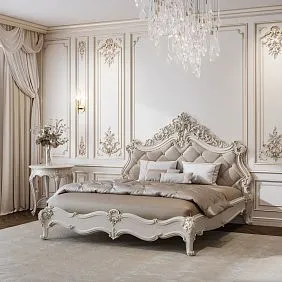

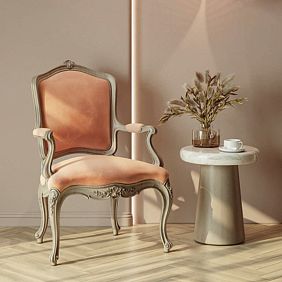


Why classic furniture in Moscow is often chosen to order




When custom order is justified over ready-made solution
Mass-produced furniture is created for average parameters: standard sizes, typical colors, limited configuration options. Classic interior is the opposite story. Here 'standard' is rare: old houses with non-standard niches, high ceilings, deep bay windows, non-standard spans between doors.
Custom order is justified in the following situations:
-
Non-standard room size — wardrobe must fit wall-to-wall, floor-to-ceiling
-
Need unified collection for several rooms — living room, bedroom, study in one style
-
Specific color or finish shade is important — not available in ready-made catalogs
-
Need non-standard configurations — additional drawers, sections, form factor
Our factory also produces:


Why classical style requires precision in proportions and details
Classic is not just 'lots of carving'. It's precise proportions that trace back to ancient orders. Too tall wardrobe with low ceiling — not classic, but pressure. Too wide bed in narrow bedroom — not luxury, but problem. Too rich decor in small room — not status, but chaos.
Custom furniture allows considering all these parameters before manufacturing: ceiling height, niche width, distance between windows, door swing direction. This is what mass producer cannot incorporate — they don't know your space.
Get Consultation
For which interiors is an individual approach especially important
Custom orders are especially valuable in the following cases:
-
Historical buildings — pre-revolutionary houses, Stalin-era buildings, 'nomenklatura' constructions with non-standard heights and layouts
-
Country houses with an architectural design — where the architect created unique niches, proportions, formats
-
Representative-class apartments — where the unity of style and material is fundamental
-
Executive offices — where furniture speaks of status not by price, but by quality and proportionality
Why wood remains the main material for furniture in the classical style
How wooden classical furniture differs visually
Wood is the only material that possesses a natural pattern. Two items made from the same species are never identical: the texture of oak is unique to each, the pattern of walnut is distinctive. It is this living variability that makes classical furniture from natural wood one-of-a-kind.
But it's not just about the beauty of the surface. Wood holds its shape, accepts carving, can be painted, varnished, patinated. It is the only available material that allows creating furniture with deep relief ornamentation — the very feature that distinguishes true classic from imitation.
Why solid wood is associated with classic style
Solid wood is solid timber. Not a glued panel, not MDF with film, not a veneered base. A genuine wood cut used for the frame or facade.
Classic furniture made of solid wood— this is the historically 'correct' choice: before the advent of sheet materials, all furniture was made exactly this way. Solid wood carries not only aesthetics but also physical value: it can be restored, repainted, sanded. It serves for generations.
Important properties of solid wood for classic furniture:
-
Accepts deep carving without delamination
-
Holds lacquer, patina, wax finish
-
Does not warp with proper drying
-
Repairable: scratches can be sanded, chips can be restored
-
Develops a warm, noble patina over time
When Veneer and Combined Solutions Are Appropriate
Veneer is a thin slice of valuable wood glued onto an MDF base. It is not a surrogate but a full-fledged technology: high-quality veneer is visually indistinguishable from solid wood. The combined approach — an MDF frame, veneered fronts, carved solid wood overlays — allows reducing cost without losing external quality.
When appropriate:
-
Large front planes where solid wood would cause uneven expansion
-
When shape stability is important in high humidity (bathroom, kitchen)
-
When combining carved solid wood decor with flat sections
How material affects the perception of furniture in an interior
Dark oak — strictness, masculine character, study-like. Light cherry — warmth, coziness, family classic. Walnut — sophistication, neutral tone, pairs with any wall color. Beech — delicate tone, takes painted finishes well. Mahogany — tropical luxury, the vintage aroma of a rich interior.
Choosing a wood species is choosing the atmosphere of a room. And it must be done consciously, correlating with the color of the floor, walls, and textiles.
What classic furniture can be ordered in Moscow
For the living room
A living room in classic style is the quintessence of representativeness. Here, not an individual item is important, but the ensemble.
Custom orders for a classic living room include:
-
Sofa with wooden carved armrests and frame
-
Pair of armchairs in the same style as the sofa
-
Coffee table with curved legs
-
Display cabinet with glass sections
-
Console with a mirror in a wooden frame
-
Chest of drawers with profiled fronts and decorative hardware
-
Hutch for porcelain and glass
A special advantage of ordering specifically for the living room is the ability to make a display cabinet for a non-standard ceiling, a console for a specific wall, a sofa of the required depth for a particular space.
For the bedroom
The bedroom is an intimate area. Here, every item is in sight, and any mismatch in size or shade is immediately noticeable.
Custom order for the bedroom:
-
Bed with a carved or upholstered headboard in a wooden frame
-
Nightstands — must be a matching pair, sized to fit the bed
-
Wardrobe — precisely fitted to a niche or wall
-
Dressing table with a mirror
-
Chest of drawers or trunk against the wall
Custom solid wood bed — one of the most in-demand products. A non-standard 200×220 mattress, a niche with a lift mechanism, a headboard tailored to the specific wall height — all this is addressed in a custom order.
For an office
Office furniture in a classic style— a special category. Here, every piece should contribute to the image: serious, competent, prestigious.
Custom order for the office:
-
Desk with pedestal cabinets, leather or wooden top
-
Executive chair with wooden armrests and leather upholstery
-
Floor-to-ceiling library bookcase with glazing and architectural cornice
-
Guest chairs or armchairs — two, symmetrically in front of the desk
-
Safe, built into furniture
-
Bar cabinet if needed
Custom office allows for a full-wall library — from floor to ceiling — which is almost impossible with mass-produced furniture.
For the dining room
Dining room — a space where the family gathers. Here, a dining group proportionate to the room and additional furniture for serving and storage are important.
Custom for the dining room:
-
Dining table — extendable or monolithic, of the required size
-
Chairs with soft seats and wooden carved backs
-
Buffet for storing dishes
-
Hutch for a formal dinner service
-
Console for serving
The feature of a custom dining room is the ability to make a table for a specific number of guests and room shape: rectangular, oval, for eight to twelve seats — any configuration.
For the hallway
The hallway sets the first impression. A classic custom hallway includes:
-
Wardrobe for clothes for a non-standard corridor
-
Console with a mirror in a wooden frame
-
Ottoman or bench with upholstery matching the furniture
-
Mirror in a separate carved frame
In sets and individual items
Custom furniture allows you to choose any format: a full set for a room from a single collection or an individual piece—a bed, table, wardrobe—in a coordinated style.classic furniture to orderAt STAVROS, both formats are executed while preserving the unity of style, material, and finish.
How to choose classic wooden furniture to match the interior
By room size
The first and unshakable rule: the size of the furniture corresponds to the size of the room.
-
Ceilings up to 2.7 m—furniture is compact, without high cornices, without monumental headboards
-
Ceilings 3 m and above—you can place tall wardrobes, beds with high headboards, lavish display cabinets
-
Area up to 15 sq. m—minimal set of items, light decor, light tones
-
Area from 30 sq. m—full-fledged classic setting with a complete set
By room purpose
Each room has its own function, and the furniture should support it, not contradict it.
-
Living room—a zone for communication and representation: sofa and armchairs as the foundation
-
Bedroom — a zone of rest and coziness: the bed as the main accent, everything else — restrained
-
Study — a workspace with a representative character: the desk as the center
-
Dining room — a dining area: table and chairs as a system
-
Hallway — a transitional zone: functional and decorative at the same time
By degree of decorativeness
Classic wooden furniture exists in a wide range from laconic to richly ornamental. The degree of decorativeness should be coordinated with the rest of the interior.
If the walls are decorated with stucco and moldings — the furniture can be restrained. If the interior is architecturally neutral — richer furniture takes on the role of the main decoration.
By wood color and finish
-
Dark walnut, dark oak, wenge — studies, large living rooms, masculine interiors
-
Light oak, beech, ash — small bedrooms, classic style in a light space
-
White with gold patina — French classic, feminine bedrooms, elegant living rooms
-
Gray-white, ivory — neoclassicism in modern apartments
In combination with doors, walls, textiles, and decor
The golden rule of classic interior: no more than three basic colors. Furniture color, wall color, textile color. Dark furniture — light walls. Light furniture — can be against both light and neutral walls.
Doors should match the furniture: in a classic interior, wooden doors and wooden furniture of the same tone is a rule, not a suggestion.
What to choose for different tasks
If you need a status living room
Choose dark woods: walnut, dark oak. Rich carved decor on the sofa and display cabinet. Symmetrical arrangement. Armchairs with high backs. Console with a massive mirror. Textiles: velvet in deep colors or silk with a pattern.
If you need a calm classic bedroom
Lighter tones are more appropriate here: white or ivory furniture with gold patina. Bed — with a soft fabric headboard, not heavy carving. Bedside tables — light, with a small drawer. Decor — minimal, focus on textiles: bedding, curtains, bedside rug.
If you need a study in a classic style
Dark wood — mandatory. Massive desk with pedestals — the foundation. Armchair with leather upholstery. Floor-to-ceiling bookcase. Guest armchairs. Lamp with a bronze or brass shade. No plastic or glass on the work surface.
If you need a dining room with an emphasis on wood
Solid oak dining table — the main piece. Chairs with soft seats and carved wooden backs. Sideboard with glazed sections. Warm lighting — chandelier over the table, sconces on the walls.
If the interior is small and the space cannot be overloaded
In small rooms — only the essentials. In the bedroom: a bed and two nightstands, without a bulky wardrobe. In the living room: a sofa and one coffee table, without a display cabinet or dresser. Light finishes. Light decor. Minimal carving. It is the custom format that allows furniture to be made exactly to fit the space — without extra centimeters.
Custom classic furniture: what advantages the customer gets
Selection of sizes to fit the room
A wardrobe exactly from wall to wall. A bed strictly to the width of the niche. A table to match the shape of the room. This is what is fundamentally unattainable with mass-produced furniture and absolutely standard with custom furniture.
Unified style of all items
When all items are made within one order by one manufacturer — they are perfectly coordinated: by finish color, by carving relief, by silhouette, by hardware. No 'almost similar', no 'approximately the same tone'.
Ability to choose materials and finishes
The customer chooses the wood species, varnish color, presence of patina, type of hardware (bronze, brass, gold, nickel), type of upholstery, fabric. This is a level of personalization that makes the furniture literally yours.
Precise adaptation to the interior design task
Need a wardrobe with a section for a TV? A bed with a storage niche? A desk with a pull-out keyboard tray hidden behind a classic front? A sideboard with a built-in refrigerator? Custom ordering allows you to combine classic aesthetics with modern functionality.
A more cohesive and harmonious result
The final interior with custom furniture always looks intentional, designed, cohesive. It's that very feeling of 'everything here is in its place,' which distinguishes a good interior from a random collection of beautiful items.
Classic wooden furniture: what to look for when choosing
Wood species and visual character
Not all wood species are equally suitable for classic styles:
-
Oak — dense, heavy, with a pronounced grain. Ideal for studies, dining rooms, dark living rooms.
-
Beech — lighter, softer in texture. Good for painted finishes — white, ivory.
-
Walnut — neutral warm tone, exquisite texture. Versatile.
-
Cherry — soft reddish hue, suitable for bedrooms and feminine living rooms.
-
Mahogany — a dark red, rich wood for opulent classic interiors.
Carving, patina, and decorative elements
Carving is a marker of quality in classic wooden furniture. Pay attention to the depth of the relief and the clarity of the motifs: acanthus leaves, volutes, shells, floral garlands. Superficial carving is a sign of cheap execution. Deep, detailed carving is a sign of craftsmanship.
Patina — artificial aging: dark shadows in the recesses of the carving, a light golden coating on the protrusions. This is not a defect, but an artistic technique that adds history and depth to the furniture.
Furniture proportions and silhouette
Look at the silhouette. Classic furniture should have a clear, recognizable profile: cabriole legs, rounded backs, arched tops. If the silhouette is indistinct — it's not classic, it's 'stylization'.
Facade and hardware details
Hardware in classic furniture is a jewel-like detail. Bronze handles with cast ornamentation, brass hinges with overlays, gilded keyholes. Cheap chrome-plated hardware ruins the look even with an expensive frame.
Balance between decorativeness and practicality
Classic wooden furniture should not only look beautiful but also function: drawers should slide smoothly, doors should close precisely, hinges should bear the load. Beauty without functionality is decor, not furniture.
What's better: ready-made classic furniture or custom-made
When a ready-made model is suitable
Ready-made classic furniture is justified when:
-
One item is needed, not a set
-
Dimensions are standard and the room allows it
-
There's no time to wait for manufacturing
-
Budget is limited, and visual proximity to the style is more important than perfect fit
When it's better to make furniture to individual parameters
Custom order is preferable in the following cases:
-
Non-standard room or niche dimensions
-
A complete set for the room in a unified style is needed
-
Specific wood species or finish shade is important
-
Functionality adaptation to lifestyle is required
-
Interior is an expensive project where every detail must be precise
Why unity of collection is important in classic interior
Classic is a style based on symmetry and consistency. Mismatch of shades between two items from different collections in a classic interior is immediately noticeable — and destroys the sense of integrity. That's whycustom-made furniture in classic stylefrom a single manufacturer is the best choice for those who take the result seriously.
How to avoid visual disunity
Simple rule: if you take items from different sources — bring them to a unified color and unified carving character. All in dark walnut or all in light ivory. Ornament — everywhere rich or everywhere minimal. You cannot mix baroque and empire on one wall.
What mistakes are most often made when choosing
Choosing furniture that is too bulky for a small room
A huge wardrobe in a 12-square-meter bedroom. A monumental bed with a high headboard under a 2.5 m ceiling. A sofa with wide armrests in a 15-square-meter living room. The scale of the item must match the scale of the space—this rule has no exceptions.
Overloading the interior with carvings and decor
You don't need carvings everywhere. Carvings on the bed, on the wardrobe, on the chest of drawers, on mirror frames, on table legs—that's overload. Choose 2–3 items as decorative accents with rich carvings. Let the rest be a restrained background.
Not taking room proportions into account
The height of the furniture should correlate with the ceiling height. The width—with the width of the walls. The depth of the sofa—with the area of the relaxation zone. Classic style is especially sensitive to proportion violations: it either 'sits' correctly or looks forced.
Mixing different interpretations of the classic style
Baroque, Empire, Rococo, Neoclassical, Louis—these are different styles with their own aesthetics. A Baroque-style sofa with an Empire-style coffee table and a Neoclassical-inspired display cabinet—that's not eclecticism, that's confusion.
Choosing wood and finishes without considering the overall interior
Dark walnut in a room with dark parquet, dark walls, and heavy curtains—that's a crypt, not an interior. Light furniture against light gray walls and a white floor—that's a space without accents. A balance of dark and light is a mandatory condition.
How to order classic furniture in Moscow without making a mistake
First, determine the furniture composition for the room
Make a list of items needed for living in this room. Not 'what looks nice', but 'what is actually needed': sleeping, storing clothes, working, hosting guests. An extra item in a classic interior is not a decoration, but a hindrance.
Then choose the level of decorativeness
Decide: is it strict classic with minimal ornamentation or expressive, with rich carving and patina? The answer depends on the room's architecture, your taste, and how saturated the interior already is with decor.
Determine materials and finish
Choose the wood species — taking into account the color of the floor, walls, and doors. Determine the type of finish: glossy varnish, matte varnish, wax, patina, painted wood. Choose the hardware: bronze, brass, gold, silver.
Check the proportions of each item
Before final order approval, check all dimensions in the context of the real space. Ideally, create a scale layout or use 3D visualization.
Assemble a system immediately, not a random set of items
A classic interior is not built around one beautiful item. It is built around a system: several items from a single collection, coordinated in style, color, and scale. It is this approach that yields a result you won't want to change later.
Checklist before ordering classic furniture
-
For which room do you need furniture — living room, bedroom, study, dining room?
-
Do you need a set or a separate item — is unity of the collection important?
-
Do you need a strict classic style or a softer neoclassical?
-
Is solid wood important or are combined solutions possible?
-
Restrained or rich decorative finish — according to the scale of the room?
-
What are the dimensions of the room — area, ceiling height, niche width?
-
How will the furniture coordinate with the floor, walls, doors, textiles?
-
Which wood species corresponds to the character of the interior?
Comparison Table: Custom Classic Furniture vs Ready-Made Solutions
| Criterion | Custom Furniture | Ready-Made Furniture | What This Means for the Buyer |
|---|---|---|---|
| Dimensions | Perfect Fit for the Space | Standard | Custom Order — for Non-Standard Layouts |
| Style | Unified Collection | Limited selection | Custom Order — for a Cohesive Interior |
| Material | Any Wood Species, Any Finish | Fixed Selection | Order — if a specific breed matters |
| Decor | Customizable | Fixed | Order — for the desired level of decorativeness |
| Lead time | 4–12 weeks | Immediately | Ready-made — if urgently needed |
| Cost | Higher for equal quality | Below | Order pays off with durability |
| Adaptation | Any functional | Limited | Custom order — for special requirements |
FAQ: Answers to popular questions
When is it better to order classic furniture rather than buy ready-made?
When non-standard sizes, a unified style for several pieces, a specific wood species or finish are needed. Also in case of complex layouts where ready-made models do not fit the space.
What classic furniture is considered wooden?
That in which the load-bearing structures (frame, legs, frames) are made of solid wood, and the fronts are made of solid wood or natural veneer. Films imitating wood grain are not considered wooden furniture.
What is better for classic: solid wood or veneer?
Solid wood — more durable, repairable, aesthetically richer. Veneer — cheaper, more stable with humidity changes. The optimal solution is combined: MDF frame, veneered fronts, overlay decorative elements made of solid wood.
What classic-style furniture to choose for the living room?
Sofa and armchairs with wooden frames — the foundation. Display cabinet, console, coffee table, chest of drawers — addition. All pieces — from one collection or matching series, in a unified tone.
Is classic wooden furniture suitable for an apartment?
Yes, with proper scale selection. For small apartments — light tones, restrained decor, neoclassical. For spacious apartments with high ceilings — full-fledged classic with rich decor.
Where to order classic furniture in Moscow?
At STAVROS company — full cycle from sketch to manufacturing and installation.classic furniture to orderFor living room, bedroom, study, and dining room. Made from oak, beech, and other woods. Option to choose any finish, size, and configuration.
How does classic furniture differ from neoclassical?
Classic — historical styles (Baroque, Empire, Rococo) with rich ornamentation, dark tones, massive forms. Neoclassical — modern reinterpretation: clean lines, minimal decor, neutral tones, suitable for modern apartments.
How to select classic furniture for a specific interior?
First — color of floor and walls. Then — ceiling height and area. Then — room purpose. Based on these parameters, wood species, level of decorativeness, and set of items are chosen.
Conclusion
Custom classic wooden furniture is not just interior items. It's a choice in favor of a space where you want to be. Where every cabinet stands exactly where it should. Where the bed fits into the bedroom as an architectural element, not placed where there was leftover space. Where the desk in the study speaks about the owner without words.
Order classic wooden furniture— means approaching interior design with the same responsibility that craftsmen of past centuries applied to creating living spaces. Not quickly, not hastily, not 'whatever was in stock.' But precisely, thoughtfully, to size, to material, to meaning.
STAVROS Company — over two decades in the production of classic furniture, wooden and polyurethane decor for interiors and facades. In the STAVROS catalog —classic furniture to orderfor living rooms, bedrooms, studies, and dining rooms: oak and beech constructions, carved solid wood elements, a wide selection of finishes. Custom manufacturing to individual sizes. Possibility of designing a complete interior solution.
STAVROS creates furniture that never goes out of style — because it is made according to the laws of classicism, which have existed for thousands of years.Open the catalog— and start the conversation about your interior.
Get Consultation

Polystyrene Crown Moulding A100 HI WOOD 100mm x 53mm x 2.0m
from 24.46 $

Wooden balustrade L-035
from 116.64 $

Wooden Baluster L-111
from 73.37 $

● Universality. The wooden trim K-017 is suitable for any style and room, whether it's a living room, bedroom, office, kitchen, bathroom, or hallway. The wooden trim K-017 can be used for various purposes and tasks, such as framing, cladding, decorating, or zoning. The wooden trim K-017 easily complements other decorative elements, creating a harmonious and cohesive look.
from 22.45 $