Article Contents:
- Why Wooden Furniture Is an Investment in the Future
- Ecology and Health: Breathe Freely
- Durability: heritage for future generations
- Aesthetics and Uniqueness: The Irreplaceable Character of Each Piece
- Universality: beyond time and trends
- Investment Appeal: Value That Grows Over Time
- Variety of Wood Species: Choosing the Ideal Material
- Exquisite Hardwoods: Timeless Reliability
- Oak: king among trees
- Walnut: aristocratic refinement
- Ash: Flexibility and Strength
- Coniferous species: accessibility and practicality
- Spruce: A Democratic Choice
- Larch: underestimated gem
- Exotic Species: Uniqueness and Character
- Teak: Tropical Luxury
- Wenge: African Exoticism
- Styles of Wooden Furniture: From Classic to Avant-Garde
- Classic: Beyond Time and Trends
- Country and Provence: Coziness and Warmth
- Minimalism and Scandinavian Style: Functionality and Clean Lines
- Loft and Industrial Style: Brutality and Character
- Custom and Designer Furniture: Uniqueness and Self-Expression
- Where to Buy Wooden Furniture: Criteria for Choosing a Reliable Supplier
- Specialized Showrooms: Quality and Variety
- Furniture Factories: From Manufacturer to Consumer
- Online Stores: Convenience and Wide Selection
- Master Woodworkers: Exclusivity and Personal Approach
- Criteria for Choosing a Reliable Supplier
- Practical Tips for Choosing and Placing Wooden Furniture
- Assessing Quality: What to Pay Attention to When Buying
- Dimensions and proportions: Harmony in space
- Matching with Interior Design: Color, Texture, Style
- Care and Maintenance: Extending the Life of Wooden Furniture
- Conclusion: Wooden Furniture as Part of Conscious Consumption

Wood... A material that has accompanied humanity for millennia, warming us with its heat, delighting our eyes with its natural beauty, and offering a sense of reliability. In an age of plastic, glass, and metal, it is wooden furniture that becomes an island of authenticity, bringing us back to our roots, to nature, to ourselves. This is not merely interior decor — these are living beings with their own character, history, and energy.
Have you ever wondered why, entering a room with wooden furniture, we involuntarily exhale and relax? Why an old oak table evokes more emotion than the most fashionable glass and chrome structure? The answer is simple: wood is life, frozen in form but still breathing, changing, and interacting with the surrounding world.
In this article, we will dive into the wonderful world of wooden furniture. We will reveal the secrets of choosing quality pieces, discuss the variety of styles and wood species, share tips on care and placement. And, of course, we will answer an important question: where to buy wooden furniturewhich will become not just a functional interior item, but a true family treasure, passed down from generation to generation.


Why Wooden Furniture Is an Investment in the Future
In a world where everything changes rapidly, where items become disposable, and trends change with kaleidoscopic speed, wooden furniture remains an island of stability and timeless beauty. This is not merely a purchase — it is an investment, in many senses.




Ecology and Health: Breathe Freely
Modern people spend up to 90% of their time indoors. The air we breathe in our homes and offices directly affects our well-being, productivity, and health. And here, wooden furniture plays an invaluable role.
Unlike products made of particleboard, MDF, and other composite materials, quality solid wood furniture does not emit formaldehyde and other harmful substances. Moreover, wood possesses a unique ability to regulate humidity in a room, absorbing excess moisture and releasing it when needed. This creates an optimal microclimate, especially important for people with allergies, asthma, and other respiratory conditions.
Natural wood has bactericidal properties. Studies show that harmful microorganisms live significantly less on wooden surfaces than on plastic or metal. This is especially important for kitchen furniture, countertops, and cutting boards.
Moreover, wood is a renewable resource. With responsible forestry and production practices, wooden furniture becomes an eco-friendly choice, minimizing your carbon footprint.
Our factory also produces:


Durability: A Legacy for Future Generations
"Bought and forgot" - this principle perfectly describes high-quality wooden furniture. While particleboard items typically last 5-7 years, solid wood furniture can delight several generations of a family.
The secret to such longevity lies in the very nature of the material. Wood has high strength relative to its relatively low weight. It is resistant to abrasion, impacts, and other mechanical stresses. With proper care, wooden furniture not only retains its qualities but also becomes more beautiful over time, acquiring a noble patina.
It is important to note that even if wooden furniture sustains damage, it can be restored. Scratches, chips, and wear marks can be repaired, unlike defects on particleboard or plastic furniture, which must be discarded if severely damaged.
Get Consultation
Aesthetics and uniqueness: the unique character of each item
Nature does not create two absolutely identical trees. Each has a unique grain pattern, texture characteristics, and shade. This uniqueness is transferred to furniture, making each item one-of-a-kind.
Wooden furniture has a special tactile appeal. Touching a warm, living wooden surface provides a sense of comfort and connection to nature. This tactile experience cannot be replicated with even the most advanced synthetic materials.
Over time, wood changes its color, acquiring a deeper, richer tone. This natural "ripening" process gives furniture a unique charm and depth that cannot be imitated.
Universality: Beyond Time and Trends
Wooden furniture is remarkably versatile. It fits organically into almost any interior style — from classic to minimalism, country to high-tech. This is because wood is a timeless material, immune to fleeting fashion trends.
Due to the variety of wood species, shades, and finishing techniques, wooden furniture can be selected to match any color scheme and stylistic concept. Light birch furniture fills a space with air and light, dark walnut creates an atmosphere of aristocratic luxury, while rustic oak adds a touch of country coziness.
Moreover, wooden furniture is easy to update, allowing you to change its appearance to match new preferences or interior solutions. Repainting, staining, decoupage — these and other techniques allow old items to be given a second life, adapting them to modern realities.
Investment appeal: value that grows over time
Unlike most household items, high-quality wooden furniture does not lose value over time — it may even significantly increase in value. This is especially true for items made from rare wood species, crafted by renowned artisans, or possessing historical value.
Antique wooden furniture is a recognized investment, with its value steadily increasing. But even without claiming antique status, well-preserved wooden furniture will always find a buyer on the secondary market.
Thus, by purchasing quality wooden furniture, you are not only furnishing your home but also making a sensible investment that may bring you not only aesthetic pleasure but also financial benefit.
Variety of wood species: choosing the ideal material
Choosing a wood species is one of the key factors when buying furniture. Each species has unique characteristics that affect the appearance, strength, durability, and cost of the item.
Premium hardwoods: century-long reliability
Oak: king among trees
Oak is rightfully considered one of the most prestigious species for furniture making. Its exceptional strength, durability, and expressive grain make oak furniture a desirable acquisition for many.
Oak's technical specifications are impressive: density 700-800 kg/m³, hardness on the Brinell scale 3.7-4.5, service life over 100 years with proper care. Oak furniture is resistant to mechanical damage, moisture, and mold.
Visually, oak has a beautiful golden-brown color with a distinct ring grain pattern. As it ages, the wood darkens, acquiring a noble honey tone. Oak furniture is ideal for classic interiors, country, rustic, and English classic styles.
The cost of oak furniture is relatively high, but fully justified by its quality and longevity. This is a true investment that will serve not just one generation of your family.
Walnut: aristocratic elegance
Walnut - a species associated with luxury and elegance. Its dark brown wood with purple or reddish tones and beautiful wavy pattern creates a sense of nobility and status.
Walnut's technical specifications are also impressive: density 640-750 kg/m³, hardness on the Brinell scale 3.5-4.0. The wood is easy to work with, allowing for intricate carved elements and elegant details.
Walnut furniture is traditionally associated with classic styles, baroque, and empire. It is ideal for creating luxurious interiors with the atmosphere of old palaces and estates.
The cost of walnut furniture falls in the premium segment, explained by both the qualities of the wood itself and the complexity of its processing.
Ash: flexibility and strength
Ash is a species combining strength and flexibility. Its wood has a beautiful light-yellow color with a distinct texture resembling oak, but with a softer, smoother pattern.
Ash's technical specifications: density 650-750 kg/m³, hardness on the Brinell scale 4.0-4.5. A distinctive feature of this species is its high elasticity, which traditionally makes ash suitable for bent furniture (chairs, rocking chairs).
Ash furniture is versatile in terms of style. It fits organically into both classic and modern interiors. Ash looks especially good in Scandinavian style, where light wood with a distinct grain is prized.
The cost of ash furniture falls in the mid-price segment, making it an accessible alternative to oak while maintaining high performance characteristics.
Coniferous species: accessibility and practicality
Spruce: a democratic choice
Pine is the most common and accessible species for furniture making. Its light yellowish wood with distinctive knots creates an atmosphere of coziness and warmth.
Technical characteristics of pine: density 400-520 kg/m³, hardness by Brinell 1.5-2.5. Pine belongs to softwoods, making it more susceptible to mechanical damage, but also easy to process.
Pine furniture is ideal for country, Provence, and Scandinavian styles. It is especially suitable for children's rooms, country houses, and cottages — anywhere where naturalness and eco-friendliness are valued.
Affordable price is one of the main advantages of pine furniture. It is an excellent choice for those who want to buy natural wooden furniture without paying extra for rare species.
Larch: an underestimated gem
Larch is a unique coniferous species, matching the strength of many hardwoods. Its wood has a beautiful amber tone, which over time develops into a noble reddish hue.
Technical characteristics of larch are impressive: density 640-700 kg/m³, hardness by Brinell 2.5-3.2. The unique feature of this species is exceptional resistance to moisture and decay, due to high resin content.
Larch furniture is versatile in terms of style. It looks great in both classic and modern interiors, especially in eco-style and Scandinavian design.
The cost of larch furniture falls in the mid-price segment, making it an excellent price-to-quality ratio for those seeking durable and long-lasting furniture.
Exotic species: uniqueness and character
Teak: tropical luxury
Teak is one of the most valuable wood species in the world. Its golden-brown wood with a silky sheen and distinctive aroma creates a sense of tropical luxury.
Technical characteristics of teak: density 630-720 kg/m³, hardness by Brinell 3.5-4.5. A unique property of teak is its high content of natural oils, which make the wood exceptionally resistant to moisture, insects, and fungi.
Teak furniture is traditionally associated with colonial style, but also fits beautifully into modern minimalist interiors. Garden furniture made of teak is especially popular, capable of withstanding any weather conditions.
The high cost of teak furniture is explained by the unique properties of the wood and the limited availability of the resource — teak grows slowly and is mainly found in tropical regions.
Wenge: African exotic
Wenge is an African species with dark brown, almost black wood, streaked with contrasting light veins. This dramatic contrast creates a unique, memorable appearance.
Technical characteristics of wenge: density 800-900 kg/m³, hardness by Brinell 4.5-5.0. This is one of the hardest and heaviest species, ensuring exceptional strength and durability of furniture.
Wenge furniture becomes a striking accent in interior design. It looks especially good in modern styles — minimalism, high-tech, as well as in ethnic interiors with African motifs.
High cost and limited availability make wenge furniture a luxury item, highlighting the owner’s status and refined taste.
Styles of wooden furniture: from classic to avant-garde
Wooden furniture is remarkably diverse. It can be strict and minimalist or richly decorated, heavy and substantial or light and airy. Let’s consider the main stylistic directions in which modern manufacturers work.
Classic: timeless and fashionable
Classic wooden furniture embodies elegance and harmony. It is characterized by symmetrical forms, moderate decoration, high-quality materials, and flawless craftsmanship.
Main features of classic furniture:
- Use of valuable wood species (oak, walnut, mahogany)
- Proportionality and symmetry
- Carved elements (columns, capitals, rosettes)
- Curved legs in cabriole shape
- Natural finish highlighting the beauty of the wood
- Hardware made of brass or bronze
Classic furniture creates an atmosphere of stability and respectability. It never goes out of style and fits organically into almost any interior, from an urban apartment to a country estate.
The sizes of classic furniture are usually imposing: the height of cabinets can reach 2.2–2.4 m, the width of tables — 1–1.5 m. This creates a sense of solidity and status.
Country and Provence: comfort and warmth
Country and Provence styles embody rustic coziness and simplicity. They are characterized by the use of natural materials, simple forms, and functionality.
Main features of furniture in the country and Provence style:
- Use of local wood species (pine, spruce, birch)
- Simple, functional shapes
- Minimal decoration or simple carved elements
- Open shelves and shelving units
- Light or pastel tones, or artificial aging
- Simple metal or ceramic hardware
Furniture in the country and Provence style creates an atmosphere of warmth and coziness. It is ideal for country homes, cottages, as well as for city apartments styled accordingly.
The dimensions of such furniture are usually proportional to the human body: the height of cabinets rarely exceeds 2 m, tables and chests have a convenient height of 75-85 cm. This makes the space more comfortable and human-centered.
Minimalism and Scandinavian style: functionality and clean lines
Minimalist and Scandinavian furniture embodies a modern approach to design, where functionality, clean lines, and the absence of unnecessary details prevail.
Main features of minimalist and Scandinavian furniture:
- Use of light wood species (birch, maple, beech)
- Simple geometric forms
- Absence of decorative elements
- Functionality of every detail
- Natural finish or light coloring
- Minimalist, often hidden hardware
Such furniture creates a sense of space, light, and air. It is ideal for small city apartments, as well as for those who value functionality and dislike visual clutter.
The dimensions of minimalist furniture are usually compact: cabinet height 180-200 cm, depth 40-50 cm, which allows saving space without compromising functionality.
Loft and industrial style: brutality and character
Furniture in the loft and industrial style combines wood with metal, glass, and other industrial materials. It is characterized by ruggedness, expressiveness, and character.
Main features of loft-style furniture:
- Use of rough-hewn wood (often aged or with visible defects)
- Combination of wood with metal elements
- Simple, often angular shapes
- Minimal decoration
- Natural finish or intentionally rough paint
- Heavy metal hardware
Such furniture creates an atmosphere of a creative workshop or industrial space. It is ideal for lofts, studios, as well as for creating bold accents in more traditional interiors.
Loft furniture dimensions are often non-standard: tables can be very long (2-3 m) and narrow, shelves - tall (up to the ceiling) and open. This emphasizes the industrial character and functionality of the style.
Custom and designer furniture: uniqueness and self-expression
Custom wooden furniture are unique items created by designers and master carpenters. They are distinguished by original design, non-standard solutions, and exceptional craftsmanship quality.
Main features of custom furniture:
- Use of rare and valuable wood species
- Unique design, not fitting into standard stylistic frameworks
- Complex processing technologies
- Often handmade
- Limited editions or single pieces
- High artistic value
Author's furniture becomes not just a functional item, but a work of art, the centerpiece of interior composition. It highlights the owner's individuality and taste, their willingness to invest in unique pieces.
The size of author's furniture can be any - from miniature items to large-scale installations. The key here is the artistic concept and its realization.
Where to buy wooden furniture: criteria for choosing a reliable supplier
Choosing where to buy wooden furniture is no less important than choosing the furniture itself. The reliability of the supplier affects not only the quality of the purchased items, but also the level of service, warranty support, and many other aspects.
Specialized stores: quality and assortment
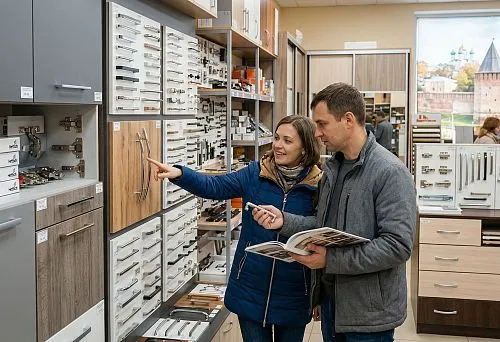
Specialized wooden furniture stores are places where a wide range of items in various styles and price categories is presented. Here you can see the furniture in person, assess its quality, color, and texture.
Advantages of buying in specialized stores:
- Opportunity to see and touch the furniture before purchase
- Professional consultation from specialists
- Guarantee of quality and authenticity of materials
- Ability to order non-standard sizes or configurations
- Delivery and assembly by the store
- Warranty service
When choosing a store, pay attention to:
- Reputation and duration of operation on the market
- Brands and manufacturers presented
- Customer reviews
- Delivery, assembly, and warranty conditions
- Possibility of return or exchange in case of defects detected
Specialized stores usually offer furniture in the mid- and premium price segments, which is explained by high quality standards and service levels.
Furniture factories: from manufacturer to consumer
Many furniture factories have their own showrooms or online stores, where you can purchase their products directly, without intermediaries.
Advantages of buying from the manufacturer:
- Lower prices due to the absence of intermediary markup
- Full information about the manufacturing process and materials
- Opportunity to visit the production facility and see how the furniture is made
- Wide customization options
- Direct contact with the manufacturer in case of questions or problems
When choosing a factory, pay attention to:
- Technological equipment of the production facility
- Used materials and components
- Quality control system
- Ecological certifications
- Portfolio of completed projects
Buying directly from the manufacturer is especially advantageous when ordering comprehensive room furnishings (e.g., kitchen, bedroom, or living room), as you can receive a significant discount on the complete set.
Online stores: convenience and wide selection
Online stores are becoming an increasingly popular channel for purchasing furniture, including wooden furniture. They offer a wide range, convenient search, and the ability to compare different options.
Advantages of buying from online stores:
- Access to offers from different regions and countries
- Ability to compare prices and features
- Convenience of choosing anytime of day
- Delivery to your door
- Often lower prices due to the absence of costs for maintaining exhibition halls
When choosing an online store, pay attention to:
- Reputation and customer reviews
- Completeness of product information (materials, dimensions, weight, photos)
- Delivery, assembly, and warranty conditions
- Possibility of return or exchange
- Payment security
Buying furniture through the internet has its risks (inability to assess quality in person, potential delivery issues), but these risks are minimized by choosing a reliable store.
Master carpenters: exclusivity and individual approach
For those seeking truly unique furniture, ordering from a master carpenter may be the ideal solution. This allows you to receive an item created specifically for you, taking into account all your preferences and the characteristics of the space.
Advantages of working with a master:
- Full customization (dimensions, shape, materials, finish)
- Uniqueness of each item
- Opportunity to participate in the creation process
- Highest quality of handcrafted work
- Creating a family heirloom that will be passed down from generation to generation
When choosing a master, pay attention to:
- Portfolio of previous works
- Customer reviews
- Education and work experience
- Materials and technologies used
- Production timelines and payment terms
Ordering furniture from a master carpenter usually requires higher investments and longer waiting times, but the result is worth it—you get not just furniture, but a work of art.
Criteria for selecting a reliable supplier
Regardless of the fact, where to buy wooden furniture Whether in a showroom, factory, online store, or with a private craftsman—important to evaluate the supplier's reliability based on the following criteria:
- Transparency of information. A reliable supplier provides complete information about materials, production technologies, delivery conditions, and warranties.
- Quality of materials. The supplier must use high-quality wood with proper moisture content (8-12%) and without visible defects.
- Production technologies. Modern equipment and traditional woodworking techniques ensure high quality of finished products.
- Ecological safety. A reliable supplier uses environmentally friendly materials and safe lacquers, and holds appropriate certifications.
- Warranty obligations. The longer the warranty period, the more confident the manufacturer is in the quality of their product.
- Service support. The ability to repair, restore, or replace parts — an important aspect of long-term cooperation.
- Customer reviews. Real buyer reviews are a valuable source of information about the supplier's reliability.
When choosing, where to buy wooden furnitureRemember, this is a long-term investment. Saving on quality may result in disappointment and additional expenses in the future.
Practical tips for choosing and placing wooden furniture
Choosing and placing wooden furniture is an art that requires attention to detail and understanding of basic interior design principles. Let’s consider practical tips that will help you create a harmonious and functional space.
Quality assessment: what to pay attention to when purchasing
When choosing wooden furniture, pay attention to the following aspects:
- Material and its quality. The wood should be uniform, without visible defects (cracks, chips, inconsistencies). Pay attention to moisture—dry wood should not have a damp smell.
- Construction and assembly. Quality furniture has strong joints, often using traditional joinery techniques (dovetail, mortise and tenon). Check for gaps at the joints.
- Surface finish. The surface should be smooth, without roughness or unevenness. The lacquer coating should be even, without drips or bubbles.
- Functionality. Check the operation of all movable parts—drawers should slide out and in easily, doors should open and close smoothly, without sticking or misalignment.
- Hardware. Quality hardware (hinges, handles, guides) ensures the longevity and ease of use of furniture. Pay attention to the material it is made of and the reliability of its mounting.
- Weight. Quality solid wood furniture usually has significant weight. Too light furniture may be made from inferior materials or have structural flaws.
- Smell. Natural wood has a pleasant, natural aroma. A sharp chemical smell may indicate the use of inferior lacquer coatings or insufficient curing after treatment.
Dimensions and proportions: harmony in space
Correctly chosen dimensions and proportions of furniture are key to creating a harmonious and functional interior:
- Fit to room size. Large, heavy furniture requires spacious rooms. In small rooms, it’s better to use compact items with visually light constructions.
- Ergonomics. Furniture should match the anthropometric data of users. Standard dimensions: table height—75–80 cm, chair height—45–50 cm, cabinet depth—50–60 cm.
- Functional zones. When placing furniture, consider the functional zones of the room and ensure convenient pathways (minimum 70–80 cm).
- Proportions. Maintain proper proportions between different pieces of furniture. For example, a coffee table should be approximately 10–15 cm lower than the sofa seat.
- Visual balance. Distribute the visual 'weight' of furniture evenly throughout the room, avoiding clustering large items in one part of the room.
Coordination with interior: color, texture, style
Wooden furniture should harmoniously fit into the overall interior concept:
- Color palette. The color of the wood should match the room’s color palette. Light wood (birch, maple, beech) visually expands space and creates a sense of lightness. Dark wood (walnut, wenge) adds solidity and depth to the interior.
- Texture. Prominent wood texture (oak, beech) becomes an active design element and requires a more restrained environment. Wood with neutral texture (ash, maple) is more versatile.
- Stylistic unity. Furniture should match the overall interior style. Mixing styles is possible, but requires a refined sense of proportion and understanding of design principles.
- Accents. Wooden furniture can become an accent element in the interior, especially if it has a unique design or is made from rare wood species.
- Combination with other materials. Wood combines beautifully with various materials—stone, glass, metal, fabric. These combinations can be used to create interesting contrasts and textural transitions.
Care and use: extending the life of wooden furniture
Proper care significantly extends the lifespan of wooden furniture and preserves its attractive appearance:
- Regular cleaning. Remove dust with a soft dry cloth, moving along the grain of the wood. For more thorough cleaning, use a slightly damp cloth, then immediately dry the surface.
- Protection from moisture. Avoid placing wooden furniture in rooms with high humidity. Use stands under hot and wet items. Wipe up any spilled liquid immediately.
- Protection from sunlight. Direct sunlight can cause fading and cracking of the wood. Use curtains or blinds to protect furniture from intense sunlight.
- Regular renewal of protective coating. Depending on the type of finish and usage intensity, renew the protective coating (wax, oil, varnish) every 1-3 years.
- Proper use. Do not overload shelves and drawers, do not drag furniture across the floor, use felt pads on legs to prevent scratches.
- Maintaining optimal microclimate. Sudden changes in temperature and humidity negatively affect wooden furniture. Optimal conditions: temperature 18-22°C, humidity 45-60%.
- Timely repair. When damage (scratches, chips, loose joints) is detected, perform timely repairs to prevent further deterioration.
Conclusion: Wooden furniture as part of conscious consumption
In an era of mass production and rapid trend changes, wooden furniture becomes a symbol of a conscious approach to furnishing living space. It is a choice in favor of quality, durability, and eco-friendliness.
where to buy wooden furnitureWhich will become not just a functional item, but part of your life for many years? This question requires thoughtful consideration and understanding that you are not merely purchasing an interior item, but investing in the quality of your life.
Wooden furniture is a connection to nature, to the traditions of craftsmanship passed down from generation to generation. It is the opportunity to create in your home an atmosphere of authenticity and warmth, which is so lacking in today's urbanized world.
Choosing wooden furniture means choosing:
- Eco-friendliness - natural materials, minimal carbon footprint, recyclability
- Durability - quality wooden furniture lasts for decades, sometimes even centuries
- Health - absence of harmful chemicals, natural humidity regulation
- Aesthetics - unique beauty of natural wood, which only enhances over time
- Values - furniture that can become a family heirloom and be passed down from generation to generation
In a world where authenticity and connection to nature are increasingly valued, wooden furniture becomes not just a functional choice, but a philosophical statement. It is a way to say 'no' to disposable consumer culture and 'yes' to a conscious, eco-friendly, and aesthetically fulfilling lifestyle.
Investing in quality wooden furniture today creates a legacy for future generations — both material and value-based. You become part of a long chain of people who value beauty, quality, and harmony with nature.
May your home, filled with the warmth and beauty of natural wood, become a place where every item has its own story, character, and soul. A place where you want to live, create, and share joy with loved ones. For it is precisely in this that the true value of our living space lies.