












































































Article Contents:
- Engineering Foundations of Reliable Connection
- Physics of Loads in Stair Railings
- Material science aspects of connections
- Classification of Mounting Methods
- Traditional joinery
- Modern fastening systems
- Technological Features of Installation
- Preparation operations
- Assembly sequence
- Specialized Mounting Methods
- Connection via Underhandrail Bracket
- Hidden Connection with Screws
- Working with different materials: key features
- Wooden Structures
- Combined Systems
- Quality Control and Testing
- Methods for Checking Connection Strength
- Typical Defects and Ways to Eliminate Them
- Modern technologies and innovations
- Automated Connection Systems
- Intelligent Fastening Systems
- Economic Aspects of Choosing a Connection Method
- Analysis of costs of various solutions
- Long-Term Economic Efficiency
- Safety Requirements and Regulatory Basis
- Building codes and regulations
- Certification and Quality Control
- Practical Recommendations for Selection
- Criteria for Evaluating Connection Methods
- Material Recommendations
- Conclusion
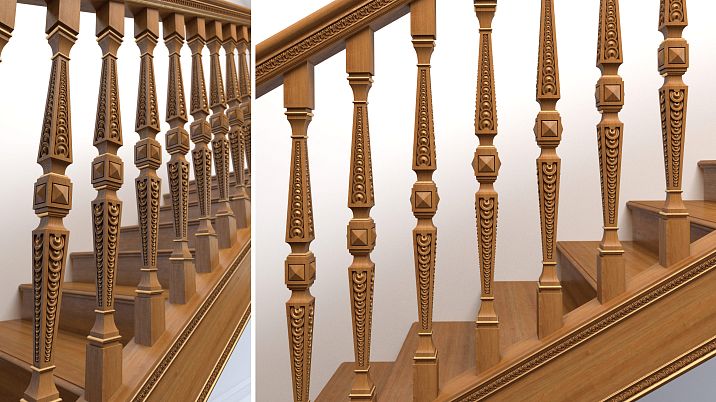
Creating a reliable and aesthetically pleasing stair railing requires a deep understanding of the technological nuances of installation. The question of how to attach handrails to balustersconcerns everyone who aims to create a safe and beautiful stair structure. Proper connection of these elements determines not only the longevity of the entire railing system, but also the safety of people who will use the stairs daily.
The art of installing stair railings combines engineering precision with carpentry craftsmanship. Each connection must withstand significant loads while maintaining aesthetic appeal. Modern technologies offer numerous ways to fasten, each with its own advantages and areas of application.





Engineering Foundations of Reliable Connection




Physics of Loads in Stair Railings
Stair handrails experience a complex set of loads during operation. Horizontal forces arise when a person leans on the handrail, vertical forces occur during dynamic movements while ascending or descending stairs. Torque moments appear due to uneven load distribution along the length of the railing.
The calculated horizontal load on handrails is 0.8 kN/m for residential buildings and 1.5 kN/m for public structures. These values account for the possibility of multiple people leaning simultaneously and extreme situations. The dynamic coefficient increases static loads by 1.4 times, which must be considered when designing connections.
Stress distribution at the connection node of handrails to balusters is uneven. Maximum values occur at points of load concentration — locations of fastening elements. Proper connection design implies even distribution of forces over the maximum possible contact area.
Our factory also produces:




Material aspects of connections
Material compatibility plays a decisive role in the longevity of the connection. Different wood species react differently to changes in humidity and temperature. Coefficients of linear expansion must be close to avoid stress development in the connection under changing climatic conditions.
Hardwood species — oak, beech, ash — provide high load-bearing capacity for connections but require pre-drilling holes for fasteners. Softwoods — pine, spruce — are easier to process but less resistant to pulling loads.
Wood moisture critically affects connection quality. Optimal values are 8–12% for interior structures. Using unseasoned material leads to weakened connections due to natural wood shrinkage during operation.
Get Consultation
Classification of Mounting Methods
Traditional joinery
Dowel connections represent a classic method of carpentry art, proven by centuries of use. Wooden dowels with diameters of 8–12 mm are made from hardwoods and provide strong connections when properly installed. The dowel length should be at least 50 mm for secure fixation in both parts.
Dowel installation technology requires high precision in drilling holes. Even a 1–2 mm deviation from coaxial alignment may weaken the connection or make assembly impossible. Using special guides and alignment tools ensures the required positioning accuracy.
The "tongue-and-groove" connection provides maximum contact area between parts. The tenon at the end of the baluster fits into the corresponding groove in the handrail, creating mechanical interlock. Additional fixation with glue transforms such a connection into a monolithic structure.
Modern fastening systems
Threaded screws with diameters of 6–10 mm provide high connection strength with relatively simple installation. The screw is screwed into the end of the baluster to a depth of 40–50 mm, and the protruding part, 30–40 mm long, enters a previously drilled hole in the handrail. Using carpentry glue strengthens the connection and prevents accidental loosening.
Conformers (Euro screws) represent a modern solution for quick and reliable connection of wooden elements. The special thread shape provides high load-bearing capacity in wood. The concealed head allows creating a hidden connection that does not compromise the product's aesthetics.
Specialized connectors for stair structures account for the specific operational characteristics of railings. Adjustable elements allow compensating for manufacturing and installation inaccuracies. Anti-corrosion coatings ensure longevity under varying humidity conditions.
Technological features of installation
Preparation operations
Precise marking of fastening locations determines the quality of all subsequent work. The distance between balusters should be uniform and not exceed 150 mm center-to-center to ensure safety. Using laser levels and precision measuring tools guarantees high marking accuracy.
Preparing the end surfaces of balusters includes aligning them at an angle corresponding to the stair incline. Even a 1–2 degree deviation from the calculated angle results in poor handrail fit and weakened connection. Using miter saws with adjustable angles ensures the required processing accuracy.
Drilling holes for fasteners requires special care. The hole diameter must precisely match the fastener size, considering requirements for fit tightness. Drilling depth is controlled by special depth stops or marks on the drill bit.
Assembly Sequence
Installing support posts at the beginning and end of the stair run creates the foundation for the entire railing system. These elements must be installed with maximum precision, as they define the geometry of the handrail. Temporary bracing allows precise positioning of the posts before final fixation.
Intermediate balusters are installed using a taut control string stretched between the support posts. Each element is installed strictly vertically, checked with a plumb bob or level. The height of the balusters is individually adjusted to account for possible inaccuracies in stair geometry.
The process of how to attach handrails to balustersThe handrail installation completes the railing assembly. The handrail is mounted onto the prepared ends of the balusters and secured using the chosen fastening method. The quality of the connection is checked by gentle rocking — the absence of play indicates correct workmanship.
Specialized fastening methods
Fastening through a handrail support rail
Using an intermediate rail simplifies installation and increases connection reliability. A handrail support rail with a cross-section of 20×40 mm or 25×50 mm is attached to the ends of the balusters using self-tapping screws or dowels. A groove is milled into the rail for handrail installation, ensuring precise positioning and even load distribution.
Advantages of this method include the possibility of concealed handrail mounting and ease of adjusting its position. The disadvantage is an increase in the overall railing height by the thickness of the rail, which must be considered during design.
Grooving the rail for the handrail is performed on specialized equipment with precise adjustment of groove depth and width. The quality of the groove determines the tightness of the handrail fit and absence of gaps in the connection.
Concealed mounting on bolts
Concealed handrail mounting ensures maximum aesthetic quality of the connection. Threaded bolts are screwed into the ends of the balusters, and corresponding holes are drilled in the handrail. The handrail is slipped over the bolts and secured with nuts and washers, which are pressed into special recesses.
Accuracy of drilling holes in the handrail is critical for connection quality. Even minor deviations from calculated coordinates result in assembly failure or stress in the structure. Using coordinate drilling machines or special fixtures ensures the required precision.
The depth of recesses for nuts is calculated considering the thickness of the washer and height of the nut plus 2-3 mm for accommodating a decorative plug. The plugs are made from the same material as the handrail and installed flush with the surface using adhesive.
Features of Working with Different Materials
Wooden structures
Connecting wooden elements requires consideration of wood grain direction. Fasteners installed across the grain have greater load-bearing capacity than those installed along the grain. When designing connections, fasteners should be primarily oriented radially or tangentially.
Pre-drilling holes for self-tapping screws prevents wood cracking, especially in hardwoods. The hole diameter should be 0.7-0.8 times the screw diameter to ensure reliable thread engagement in the wood.
Wood glue enhances any mechanical connection. Modern polyurethane glues provide connection strength exceeding the strength of the wood itself. The open time of the glue is 10-15 minutes, which must be considered when planning work.
Combined systems
Combining wooden and metallic elements requires a special approach to connection design. Different coefficients of thermal expansion may lead to stress at connection joints. Using elastic gaskets or compensating elements resolves this issue.
Anti-corrosion protection of metallic elements is critical for connection longevity. Zinc, chrome, or polymer coatings prevent corrosion and ensure stable fastener performance throughout the service life.
Electrochemical compatibility of materials prevents galvanic corrosion. Direct contact between dissimilar metals must be avoided using insulating gaskets or coatings.
Quality control and testing
Methods for checking joint strength
Visual inspection includes checking the tightness of part fit, absence of gaps and cracks, and correct positioning of fasteners. A quality connection should not exhibit visible defects or signs of weakening.
Mechanical tests are conducted by applying controlled loads to installed elements. A horizontal load of 100-150 kg applied to the handrail should not cause visible deformation or weakening of connections. Absence of creaking or play confirms quality installation.
Long-term observations allow assessment of connection stability during operation. Periodic inspections at 1, 3, 6, and 12 months after installation reveal potential problems at an early stage.
Typical defects and methods of their elimination
Loosening of threaded connections occurs due to wood shrinkage or insufficient tightening during installation. Retightening fasteners restores connection strength. Using locking compounds prevents re-loosening.
Cracking of wood in the fastening zone occurs when exceeding allowable loads or selecting inappropriate fasteners. Minor cracks are filled with adhesive and clamped until fully cured. Severe damage requires replacing the element.
Appearance of gaps between parts indicates a geometric connection error or wood shrinkage. Adjustable connections allow compensation for minor size changes. Significant gaps require reworking the connection.
Modern technologies and innovations
Automated fastening systems
Pneumatic and hydraulic fastening systems provide uniform tightening force and eliminate human error. Programmable controllers allow setting optimal parameters for different types of connections.
Torque control systems prevent wood damage from excessive force. Feedback sensors signal when the target torque is reached and automatically stop the tightening process.
Robotized complexes for assembling stair railings ensure high precision and repeatability of operations. Vision systems monitor connection quality in real-time.
Intelligent fastening systems
Self-regulating connections automatically compensate for dimensional changes of parts due to humidity and temperature fluctuations. Elastic elements maintain constant tightening force regardless of external influences.
Connection condition monitoring systems include deformation, vibration, and temperature sensors. Data is transmitted to the building’s central management system and enables planning preventive maintenance.
Self-diagnosing fastening elements change color upon critical loosening or damage. Such systems enable early problem detection and prevent emergency situations.
The initial costs of fastening systems vary widely. Simple screws are inexpensive but may require replacement after several years. Specialized connectors are more expensive but provide long-term reliability.
Analysis of the cost of various solutions
Installation cost depends on the complexity of the chosen fastening method. Simple connections can be performed by any handyman, while complex ones require qualified specialists. Saving on installation may result in costly repairs in the future.
Operational expenses include periodic maintenance, tightening connections, and replacing worn elements. High-quality fastening systems require minimal maintenance and serve for decades without replacement.
Investments in high-quality fastening systems pay off through reduced maintenance and repair costs. Reliable connections do not require regular tightening or replacement of elements. The service life of quality fasteners may exceed 25-30 years.
Long-term economic efficiency
Investments in high-quality fastening systems pay off through reduced maintenance and repair costs. Reliable connections do not require regular tightening or replacement of components. The service life of quality fasteners may exceed 25-30 years.
The residual value of a structure with quality connections remains high throughout its service life. During reconstruction or dismantling, such elements can be reused, partially offsetting initial costs.
Insurance companies consider construction quality when calculating premiums. Using certified fastening systems may reduce the cost of property insurance.
Safety Requirements and Regulatory Standards
Building codes and regulations
The height of stair railings is regulated by building codes and must be at least 900 mm for residential buildings and 1200 mm for public buildings. These requirements ensure user safety and must be strictly followed.
The railings must withstand a horizontal load of at least 0.8 kN/m for residential buildings without failure or residual deformation. Tests are conducted on completed structures using calibrated loads.
The distance between vertical railing elements must not exceed 100 mm in clear span to prevent children from slipping through. This requirement is critically important for families with young children.
Certification and Quality Control
Fastening elements must have certificates confirming compliance with established standards. Certification confirms that the strength characteristics meet declared values and that the application is safe.
Periodic testing of completed structures confirms compliance with safety requirements. Test protocols serve as documented proof of the quality of work performed.
Warranty obligations of fastening system manufacturers ensure consumer protection. The warranty period for quality products is 5-10 years provided that operating conditions are met.
Practical Recommendations for Selection
Criteria for Evaluating Fastening Methods
Operating conditions determine requirements for fastening systems. Indoor staircases operate under stable conditions, while outdoor ones are exposed to atmospheric factors. Humidity, temperature fluctuations, and ultraviolet radiation affect the longevity of connections.
The intensity of staircase usage determines requirements for the strength and wear resistance of fastening elements. Main staircases in residential buildings experience moderate loads, while those in public buildings experience heavy loads.
Aesthetic requirements influence the choice of connection type. Hidden fastenings provide maximum aesthetics but are more complex to manufacture. Open connections are simpler but may compromise the appearance of the product.
Material Recommendations
Stainless steel provides maximum corrosion resistance and longevity of fastening elements. Additional costs are offset by long service life and the absence of replacement needs.
Galvanized steel represents a compromise between cost and quality. The zinc coating provides corrosion protection under normal operating conditions. The coating thickness must be at least 12 micrometers.
Brass fastening elements combine corrosion resistance with aesthetic appeal. They are especially suitable for classic interiors, where both functionality and the appearance of the fasteners are important.
Conclusion
The mastery of how to attach handrails to balustersUnderstanding of physical processes occurring in connections, knowledge of material properties, and proficiency in modern installation technologies. Each fastening method has its advantages and limitations, which must be considered when selecting the optimal solution for a specific project.
Quality connections between railings and balusters ensure not only the safety of staircase operation but also its longevity and aesthetic appeal. Properly executed connections serve for decades without requiring significant maintenance or repairs.
Investments in high-quality fastening systems and professional installation pay off multiple times due to reliability, longevity, and aesthetic qualities of the finished railing. Saving on fasteners often leads to costly problems in the future.
Modern technologies open new possibilities for creating reliable and attractive connections. Automation of production, new materials, and intelligent monitoring systems all contribute to improving the quality and longevity of staircase structures.
The future of staircase construction lies in integrating traditional methods with innovative technologies. Combining time-tested solutions with modern materials and equipment enables the creation of railings that meet the highest standards of safety, functionality, and aesthetics.
Decor Set C-001-2-2


