Article Contents:
- Philosophy of Reliable Fastening
- Load Analysis: What the Railing Must Withstand
- Material Science in the Context of Fastening
- Technological Fastening Methods: From Traditions to Innovations
- Spindle joints: classic reliability
- Self-Tapping Screws: Speed Versus Reliability
- Adhesive Technologies: Chemistry Serving Strength
- Step-by-Step Professional Installation Technology
- Preparation Stage: The Foundation of Success
- Installing Support Posts: The Foundation of Reliability
- Installing Intermediate Balusters: Precision and Rhythm
- Specifics of Working with Different Materials
- Wooden Structures: Living Material
- Metal Elements: Precision and Durability
- Combined Solutions: The Best from Different Worlds
- Quality Control and Work Acceptance
- Geometric Parameters: Precision Visible to the Eye
- Strength Tests: Checking Reliability
- Operation and Maintenance: Extending Service Life
- Preventive Inspections: Preventing Problems
- Repair and Modernization: A Second Life for the Structure
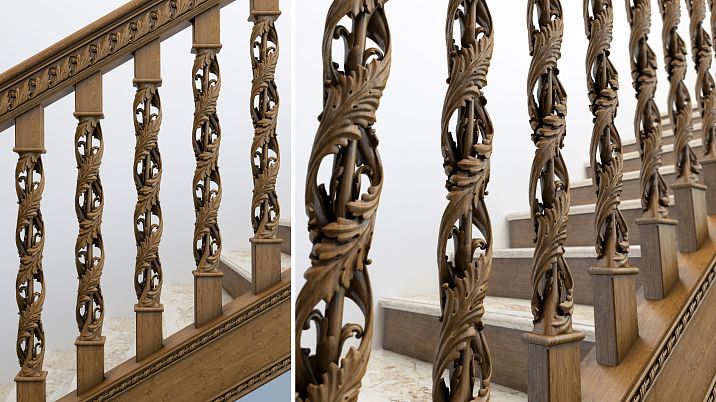
Every time we ascend the stairs, we entrust our safety to the invisible craftsmanship of those who created this structure. Installing balusters and handrails is not merely a construction operation—it is the art of creating reliable protection, where every millimeter matters, and every connection can save a life.
Imagine: one inaccurate movement during installation, one improperly tightened bolt—and an elegant staircase becomes a source of danger. But when a master knows their craft, when each element is installed with jewel-like precision, a masterpiece of engineering art is born, capable of serving for decades.
What distinguishes professional installation of balusters and handrails from amateur work? Deep understanding of materials, knowledge of technological processes, and above all, respect for the safety of future users. Each element of the railing must withstand not only static loads but also dynamic impacts that occur during active use of the staircase.


Philosophy of Reliable Fastening
Why do some stair railings serve for centuries, while others begin to loosen within just a few years? The secret lies in understanding the physics of loads and selecting the correct fastening technology. Each installation method has its own area of application, advantages, and limitations.




Load Analysis: What the Railing Must Withstand
Modern building codes require stair railings to withstand a horizontal load of at least 0.8 kN/m for residential buildings. But this is only the minimum requirement. Professional installation of balusters and handrails implies creating a safety margin that accounts for real operating conditions.
Imagine the situation: a group of people simultaneously ascending the stairs, someone trips and instinctively grabs the handrail. At that moment, the railing experiences a load many times exceeding the normative value. Quality installation must ensure safety even in such extreme situations.
Our factory also produces:




Material Science in the Context of Fastening
The choice of fastening material is determined not only by the type of balusters but also by the characteristics of the base. Wooden elements require one approach, metal elements—another entirely. Concrete bases dictate their own rules, while composite materials open up new possibilities.
Professional installation of balusters and handrails begins with a careful analysis of all system components. Incompatibility of materials may lead to corrosion, cracking, or weakening of connections. For example, using steel fasteners in contact with aluminum elements without insulation inevitably leads to electrochemical corrosion.
Get Consultation
Technological Fastening Methods: From Traditions to Innovations
The modern construction industry offers numerous ways to secure stair railings. Each method has its own development history, technical features, and optimal application area.
Spindle Connections: The Classic of Reliability
Threaded studs remain one of the most reliable methods for securing balusters. This method ensures high connection strength and allows for disassembly of elements without damage if necessary. Installing balusters and handrails on studs requires high precision drilling and understanding of working with different materials.
The stud diameter is selected based on loads and baluster dimensions. For standard wooden elements with a 50×50 mm cross-section, using M8 or M10 studs is optimal. The embedment depth should be at least 6-8 times the fastener diameter, ensuring secure fixation.
Special attention is required for hole preparation. Inaccurate drilling may lead to misalignments, which will be noticeable in the finished structure. Professional craftsmen use special guides and fixtures to ensure perfect perpendicularity of holes.
Self-tapping screws: speed versus reliability
Mounting using self-tapping screws is the fastest installation method, but it has significant load limitations. Installing balusters and handrails this way is suitable for light structures and temporary railings. The main issue with self-tapping screws is their tendency to loosen under variable loads.
To enhance the reliability of self-tapping screw connections, several techniques are used. First, screws are installed at an angle, increasing contact area with the material. Second, longer fasteners — 80-90 mm for standard balusters — are used. Third, pre-drilling is mandatory for hardwoods.
Adhesive technologies: chemistry serving strength
Modern polyurethane and epoxy adhesives open new possibilities for securing stair elements. Adhesive joints distribute load evenly across the entire contact area, which is especially important for thin-walled and hollow structures. Installing balusters and handrails using adhesive technologies requires strict adherence to temperature-humidity conditions and polymerization time.
The advantage of adhesive joints is the absence of stress concentrators, which inevitably occur with mechanical fastening. The disadvantage is difficulty in disassembly and sensitivity to thermal deformations. Therefore, adhesive technologies are often used in combination with mechanical fastening methods.
Step-by-step professional installation technology
Quality installation of balusters and handrails is a sequence of precisely calibrated operations, where each stage affects the final result. Violating the technology at any stage may lead to reduced strength or deterioration of the structure's appearance.
Preparation stage: the foundation of success
Successful installation begins long before the first baluster is mounted. The preparatory stage includes checking the staircase geometry, assessing the foundation condition, and planning the work sequence. Even minor deviations from design dimensions can significantly complicate installation.
Special attention is given to marking. Professional craftsmen use laser levels and special templates to ensure precise positioning of elements. An error in marking by several millimeters may result in visible defects in the finished structure.
Checking material moisture is another critically important point. Wooden elements must have moisture no higher than 12%; otherwise, during operation, deformations may occur, leading to weakened connections.
Mounting support posts: foundation of reliability
Support posts bear the main load from the entire railing, so their installation requires special care. Fastening posts to the foundation must ensure resistance to both vertical and horizontal loads.
For wooden staircases, optimal mounting involves securing posts through the full thickness of the tread or landing. Bolts M12-M16 with wide washers are used to distribute the load. Elastic washers must be installed under the washers to compensate for wood's thermal deformations.
When mounting to concrete foundations, anchor bolts or chemical anchors are used. The embedment depth should be at least 8 times the fastener diameter. Special attention is given to drilling quality — the hole must be strictly perpendicular to the surface and have the correct diameter.
Installing intermediate balusters: precision and rhythm
Intermediate balusters form the main area of the railing and largely determine its appearance. Uniformity of their placement is critically important for the aesthetic perception of the structure. Installing intermediate balusters and handrails requires high precision marking and adherence to a unified fastening technology.
The distance between balusters is determined by safety requirements — no more than 120 mm for residential buildings and 100 mm for childcare facilities. However, simply dividing the span length by the number of gaps does not always yield the optimal result. Professional craftsmen consider the thickness of the balusters themselves and achieve a visually even rhythm.
Intermediate balusters can be mounted using various methods depending on the staircase construction. On treads, threaded connections are more common, while on stringers, they are inserted into grooves or fastened to underslung boards.
Specifics of working with different materials
Each material dictates its own installation rules. What is ideal for wood may be unacceptable for metal or stone. Understanding the characteristics of different materials is key to successfully installing balusters and handrails.
Wooden structures: living material
Wood is a living material that continues to change even after processing and installation. Seasonal moisture fluctuations cause dimensional changes, which must be considered when designing connections. Installing wooden balusters and handrails requires creating compensatory gaps and using movable joints.
Different wood species have varying strength and workability characteristics. Coniferous species are easy to process but have relatively low density. Hardwood species are stronger but require more powerful tools and special processing techniques.
The direction of wood grain is critically important for connection strength. Fastening along the grain is significantly less reliable than across it. Therefore, when designing connection joints, efforts are made to ensure the fastener works in shear rather than in pull-out.
Metal Elements: Precision and Durability
Metal balusters and handrails feature high manufacturing precision and dimensional stability. This simplifies installation but requires corresponding accuracy from the base. Installation of metal balusters and handrails does not allow significant adjustments during mounting.
The main problem with metal structures is corrosion. All joints must be protected from moisture. Special sealants, gaskets, and protective coatings are used. Special attention is paid to areas of contact between dissimilar metals.
Welded joints provide maximum strength but require subsequent processing and protection. Bolted joints are easier to manufacture and allow disassembly, but create stress concentrators. The choice of joint type depends on specific operating conditions.
Combined solutions: the best of different worlds
Modern stair railings often combine different materials to achieve an optimal balance of strength, aesthetics, and cost. Installation of combined balusters and handrails requires special attention to material compatibility and compensation for different expansion coefficients.
Popular combinations include wooden handrails on metal posts, glass infill in metal frames, stone elements with metal fasteners. Each combination has its own technical features and requires an individual approach to designing connection joints.
Quality control and acceptance of work
Professional installation of balusters and handrails concludes with careful quality control of completed work. This stage is no less important than the installation itself, as it allows identifying and eliminating defects before handing over the object for operation.
Geometric parameters: precision visible to the eye
The first stage of control is checking the geometric parameters of the structure. Verticality of balusters, horizontal alignment of handrails, uniformity of spacing — all these parameters affect the appearance and safety of the railing. Permissible deviations are strictly regulated by normative documents.
Control uses precise measuring tools: laser levels, squares, tape measures with millimeter divisions. Special attention is paid to joints connecting different elements — it is here that mounting defects most often manifest.
Visual inspection is no less important than instrumental inspection. An experienced craftsman can detect minor deviations that do not exceed tolerances but affect the overall perception of the structure.
Strength tests: checking reliability
Strength control is a mandatory stage for acceptance of stair railings. Tests are conducted by applying normative loads to various structural elements. Installation of balusters and handrails is considered quality if all elements withstand test loads without visible deformation.
Tests are conducted in stages, starting with minimum loads. This allows identifying weak spots before critical loading. Special attention is paid to connection joints — it is here that failures most often occur.
Dynamic tests simulate real operating conditions. The railing is subjected to cyclic loads simulating the effects of active stair use. A quality structure must withstand at least 100,000 load cycles without signs of material fatigue.
Operation and maintenance: extending service life
Correct installation of balusters and handrails is only the first step toward long-term, safe operation of stair railings. Regular maintenance and timely repairs allow preserving the original characteristics of the structure for many years.
Preventive inspections: preventing problems
Regular inspections allow identifying developing defects before they reach critical stages. Inspection frequency depends on the intensity of stair use and operating conditions. Residential buildings require annual inspections, while public buildings require semi-annual inspections.
Special attention is paid to connection joints. Loosening of fasteners is the most common cause of reduced railing reliability. Timely tightening of bolts and replacement of worn elements prevent serious problems.
The condition of protective coatings also requires constant monitoring. Damage to the paint coating allows moisture to penetrate and may lead to corrosion of metal elements or rotting of wood.
Repair and modernization: a second life for the structure
Even the most quality installation of balusters and handrails does not guarantee eternal service life of the structure. Over time, repair or modernization of the railing may be required. Properly designed joints allow replacing individual elements without dismantling the entire structure.
Modernization may be related to changes in safety requirements or aesthetic preferences. Modern technologies allow significantly improving the characteristics of existing railings without full replacement of the structure.
Quality installation of balusters and handrails is an investment in safety and comfort for many years. Properly executed mounting, use of quality materials, and adherence to technological requirements ensure reliability and longevity of stair railings. Each element of the structure plays its role in the overall safety system, and neglecting any detail may have serious consequences.
Modern technologies and materials open new possibilities for creating beautiful and reliable railings. But the foundation of success remains the professionalism of the installers and strict adherence to technological requirements. For detailed information on installation technology and practical recommendations, we recommend studying materials by installation of balusters and handrails leading industry specialists.
STAVROS Company, recognized as a leader in the production and installation of stair structures, offers a full range of services from design to final finishing. Years of experience, use of advanced technologies, and strict quality control at every production stage allow STAVROS to guarantee flawless results. By contacting STAVROS specialists, you receive not just quality products, but professional support ensuring the long-term durability and safety of your stair structures.