Article Contents:
- Philosophy of independent creativity
- Advantages of personalized approach
- Psychological Aspects of the Creative Process
- Material Science Foundations of a Successful Project
- Wood Selection: Professional Criteria for Choosing
- Coniferous species: accessibility without compromise
- Tool Preparation: Home Craftsman's Toolkit
- Main set of tools
- Measuring Instruments and Marking Tools
- Technological Secrets of Professional Installation
- Preparation Stage: Foundation for High-Quality Results
- Mounting methods: choosing the optimal solution
- Step-by-step installation technology
- Installing Support Posts
- Installation of intermediate balusters
- Handrail Installation
- Decorative Finishing and Final Treatment
- Artistic Woodworking Techniques
- Protective and decorative coatings
- Quality control and defect elimination
- Criteria for Evaluating Work Quality
- Typical Errors and Ways to Eliminate Them
- Ergonomic Aspects and Safety Requirements
- Regulatory requirements for stair railings
- Adaptation to User Needs
- Economic Aspects of DIY Installation
- Material Cost Calculation
- Comparison with professional services
- Maintenance and Longevity
- Regular care for wooden elements
- Signs of Need for Repair
- Modern Trends and Innovations
- Ecological Materials and Technologies
- Integration of modern technologies
- Conclusion
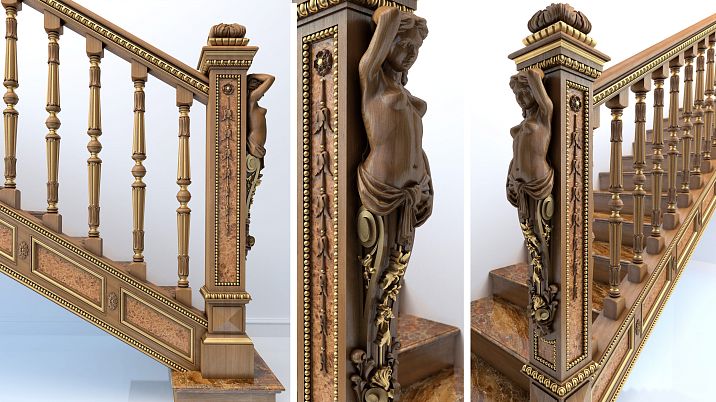
Every owner of a two-story house will eventually face the need to arrange the stair area. The possibility to install balusters and handrails by one's own hands transforms not just into a saving of family budget, but into an engaging creative journey, the result of which becomes a unique architectural composition. Self-installation of stair railings requires patience, precision, and deep understanding of structural features, but rewards the craftsman with pride in the work created by their own hands.
Modern technologies and accessibility of quality materials open up boundless opportunities for home craftsmen to realize the most daring design ideas. Properly installed stair railings ensure not only safe movement, but also create a unique atmosphere of coziness and respectability in the home.


Philosophy of independent creativity




Advantages of personalized approach
Taking on the installation of stair railings independently opens unique opportunities for creative self-expression. Unlike standard factory solutions, self-work allows to take into account the smallest interior nuances, creating an ideal harmony between functionality and aesthetics. Every detail can be thought out to the smallest detail, each element — made with love and attention to quality.
The economic component of self-installation also plays an important role. The cost of professional services for installing stair railings can amount to 40-60% of the price of the materials themselves. Mastering the installation technology allows a home craftsman to redirect saved funds toward purchasing higher quality materials or additional decorative elements.
The process of self-work becomes a source of invaluable experience and knowledge. Understanding the structural features of stair railings will be useful in future repairs, modernizations, or creating new interior elements. Skills in working with wood, metal, and fastening systems will find application in many home projects.
Our factory also produces:


Psychological aspects of the creative process
Working with wood has a special therapeutic effect, helping to relieve stress and find inner balance. The rhythmic movements of a plane, the aroma of freshly planed wood, the gradual transformation of a rough blank into an elegant detail — all this creates a meditative atmosphere conducive to creative inspiration.
Each stage of work brings a sense of satisfaction from overcoming technical difficulties and achieving set goals. Precise fitting of parts, perfect alignment of elements, flawless quality of connections — all these achievements build confidence in one's abilities and motivate further refinement of craftsmanship.
The finished product becomes an object of special pride, since every its element is created by one's own hands. Guests in the house invariably admire the beauty and quality of handmade railings, and their creator receives well-deserved recognition of their talents and diligence.
Get Consultation
Material Science Foundations of a Successful Project
Wood Selection: Professional Criteria for Choosing
The success of any project to create stair railings begins with the correct choice of materials. The wood for balusters and handrails should have an optimal combination of strength, dimensional stability, and aesthetic qualities. The moisture content of the material should not exceed 10-12%, which guarantees the absence of deformations after installation.
Oak remains the gold standard for manufacturing stair elements due to its exceptional strength and expressive texture. Its density of 700-800 kg/m³ ensures the longevity of the structure, and its natural resistance to moisture and biological damage minimizes maintenance requirements. Processing oak requires sharp tools and patience, but the result exceeds all expectations.
Ash is attracted by its contrasting structure and high impact toughness. This species allows creating elements of complex shapes without the risk of cracking. The natural elasticity of ash makes it an ideal material for handrails that must withstand significant loads when supported.
Beech is distinguished by its uniform structure and excellent workability. Its neutral color opens up wide possibilities for toning and creating any color solutions. Beech is easily turned, which is important when manufacturing balusters of complex shapes.
Coniferous species: accessibility without compromise
Common spruce offers an optimal price-to-quality ratio for beginner craftsmen. Its soft structure facilitates processing with hand tools, and its natural resinous nature provides additional protection against moisture. The contrasting texture with alternating light sapwood and dark heartwood creates an attractive decorative effect.
Siberian larch surpasses most coniferous species in strength and durability. Its density approaches that of hardwoods, and its natural resistance to rot has no analogues among domestic species. The beautiful texture with pronounced annual rings gives products a special expressiveness.
Siberian cedar is valued for its ease of processing and pleasant aroma with phytoncide properties. Its soft structure allows creating complex carved compositions, inaccessible when working with hard species. Cedar practically does not produce splinters during processing, which is important for achieving a quality surface.
Tool Preparation: Home Craftsman's Toolkit
Basic toolset
Quality tools are the guarantee of successful completion of any carpentry project. An electric drill with a set of drill bits of various diameters will become the main assistant in creating mounting holes. Drill bits for wood with diameters of 6, 8, 10, and 12 mm cover most needs when installing stair railings.
The miter saw provides precise angular cuts required for fitting elements. The ability to set various cutting angles allows adapting details to any staircase slope. A high-quality fine-toothed saw blade ensures clean cuts without chipping.
A sander or set of abrasive papers of different grits is necessary to prepare surfaces for finishing. Sequential use of abrasives from coarse to fine ensures a perfectly smooth surface ready for protective-decorative coatings.
Measuring instruments and marking tools
Measurement accuracy determines the quality of all subsequent work. A tape measure at least 5 meters long allows measurements without repositioning. A metal square ensures control of right angles during marking and assembly of elements.
A construction level 1-1.5 meters long is necessary to control the horizontal and vertical alignment of elements. A laser level significantly simplifies marking and ensures high positioning accuracy. A plumb bob helps control the verticality of balusters at all stages of installation.
Marking tools include pencils of different hardness, a awl for precise marks, a compass for drawing arcs and circles. A high-quality stainless steel ruler serves not only for measurements but also as a guide during cutting.
Professional Installation Techniques
Preparation stage: foundation for quality results
Successful installation of stair railings begins with careful preparation of the work area and materials. All wooden elements must undergo acclimatization in the installation room for 3-5 days to equalize moisture and prevent deformation after installation.
Marking locations for baluster installation requires special precision. The distance between axes of adjacent balusters should not exceed 150 mm to ensure child safety. Even distribution of elements creates a harmonious visual rhythm and ensures optimal load distribution.
Preparation of mounting holes is performed using dowels or templates to ensure positioning accuracy. The hole diameter should be 1-2 mm smaller than the fastener diameter to ensure tight fit. Hole depth is controlled by drill depth limiters.
Mounting methods: choosing the optimal solution
Mounting on metal bolts ensures maximum joint strength and is recommended for support posts. Threaded bolts with a diameter of 8-10 mm are screwed into the baluster end using wood glue. The protruding part, 50-60 mm long, ensures secure fixation in the base.
Connection using wooden dowels is a traditional carpentry method ensuring strength and durability. Dowels with a diameter of 8-12 mm are made from hardwood and installed with glue. Such a connection is practically impossible to disassemble without damaging the elements.
Screw mounting is suitable for temporary assembly or when disassembly of the structure is required. Screws with a diameter of at least 6 mm and concealed heads are screwed in at an angle for hidden mounting. Screw locations are masked with wooden plugs or putty.
Step-by-step installation technology
Installation of Support Posts
Installation of stair railings begins with mounting support posts, which define the geometry of the entire structure. The first post is installed on the lower landing or first step, the second — on the upper landing or last step of the flight. Accuracy of their positioning is critically important for correct railing geometry.
Mounting support posts to wooden structures is performed using bolt connections with a diameter of at least 12 mm. For concrete bases, anchor bolts of corresponding diameter are used. Anchor depth should be at least 80 mm to ensure secure mounting.
Post verticality is controlled using a level in two mutually perpendicular planes. Temporary fixation with braces allows precise positioning of the post before final mounting. After installing support posts, a control string is stretched between them to align intermediate balusters.
Installation of intermediate balusters
Process Installing balusters and handrails by yourself Installation continues with intermediate posts. Each baluster is installed strictly according to the marking with verticality control. Use of temporary guiding rails helps maintain correct element positioning until final mounting.
Baluster height is individually adjusted for each step, taking into account the staircase slope. Top edges must be aligned on a single line parallel to the handrail line. A taut string or laser level is used for control.
Mounting intermediate balusters is performed using the selected method with mandatory use of wood glue to increase joint strength. Excess glue is immediately wiped with a damp cloth to prevent stains on the wood.
Handrail installation
The final stage of installation includes mounting the handrail, which unifies all railing elements into a single structure. The handrail is made from a solid beam or assembled from separate laminates to achieve the required length. The handrail cross-section is selected based on ergonomic requirements — 40-60 mm in width and 25-40 mm in height.
Mounting the handrail to balusters is done through a handrail support rail, which evenly distributes load along the entire railing length. The rail is mounted to the top ends of balusters using screws, after which a groove is milled in it for handrail installation. The groove depth is 15-20 mm to ensure secure fixation.
Handrail joints at turns are made at a 45-degree angle using special connecting elements. Connection points are reinforced with hidden dowels or confirmats. Final joint finishing includes sanding and fitting to achieve a perfectly smooth surface.
Decorative finishing and final treatment
Artistic woodworking techniques
Carving allows creating unique decorative elements that transform ordinary balusters into works of art. Geometric carving, based on combinations of simple geometric shapes, is accessible even to beginners. Floral motifs require a higher level of skill but create unique artistic compositions.
Turning opens up wide possibilities for creating balusters of complex shapes. Modern turning lathes allow reproducing classic profiles or creating original compositions. Alternating convex and concave elements create play of light and shadow, giving the item volume and expressiveness.
Combining different woodworking techniques allows creating exclusive items. Turned elements can be complemented with carved details, flat surfaces — decorative inlays. This approach requires careful planning, but the result exceeds even the most daring expectations.
Protective and decorative coatings
Surface preparation for final finishing begins with careful sanding of all elements. The process includes several stages with gradual reduction of abrasive grit — from 120 to 320 grit. Each sanding stage must completely remove scratches from the previous one, creating a perfectly smooth surface.
Priming ensures even absorption of the finish and improves its adhesion to wood. Special primers are used for coniferous species, blocking resin exudation. Primer is applied in a thin, even layer, followed by intermediate sanding with fine abrasive.
Selection of the finish depends on usage conditions and aesthetic preferences. Lacquered finishes provide maximum protection and highlight the natural beauty of wood. Oil-based finishes create a more natural appearance and are easily repairable for local damage. Wax finishes give surfaces a silky texture and pleasant tactile sensations.
Quality control and defect elimination
Criteria for evaluating work quality
Geometric accuracy of installed elements is controlled using measuring tools. Deviations from verticality should not exceed 2 mm per meter of baluster height. Distances between elements are checked with a tape measure to 1 mm accuracy. Height uniformity is controlled using a taut string or laser level.
Connection strength is checked by gently rocking each element. A properly installed baluster should not have any play or movement. If weak connections are detected, they are reinforced with additional fasteners or by replacing the adhesive compound.
Surface quality is evaluated visually and tactilely. Absence of chips, scratches, or unevenness indicates professional workmanship. Uniformity of coating, absence of drips or stains characterize the quality of final finishing.
Typical errors and ways to correct them
Inaccurate marking leads to uneven placement of balusters and disrupts the visual perception of the railing. Correction requires dismantling incorrectly installed elements and reinstallation in accordance with the marking technology. Using templates and guides helps avoid such errors.
Insufficient depth of mounting holes reduces connection strength and may lead to loosening of elements during operation. Deepening existing holes is possible only if the base has sufficient thickness. Otherwise, additional fasteners must be used.
Balusters tilted relative to verticality disrupt the aesthetics of the railing and may indicate errors in marking or installation. Minor deviations are corrected by adjusting fasteners; significant deviations require reinstallation of balusters in accordance with the technology.
Ergonomic aspects and safety requirements
Regulatory requirements for stair railings
The height of the staircase railing should be at least 900 mm for residential buildings and at least 1200 mm for public buildings. These requirements ensure user safety and prevent accidental falls. The handrail must withstand a horizontal load of at least 0.8 kN/m without failure or residual deformation.
The distance between vertical elements of the railing should not exceed 100 mm in clear span to prevent children from slipping through. This requirement is critically important for families with young children and must be strictly observed.
Surfaces of all railing elements must be smooth, without sharp edges or burrs. The temperature of the handrail should not cause discomfort upon contact. The start and end of the handrail must have a safe termination — a bend into the wall or a special cap.
Adaptation to user needs
For families with young children, it is recommended to install an additional handrail at a height of 500–600 mm from the step level. Such a handrail may be attached to the main balusters or have its own supports. The surface of the child’s handrail should be particularly carefully treated.
Elderly people and those with disabilities require special attention to staircase ergonomics. The handrail must begin and end beyond the first and last steps by 300-400 mm. Additional lighting of the handrail increases safety during nighttime use.
Anti-slip elements on the steps and special treatment of the handrail ensure additional safety. Ribbed surfaces or special inserts prevent slipping of hands on the handrail. Contrast coloring of the first and last steps improves their visibility.
Economic Aspects of DIY Installation
Calculation of material costs
The cost of materials for self-installation of staircase railings is significantly lower than the price of ready-made products. High-quality pine balusters cost between 200 and 500 rubles per piece depending on the complexity of the shape. Balusters made from hardwoods cost 2-3 times more but provide exceptional durability.
Fastening materials constitute a relatively small portion of total costs, but their quality is critically important for the reliability of the structure. Saving on fasteners is unacceptable, as it may lead to serious consequences during operation. The cost of quality fasteners is 10-15% of the price of main materials.
Tools for single use can be rented, significantly reducing overall costs. Specialized tools — drilling guides, clamps for gluing — pay for themselves only with large volumes of work or regular use.
Comparison with professional services
Self-installation of staircase railings allows saving 50-70% of professional service costs. However, one must consider the time spent learning the technology, purchasing materials, and actually performing the work. For an inexperienced craftsman, the entire process may take 3-4 times longer than for a professional.
The quality of self-performed work depends on the experience and care of the executor. When following the technology and using quality materials, the result may surpass professional standards. However, errors in work may require redoing and additional expenses.
Warranty obligations for self-performed work do not exist, which should be considered when making a decision. Professional craftsmen usually provide warranties on completed work for 1 to 3 years, offering additional protection for investments.
Technical maintenance and longevity
Regular care for wooden elements
Proper care of installed railings ensures their longevity and preservation of their original appearance. Weekly dry cleaning with a vacuum cleaner or soft brush removes dust and prevents its accumulation in thread grooves. Wet cleaning is performed with slightly damp cloth without using aggressive cleaning agents.
Monthly inspections reveal possible coating defects, loosening of fasteners, or cracks in wood. Minor scratches and abrasions are repaired by local coating restoration. Serious damage requires professional repair or replacement of damaged elements.
Seasonal maintenance includes checking the tightness of all fasteners and updating the protective coating as needed. In rooms with variable humidity, it is recommended to monitor the condition of adhesive joints and reinforce them if necessary.
Signs of the need for repair
Looseness in baluster joints indicates weakened fasteners or failure of adhesive joints. Such defects require immediate elimination to prevent further structural damage. Temporary fixation with additional fasteners allows safe use of the staircase until major repair is performed.
Cracks in the wood may be due to natural drying of the material or exceeding calculated loads. Surface cracks are filled with wood putty; deep cracks require reinforcement with metal plates or replacement of the element.
Color change in wood may indicate fungal damage or exposure to ultraviolet radiation. In the first case, treatment with antiseptic compounds is required; in the second case, updating the protective coating with UV filters is necessary.
Modern trends and innovations
Ecological materials and technologies
Growing attention to ecological issues stimulates the use of renewable materials and non-hazardous technologies. Wood from sustainably managed forests with FSC certification guarantees ecological responsibility and strict compliance with raw material harvesting standards.
Water-based varnishes and paints do not contain volatile organic compounds, making them safe for human health and the environment. They have no strong odor and dry quickly, simplifying the finishing process in residential spaces.
Bio-composites based on wood fibers and biopolymers combine ecological safety with improved performance characteristics. They fully degrade under natural conditions and do not harm the environment during disposal.
Integration of Modern Technologies
Integrated LED lighting in handrails creates an attractive illumination of the staircase and enhances safety during nighttime use. Concealed wiring is laid in special channels within wooden elements. Lighting control can be automated using motion sensors.
Smart monitoring systems for structural condition include vibration and deformation sensors that transmit data to the owner’s mobile devices. Such systems allow real-time monitoring of the staircase’s technical condition and planning preventive maintenance.
Using composite materials in combination with natural wood ensures increased durability while preserving natural beauty. Composite elements are not susceptible to rotting or deformation, which is especially important in rooms with variable humidity.
Conclusion
Opening unique opportunities for home craftsmen to express creativity and create unique architectural compositions. This process requires patience, precision, and deep understanding of technological features, but rewards the creator with pride in the completed work and significant savings on the family budget. to install balusters and handrails by one's own hands Modern materials and tools make self-installation of stair railings accessible to anyone with basic woodworking skills. Adhering to technological requirements and using quality materials ensure the longevity and safety of the constructed structure.
Each stage of work — from selecting materials to final finishing — presents opportunities for learning and refining craftsmanship. Acquired skills will be applicable to many other home projects, and the created railing will become a source of special pride and a decorative element of the home.
Investments of time and effort into creating stair railings independently pay off not only economically but also morally, through the satisfaction of having created a handmade masterpiece. Each element, crafted with love and attention to detail, becomes part of the family's history and will serve many generations.
Investments of time and effort into self-creating staircase railings pay off not only economically but also morally, through satisfaction from creating a handmade masterpiece. Each element, crafted with love and attention to detail, becomes part of family history and will serve many generations.
STAVROS Company offers a wide range of quality materials and components for self-manufacturing stair railings. Our extensive experience and deep understanding of home craftsmen's needs allow us to propose optimal solutions for any project. Professional consultations from our specialists will help avoid typical mistakes and achieve an ideal result in creating stair railings by hand.