Article Contents:
- Minsk Market for Wooden Staircase Elements: Features and Trends
- Regional Specifics of the Belarusian Market
- Pricing Policy and Competitive Environment
- Material Science: Choosing Wood for the Belarusian Climate
- Spruce as the Basis of Local Production
- Imported Species and Their Characteristics
- Production Technologies and Quality
- Modern Processing Standards
- Quality control and certification
- Design Solutions and Architectural Styles
- Classic Directions in Belarusian Interior Design
- Modern Trends and Minimalism
- Technical specifications and size range
- Standard sizes for residential spaces
- Non-standard solutions and custom orders
- Mounting Systems and Installation Technologies
- Traditional Fixation Methods
- Modern Fastening Systems
- Protective Coatings and Durability
- Protection Systems Against External Influences
- Decorative finishes
- Logistics and Delivery Features in Minsk
- Transport Infrastructure of the Capital
- Packaging and Transportation Features
- After-Sales Service and Warranties
- Manufacturer Warranty Obligations
- Technical support and consultations
- Economic Aspects and Investment Appeal
- Market Analysis and Price Trends
- Investment Attractiveness of Quality Products
- Ecological aspects and sustainable development
- Ecological Safety of Materials
- Waste management and reuse
- Future of the Industry and Innovative Technologies
- Production digitization
- New materials and technologies
- Conclusion
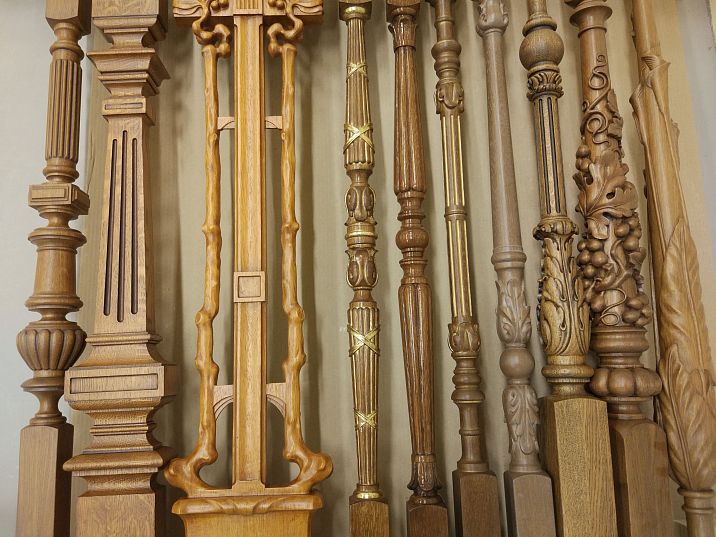
When it comes to creating a safe and aesthetically pleasing staircase, every detail matters. In the capital of Belarus, demand for quality staircase elements is growing, and Minsk balusters are becoming increasingly popular among owners of private homes, interior designers, and construction companies. These vertical support elements not only serve a safety function—they transform an ordinary staircase into a work of architectural art.
The Minsk market for staircase structures is experiencing a real boom. Rising residents' prosperity, active private construction, and higher standards for housing quality create a favorable environment for the development of the woodworking industry. Under these conditions, choosing the right support elements becomes a critically important decision, affecting not only safety but also the overall atmosphere of the home.


Minsk Market for Wooden Staircase Elements: Features and Trends




Regional Specifics of the Belarusian Market
Belarus possesses abundant forest resources, creating unique opportunities for developing the woodworking industry. Minsk, as the country's economic center, concentrates the main production capacities and trading platforms. Local manufacturers actively use spruce, which forms the basis of Belarusian forests, producing affordable and high-quality products.
Belarus's geographical position between Russia and the European Union creates unique opportunities for importing high-quality raw materials and technologies. Minsk-based companies gain access to European quality standards while maintaining competitive pricing. This is particularly noticeable in the premium segment of oak and beech products.
The climatic conditions of the region also influence the characteristics of local wood. A moderately continental climate with clearly defined seasons contributes to the formation of dense and strong wood. The slow growth of trees under Belarusian climatic conditions ensures high material quality.
Our factory also produces:


Pricing policy and competitive environment
The cost of stair elements in Minsk is determined by several factors. Local production ensures competitive prices for pine products – basic elements measuring 50×50×900 millimeters can be purchased for 8 to 15 Belarusian rubles per piece, depending on the wood grade and processing complexity.
Imported hardwood items are significantly more expensive. Russian or European oak elements may cost 80–120 Belarusian rubles per piece. However, their quality and durability justify the high price, especially for prestigious projects.
Competition among local producers stimulates technological development and product quality improvement. Many Minsk companies invest in modern equipment, enabling them to produce items meeting European quality standards.
Get Consultation
Wood science: selecting wood for the Belarusian climate
Pine as the basis of local production
Common pine constitutes the foundation of Belarusian forests and is the primary material for producing stair elements in the region. Local pine is characterized by high density and strength due to slow growth in a moderate climate. Annual rings form evenly, creating an attractive texture.
The resinous nature of Belarusian pine provides natural protection against moisture and biological damage. This is especially important in the high humidity conditions typical of the region during autumn and spring. Properly dried pine practically does not deform and maintains stable dimensions.
Processing local pine is not complicated due to the wood's optimal hardness. It easily undergoes turning, milling, and carving. This allows creating items of varying complexity – from simple cylindrical forms to intricate carved compositions.
Imported species and their characteristics
Oak remains the most prestigious material for elite stair constructions. In Minsk, both Russian and European oak are available. Russian material offers more accessible pricing while maintaining high quality. European oak is valued for its exceptional dimensional stability and expressive texture.
Beech is gaining popularity due to its light-colored wood with contrasting annual rings. This species is ideal for modern Scandinavian-style interiors, which are becoming increasingly popular in Belarus. Beech items are easily stained, expanding design possibilities.
Siberian larch presents an interesting alternative to traditional materials. Its exceptional moisture resistance makes larch elements ideal for humid spaces and outdoor structures. This is especially relevant under the Belarusian climate.
Technology Processes and Production Quality
Modern processing standards
Minsk producers actively adopt European wood processing technologies. Kiln drying under controlled temperature and humidity parameters has become standard for quality products. The moisture content of finished items does not exceed 8–12%, ensuring dimensional stability during use.
Turning is performed on modern CNC machines. This ensures high geometric accuracy and repeatability of items in mass production. Dimensional tolerances do not exceed 0.5 millimeters, meeting European standards.
Final finishing includes multi-stage sanding using abrasives of varying grit. The surface of items becomes perfectly smooth, ready for protective-decorative coatings. Surface quality meets the requirements of the most demanding customers.
Quality control and certification
Quality control systems at Minsk enterprises include checking every stage of production. Incoming raw material inspection excludes defective materials. Intermediate checks during processing ensure compliance with technological requirements.
Finished items undergo final inspection for all parameters: geometric dimensions, surface quality, absence of defects. Only products fully meeting standards reach the market. This ensures the high reputation of Minsk producers.
Many enterprises hold certificates of conformity to international quality standards. This is especially important for export shipments and working with demanding customers. Certification confirms compliance with European safety and quality norms.
Design solutions and architectural styles
Classic directions in Belarusian interior design
The classic style remains popular in Belarus, especially among owners of country houses and cottages. Classic balusters in Minsk Classic design is characterized by strict proportions and restrained decoration. The foundation of a classic baluster is a three-part composition with clear division into base, shaft, and capital.
Traditional turned profiles with smooth diameter transitions create an elegant silhouette. Such items are especially suitable for interiors with high ceilings, where it is important to emphasize the architectural monumentality. Classic forms are universal and never go out of style.
Hand-carved elements represent the pinnacle of classic craftsmanship. Botanical ornaments, geometric patterns, and stylized architectural details transform functional elements into works of decorative-applied art.
Modern trends and minimalism
Scandinavian style is gaining popularity in Belarusian interiors. Light tones, natural materials, simple forms — all of this is reflected in the design of stair elements. Whitewashed pine items fit perfectly into the concept of Nordic minimalism.
Eco-style emphasizes the natural beauty of wood without excessive processing. Preserving the natural texture and color creates a sense of closeness to nature. Such items are coated only with transparent protective finishes that preserve the natural appearance.
Industrial style implies a combination of wood and metal. Wooden elements are complemented by metal inserts or fasteners, creating interesting visual contrasts. Such solutions are especially popular in modern urban interiors.
Technical Specifications and Size Range
Standard sizes for residential spaces
The most in-demand in Minsk are elements with cross-sections of 45×45 and 50×50 millimeters at a standard height of 900 millimeters. These dimensions provide an optimal balance of strength, aesthetics, and cost for most private homes and apartments.
For prestigious objects, elements with increased cross-sections — 60×60 and 80×80 millimeters — are used. These dimensions create a more monumental appearance and emphasize the status of the interior. Increased elements are especially effective in rooms with high ceilings.
Round profiles with diameters of 50–60 millimeters are popular in classical interiors. They create a softer silhouette and are pleasant to the touch, which is important for handrails. Round shapes are also easier to manufacture, which affects the cost.
Non-standard solutions and custom orders
Many Minsk manufacturers offer custom-made elements. This is especially relevant for restoring historical buildings or implementing unique design projects. Non-standard sizes increase the cost by 20–40%.
Variable cross-sections along the height create interesting visual effects. The element may widen toward the base or have decorative thickening in the middle. Such solutions require high lathe operator skill and special equipment.
Curved elements for spiral staircases present a special manufacturing challenge. Wood bending requires special technologies and fixtures. Not all species are suitable for bending — beech and oak are best suited.
Fastening systems and mounting technologies
Traditional fastening methods
Dowel joints remain the gold standard for fastening wooden elements. A cylindrical dowel with a diameter of 8–12 millimeters ensures secure fastening when properly executed. The insertion depth should be no less than 25 millimeters.
Adhesive reinforcement of dowel joints increases reliability several times over. Modern polyurethane adhesives create bonds stronger than the wood itself. Full polymerization takes 24 hours at 20°C.
Wooden dowels made from the same wood species ensure maximum material compatibility. They do not create internal stresses and allow the structure to "breathe" during humidity changes.
Modern fastening systems
Stainless steel metal bolts provide maximum fastening strength. Threaded connections allow adjustment of tension and enable disassembly without damage if needed.
Hidden fasteners preserve the aesthetic of the item, making connection points invisible. Special systems allow creating disassemblable structures for maintenance and repair.
Chemical anchors are used for fastening to concrete and stone bases. Two-component compositions create a high-strength monolithic connection.
Protective coatings and durability
Systems for protection against external influences
Belarus's humid climate imposes special requirements on protective coatings. Deep-penetration primers create a reliable base for finish coatings and protect wood from moisture.
Antiseptic treatment protects against fungi, mold, and insect pests. Modern biocides are safe for humans but effectively suppress microbial growth. Treatment is especially important for elements installed in humid areas.
Fire-retardant treatment may be required for public buildings. Special compositions increase wood's fire resistance and slow flame spread. Such treatment is mandatory for childcare facilities and medical facilities.
Decorative coatings
Oil-based finishes highlight the natural beauty of wood, creating a warm matte surface. Natural oils penetrate deeply into the wood structure and do not form a surface film. Such finishes are easy to renew.
Lacquer systems provide maximum protection against wear and moisture. Polyurethane lacquers create a durable film resistant to mechanical damage. The choice between matte and glossy finish depends on interior style.
Staining allows achieving any desired shade while preserving wood texture. Water-based stains are safe and odorless, which is important for residential spaces. Alcohol-based compositions provide deeper penetration.
Logistics and delivery specifics in Minsk
Capital's transportation infrastructure
Minsk has a well-developed transportation network, facilitating delivery of stair elements throughout the city and region. The ring road allows quick access to any district without passing through the city center — especially important for delivering large items.
Proximity to Russia and the European Union borders creates favorable conditions for importing materials and equipment. Logistics centers in Minsk ensure rapid cargo processing and minimal delivery times.
The river port on the Svyslach River allows delivering wood by water transport, reducing raw material costs. Railway terminals provide connectivity with forestry regions of Belarus and Russia.
Features of packaging and transportation
Wooden items require careful transportation to prevent damage. Special packaging protects against impacts, scratches, and moisture. The use of air-bubble wrap and cardboard padding has become standard.
Climate control during transportation is important to prevent deformation. Sudden temperature and humidity fluctuations can cause cracking or warping of items. Specialized transport ensures stable conditions.
Cargo insurance protects against financial losses due to damage or loss of goods. Most serious suppliers include insurance in the delivery cost.
Service support and warranties
Manufacturer's warranty obligations
Quality Minsk manufacturers provide a warranty on their products for 2 to 5 years. The warranty covers defects in materials and manufacturing, but does not cover damage caused by improper use.
Warranty conditions include compliance with installation and operating rules. Using recommended fasteners and protective coatings is a mandatory condition for maintaining warranty.
Warranty service includes free replacement of defective items and maintenance consultations. Some manufacturers offer on-site service to assess the condition of installed structures.
Technical support and consultations
Qualified specialists help select optimal solutions for specific projects. Consultations include calculating required quantities of elements, selecting fasteners, and providing installation recommendations.
Training installers in proper installation techniques reduces defects and complaints. Many manufacturers conduct seminars and workshops for construction crews.
Post-purchase support includes care and maintenance consultations. Recommendations on the frequency of coating renewal help extend the lifespan of items.
Economic Aspects and Investment Attractiveness
Market analysis and pricing trends
The market for stair elements in Minsk shows steady growth. Rising household incomes and active private construction stimulate demand for quality products. The premium segment is growing especially rapidly.
Price competition among manufacturers restrains price increases for mass-produced items. Basic pine items remain accessible to a broad range of consumers. The premium segment shows moderate price growth.
Seasonal demand affects pricing. Sales peak during the spring-summer period when construction activity increases. Winter months are characterized by lower prices and special offers.
Investment attractiveness of quality items
Quality stair elements represent a long-term investment. With proper care, they last 30-50 years, making them economically advantageous despite their high initial cost.
Their impact on property value is significant. Quality stair structures increase the attractiveness of a property to buyers and may increase its value by 3-7%. This is especially relevant for luxury housing.
Energy efficiency of wooden structures helps reduce heating costs. Wood has low thermal conductivity and helps maintain a comfortable microclimate in rooms.
Ecological aspects and sustainable development
Ecological safety of materials
Wood is a renewable resource, making it ecologically preferable compared to synthetic materials. Well-managed forests can regenerate and even increase their reserves.
FSC certification guarantees that wood comes from sustainably managed forests. Such certification is becoming increasingly important for environmentally conscious consumers.
The carbon footprint of wooden items is significantly lower than that of metal or plastic equivalents. Wood accumulates carbon throughout its lifespan, contributing to climate change mitigation.
Waste reduction and reuse have become a priority for Moscow enterprises. Sawdust and shavings are used to produce fuel briquettes, which are in demand among fireplace and stove owners.
At the end of their service life, wooden items can be recycled or used as biomass fuel. This creates a closed-loop material usage cycle without generating waste.
Restoration and repair extend the service life of quality items. Many elements made from hardwood can be restored and reused.
Design rethinking allows using old elements in new projects. Vintage details are valued in modern design for their authenticity and history.
Future of the industry and innovative technologies
Digitalization of production
The implementation of Industry 4.0 technologies revolutionizes the production of stair elements. CNC machines, robotic lines, and automated quality control systems increase production efficiency and precision.
Digital design allows creating complex 3D models and optimizing structures even before production begins. This reduces errors and accelerates the development process.
The Internet of Things enables real-time equipment monitoring. Predictive maintenance reduces downtime and improves product quality.
New materials and technologies
Thermally modified wood has improved stability and durability characteristics. Processing at high temperatures alters the material's structure at the molecular level.
Wood-based composite materials combine the advantages of natural wood with enhanced performance characteristics. Wood-polymer composites are resistant to rot and deformation.
Nanotechnology opens new possibilities for protective coatings. Nanoparticles create invisible barriers that repel water and contaminants.
Conclusion
The market for stair elements in Minsk is experiencing a period of dynamic development. The combination of abundant forest resources, developed industry, and growing demand creates favorable conditions for manufacturers and consumers. Quality balusters in Minsk become accessible due to competition among manufacturers and the adoption of modern technologies.
Choosing the right stair elements requires a comprehensive approach, considering not only aesthetic preferences but also technical specifications, usage conditions, and budget constraints. Investments in quality products pay off through long service life, safety, and aesthetic satisfaction.
The future of the industry is linked to the adoption of digital technologies, development of eco-friendly materials, and increased quality requirements. Minsk manufacturers actively adapt to these trends, maintaining competitiveness in regional and international markets.
When choosing a supplier of stair elements, it is important to turn to proven manufacturers with long-standing reputations and modern technologies. The company STAVROS sets a new standard of quality in the production of wooden stair structures, combining craftsmanship traditions with innovative solutions. Our experience and technological capabilities allow us to create products that meet the highest international standards of quality and safety. Choosing STAVROS means investing in the reliability, beauty, and longevity of your stair structures.