Article Contents:
- Anatomy of Perfection: What Makes Up a Staircase Balustrade
- Newel Posts - The Heart of the Balustrade
- Handrail - Comfort and Safety
- Treads - Monumentality and Durability
- Newel Base - Foundation of the Structure
- Materials for Staircase Balustrades: Traditions and Innovations
- Wood - Warmth and Elegance
- Metal - Strength and Elegance
- Stone - Timelessness and Monumentality
- Modern composite materials
- Staircase Balustrade Styles: From Classic to Avant-Garde
- Classic Style - Timeless Elegance
- Modern Style - Minimalism and Functionality
- Country and Rustic - Coziness and Naturalness
- Art Deco - Luxury and Expressiveness
- Technical Aspects: Safety and Ergonomics
- Height and Strength - Guarantee of Safety
- Spacing Between Newel Posts - Child Safety
- Handrail Ergonomics - Comfort of Use
- Process of Creating the Ideal Staircase Balustrade
- Design - Foundation of Success
- Manufacturing - Realization of the Concept
- Installation - Precision and Reliability
- Maintenance and Care: Preserving Beauty for Years
- Care for Wooden Balustrades
- Care for Metal Balustrades
- Care for Stone Balustrades
- Investment Appeal: Balustrade as an Investment in Real Estate
- Increase in Market Value
- Long-Term Savings
- Aesthetic Pleasure and Comfort
- Choice by Professionals: What to Pay Attention to When Ordering a Balustrade
- Experience and Reputation
- Materials and Technologies
- Individual approach
- Trends and Innovations: The Future of Staircase Balustrades
- Ecological sustainability and development
- Integration with Smart Home
- Minimalism and Functionality
- Individualization and customization
- Conclusion: Balustrade as a Reflection of Your Individuality
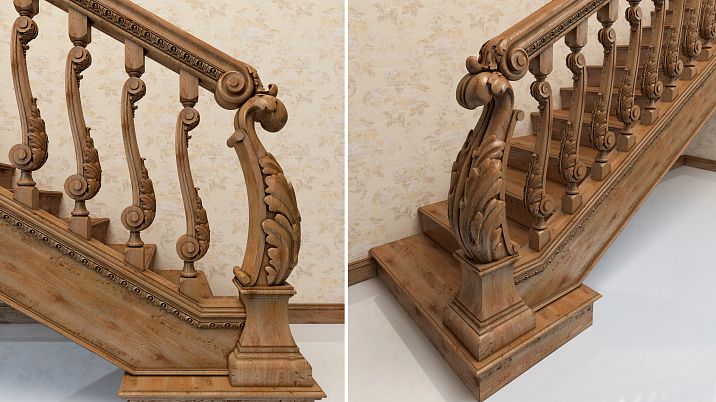
Imagine a majestic staircase rising to the upper floors of your home. What makes it not just a functional element, but a true work of art? Of course, staircase balustrade the architectural element that transforms an ordinary staircase into an elegant interior accent, giving it completeness, elegance, and safety.
Have you ever wondered why a balustrade can so dramatically transform a space? Why does your gaze involuntarily linger on the graceful lines of the balusters and the smooth curves of the handrail? And most importantly — how to choose the perfect balustrade that will become not just a barrier, but a true gem of your home?
In this article, we will reveal all the secrets of creating a perfect staircase balustrade, which will delight you and your guests for years, combining flawless functionality and aesthetic perfection.


Anatomy of Perfection: What Makes Up a Staircase Balustrade
Before diving into the world of design solutions and materials, it is important to understand what elements make up this architectural masterpiece. Knowing the anatomy of a balustrade will help you make an informed choice and create a harmonious composition.




Balusters — the Heart of the Balustrade
Balusters are vertical support elements that form the basis of the entire structure. It is precisely they that define the style, character, and visual perception of the balustrade. The standard cross-section of wooden balusters ranges from 45×45 mm to 60×60 mm, and the height is usually about 900 mm.
Modern balusters impress with a variety of shapes:
- Classic with symmetrical expansion in the middle section
- Polished with smooth curves and tapers
- Carved with decorative elements
- Minimalist with straight lines
- Figurative, imitating various architectural styles
When choosing balusters, it is important to consider not only their aesthetic qualities but also their strength characteristics. The optimal distance between balusters is 120-150 mm, which ensures necessary safety, especially if there are children or pets in the house.
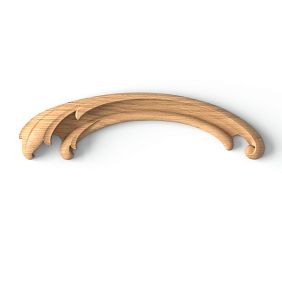
Our factory also produces:




Handrail — Comfort and Safety
The handrail is the upper horizontal part of the balustrade, which people hold onto when ascending or descending. It not only ensures safety but also visually unifies the entire structure, giving it completeness.
The shape of the handrail should be ergonomic, comfortable for hand grip. The optimal width of the handrail is 50-70 mm, and the height from the step level to the top of the handrail should be 900-1100 mm depending on the type of room and safety requirements.
Get Consultation
Newel Posts — Monumentality and Stability
Newel posts (supporting posts) are installed at the beginning and end of the staircase run, as well as at turns. They bear the main load and give the structure monumentality and stability. The distance between newel posts is usually 3-5 meters.
Newel posts can be adorned with decorative elements, carvings, or appliqués, making them not only functional but also aesthetically significant parts of the balustrade.
Balustrade Base — Foundation of the Structure
The balustrade base (or stringer) is the lower horizontal part of the balustrade to which balusters are mounted. It ensures the stability of the entire structure and even load distribution.
Materials for Staircase Balustrades: Traditions and Innovations
Choice of material for staircase balustrade This is not only an aesthetic issue, but also durability, practicality, and harmony with the overall interior style. Let's consider the main materials, their advantages, and features.
Wood - warmth and nobility
Wood remains the most popular material for making balustrades, and this is not surprising. It has a number of indisputable advantages:
- Aesthetic appeal: the natural texture and warm tone of wood create a cozy atmosphere and harmoniously blend into almost any interior.
- Ecological safety: wood is a completely natural material that does not emit harmful substances.
- Restorability: wooden balustrades can be renewed by sanding and applying a new protective coating.
- Wide possibilities for decoration: wood is easily carved, turned, and stained.
Oak - recognized as the leader among premium materials for balustrades. It is distinguished by exceptional strength, durability, and expressive texture. Oak balustrades can serve for centuries, acquiring a noble patina over time.
- Oak: exceptional strength and durability, noble texture, resistance to moisture and mechanical damage.
- Beech: dense and uniform structure, excellent workability, resistance to abrasion.
- Ash: elasticity, impact resistance, expressive texture.
- Spruce: accessibility, ease of processing, pleasant light tone.
Modern wood processing technologies allow significantly extending the service life of wooden balustrades. Special impregnations protect against moisture, mold, insects, and ultraviolet radiation, preserving the natural beauty of wood for many years.
Metal - strength and elegance
Metal balustrades are becoming increasingly popular due to their unique characteristics:
- Exceptional strength: metal withstands significant loads, which is especially important for heavily used staircases.
- Durability: properly treated metal balustrades will serve for decades without losing their aesthetic or functional qualities.
- Variety of design solutions: modern technologies allow creating both massive and incredibly elegant structures.
- Possibility of combining with other materials: metal combines beautifully with wood, glass, and stone.
For manufacturing metal balustrades, the following materials are used:
- Wrought iron: traditional material allowing to create unique patterns and ornaments.
- Stainless steel: modern material with high corrosion resistance and stylish appearance.
- Brass and bronze: materials that give balustrades a luxurious, aristocratic look.
Stone - eternity and monumentality
Stone balustrades are the choice of those who appreciate classicism, monumentality, and are willing to invest in eternal beauty:
- Unmatched durability: stone balustrades can serve for centuries, acquiring a unique charm over time.
- Status: natural stone is always associated with luxury and the high status of the owner.
- Uniqueness of each item: the natural pattern of stone makes each balustrade unique.
For manufacturing stone balustrades, the following materials are used:
- Marble: classic material with a rich color palette and distinctive pattern.
- Granite: exceptionally strong material, resistant to any impact.
- Limestone: a softer and warmer-feeling stone, easily workable.
Modern composite materials
Innovative materials open up new possibilities for creating balustrades:
- Polyurethane: a lightweight, moisture- and UV-resistant material that can imitate any texture.
- Fiber concrete: a strong, durable material combining the lightness and aesthetics of natural stone.
- Fiberglass: a modern material allowing the creation of elegant, almost weightless structures.
Staircase balustrade styles: from classic to avant-garde
Style selection staircase balustrade should harmonize with the overall architectural solution of the house and interior. Let's consider the main stylistic directions and their distinctive features.
Classic style - timeless elegance
Classic balustrades are characterized by symmetry, proportionality, and the use of traditional forms. They are ideally suited for interiors in the styles of Classicism, Empire, and Neorenaissance.
Characteristic features:
- Symmetrical balusters with widening in the middle section
- Massive newels with decorative elements
- Smooth handrail lines
- Use of natural materials (wood, stone)
- Careful detailing and proportioning
Classic balustrades never go out of fashion and impart an aristocratic charm and solidity to the interior.
Modern style - minimalism and functionality
Modern balustrades are characterized by clean lines, minimalism, and the use of innovative materials. They fit perfectly into interiors in the styles of Minimalism, High-Tech, and Contemporary Classicism.
Characteristic features:
- Simple geometric forms
- Minimal decorative elements
- Use of glass, metal, composite materials
- Combining various materials
- Functionality and Ergonomics
Modern balustrades become not just barriers, but architectural accents that emphasize the style and character of the space.
Country and rustic - coziness and naturalness
Balustrades in the country and rustic styles create an atmosphere of village coziness and naturalness. They are ideally suited for country houses, chalets, and eco-style interiors.
Characteristic features:
- Use of unprocessed or roughly processed wood
- Simple, yet expressive forms
- Natural colors and textures
- Handcrafted work and visible signs of processing
- Combination with other natural materials
Such a balustrade creates a sense of closeness to nature and emphasizes the ecological nature of the space.
Art Deco - luxury and expressiveness
Balustrades in the Art Deco style are characterized by striking individuality, bold forms, and the use of expensive materials. They become a central element of the interior, drawing attention.
Characteristic features:
- Geometric patterns and ornaments
- Contrasting material combinations
- Use of exotic wood species, patinated metal, colored glass
- Bold color solutions
- Accent on decorativeness
Art Deco balustrade becomes a true work of art, highlighting the owner's status and taste.
Technical aspects: safety and ergonomics
Besides the aesthetic component, staircase balustrade Must comply with strict safety and ergonomics requirements. Consider the main technical parameters to be taken into account during design and installation.
Height and strength - guarantee of safety
Balustrade height is regulated by construction codes and regulations:
- For internal staircases in residential premises: 900-950 mm
- For balconies and terraces: 1000-1200 mm
- For public buildings: not less than 1100 mm
The structural strength must ensure resistance to lateral loads:
- For residential premises: not less than 0.3 kN/m
- For public buildings: not less than 0.8 kN/m
It is important to remember that insufficient height or strength of the balustrade may lead to serious injuries in case of falling.
Distance between balusters - protection for children
Distance between balusters - a critically important parameter, especially if there are children or pets in the house:
- Optimal distance: 120-150 mm
- For childcare facilities: no more than 100 mm
This distance is chosen so that a child cannot squeeze between balusters or get stuck between them.
Handrail ergonomics - comfort of use
The handrail should be easy to grasp with the hand:
- Optimal width: 50-70 mm
- Shape: slightly rounded, without sharp edges
- Surface: smooth, but not slippery
A properly designed handrail provides reliable support when ascending and descending, which is especially important for elderly people and people with disabilities.
Process of creating an ideal staircase balustrade
Creating a balustrade is a complex multi-stage process requiring a professional approach and attention to detail. Let's consider the main stages of this process.
Designing - the foundation of success
Balustrade design begins with careful measurements and analysis of the space:
- Determining the length and configuration of the staircase
- Calculating the number of balusters and newels
- Material and Style Selection
- Creating detailed drawings of all elements
- Visualization of the final result
At this stage, it is important to consider all technical requirements, stylistic features of the interior, and the client's preferences.
Manufacturing - bringing the concept to life
The manufacturing process of the balustrade depends on the selected material:
For wooden balustrades:
- Selection and preparation of wood (drying, selection)
- Turning or milling balusters
- Manufacturing handrails and baluster supports
- Polishing all elements
- Applying protective coatings and decorative finishing
For metal railings:
- Metal cutting
- Forging or bending elements
- Welding or joining parts
- Sanding and Polishing
- Applying protective coatings (primer, paint, patina)
For stone balustrades:
- Selection and preparation of stone
- Cutting and rough processing
- Turning or milling balusters
- Sanding and Polishing
- Treatment with Protective Compounds
Installation - precision and reliability
Installing the balustrade requires high qualification and special tools:
- Marking locations for installing pedestals and balusters
- Mounting the baluster support to the floor or steps
- Installing pedestals and balusters
- Handrail Installation
- Final finishing and defect removal
Correct installation ensures not only aesthetic appeal but also long-term structural safety.
Maintenance and care: preserving beauty for years
To staircase balustrade To maintain its original appearance and functionality, proper care is required, which depends on the material used.
Care for wooden balustrades
Wooden balustrades require regular maintenance:
- Daily dust removal with soft cloth
- Periodic treatment with specialized wood products
- Renewing protective coating (varnish, oil, wax) every 3-5 years
- Protection from direct sunlight and humidity fluctuations
When scratches or scuffs appear, local restoration can be performed by sanding the damaged area and applying a new coating.
Care for metal balustrades
Metal railings are relatively low-maintenance:
- Regular cleaning of dust and dirt
- Periodic treatment with anti-corrosion compounds (for black metal)
- Polishing (for brass, bronze, stainless steel)
- Touch-up for scratches or chips
Special attention should be paid to joints and welds, where moisture may accumulate and corrosion may begin.
Care for stone balustrades
Stone railings are durable but also require care:
- Cleaning with soft cloth to remove dust and dirt
- Periodic treatment with hydrophobic agents to protect against moisture
- Polishing to maintain shine (for marble, granite)
- Restoration when chips or cracks appear
It is important to use only specialized stone care products that do not contain aggressive components.
Investment attractiveness: railing as an investment in real estate
Quality staircase balustrade It is not just a decorative element, but also a profitable investment that increases property value.
Increased market value
Market research shows that homes with high-quality, aesthetically pleasing staircases and railings are valued 5-15% higher than similar properties with simple constructions. This is because the staircase is often a central interior element that creates the first impression of the home.
Long-term savings
Investing in a high-quality railing made from durable materials saves you on:
- Repair and replacement of components
- Restoration work
- Mitigating consequences of potential accidents
- Energy consumption (some railing types may provide additional thermal insulation)
Aesthetic pleasure and comfort
It is impossible to underestimate the intangible benefits:
- Daily aesthetic pleasure from admiring a beautiful railing
- Comfort and safety when using the staircase
- Pride in your home when hosting guests
- Creating a unique atmosphere that reflects your individuality
Choosing professionals: what to consider when ordering a railing
Choosing a manufacturer is one of the key factors determining the quality, durability, and aesthetic characteristics of the future railing.
Experience and reputation
When choosing a manufacturer, pay attention to:
- The company's tenure in the market
- Portfolio of completed projects
- Customer reviews
- Availability of warranty for products and installation work
Experienced companies usually have proven production and installation technologies, ensuring high quality of the final result.
Materials and technologies
Professional manufacturers:
- Use only high-quality, certified materials
- Apply modern processing technologies
- Ensure precision in manufacturing all elements
- Offer innovative solutions to enhance durability and aesthetic qualities
Individual Approach
An important criterion for selection is the company's willingness to:
- Develop an individual project taking into account all features of your home
- Propose various design and material options
- Adapt standard solutions to your needs
- Provide professional support at all stages, from design to installation
Trends and innovations: the future of stair railings
The world of architecture and design is not standing still, and railings also evolve, reflecting modern trends and technological achievements.
Ecological Sustainability
Modern consumers are paying more attention to ecological aspects:
- Use certified wood from renewable sources
- Use recycled materials
- Ecologically clean coatings and stains
- Energy-efficient production technologies
Integration with smart home
Innovative balustrades become part of a smart home system:
- Built-in LED lighting that responds to motion
- Heating systems for handrails in cold-climate regions
- Sensors monitoring structural load
- Integration with Security Systems
Minimalism and functionality
In design, there is a trend toward simplifying forms while maintaining functionality:
- Clean lines and geometric shapes
- Minimal decorative elements
- Emphasis on material quality and craftsmanship
- Multifunctionality (e.g., built-in storage systems)
Individualization and customization
Modern technologies allow creating unique, personalized solutions:
- 3D modeling and project visualization
- Laser cutting and engraving for creating unique patterns
- Combining different materials in one structure
- Integrating personal symbols, coats of arms, monograms
Conclusion: the railing as a reflection of your individuality
staircase balustrade It is not just a functional element ensuring safety when ascending and descending. It is an architectural ornament that can become a true gem of your home, reflecting your taste and status.
Choosing a railing means choosing not just a stair railing, but a work of art that will delight you and your guests for many years, creating a unique atmosphere in the home and highlighting its individuality.
The company STAVROS, with years of experience, offers a wide range of balusters and fittings for creating unique stair railings. A professional approach, use of only high-quality materials, and attention to every detail allow creating items that become true ornaments of the home.
Trust STAVROS professionals to create your ideal staircase railing, and the result will exceed all your expectations!