Article Contents:
- Why the Ceiling is the Main Character of the Interior
- Psychology of Space: Where the Eye is Directed
- Hiding Flaws: Elegant Camouflage
- Zoning without partitions
- Acoustics and Lighting
- Polyurethane vs. Traditional Materials
- Gypsum: Classic with Drawbacks
- Polystyrene: Cheapness with Compromises
- Polyurethane: technology of the 21st century
- Types of Ceiling Decor: Elements of Luxury
- Ceiling Cornices: Framing the Fifth Wall
- Ceiling Rosettes: Queens of Central Lighting
- Coffers: Depth and Volume
- Ceiling Moldings: Universal Strips
- Domes and Arches
- Decorative Panels and Appliqués
- Decorative Beams
- Selection Rules: How to Avoid Mistakes
- Ceiling Height: The Main Criterion
- Room Area: Proportions Matter
- Interior Style: Harmony of Decor
- Lighting: Decor and Light
- Installing Ceiling Decor: Step-by-Step Guide
- Tools and Materials
- Preparing the ceiling
- Installing Cornices
- Installing Rosettes
- Creating Coasters
- Installing Beams
- Sealing Joints and Final Finishing
- Installing Cove Lighting
- Design Solutions: Ideas for Inspiration
- Classic Coffered Ceiling
- Modern Ceiling with Cove Lighting
- Contrasting Coffered Ceilings
- Rustic Ceiling with Beams
- Baroque Luxury
- Accent Zone
- Ceiling Decoration Care
- Frequently Asked Questions
- Conclusion: Ceiling as a Work of Art

You’ve ever wondered why some interiors stick in your memory and impress you, while others remain bland? The secret often lies in that part of the room we rarely notice upon entering, yet which defines the entire atmosphere of the space. We’re talking about the ceiling — the fifth wall, as designers call it.Ceiling moldingstransforms a plain surface into an architectural masterpiece, from a simple white canvas — into a work of art.
Imagine: you enter a room, raise your gaze, and see an elegant rosette around a crystal chandelier, elegant cornices with delicate relief framing the perimeter, or luxurious coffered ceilings creating depth and volume. This is not an 18th-century palace or an oligarch’s mansion. This is a typical apartment in 2026, where polyurethane molding has truly revolutionized ceiling decoration.
Forget heavy plaster moldings that require structural reinforcement, professional installation, and a cosmic budget. Modern polyurethane elements weigh 10 times less, can be installed over the weekend by one person, cost 5 times less, and last for decades without cracking, crumbling, or yellowing.
This article is your guide to creating a luxurious ceiling. We’ll discuss types of ceiling decoration, selection rules, installation secrets, stylistic solutions, and show you how to transform a standard ceiling into an architectural masterpiece using just a few elements.



Why the Ceiling is the Main Character of the Interior




Psychology of Space: Where the Gaze is Directed
Psychologists assert: ceiling height affects the perception of space more strongly than floor area. In a room with a low ceiling, a person feels constrained, even if the area is 30 square meters. In a room with a high ceiling, there’s a sense of freedom and spaciousness, even if the area is only 15 square meters.
Ceiling Moldingsvisually alters: properly chosen cornices make the ceiling appear higher, coffered ceilings add depth, rosettes create a focal point that draws the gaze. This is not magic, but the intelligent use of architectural techniques known for centuries.
Our factory also produces:


Hiding Flaws: Elegant Camouflage
Standard ceilings in typical homes are rarely perfectly flat. Joints between panels, cracks, height discrepancies, and chandelier wires — all of this requires camouflage. Ceiling cornices cover the junction between wall and ceiling, hiding unevenness and gaps. Rosettes conceal wires and chandelier fixtures. Coffer ceilings divert attention from minor surface defects.
Get Consultation
Zoning without partitions
Ceiling decoration allows you to visually zone a space without erecting walls. Highlight the living room with rosettes and coffered ceilings, the kitchen zone with a simple cornice, and the bedroom zone in a studio with another type of decoration. This creates a logical division while preserving the openness of the space.
Acoustics and Lighting
Relief elements on the ceiling affect room acoustics — they diffuse sound, reduce echo, and make music or voices sound more comfortable. Cornices with hidden lighting create unique lighting scenarios, while rosettes enhance the central lighting effect from the chandelier.
Polyurethane vs. Traditional Materials
Plaster: Classic with Drawbacks
Plaster molding — tradition, history, authenticity. But plaster weighs 15–25 kilograms per square meter, requires reinforcement of ceiling structures, professional installation on metal frames or anchors. Plaster fears moisture (swells, develops mold), is brittle (cracks under vibrations or building settlement), and expensive (5–7 times more expensive than polyurethane).
Polystyrene: Cheap with Compromises
Polystyrene elements are cheap, lightweight, and easy to install. But polystyrene is brittle (breaks under light pressure), yellows after 5–10 years (especially from sunlight), looks cheap (coarse texture, unclear relief), and is flammable (releases toxic gases when burning).
Polyurethane: 21st-century technology
Polyurethane molding combines the best qualities of all materials, eliminating the drawbacks:
Lightness: 1–3 kilograms per square meter. A 2-meter cornice weighs 1–2 kilograms (a plaster equivalent weighs 15–20 kilograms). Can be installed with ordinary adhesive without reinforcing structures.
Durability: elastic impact-resistant material. Does not crumble or crack under vibrations, building settlement, or temperature fluctuations. Withstands accidental impacts (ladders, furniture during moving) without damage.
Moisture Resistance: absolutely does not absorb water. You can confidently use it in bathrooms, kitchens, humid areas, and pools. Does not develop mold, does not swell, does not deform.
Relief Detailing: modern injection molding technologies create sharp relief with fine details, comparable to hand-crafted plaster molding.
Ease of processing: can be cut with a handsaw, circular saw, or office knife. You can adjust elements to any size, cut at an angle, and combine them.
Durability: lasts 30–50 years without quality loss, does not yellow (unlike polystyrene), does not age, does not lose shape.
Affordability: 3–5 times cheaper than gypsum at comparable quality. Crown molding 500–2000 rubles per 2 meters (gypsum — 3000–8000), rose 1000–5000 rubles (gypsum — 5000–20000).
Types of ceiling decoration: luxury elements
Ceiling cornices: framing the fifth wall
Ceiling cornices (plinths, moldings, picture rails) — basic elementPlaster ceilinginstalled along the perimeter of the room at the junction of the wall and ceiling.
Simple cornices: height 3–8 centimeters, smooth or with minimal relief (1–2 lines, simple recesses). Ideal for minimalist, modern, Scandinavian interiors, low ceilings (2.5–2.7 meters). Create neat framing and visually lift the ceiling.
Classic cornices: height 8–15 centimeters, with relief ornaments — meanders (Greek geometric patterns), Ionic (rows of egg-shaped elements), acanthus leaves, beads, palmettes. Characteristic of classical, neoclassical, and Empire interiors, medium ceilings (2.8–3.2 meters). Add elegance and monumentality.
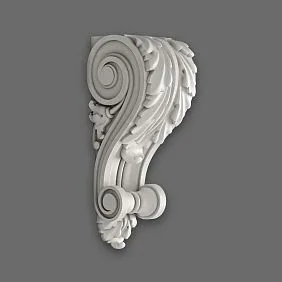
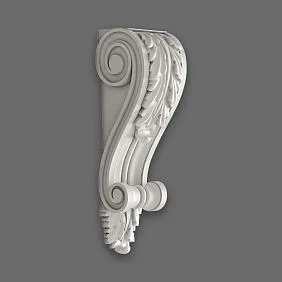
Baroque cornices: height 15–30 centimeters, with lavish multi-level decoration — scrolls, shells, garlands, complex compositions. Suitable for palace, baroque, and rococo interiors, high ceilings (from 3.5 meters). Create luxury, theatricality, and grandeur.
Cornices with a shelf for lighting: with a special recess (shelf) for installing LED strip. Light directed upward toward the ceiling creates a floating ceiling effect, visually increasing height by 20–30 centimeters. The hit of 2026 for modern interiors.
Flexible cornices: made of elastic polyurethane, bendable along a radius. Used for framing curved ceilings, domes, arches, and bay windows.
Ceiling rose: queens of central lighting
Ceiling roses (medallions) — round, oval, or polygonal elements with diameter 20–120 centimeters, installed on the ceiling at the point of chandelier or fixture attachment.
Rose functions:
-
Hiding wires, mounting hardware, chandelier junction boxes.
-
Creating decorative framing, enhancing the visual effect of the chandelier.
-
Visual center of composition, focal point attracting attention.
-
Protection of the ceiling from heating (for powerful incandescent lamps).
Rose types by size:
-
Small (diameter 20–40 cm): for small rooms, low ceilings, compact fixtures.
-
Medium (diameter 50–70 cm): universal, for most living rooms with standard ceilings.
-
Large (diameter 80–120 cm): for spacious rooms, high ceilings, large chandeliers.
Rose types by style:
Simple roses: minimal relief — concentric circles, simple petals, geometric patterns. Modern, minimalist, Scandinavian interiors.
Classic roses: relief ornaments — acanthus leaves, roses, lilies, grapevines, geometric rosettes. Classic, neoclassical, Provence, English style.
Baroque roses: lavish multi-level decoration — complex scrolls, angels, garlands, shells, compositions of multiple elements. Palace style, baroque, rococo.
Modern roses: geometric patterns — hexagons, stars, abstract compositions. High-tech, modern, art deco.
Unusual applications: roses can be installed not only under chandeliers, but also simply on the ceiling as decorative elements (several roses of different sizes creating a composition), on walls as panels (a rose painted in contrasting color becomes an art object).
Cassette ceilings: depth and volume
Coffers are recesses (or imitations of recesses) on the ceiling, framed by moldings. Classical coffers are square or rectangular cells forming a regular grid on the ceiling.
History: coffered ceilings are known since antiquity. In ancient Roman architecture, coffers were created to reduce the weight of stone vaults — removing part of the material to form recesses. As a side effect, an attractive decorative effect was achieved.
Modern polyurethane coffers imitate classical recesses without requiring complex structures. These are flat frames (moldings) 5–15 centimeters wide, glued to the ceiling to create visual cells.
Effects of coffers:
-
Visual depth and volume — a flat ceiling appears multi-level.
-
Rhythm and order — a regular grid creates harmony.
-
Visual reduction of excessively high ceilings — coffers make proportions more comfortable.
-
Acoustic effect — the relief scatters sound, reducing echo.
-
Concealing defects — coffers divert attention from ceiling irregularities.
Coffer sizes: depend on room area and height. For standard rooms 15–25 m², optimal sizes are 60×60, 80×80, 100×100 centimeters. For large halls — 120×120, 150×150 centimeters.
Design options:
-
Simple coffers — ceiling and coffers in one color, relief creates play of light and shadow.
-
Contrasting coffers — inner cell parts are painted in another color (darker or lighter than the base tone).
-
Coffers with decor — a rosette, panel, or ornament is installed inside each cell.
-
Coffers with lighting — LED strips are installed along the perimeter of the coffers (behind the moldings).
Ceiling moldings: universal strips
Ceiling moldings — narrow decorative strips 3–12 centimeters wide, 2–2.4 meters long. Used to create coffers, frame individual ceiling zones, decorative compositions.
Simple moldings: smooth rectangular or with one recess. Minimalism, modernity.
Classic moldings: with relief — beads, Ionic, geometric patterns. Classic, neoclassical.
Flexible moldings: bendable along a radius, used for curved elements — framing round ceiling inserts, domes.
Domes and Arches
Domes — volumetric elements imitating architectural vaults. Diameter 40–150 centimeters, height 10–50 centimeters. Installed on the ceiling as standalone decorative elements or in combination with rosettes, chandeliers.
Domes create visual height, a cathedral or church effect, luxurious hall ambiance. Used in spacious rooms with high ceilings (from 3.5 meters), classical, baroque, neoclassical interiors.
Decorative panels and appliqués
Panels — flat decorative elements 30×30, 60×60, 80×80 centimeters with relief patterns. Installed on the ceiling as individual accents — in the center of coffer cells, in room corners, symmetrically along the perimeter.
Appliqués — small volumetric elements (10×10, 20×20 centimeters) — rosettes, scrolls, ornaments. Used to enhance decoration at molding junctions, in coffer corners, as additional accents.
Decorative beams
Decorative beams — imitation of wooden load-bearing beams. Polyurethane beams are lightweight (2–5 kg), hollow inside (can hide wires, pipes), look like natural wood (texture, color).
Sizes: width 10–20 centimeters, height 10–20 centimeters, length 2–4 meters. Beams are installed parallel (create direction, visually elongate the room) or crosswise (create a coffered effect).
Beams are ideal for country, rustic, Provence, chalet, loft, Mediterranean styles. They add coziness, warmth, connection to nature, visually reduce excessively high ceilings.
Selection rules: how to avoid mistakes
Ceiling height: main criterion
Low ceilings (2.5–2.7 meters): use thin cornices 3–6 cm high, small rosettes 20–40 cm in diameter, avoid coffered ceilings and bulky elements (they visually lower the ceiling even more). Best choice — simple white cornice + small rosette or without rosette at all.
Medium ceilings (2.8–3.2 meters): universal height, suitable cornices 8–12 cm, rosettes 50–70 cm, coffered ceilings with 80×80 cm cells. You can use moderate decorative elements.
High ceilings (3.3 meters and above): boldly use bulky cornices 15–30 cm, large rosettes 80–120 cm, coffered ceilings with 100×100, 120×120 cm cells, domes, beams. Small elements will disappear into the height.
Room area: proportions matter
Small rooms (up to 15 m²): minimal decoration — thin cornice, small rosette or without it. Excess molding will overload the space.
Medium rooms (15–25 m²): medium elements, coffered ceilings with large cells (4–6 cells per room).
Large rooms (25+ m²): large elements, complex coffered compositions (9–16 cells), several rosettes.
Interior style: harmony of decor
Classic: cornices with classical ornaments (meanders, Ionic, acanthus), rosettes with floral motifs, coffered ceilings with decorative inserts. Color — white, cream, with gold patina.
Neoclassical: simplified classical elements, more restrained and strict. Cornices with minimal relief, medium rosettes with geometric patterns, simple coffered ceilings. Color — white, gray, beige.
Baroque and Rococo: ornate cornices, large rosettes with angels and garlands, coffered ceilings with rich decoration inside cells. Color — white with gold, cream, pastel tones.
Minimalism: simple smooth cornice 3–5 cm, without rosette or small simple rosette. Color — white, matching ceiling or walls.
Scandinavian: simple white cornice, without additional decoration. Creates neat framing without overloading.
Loft: decorative beams with wood or metal texture, minimal molding. Or without molding at all (exposed utilities, concrete ceiling).
Provence: medium-sized cornices with floral ornament, rosettes with floral motifs. Color — white with aging effect, patina.
Art Deco: cornices and rosettes with geometric ornaments — zigzags, fans, stepped profiles. Color — white, black, gold, contrasting combinations.
Lighting: decoration and light
If planning concealed lighting — choose cornices with a shelf protruding 10–15 cm from the ceiling. If the chandelier is large and complex — choose a large rosette matching the chandelier. If lights are spotlights or recessed — no rosette needed.
Installing ceiling decoration: step-by-step guide
Tools and materials
Tools: circular saw (or handsaw with stop block), utility knife, tape measure, pencil, laser level (or water level), ladder, putty knife, sandpaper (grit 120–180), brushes or roller.
Materials: ceiling decoration (cornices, rosettes, moldings), polyurethane mounting adhesive, acrylic sealant (white), spackling compound (if needed for leveling), primer, paint (if required), LED strip (for backlighting).
Ceiling preparation
Cleaning: ceiling must be clean, dry, and degreased. Remove dust, cobwebs, grease stains. If ceiling is painted with glossy paint, lightly sand it to improve adhesion.
Leveling: polyurethane is flexible and follows minor irregularities. But significant height differences (over 5 mm) are better leveled with spackling compound. Otherwise, cornices will appear visually crooked, coffered ceilings — uneven.
Priming: prime ceiling with deep-penetration acrylic primer. This improves adhesive bond and prevents peeling.
Installing cornices
Marking: measure from ceiling down the wall the height of cornice plus 2–3 mm. Draw a horizontal line around the room using laser level and pencil. This is the reference for the bottom edge of the cornice.
Cutting angles: for joining cornices at internal corners (90 degrees), cut each element at a 45-degree angle. Use stop block or circular saw. Note: for internal corners, the back part of the cornice (attached to wall) is longer than the front. For external corners — opposite.
Adhesive application: apply adhesive to the back side of the cornice (on both surfaces — attached to wall and ceiling) in a zigzag pattern. Press cornice against wall and ceiling, aligning bottom edge with marking. Hold for 30–60 seconds. Wipe off excess adhesive with damp cloth.
Joining straight: if wall is longer than 2 meters (length of one element), join several cornices. Cutting at 45-degree angle (miter joint) is more aesthetic — joint is less noticeable. Apply adhesive to ends of both elements before joining.
Fixation: if cornice is heavy, secure with painter’s tape until adhesive dries (12 hours). Or temporarily nail with small nails (then remove, patch holes with spackling).
Socket Installation
Marking the center: find the center of the ceiling (intersection of diagonals from corners) or the fixture mounting point. Mark with a pencil.
Wire hole: if the socket is installed under a chandelier, drill a hole in the center of the socket large enough for wires and mounting (usually 5–10 cm). Use a circular saw or jigsaw.
Adhesive application: apply adhesive to the back of the socket around the perimeter (not in the center to avoid interfering with the hole). Press the socket onto the ceiling, aligning the center with the mark. Hold for 60–120 seconds (heavier than valances).
Fixation: sockets are often heavy and require additional fixation. Use painter’s tape (attach tape strips from the socket to the ceiling in a crisscross pattern) or temporary supports (e.g., a mop leaning against the center of the socket).
Creating coffered ceilings
Grid planning: draw a grid for coffered ceilings on the ceiling with a pencil. For a 4×5 meter room, you can make 6 coffers (3×2) approximately 130×125 cm each. Use a laser level for accuracy.
Molding cutting: cut moldings to the required length. Each coffer requires 4 pieces (perimeter of a rectangle). Cut corners at 45 degrees for neat joints.
Adhesive application: apply adhesive to the back of the moldings and press them onto the ceiling along marked lines. Start from the far corner of the room and move toward the entrance.
Decor inside coffers (optional): after the main structure dries, you can install decorative panels, sockets, or inserts inside each cell.
Beam installation
Marking: mark lines on the ceiling where beams will run. For parallel beams, use a tape measure and laser level. Beam spacing: 60–100 cm.
Mounting: beams are hollow inside and attach to special brackets or simply with adhesive (if lightweight). For heavy beams, use additional mounting with screws into the ceiling (screws are driven from inside the beam through the top wall, heads hidden).
Joint sealing and final finishing
Sealant: after the adhesive dries (12–24 hours), inspect all joints. Fill small gaps (up to 2 mm) with white acrylic sealant. Push sealant into the gap, smooth with a wet finger, wipe excess with a damp cloth.
Spackle: fill large gaps with acrylic spackle. After drying, sand with fine grit (180–220).
Painting: if elements are white and you want another color, paint with acrylic paint. Apply with brush or roller in 1–2 coats. For hard-to-reach areas, aerosol paint is convenient.
Patina: for a luxurious effect, apply gold, silver, or bronze patina. Base coat (white or cream), then patina with a sponge, highlighting relief.
Installing lighting
For valances with a shelf: after installing the valance, lay an LED strip on the shelf, directing light upward toward the ceiling. Secure the strip with double-sided tape (usually available on the back of the strip). Connect the power supply and hide wires behind the valance.
For coffers: LED strip can be installed around the coffer edges (behind moldings) or inside the cells (directing light toward the center).
Control: connect lighting to a dimmer or smart home system for adjusting brightness, color, and creating lighting scenes.
Design solutions: ideas for inspiration
Classic coffered ceiling
White ceiling with 100×100 cm coffers (9 cells for a 4×5 meter room), framed by 8 cm wide white moldings. In the central cell — a large classic socket 70 cm in diameter with a chandelier. Entire ceiling is white, relief creates play of light and shadow. Around perimeter — classic 12 cm high valance. Style — neoclassical, elegance, harmony.
Modern ceiling with lighting
Smooth white ceiling without additional decor. Around perimeter — simple 10 cm high valance with a shelf for lighting, set back 12 cm from the ceiling. Behind valance — cool white LED strip. Light directed upward, reflected off ceiling, creating a floating ceiling effect. Visually, ceiling appears 20–30 cm higher. Style — modern minimalism.
Contrasting coffers
Light gray ceiling, coffers framed with white moldings. Inside each cell, ceiling painted one tone darker (medium gray). Creates clear contrast, graphic effect. Around perimeter — 10 cm high white valance. Style — modern classic, art deco.
Rustic ceiling with beams
White ceiling with decorative "wood" beams (dark walnut or oak), installed parallel with 80 cm spacing. Beams create direction, visually elongating the room. Around perimeter — simple white valance. Style — Provence, country, Mediterranean.
Baroque Luxury
Cream-colored ceiling with large 120×120 cm coffers, framed by baroque moldings with scrolls. Inside each cell — decorative panel with plant ornament. In the center of the ceiling — a large baroque rosette 100 cm in diameter with angels and garlands, with a massive crystal chandelier. Around the perimeter — a baroque cornice 25 cm high. All molding with gold patina. Style — baroque, palace luxury.
Accent zone
In the studio or dining room, designate the living area with coffers and a rosette above the coffee table, and leave the dining area with a simple cornice. This creates visual zoning without walls.
Ceiling decoration care
Regular cleaning: wipe the decor with a dry soft cloth or vacuum with a soft brush every 3–6 months. Dust accumulates in the relief, making the molding dull.
Wet cleaning: once a year, wipe with a damp cloth and mild detergent. Avoid abrasives and aggressive chemicals.
Paint refresh: after 5–10 years, paint may fade. Lightly sand, prime, and repaint.
Repair damage: sand and repaint scratches. Fill dents and repaint. If an element has detached, apply fresh adhesive, press down, and secure with tape.
Frequently asked questions
Can polyurethane decor be installed on a stretch ceiling?
No, you cannot glue it directly to the fabric (it will sag). However, you can install a cornice on the wall slightly below the stretch ceiling level, creating a decorative frame.
How long does installation take?
Cornices around a 4×5 meter room — 3–4 hours. Rosette — 30 minutes. 9-cell coffers — 6–8 hours.
Can polyurethane decor be painted?
Yes, with any water-based paint.
How long does it last?
30–50 years with proper installation.
Is special adhesive needed?
It is recommended to use polyurethane adhesive or universal mounting polymer adhesive, such as 'Moment Montazh'.
Conclusion: ceiling as a work of art
The ceiling is not just a surface above your head. It is the fifth wall, a canvas for creativity, an opportunity to transform a typical apartment into a unique space. Polyurethane molding makes this possibility accessible to everyone: lightweight, durable, moisture-resistant, inexpensive, and easy to install.
From classic coffers to modern cornices with lighting, from baroque rosettes to minimalist moldings — the choice is limitless. You can create a palace, Scandinavian calm, Provençal romance, Art Deco elegance — it all depends solely on your imagination.
STAVROS offers a professional collection of polyurethane ceiling decor: ceiling cornices over 100 models (simple smooth ones 3–8 cm high for minimalism, classic ones with ornament 8–15 cm, baroque ones with lavish decor 15–30 cm, cornices with a shelf for hidden lighting), ceiling rosettes over 80 models in diameter from 20 to 120 cm (simple geometric, classic with plant motifs, baroque with angels and garlands, modern with abstract patterns), moldings for creating coffers (smooth, with ornament, flexible for curved surfaces) 3–12 cm wide, domes and vaults 40–150 cm in diameter for creating architectural accents, decorative beams with wood texture (oak, walnut, wenge) 2–4 meters long, decorative panels and inserts for decorating coffers. Each element is made of high-quality polyurethane with density 280–320 kg/m³, ensuring maximum strength, sharpness of the finest relief details, durability without deformation. All elements are primed with white primer and ready for installation or painting. STAVROS offers color matching in any RAL catalog color, patination (gold, silver, bronze, aged copper), creation of Venetian plaster and marble effects on molding. Comprehensive solutions: we will select all elements for your ceiling decoration (cornices + rosettes + moldings for coffers + adhesive + sealant + paint) in a unified style. Professional consultations: our specialists with 30 years of experience in decorative finishing will help calculate the number of elements, select sizes to fit ceiling heights, create a 3D visualization of your ceiling with selected elements, provide detailed installation and lighting setup recommendations. Own warehouse, fast delivery across Russia, flexible discounts for designers and construction companies. Quality guarantee: all elements undergo inspection for defects, warping, and uneven relief. Visit STAVROS showrooms in Moscow and St. Petersburg to see assembled ceiling compositions, evaluate relief quality and material density, and choose ideal elements to create your dream ceiling. STAVROS — European-level quality, individual approach, professional support from selection to installation. Create ceilings that amaze, inspire, become works of art, and a source of pride for your home.