Article Contents:
- Different Materials - Unified Aesthetics: Wood and Polyurethane
- Physical Properties and Their Significance
- Price Accessibility and Rationality
- Aesthetic Unity Through Finishing
- How Relief Decoration Emphasizes the Structure of Wooden Surfaces
- Framing as an Accent
- Texture Contrast
- Color Contrast as a Tool
- Principles of Combining Light and Natural Textures
- The Principle of Dominance
- Color Temperature and Its Influence
- Scale of Elements and Their Interaction
- Use of Appliqués and Ornaments to Create Volume
- Multi-Level Composition
- Shadows as a Tool for Volume
- Combined Appliqués
- Interior Styles Where Wood and Moldings Work Together
- Classicism - Grand Symmetry
- Baroque - Ornate Decorativeness
- Neoclassicism - Elegant Reserve
- Art deco - geometric luxury
- Modern eclecticism
- Conclusion

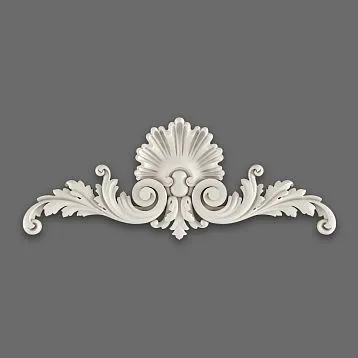
High-end interiors are built on the combination of materials, each of which reveals the strengths of the other.Relief Decorationfrom polyurethane andSolid Wood ItemsWood and polyurethane — two materials with opposing characteristics that, when harmoniously combined, create spaces of exceptional expressiveness. The smooth plasticity of moldings contrasts with the lively texture of wood. The whiteness of polyurethane elements highlights the warmth of natural wood. The lightness of the modern material is balanced by the heaviness of the traditional. This combination opens up unlimited possibilities for creating interiors where classical grandeur meets modern practicality.


Different Materials - Unified Aesthetics: Wood and Polyurethane
It seems that natural wood and synthetic polyurethane — materials from different worlds. Yet it is precisely their differences that create the foundation for harmonious interaction.carved wooden inlayscarry the living energy of the natural material with its unique texture.Polyurethane appliquésensure ideal geometric forms and flawless repeatability of elements.




Polyurethane differs by absolute dimensional stability at any humidity and temperature.
Neoclassicism - elegant restraintRelief DecorationDoes not deform, crack, or swell due to moisture. This is critical for elements located near moisture sources — in the kitchen, bathroom, near windows. Wood lives and breathes, changing size depending on air humidity.Solid Wood ItemsRequire acclimatization before installation and proper protective coating.
The weight of materials affects structural solutions. Polyurethane elements are lightweight — a large cornice or rosette weighs dozens of times less than a similar wooden one. This simplifies installation and reduces load on walls and ceilings.wooden ornamentHeavy, creating a sense of solidity and prestige. The weight of a wooden element is perceived as an indicator of its value and longevity.
Surface treatment differs significantly.Polyurethane appliquésAre produced with a perfectly smooth white surface, ready for painting.carved wooden inlaysHave a living texture with growth rings, pores, and natural color variations. This texture can be emphasized by transparent finish or concealed by opaque enamel.
Our factory also produces:


Price accessibility and rationality
The cost of polyurethane elements is significantly lower than carved wooden items of comparable complexity.Relief DecorationIs produced by molding, ensuring low cost with high detail.wooden ornamentIs created by hand carving or mechanical processing, requiring time and skill.
A rational strategy combines both materials, using each where its advantages are maximized. Large architectural elements — cornices, moldings, rosettes — are made of polyurethane. Accent decorative details requiring live texture and tactile quality — from solid wood.Solid Wood ItemsAppear as precious inlays against polyurethane molding, drawing attention.
Material longevity is comparable with proper use. Polyurethane does not fear moisture, is not damaged by insects, and requires no special care. Wood, with quality protective finish, serves for decades, gradually acquiring a noble patina.carved wooden inlaysCan be restored — sanded and repainted, virtually extending their life indefinitely.
Get Consultation
Aesthetic unity through finishing
The key to harmonious combination — a unified finishing system. White enamel unifies polyurethane and wooden elements into a monochromatic composition.Relief DecorationandSolid Wood ItemsAppear as elements of a unified system under white paint. The difference is only tactile — smooth polyurethane and warm wood to the touch.
Toning creates color nuances while preserving the overall palette. Polyurethane elements are painted cream or light gray. Wooden elements retain their natural tone with transparent finish or are toned to similar shades.Polyurethane appliquésLight ones serve as framing for more color-saturated wooden inserts.
Patination — a technique equally applicable to both materials. A base light layer is covered with dark patina, which remains in ornament recesses.wooden ornamentAnd polyurethane elements with patina appear aged, vintage. This common finishing technique unifies different materials into a single style.
How molding decoration emphasizes the structure of wooden surfaces
Architectural composition is built on the interaction of elements, where each enhances the expressiveness of the other.Relief DecorationCreates a white geometric structure — frames, moldings, cornices. Within this structureSolid Wood ItemsReveal their natural beauty — texture, warmth of tone, tactile quality.
Framing as accentuation
Polyurethane moldings form frames around wooden panels. The smooth white frame contrasts with the textured wooden surface inside.carved wooden inlaysAt the center of a panel framed by molding, appear as a jewel in its setting. The gaze moves from the light frame to the dark center, focusing on the carved decoration.
Wide polyurethane moldings create a visual field around the wooden element.wooden ornamentSurrounded by smooth wall space and ornamental molding. This space acts as a pause, allowing one to appreciate the details of the carving and perceive the complexity of the ornament. Without framing, wooden decoration fades against the saturated surface.
Multi-level framing creates depth. The first level is a narrow wooden molding directly adjacent to the panel. The second level is a wider polyurethane molding at a distance. The third is an outer decorative molding. This layering creates visual immersion, guiding the eye from the periphery to the center of the composition, where it is locatedcarved wooden element.
Texture contrast
The perfectly smooth surface of polyurethane highlights the relief of wood.Relief DecorationIt has no texture — it is a pure form without visual noise. On this neutral background, the texture of wood with growth rings, pores, and natural variations appears most vividly. The eye perceives the contrast as an enrichment of the composition.
The direction of the wood's texture plays an important role. Vertical grain creates an upward thrust. Horizontal grain expands the space.Solid Wood ItemsWith vertical texture in a horizontal frame of polyurethane molding, it creates visual tension. The texture strives to break out of the frame, creating dynamism.
The degree of wood processing affects the contrast with molding. Smoothly sanded wood with varnish approaches the texture of polyurethane, with minimal contrast. Brushed wood with pronounced relief texture contrasts maximally with the smoothness of molding.wooden ornamentWith emphasized texture against white molding, it creates a dramatic effect.
Color contrast as a tool
White molding and natural wood — a classic combination.Polyurethane appliquésWhite color creates a neutral background on which warm wood tones — from light honey to dark brown — resonate fully. This contrast of warm and cool, saturated and neutral colors enriches the interior palette.
Tonal contrast enhances the perception of form. Dark wood in a light molding frame creates maximum contrast.carved wooden inlaysMade of walnut or wenge on a white background, they read as graphic silhouettes. Each carving detail is clearly visible due to contrast with the background.
Inversion of colors creates an alternative solution. White wood — bleached oak or painted wood — framed by colored molding.Relief DecorationIt is painted in gray, beige, pastel tones. Light wood becomes an accent on a colored background, inverting the traditional scheme.
Principles of combining light and natural textures
The balance between light artificial and warm natural textures — an art that defines the atmosphere of the interior.Solid Wood ItemsThey bring warmth and life.Relief DecorationIt creates solemnity and purity of form. The proportion of these elements determines whether the interior will be warm and cozy or cool and formal.
Rule of dominance
One material should dominate, creating the composition's foundation. The second serves as an accent, enriching the foundation. Dominance of polyurethane molding creates a classic formal interior.Polyurethane appliquésThey cover most architectural elements — cornices, moldings, rosettes, frames.wooden ornamentIt is used point-wise — at the center of the main panel, on the fireplace arch, at the headboard of the bed.
Dominance of wood creates a warm, intimate interior. Wooden panels cover a significant area of walls. Solid wood furniture sets the tone of the space. Polyurethane molding is used functionally — as cornices, door and window frames.Relief DecorationIt does not compete with wood for attention, but serves as a technical frame for the composition.
Balance of materials creates a complex, rich environment. Approximately half of architectural elements are polyurethane, half are wooden.carved wooden inlaysThey alternate with polyurethane. Wooden panels are framed by molding, which occupies comparable area. This creates a visual dialogue between materials.
Color temperature and its influence
The color temperature balance of the palette is critical for comfort. White molding — a cool element. Natural wood — warm. Dominance of cool creates a sense of freshness, but may be perceived as uncomfortable.Solid Wood ItemsThey sufficiently warm the interior, compensating for the coldness of whiteness.
The shade of white affects the temperature balance. Cool white with a bluish undertone enhances coolness. Warm white—creamy, with a yellowish tint—approaches the temperature of light wood.Polyurethane appliquésWarm white blends more easily with wood, creating a harmonious transition.
The shade of wood also varies by temperature. Cool gray-brown tones—bleached oak, ash—are closer to the temperature of white molding. Warm honey, reddish, and reddish-brown tones—cherry, walnut, teak—create maximum temperature contrast with white.wooden ornamentCool shades integrate more softly, warm shades create bright accents.
Scale of elements and their interaction
The size of elements made from different materials should be coordinated. Large polyurethane cornices require proportionally sized wooden panels. Fine molding pairs well with delicate wooden inserts.Relief DecorationLarge-scale elements suppress small wooden elements, making them insignificant.
The proportion of frame width to the size of the framed element is usually 1:5 - 1:8. A wooden panel 60 centimeters wide is framed by a polyurethane molding 8-12 centimeters wide.carved wooden inlaysA 30-centimeter diameter element is framed by molding 4-6 centimeters wide. This creates a visual balance between the frame and its content.
The density of element placement affects perception. Frequent alternation of polyurethane and wooden details creates a busy, visually noisy effect. Grouping elements of one material with pauses of another creates rhythm and readability.Solid Wood ItemsConcentrated in an accent zone, the rest of the space is finished with molding.
Use of overlays and ornaments to create volume
Wall depth is created not by the quantity of decoration, but by a thoughtfully designed relief system.Polyurethane appliquésandcarved wooden inlaysLocal volumetric elements that create visual accents and shape the surface’s plasticity.
Multi-level composition
First level — basic wall plane. Second level — polyurethane framing moldings protruding 15-20 millimeters. Third level — wooden overlays inside the frames, protruding another 10-15 millimeters. This three-level system creates real physical depth of 30-40 millimeters, perceived as significant volume.
Relief gradient from flat to volumetric directs the gaze. The periphery of the composition is flat or has minimal relief. Relief increases toward the center.wooden ornamentAt the center, the relief has maximum depth — 15-25 millimeters. This creates a visual funnel drawing the gaze toward the compositional center.
Counter-relief — recesses in the wall plane — adds additional depth. A wooden panel is recessed 10-15 millimeters relative to the wall plane.Relief DecorationThis recess is framed, creating a border around the niche. Visual depth accumulates — the recessed panel plus the protruding frame create a total relief of 25-35 millimeters.
Shadows as a tool for volume
Volume is perceived through shadows created by relief. Side lighting maximally emphasizes volume — every protrusion casts a shadow.carved wooden inlaysDetails with deep relief under side lighting demonstrate maximum plasticity. Shadows in the recesses of the relief contrast with illuminated protrusions.
Directed lighting from below or above creates dramatic shadows. A light fixture placed undera wooden carved overlaydirects light upward. Shadows fall upward, creating an unusual effect that attracts attention. Polyurethane molding, with its sharp profile, casts geometric shadows.
Surface color affects the perception of shadows. A white surface reflects light in shadows, making them gray and soft. A dark surface absorbs light, making shadows deep and nearly black.wooden ornamentNatural color creates a medium contrast of shadows — sufficient for volume, but not dramatic.
Combined overlays
The two-material overlay creates richness of textures in one element. The base is a polyurethane rosette or cartouche. A carved wooden element is inserted in the center.Polyurethane appliquésThey provide a symmetrical geometric frame.Carved wooden insertIt adds natural texture and warmth.
The layered composition is built by overlaying elements. The first layer is a large polyurethane rosette, 40 centimeters in diameter, on the wall. The second layer is a wooden ring, 30 centimeters in diameter, placed over the rosette. The third layer is a central carved overlay, 20 centimeters in diameter. This layering creates visual depth and richness of composition.
Framing the carved element with a polyurethane strip creates a clear boundary.wooden ornamentAn irregular organic shape is framed by a geometric polyurethane profile. The contrast between organic and geometric forms enhances the expressiveness of both elements. The strip can be narrow - 3-5 centimeters - creating a delicate border, or wide - 10-15 centimeters - forming a powerful frame.
Interior styles where wood and moldings work together
The combination of wooden elements and molded decoration is universal, but in each style this combination acquires its own character.Solid Wood ItemsandRelief DecorationThey adapt to the stylistic concept through proportions, density of decoration, and finishing methods.
Neoclassicism - solemn symmetry
Neoclassicism uses both materials equally. Polyurethane molding forms the architectural framework - cornices, moldings, pilasters.carved wooden inlaysThey create accents at focal points - in the center of panels, on the capitals of pilasters, at the corners of frames. Symmetry is absolute - each element on one wall has a mirror reflection.
Neoclassical ornamental motifs - acanthus leaves, palmettes, rosettes, meanders.wooden ornamentIt repeats motifs of polyurethane molding, creating unity in decorative language. The wooden carved rosette in the center of the ceiling corresponds with smaller polyurethane rosettes at the corners.
Neoclassicism's color palette is restrained - white, cream, light gray for molding. Natural wood tones or bleached wood for wooden elements.Solid Wood ItemsThey, with gilding on a white background of molding, create the solemnity of formal interiors.
Baroque - lavish ornamentation
Baroque demands excessive decoration.Relief DecorationIt covers most architectural elements - intricately profiled cornices, multi-tiered moldings, volumetric cartouches.carved wooden inlaysThey add even greater relief, creating almost sculptural compositions.
Baroque ornament is dynamic - volutes, garlands, putti, mascarons.wooden ornamentIt has deep relief - 20-30 millimeters - creating dramatic shadows. Asymmetry of elements within a symmetrical composition is characteristic of Baroque - the left volute differs from the right in details, while maintaining overall mirror symmetry.
Gilding is a characteristic feature of Baroque.Polyurethane appliquésAnd wooden elements are covered with gold leaf. A white background with gold decoration - a classic scheme. Or the base is painted in rich colors - emerald, burgundy, blue - while gold creates accents on protruding parts of the relief.
Neoclassicism adopts the forms of classicism, but simplifies and lightens them.
Neoclassicism takes the forms of classicism, but simplifies and lightens them.Solid Wood ItemsandRelief DecorationUsed moderately. Wall panels are present, but fewer and larger. Ornament is delicate, with shallow relief of 5-10 millimeters.
Element proportions are classical, but scale is smaller. Cornices 10-15 cm wide instead of 20-30 cm in classicism.carved wooden inlaysDiameter 15-20 cm instead of 30-40 cm. This miniaturization creates elegance and lightness while preserving classical compositional logic.
Neutral colors - white, various shades of gray, beige.wooden ornamentNatural wood is used selectively - on the main panel, at the headboard of the bed - as a precious accent in a monochromatic space.
Art Deco - geometric luxury
Art Deco combines geometry with richness of materials.Polyurethane appliquésThey have geometric shapes - hexagons, octagons, stepped pyramids.carved wooden inlaysThey use geometrized plant motifs - stylized leaves, symmetrical fans, sun rays.
Material contrasts are maximal. Polyurethane molding is painted black, dark brown, graphite. Light wood - maple, beech, bleached oak - or vice versa, dark on a light background.Solid Wood ItemsWith metal inlay - brass, bronze - they create the characteristic Art Deco combination of wood and metal.
Gloss is characteristic of the style.Relief DecorationIt is covered with high-gloss lacquer. Wood is also lacquered to a mirror finish. This gloss creates the glamour of the 1920s-30s, the jazz and skyscraper era.
Modern Eclecticism
Modern interiors freely mix elements of various styles.wooden ornamentClassical motifs are combined with minimalist polyurethane moldings without decoration. Baroque carved applique is placed in a minimalist white frame. This eclecticism creates richness of visual impressions.
Unconventional combinations create individuality. Traditional carved decoration is painted in unexpected colors - bright, pastel, metallic.Polyurethane appliquésThey are used not as frames, but as independent art objects on the wall.carved wooden inlaysThey are mounted asymmetrically, breaking classical symmetry.
Scaling elements creates a modern interpretation. A classical rosette is enlarged to a diameter of 80-100 centimeters, becoming a wall sculpture. Or conversely, miniature carved elements of 5-8 centimeters create a carpet composition made of many details.Solid Wood ItemsThey attract attention in unexpected scale, creating a memorable image.
Conclusion
The combination of polyurethane plastic and wood texture is a dialogue between modern technologies and centuries-old traditions.Relief DecorationThey offer the perfection of geometry, material stability, accessibility of complex forms.Solid Wood ItemsThey carry the living energy of natural material, uniqueness of texture, nobility of centuries-old tradition.
Harmony is achieved through understanding the strengths of each material. Polyurethane is ideal for extended architectural elements - cornices, moldings, where perfect geometry and repeatability are important. Wood is indispensable for accent decorative details, where natural texture and tactility are valued.wooden ornamentIt is perceived as a precious element against a polyurethane structure.
Principles of combination are universal for all styles. Framing emphasizes, contrast of textures enriches, multi-level composition creates depth.carved wooden inlaysandPolyurethane appliquésThey work in tandem, enhancing each other's expressiveness.
Company STAVROS offers a full range ofpolyurethane molding decorationandsolid wood productsWide choicecarved wooden inlays, ornamentsand polyurethane elements allows creating harmonious combinations for any interior style. High-quality processing ensures compatibility of elements made from different materials. Professional consultation with specialists helps find the optimal balance of molding and wood, creating interiors where plastic and texture, modernity and tradition are perfectly balanced.