












































































Article Contents:
- Mutual complement of wood and stucco
- How stucco adds lightness, while wood brings weight and depth
- Combining ceilings, walls, and doorways
- How to coordinate textures and color solutions
- Examples of classic interiors by STAVROS
- Styles: Neoclassicism, Empire, Modern
- Conclusion - balance of texture and form

Классический интерьер - это симфония материалов, где каждый элемент играет свою партию. Relief Decorationcreates lightness and architectural expressiveness in upper zones,Wooden Insertsbring warmth and weight to the middle part of the space. This is not merely the coexistence of two materials — it is a deeply considered dialogue between lightness and solidity, between the heavenly and the earthly, between illusion and reality.
The history of this duo traces back to the Renaissance, when Italian masters began actively using plaster stucco to decorate palace ceilings, simultaneously employing carved wood for wall and furniture finishes. Baroque took this combination to the peak of decorative art, Rococo lightened the forms, Classicism introduced strict proportionality. Each era found its balance between these materials, but one thing remained unchanged — their mutual complementation created interiors of unparalleled beauty.
Modern technologies have expanded the possibilities of this duo.Polyurethane Decorreproduces classical stucco forms with high precision, while also offering practicality and durability. Solid wood elements from valuable species retain their natural beauty and tactile appeal. Together, they create interiors where tradition meets modern demands for comfort and functionality.


Mutual complement of wood and stucco
The complementary characteristics of stucco and wood create the foundation for their harmonious combination.Relief DecorationIt possesses visual lightness due to its white color and relief structure. It reflects light, creates shadow play, and adds volume to flat ceiling and upper wall surfaces. Wood, in contrast, absorbs light, creates a sense of mass, weight, and solidity.
This opposition does not create conflict, but forms a balance. The upper part of the room, decorated with white stucco, appears visually light and as if floating. The lower and middle parts, where wood dominates, create a sense of strength and grounding. A person in such a space feels protected from below and free above — this is a basic psychological need satisfied by the correct combination of materials.
Textural diversity enriches the perception of the interior. Smooth surfacepolyurethane moldingcontrasts with the natural texture of wood — its growth rings, medullary rays, natural grain. This contrast makes the space multi-layered, interesting to perceive, and free from monotony.
The temperature contrast of materials also plays an important role. Wood is a warm material, both literally and figuratively. It slowly releases heat, feels pleasant to the touch, and creates a sense of coziness. Stucco, especially when painted white, is perceived as cool, fresh, and airy. Together, these temperatures create a comfortable balance.
Functional zoning between materials is natural and logical.Polyurethane Decoroccupies the upper zone — ceiling cornices, rosettes, friezes, coffered ceilings. These elements are out of reach, perceived purely visually. Wooden elements are placed in the middle and lower zones — skirting boards, panels, door casings, furniture. These items are within the tactile contact zone, and the warmth of wood is especially valuable here.
Scale correspondence of elements creates visual harmony. Large ceiling cornices are balanced by wide wooden skirting boards. Small stucco rosettes harmonize with thin wooden door casings. Disrupting the scale — large stucco with small wooden decor, or vice versa — creates visual imbalance.
Rhythmic interaction of elements forms the visual music of the interior. Regular placement of stucco rosettes on the ceiling can echo the even rhythm of wooden panels on the walls. Vertical wooden pilasters respond to the vertical division of the stucco frieze. These echoes create compositional unity.
Historical examples demonstrate the perfection of this combination. The halls of the Winter Palace in St. Petersburg, the grand rooms of Versailles, the interiors of English country houses — everywhere we see a harmonious union of stucco and wood. These interiors were created by the best craftsmen of their time and remain models for modern designers.
Perception psychology confirms the correctness of this combination. Studies show that people feel more comfortable in spaces where the upper zone is lighter than the lower one. This is related to natural experience — the sky is always lighter than the earth. White stucco at the top and dark wood at the bottom create a natural distribution of light and weight.
The acoustic properties of materials are also important. Stucco on the ceiling reflects sound, creating a certain reverberation. Wooden panels on the walls partially absorb sound, softening acoustics. This combination creates a comfortable acoustic environment without excessive echo or deadness.
The practicality of this duo has been proven over time.polyurethane moldingson the ceiling requires no special care, easily cleans off dust, is not afraid of humidity.Wooden elementsin lower zones are easily accessible for maintenance and can be restored or replaced if necessary.
Economic efficiency also plays a role. Using lightweight polyurethane for upper zones reduces load on ceilings and simplifies installation. Wood is used where its tactile quality and prestige matter — in areas of direct human contact. This is an optimal budget distribution across different interior zones.




Stucco decoration adds lightness, while wood adds weight and depth.
The visual physics of materials determines their role in the interior.Relief Decorationcreates a sense of weightlessness due to several factors. The white color reflects light most efficiently, making elements visually light. The relief structure with play of light and shadow creates an illusion of volume without real mass. Placement in the upper zone enhances the sensation of floating.
Polyurethane ceiling cornices frame the ceiling perimeter with a thin line that visually separates the ceiling from walls. This technique creates an illusion that the ceiling does not rest on walls but floats above them. Especially effective when using hidden backlighting behind the cornice — the glowing strip enhances the sensation of levitation.
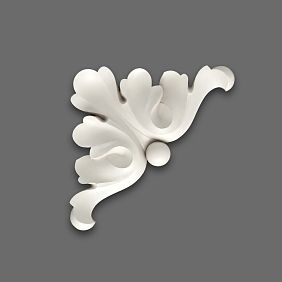
Ceiling rose fixtures create visual centers that draw the eye upward. The circular symmetry of the rose creates a centripetal motion, focusing attention on the center of the ceiling, where a chandelier is usually placed. This technique visually raises the ceiling, making the room appear taller.Decorative stuccowith plant motifs creates associations with light, natural forms — flowers, leaves, clouds.
Ceiling coffers, although they create recesses, paradoxically also contribute to visual lightness. The play of light in the recesses creates a dynamic surface that appears mobile and alive. White edges of the coffers reflect light, making the entire structure airy despite its obvious complexity.
Wood, on the contrary, creates a sense of weight and depth. Dark woods — walnut, wenge, stained oak — absorb light, creating a visual mass. Light woods — beech, maple, birch — are visually lighter but still convey a sense of materiality and solidity.Wooden Insertsact as visual anchors, holding the composition together.
Wooden wall panels create vertical or horizontal divisions that structure space. Unlike light stucco, which seems to dissolve into the air, wooden panels clearly assert their presence. Their texture, color, and mass create a sense of protection and solidity.
Wooden skirting boards work as the visual foundation of the interior. A wide, high skirting board made of dark wood creates an impression of a powerful base on which the walls stand. This sense of fundamentality is especially important in high rooms, where without a massive skirting board, walls may appear unstable.
The depth of wood color creates a visual perspective. The richness of tones in wood texture — from light sapwood areas to dark heartwood — creates a sense of material depth. The eye seems to penetrate into the wood, creating an illusion of greater mass than actually exists.
House Carvingon wooden elements enhances the sense of depth due to real recesses and protrusions. Unlike stucco, where relief creates play of light, carving in wood creates real three-dimensionality. The tactile appeal of carved wood adds a sense of materiality.
The contrast of weight and lightness creates a visual balance in the interior. Heavy wooden furniture, massive wall panels, wide skirting boards create a sense of stability and reliability. Light white stucco on the ceiling refreshes the composition, preventing it from becoming too heavy and gloomy. This balance is critically important for perceptual comfort.
A gradient from light to heavy vertically creates a natural distribution of visual weight. The lightest zone — the ceiling with white stucco. The medium-weight zone — upper part of walls with paint or wallpaper. The heaviest zone — lower third of walls with wooden panels and skirting boards. This vertical distribution corresponds to our experience of gravity.
Optical illusions created by this combination influence the perception of room proportions. A light, airy ceiling appears higher than it actually is. Dark, heavy wooden elements at the bottom visually expand the space, creating an impression of a solid foundation. These illusions can be used to correct non-ideal room proportions.
Our factory also produces:


Combining ceilings, walls, and doorways
Ceiling — the main stage forstucco decorationThe perimeter of the ceiling is framed by a cornice, creating a clear boundary between vertical and horizontal planes. The width of the cornice depends on the height of the room — in standard apartments, cornices 80-120 mm wide are appropriate, in high rooms — 150-250 mm. The cornice profile can be simple geometric or complex multi-tiered with classical details.
The central ceiling rose is a traditional element of classical interiors. It frames the point of chandelier attachment, creating a visual center of the composition. The diameter of the rose corresponds to the size of the chandelier and the area of the room — usually from 40 to 120 cm. The rose ornament may include plant motifs, geometric patterns, classical details — Ionic, ovolo, palmettes.
coffered ceilings are created usingpolyurethane decor- beams and moldings that divide the ceiling into square or rectangular recesses. Each coffer is framed along its perimeter, and may contain a small rose or ornamental inset. Co ffers visually structure large ceilings, creating rhythm and scale.
Crown moldings - wide decorative bands with ornamentation - create a transitional zone between the ceiling and walls. The frieze may include floral garlands, geometric meanders, or narrative reliefs. The height of the frieze is usually 200-400 mm. Polyurethane friezes are lighter and more practical than traditional plaster ones, while retaining visual expressiveness.
Walls combine stucco and wood vertically. The classic three-part division implies: a lower panel zone of wood 90-120 cm high, a middle painted or wallpapered zone, and an upper frieze zone with stucco. Horizontal boundaries between zones are marked bymoldings.
Wooden panels at the lower part of walls protect the surface from mechanical damage and create an elegant backdrop for furniture. Panels may be smooth or louvered, solid wood or veneered. The top edge of panels is finished with a horizontal molding - the panel's capital - which may be wooden or polyurethane depending on the concept.
Vertical pilasters made ofpolyurethaneon walls create a semblance of a colonnade, dividing long walls into logical segments. Pilasters have a base, shaft, and capital, mirroring the structure of classical columns. Between pilasters, wooden panels, paintings, or mirrors in wooden frames may be placed.
Moldings on walls create framed compositions - panels of various shapes and sizes. Moldings may be polyurethane - lightweight and practical - or wooden - warm and tactile. Within the frames, accent wallpapers, fabric, frescoes, or carved wooden panels are placed. These panels structure large wall surfaces.
Doorways - zones of maximum decorative concentration. The door panel is traditionally wooden, often with a louvered structure and carved insets. Door casings frame the opening, may be wooden with carving or simple painted ones. Above the door, a sash molding - a horizontal polyurethane protrusion, often with consoles on the sides - is placed.
Pilasters on both sides of the door create the grandeur of the portal. Polyurethane pilasters with bases and capitals frame the wooden door panel, creating an architectural composition. This technique is characteristic of formal interiors - living rooms, dining rooms, offices.
Arched openings combinepolyurethane archeswith wooden side pilasters or casings. A polyurethane arch is lighter than plaster or stone, easier to install. Wooden elements at the bottom of the opening create a sturdy base visually supporting the arch.
Corner zones of rooms are often decorated with corner pilasters or columns. Polyurethane elements create architectural expressiveness at corners, while wooden panels between them form walls. This composition is especially effective in rooms with irregular shapes, where corners require visual emphasis.
Niche walls are framed with both polyurethane and wooden elements. The inner surface of the niche may be painted in a contrasting color or covered with accent wallpaper. The perimeter of the niche is framed with molding - polyurethane for upper niches, wooden for lower ones. Inside, decorative items and lighting are placed.
Get Consultation
How to coordinate textures and color solutions
Textural harmony begins with understanding the nature of materials.polyurethane moldingshas a smooth, uniform surface with clear relief. After painting, it acquires a matte or semi-matte texture. Wood has a natural texture with growth rings, medullary rays, and characteristic grain patterns for each species.
Contrast between smooth and textured creates visual richness. Ideally smooth white stucco on the ceiling contrasts with expressive oak or walnut panel textures on walls. This contrast does not conflict but complements - the upper zone is light and airy due to smoothness, while the lower zone is material and substantial due to texture.
Surface matte finish is critically important for harmony. Glossy stucco will look plastic and cheap, destroying the elegance of wooden elements.Relief Decorationis always painted with matte paints. Wood is coated with matte oil or semi-gloss varnish, but not glossy - gloss is appropriate only in certain art deco styles.
Color harmony is built on several proven strategies. The classic combination - white stucco with natural-toned wood. White is universal, it highlights stucco relief and does not compete with wood color. Oak, walnut, ash, beech retain their natural tones under transparent oil or varnish.
Monochromatic strategy implies painting all elements in shades of one color. Light gray stucco with dark gray wooden elements creates an elegant monochromatic palette. Cream stucco with honey-toned wood forms a warm nuanced composition. This strategy is characteristic of modern classicism and Scandinavian interiors.
Contrast strategy uses opposition between light and dark. Bright white stucco with dark wenge or mahogany creates a graphic dramatic effect. Light ash panels with dark polyurethane moldings (painted bronze or graphite) create an inverse contrast. Contrast solutions require confident sense of proportion.
Gradient strategy creates a smooth transition from light upper to dark lower. White stucco on the ceiling, light beige painted walls, medium-brown wooden panels, dark brown skirting - such a gradient visually raises the ceiling and creates a sense of naturalness, mimicking natural light distribution.
Accent strategy uses gold, silver, or color to highlight certain elements. Gold stucco details on a white background correspond with gold detailscarved wooden inlays. Emerald polyurethane moldings on cream walls harmonize with wooden furniture painted in the same emerald color.
Patina creates an effect of noble antiquity and unifies various materials through a common aesthetic. White molding with a light cream patina harmonizes with wood patinated in the same tones. Gold patina on protruding molding details echoes with gilded carved wooden elements.
Color temperature is important for harmony. Warm wood tones—honey oak, golden walnut, cherry red—require warm white molding with a slight cream or yellowish tint. Cool wood tones—gray ash, bleached oak—harmonize with cool Arctic white molding.
Color saturation affects the visual weight of elements. Pale, unsaturated wood tones—bleached, pastel-toned—create lightness, aligning visually with white molding. Saturated dark wood tones create maximum contrast with white molding, enhancing the composition’s drama.
Repeating color motifs create visual connections between different interior zones. The golden tone of oak paneling may repeat in wooden picture frames, furniture, and parquet. White molding color repeats in door panels, furniture facades, and textiles. These repetitions create rhythm and unity.
The number of colors in an interior should be limited to preserve harmony. The classic formula—three main colors: white molding, natural wood color, accent wall or textile color. Too many colors create visual chaos; too few create monotony.
Examples of classical interiors by STAVROS
A 50-square-meter formal living room with 3.8-meter-high ceilings demonstrates a classic combinationmoldingsand wood. The ceiling is finished with polyurethane beams 180 mm wide and 120 mm high, forming nine 150x150 cm square coffers. In the center of each coffer is a small rose 40 cm in diameter.
The ceiling perimeter is framed by a massive 220 mm wide polyurethane cornice with a classical profile including Ionic and Ogee elements. Behind the cornice is concealed LED lighting, creating a floating ceiling effect. The central 100 cm diameter rose frames a crystal chandelier, becoming the visual center of the composition.
The living room walls are divided into three sections by height. The lower zone up to 120 cm is clad with solid oak panels with patina. The panels have a louvered structure with perimeter borders and central inserts. The top edge of the panels is finished with a carved oak leaf ornament molding.
The middle wall zone from 120 to 280 cm is painted in warm cream. On the accent wall, a composition of polyurethane moldings forms three vertical panels 90x180 cm. In the center of each panel—carved wooden insertwith a floral ornament, painted gold.
The upper frieze zone from 280 cm to the ceiling is adorned with a polyurethane frieze featuring garlands and rosettes. The frieze is painted white with a light cream patina, harmonizing with the wall color. The room’s corners are accentuated by polyurethane pilasters with Corinthian capitals.
The living room’s doorways are designed as formal portals. Double doors made of solid oak have a louvered structure with carved inserts. Door casings 150 mm wide are made of the same oak with carved ornamentation. Above the door is a polyurethane sash with consoles, painted white.
The fireplace in the living room became the climax of decoration. The portal is made of polyurethane elements imitating marble. The side pilasters of the portal are adorned with fluting and carved capitals. The oak mantel, 200 mm wide and 60 mm thick, features a carved frieze with acanthus leaves. Above the mantel is a polyurethane panel with relief.
A 30-square-meter office demonstrates a more restrained, yet no less noble, combination of materials. The 3.2-meter-high ceiling has a simple 150 mm wide polyurethane cornice. The central ceiling area is divided into smaller coffers—sixteen 70x70 cm squares. In the center of the ceiling is a classic rose 60 cm in diameter.
Office walls up to 200 cm are clad with solid walnut panels. The dark noble tone of walnut creates a respectable atmosphere suitable for a workspace. Panels have a simple louvered structure without excessive decoration. The top edge of the panels is finished with a molding-capital made of the same walnut.
The upper part of the walls from 200 cm to the ceiling is painted light gray, creating contrast with the dark wood. This zone is minimally decorated—only a thin polyurethane molding at the ceiling junction. The goal is not to distract attention from bookshelves and the work desk, which are the main functional elements.
Bookshelves spanning the full height of the walls are made of solid walnut. The lower part of the shelves—solid facades with louvered panels. The upper part—glass vitrines with wooden frames. The shelf cornice is adorned withcarved wooden insertwith a classical ornament, painted gold.
A 28-square-meter bedroom demonstrates a more delicate combination of materials. The 3.0-meter-high ceiling has a simple cornice and a small central rose—50 cm. Excessive ceiling decoration in a bedroom is inappropriate—it interferes with relaxation. The cornice is painted cream-white.
Bedroom walls are painted in a soft lavender tone. The lower panel zone 90 cm high is made of birch wood, painted white with a light patina. Light wood in the bedroom creates a sense of freshness and cleanliness. The top edge of the panels is finished with a simple molding without carved decoration.
The bed’s headboard is the main decorative element of the bedroom. The tall headboard made of birch wood is framed by a perimeter molding and adorned with a centralcarved insertwith a floral ornament. The insert is painted silver, harmonizing with the lavender wall color.
Above the headboard, a decorative composition of polyurethane elements is created on the ceiling—a molding frame, with a rose at its center. This composition visually highlights the bed zone, creating an architectural canopy without using textiles. The polyurethane is painted the same cream-white as the cornice.
Styles: Neoclassicism, Empire, Modern
Neoclassicism—a style ideally suited for combiningstucco decorationand wood. This style values restraint, proportions, classical forms without excessive ornamentation. Moldings in neoclassicism have clear geometric profiles, symmetrical compositions, moderate relief. Wood is used in natural tones or painted white, gray, beige.
The ceiling in a neoclassical interior is framed by a simple cornice with classical details - Ionic, Ovolo, beads. The central rosette has radial or concentric symmetry. Cores, if used, have regular geometric shapes - squares or rectangles with clear framing.
Walls in neoclassicism often have paneling with moldings - rectangular or square frames, creating a rhythmic structure. Moldings may bepolyurethane- white, creating a graphic effect, or wooden - painted to match the wall color. Within the frames, accent wallpapers, paintings, and mirrors are placed.
Wooden elements in neoclassicism are restrained and elegant. Panels have a simple latticed structure without excessive decoration. Baseboards are tall - 120-150 mm, with a clear profile. Doors are latticed with minimal carved decoration. Furniture has straight lines, conical legs, restrained carving.
The color palette of neoclassicism - white, cream, gray, beige for moldings; natural tones of oak, ash, or wood painted white or gray. Contrasts are moderate - white moldings on light gray background, gray moldings on white walls. Gilding is used delicately, only on individual details.
Empire - a style of military triumphs and imperial grandeur. This style demands solemnity, monumentality, abundance of symbolism.Moldings in the Empire styleinclude military attributes - crossed swords, armor, laurel wreaths, eagles. Wood is used dark, often with gilding or painted black with gold.
The ceiling in the Empire style has a massive cornice with an expressive profile. The central rosette is large, often octagonal or star-shaped with rays. Friezes include bas-reliefs depicting military scenes, trophies, allegorical figures. The color of moldings - white with gilding on details.
Walls in the Empire style are often covered with fabric or wallpaper in saturated colors - emerald, burgundy, blue. Wooden panels up to 100-120 cm height have rich carving with imperial symbolism. Pilasters with bases and capitals divide walls, creating a majestic architecture.
Wooden elements in the Empire style are massive and expressive. Baseboards 150-200 mm high have complex profiles with carved details. Doors are heavy, often double, with inlays in the form of laurel wreaths, rosettes, military attributes. Furniture is monumental - columns, sphinxes, lion paws, gilding.
The color palette of the Empire is contrasting and saturated. White moldings with gilding against dark red wood. Black wooden elements with gold inlays against emerald walls. Bronze hardware, gilded details, rich fabrics create a luxurious imperial atmosphere.
Modern (Art Nouveau) - a style that rejected classical forms and created a new organic language of decoration.Moldings in the Modern stylehave smooth asymmetrical forms, plant motifs, flowing lines. Wood is used with pronounced texture, often dark species, carved in the form of stylized plants.
The ceiling in Modern style may have an asymmetrical composition. Moldings create smooth wavy lines that flow from walls to ceiling. Rosettes are asymmetrical, often in the form of stylized flowers - irises, lilies, poppies. Cornices have wavy profiles, without straight lines or angles.
Walls in Modern style often have curved divisions.Polyurethane moldingscreate smooth curves framing panels of irregular shape. Wooden panels may also have curved upper edges. Pilasters are replaced by stylized tree trunks or female figures.
Wooden elements in Modern style are richly decorated with carving. Plant motifs - irises, lilies, water lilies, ivy - cover surfaces of doors, panels, furniture. Lines are fluid, asymmetrical, creating a sense of organic growth.House Carvingin the Modern style is characterized by smoothness and stylization.
The color palette of Modern style is complex and nuanced. Muted natural tones - swamp green, lilac, gray-blue, ochre. Moldings are often painted not white, but in pastel tones - pale pink, light green, cream. Wood is dark - walnut, wenge, stained oak. Gilding is used rarely, preference is given to patina.
Conclusion - balance of texture and form
Harmonious combinationstucco decorationandof wooden elementsis the art of balance. Balance between lightness and weight, between heavenly and earthly, between illusion and reality. Each material plays its role, complementing and enhancing the other.
Textural balance is created through contrast between smooth moldings and textured wood. This opposition does not conflict, but enriches perception, making the interior multi-layered and interesting. Tactile diversity of materials adds a dimension inaccessible to purely visual perception.
Formal balance is achieved through proper distribution of elements by zones. Light white moldings dominate at the top, creating architectural expressiveness of the ceiling and upper wall sections. Massive noble wood dominates below, forming a sturdy base and tactilely appealing environment in the contact zone.
Color balance is built on proven combinations. Classic white and natural, monochromatic gradients, contrasting oppositions - each strategy works when moderation and understanding of proportions are observed. It is not the number of colors, but their harmonious interaction that matters.
Stylistic balance requires that molding and wood speak the same language. Classical molding combines with classical wooden elements. Modern minimalist molding harmonizes with sleek wood. Mixing incompatible styles destroys the integrity of the interior.
Scale balance ensures visual harmony. Large molding elements require proportionate wooden details. Elegant, delicate molding harmonizes with refined wooden moldings and casings. Disproportion creates visual discomfort.
Functional balance determines the practicality of the solution. LightweightPolyurethaneis used where its moisture resistance, ease of installation, and lack of load on ceilings are important.Woodis applied in tactile contact zones, where its natural warmth and nobility are important.
The longevity of a properly designed interior is measured in decades. High-quality polyurethane molding does not yellow, crack, or flake. Wooden elements made from hardwoods, with proper care, serve for generations. This material duo is an investment in quality and beauty.
The ecological nature of natural wood and the safety of modern polyurethane make this duo a healthy choice. Wood creates a comfortable microclimate and regulates humidity. Quality polyurethane does not emit harmful substances. Together, they form a healthy living environment.
The versatility of this combination allows for the implementation of any stylistic concept—from strict classicism to modern eclecticism. By changing proportions, shapes, and colors, one can create endless interior variations while preserving the basic harmony of materials.
STAVROS Company offers a full range of solutions for creating classic interiors.molded decoration made of polyurethaneIncludes cornices, rosettes, moldings, pilasters, and coffered ceilings of any shape and size.Wooden elementsMade from solid oak, beech, walnut, and birch, they include baseboards, panels, casings, and carved appliqués.
STAVROS professional consultants will help select the optimal combination of elements for a specific project. Considering the interior style, room dimensions, budget, and individual preferences, specialists will create a harmonious composition where each element is in its proper place.
Balance of texture and form is a philosophy that transforms a space into a harmonious living environment. When the lightness of molding is balanced by the weight of wood, when the celestial meets the earthly, when form acquires matter—classic interior, timeless, is born.


