Article Contents:
- History of stucco: from antiquity to the present day
- Origin of stucco art in ancient civilizations
- Evolution of stucco decoration in various architectural styles
- Modern revival of stucco art
- Materials for making modern stucco
- Polyurethane stucco: advantages and technical specifications
- Gypsum stucco: traditions and modernity
- Polystyrene stucco: an affordable solution for modern interiors
- Comparative analysis of materials: what to choose for your interior
- Types of stucco elements and their functional purpose
- Ceiling roses: the central element of composition
- Cornices and moldings: the art of framing
- Columns and Pilasters: Vertical Accents
- Brackets and consoles: functional decor
- Decorative panels and bas-reliefs: the art of telling stories
- Stucco in various interior styles
- Classic style: luxury and symmetry
- Neoclassicism: A Modern Interpretation of Traditions
- Art Deco: Geometry and Luxury
- Modern Style: Minimalism and Functionality
- Material Base: What Makes Italian Furniture Special
- Practical aspects of choosing and purchasing stucco
- How to calculate the required quantity of stucco elements
- Quality criteria for stucco items
- Where to buy quality stucco: trusted manufacturers
- Cost of stucco: what affects the price
- Installation and maintenance of stucco
- Tools and materials for self-installation
- Step-by-step instructions for installing various elements
- Painting and decorative finishing of stucco
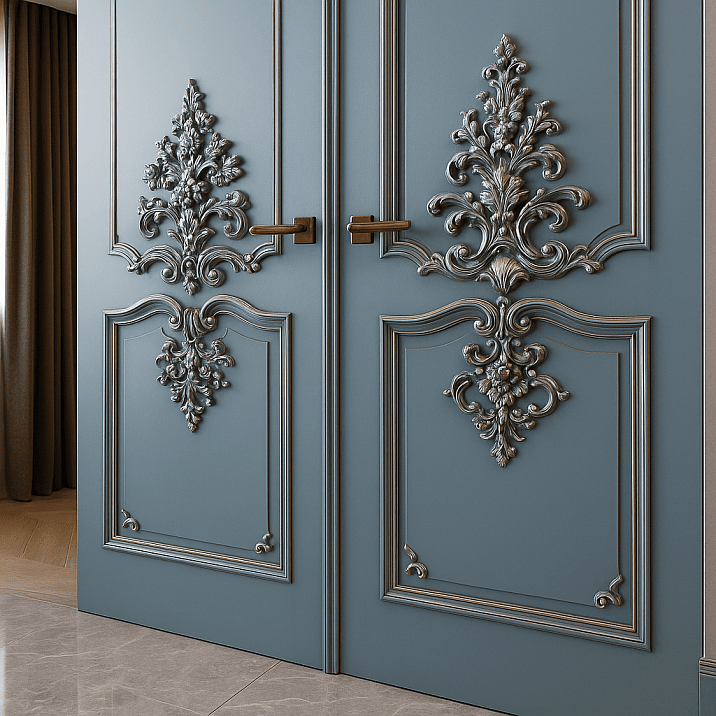
Elegant lines, noble forms, play of light and shadow — all this is stucco, transforming an ordinary room into a work of art. This classic decorative element, inherited from ancient times, is experiencing a true revival today, finding new expression in modern interiors. But how to find truly quality stucco? Where to buy stucco - a question that concerns many lovers of refined decor, wishing to give their home a special charm and individuality.
Ready to transform your home and create an interior worthy of royal chambers? Then keep reading — ahead awaits an exciting journey into the world of architectural decoration!
Ready to transform your home and create an interior worthy of royal chambers? Then keep reading — ahead awaits an exciting journey into the world of architectural decoration!


The history of moldings: from antiquity to the present day
Molding decoration has a rich history spanning millennia. This art form has undergone a long evolution, changing alongside architectural styles and technologies.




The birth of molding art in ancient civilizations
The first examples of molding decoration appeared even in ancient Egypt and Mesopotamia. Back then, artisans used plaster and lime to create relief ornaments on temple and palace walls. These early forms of molding were predominantly religious and mythological in nature, reflecting the beliefs and culture of their time.
The true golden age of molding art fell during the era of Ancient Greece and Rome. It was the ancient masters who developed classical orders with their characteristic elements: capitals, friezes, cornices. They perfected the technique of creating acanthus leaves, meanders, ovals, and other decorative motifs, which are still considered the epitome of elegance to this day.
The Romans went further than the Greeks, developing the technology of casting in plaster, which allowed for the mass production of decorative elements. Their villas and public buildings were adorned with exquisite moldings, showcasing the wealth and status of their owners.
Our factory also produces:


The evolution of molding decoration in various architectural styles
After the fall of the Roman Empire, the art of molding did not disappear, but transformed in accordance with new aesthetic ideals. During the Romanesque period, molding decoration became more schematic and symbolic, often featuring religious motifs.
The Gothic era brought vertical rhythms and upward aspirations. Molding from this period was characterized by complexity and detail, including pointed arches, rosettes, and quatrefoils.
The true triumph of molding decoration occurred during the Renaissance, when architects returned to classical ideals. The palazzi of Italian aristocrats were adorned with exquisite moldings featuring mythological scenes, garlands, and medallions.
Baroque and Rococo pushed the opulence of molding decoration to its peak. Interiors of these styles were literally overflowing with wavy forms, scrolls, shells, and floral garlands. Molding became not just decoration, but the primary means of shaping space.
Neoclassicism restored strictness and order to molding decoration. Symmetrical compositions, classical motifs, and medallions with laurel wreaths became fashionable.
Modernism at the turn of the 19th and 20th centuries introduced natural, flowing forms into molding: stylized plants, female figures, unusual ornaments.
Constructivism and minimalism of the 20th century temporarily pushed molding to the background, but could not completely expel this form of decoration from architecture and interior design.
Get Consultation
The modern revival of molding art
Today we witness a true renaissance of molding decoration. Modern designers reinterpret classical forms, adapting them to current interior trends. Molding is no longer an attribute of exclusively classical styles — it seamlessly integrates into neoclassicism, eclecticism, fusion, and even minimalist interiors, where it serves as a refined accent.
An important role in the revival of molding's popularity was played by new materials and technologies. If, in the past, creating and installing molding decoration was a labor-intensive and expensive process accessible only to wealthy clients, then today Where to buy stucco ready-made elements from modern materials are accessible to a wide range of consumers.
Polyurethane, polystyrene, high-strength plaster — these materials allow creating lightweight, durable, and long-lasting decorative elements that do not fall short in beauty compared to classical plaster molding, but significantly surpass it in practical characteristics.
Materials for making modern molding
Today, manufacturers offer molding decoration made from various materials, each with its own unique properties, advantages, and areas of application. Understanding the characteristics of these materials will help you make the right choice when purchasing molding for your interior.
Polyurethane molding: advantages and technical characteristics
Polyurethane is one of the most popular modern materials for manufacturing molding decoration. This synthetic polymer possesses a range of outstanding qualities, making it ideal for creating architectural elements.
The technical characteristics of polyurethane molding are impressive:
- Density: 200-300 kg/m³
- Flexural strength: up to 10 MPa
- Moisture resistance: does not absorb moisture, resistant to mold and fungi
- Operating temperature range: from -40°C to +70°C
- Service life: more than 25 years with proper installation and use
Polyurethane molding features exceptional pattern detail. Thanks to the injection molding technology, manufacturers can reproduce the most complex and elegant ornaments with perfect accuracy. Even the smallest decorative elements, such as acanthus leaves or floral garlands, appear clearly and realistically.
Another important advantage of polyurethane is its lightness. A polyurethane rosette with a diameter of 60 cm weighs only 1.5-2 kg, whereas a similar gypsum item would weigh about 8-10 kg. This significantly simplifies the transportation, storage, and installation of decorative elements.
Polyurethane does not rot, is not afraid of moisture and temperature fluctuations, making it ideal for use in high-humidity areas — bathrooms, pools, saunas. Moreover, this material does not attract insects and is not a nutrient medium for microorganisms.
It is important to note that polyurethane molding is environmentally safe. Modern manufacturers use non-toxic compositions that do not emit harmful substances even when heated. This is confirmed by appropriate quality and safety certificates.
Gypsum molding: traditions and modernity
Gypsum is a classic material for making decorative molding, used for thousands of years. Despite the emergence of modern synthetic materials, gypsum molding has not lost its popularity and is still highly valued for its unique properties.
Technical characteristics of gypsum molding:
- Density: 800-1200 kg/m³
- Compressive strength: 5-15 MPa
- Moisture permeability: high, "breathable" material
- Fire resistance: does not burn, withstands temperature up to 1200°C
- Ecological safety: 100% natural material
Gypsum has a unique ability to regulate humidity in a room, absorbing excess and releasing it when deficient. This creates a favorable microclimate and prevents condensation on walls and ceilings.
Modern manufacturers use reinforced gypsum mixes with additives such as polymers, fiberglass, and other components, which significantly increase the strength and durability of the products. Such molding does not crack during building settlement and withstands mechanical loads.
Gypsum molding is especially valued in restoration work and in decorating interiors in a classical style. It creates a unique atmosphere of authenticity and elegance that is difficult to achieve with synthetic materials.
Polystyrene molding: an affordable solution for modern interiors
Polystyrene (expanded polystyrene) is the lightest and most affordable material for making decorative molding. It is ideal for budget repairs and temporary decorative solutions.
Technical characteristics of polystyrene molding:
- Density: 25-35 kg/m³
- Flexural strength: 0.4-0.5 MPa
- Moisture resistance: medium
- Operating temperature range: from -20°C to +70°C
- Service life: 5-10 years with proper installation and use
The main advantage of polystyrene molding is its exceptional lightness. The weight of one meter of cornice made from this material is only 200-300 g, allowing it to be mounted on any surface, including gypsum board, using ordinary adhesive.
Polystyrene can be easily cut with a standard office knife, simplifying the fitting of elements during installation. This is especially important when installing molding independently without professional help.
Modern polystyrene molding has a special protective coating that gives it strength and resistance to mechanical impacts. Such items can be painted with any water-dispersive paints, creating unique color solutions.
Comparative analysis of materials: what to choose for your interior
When choosing a material for decorative molding, it is important to consider the characteristics of your interior, budget, and expected service life of the finish.
Polyurethane molding is the optimal choice for most modern interiors. It combines beauty, durability, and practicality. Where to buy stucco Polyurethane molding is available in an extensive range, allowing you to select elements for any style—from classic to modern.
Gypsum molding is ideal for historical interiors, restoration projects, and classic styles where authenticity is important. This material creates a unique atmosphere and noble patina of time that cannot be imitated.
PVC molding is suitable for budget repairs, temporary solutions, or spaces where significant mechanical loads on decorative elements are not expected.
For wet areas (bathrooms, pools), it is recommended to use only polyurethane molding, which is resistant to water and temperature fluctuations.
For rooms with high ceilings (above 3 meters), it is better to choose large elements made of polyurethane or gypsum, which will be clearly visible from a distance and create proper proportions.
In interiors with high traffic (children's rooms, hallways, public spaces), the optimal choice is polyurethane molding, which is resistant to mechanical damage and easy to maintain.
Types of molding elements and their functional purpose
Molding decoration is presented in a variety of different elements, each serving a specific function in the interior. Understanding the purpose and application specifics of these elements will help you create a harmonious composition and correctly place accents.
Ceiling rosettes: the central element of the composition
A ceiling rosette is a round or oval decorative element placed in the center of the ceiling, usually around a chandelier or light fixture. This element has a rich history and originally served not only a decorative but also a practical function—protecting the ceiling from soot from candles and oil lamps.
Modern ceiling rosettes are available in a vast variety of sizes and designs:
- Diameter: from 30 cm to 120 cm
- Thickness: from 2 cm to 10 cm
- Styles: from strict classicism to lavish baroque and elegant modernism
The rosette is the central element of the ceiling composition and sets the tone for the entire design. When choosing a rosette, it is important to consider the room's size and ceiling height. In a room of 15–20 m² with ceilings of 2.7–3 m, the optimal rosette diameter is 60–80 cm. For large rooms with high ceilings, rosettes with a diameter of 100–120 cm are suitable.
Special attention should be paid to the combination of the rosette with the chandelier. The rosette's diameter should be 1.5–2 times larger than the chandelier's diameter to create proper proportions. The rosette's style should match the chandelier's style—a classic crystal chandelier requires a rosette with a classical ornament, while a modern light fixture will harmonize with a rosette in a minimalist or art deco style.
Cornices and moldings: the art of framing
Cornices and moldings are linear decorative elements used to frame ceilings, walls, door and window openings. They not only decorate the interior but also perform an important function of spatial zoning.
Ceiling cornices (plinths) are installed at the junction of the wall and ceiling. They visually complete the ceiling and conceal possible irregularities in the joint. Modern manufacturers offer cornices of various widths and profiles:
- Width: from 3 cm to 25 cm
- Height: from 3 cm to 20 cm
- Standard element length: 200 cm
The choice of cornice size depends on ceiling height and room area. For standard apartments with ceilings of 2.5–2.7 m, the optimal cornice width is 5–10 cm. In rooms with high ceilings (from 3 m), cornices with a width of 12–25 cm are appropriate.
Moldings are thinner linear elements used to create decorative panels on walls, frame doors and windows, and decorate furniture. They come in various profiles and sizes:
- Width: from 2 cm to 10 cm
- Thickness: from 1 cm to 3 cm
- Standard element length: 200 cm
Using moldings, you can create geometric patterns on walls, imitate classic paneling, highlight functional zones. This is a universal designer tool that can transform even the simplest interior.
Columns and pilasters: vertical accents
Columns and pilasters are vertical architectural elements used for spatial zoning, supporting arches, and creating expressive accents in the interior.
A column is a freestanding vertical support that can serve as either a structural or decorative element. Modern decorative columns are made from lightweight materials and often have hollow construction. They are available in various styles:
- Doric order: strict forms, minimal decoration
- Ionic order: more elegant proportions, volutes in the capitals
- Corinthian order: richly decorated capital with acanthus leaves
- Tuscan order: simplified version of Doric
- Composite order: combination of Ionic and Corinthian
Pilasters are flat columns that project from the wall plane by 1/4 or 1/5 of their width. They are used for visual division of walls, framing openings and niches, and creating rhythmic composition in interiors.
Columns and pilasters consist of three main parts:
- Base (foundation)
- Shaft (column body)
- Capital (upper part)
Each of these parts can be decorated according to the chosen architectural style. Modern manufacturers offer both complete columns and separate elements (bases, shafts, capitals), which can be combined according to personal preference.
Brackets and consoles: functional decor
Brackets and consoles are projecting support elements from the wall historically used to support beams, shelves, balconies. In modern interiors, they often serve a decorative function, creating an interesting play of light and shadow.
Brackets have the shape of the letter "L" or "S" and are installed under cornices, shelves, protruding parts of furniture. They are available in various styles and sizes:
- Height: from 10 cm to 50 cm
- Width: from 5 cm to 25 cm
- Projection depth: from 5 cm to 30 cm
Consoles are more massive support elements, often used in pairs to support fireplace mantels, countertops, decorative niches. They can be adorned with intricate carving, floral motifs, and mascarons.
In modern interiors, brackets and consoles are often used as standalone decorative elements, creating interesting accents on walls. They can serve as supports for small shelves, lamps, or works of art.
Decorative panels and reliefs: art telling stories
Decorative panels and reliefs are relief images on a flat surface used to create expressive accents in interiors. They can depict narrative scenes, ornaments, or floral motifs.
Panels are usually rectangular or oval and represent a complete composition. Panel sizes can vary from small (30x40 cm) to monumental (100x200 cm and larger). Panels can be mounted on walls as standalone elements or framed with moldings.
Reliefs are sculptural images projecting from the background plane by no more than half their volume. They can be individual elements (medallions, rosettes) or part of a more complex composition.
In classical interiors, panels and reliefs with mythological scenes, allegorical images, and scenes from ancient history are popular. In modern interiors, abstract compositions, stylized natural motifs, and geometric patterns are often used.
Where to buy stucco Decorative panels and reliefs are available in a wide variety — from classic samples to original works by contemporary sculptors. Such elements become true works of art and central accents in interiors.
Moldings in various interior styles
Molded decoration is remarkably versatile — it can fit organically into almost any interior style, from strict classicism to modern minimalism. The key to success is choosing the right elements and combining them thoughtfully with other decorative details.
Classic style: luxury and symmetry
Classic style is the natural habitat of molded decoration. Here, molding is not merely decoration but an integral part of the architectural solution, shaping space and defining its rhythm.
In a classic interior, a rich set of molded elements is used:
- Ceiling rose with large diameter (80-120 cm) and detailed ornament
- Wide cornices (15-25 cm) with multi-step profile
- Moldings for creating symmetrical wall panels
- Corinthian or Ionic order columns and pilasters
- Decorative brackets under cornices
- Panels and reliefs with mythological or floral motifs
The color scheme of molding in classical style is usually restrained - white, ivory, light beige. Sometimes individual ornament elements are highlighted with gold or patina.
The main principle of classical style - symmetry and proportionality. Molded elements should be balanced and proportionate to the room. For classical interiors, walls are typically divided into three parts: plinth (lower part), main field, and frieze with cornice.
Neoclassicism: modern interpretation of traditions
Neoclassicism is an adaptation of classical style to modern realities. Here, the main principles of classicism (symmetry, proportionality) are preserved, but forms become more laconic, and decoration less saturated.
In neoclassical interiors, molding is used more restrainedly:
- Ceiling rose with medium diameter (60-80 cm) and simplified ornament
- Cornices of moderate width (10-15 cm) with clear, but not overloaded profile
- Moldings for creating geometric wall panels
- Pilasters with simplified capitals
- Laconic brackets and consoles
The color palette of molding in neoclassicism can be diverse - from traditional white to contrasting solutions, where molded decoration stands out against walls or, conversely, blends into them as a unified whole.
Neoclassicism allows bold experiments with proportions and placement of molded elements. For example, a ceiling rose may be offset from the room's center, and wall panels may have non-standard sizes and configurations.
Art Deco: geometry and luxury
Art Deco style, which peaked in the 1920s-30s, is characterized by a love for geometric forms, exotic materials, and contrasting combinations. Molding in this style acquires a new sound.
The following molded elements are characteristic of Art Deco:
- Ceiling roses with geometric ornament (zigzags, sun rays, stepped forms)
- Cornices with clear, faceted profiles
- Moldings for creating symmetrical geometric compositions on walls and ceilings
- Decorative panels with abstract or stylized images
The color scheme of molding in Art Deco style can be very bold - gold, silver, black, contrasting combinations. Often, the technique of colored lacquering is used, where molded decoration is covered with glossy paint of saturated color.
In Art Deco interiors, molding is often combined with mirrors, polished metal, exotic wood species, creating an atmosphere of refined luxury and glamour.
Modern Style: Minimalism and Functionality
In modern minimalist interiors, molding is used very selectively, but can create expressive accents and add depth and character to the space.
The following molded elements are characteristic of modern style:
- Ceiling roses with simple geometric shapes
- Laconic cornices with clean lines
- Moldings for creating abstract compositions on walls
- Decorative 3D panels with relief geometric patterns
In modern interiors, molding often becomes part of the architectural solution rather than just a decorative element. For example, cornices can be integrated with hidden lighting systems, creating a floating ceiling effect.
The color scheme of molding in modern style is usually monochromatic — white, gray, black. Sometimes contrasting combinations or unexpected accent colors are used.
An important principle of using molding in modern interiors is minimalism and functionality. Each element must be justified and harmoniously integrated into the overall space concept.
Eclecticism: the art of mixing styles
Eclecticism is a style that allows boldly combining elements from different eras and directions. Here, molded decoration can express itself in all its variety of forms and solutions.
In an eclectic interior, you can combine:
- Classic ceiling rosettes with modern lighting fixtures
- Traditional cornices with minimalist furniture
- Decorative panels in Art Deco style with antique items
- Moldings in neoclassical style with avant-garde artworks
The key to successful eclecticism is the presence of a unifying element that will link disparate details into a harmonious composition. This element can be a color palette, a recurring motif, or a material.
Where to buy stucco For an eclectic interior, selection must be carefully considered in relation to the overall space concept. Here, a sense of proportion and artistic taste are crucial to prevent the interior from becoming a chaotic jumble of styles.
Practical aspects of selecting and purchasing molding
Choosing and purchasing molded decoration is a responsible step that requires careful attention and consideration of many factors. The correctness of your choice affects not only the aesthetic result but also the durability of the finish.
How to calculate the required amount of molded elements
Before purchasing molding, precise measurements of the room must be taken and the required quantity of elements calculated. This will help avoid material shortages or unnecessary expenses.
To calculate ceiling cornices:
- Measure the room's perimeter (sum of all wall lengths).
- Note that the standard length of a cornice is 2 meters.
- Divide the perimeter by the length of one element and round up the result.
- Add 10-15% for trimming and possible defects.
For example, for a room measuring 4x5 meters, the perimeter will be 18 meters. Dividing by 2 meters gives 9 elements. Accounting for a reserve, 10-11 cornices will be needed.
To calculate moldings for wall panels:
- Draw a layout of panel placement on the walls.
- Measure the total length of all lines.
- Divide the obtained value by the length of one molding (usually 2 meters).
- Add 15-20% for trimming, especially if corner joints are anticipated.
For ceiling rosettes, columns, pilasters, and other individual elements, simply determine the required quantity based on the design plan.
Criteria for quality of molded items
When selecting moldings, pay attention to the following quality parameters:
- Relief clarity. All pattern details must be clear, with smooth edges and transitions. Blurred contours or "smeared" recesses are signs of poor quality.
- Surface uniformity. The item must not have bubbles, blisters, cracks, dents, or other defects.
- Geometric accuracy. Check the straightness of cornices and moldings, and the correctness of rosette circles. Deviations may cause problems during installation.
- Material density. A quality polyurethane or polystyrene item has a uniform structure without voids or delamination. When lightly tapped, it produces a dull sound.
- Coating quality. Factory primer should be even, without streaks or uncoated areas.
- Joint accuracy. Check how adjacent elements connect. Quality molding has perfectly matched joints that will be almost invisible after installation.
- Item weight. Too light polyurethane items may indicate low material density and, consequently, lower strength and durability.
Where to buy quality molding: trusted manufacturers
Question Where to buy stucco Many are concerned about quality and reasonable price. The market offers numerous manufacturers, and it is important to choose a reliable supplier that guarantees product quality.
Specialized stores for finishing materials usually offer a wide range of molding from various manufacturers. The advantage of such stores is the ability to see the product in person, assess its quality, and receive expert advice.
Manufacturer's branded showrooms offer a complete range of products from a specific brand, including exclusive collections and new items. Here you can receive professional advice on selecting and installing molding, as well as order custom elements.
Online stores offer a convenient way to select and order molding with delivery to your home. When purchasing online, pay attention to the store's reputation, availability of detailed photos and product descriptions, delivery and return conditions.
When choosing a manufacturer, pay attention to the following factors:
- Experience in the market
- Presence of quality certificates
- Warranty Obligations
- Range of product assortment
- Customer reviews
- Availability of technical support and consultations
Among trusted molding manufacturers, we can note companies specializing in manufacturing architectural decor from various materials and offering a wide range of high-quality items.
Cost of molding: what affects the price
The cost of molded decor can vary significantly depending on several factors:
- Material used. Polystyrene molding is the cheapest, polyurethane falls in the middle price range, while gypsum and especially handcrafted gypsum items are the most expensive.
- Design complexity. The more complex and detailed the pattern, the higher the item's cost. Simple geometric shapes will cost less than intricate floral ornaments or sculptural compositions.
- Element size. Large rosettes, wide cornices, and massive columns cost more than compact equivalents.
- Manufacturer's brand. Well-known European brands usually set higher prices compared to domestic manufacturers, although quality may be comparable.
- Design exclusivity. Items from limited collections or custom-made pieces cost significantly more than mass-produced items.
For reference, here is an approximate price range for main elements of molded decor:
- Polyurethane ceiling cornice: from 500 to 3000 rubles per linear meter
- Polyurethane ceiling rosette with 60 cm diameter: from 2000 to 10000 rubles
- Polyurethane wall molding: from 300 to 1500 rubles per linear meter
- Polyurethane column 2.5 m high: from 15000 to 50000 rubles
- Polyurethane decorative panel: from 3000 to 30000 rubles
When planning the budget for stucco decoration, consider not only the cost of the items themselves, but also expenses for delivery, mounting materials, and, if necessary, installation specialist services.
Installation and care of stucco
Correct installation and regular maintenance are the key to the longevity and attractive appearance of stucco decoration. Modern materials and technologies have significantly simplified the installation process, making it accessible even to non-professionals.
Tools and materials for self-installation
To install stucco, you will need the following tools and materials:
Tools:
- Fine-toothed hacksaw or electric jigsaw
- Miter block for precise corner trimming
- Tape measure and pencil
- Construction level
- Putty knife
- Sandpaper of various grits
- Paint scraper
- Caulking gun
- Painters' tape
- Wet sponge for removing excess glue
Materials:
- Mounting adhesive for polyurethane or polystyrene
- Acrylic caulk for filling joints
- Final putty for surface leveling
- Primer for surface preparation
- Acrylic paint for final finish
- Self-tapping screws and anchors (for mounting heavy elements)
Before starting work, ensure that the wall and ceiling surfaces are clean, dry, and level. If necessary, level them with putty and prime.
Step-by-step instructions for installing various elements
Installing ceiling cornice:
- Mark the wall and ceiling, indicating the line for cornice installation.
- Prepare the cornice elements by trimming them at the required angle for fitting in room corners. Use a 45° angle for internal corners and a 135° angle for external corners.
- Apply mounting adhesive to the back of the cornice in a zigzag pattern.
- Place the cornice at the installation site, press firmly, and hold for 30-60 seconds.
- Remove excess glue with a damp sponge.
- After installing all elements, fill the joints with acrylic caulk.
- After the caulk dries, sand the joints with sandpaper.
- Prime and paint the cornice in the desired color.
Installing a ceiling rose:
- Determine the center of the ceiling or the location for the chandelier.
- Apply mounting adhesive to the back of the rose along the perimeter and across the center in a cross pattern.
- Attach the rose to the ceiling, align it, and press firmly.
- To secure it during the drying time of the adhesive, use painter's tape or temporary supports.
- After the adhesive has dried (usually 24 hours), prime and paint the rose.
Installing wall moldings:
- Mark the wall to indicate the outlines of future panels.
- Prepare the moldings by cutting them at a 45° angle at the joints.
- Apply adhesive to the back of the molding.
- Attach the molding to the wall according to the markings and press firmly.
- Remove excess adhesive and, if necessary, secure the molding with painter's tape until the adhesive dries.
- Fill the joints, prime, and paint the moldings.
Painting and decorative finishing of moldings
Painting moldings is an important stage that not only protects the material but also gives the decoration the desired look, matching the overall interior style.
Preparation for painting:
- Clean the molding surface from dust and dirt.
- Fill all joints and imperfections with acrylic spackle.
- After the spackle dries, sand the surface with fine-grit sandpaper.
- Apply a primer layer, which ensures better paint adhesion to the surface and reduces paint consumption.
Paint selection:
- For polyurethane and polystyrene moldings, water-based acrylic paints are best suited. They are eco-friendly, dry quickly, and have no strong odor.
- For plaster moldings, you can use either acrylic or alkyd paints, which form a more durable finish.
Painting techniques:
- Single-color painting - a classic option where the entire molding is painted in one color, usually white or cream.
- Two-color painting - the background and raised pattern elements are painted in different but coordinating colors.
- Patina - a technique where, after the base color, a patina (special paint or wax) is applied to raised parts, creating an aged effect.
- Gilding - applying gold, silver, or bronze paint to specific pattern elements to create a luxurious effect.
- Glazing - applying a translucent layer of paint in a different shade to create depth and dimension.
To achieve the best result, it is recommended to apply paint in 2-3 thin layers, allowing each layer to dry completely before applying the next.