Article Contents:
- Anatomy of pricing in the world of ceiling decoration
- Size Grading and Its Impact on Cost
- Ornamental complexity as a pricing factor
- Regional pricing characteristics
- Seasonal fluctuations in demand and price
- Comparative Analysis of Materials and Technologies
- Polyurethane vs. Traditional Materials
- Production technologies and their impact on price
- Economic model of a ceiling decoration project
- Cost structure of a comprehensive project
- Budget optimization without compromising quality
- Hidden cost factors
- Additional expenses often forgotten to consider
- Influence of architectural features on cost
- Long-Term Economic Efficiency
- Return on investment in ceiling decoration
- Comparison with alternative decoration methods
- Market trends and price forecasts
- Factors influencing price dynamics
- Market development forecasts
- Purchasing strategies for different budgets
- Economy class: maximum effect at minimum cost
- Middle class: balance of quality and cost
- Premium class: boundless possibilities
- Regional suppliers and logistics
- Choosing between local and federal suppliers
- Optimizing logistics costs
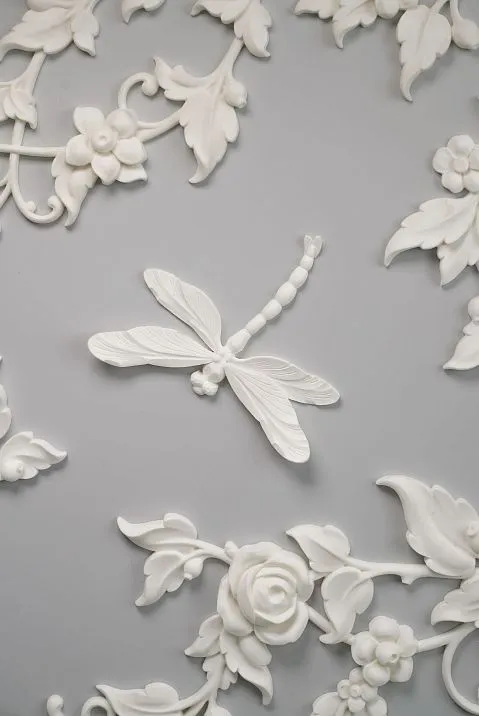
There are solutions that not only change the appearance of a space, but also the quality of life of its inhabitants. Ceiling molding price which justifies years of aesthetic enjoyment, represents one of such wise investments in the beauty of one's own home. Every ruble spent on quality ceiling decoration returns many times over through daily moments of admiration for the exquisite interior.
Why does the cost of molding vary from project to project? What influences the formation of price and how to choose the optimal balance of quality and cost? These questions concern everyone who strives to create a truly outstanding interior, without overpaying for unnecessary extravagances, but also without cutting corners on what truly matters.
The modern market of decorative materials offers solutions for any budget — from affordable options for modest apartments to luxurious compositions for palace interiors. Understanding the principles of pricing will help make the right choice and get maximum return on investment in beauty.


Anatomy of pricing in the world of ceiling decoration
The formation of the cost of ceiling molding is a multifactorial process, where each component plays its role in the final price. Material costs account for the majority — from 40% to 60% of the total project cost. The quality of the base polyurethane, the complexity of the molds, and the number of production operations directly affect the cost of finished products.
The design component determines the uniqueness and artistic value of the product. Simple geometric profiles cost significantly less than complex ornamental compositions. Original designs, exclusive ornaments, and individual projects require additional costs for mold creation and development of technological processes.
Production capacity and manufacturing geography also affect pricing. Large manufacturers with automated lines can offer more competitive prices on standard mass-produced items. Small workshops specialize in exclusive items, where manual labor and individualized approach justify higher costs.
Logistical costs become a significant item when delivering to remote regions. However, the lightness of polyurethane products minimizes transportation costs compared to traditional materials — plaster or natural stone.




Size Grading and Its Impact on Cost
The dependence of price on item size has a nonlinear character. Small elements with a diameter up to 300 mm cost from 500 to 3000 rubles per piece depending on ornament complexity. The cost per square centimeter of surface here is highest due to high fixed production costs.
Sizes of 400-700 mm represent the optimal price-to-quality ratio. The price range is 2500-8000 rubles with a more favorable cost per unit area. These sizes are most popular in residential interiors.
Large items over 800 mm demonstrate economies of scale — cost per unit area decreases, but the total item price may reach 15000-35000 rubles. Such investments are justified in prestigious spaces, where decoration plays a key role in creating a status impression.
Our factory also produces:


Ornamental complexity as a pricing factor
Smooth surfaces and simple geometric forms require minimal production costs. The price of such items is primarily determined by material cost and basic manufacturing operations. This is the most cost-effective market segment.
Medium ornamentation with relief depth of 3-8 mm increases cost by 50-100%. Such items require more complex forms, increased material consumption, and additional surface processing operations.
Complex detailing with deep relief of 10-20 mm and multiple elements may increase price by 3-5 times compared to simple analogs. Here, price reflects not only material costs but also the artistic value of the item.
Get Consultation
Regional pricing features
The cost of ceiling moldings varies significantly across regions of Russia. The Moscow region traditionally shows the highest prices — 20-40% above the average Russian level. This is explained by high purchasing power, a developed design industry, and a large number of premium projects.
Saint Petersburg follows the capital with average prices 15-25% higher. The city’s historical architecture creates specific requirements for restoration work quality, supporting high standards and corresponding pricing.
Regional centers show prices close to the average Russian level with deviations of ±10-15%. Ceiling molding price In these cities, costs are primarily formed by logistics expenses and local population income levels.
Remote regions may have higher prices due to logistics costs or lower prices due to limited demand. The development of e-commerce eliminates regional differences for standard items.
Seasonal fluctuations in demand and prices
The ceiling molding market is subject to seasonal fluctuations linked to construction industry activity. The spring-summer period is characterized by peak demand, which may lead to price increases of 10-20% and longer delivery times.
The autumn season remains stable in pricing while maintaining high demand. This is the optimal time for large orders, when manufacturers are willing to offer discounts on bulk volumes.
Winter months traditionally feature reduced activity and potential price promotions. Planning purchases for this period may provide savings of 15-25% provided materials can be stored until work begins.
Comparative analysis of materials and technologies
Polyurethane vs. Traditional Materials
Plaster molding remains the benchmark for restoration work quality, but its cost is 3-5 times higher than polyurethane analogs. Installation costs are also higher due to the material’s weight and fragility. Polyurethane inserts provide 80-90% of plaster’s aesthetic qualities at significantly lower costs.
Polystyrene products represent a budget segment of the market, costing 2-3 times less than polyurethane analogs. However, low strength, limited detailing, and short service life make such savings questionable in the long term.
Hand-carved wooden moldings may cost 10-20 times more than polyurethane items for comparable aesthetic effect. Such investments are justified only in exceptional cases — historical interiors, designer projects, collectible items.
Production technologies and their impact on price
Hand casting into silicone molds provides the highest level of detail quality but requires significant labor input. Items produced by this technology cost 30-50% more than machine-made analogs.
Automated production allows reducing cost while maintaining consistent quality. Large manufacturers invest in modern equipment, enabling them to offer competitive prices on mass-produced items.
Hybrid technologies combine automated casting with manual finishing of details. This is a compromise between cost and quality, especially relevant for mid-priced items.
Economic model of a ceiling decoration project
Cost structure for a comprehensive project
The total cost of a ceiling decoration project includes several major expense categories. Materials account for 40-60% of the budget depending on project complexity. Simple cornices and rosettes may cost 15000-25000 rubles for a three-room apartment, complex multi-element compositions — 50000-100000 rubles.
Installation work is estimated at 40-80% of material cost. Simple cornice installation costs 300-500 rubles per linear meter, complex installation with fitting and finishing — up to 1500 rubles per meter. Installation of ceiling rosettes is priced from 2000 to 8000 rubles per unit.
Preparation work — ceiling leveling, priming, marking — accounts for 10-20% of the total budget. These costs are often underestimated during planning but are critically important for achieving quality results.
Finishing includes joint filling, painting, and decorative techniques. Depending on the chosen finish, this item may constitute 15% to 50% of material costs.
Budget optimization without compromising quality
Phased implementation allows distributing costs over time. Start with basic elements — cornices and central rose, gradually adding decorative details. This approach provides an immediate noticeable effect even with a limited budget.
Combining elements of different price categories allows creating a rich composition at reasonable costs. Polyurethane overlays of simple profiles can be complemented by several accent elements of complex work.
Group purchases for multiple rooms or in conjunction with neighbors can provide wholesale discounts of 15-25%. Many manufacturers offer significant discounts for orders exceeding a certain amount.
Seasonal purchasing planning can ensure savings up to 20%. Ordering materials during low-demand periods with delivery at the start of renovation work is an effective cost-optimization strategy.
Hidden cost factors
Additional expenses often forgotten to account for
Material delivery can constitute a significant expense, especially for large orders or remote regions. Delivery cost varies from 2000 to 15000 rubles depending on volume and distance.
Material storage until work begins requires suitable conditions. Polyurethane items require protection from mechanical damage and UV exposure. Warehouse rental may cost 1000-3000 rubles per month.
Tools and consumables — adhesives, primers, paints, brushes, putty knives — add 3000-8000 rubles to the project’s total budget. Quality materials cost more but provide better results and longevity.
Unforeseen expenses for correcting base defects, additional elements, or project changes may amount to 10-20% of the planned budget. A wise approach is to allocate a reserve for such contingencies.
Influence of architectural features on cost
Non-standard room geometry requires individual fitting of elements, increasing labor costs by 30-50%. Sloped ceilings, bay windows, and complex architectural forms complicate installation and may require custom-made elements.
Ceiling height directly affects installation costs. Above 3.5 meters, costs increase by 25-40% due to the need for specialized equipment and higher safety requirements.
The condition of the base ceiling determines the volume of preparatory work. Significant unevenness, cracks, and water stains require additional costs for leveling and surface preparation.
Long-term economic efficiency
Return on investment in ceiling decoration
Quality ceiling molding lasts 25-30 years without replacement or major repair. With an average lifespan of 25 years, annual costs per square meter of decoration amount to only 100-400 rubles — a sum comparable to the cost of quality wallpaper.
Increased property value constitutes an important aspect of return on investment. Statistics show a 12-20% increase in market value of apartments with quality decoration. For an apartment costing 8-10 million rubles, this yields a 1-2 million ruble increase — a sum many times exceeding molding costs.
The psychological effect of living in a beautiful interior is difficult to quantify in monetary terms, but its significance is undeniable. Daily aesthetic enjoyment, pride in one’s home, positive emotions from guests — all these constitute an intangible yet very important part of the return on investment.
Comparison with alternative decoration methods
Fabricated ceiling with photo printing costs similarly to molding but has a limited lifespan of 10-15 years. In contrast, molding provides a volumetric effect unattainable with flat coverings.
Complex gypsum board structures may cost more than molding while offering less aesthetic impact. Ceiling molding price Comparable to gypsum board solutions, it provides significantly richer visual effects.
Ceiling artistic painting may cost 5-10 times more than molding for comparable decorative effect. However, painting requires special care and cannot be easily changed when design preferences change.
Market trends and price forecasts
Factors influencing price dynamics
Raw material cost is the primary pricing factor. Prices for petrochemical raw materials, from which polyurethane is produced, affect the cost of finished products. Volatility of oil prices creates corresponding fluctuations in decorative element prices.
Currency exchange rates affect the cost of imported equipment and technologies. A stronger ruble lowers prices, while a weaker ruble raises them. Russian-made polyurethane overlays are less susceptible to currency fluctuations.
Technological advancements gradually reduce production costs. Automation, new materials, and logistics optimization — all these factors contribute to lower prices in the long term.
The growing demand for quality interior solutions supports prices at a stable level. Increased household incomes, development of design culture, and the popularity of beautiful interiors through social networks — all of this contributes to market growth.
Market Development Forecasts
Experts forecast stable market growth for ceiling moldings at 8-12% annually over the next 5-7 years. Key drivers of growth include increased construction volumes, rising household incomes, and development of design services.
Technological innovations will contribute to the emergence of higher quality and more affordable solutions. 3D printing, new materials, and automated production — these trends will make quality decor more accessible to broader segments of the population.
Environmental requirements stimulate the development of safer materials, which may lead to some price increases in the short term, but will provide additional value for consumers in the long term.
Purchasing strategies for different budgets
Economy class: maximum effect at minimum cost
With a limited budget of 20,000–40,000 rubles, it is recommended to focus on key elements. A simple cornice around the room perimeter and a central medium-sized rosette will create a noticeable decorative effect at minimal cost.
Choosing standard sizes and simple profiles will provide maximum decorative area at minimal cost. Polyurethane overlays from the basic line offer decent quality at an affordable price.
DIY installation of simple elements can save up to 40% of the total budget. Modern adhesive compositions allow installation of cornices and rosettes without special skills.
Middle class: balance of quality and cost
A budget of 50,000–100,000 rubles opens up wide opportunities for creating an expressive interior. You can afford elements of medium complexity, combined compositions, and quality finishing.
Ceiling molding price In this segment, there is an optimal balance of quality and cost. It is possible to choose elements with more complex ornamentation, use multiple profile types, and create multi-level compositions.
Professional installation in this price range is justified by the complexity of work and the importance of quality results. Experienced masters ensure perfect fitting of elements and long-term durability of installation.
Premium class: unlimited possibilities
With a budget exceeding 150,000 rubles, the most ambitious projects can be realized. Exclusive elements, custom designs, complex multi-level compositions, and elite finishing techniques — all of this becomes accessible.
Custom design allows creating a unique interior fully matching personal preferences and architectural features of the space. It is possible to manufacture elements based on individual sketches, including family crests or monograms.
High-class masters and designers ensure flawless quality of all work — from design to finishing. Such projects become true masterpieces of decorative art.
Regional suppliers and logistics
Choosing between local and federal suppliers
Local manufacturers often offer more flexible cooperation terms, the opportunity to inspect products before purchase, and faster delivery. However, the assortment may be limited, and prices may be higher due to smaller production volumes.
Federal manufacturers provide a wide selection, stable quality, and competitive prices on standard items. However, logistics costs and delivery times may be significant for remote regions.
Online trading allows comparing offers from multiple suppliers and selecting the optimal combination of price and quality. Many manufacturers offer free delivery for orders above a certain amount.
Optimizing logistics costs
Consolidating orders — combining orders from multiple sites or customers allows obtaining wholesale discounts and reducing per-unit delivery costs. Savings may amount to 15–30% of total expenses.
Planning deliveries according to the work schedule minimizes storage costs and reduces the risk of material damage. Polyurethane overlays do not require special storage conditions, simplifying logistics.
Alternative delivery methods — piggyback shipments, consolidated transport, self-pickup — can significantly reduce transportation costs. However, it is important to ensure the safety of fragile decorative elements.
The world of ceiling decoration offers solutions for any budget and any needs. Understanding pricing principles allows making an informed choice and getting maximum return on every ruble invested. Ceiling molding price which is determined by many factors, remains one of the most effective investments in the beauty and comfort of one’s own home.
Properly selected and professionally installed ceiling molding serves for decades, daily bringing joy from admiring beauty. This is an investment not only in real estate, but also in quality of life, in those moments of admiration we experience each time we look up at the ceiling.
Every ruble spent on quality decor pays off many times — through increased property value, years of aesthetic enjoyment, pride in one’s home, and positive emotions of everyone who enters it. This decision has no expiration date and becomes even more valuable with time.
Ceiling molding price — an investment in boundless interior beauty | STAVROS Company