Article Contents:
- Revolution in the world of decorative materials
- Types of ceiling moldings
- Outlets: the sun of interior universe
- Crown moldings: architectural elegance of transitions
- Moldings: universality of decorative solutions
- Stylistic directions in ceiling decoration
- Classical tradition
- Baroque extravagance
- Modern minimalism
- Neoclassical interpretation
- Technical aspects of selection and installation
- Quality criteria for polyurethane products
- Material quantity calculation
- Surface Preparation
- Adhesive technologies and mounting methods
- Modern adhesives
- Installation Technology
- Final finishing and painting
- Preparation for painting
- Decorative finishing techniques
- Integration with lighting systems
- Hidden Lighting
- Accent lighting for moldings
- Economic Aspects of the Project
- Budgeting for decorative projects
- Long-Term Economic Efficiency
- Impact on property value
- Investment attractiveness
- Regional application specifics
- Climate factors
- Logistical aspects
- Trends in development and prospects
- Innovations in production
- Integration of "smart" technologies
Imagine the moment when you first enter the home of your dreams. Your gaze involuntarily turns upward, and there, on the ceiling, unfolds a true architectural spectacle. Elegant lines, noble forms, play of light and shadow — all this creates an atmosphere that makes your heart beat faster. Such an effect can be achieved if you properly buy ceiling moldingstransforming an ordinary dwelling into a work of decorative art.
Ceiling moldings are not just a decorative element — they are a philosophy of space embodied in material. Every detail here matters: from the profile thickness to the relief depth, from ornament selection to its placement method. In today’s world, where individuality is valued above all else, molded decoration becomes a way to express one’s own personality and create a unique atmosphere.
The evolution of production technologies has radically changed the perception of ceiling moldings. If before this was the privilege of palaces and aristocratic mansions, today quality decoration is accessible to everyone. Polyurethane moldings have ushered in a new era in decorative art, combining the beauty of classical forms with the practicality of modern materials.


Revolution in the world of decorative materials
Polyurethane has become a true breakthrough in architectural decoration production. This innovative material possesses unique properties that make it ideal for creating ceiling compositions of any complexity. The density of polyurethane is only 0.6 g/cm³, which is five times lighter than traditional plaster, while its compressive strength reaches 28 MPa.
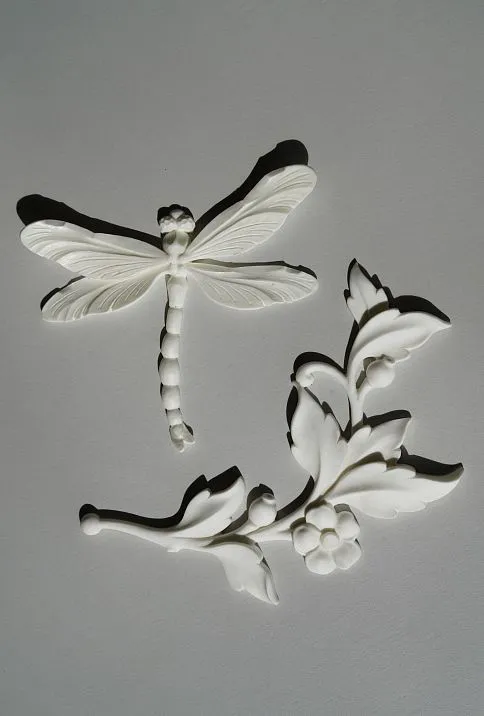
The injection molding technology allows reproducing the finest ornament details with remarkable precision. Each petal, each swirl is transferred with filigree clarity, previously accessible only to handcraftsmen. Modern polyurethane appliqués surpass even historical samples in detail quality.
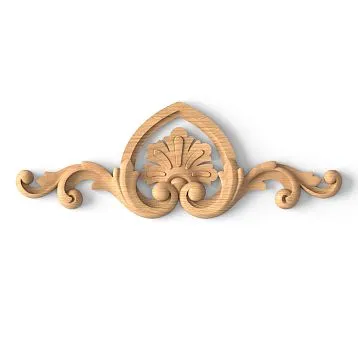
The versatility of the material opens boundless creative possibilities. Polyurethane appliqués are easily machinable — they can be cut, drilled, sanded, without fear of chips or cracks. This allows adapting standard elements to any architectural features of a room.




Ceiling Applique Types
Our factory also produces:


Rosettes: The Sun of Interior Universe
Ceiling rosettes are central compositional elements around which the entire architectural concept of the space is built. The diameter of modern rosettes varies from 20 centimeters for intimate rooms to 150 centimeters for spacious halls. Each size requires a corresponding scale of ornamentation and depth of relief.
Classic rosettes reproduce canonical motifs of European decorative art: acanthus leaves, roses, laurel wreaths, woven ornaments. Modern interpretations offer geometric compositions, abstract patterns, and stylized plant elements. Modular systems are especially popular, allowing combining different elements into a single composition.
Installing rosettes requires special care in determining the center of the ceiling. Even a slight displacement may disrupt the harmony of the entire space. Professional designers use the golden ratio to determine the optimal rosette size relative to the room's area.
Get Consultation
Crown Mouldings: Architectural Elegance of Transitions
Ceiling crown mouldings serve a dual function — practical and aesthetic. On one hand, they conceal technical seams between walls and ceilings; on the other, they create a smooth architectural transition, visually increasing the room's height. The variety of crown moulding profiles is astonishing: from minimalist geometric forms to complex multi-level compositions with rich ornamentation.
Classic crown mouldings reproduce the classical orders of ancient architecture, adapted for modern interiors. The Doric order is characterized by strictness and simplicity of forms, Ionic — by elegant ornamentation, Corinthian — by lavish ornamentation. Each style creates its own atmosphere and requires a corresponding interior setting.
Modern interpretations of crown mouldings offer bold experiments with form and scale. Minimalist profiles emphasize the purity of lines in contemporary interiors, while complex ornamental compositions create an atmosphere of luxury and refinement. Designers pay special attention to corner elements — these determine the quality and professionalism of installation.
Mouldings: Universality of Decorative Solutions
Decorative mouldings are linear elements of various cross-sections, usable either individually or in combination with other types of mouldings. Their universality lies in the ability to create complex geometric compositions, zone spaces, and establish visual accents.
Mouldings allow correcting architectural flaws of a room. Horizontal elements visually expand space, vertical ones increase ceiling height. Diagonal compositions create dynamism and give interiors a modern feel.
Flexible polyurethane mouldings open new possibilities for design creativity. They allow creating curved compositions — arches, circles, complex geometric figures. This is especially important in rooms with non-standard layouts or when working with original architectural projects.
Stylistic Directions in Ceiling Decoration
Classic Tradition
The classical style in ceiling decoration is based on principles of ancient architecture, adapted for residential interiors. Main characteristics — symmetry, proportionality, use of canonical ornamental motifs. Buy ceiling mouldings In classical execution, it means investing in eternal values of beauty and harmony.
Color palettes of classical interiors lean toward white with possible gold accents. Gold leaf is applied to protruding ornament elements, emphasizing their volume and creating a luxurious sheen. Patination technique adds elements a noble antiquity, creating a sense of historical value.
Classic proportions require strict adherence to mathematical ratios. The diameter of the central rosette should be 1/7 of the sum of room length and width. The height of the crown moulding is calculated as 1/20 of wall height. These canonical ratios have been tested over centuries and guarantee harmonious perception of space.
Baroque Extravagance
Baroque demands maximum opulence and theatricality of decoration. Large multi-level rosettes, massive crown mouldings with rich ornamentation, complex compositions of multiple elements — all this creates an atmosphere of palace luxury. Polyurethane appliqués in baroque style feature deep relief and abundance of decorative details.
A characteristic feature of baroque is asymmetry within symmetry — the overall composition is strictly centered, but individual decorative elements may have asymmetrical details. This creates dynamism and prevents the eye from getting bored by excessive order.
Color solutions in baroque style lean toward contrasts. White mouldings on a colored background or, conversely, gilded elements on a white ceiling create expressive accents. The technique of artificial aging is especially popular, imparting the decoration a noble patina of centuries.
Modern minimalism
A minimalist approach to ceiling decoration implies using simple geometric forms and minimalist profiles. Round or square rosettes with minimal relief, strict crown moulding lines, absence of excessive ornamentation — these are the main principles of this direction.
When you decide buy ceiling moldings In minimalist style, it is important to understand that every detail must be functionally justified. Decoration should not dominate the space, but rather highlight its architectural merits.
Color solutions are usually monochromatic — white on white or contrasting black and white. This approach allows preserving the functionality of decorative elements without overloading the space with excessive details.
Neoclassical Interpretation
Neoclassicism represents a compromise between classical opulence and modern restraint. Traditional ornamental motifs are simplified and stylized, retaining recognizability while acquiring a modern sound. Element sizes in neoclassical style are usually larger than classical canons — this is due to the increased size of modern rooms.
Technical aspects of selection and installation
Quality criteria for polyurethane products
When selecting ceiling moldings, the key factors are material quality and manufacturing precision. High-quality polyurethane should have a uniform structure without pores or inclusions. The surface of elements should be smooth, without bubbles or deformations. Geometric dimensions must match the stated values with precision to 1 mm.
Special attention should be paid to the quality of ornament detail. High-quality polyurethane overlays reproduce the finest details with remarkable clarity. Lines should be clean, without blurring or distortion. The relief depth should be consistent across the entire surface of the element.
Packaging and labeling also indicate product quality. Professional manufacturers use individual packaging for each element, protecting against damage during transport. Labeling must include information on dimensions, article number, and installation recommendations.
Material quantity calculation
Correct calculation of required material is the foundation of a successful project. For cornices, length is calculated as the room's perimeter plus 10% for trimming and possible errors. Corner elements are calculated separately — based on the number of internal and external angles.
Rosettes are typically installed one in the center of the ceiling, but in large rooms, a composition of several elements may be required. Moldings are calculated based on the complexity of the planned pattern, with a mandatory allowance for fitting and possible adjustments.
Professional designers recommend ordering material with a 15-20% surplus over the calculated amount. This is due to installation specifics and possible project adjustments during work.
Surface preparation
Quality installation begins with careful preparation of the ceiling surface. The base must be perfectly flat — any irregularities will become visible after installing decorative elements. The surface is cleaned of dust, dirt, and remnants of old coatings.
Ceiling priming improves adhesive bond and prevents stains on moldings. Deep-penetration acrylic primers are used, which strengthen the surface and create optimal conditions for adhesion.
Ceiling marking is a critically important stage of work. The room's center is determined by the intersection of diagonals, from which the entire composition is built. Using a laser level significantly simplifies the marking process and guarantees installation accuracy.
Adhesive technologies and mounting methods
Modern adhesives
The quality of installation largely depends on the correct choice of adhesive. Modern polyurethane adhesives provide excellent adhesion to any surface type — concrete, gypsum board, wood, metal. Setting time is 10-15 minutes, full polymerization occurs within 24 hours.
Professional installers use adhesives with adjustable open time. This allows adjusting the position of elements during installation and achieving perfect mounting accuracy. Some formulations contain thixotropic additives that prevent adhesive from dripping from vertical surfaces.
Large polyurethane overlays may require additional mechanical fastening. In this case, decorative-headed self-tapping screws are used, which are later masked with putty and painted to match the molding color.
Installation technology
The process begins with applying adhesive to the back surface of the element. Adhesive is applied using a notched trowel in an even layer, avoiding gaps or excess. Special attention is paid to the edges of the element — this is where detachment most often occurs.
The element is pressed evenly across its entire surface. For large rosettes, special supports may be needed to hold the element until the adhesive fully sets. Pressing time depends on the element size and ranges from 30 seconds to 5 minutes.
Joining linear elements requires special care. Element ends are cut at the required angle using a miter saw or miter box. Quality joining should not have visible seams after final finishing.
Final finishing and painting
Preparation for painting
After installation, all joints and connection points are filled with special putty. Acrylic-based compounds are used, which do not shrink and are easy to sand. After the putty dries, the surface is sanded with fine-grit sandpaper until perfectly smooth.
Moldings must be primed before painting. Primer equalizes the surface's absorbency and ensures even paint distribution. Special adhesive primers are used for polyurethane surfaces.
Professional finishers recommend using natural-bristle brushes for painting relief surfaces. Rollers are used only for large, flat areas. Spray guns provide the most even coverage but require protection of surrounding surfaces from overspray.
Decorative finishing techniques
Gilding remains one of the most effective ways to decorate moldings. Modern technologies offer several options — from traditional leaf gold to imitation using gold paints and gold leaf. Each method has its own characteristics and applications.
Patination creates an effect of noble antiquity. The technique involves applying dark paint into the recesses of the relief, then partially removing it from raised areas. This emphasizes the ornament's volume and creates a sense of centuries-old history.
Modern decorative coatings allow imitation of various materials — marble, bronze, silver, even exotic woods. These techniques require high skill from the executor, but the result exceeds all expectations.
Integration with lighting systems
Hidden lighting
Modern technologies allow integrating hidden lighting systems into molded decoration. LED strips placed in special grooves of cornices create a floating ceiling effect. This solution is especially effective at night, when main lighting is dimmed.
Decorative moldings with built-in lighting become independent light sources. Diffused lighting passing through translucent inserts creates a soft, romantic atmosphere. The ability to adjust brightness and color of the lighting allows adapting illumination to various tasks and moods.
Lighting control is performed through modern dimmers and controllers. It is possible to create various lighting scenes — from bright working lighting to intimate evening lighting. Integration with "smart home" systems allows automating lighting control.
Accent lighting of moldings
Directional lighting can turn ordinary molding into a work of art. Spotlights positioned at a specific angle create deep shadows in ornament recesses, emphasizing the volume and relief of elements.
Color lighting opens new possibilities for decorative design. RGB systems allow changing the lighting color depending on the time of day, holiday, or mood. This solution is especially popular in entertainment zones and children's rooms.
Economic aspects of the project
Budgeting for decorative projects
The cost of a ceiling molding project consists of several components: materials, labor, additional services. Buy ceiling mouldings Quality means investing in long-term interior beauty. Initial costs are offset by the durability and aesthetic qualities of the material.
Polyurethane products offer optimal price-to-quality ratio. At a cost comparable to other decorative finishes, they significantly surpass alternatives in durability and performance characteristics.
Professional installation accounts for 30-50% of material costs. However, saving on labor may lead to serious problems in the future. Poor installation negates all advantages of expensive materials.
Long-term economic efficiency
High durability of polyurethane products makes them a worthwhile investment in the long term. The service life of quality molding is measured in decades without the need for replacement or major repairs.
The ability to repaint multiple times allows refreshing the interior without replacing decorative elements. This is especially important when changing the stylistic concept of a room or simply wishing to refresh the ambiance.
Minimal maintenance costs further increase economic efficiency. Polyurethane inserts require no special care; regular dry cleaning is sufficient to maintain an ideal appearance.
Impact on property value
Investment Appeal
Quality ceiling molding significantly increases the market value of real estate. Buyers are willing to pay extra for ready-made interior solutions, especially if they are executed at a high professional level.
Real estate market statistics show that the presence of quality molding increases apartment value by 15-25%. This makes investments in decorative finishes not only aesthetically but also economically justified.
Unique interiors with quality molding stand out against standard offerings. This shortens sales time and allows achieving more favorable deal conditions.
Regional application specifics
Climate factors
Polyurethane molding demonstrates excellent resistance to various climate conditions. The material withstands temperatures from -40°C to +80°C without changing its geometric dimensions. This makes it suitable for use in any region of Russia.
Polyurethane's moisture resistance allows using decorative elements in rooms with high humidity. The marine climate of coastal regions does not negatively affect the material.
Seismic activity in some regions requires special attention to mounting methods. The elasticity of polyurethane and reliability of adhesive joints ensure stability of the decoration even during minor building structure movements.
Transportation of oak balusters requires special precautions due to their weight and value. Special packaging is used to prevent mechanical damage.
The lightness of polyurethane products significantly simplifies transportation. Standard packaging protects elements from damage during delivery to remote regions. The possibility of delivery by any transport type expands the geographical scope of application.
Compact packaging allows optimizing logistics costs. One standard pallet can hold decorative elements for finishing a room up to 100 square meters.
Trends and prospects
Production innovations
Advancements in production technology open new opportunities for creating unique decorative elements. 3D printing allows manufacturing custom elements according to original designs. Computer modeling ensures precise calculation of all parameters of future compositions.
New polyurethane compositions have improved performance characteristics. Increased elasticity, improved adhesion, UV resistance — these qualities make modern molding even more attractive to consumers.
Ecological requirements stimulate the development of biodegradable polymers. Materials based on renewable resources may become the foundation for decorative elements of the future.
Integration of "smart" technologies
The future of stucco decoration is linked to the integration of intelligent systems. Built-in sensors for lighting, motion, and temperature can transform decorative elements into active components of building management systems.
Wireless technologies allow hiding various devices — from Wi-Fi routers to security system components — within stucco. This opens new possibilities for creating technologically advanced interiors without compromising aesthetics.
When you make a decision buy ceiling moldingsYou invest not only in today's beauty but also in tomorrow's technology. Modern stucco is a symbiosis of classical aesthetic principles and innovative materials, creating the foundation for interiors of the next generation.
The world of ceiling stucco is constantly evolving, offering new opportunities to create unique interiors. From classical palace compositions to futuristic minimalist solutions — everyone can find a style reflecting their individuality and lifestyle. Remember: quality stucco is not an expense, but an investment in the beauty, comfort, and status of your home.
STAVROS is a recognized leader in producing high-quality polyurethane stucco, combining master craftsmen's long experience with advanced manufacturing technologies. A wide range of decorative solutions, strict quality control at every production stage, and an individual approach to each client make STAVROS a reliable partner in creating dream interiors. Choosing STAVROS products means choosing not just decorative elements, but tools to realize the boldest design ideas that will delight you and your loved ones for years to come.