Article Contents:
- Why Polyurethane Molding is in Demand in Moscow
- How does polyurethane molding differ from other materials
- Polyurethane and Gypsum: An Honest Comparison
- Polyurethane and Duropolymer
- Why Polyurethane is Chosen for Most Projects
- What Types of Polyurethane Molding Can Be Purchased in Moscow
- Moldings
- Cornices
- Ceiling Rosettes
- Baseboards
- Inlays and Decorative Elements
- Corbels, Capitals, Architectural Details
- Where Polyurethane Molding is Used
- For walls
- For ceiling
- For facade
- For Furniture and Doorways
- How to choose polyurethane molding to match the interior
- By room style
- By room size
- For the task
- Popular solutions: set for different rooms
- What to consider before ordering in Moscow
- Sizes and proportions
- Surface type and installation conditions
- Compatibility of elements with each other
- Material reserve and trimming
- Delivery, pickup, consultation
- Advantages of polyurethane molding: a systematic view
- What mistakes are most often made when choosing molding
- How to order polyurethane molding in Moscow
- Moldings, rosettes, overlays: elements that are often forgotten
- Why it's convenient to choose polyurethane molding in the STAVROS catalog
- FAQ: Answers to Popular Questions
- Conclusion
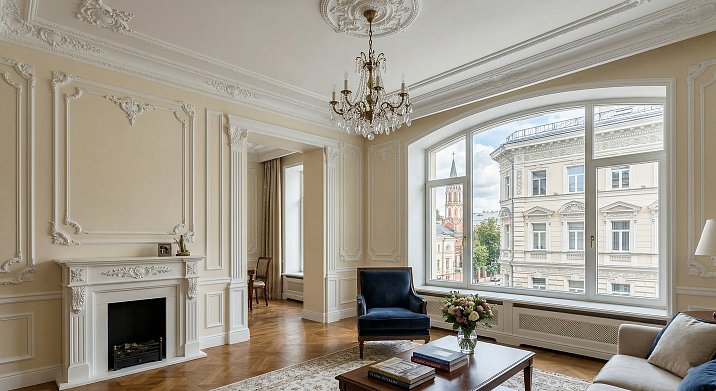
If you are looking forpolyurethane molding in Moscow— a place where a wide range is combined with professional selection and the real opportunity to see samples in person — then this material is written specifically for you. There are no general words here about 'what molding is'. Here is a specific, detailed discussion: what types of decor exist, in which rooms they work best, how to choose for a specific interior, and what is important to check before ordering.
Polyurethane decor has long moved beyond being a niche product for designers. Today, it is chosen by owners of apartments, country houses, commercial properties — anywhere they want to get an expressive result without an astronomical budget and extremely complex installation. And in Moscow, where the pace of renovation and interior updates remains one of the highest in the country, demand for such decor is steadily growing year after year.




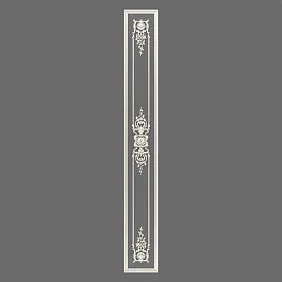
Why polyurethane molding is in demand in Moscow
Moscow is a city of contrasts. Here, Stalinist skyscrapers coexist with lofts in former factory buildings, and new residential complexes with open layouts appeal to a wide variety of aesthetic demands. At the same time, the desire to make a space special, personal, expressive — unites absolutely everyone.
Polyurethane molding in this context has proven to be the perfect tool. It does not require expensive installation involving teams of plasterers, does not overload structures with weight, easily adapts to any style, and allows you to achieve that very 'expensive look' that otherwise is only achieved with hand-molded plaster or carved wood.
Three key reasons why the Moscow market has so actively embraced this material:
-
Repair speed. In a metropolis, time is a scarce resource. Polyurethane decorative elements are installed with adhesive, without reinforcement or complex preparatory work. One craftsman can decorate an entire apartment in a day.
-
Versatility of application. Polyurethane decor is suitable for apartments, country houses, offices, restaurants, boutiques, showrooms — for any space where a visual accent is needed.
-
Affordability with high-end results. Polyurethane molding can be purchased in Moscow for a sum incomparably lower than handmade plaster molding, while the visual difference is minimal — the relief is sharp, detailing is high.
It is also important that Moscow buyers now have a real opportunity to choose not from catalog photos, but by examining samples in person. This fundamentally changes the quality of selection.




How polyurethane molding differs from other materials
Before moving on to the assortment and application, it's worth addressing the fundamental question: why polyurethane, and not plaster, duropolymer, or MDF? The answer is not as obvious as it seems.
Our factory also produces:


Polyurethane vs. Plaster: An Honest Comparison
Plaster molding is a classic, tested over centuries. It provides excellent detailing, takes paint and patina well, and looks monumental. But plaster has a number of significant limitations that become a real problem in modern renovations.
| Parameter | Polyurethane molding | What this gives the buyer |
|---|---|---|
| Weight | 5–8 times lighter than plaster | No load on floor slabs, installation without reinforcement |
| Moisture resistance | Absolute, does not absorb moisture | Suitable for kitchen, bathroom, pool |
| Installation | Adhesive, no specialists needed | Savings on labor, fast installation |
| Relief detail | High, precise geometry | Expressive decor without finishing |
| Transportation | Lightweight, no risk of chipping | Delivery without losses |
| Painting | Multiple uses, any compositions | Color change when updating interior |
| Temperature resistance | From −60 to +80°C | For unheated rooms and facades |
| Care | Wipe with a damp cloth | Minimal maintenance |
Plaster is fragile. It breaks during transportation, requires experience during installation, and needs special protection in high humidity. Polyurethane is free from all these drawbacks. At the same time, from a distance of several meters—which is exactly how we perceive ceiling or wall decor—the visual difference between good polyurethane and plaster is practically indistinguishable.
Get Consultation
Polyurethane and duropolymer
Duropolymer is another synthetic material for molding, denser and harder than standard polyurethane. It is chosen for facade work under conditions of intensive mechanical impact: for example, for elements at ground floor level, near pedestrian zones.
Polyurethane, on the other hand, is more flexible, accepts adhesive compounds better, and is slightly easier to process. For most interior tasks—ceilings, walls, arches—it is optimal. For facade decor in high-load areas, duropolymer may be preferable. But for the classic task of 'transforming an apartment or country house,' polyurethane is the number one choice.
Why polyurethane is chosen for most projects
Balance. This word most accurately describes the essence of this material. Polyurethane balances between aesthetics and practicality, between price and quality, between pattern complexity and ease of installation. For an architect or designer, it is a tool that provides almost unlimited freedom within reasonable budget constraints. For an apartment owner, it is an opportunity to achieve a professional result with their own hands.
What types of polyurethane moldings can be purchased in Moscow?
Assortmentpolyurethane decortoday is so extensive that it covers all possible application scenarios—from a modest accent above a doorway to complete architectural facade design. Let's break it down by categories.
Moldings are linear profiles used to create framed compositions, zone walls, and frame openings. They come in various widths (from 20 to 150 mm) and relief complexity — from smooth to richly decorated.
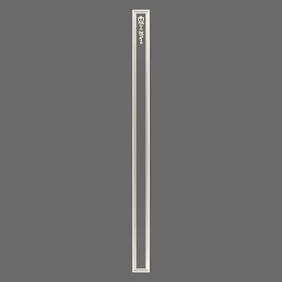
decorative moldings—these are the foundation of any molding composition. Profiled strips of varying widths and profile complexity are used to create framed panels on walls, horizontal wall divisions into belts, framing door and window openings, and decorating niches and arches.
The width of moldings varies from narrow 20–30 mm—for fine contour detailing—to wide 150–200 mm with rich relief. The higher the ceilings and more spacious the room, the more massive a molding is appropriate. In small rooms, a wide profile will overwhelm the wall.
Flexible moldings—a separate category, indispensable when working with arches, columns, bay windows, and any curved surfaces. The material bends without deforming the relief, taking on the required bend radius.
Crown mouldings
Polyurethane Crown Molding—this is a transitional element between the wall and ceiling. It is the cornice that sets the 'tone' for the entire molding composition: it serves as a spatial frame, completes the ceiling perimeter, and visually increases the room's height.
Cornices come in:
-
Ceiling—installed in the wall/ceiling corner, concealing the joint;
-
Facade—create horizontal divisions on a building's facade;
-
Curtain rods combine decorative function with practicality.
A properly chosen curtain rod can visually add 20–30 centimeters of height to a room. This is not an illusion—it's optics working through a horizontal accent line near the ceiling.
Ceiling Rosettes
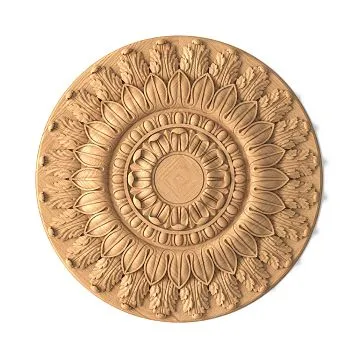
Polyurethane ceiling rosettesCeiling rosettes are one of the most impressive and simultaneously affordable elements of stucco decor. Classically, they are installed under a chandelier, concealing the mounting point and creating a decorative accent in the center of the ceiling.
The diameter of rosettes ranges from compact 150–200 mm—for small fixtures in a bedroom or hallway—to impressive 600–800 mm and more, designed for spacious living rooms and halls.
The ornament of rosettes covers the entire spectrum of styles: from strict, laconic concentric circles for a modern interior—to lush Baroque compositions with grapevines, roses, and classical acanthus leaves. When the lighting is on, the relief comes to life, creating a play of light and shadow that makes the ceiling vibrant.
Baseboards
Polyurethane BaseboardsBaseboards perform both a technical and decorative function: they conceal the joint between the floor and wall, set the rhythm for the lower part of the room, and complete the interior composition from below.
The height of polyurethane baseboards ranges from 50 to 150 mm and more. For classic interiors, high baseboards with profiled relief are chosen; for modern ones—laconic ones with clean geometry. It is important that the baseboard matches the scale of the room: in a small room, a massive, high baseboard will visually 'eat up' space.
Overlays and decorative elements
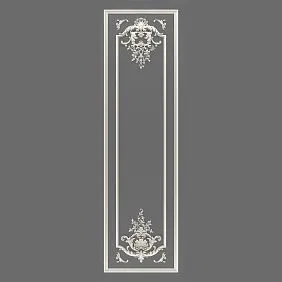
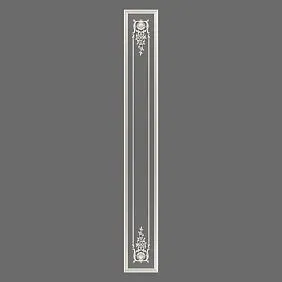
Polyurethane appliquésAppliqués are individual decorative elements: corner rosettes, medallions, cartouches, floral overlays, acanthus leaves, scrolls. They are used to complement molding compositions, create accents on flat surfaces, and decorate furniture and doors.
It is the appliqués that give the stucco system its 'jewelry-like' quality. One properly chosen corner ornament in a framed panel transforms a simple square frame made of moldings into an exquisite classical composition.
Brackets, capitals, architectural details
Brackets — decorative console elements — are used to support cornices, shelves, and beams. Capitals complete pilasters and half-columns, defining their stylistic affiliation. These are 'background' details, but they are precisely what create a sense of completeness and professionalism in a stucco system.
Where is polyurethane stucco used?
Polyurethane molded decor is used so widely that listing 'where it cannot be used' would be shorter. Nevertheless, let's structure the main scenarios.
For walls
Polyurethane wall decor— this is the richest and most varied application scenario. Wall stucco allows you to:
-
Create framed panels — classic rectangular or square fields framed by moldings. This technique came from 18th-century palace interiors and remains one of the most elegant ways to decorate a wall to this day.
-
Zone the space — vertical moldings and pilasters visually divide the wall into sections, creating rhythm without physical partitions.
-
Accentuate zones — the wall behind the sofa, the headboard of the bed, the TV niche — any of these zones can become a focal point thanks to a decorative panel or frame.
-
Hide defects — moldings and overlays mask cracks, material joints, traces of alterations without the need for complete wall leveling.
For the ceiling
ceiling decor— this is a separate world of possibilities. A cornice around the perimeter, a rosette for a chandelier, additional ornamental belts — each of these elements works independently and even more so — in a system.
A well-designed ceiling makes a room taller, more cohesive, and finished. Polyurethane ceiling stucco is a tool capable of turning a boring white rectangle into an architectural detail. Cornices work especially effectively with hidden lighting: light going behind the cornice creates a soft, diffused halo near the ceiling.
For the facade
Polyurethane facade molding is one of the most practical solutions for finishing and decorating exterior walls. The material withstands temperature fluctuations from -60 to +80°C, does not deteriorate under moisture and UV exposure, and does not crack in frost.
For facades, the following are used: cornices, pilasters, window and door frame trims, corner overlays, architraves, decorative belts. A facade with polyurethane decor gains architectural expressiveness that previously only mansion owners with substantial budgets could afford.
For furniture and doorways
Polyurethane decorative overlays are an excellent way to update old furniture or add an extra accent to door panels. Small corner ornaments, medallions, and rosettes are attached with glue and instantly transform familiar items. This technique is especially popular in neoclassical and Provence interiors, where furniture with decorative overlays becomes part of a unified visual system.
How to choose polyurethane molding for your interior
Choosing molding is not just a matter of taste. It's a design task where several parameters are important simultaneously.
Based on the style of the room
Classicism and Baroque. Wide profiled moldings with rich relief, ceiling rosettes with floral ornaments, pilasters with Corinthian capitals, decorative overlays in the form of acanthus leaves and cartouches are appropriate here. The richer the molding, the more organically it fits this style.
Neoclassicism. Restraint and precision. Simple profile moldings, minimalist frame panels, rosettes with geometric ornaments. Color - white or close to it, without pronounced contrast.
Modern interior and minimalism. Here, molding is used selectively: a thin molding as a zoning element, one laconic rosette for a pendant light, a clean ceiling cornice without a complex profile. The molding should not dominate - it should create structure.
Eclecticism. The freest style. Here you can combine classic rosettes with modern furniture, geometric moldings with ethnic textiles. The main thing is the unity of the color scheme and a sense of curated chaos, not random clutter.
By room size
This is the most common source of errors when choosing molding. Remember a simple rule: the scale of the decor must match the scale of the room.
-
Small room (up to 20 sq.m): narrow moldings 30–50 mm, compact rosettes up to 250–300 mm, baseboard height up to 70 mm. Lightness and airiness are the main principle.
-
Medium room (20–40 sq.m): moldings 60–100 mm, rosettes 300–500 mm, cornices of medium profile.
-
Large hall or living room (from 40 sq.m): wide cornices with rich profile, rosettes 500–800 mm, creation of complex multi-element ceiling compositions is possible.
Ceiling height is a separate parameter. With a height of less than 2.7 m, the molding should be as light and thin as possible. With a height from 3 m, possibilities for large-scale decorative solutions open up.
By task
Before choosing specific elements, ask yourself the question: what do I want to achieve as a result?
-
Zoning → vertical moldings, decorative belts, pilasters.
-
Hiding joints and defects → moldings at the wall/ceiling junction, overlays over problem areas.
-
Creating an accent → ceiling rosette, framed panel, decorative panel.
-
Finishing the composition → cornice, baseboard, corner elements.
Popular solutions: a set for different rooms
One of the most frequent requests is 'how to choose molding for a specific room?'. There is no single correct answer, but there are proven solutions.
For the living room — the basic set includes a cornice along the ceiling perimeter, a ceiling rosette for the chandelier, and molding panels on the accent wall. These are three elements that together create a sense of a full-fledged classic interior.
For the bedroom — the emphasis shifts to the headboard: a decorative panel or a framed molding panel highlights the sleeping area, making it more intimate and complete. The ceiling can be optionally complemented with a rosette above the bed.
For the hallway — a small space is well-suited for decoration with a cornice and molding decor on the walls: this creates an 'entry portal' that sets the tone for the rest of the interior.
For the study — strictness and conciseness. Thin moldings, minimalist panels, absence of excessive ornamentation.
For the house facade — cornices, pilasters, window and building corner trims. A system that turns a typical country house into an architecturally expressive object.
What to pay attention to before ordering in Moscow
Dimensions and Proportions
The first thing to do before ordering is to carefully measure the room. Wall length, ceiling height, opening width — all of this affects the choice of elements. For the cornice, the perimeter length including corners is important. For the rosette — the diameter relative to the ceiling area. For the molding panel — the proportions of the frame relative to the wall.
Surface type and installation conditions
Polyurethane decor is installed with adhesive. The surface must be level, clean, and sufficiently strong to hold the adhesive bond. Installation on loose or crumbling plaster is impossible without prior reinforcement. On modern paintable wallpaper — possible provided the wallpaper has reliable adhesion to the substrate.
Compatibility of elements with each other
This is a subtle but crucial point. The cornice, molding, and rosette in one room should either belong to the same collection or be intentionally selected from different collections so that their style and scale match. Mixing a coarse profile with a fine one in the same room creates a sense of chaos, even if each element is beautiful on its own.
Material reserve and trimming
When ordering moldings and trim, always take material with a 10–15% reserve. Trimming, miter cuts on corners, minor defects — all this 'consumes' footage. It's better to have extra strips than to purchase a small batch of the same article later.
Delivery, pickup, consultation
In Moscow, there is a real opportunity not only to orderpolyurethane moldingonline but also to select it in person — see samples live, assess the relief and surface quality, consult with a specialist. This opportunity is worth using, especially if you are working on a complex project with several types of elements.
Advantages of polyurethane stucco: a systematic view
We have already mentioned individual advantages throughout the text. Here is a consolidated overview of why polyurethane molding remains the best choice for most projects.
-
Lightweight — 5–8 times lighter than plaster, does not load structures, safe on the ceiling.
-
Precise geometry — produced in press molds, each piece is identical to the previous one. No errors of manual molding.
-
Expressive relief — modern press molds allow reproduction of the finest details of ornamentation, unattainable with manual production.
-
Moisture resistance — does not absorb water, does not swell, does not rot. The only molding material that can be used in bathrooms and swimming pools without special protection.
-
Paintability — any acrylic paint is suitable, patination, gilding, silvering, and aging are possible.
-
Wide range of applications — ceilings, walls, furniture, facades, doorways, fireplaces.
-
Durability — with proper installation, it lasts 30 years or more without repair.
What mistakes are most often made when choosing molding
Even experienced buyers sometimes make mistakes. Here are the most common miscalculations.
1. Buying without considering scale. A wide cornice with a rich profile in a small room with low ceilings overwhelms the space. A thin molding in a spacious hall gets lost and looks out of place.
2. Mixing different styles. A classic floral ornament and a strict geometric frame in the same room is not eclecticism, it's a mistake. Stylistic unity is a basic rule.
3. Not considering the installation location. A ceiling rosette purchased 'by eye' may not align with the chandelier's mounting point. Window trim that doesn't account for the windowsill projection won't fit correctly. Measure everything twice.
4. Choosing decor based only on photos. A photo doesn't convey scale. What looks like an elegant thin molding on screen might turn out to be a massive wide plank in reality. Request samples or check the dimensions in the description.
5. Not planning a system. A cornice, molding, and rosette purchased at different times from different places often don't form a cohesive ensemble. It's much more reliable to immediately select a set of compatible elements from the same collection.
6. Not getting extra. 'I have enough' is a phrase that regularly leads to unpleasant situations. Add 10–15% to the calculated footage.
How to order polyurethane molding in Moscow
A logically structured purchasing process saves time and nerves. Here is the sequence that works.
-
Define the task. What exactly do you want to decorate — the ceiling, walls, facade, furniture? What is the interior style? This narrows the choice to the necessary categories.
-
Take measurements. Wall lengths, ceiling perimeter, room height, opening widths, chandelier mounting location.
-
Select product type. Cornices, moldings, rosettes, baseboards — or a set.
-
Check dimensions of specific items. Profile width, height, section length — all are in the product card. Ensure the element's scale matches the room.
-
Choose compatible elements. If you're taking several types of elements, make sure they belong to the same collection or harmonize in style and scale.
-
Calculate quantity with a 10–15% surplus.
-
Agree on the pickup method. Delivery within Moscow or self-pickup — both options are available. If necessary — consult with a specialist before placing an order.
Trims, rosettes, overlays: elements that are often forgotten
When talking about moldings, most buyers think of cornices and rosettes. Meanwhile, two types of products remain undeservedly in the shadows.
Polyurethane trim— are profiled linear elements used as decorative borders, frames, corner finishes. They are flexible, easily cut to any angle, and indispensable where a clean finishing touch without a complex profile is needed.
Outlets— unlike ceiling rosettes — are wall decorative medallions. They are installed in the center of framed panels, above console shelves, as an accent element on an empty wall. Small in size, they provide a disproportionately large visual effect.
Why it's convenient to choose polyurethane moldings in the STAVROS catalog
When you choosepolyurethane decorative molding for wallsFor walls, ceilings, and facades, it's important that the entire necessary range is concentrated in one place. This eliminates the need to 'assemble' a kit from elements of different manufacturers, which may not match in style or scale.
Several practical arguments:
-
Wide range by categories. Moldings, cornices, baseboards, trim, ceiling rosettes, wall rosettes, overlays — all in one catalog, structured by product types.
-
Collection principle. Many elements are combined into collections, which simplifies the selection of compatible parts.
-
Solutions for walls, ceilings, and facades. One catalog covers all tasks — from bedroom design to finishing the facade of a country house.
-
Opportunity to view samples. A real chance to assess quality in person before purchase.
-
Professional consultation. Specialists help select a kit and calculate the amount of material, taking into account specific tasks.
FAQ: Answers to popular questions
What is better for an apartment: polyurethane stucco or gypsum?
For most apartments, polyurethane stucco is preferable. It is lighter, easier to install, does not require professional plasterers, is not afraid of moisture, and looks great in any interior style. Gypsum stucco is justified only in historical restoration projects, where the authenticity of the material is important.
Is polyurethane stucco suitable for wet areas?
Yes, absolutely. Polyurethane does not absorb water and does not deteriorate upon contact with moisture. It can be used in bathrooms, kitchens, swimming pools, and saunas. The only condition is high-quality painting with moisture-resistant paints.
Can such molding be used on the facade?
Yes, provided that products designed for outdoor use are selected. Polyurethane is resistant to temperature fluctuations, ultraviolet light, and precipitation. Facade molding made of polyurethane, with proper installation and painting, lasts at least 15–20 years.
What to choose for the ceiling: cornice or rosette?
It depends on the task. A cornice frames the perimeter and visually raises the ceiling—it's a basic element for any classic interior. A rosette creates a central accent under the chandelier. Ideally, they work together. If the budget is limited, start with the cornice: it provides a greater spatial effect.
Can polyurethane molding be painted?
Yes, easily. Acrylic and latex water-based paints are suitable. The surface can be repainted multiple times without loss of quality. Patination, gilding, silvering, and other decorative techniques are possible.
How to choose decor for a small room?
Choose elements with a minimal profile. Thin molding 30–40 mm, a compact rosette up to 250 mm, a baseboard height of 50–60 mm. Avoid overloaded ornaments and wide profiles. Light monochrome decor matching the wall color creates structure without visual overload.
Where to buy polyurethane molding in Moscow?
The STAVROS catalog features a full range of polyurethane decor for walls, ceilings, and facades—with the possibility of online ordering, delivery in Moscow, and specialist consultation.
What to choose first: moldings, cornices, or rosettes?
Start with the cornice — it sets the scale and overall logic of the space. Then select moldings with the same profile and style. The rosette is chosen last, based on the chandelier's diameter and the overall ceiling composition.
Which molding is better for a ceiling with a stretch covering?
Polyurethane molding, thanks to its minimal weight, is ideal for stretch ceilings. Cornices are mounted around the perimeter before stretching the fabric, rosettes — through embedded mounts. No risk of deformation or sagging of the covering.
Conclusion
Polyurethane moldings— is not a tribute to fashion or a cheap surrogate. It is a modern, technological, and aesthetically rich material that has organically fit into the realities of the Moscow market: high demands for results, limited timeframes, a wide range of stylistic preferences.
For those who want to get an exquisite classic interior or an expressive facade without colossal costs — this is the optimal choice. It is only important to approach the choice systematically: consider the scale of the room, style, compatibility of elements, and the tasks each of them should solve.
A comprehensive approach — when the cornice, molding, rosette, and baseboard are selected together as a single system — always yields a result incomparably stronger than a random set of beautiful details. That is why it is worth looking not at an individual element, but at the complete picture of the interior.
Company STAVROS is one of the leading suppliers of decorative polyurethane molding on the Russian market. The catalog covers all key categories of polyurethane decor: moldings, cornices, baseboards, ceiling and wall rosettes, overlays, trim, brackets, and capitals. The collections are developed considering current style trends — from neoclassicism to modern minimalist solutions. STAVROS works with both private buyers and designers and architectural studios, providing professional support at all stages — from element selection to material quantity calculation and installation recommendations.