Article Contents:
- Polymer alchemy: how beauty is born
- Chemical inertness and ecological safety
- Technological Revolution in Production
- Ecological Safety and Innovations
- Stylistic universe of wall decor
- Classic Heritage in Modern Interpretation
- Baroque Opulence and Rococo Refinement
- Modern Interpretations and Avant-Garde Solutions
- Typology of wall elements
- Moldings and cornices: architectural punctuation
- Panels and boiserie: aristocratic luxury
- Pilasters and half-columns: vertical dominance
- Innovative installation technologies
- Preparatory operations: foundation of quality
- New-Generation Adhesive Systems
- Jointing Technologies
- Instrumental support of the process
- Cutting Tools
- Measuring Instruments
- Auxiliary equipment
- Stylistic integration into interior
- Classic Interiors
- Modern Interpretations
- Eclectic solutions
- Economic efficiency of solutions
- Comparative Cost of Materials
- Installation Costs
- Long-Term Economic Efficiency
- Innovations in care and maintenance
- Cleaning Systems
- Repair Technologies
- Updating Finishes
- Conclusion: The Art of Accessible Elegance
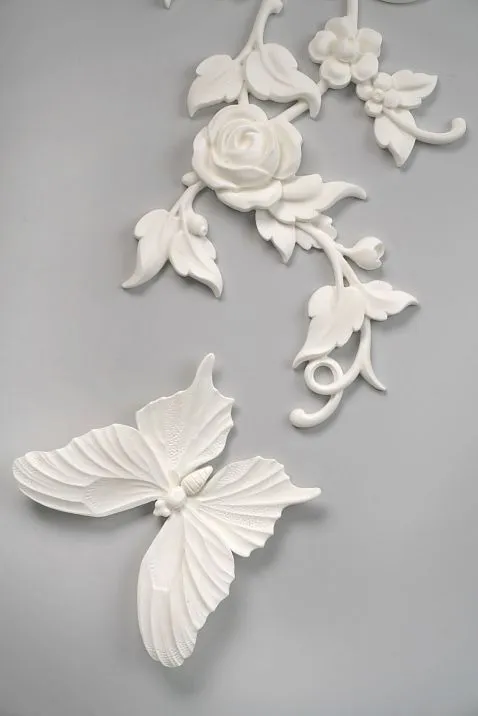
Walls are the canvas on which the story of our home is written. But what if we transform them from plain surfaces into a gallery of refined forms? What if every room becomes a witness to the artistic taste and refinement of its owners? Decorative polyurethane wall molding It opens before us a world of boundless possibilities, where modern technologies meet eternal canons of beauty.
In an era of mass production and standardized solutions, when most interiors resemble each other like twins, the emergence of unique decor becomes an act of creative self-expression. Polyurethane molding offers everyone the opportunity to create a space worthy of their dreams, without requiring astronomical costs or multi-month renovation work.
Imagine a morning when sunlight glides across the relief surfaces of the walls, creating a wonderful play of light and shadow. Each ornament comes alive, telling its story of beauty. This is not just decoration — it is a philosophy of life, where the beautiful becomes part of everyday life.



Polymer alchemy: how beauty is born




Molecular Architecture of Perfection
Behind the simple appearance of decorative molding lies complex scientific work. Polyurethane is a thermosetting polymer with a unique three-dimensional molecular structure, where each macromolecule is connected to neighboring ones by multiple cross-links. This feature provides the material with exceptional strength at minimal weight.
The density of finished products varies from 450 to 750 kg/m³ depending on the purpose of the elements. Wall moldings and panels are made from lighter compositions to simplify installation, while large decorative elements require higher density to ensure dimensional stability.
The compressive strength of modern polyurethane reaches 90 MPa, exceeding the properties of many traditional construction materials. At the same time, the material retains elasticity, allowing it to deform under load by up to 20% without residual changes and return to its original shape.
Our factory also produces:


Technological revolution in production
Creating a master model is a union of art and technology. Sculptors create original samples, which are then scanned using 3D technology with precision down to 0.01 mm. The resulting digital models allow reproduction of even the most delicate ornament details.
Silicone molds are made from special RTV silicones with hardness of 25-30 Shore A. This hardness ensures perfect transfer of the finest relief details while maintaining sufficient elasticity for multiple uses. The lifespan of a quality mold is 1000-1500 casts.
The casting process occurs under strictly controlled parameters: component temperature 21±1°C, relative air humidity 55±5%, mixing time does not exceed 45 seconds. Any deviation from technological norms may lead to structural defects in the material or inaccuracies in geometric dimensions.
Get Consultation
Ecological Safety and Innovations
Modern polyurethane compositions fully comply with the strictest ecological standards of the European Union. The composition does not contain formaldehyde, heavy metals, or volatile organic compounds of risk class higher than fourth. The material is certified for use in children's and medical facilities.
Hypoallergenicity is confirmed by independent tests in leading European laboratories. Even people with heightened sensitivity to chemicals can be in rooms with polyurethane decor without any risk to their health.
Antimicrobial properties are achieved by incorporating silver ions into the composition, which provide long-term protection against mold, fungi, and bacteria. This is especially important for wall decor, where dust may accumulate and create conditions for microorganism proliferation.
Stylistic universe of wall decor
Classic Heritage in Modern Interpretation
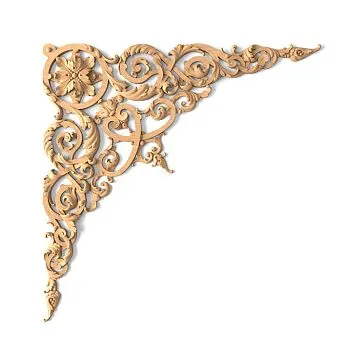
Ancient architecture gave the world a system of proportions and ornaments whose relevance has not diminished over millennia. Corinthian acanthus leaves, Doric meanders, Ionic volutes — all these elements have found new embodiment in decorative polyurethane wall molding.
The mathematical precision of classical proportions is reproduced with extreme accuracy. The golden ratio (1:1.618), underlying ancient orders, is naturally perceived by the human eye as ideal harmony. Modern technologies allow reproducing these ratios with precision down to tenths of a millimeter.
Plant motifs in classical architecture carry deep symbolic meaning. Oak leaves symbolize strength and longevity, laurel branches — victory and glory, grapevines — abundance and prosperity. In wall decoration, these symbols create an atmosphere of solemnity and nobility.
Baroque opulence and rococo refinement
Baroque astonishes with its ability to create an illusion of movement in static material. Complex scrolls and counter-scrolls, asymmetrical compositions, rich chiaroscuro plasticity transform walls into theatrical backdrops. Each element seems to live its own life, creating a sense of an endless dance of forms.
Rococo motifs, with their elegant asymmetrical forms, create an atmosphere of the gallant 18th century. Stylized shells, interwoven ribbons, floral garlands transform interiors into exquisite boxes. Every detail is thought out to the smallest detail, and each scroll has its place within the overall composition.
Modern decorative coating technologies allow mimicking any historical materials: patinated bronze, aged gold, marble with natural veins, rare wood species. All this is achievable using special paints and application techniques.
Modern interpretations and avant-garde solutions
21st-century Neoclassicism adapts traditional forms to modern aesthetic requirements. Simplification of details, enlargement of main elements, adaptation of proportions to modern interiors make classicism relevant for a new generation of designers and architects.
Minimalist interpretations are characterized by concise profiles, clear geometric forms, absence of excessive detailing. Beauty is achieved through perfection of proportions and quality of execution, not by quantity of decorative elements.
Parametric design opens opportunities for creating forms impossible in traditional architecture. Algorithms generate complex geometric structures, which are materialized using modern casting and digital modeling technologies.
Wall Element Typology
Moldings and Cornices: Architectural Punctuation
Moldings represent the most numerous group of wall decoration. Profile widths vary from 20 to 250 mm, heights — from 12 to 180 mm. This variety allows creating both delicate accents and expressive architectural divisions of wall space.
The functional purpose of moldings goes far beyond simple decoration. They allow visually structuring space, creating geometric compositions, zoning large areas, concealing joints between different finishing materials.
Special flexible moldings are designed for decorating curved surfaces. The minimum bending radius is 400 mm, enabling the creation of arches, vaults, elliptical forms, and wavy surfaces.
Panels and Boiserie: Aristocratic Luxury
Decorative panels reproduce traditional boiserie — wooden wall cladding characteristic of palace interiors of the 17th-18th centuries. A modular system allows creating coverings of any size while preserving the proportionality of the ornament.
Standard panel sizes vary from 300×400 mm to 800×1200 mm. Element thickness is 15–25 mm, ensuring sufficient relief with minimal weight. Each panel is equipped with a jointing system enabling seamless coverings.
Thematic collections include panels in various styles: from strict English classicism to lavish French Baroque. Ornaments may be geometric, plant-based, heraldic, or abstract.
Pilasters and Half-Columns: Vertical Dominance
Pilasters serve to create vertical accents and visually structure wall space. Element heights vary from 800 to 3000 mm, widths — from 120 to 400 mm. A modular system of bases, shafts, and capitals allows creating compositions of any height.
Fluted shafts create play of light and shadow on the pilaster surface. The number of flutes traditionally is 12, 16, or 20 depending on element width. Groove depth is calculated based on optical properties of human perception.
Capitals of various orders are reproduced with historical accuracy. Doric capitals are minimalist and functional. Ionic capitals are adorned with characteristic volutes. Corinthian capitals impress with rich vegetal ornamentation.
Innovative mounting technologies
Preparation Operations: Foundation of Quality
Installation Quality Decorative Polyurethane Wall Moldings 85% of the quality depends on the correctness of preparatory work. The wall surface must be flat, dry, strong, cleaned from dust, grease, and peeling coatings.
Moisture content of the substrate must not exceed 5% by mass. Check is performed using electronic moisture meters. Excessive moisture may lead to weakening of adhesive bond and appearance of coating defects.
Geometric deviations of the wall must not exceed 2 mm per meter of length. Large irregularities are leveled with plaster mixes; local defects are filled with putty. Quality of preparation is checked using a straightedge and level.
New-generation adhesive systems
Polyurethane adhesives provide chemical affinity with decorative material, creating practically monolithic bonding. Bond strength exceeds the strength of the material itself — failure occurs not along the adhesive joint, but along the base material.
Open waiting time is 20–35 minutes depending on air temperature and humidity. During this time, the adhesive partially polymerizes, forming a surface film that ensures optimal adhesion upon contact with the substrate.
Final strength is achieved within 24–72 hours depending on adhesive layer thickness and environmental conditions. During this time, elements must be securely fixed against displacement and vibrations.
Jointing technologies
Corner joints are made at precisely calculated angles. For standard rooms with right angles, a 45° angle is used; for non-standard geometries, each angle is individually measured using a protractor or digital angle gauge.
Polyurethane-based adhesive provides chemical "welding" of the joined surfaces. After complete polymerization, the joint becomes stronger than the base material and is virtually invisible to the eye.
The technology for forming angles requires high precision cutting. Adjustable-angle miters, circular saws with fine-toothed blades, and hand saws with guides are used. Cut quality is visually inspected and checked with feeler gauges.
Tooling for the process
Cutting Tools
Saws with fine teeth (14-18 teeth per inch) provide clean cuts without chipping or burrs. Blades must be sharp and properly sharpened. A dull tool may cause material deformation and poor cuts.
Circular saws with carbide-tipped blades are ideal for precise cutting at various angles. The blade diameter should match the material thickness with at least 50 mm clearance. Feed rate is adjusted depending on material density.
Electric jigsaws with plastic blades are suitable for curved cuts and creating curved elements. The blade movement speed should be minimal to prevent melting of cut edges.
Measuring Instruments
Tape measures with 1 mm division accuracy are required for preliminary marking. Tape length is chosen based on room size, but at least 3 meters is recommended for convenience.
Levels of various lengths (400 to 2000 mm) ensure control of horizontal and vertical alignment of elements. Level accuracy should be no less than 0.5 mm/m.
Try squares and protractors allow control of right angles and measurement of non-standard room angles. High-quality tools are made of stainless steel with laser-engraved scales.
Auxiliary Equipment
Ladders and scaffolds provide safe access to upper wall sections. Ladder height should allow comfortable work without excessive arm stretching.
Vacuum cleaners for removing dust and sawdust are necessary to maintain cleanliness at the work site. Fine dust may reduce adhesive bond strength.
Technical hair dryers are used to accelerate polymerization of adhesive compositions under low-temperature conditions. Heating temperature must not exceed 60°C to avoid material deformation.
Stylistic integration into interior design
Classic Interiors
Classic style requires strict adherence to canonical proportions and ornamentation. Decorative polyurethane wall molding Enables reproduction of historical samples with museum-level accuracy. Each element has its designated place within the overall hierarchy of forms.
Color palette traditionally is limited to noble tones: white, cream, ivory, pearl gray. Gold is applied sparingly, only to accentuate the most important compositional elements.
Lighting should emphasize the relief of decoration, creating soft shadows and highlights. Directional lights with warm color temperature (2700–3000K) are used.
Modern Interpretations
Modern design adapts classical forms to current aesthetic requirements. Simplification of details, scaling up, and use of contrasting color schemes create a fresh perspective on traditional elements.
Color solutions become bolder: from monochromatic black-and-white compositions to vibrant accent colors. Materials easily take on any shade, allowing experimentation with color.
Combining with modern materials — glass, metal, ceramic — creates interesting contrasts in texture and reflection. Moldings become the connecting element between different materials.
Eclectic Solutions
Eclecticism allows combining elements from different styles and eras into a single composition. This requires deep understanding of stylistic patterns and sense of proportion, but opens boundless creative possibilities.
Thematic compositions unite elements from one cultural tradition: classical, oriental, Gothic. Each culture has its characteristic ornaments and proportions.
Author interpretations are created by designers for specific projects. This may involve reinterpreting classical forms or creating entirely new compositions based on modern aesthetic principles.
Economic efficiency of solutions
Comparative material cost
Polyurethane molding, at comparable quality of execution, costs 3–6 times less than elements made of natural stone or wood. Savings are achieved through industrial production methods and optimized technological processes.
Gypsum elements appear cheaper only at first glance. Accounting for transportation costs, installation complexity, need for protective coatings, and risk of damage reveals the real economic advantages of polyurethane.
Natural materials — carved wood, natural stone — are undoubtedly more prestigious, but their cost may be 10–25 times higher. Additionally, they require special care, protection from adverse effects, and regular maintenance.
Installation costs
The lightweight nature of the material allows installation by 1–2 people without lifting equipment. This significantly reduces labor costs, especially when decorating high ceilings or hard-to-reach areas.
No need for special tools simplifies the installation process. A standard set of construction tools is supplemented only by a miter gauge for cutting angles and a toothed putty knife for applying adhesive.
Installation speed is 4-5 times higher compared to traditional materials. A standard room of 20 m² can be fully decorated with decorative elements in 1-2 days of work.
Long-term economic efficiency
Minimal operating costs make polyurethane molding a profitable long-term investment. The material requires no special care, periodic impregnation, protective coatings, or regular repairs.
The ability to repaint multiple times allows updating the interior without replacing decorative elements. This is especially important in commercial spaces, where the design concept may change every 5-7 years.
The impact on property value is 20-40% of the cost of decorative finishing. A well-executed wall decoration significantly increases the attractiveness of the property to potential buyers or tenants.
Innovations in care and maintenance
Cleaning systems
The smooth surface of polyurethane does not accumulate dust in significant amounts. Regular cleaning requires wiping with slightly damp microfiber cloth or vacuuming with a soft brush.
The material's anti-static properties prevent surface electrification. This is especially important in rooms with intensive air exchange, where static electricity may attract dust and small particles.
For removing stubborn stains, use mild solutions of neutral cleaning agents. Aggressive chemical compounds, solvents, and abrasive materials are strictly not recommended.
Repair technologies
Local damage is repaired using special polyurethane-based repair compounds. Ideal chemical compatibility ensures imperceptible restoration and long-lasting repair.
The repair technology includes cleaning the damaged area, applying repair compound with slight excess, sanding after full drying, and final painting to match the base coating.
Full recovery time is 48-72 hours depending on the size of damage and environmental conditions. The repaired area matches the strength of the original material.
Coating renewal
Polyurethane has excellent adhesion to most lacquer and paint materials. Before painting, the surface is lightly sanded with fine abrasive paper P320-P400 to achieve optimal roughness.
Priming with special polymer-compatible primers ensures even coverage and paint savings. Primer drying time is 6-8 hours under normal conditions.
Painting is done with high-quality water-based paints in 2-3 thin layers with intermediate drying. Modern paints provide coating durability of up to 10-12 years without loss of decorative properties.
Conclusion: the art of accessible elegance
In a world of rapidly changing design trends and growing demands for quality of life, polyurethane wall molding has become a symbol of harmonious blending of tradition and innovation. This remarkable material allows each person to create a dream interior without compromising on quality, durability, or aesthetic principles.
Every day, thousands of people make the decision to improve the quality of their living space by choosing decorative elements that will delight the eye for many years. Modern polyurethane molding offers this possibility without limitations on style, budget, or architectural form complexity.
The revolution in materials science has made it possible to create products that combine the beauty of classic forms with the advantages of modern technologies. Lightness, strength, moisture resistance, and ease of installation — all these qualities contribute to creating a comfortable and aesthetically perfect living environment.
Investing in quality wall decoration is an investment in emotional well-being and improved quality of daily life. Every time you enter a beautifully decorated room and admire the play of light in the elegant curves of molding, you receive aesthetic pleasure that cannot be measured in monetary terms.
Choosing modern materials and proven manufacturers is a choice made by people who understand the value of long-term solutions and are unwilling to compromise on mediocrity. It is the choice of those who strive to create a space worthy of their ambitions and life principles.
The future of interior design is inseparably linked with materials that combine aesthetic perfection with functional efficiency. Polyurethane molding already embodies these principles today, offering limitless opportunities for creative self-expression and the creation of unique spaces.
STAVROS Company embodies the best traditions of Russian entrepreneurship, enriched with European quality standards and advanced technological solutions. Decades of experience in architectural decoration, proprietary high-tech production, strict quality control at every manufacturing stage, and impeccable customer service have made STAVROS an undisputed industry leader and a reliable partner for thousands of satisfied clients across the country. Every STAVROS product is created with a deep understanding of its role in the overall interior concept, where every detail, every element, and every nuance of lighting and architectural harmony matters. Choosing STAVROS means choosing not just quality products, but a philosophy of perfection that transforms ordinary walls into works of art. Trust the experience of true STAVROS professionals and discover the incredible world of boundless possibilities, where classical beauty harmoniously combines with modern comfort, creating interiors worthy of the most discerning admirers of beautiful and functional design.