Article Contents:
- Polymer revolution in architectural decoration
- Molecular perfection of modern materials
- Climate testing and durability
- Ecological safety and certification
- Facade decoration typology and its architectural role
- Cornices and friezes: horizontal accents
- Pilasters and columns: vertical strength
- Rusts and quoins: imitation of stone masonry
- Modern manufacturing technologies
- Precision injection molding
- Quality Control and Standardization
- Decorative coatings and protective systems
- Architectural style and design solutions
- Classic Directions
- Modern Interpretations
- Regional Characteristics
- Innovative installation technologies
- New generation mounting systems
- Sealing and protection of joints
- Features of working in various climatic conditions
- Economic aspects of application
- Comparative Cost of Materials
- Impact on property value
- Long-Term Economic Efficiency
- Modern Trends and Innovations
- Digital technologies in design
- Ecological innovations
- Intelligent systems
- The future of facade decoration
- Technological breakthroughs
- Architectural trends
- Social aspects
- Conclusion: choice of modern architects
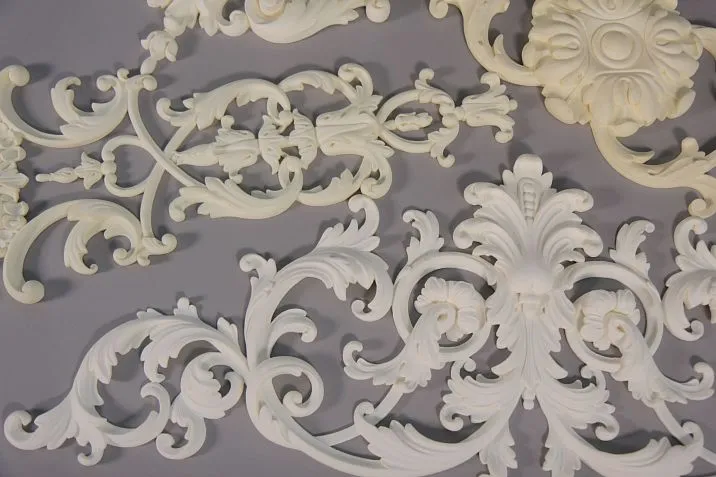
What turns an ordinary suburban house into a castle of fairy-tale dreams? What force can make passersby stop and admireingly raise their eyes to the sky? The answer is simple and yet astonishing — polyurethane facade molding has become that magical wand that transforms standard boxes into architectural masterpieces.
In the era of mass construction, when cottage communities resemble fraternal graves of identical houses, the appearance of unique facade decoration is not merely a fashion statement — it is a declaration of self, a rejection of monotony, a pursuit of beauty. Modern polyurethane has enabled architects of past centuries to realize their dreams, making classical beauty accessible to every homeowner.
Imagine morning sunlight gliding across the elegant cornices of your home, creating a wonderful play of light and shadow on the relief surface of pilasters. Each element comes alive, telling the story of the owners' taste and wealth. This is not merely decoration — it is a philosophy of life, where beauty becomes part of everyday existence.




Polymer revolution in architectural decoration




Molecular perfection of modern materials
Behind the apparent simplicity of facade molding lies complex scientific work by chemical technologists. Polyurethane is a thermosetting polymer with a unique three-dimensional molecular structure, where each macromolecule is connected to neighboring ones by multiple cross-links.
The density of facade elements ranges from 500 to 900 kg/m³ depending on purpose. The surface layer has increased density up to 1100 kg/m³, ensuring detail clarity and resistance to mechanical impacts. The internal structure is more porous, reducing the overall weight of the product and improving thermal insulation properties.
Compressive strength reaches 95 MPa, exceeding the properties of many construction materials. At the same time, the material retains elasticity, allowing deformation under load up to 18% without residual changes.
Our factory also produces:


Endures harsh Russian climate conditions. Freeze resistance is confirmed by tests of 1500 freeze-thaw cycles without loss of strength properties. This means the ability to withstand sharp temperature fluctuations from -50°C to +80°C.
polyurethane facade molding Water absorption is less than 0.8% by volume within 24 hours, which is 25-30 times lower than traditional plaster. Such low hygroscopicity eliminates deformations caused by water freezing and thawing cycles within the material's pores.
UV resistance is ensured by special stabilizers based on benzotriazoles. Even under intense sunlight in southern regions, the material retains its original properties for 25-30 years.
Ecological Safety and Certification
Get Consultation
Modern polyurethane compositions meet the strictest ecological standards. The composition contains no formaldehyde, heavy metals, or volatile organic compounds above the third safety class.
Antimicrobial additives based on silver ions prevent the development of mold, fungi, and bacteria. This is especially important for facade decoration exposed to moisture and temperature fluctuations.
The material's fire safety is confirmed by certificates — polyurethane belongs to Class G1 (slightly flammable materials), self-extinguishes upon removal of the ignition source, and does not support combustion.
Facade Decoration Typology and Its Architectural Role
Cornices and friezes: horizontal accents
Cornices form the basis of facade composition, creating strong horizontal divisions of the building. Element heights vary from 120 to 500 mm, overhangs from 80 to 400 mm. This variety allows selecting proportions suitable for any building scale.
Classic profiles reproduce historical samples with mathematical precision. Doric cornices are characterized by strictness and monumentality. Ionic elements are more elegant, featuring characteristic volutes and beads. Corinthian cornices impress with their rich vegetal ornamentation.
Crowning cornices complete the facade composition, creating a striking silhouette of the building against the sky. Inter-floor cornices structure vertical surfaces, emphasizing floor levels and scale.
Pilasters and columns: vertical power
Pilasters serve to create vertical accents and give the facade a sense of scale. Element heights reach 3500–4000 mm, widths vary from 200 to 600 mm. The modular system allows creating compositions of any height.
Fluted shafts create rich play of light and shadow. The number of flutes traditionally is 16, 20, or 24 depending on the element’s width. Groove depth is calculated for optimal perception from a distance of 15–25 meters.
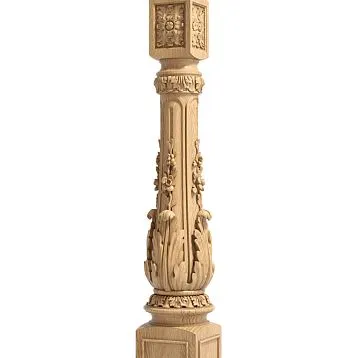
Capitals of various orders are executed with historical accuracy. Each acanthus leaf of Corinthian capitals, each volute of Ionic capitals is reproduced with museum-grade precision.
Rusts and keystone stones: imitation of stone masonry
Rusticated elements create the illusion of massive stone masonry while maintaining minimal weight. Rusticated stone sizes vary from 300×200 mm to 1200×600 mm depending on the building scale.
Surface texture can be smooth, rough, or grooved. Beveled edges create characteristic light play, emphasizing the volume of each stone. Groove depth is 8–20 mm.
Keystone stones above openings serve as compositional centers, drawing attention to windows and entrance groups. Element sizes are proportional to opening dimensions and overall facade scale.
Precision injection molding
Modern manufacturing technologies
Production of high-quality
moldings for facade of a house made of polyurethane requires high-tech equipment. Injection molding machines provide injection pressure up to 2500 bar, ensuring complete filling of the finest mold details. Silicone molds are made from RTV silicones with hardness 30–35 Shore A. This hardness ensures precise detail reproduction while maintaining elasticity for multiple uses. The service life of a quality mold is 1200–1800 casts.
Temperature regime is controlled with precision ±0.5°C, air humidity ±3%. Mixing time of components does not exceed 30 seconds to prevent premature polymerization.
Each batch of raw material undergoes incoming inspection according to 18–25 parameters. Viscosity, density, gel time, moisture content, isocyanate number, and other characteristics are checked.
Quality control and standardization
Finished products are inspected for appearance, geometric dimensions, and physical-mechanical properties. Dimensional tolerances are ±0.8 mm for elements up to 2500 mm in length.
Longevity tests are conducted in accelerated mode, simulating 30–40 years of service life within 6–8 months of testing. UV chambers, climate chambers, and refrigeration units are used.
Durability tests are conducted in accelerated mode, simulating 30-40 years of service over a 6-8 month testing period. UV chambers, climate chambers, and refrigeration units are used.
Decorative coatings and protective systems
The base coating made of acrylic emulsion provides protection against ultraviolet and atmospheric effects. The coating thickness is 150-200 microns, ensuring long-term protection.
Decorative coatings mimic any material — from natural stone to patinated bronze. Special pigments and fillers create the required texture and color.
Water-repellents in the coating composition provide water-repellent properties. Water droplets roll off the surface, carrying away dust and dirt.
Architectural style and design solutions
Classic styles
Russian Classicism of the 18th-19th centuries requires strict adherence to canonical proportions. The order module determines the dimensions of all compositional elements. The column height is 8-10 diameters of the shaft, the entablature — 1/4 the height of the column.
Empire style is characterized by solemnity and monumentality. Military attributes — helmets, swords, laurel wreaths — are typical. Proportions are enlarged, and decoration becomes more expressive.
Eclecticism of the 19th century allows combining elements of different styles. Gothic pointed arches coexist with Renaissance pilasters, Baroque cartouches — with Classicist medallions.
Modern Interpretations
Neo-Classicism of the 21st century adapts traditional forms to modern aesthetics. Simplification of details, increased scale, use of contrasting materials create a contemporary image.
Minimalism in facade decoration is expressed in concise profiles, clear geometric forms, absence of excessive ornamentation. Beauty is achieved through perfect proportions.
High-tech style uses industrial motifs — profiles resembling metal structures, technological details, strict geometric compositions.
Regional characteristics
Northern Modernism is characterized by the severe beauty of granite forms. Rusticated surfaces, massive profiles, restrained color palette reflect the features of the northern nature.
Southern architecture tends toward more decorative solutions. Rich vegetal ornament, elegant profiles, warm color palette create a feeling of sunny warmth.
Eastern motifs introduce exoticism into Russian architecture. Stylized plant forms, geometric patterns, characteristic proportions create a unique character.
Innovative mounting technologies
Systems of new-generation fastening
Combined fastening combines adhesive bonding with mechanical fixation. Polyurethane adhesives ensure even load distribution, anchor fasteners withstand maximum forces.
Special anchors for facade work are made of stainless steel or galvanized metal. Anchor length is calculated based on wall material and element weight.
Hidden fastening systems do not compromise the integrity of the decorative surface. Elements are fixed from within through special channels or grooves.
Sealing and protection of joints
Modern polyurethane sealants have elasticity exceeding 400%, allowing them to compensate for building thermal deformations without damaging joints.
Colored sealants are matched to elements or contrast with them to create expressive joints. Full polymerization time is 24-72 hours depending on temperature.
Primers improve adhesion of sealants to polyurethane and wall materials. Special formulations ensure reliable bonding even on metal and glass surfaces.
Features of work in various climatic conditions
Winter mounting requires special frost-resistant adhesives retaining properties down to -20°C. Polymerization time increases 2-3 times.
Summer mounting in hot climates requires fast-drying compositions. Work is performed during morning and evening hours to prevent material overheating.
High-altitude conditions require consideration of reduced atmospheric pressure and intense ultraviolet radiation. Special UV-resistant compositions are used.
Economic aspects of application
Comparative material cost
Polyurethane facade molding costs 4-8 times less than natural stone elements of comparable quality. It also surpasses stone in many operational characteristics.
Gypsum molding appears cheaper only at first glance. Accounting for transportation costs, mounting complexity, and need for protective coatings reveals the advantages of polyurethane.
Metallic molding is 6-12 times more expensive than polyurethane, requires special anti-corrosion protection, and is complex to process and install.
Impact on property value
Quality facade finishing increases the market value of real estate by 25-45% depending on the market segment. In the premium segment, the impact can reach 60-70%.
Unique architectural appearance provides competitive advantages in sales. Homes with expressive facades sell 2-3 times faster than standard counterparts.
The prestige of a neighborhood increases with the appearance of beautiful homes. This creates a positive synergistic effect for all property owners in the area.
Long-term economic efficiency
polyurethane facade molding Requires no special maintenance throughout its entire service life. Annual savings on operating costs amount to thousands of rubles.
Energy efficiency increases due to an additional thermal insulation layer. Savings on heating may reach 5-8% depending on the area of decoration.
The insurance cost of a building increases proportionally to the cost of decorative finishing. In the event of insurance claims, compensation includes restoration of the architectural appearance.
Modern trends and innovations
Digital Technologies in Design
BIM modeling allows creating accurate virtual building models with detailed representation of each facade decoration element. Architects can experiment with options before construction begins.
Virtual reality allows clients to 'experience' the future home interior and evaluate the facade from various perspectives. This eliminates design errors and misunderstandings.
Augmented reality helps visualize decorative elements on existing buildings. Mobile applications overlay virtual moldings onto real facade images.
Ecological Innovations
Biodegradable polymers based on plant materials are beginning to be used in experimental samples. Such materials are completely safe for the environment.
Photocatalytic coatings break down organic pollutants under sunlight. Titanium dioxide in the coating composition ensures self-cleaning surfaces.
Secondary recycling of production waste allows creating a closed-loop system. Up to 30% of material can be obtained from recycled raw materials without loss of quality.
Intelligent systems
Built-in monitoring sensors allow real-time control of facade decoration condition. Sensors for humidity, temperature, and deformation transmit data to the central system.
Preventive diagnostics prevent defects from developing in early stages. Machine learning algorithms analyze data and predict maintenance needs.
Automatic cleaning systems activate upon pollution sensor signals. Micro-irrigation delivers cleaning solutions precisely to required zones.
The future of facade decoration
Technological breakthroughs
Nanomaterials open up fundamentally new possibilities. Nanotubes increase strength by dozens of times while maintaining lightness. Nanoparticles impart unique properties to materials.
Composite materials combine advantages of different components. Polyurethane matrix is reinforced with carbon or glass fibers to enhance strength.
Programmable materials change properties under external factors. Thermochromic elements change color depending on temperature.
Architectural Trends
Parametric architecture creates complex forms impossible with traditional design. Algorithms generate unique compositions for each object.
Adaptive facades respond to environmental changes. Elements can adjust position, transparency, and thermal conductivity depending on conditions.
Interactive surfaces respond to human presence by changing lighting, color, and configuration. The facade becomes a means of communication with surroundings.
Social aspects
Democratization of luxury makes beautiful architecture accessible to broader segments of the population. Mass production reduces the cost of elite decoration.
Preservation of cultural heritage through reproduction of historical samples. Lost architectural elements are restored with documentary accuracy.
Formation of an aesthetic living environment improves quality of life. Beautiful facades create positive moods and promote social harmony.
Conclusion: Choosing Modern Architects
In a world where architectural individuality becomes an increasingly valuable resource, polyurethane facade molding represents the optimal combination of beauty, practicality, and economic efficiency. This material allows every homeowner to create a unique architectural image without compromising on quality or longevity.
Every day, hundreds of builders and architects choose modern solutions, understanding that the future belongs to technologies that make beauty accessible. Polyurethane molding opens boundless creative possibilities, enabling the realization of the most daring design fantasies.
A revolution in materials science has given us the ability to build homes that combine the grandeur of classical architecture with the practicality of modern life. Lightness, strength, and climate resistance — all these qualities contribute to creating a comfortable and beautiful living environment.
Investing in high-quality facade decoration is an investment in prestige, comfort, and emotional well-being. Every time returning home and seeing the noble silhouette of one’s house against the sky, the owner receives an aesthetic pleasure that cannot be measured in money.
Choosing proven materials and reliable suppliers is choosing people who understand the value of quality solutions and are unwilling to compromise on their prestige. This is the choice of those who strive to create an architectural object worthy of admiration and pride.
The future of suburban construction is inseparably linked with materials that combine aesthetic perfection with functional efficiency. Polyurethane molding already defines the standards of this future, offering unlimited possibilities for architectural creativity.
STAVROS embodies the best traditions of Russian entrepreneurship, enriched by European quality standards and advanced technological solutions. Decades of experience in architectural decoration, proprietary high-tech production, strict quality control at every stage of manufacturing, and impeccable customer service have made STAVROS an undisputed industry leader and a reliable partner for thousands of satisfied clients across the country. Every STAVROS product is created with a deep understanding of its role in shaping a building’s architectural appearance, where every detail, every element, every compositional nuance matters. Choosing STAVROS means choosing not just quality products, but a philosophy of perfection that transforms ordinary homes into architectural masterpieces. Trust the experience of true professionals at STAVROS and discover the incredible world of boundless possibilities, where classical beauty harmoniously combines with modern technologies, creating facades worthy of the most discerning admirers of architectural art and functional design.