Article Contents:
- Architectural psychology of ceiling space
- Influence of scale on perception
- Material science: polyurethane as the material of the future
- Ecological safety
- Stylistic palette of ceiling decoration
- Classical Canons
- Baroque Theatricality
- Neoclassical monumentality
- Modern organic style
- Technological aspects of production
- Process of casting and molding
- Quality Control
- Installation technologies
- Foundation Preparation
- Marking and Planning
- Adhesive technologies
- Integration with engineering systems
- Lighting and electrical systems
- Climate Systems
- Psychology of color in interior decoration
- Classic monochromatic schemes
- Artistic techniques
- Economic Efficiency of Projects
- Cost analysis
- Impact on property value
- Maintenance and Durability
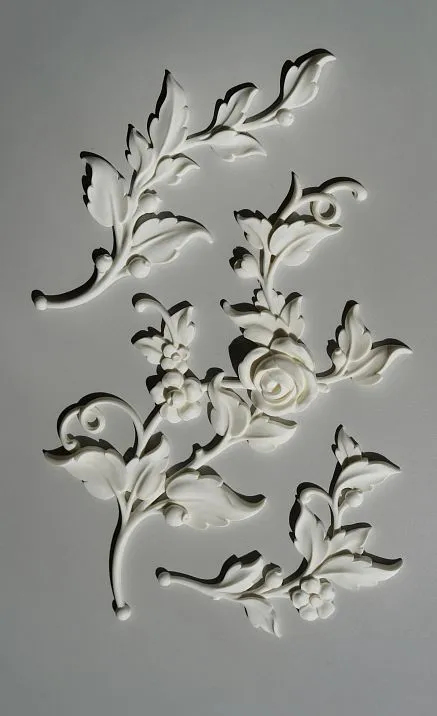
The ceiling is the fifth wall of a room, which we often forget to decorate. Yet, precisely here, in this airy space above our heads, lies enormous potential for creating truly impressive interiors. Ceiling moldings can radically change the perception of space, transforming an ordinary room into a grand hall or a cozy boudoir.
What happens to a person when they enter a room with an intricately decorated ceiling? Their gaze involuntarily turns upward, their breath holds, and a sense of admiration for beauty arises within. This is not coincidence — it is the result of thousands of years of human experience in creating spaces that elevate the spirit and delight the eye.
Modern materials and technologies have opened up possibilities that masters of the past could only dream of. Polyurethane moldings combine the beauty of classical forms with the practicality of the 21st century, making high art accessible to every home.




Architectural psychology of ceiling space
Human perception is structured in such a way that ceiling height directly affects our emotional state and capacity for creative thinking. High ceilings stimulate abstract thinking and creativity, while low ceilings promote focus on details. Decorative polyurethane moldings allow control over these psychological effects, visually adjusting the perception of height.
The geometry of ornament exerts a subconscious influence on the psyche. Circular forms soothe and calm, angular forms activate and invigorate, wavy forms relax and set a romantic mood. An experienced designer uses these insights to create the desired atmosphere in each specific space.
The rhythm of decorative elements creates a visual music of space. Evenly spaced elements soothe and organize thoughts, an increasing rhythm creates dynamism and energy, while a slowing rhythm induces relaxation and calm. Ceiling moldings allows creating complex rhythmic compositions, controlling the emotional impact of the interior.
Color perception also plays a key role. Warm tones of moldings create a sense of coziness and closeness, while cool tones convey grandeur and spaciousness. Contrasting solutions activate attention, monochromatic ones soothe and harmonize.




Influence of scale on perception
The size of decorative elements must correspond to the scale of the room. Small details in a large hall will be lost and fail to make the desired impression. Large elements in a small room will overwhelm the space. Polyurethane decorative elements are available in a wide range of sizes, allowing you to select ideal proportions for any room.
The depth of relief affects the expressiveness of the decoration. Flat elements create a delicate, barely noticeable effect. Deep relief provides dramatic play of light and shadow, especially effective under directional lighting. A medium depth of 8-12 mm is optimal for most residential interiors.
The number of elements determines the richness of the decoration. Minimalist compositions with a few large elements create a modern sound. Rich, multi-element compositions convey classic opulence. It is important to find a balance between expressiveness and overloading.
Our factory also produces:



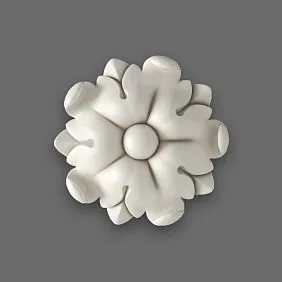
Material science: polyurethane as the material of the future
Polyurethane has revolutionized the world of architectural decoration, offering a unique combination of aesthetic and functional qualities. The density of modern polyurethane (600-900 kg/m³) ensures sufficient strength with minimal weight. This is critically important for ceiling structures, where every gram matters.
The molecular structure of polyurethane ensures exceptional resistance to external influences. The material withstands temperatures from -45°C to +85°C without changing its geometric dimensions. The coefficient of thermal expansion is only 0.00012 per degree — ten times less than that of wood.
The moisture resistance of polyurethane with a water absorption coefficient less than 0.8% allows using the decor in any climatic conditions. The material does not swell, does not warp, and maintains stable shape when humidity changes from 10% to 90%. Polyurethane decorative molding behaves equally well in dry steppe regions and humid marine climates.
Chemical inertness ensures longevity in aggressive environments. Polyurethane does not react with household cleaning agents, does not absorb kitchen and tobacco odors, and does not serve as a nutrient medium for mold and fungi. This makes it an ideal material for any living space.
Get Consultation
Ecological safety
Modern polyurethane for architectural decor is completely safe for human health. The material does not emit formaldehyde, contains no heavy metals or volatile organic compounds. Hypoallergenicity is confirmed by international quality certifications.
The anti-static properties of the surface prevent dust accumulation, which is especially important for people with respiratory diseases. Polyurethane decorative elements do not require frequent wet cleaning and maintain cleanliness longer than other materials.
Fire safety meets the highest standards. Polyurethane belongs to flame-retardant materials and does not emit toxic gases when heated. The ignition temperature exceeds 300°C, which excludes accidental ignition in household conditions.
Ceiling decor style palette
Classical canons
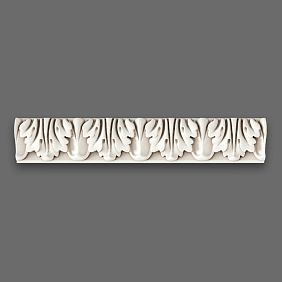
The classical style in ceiling decor is based on principles of ancient architecture, adapted for modern living spaces. Main elements — cornices, rosettes, coffered ceilings — are used in strict proportional relationships, creating harmonious compositions.
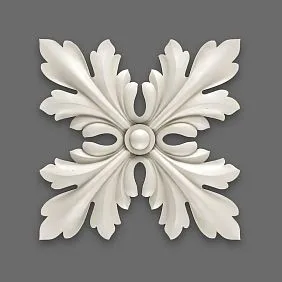
The order system — Doric, Ionic, Corinthian — defines the character of ornamentation. The Doric order is characterized by strictness and simplicity of forms. The Ionic — by elegant decoration with characteristic volutes. The Corinthian — by lush vegetal ornamentation with acanthus leaves.
Ceiling moldings In classical execution, it uses a canonical color palette — white, cream, ivory, with possible gold accents. This solution emphasizes architectural purity of forms and creates a sense of solemn elegance.
Symmetry is the fundamental principle of classical compositions. The central rosette is framed by concentric decorative rings, corners are emphasized by special elements, the perimeter is finished with strict-profile cornices. Mathematical precision of proportions creates a subconscious sense of harmony and calm.
Baroque theatricality
Baroque brought to architectural decor principles of theatrical effect and emotional impact. Complex multi-level compositions, rich ornamentation, play of light and shadow — characteristic features of this style. Polyurethane decorative molding allows reproducing the full opulence of baroque decor.
Movement is a key characteristic of baroque ornaments. Curved lines, spiral scrolls, fluttering ribbons create a sense of continuous dynamism. Vegetal motifs are stylized to the complete loss of naturalism, transforming into purely decorative elements.
Contrast of scales gives baroque compositions particular expressiveness. Large dominant elements combine with small details, creating a rich but ordered texture. Relief depth may reach 25–30 mm, ensuring dramatic play of light and shadow.
Empire monumentality
The Empire style introduced into decorative arts the symbolism of military glory and imperial grandeur. The ornamental arsenal includes laurel wreaths, palm branches, torches, swords, shields, eagles, lions. Polyurethane decorative elements reproduce these motifs with historical accuracy.
Geometric forms dominate over vegetal ones, creating a sense of strict order and hierarchy. Radial compositions emanate from the center like rays of an imperial sun. The number of rays is usually a multiple of eight — the number symbolizing infinity and perfection.
Monumentality is a distinctive feature of Empire interiors. The sizes of decorative elements significantly exceed classical canons, emphasizing grandeur and pomp. Color solutions are based on contrasts — gold on dark blue, silver on black, white on red.
Modern organic simplicity
The modern style revolutionized perceptions of decorative arts, introducing stylized natural forms and asymmetrical compositions. Vegetal motifs — irises, lilies, poppies, sunflowers — are rendered with botanical accuracy but stylized to create a new decorative reality.
Linearity is a characteristic feature of modern style. Ornament is built on long, flowing lines that imitate plant growth, water flow, hair movement in the wind. Ceiling moldings In the modern style, it often departs from strict geometric grids, creating free organic compositions.
Asymmetry becomes an artistic technique. The central composition may be shifted from the geometric center, creating dynamic balance. This requires special skill in design, but the result impresses with its freshness and originality.
Technological aspects of production
Molding and casting process
Modern polyurethane molding production is based on the technology of pressure casting into precision silicone molds. The process begins with creating a master model — the original sample of the future product. The master model can be handcrafted by an experienced sculptor or created using 3D printing from a digital model.
Silicone molds are manufactured by layering liquid silicone onto the master model. Multi-component silicones ensure detail reproduction accuracy down to 0.05 mm and durability up to 1000 casting cycles. Polyurethane decorative molding results in a flawless surface requiring no additional finishing.
Casting is performed under 2–4 atmospheres of pressure, ensuring complete filling of all micro-details of the mold and absence of pores in the finished product. Process temperature is controlled with precision ±2°C, and dwell time is calculated based on the thickness of the product’s walls.
Quality control
Each item undergoes multi-stage quality control. Visual inspection reveals surface defects — pores, pits, texture irregularities. Geometric control verifies dimensional compliance with technical specifications to ±1 mm precision.
Mechanical tests determine the material’s strength under compression, bending, and impact. Polyurethane decorative elements must withstand a compressive load of at least 150 kg/cm² and a bending load of 25 kg/cm². These indicators guarantee longevity under any operating conditions.
Climate tests simulate extreme operating conditions — freeze-thaw cycles, UV exposure, high humidity. Quality items withstand 100 cycles without changes in appearance or geometric dimensions.
Installation technologies
Foundation Preparation
The quality of installation is 70% determined by proper preparation of the base. The ceiling surface must be flat — permissible deviations should not exceed 2 mm per linear meter. Any irregularities will be visible after installing the decor, especially under side lighting.
The base is checked by tapping — a dull sound indicates delamination of old coatings, which must be removed. Loose areas are sanded down to a solid base using metal brushes or grinding machines.
Cleaning is performed with special solvents or technical alcohol. Grease stains, nicotine marks, and adhesive residue significantly reduce adhesive bond strength. Ceiling moldings Requires a perfectly clean surface for secure mounting.
Priming is a mandatory preparation step. Acrylic deep-penetration primer strengthens the surface, reduces absorbency, and improves adhesive bond. Primer drying time is 4–6 hours at +20°C and 50–60% relative humidity.
Marking and Planning
Precise marking is the foundation of a professional result. The center of the ceiling is determined by intersecting diagonals in rectangular rooms. In rooms with complex layouts, the center may be adjusted based on furniture placement and functional zoning.
Polyurethane decorative molding is installed according to a pre-prepared plan. Start with central elements — rosettes, then install perimeter cornices, and finish with decorative details. This sequence ensures maximum accuracy and minimizes fitting adjustments.
A laser level significantly simplifies marking complex compositions. Projecting multiple planes simultaneously allows creating an accurately precise coordinate grid. Some laser level models have a function to construct circles of a given diameter.
Adhesive technologies
The open working time of the adhesive is 15–25 minutes depending on temperature and air humidity. This is sufficient for precise positioning and adjusting the elements. Polyurethane decorative elements adhere evenly to the surface without distortion or air bubbles.
Full polymerization of the adhesive occurs over 24 hours, but the main strength is achieved within 4–6 hours. During this time, elements must not be loaded or displaced. For large elements, temporary fixation using braces or clamps is used.
The full polymerization of the adhesive takes 24 hours, but the main strength is achieved within 4-6 hours. During this time, the elements must not be loaded or displaced. For large elements, temporary fixation is used with wedges or clamps.
Integration with engineering systems
Lighting and Electrical Systems
Modern ceiling decor is closely integrated with lighting systems. Hidden LED backlighting is placed in special grooves of cornices, creating a floating ceiling effect. RGB systems allow changing the backlight color depending on mood or time of day.
Spotlights are embedded directly into the body of decorative elements, creating accent lighting for ornamentation. This requires preliminary planning and manufacturing elements with appropriate technical holes.
Ceiling moldings Can conceal wiring, fire alarm sensors, and video surveillance components. Removable sections provide access for maintenance without dismantling the entire composition.
Climate Systems
Air conditioning and ventilation systems are integrated through decorative grilles styled to match the overall molding design. Diffusers can be fully concealed behind decorative inserts, maintaining functionality while achieving full aesthetic integration.
Polyurethane decorative molding does not hinder natural air convection, ensuring normal air circulation in the room. The textured surface even promotes air turbulence, improving air mixing.
Acoustic properties of molded decor influence the sound environment of the room. The textured surface scatters sound waves, reducing reverberation and improving acoustic comfort. This is especially noticeable in rooms with high ceilings.
Color solutions and decorative finishing
Classic Monochromatic Schemes
Traditional white molding remains a popular solution due to its versatility and ability to highlight architectural purity of forms. Various shades of white — milk, pearl, ivory — allow fine-tuning of interior color temperature.
Monochromatic gray solutions are gaining popularity in modern interiors. Polyurethane decorative elements in gray shades — from light silver to dark graphite — create an elegant and restrained atmosphere, especially effective when combined with contrasting wall colors.
Artistic Techniques
Gilding remains a classic in decorative molding finishing. Modern technologies offer several options — from traditional gold leaf to imitation using patina and metallic paints. Each method has its own application specifics and aesthetic qualities.
Patination creates an effect of noble antiquity. Dark paint is applied into the recesses of the relief, then partially removed from raised parts, emphasizing the ornament's volume. The technique requires certain skills, but the result is striking in expressiveness.
Multi-color painting allows creating unique artistic works. Individual ornament elements are painted in different colors, creating a rich palette. Ceiling moldings Becomes a true work of art.
Economic efficiency of projects
Cost Analysis
Initial investments in ceiling decor are recouped through longevity and aesthetic qualities. The cost per square meter of decorated ceiling varies from 3000 to 15000 rubles depending on the complexity of the composition and the quality of finishing.
Comparison with alternative solutions shows the economic feasibility of polyurethane moldings. Fabricated ceilings with photo printing cost comparably but have a limited service life. Artistic painting may cost 5-10 times more for a comparable decorative effect.
Polyurethane decorative molding provides the optimal price-to-quality ratio in the long term. The service life is 25-30 years, resulting in an annual ownership cost of only 100-500 rubles per square meter.
Impact on property value
Quality ceiling decoration significantly increases the market value of real estate. Statistics show a 12-18% increase in value for properties with professionally executed decoration. This turns the cost of molding from an expense into an investment.
Unique interiors with quality decoration stand out against standard offerings. This shortens sales time and allows achieving more favorable deal terms. Polyurethane decorative elements create a sense of exclusivity and high-end finishing.
Care and longevity
Ease of maintenance is one of the main advantages of polyurethane molding. Regular dry cleaning with a soft brush or vacuum cleaner with a soft attachment keeps the decoration in perfect condition. Wet cleaning is performed as needed using neutral cleaning agents.
The ability to repaint multiple times allows updating the interior without replacing decorative elements. Polyurethane holds any type of paint — water-emulsion, acrylic, alkyd. Preliminary treatment with primer ensures perfect adhesion of the new coating.
Ceiling moldings Not susceptible to cracking, shrinkage, or deformation over time. Dimensional stability guarantees no gaps at joints even after many years of use.
Mechanical damage is easily repaired with local repairs. Minor chips are filled with acrylic putty, serious damage requires replacing individual elements. The modular structure of most systems allows replacing any fragment without dismantling the entire composition.
The art of ceiling decoration is experiencing a new renaissance, combining centuries-old traditions with modern technologies. Each molding element installed on the ceiling becomes part of an architectural poem, telling a story of beauty, harmony, and the pursuit of perfection.
Choosing quality decoration is an investment in the beauty of everyday life, in those moments of admiration we experience each time we look up at the ceiling. This decision is made once, but brings joy for many years.
Modern materials and technologies have made high art accessible to every home. The only thing needed is to find a reliable partner who will help turn dreams of beautiful interiors into reality with maximum quality and longevity.
STAVROS is a recognized leader in producing high-quality polyurethane moldings, combining rich traditions of decorative art with advanced manufacturing technologies. Years of specialist experience, modern equipment, and strict quality control at every production stage enable STAVROS to create products that become ornaments of the most refined interiors. Choosing STAVROS products means investing in proven quality, reliability, and that unique beauty which transforms a home into a work of architectural art, where every detail contributes to creating an atmosphere of harmony and perfection.