Article Contents:
- Architectural Anatomy: Understanding the Differences Between Posts and Balusters
- Posts — Structural Giants of Staircase Construction
- Balusters — Elegant Guardians of Safety
- Material Science: Choosing Wood for Durability and Beauty
- Coniferous Species — Accessibility and Practicality
- Broadleaf Species — Standard of Strength and Beauty
- Exotic Species — Exclusivity and Prestige
- Stylistic Classification: From Classic to Avant-Garde
- Classic Style — Eternal Elegance
- Baroque Style — Luxury and Dynamism
- Modern Style — Minimalism and Functionality
- Production Technologies: From Handcrafted to High-Tech Solutions
- Turning — Genre Classic
- Milling — Modern Possibilities
- Hand Carving — Art in Every Detail
- Selection Criteria: How to Avoid Buying Mistakes
- Style Compatibility with Interior
- Functional Requirements
- Economic Considerations
- Installation Features: Professional Approach to Installation
- Preparatory work
- Fastening technology
- Quality Control
- Protective Treatment and Finishing Coatings
- Surface Preparation
- Types of Protective Coatings
- Decorative Effects
- Trends in Modern Design
- Ecological and natural properties
- Technological Innovations
- Personalization and Individuality
- Economic Aspects and Investment Appeal
- Cost Formation
- Long-Term Economic Efficiency
- Cost Optimization
- Conclusion

What turns an ordinary staircase into a work of art? What makes guests pause at the threshold, admiring every detail? The answer lies in carefully selected architectural elements, among which posts and balusters hold a special place. Buy baluster post Today means not just purchasing a functional safety element, but investing in the aesthetic perfection of your home.
The modern market of staircase elements impresses with the diversity of forms, materials, and stylistic solutions. From classic turned balusters to avant-garde geometric compositions — each element can radically change the perception of space. But how not to get lost in this variety? How to choose exactly those elements that will become a harmonious addition to the interior and serve for decades?


Architectural Anatomy: Understanding the Differences Between Posts and Balusters




Posts — Structural Giants of Staircase Construction
Support posts are massive vertical elements that bear the main load from handrails and ensure the structural integrity of the entire railing. Their dimensions significantly exceed the parameters of ordinary balusters — typical cross-sections are 80x80, 100x100, and sometimes even 120x120 millimeters at a height of 1200-1500 millimeters.
Structurally, posts are installed at key points of the staircase system: at the beginning and end of flights, on turning platforms, and at points of change in handrail direction. It is precisely they that determine the overall rigidity of the structure and ensure operational safety. A quality post must withstand a horizontal load of at least 100 kilograms without visible deformation.
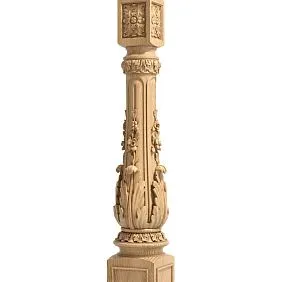
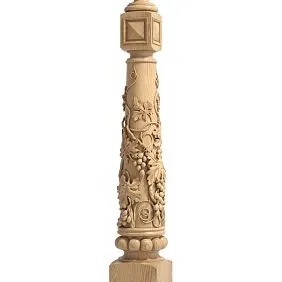
The aesthetic role of posts is no less important than their functional purpose. Often, these elements become compositional centers of the staircase ensemble, attracting attention with intricate carving, unusual proportions, or contrasting materials. The top of the post may be crowned with a decorative sphere, pyramid, vase, or other architectural elements.
Our factory also produces:



Balusters — Elegant Guardians of Safety
Balusters perform the role of filling the space between support posts, creating a continuous railing and preventing accidental falls. Their dimensions are more modest — standard cross-sections are 40x40, 50x50, 60x60 millimeters at a height of 900 millimeters, which corresponds to safety requirements.
The number of balusters on a staircase flight is calculated based on the requirement that the distance between their axes should not exceed 150 millimeters. This ensures the safety of children, eliminating the possibility of slipping between railing elements. For a 3-meter flight, 18-20 balusters will be required.
The decorative possibilities of balusters are practically limitless. Turning allows creating elements with smooth transitions in diameter, milling adds geometric ornaments, and hand carving turns each baluster into a unique work of art. Modern CNC technologies open new horizons for realizing the most daring design concepts.
Get Consultation
Material Science: Choosing Wood for Durability and Beauty
Coniferous Species — Accessibility and Practicality
Spruce remains the most popular material for manufacturing staircase elements due to the optimal combination of price, quality, and technological processability. The density of spruce 500-520 kg/m³ provides sufficient strength for most applications, and its natural resinous nature provides additional protection against moisture and biological influences.
Fir has a lighter shade and less pronounced texture, making it an ideal choice for subsequent painting in any color. However, its lower density (450-470 kg/m³) requires a more cautious approach to loads and fastening elements.
Larch occupies a special place among coniferous species due to its exceptional resistance to moisture and mechanical impacts. Density 650-700 kg/m³ brings it close to broadleaf species in characteristics, and its natural resistance to rot makes it an ideal choice for staircases in rooms with variable humidity.
Broadleaf Species — Standard of Strength and Beauty
Oak rightfully is considered the king among materials for staircase construction. Density 700-800 kg/m³, pronounced texture, noble shade, and exceptional durability make it a choice for the most prestigious projects. Oak posts and balusters can serve for centuries, acquiring a special patina and charm with age.
Ash attracts with a light shade and clearly defined annual rings, creating an effective texture. High strength and toughness make it ideal for elements subjected to dynamic loads. Ash balusters are practically immune to cracking even under intensive use.
Beech is characterized by uniform structure and a pinkish shade, which looks especially effective under transparent coatings. High density 680-750 kg/m³ ensures excellent strength characteristics, and good workability allows creating elements of complex shapes.
Exotic Species — Exclusivity and Prestige
Redwood (mahogany) represents the standard of luxury in the world of staircase construction. Noble reddish-brown shade, dimensional stability, and resistance to deformation make it a choice for the most prestigious interiors. The cost of such elements is 5-10 times higher than the price of coniferous species products.
Wenge attracts with a contrasting texture featuring alternating dark and light stripes. Exceptional hardness requires special tools for processing, but the result justifies the cost — wenge elements are practically eternal and resistant to wear.
Teak possesses unique properties — natural oily nature of the wood provides water resistance without additional treatment. Golden-brown shade and pronounced texture create a feeling of warmth and coziness.
Stylistic Classification: From Classic to Avant-Garde
Classic Style — Eternal Elegance
Classic posts and balusters are characterized by strict proportions and restrained decorative elements. The basis is the canons of classical architecture, adapted to the scale of staircase construction. Buy baluster post In classic style means investing in solutions that will never go out of fashion.
A typical classical baluster has a three-part structure: a massive base, a tapering central part, and an expanding top. Proportions are strictly regulated — the base height is 20-25% of the total height, the central part — 50-60%, the top — 15-20%. Decorative elements are limited to simple geometric forms — bands, grooves, bevels.
Posts in classic style often imitate reduced-scale columns with characteristic elements of the order system. Base, shaft with entasis, capital — each element is executed according to classical canons. Finishing elements — spheres, urns, pyramids — emphasize the solemnity of the composition.
Baroque Style — Luxury and Dynamism
Baroque elements are characterized by complex forms and rich decorative details. Curved profiles, spiral elements, three-dimensional carving create a dynamic composition that attracts attention and emphasizes the luxury of the interior.
A characteristic feature of baroque balusters is their resemblance to decorative vases or cups. Complex transitions between different diameters, alternating convex and concave elements create a rich play of light and shadow. Carved details — acanthus leaves, rosettes, cartouches — require the highest level of craftsmanship.
Posts in baroque style are often adorned with spiral grooves, three-dimensional garlands, mascarons. Finishing elements may represent complex compositions of plant motifs, heraldic symbols, allegorical figures.
Modern Style — Minimalism and Functionality
Modern stair elements are characterized by minimalist forms and an emphasis on functionality. The absence of excessive decorative details is compensated by perfect proportions and high-quality surface finishing.
Geometric purity of lines, correct proportions, perfectly smooth surfaces — main characteristics of modern style. Balusters may have simple cylindrical, prismatic, or slightly conical shapes. Decorative effect is achieved through the play of light on smooth surfaces and contrast of different materials.
Columns in a modern style often have enlarged cross-sections and simplified forms. Square or rectangular profiles emphasize the structural role of the element. Finishing details, if present, have simple geometric shapes — cubes, parallelepipeds, truncated pyramids.
Manufacturing technologies: from handcraft to high-tech solutions
Turning — the classic of the genre
Traditional turning remains the primary method for manufacturing round balusters and columns. Modern turning machines allow creating elements with high repeatability accuracy and surface quality. The use of copying devices ensures identical elements within a batch.
The process begins with preparing the blank — a square timber, which is turned into a cylindrical shape. Then, using various cutters, the required profile is formed. The quality of the finished product depends on the sharpness of the tool, the correct selection of processing modes, and the turner's skill.
Finishing includes grinding with abrasive materials of different grits. Starting with coarse grits (80-120) and gradually moving to fine grits (240-320), an ideally smooth surface is achieved, ready for coating.
Milling — modern capabilities
CNC milling machines open new horizons in manufacturing stair elements. Multi-axis processing allows creating complex three-dimensional forms inaccessible through traditional turning.
Processing programming is performed using specialized software, which converts a three-dimensional model of the item into a control program for the machine. This ensures the highest accuracy and repeatability of results.
Using specialized tools — end mills of various profiles, ball end mills for 3D processing, disk end mills for creating grooves — enables realizing the most complex design concepts. Spiral grooves, interwoven ornaments, three-dimensional floral motifs — all of this becomes achievable thanks to modern technologies.
Hand carving — art in every detail
Despite the development of mechanized processing methods, hand carving remains the unmatched method for creating unique decorative elements. Every item hand-carved bears the mark of the individual craftsmanship of the carver.
Preparation for carving includes creating a detailed sketch of the future ornament and transferring it to the blank. The quality of marking determines the accuracy and symmetry of the finished product. Experienced masters can work without detailed marking, relying on their sense of proportion and years of experience.
A carver’s toolset includes dozens of different chisels, cutters, and gouges. Each tool is designed for specific operations — from rough material removal to fine detailing. Tool sharpness is critically important for achieving clean cuts without chips or scratches.
Selection criteria: how to avoid buying mistakes
Style compatibility with interior design
Selection of stair elements should be based on the overall stylistic concept of the interior. Classical interiors require corresponding balusters and columns with traditional proportions and restrained decoration. Modern spaces are better complemented by minimalist forms without excessive ornamentation.
The color palette of elements should harmonize with the overall color scheme of the room. Dark wood species look striking in contrasting interiors, while light species create a sense of airiness and spaciousness. The ability to stain allows adapting any species to the required color scheme.
The scale of elements must correspond to the size of the room. In small spaces, massive columns will appear inappropriate, while in spacious halls, thin balusters will be lost. Correct proportion selection is the key to harmonious perception of the entire composition.
Functional Requirements
The intensity of staircase usage determines requirements for strength and durability of elements. For residential staircases with moderate load, elements from coniferous species are suitable, while public buildings require stronger hardwood species.
Climate conditions in the room affect material selection and protective treatment methods. In rooms with variable humidity, stable species or specially treated elements are preferred. The heating season, with its dry air, may cause cracking in insufficiently dried wood.
Safety requirements regulate distances between elements, height of railings, strength of connections. Non-compliance with these requirements may lead to injuries and issues with regulatory authorities.
Economic considerations
Balusters columns buy available in a wide price range — from budget solutions made of pine to exclusive items made of exotic species. Proper budget planning should consider not only the cost of elements, but also expenses for installation, finishing, and maintenance.
Savings on material quality may result in additional expenses in the future. Cheap elements made of poor-quality wood will require frequent repairs and replacements, ultimately costing more than initial investments in quality products.
Cost optimization is possible through a rational combination of elements of different complexity. Support columns, which are in the focus of attention, can be made from expensive materials with rich decoration, while intermediate balusters can be made from more affordable species with simple processing.
Installation features: professional approach to installation
Preparation Work
Quality installation begins with careful preparation of the base. Steps must be leveled, cleaned of dust and debris. Marking installation points requires high precision — even minor deviations will be noticeable in the final structure.
Checking the staircase geometry includes verifying step levelness, riser verticality, and edge parallelism. Any deviations must be corrected before installing railings. Using laser levels and measuring tools ensures the required accuracy.
Preparing elements for installation includes checking dimensions, surface finish quality, and completeness. All elements must be acclimatized in the installation room for 3-5 days to stabilize humidity and dimensions.
Fastening Technology
The method of fastening elements depends on their type, the material of the base, and the expected loads. Posts, as load-bearing elements, require particularly secure fastening using anchor bolts, threaded rods, or deep embedment into the base.
Balusters can be fastened in various ways — using dowels, self-tapping screws, or threaded connections. The choice of method depends on the material of the elements, aesthetic requirements, and the possibility of future disassembly. Hidden fastening methods are preferred to maintain the external appearance.
The use of high-quality fasteners and adhesive compositions is critically important for the longevity of the structure. Saving money on fasteners may lead to weakened connections and the need for repairs within a few years of operation.
Quality control
Checking the correct installation includes verifying the verticality of elements, uniformity of distances, and strength of connections. All elements must be installed strictly vertically with deviations no more than 2-3 millimeters.
Strength testing is conducted by applying normative loads to various points of the structure. The railing must withstand a horizontal load of 100 kg/m without visible deformations or residual displacements.
Final inspection includes examining all connections, checking for absence of play, and verifying the quality of finishing. Any defects must be corrected before handing over the object for use.
Protective Treatment and Final Coatings
Surface preparation
Proper surface preparation determines the longevity and appearance of protective coatings. Sanding should be done in stages, gradually reducing the grit size of the abrasive from 120 to 320 grit. Special attention is given to transition zones and connection areas.
Dust removal is performed using a vacuum cleaner and adhesive cloth. Even the smallest particles of dust can lead to coating defects and reduced adhesion. Surface degreasing with special agents removes oil and other contaminants.
Wood priming ensures better adhesion of finish coatings and protects against moisture. The choice of primer depends on the wood species and type of finish coating. Proper priming can extend the service life of the coating several times over.
Types of Protective Coatings
Varnish coatings provide maximum protection for wood while preserving its natural beauty. Polyurethane varnishes are characterized by high wear resistance and chemical resistance; nitrocellulose varnishes dry quickly and are easy to repair.
Oil-based coatings penetrate deeply into the wood structure, highlighting its texture and creating a pleasant tactile surface. They require periodic renewal but are easily restorable without complete removal of the old coating.
Waxing creates a matte surface with a natural gloss and pleasant tactile sensations. Wax coatings are environmentally safe but require regular maintenance and renewal.
Decorative Effects
Patination allows creating an aged wood effect, emphasizing the relief and texture. Different patination techniques — dry brush, sponge, cloth — produce various visual effects, from light aging to deep contrasting relief.
Brushing reveals the structure of annual rings, creating an expressive surface texture. Soft fibers are removed with metal brushes, while hard fibers remain, forming a relief surface. Subsequent toning highlights the contrast between different wood layers.
Staining allows changing the color of wood while preserving its texture. Water-based stains provide even coloring, alcohol-based stains penetrate more deeply, and oil-based stains offer rich tones. Combining different stains creates complex color transitions.
Trends in modern design
Ecological and natural
Growing attention to ecological issues influences the choice of materials and processing technologies. Preference is given to natural materials with minimal chemical treatment. Certified wood from sustainably managed forests is becoming a standard for responsible manufacturers.
Using natural coatings — oils, waxes, shellac — allows maintaining the ecological purity of products. These coatings do not emit harmful substances and allow wood to "breathe," supporting a healthy microclimate in the room.
Waste minimization is achieved by optimizing material cutting and recycling sawdust and shavings. Modern production strives for zero-waste technologies, utilizing all by-products of wood processing.
Technological Innovations
Laser processing opens new possibilities for creating complex decorative elements. The high precision of the laser beam allows executing delicate lace patterns, inaccessible by traditional processing methods.
3D printing with wooden composites allows creating elements of complex geometry, impossible with traditional technologies. Although this technology is still in development, its potential for creating unique items is enormous.
Digital modeling and virtual reality allow clients to see the future staircase even during the design stage. This minimizes risks of misunderstanding and allows making adjustments before production begins.
Personalization and Individuality
Modern consumers increasingly value uniqueness and individuality. Mass production is giving way to custom manufacturing according to individual projects, taking into account the specific requirements of the client.
The ability to create elements based on the client's own sketches opens up boundless creative possibilities. Family crests, initials, commemorative dates — all of this can be embodied in the decoration of staircase elements.
The modularity of modern systems allows easily changing the configuration and appearance of the staircase during operation. Replaceable decorative elements, various finishing options, and the ability to add new components — all of this makes the staircase a "living" part of the interior.
Economic Aspects and Investment Attractiveness
Formation of cost
The price of staircase elements is determined by multiple factors: cost of raw materials, complexity of processing, batch size, and production lead times. Buy balusters posts is more cost-effective in bulk, allowing significant discounts.
Seasonal fluctuations in wood prices affect the cost of finished products. Planning purchases with consideration of these fluctuations can result in savings of up to 15-20%. The winter period typically features lower prices for lumber.
Transportation costs can constitute a significant portion of the total cost, especially for bulky items. Optimizing logistics, consolidating shipments, and selecting optimal routes help minimize these expenses.
Long-term economic efficiency
Quality stair components are an investment in the longevity and aesthetics of the interior. The service life of solid wood products can reach 50-100 years with proper care. This makes them economically advantageous in the long term.
The impact on property value can be quite significant. A quality staircase with exclusive elements becomes a home's calling card, increasing its appeal to potential buyers.
The possibility of restoration and updating allows extending the service life of elements and adapting them to changing interior requirements. Sanding, re-polishing, partial replacement of decorative elements — all this is significantly cheaper than full replacement.
Cost Optimization
Reasonable planning allows optimizing costs without compromising quality. Combining elements of different complexity — expensive support posts and simpler intermediate balusters — enables creating an impressive composition within a limited budget.
Phased project implementation allows distributing costs over time. Starting with basic fittings, one can gradually add decorative elements, improve finishes, and expand functionality.
Choosing local manufacturers reduces transportation costs and allows better control over product quality. Proximity to production simplifies resolving any issues and accelerates deliveries.
Conclusion
Selecting and purchasing posts and balusters for staircases is a decision that affects not only safety and functionality but also the overall perception of the interior. Quality elements become an investment in beauty, comfort, and prestige of the home for many years.
The modern market offers solutions for any needs and budgets — from simple functional elements to exclusive works of art. The key to successful selection lies in understanding one’s own needs, interior characteristics, and long-term plans.
Properly selected and professionally installed staircase elements serve not only practical purposes but also become a source of daily aesthetic pleasure. Each ascent on such a staircase reminds one of the correctness of the chosen decision and the wisdom of investing in quality.
In the world of architectural solutions and quality materials, STAVROS occupies a special place, offering not only superior products but also deep expertise in the design and manufacturing of staircase elements. Years of experience, continuous technological refinement, and commitment to flawless quality make STAVROS a reliable partner for anyone who values professionalism and perfection in creating architectural masterpieces.