Article Contents:
- What is furniture molding and where is it used
- Molding for furniture facades
- Molding for wardrobe
- Molding for chest of drawers
- Molding for cabinet
- Molding for classic furniture
- Molding as a frame on the facade
- What furniture moldings can be purchased
- Wooden molding: the best choice for a serious project
- Smooth profile: versatile, strict, modern
- Relief profile: classic and baroque
- Molding with ornamental relief: baroque, historical carving
- Molding for painting
- Profile types table and their application
- What's better to buy: molding, overlay decor, or carved elements
- When you specifically need molding
- When overlays are better
- When carved decor is needed
- When it's worth assembling a kit: molding + overlays + handles
- How to choose furniture molding by facade type
- Molding for wardrobe
- Molding for kitchen facades
- Molding for chest of drawers
- Molding for cabinet
- Molding for doors and drawers
- Molding for classic furniture
- How to choose furniture molding by style
- Classic
- Neoclassicism
- Baroque
- Calm decorative facade
- Combining molding with handles and legs
- What elements to buy together with furniture molding
- Overlay decor for facades
- Wooden decor for furniture
- Carved decor for furniture
- Furniture handles
- Furniture legs and supports
- Capitals and cornices for complex facades
- Where to buy furniture molding and how to choose it for your project
- By style
- By Profile Width
- By material
- By facade type
- By compatibility with decor and hardware
- Mistakes when choosing furniture molding
- Profile too wide
- Overloading the facade with decor
- Conflict between molding and handles
- Mixing ornaments from different traditions
- Buying wall molding instead of furniture molding
- FAQ: Answers to popular questions about buying furniture molding
- Where to buy furniture molding?
- What molding is best for furniture fronts?
- How does furniture molding differ from applied decor?
- Can I buy wooden molding for a cabinet?
- What is better for a dresser: molding or carved overlay?
- Which handles go well with fronts with molding?
- How much molding is needed for one cabinet?
- Can wood molding be used on an MDF front?
- What are furniture decor accessories in relation to molding?
- Are corner overlays needed for molding?
- How to match legs to furniture with moldings?
- Which moldings are suitable for classic furniture?
- How to calculate the cost of decor for furniture?
- What is wood furniture decor?
- Can old furniture be updated with molding?
- About the Company STAVROS

Let me ask honestly: are you looking for where to buy furniture molding — or are you not entirely sure yet that you need molding specifically? Because these two states require different conversations. The first scenario is practical: catalog, profile, price, delivery. The second is deeper: we need to understand why molding specifically, what kind exactly, where to install it, and how it fundamentally differs from applied decor or carved elements.
This article addresses both questions. Because buy furniture molding without understanding means risking a mistake with the profile, width, style, or material. And a mistake in furniture decor is only discovered after installation. Therefore — first we'll figure it out, then we'll buy. Exactly in that order.
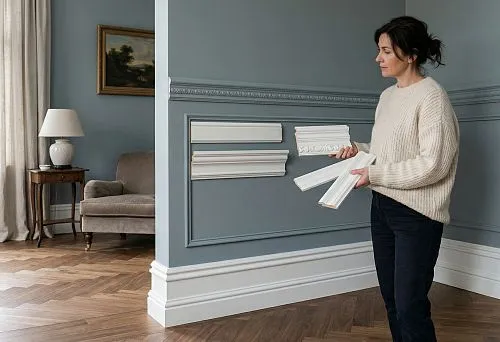
Moldings for furniture is profiled millwork that is glued onto the facade and creates a frame structure: framing, belts, architectural division of the plane. It is one of the oldest tools of furniture decor, born back in the Baroque era, when European craftsmen began transferring architectural profiles from building facades — onto the surfaces of cabinets, dressers, and case furniture. Today furniture molding is accessible to everyone — and that's precisely why it's important to understand what to do with it.



What is furniture molding and where is it used
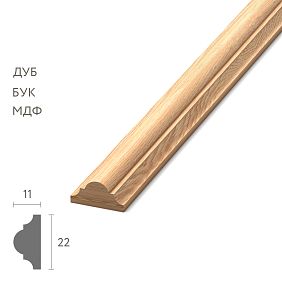
Before choosing, you need to precisely understand the subject of the conversation. Wooden molding— is a long profiled strip made of solid wood or MDF with a specific cross-section. It is precisely the cross-section—the shape of the profile in section—that determines its decorative character: strictness or opulence, lightness or weight, modesty or Baroque luxury.
Molding works as a framing element: it is glued along the perimeter of the facade with a certain indentation from the edge, creating a closed contour. This contour 'breaks up' the flat facade into zones—the central field and the frame—and this is precisely how a framed facade is created, which in the world of classical furniture is a standard of high level.




Molding for furniture facades
On a furniture facade, molding works as a visual architect: it transforms a featureless plane of MDF or plywood into a structured surface with readable geometry. This is exactly what makes serial cabinet furniture resemble custom pieces from a workshop—even if the base is the most ordinary.
The principle is simple: an indentation from the edge of 30–45 mm, a frame made of profile, corners at 45°. With proper installation and painting in a single color, the result is indistinguishable from a milled facade.
Our factory also produces:
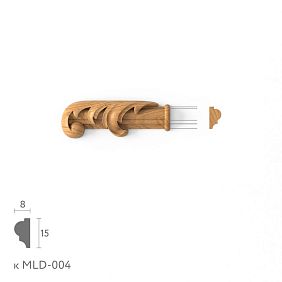
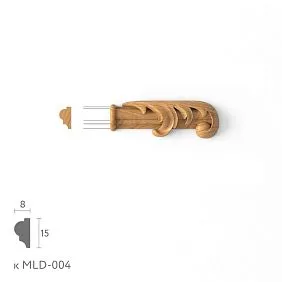
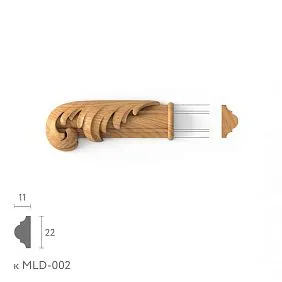
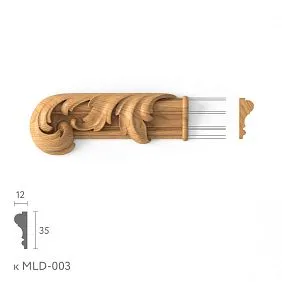
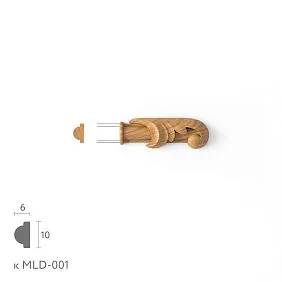
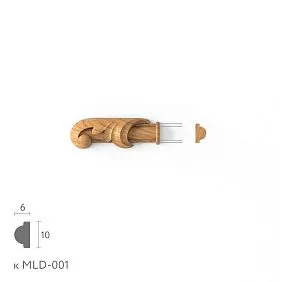
Molding for a wardrobe
A wardrobe is both the most obvious and the most advantageous object for decorating with molding. Flat hinged doors, which make up the majority on the market, with molding, turn into framed facades of a classical spirit. For a sliding wardrobe with wide panels, molding provides an additional bonus: horizontal or diagonal division of the surface reduces the monotony of a large plane.
Buy molding for a wardrobe— means choosing a profile proportionate to the height and width of the door. For wardrobes with doors 800×2000 mm, the optimal profile width is 35–50 mm.
Get Consultation
Molding for a chest of drawers
A chest of drawers is an item with several decorative surfaces: each drawer has its own front, and it is the rhythm of repeating frames that transforms the chest into an architecturally structured object. The key condition: a uniform molding indentation on all drawers, a uniform profile width, a uniform color.
Buy molding for a chest of drawerslogically as a set with corner overlays — they cover the joint at the corners of the frame and add an ornamental accent.
Molding for cabinet
Cabinets — bedside, under-TV, corner — have small fronts where subtlety and proportion are important. For a cabinet 500–700 mm high, the molding should not be wider than 20–25 mm: otherwise the frame will occupy too large a share of the surface. A narrow, smooth profile in white on a bedside cabinet is a restrained, elegant detail that speaks of an understanding of style.
Molding for classic furniture
For classic and neoclassical furniturefurniture moldings— an obligatory constructive element of the style. They form a system: the proportions of the frames, symmetry, the rhythm of repetitions — all this creates that recognizable 'classical' image, which is impossible to achieve without profiled framing. More about the principles of classic furniture — in the detailedguide to classic furniture.
Molding as a frame on the front
Frame molding logic is an architectural system, not just decoration. Molding divides a surface into a 'field' and a 'frame,' creating a visual hierarchy. The eye first fixes on the frame, then moves to the center. It is precisely this eye movement that makes a framed facade so 'readable' and complete.
What furniture moldings can be purchased?
The market offers several categories of furniture moldings, and choosing between them is not a matter of taste, but a matter of purpose.
Wooden molding: the best choice for a serious project
Wooden moldingsBeech or oak is the benchmark material for furniture decoration. Natural wood provides what neither MDF nor polyurethane can reproduce: a living texture, the warmth of the material, and the ability for fine finishing. Wooden molding perfectly accepts paint, varnish, tinting, patina, and gilding. After 15 years, it looks the same or better.
Beech is dense, fine-pored, and light-colored. Ideal for white, cream, or pastel painting. Provides a smooth surface without a pronounced texture.
Oak has a rich, open texture, dark veins, and a noble character. Excellent under clear varnish, tinted in walnut or wenge colors, or patinated.
Smooth profile: universal, strict, modern
Smooth molding is without ornamental relief, with clean geometric cross-section. Rectangular, stepped, or with a soft rounded cross-section. Creates a restrained, elegant frame that works in neoclassical, Scandinavian classic, and modern interiors with historical notes.
The smooth profile is the most universal. It is not tied to a specific ornamental tradition and is organic in any context.
Relief profile: classic and baroque
Relief molding has several height variations in cross-section—a cavetto, torus, scotia, and quarter-round. These variations create a rich play of light and shadow: under side lighting, the surface 'comes alive,' gaining depth and volume. For classic furniture, relief profile is a mandatory choice.
Molding with ornamental relief: baroque, historical carving
This is the highest category—molding with applied carved ornamentation: beads, leaf-and-dart, meander, laurel bands, braids. Such a profile requires a strict stylistic context. It is organic in baroque, rococo, empire, and classicism. In a modern interior, it is used as an accent, not as a rule.
Molding for painting
For monochrome interiors—white, gray, cream—the molding is painted the same color as the facade. The boundary between the profile and the facade disappears, leaving only the relief structure. This is how the effect of a 'monolithic framed facade' is achieved, indistinguishable from a milled product. Beech is perfectly suited for this technique: its surface accepts paint without primer.
Table of profile types and their application
| Profile type | Style | Application |
|---|---|---|
| Smooth rectangular | Neoclassicism, modern classic | Wardrobes, kitchens, bedside tables |
| With a curve | Classic, neoclassic | Wardrobes, dressers, tallboys |
| With torus | Classic, Baroque | Classic furniture, dressers |
| Complex profile | Baroque, empire | Front hall furniture, study pieces |
| Carved ornamental | Baroque, Rococo | Author's furniture, high classicism |
What to buy: molding, applied decor, or carved elements
This question is central for those starting furniture decoration for the first time. The three categories do not exist instead of each other but in a certain hierarchy.
When molding is specifically needed
Furniture moldingis indispensable where a geometric frame structure is needed on the facade plane. It creates a contour, sets proportions, forms a 'field' and a 'frame'. Without molding, it is impossible to create a framed facade—you can only add separate accent elements that will look random.
Molding is the architecture of the facade. Everything else is decor within that architecture.
When overlays are better
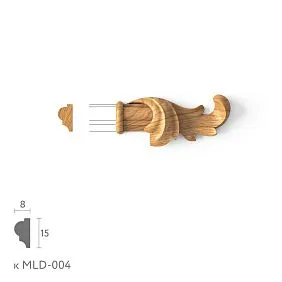
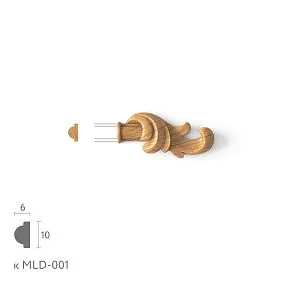
applied decoration for furnitureare accent elements: corner rosettes, cartouches, medallions, central ornaments. They work within the frame structure created by molding. Independently, without molding, overlays create separate accents—but not an architectural system.
Trims should be purchased together with molding: corner elements cover joints at frame corners and create decorative accents precisely where the molding meets the corner.
When carved decor is needed
Carved furniture decor— this is the highest level of furniture decoration. Carved cartouches, garlands, acanthus leaves, rococo scrolls — this is no longer just 'facade design,' but the creation of an author's work. Carved decor requires a rich stylistic context — Baroque, Classicism, palace style — and precise ensemble coordination with molding and handles.
For those starting from scratch, it's better to follow the path 'molding → corner trims → handles' and only then add carved decor.
When to assemble a set: molding + trims + handles
For classic and neoclassical furniture, the optimal set always includes all three levels: molding creates structure,to buy, which will allow you to transform your furniture using carved wooden elements. You can use the C-003-3 decor set to decorate furniture, walls, doors, or any other surface. The C-003-3 decor set is made of oak or beech, known for their strength, durability, and beauty. You can buy the C-003-3 decor set at the Stavros decor store, which specializes in producing and selling decorative elements and hardware for furniture and interiors. At the Stavros decor store, you will find a wide selection of decor sets of various shapes, sizes, and styles. You can choosein the form of trims creates accents,Furniture Handlescomplete the look. Purchasing everything from one catalog guarantees stylistic unity.
This is exactly how a professional furniture decorator works: they don't look for 'something pretty,' but assemble a system of compatible elements with a single stylistic logic.
How to choose molding for furniture based on facade type
Different pieces of furniture require different approaches to profile selection. Let's examine each case.
Our factory also produces:
Molding for a wardrobe
Wardrobes have different door formats: narrow and wide, low and high. For standard doors 600×2000 mm, the optimal molding width is 35–50 mm. For double sliding doors 900–1200 mm wide, molding 50–65 mm wide creates the necessary visual weight.
An important nuance for wardrobes: if the doors are light and the back panel is dark — the molding should match the door color, not the back panel. This preserves the visual clarity of the frame.
Molding for kitchen fronts
In the kitchen, the system works as follows: lower cabinets — a wider and more substantial profile (30–45 mm), upper cabinets — slightly narrower and lighter (20–30 mm). This corresponds to the architectural principle: lower elements are visually 'heavier' than upper ones.Buy furniture moldingsFor the kitchen, it's better to choose simultaneously for the upper and lower tiers — to guarantee profile unity.
Get Consultation
Molding for a chest of drawers
Chest of drawers drawers are a rhythmic row of repeating surfaces. Molding 20–30 mm wide, a uniform indentation from the edge on each drawer, corner overlays at the frame corners. The result — the effect of historical furniture with a classic framed front.
Molding for cabinet
Narrow profile (15–20 mm) for small surfaces. Smooth or with minimal relief. Without ornamental decoration — the pure geometry of the frame is enough.
Molding for doors and drawers
Each individual element gets its own frame. The key principle is the unity of indentation and width across all elements of the piece. Even a minimal difference in indentation is immediately 'read' by the eye.
Molding for classic furniture
Buy molding for classic furniture— means choosing a profile with a historical cross-section: a heel, a quarter projection, a complex profile with several transitions. Width — from 35 mm. Corner overlays with floral or geometric ornament are mandatory. Symmetry and unity are the law of classicism.
How to choose furniture molding by style
Style is a system of rules, not just aesthetics. Violating the stylistic system is always noticeable, even if it's difficult to explain the reason for the discomfort.
Classic
Classical style requires strictness and proportion. Molding with a clear profile cross-section, width from 35 mm, symmetrical frames, corner overlays. Color — white, ivory, natural wood. No mixing of ornaments.
Neoclassicism
Modern interpretation of classicism allows for thinner profiles, minimalist relief, neutral colors. Smooth molding 25–40 mm wide in white or light gray is the perfect tool for neoclassicism. Corner overlays — delicate, with a geometric motif.
Baroque
Baroque is volume, opulence, ornamental complexity. Wide molding with carved relief, corner cartouches with acanthus, central medallions, patina and gilding. This is high-level craftsmanship requiring precise ensemble coordination. To learn decoration techniques in historical styles, see the article onthe art of furniture decoration.
Calm decorative facade
For those who want 'a bit of classic without pomp' — a smooth profile of medium width in a neutral color. No ornament, no gold. Only pure frame geometry. This always works everywhere.
Combining molding with handles and legs
Molding, handles, and legs are a decorative triumvirate that works as a single whole.wooden furniture handlespainted to match the cabinet color are organic with any molding.furniture legsin the style of turned supports complete the classic look from below. None of these elements should 'stand out' from the overall stylistic logic.
What elements to buy together with furniture molding
Molding is the first step. A professional result requires a systematic approach.
Overlay decor for cabinet fronts
decorative elements for furniture— corner overlays, central cartouches, decorative rosettes. Corner overlays are mounted in the corners of the molding frame: they cover joints and create decorative focal points. Central ornaments are for wide fronts of wardrobes and tall cabinets.
Wooden decor for furniture
to buy, which will allow you to transform your furniture using carved wooden elements. You can use the C-003-3 decor set to decorate furniture, walls, doors, or any other surface. The C-003-3 decor set is made of oak or beech, known for their strength, durability, and beauty. You can buy the C-003-3 decor set at the Stavros decor store, which specializes in producing and selling decorative elements and hardware for furniture and interiors. At the Stavros decor store, you will find a wide selection of decor sets of various shapes, sizes, and styles. You can choosemade of beech and oak — overlays with plant motifs, geometric patterns, rococo curls. Buy in the same material as the molding — this guarantees matching texture under paint.
Carved decor for furniture
Carved Decorwith artistic carving — cartouches, garlands, acanthus leaves. This level of decor is suitable for baroque and palace-style furniture. Carved overlays are mounted in the center of fronts or as corner accents.
Furniture handles
Furniture Handles— an element that always catches the eye. For classic molding, choose wooden or metal handles in a historical style. The handle size should be proportionate to the molding width: large molding calls for a substantial handle, while a delicate profile pairs with an elegant bracket.
Legs and supports for furniture
Furniture SupportsWooden legs serve as the lower decorative accent that completes the vertical composition of the piece. Turned legs with a shaped profile harmonize with classic molding. Straight square legs complement a neoclassical smooth profile.
Capitals and cornices for a complex facade
For tall cabinets, buffets, and wardrobes with a top decorative shelf, cornices are added to the molding—this upper architectural band completes the vertical line. It represents the next level beyond basic frame decoration, for those creating truly architectural furniture.
Where to buy furniture molding and how to match it to your project
The question isn't just 'where,' but 'how exactly to choose.' Let's break it down by criteria.
By style
Determine your interior style before browsing the catalog. Neoclassical calls for a smooth profile, 25–40 mm. Classic style requires a complex profile, 35–55 mm, with corner overlays. Baroque demands a carved ornamental profile. Calm contemporary style suits a minimalist smooth profile in a neutral color.
By profile width
The molding width should be proportional to the facade size:
| Front height | Molding width |
|---|---|
| up to 400 mm | 15–20 mm |
| 400–700 mm | 20–35 mm |
| 700–1000 mm | 35–50 mm |
| over 1000 mm | 50–70 mm |
By material
Wood — for high-end, for tinting and patination. MDF — for monochrome painting with savings. BuyWooden moldingsin the same material as the overlays — this guarantees texture matching.
By facade type
Wardrobe — wide profile with an emphasis on symmetry. Dresser — rhythmic rows of identical frames. Kitchen — unified system for upper and lower tiers. Cabinet — delicate narrow profile without overload.
By compatibility with decor and hardware
Always check: whether corner overlays are compatible with your molding width, whether the style of handles matches the molding profile, whether legs are proportional to the overall decorative solution. Buying from one catalog automatically removes this issue — all elements are already verified for compatibility.
Mistakes when choosing furniture molding
Mistakes in furniture decor are not only a loss of money but also lost time. Let's analyze the most typical ones.
Too wide profile
A 60 mm molding on a 200 mm high dresser drawer is a failure of proportions. The frame will occupy 60% of the surface. Rule: framing on two sides should not exceed 30–35% of the height or width of the facade.
Overloading the facade with decor
Molding + corner overlays with lavish baroque + a central cartouche + carved side ornaments + a wide cornice — this is not luxury, it's chaos. Especially on small items — nightstands, small cabinets. Less is almost always better.
Conflict between molding and handles
Wooden classic molding with a carved profile plus minimalist-style metal handles — this is stylistic dissonance. The handle and molding should speak the same language. Wooden handles matching the facade color are a universally safe solution.
Mixing ornaments from different traditions
Molding with a Greek meander plus overlays with baroque rocaille — this is ornamental disorder. All decorative elements on one piece of furniture should belong to the same ornamental school. A smooth profile without ornament is always safer than incorrect mixing.
Buying wall molding instead of furniture molding
This is a serious mistake: ceiling cornices, baseboard moldings, friezes — they have different proportions, different purposes, a different scale. On a furniture facade, they look alien. Alwaysbuy furniture molding— means choosing a profile developed specifically for furniture, not for walls or ceilings.
FAQ: Answers to Popular Questions About Buying Furniture Molding
Where to Buy Furniture Molding?
buy furniture moldingNatural wood molding can be found in the Stavros catalog. It features wooden profiles made of beech and oak in several cross-sections, as well as compatible overlays, handles, and legs from the same catalog.
Which Molding is Best for Furniture Facades?
The bestWooden moldingfor furniture is made from solid beech or oak with a profile that matches the interior style. For neoclassicism—smooth and medium-width. For classicism—with a relief cross-section. For baroque—carved ornamental.
How Does Furniture Molding Differ from Overlay Decor?
furniture moldingscreate a framed geometric structure on the facade.applied decoration for furnitureare accent elements (corner rosettes, cartouches) that work within the frame or as standalone accents. Molding is architecture. Overlays are ornamentation.
Can I Buy Wooden Molding for a Cabinet?
Yes.Buy wooden furniture moldingfor a wardrobe is the right solution for classic and neoclassical interiors. The wood is painted to match the facade color, joints are filled with putty—the result is indistinguishable from a milled product.
What is better for a dresser: molding or a carved overlay?
For a dresser, it's perfect—Buy molding for a chest of drawersas the basis of a frame system and add corner overlays to the corners of the frames.Carved furniture decoras a central accent on wide facades or as corner elements for a baroque spirit.
What handles go well with cabinet fronts that have molding?
Furniture Handlesshould belong to the same stylistic system as the molding. For a classic profile—wooden or metal handles in a historical spirit. For neoclassicism—wooden rails or elegant brackets.wooden furniture handleswithout coating for painting is the most versatile option.
How much molding is needed for one wardrobe?
For a standard wardrobe with two doors 600×2000 mm, about 12–14 linear meters will be required, including allowance for miter cuts. Calculate the perimeter of each door (2 × height + 2 × width) and multiply by the number of facades. Add 10–15% for reserve.
Can wood molding be used on an MDF facade?
Yes, this is standard practice. An MDF facade provides a smooth base for gluing. Wood molding is glued with PVA wood glue, joints are filled with putty, and everything is covered with a single coat of paint. The boundary between MDF and wood under the paint is completely invisible.
What are furniture decorative accessories in relation to molding?
Furniture decorative accessories— this is the entire set of components for decorating a facade: moldings, overlays, corner elements, handles, legs. Together they form a system that elevates the furniture to the level of an author's piece.
Are corner overlays needed for molding?
Technically — no. Practically — highly desirable. Corner overlays made offurniture decorsimplify installation (no need for a perfect 45° cut) and add a decorative accent at the most 'visible' point of the frame.
How to choose legs for furniture with moldings?
Furniture SupportsLegs should match the style of the molding. A classic profile — turned lathe legs. Smooth neoclassical molding — elegant tapered or straight legs. Baroque decor — legs with fine carving. The main rule: the molding and legs should be from the same stylistic world.
Which moldings are suitable for classic furniture?
Forclassic furniture— profiles with historical cross-section: heel, shaft, quarter-round projection. Width from 35 mm. Corner overlays with floral or geometric ornament. Mandatory — symmetry of frames and uniformity of profile across all furniture facades.
How to calculate the cost of furniture decor?
Calculate the total linear footage of molding (perimeter of all facades × 1.15 for allowance), number of corner overlays (4 per facade), number of handles (1 per drawer, 1 per door). Multiply by the unit price in the Stavros catalog — and you'll get an accurate decor estimate.
What is decor for wooden furniture?
Furniture Decoration from Wood— a general term for all wooden overlay elements: moldings, rosettes, cartouches, ornaments, corner overlays. It is a system of products that together create the decorative image of furniture.
Can old furniture be updated with molding?
Yes, it is one of the most effective upgrade techniques. Old smooth facades are decorated with molding, repainted in a new color, handles are replaced — and the furniture looks like a new piece. The cost of such transformation is 5–10 times lower than replacement cost. More about methods and techniques — in the article ondecor for wooden furniture and doors.
About the company STAVROS
Everything described in this article — moldings, overlays, handles, legs, carved decor — is available in one catalog from the company STAVROS. This is a Russian manufacturer of wooden furniture decor, working with natural beech and oak wood and offering a systematic approach to furniture design: from profiled linear stock to carved overlays, from furniture handles to turned supports.
STAVROS — the choice of professional designers, restoration craftsmen, furniture manufacturers, and private buyers who understand: beautiful furniture is a system, not a random set of parts. Orders from one piece. Delivery across Russia and CIS. Warehouses in Moscow and Saint Petersburg.
When you decidebuy furniture molding— you choose quality, character, and durability. STAVROS will provide exactly that — with the guarantee of natural wood and professional results.