Article Contents:
- Revolution in the world of architectural decoration
- Polyurethane: the material that changed the rules of the game
- Technological superiority of modern production
- Variety of solutions for every home
- Decorative Elements: Accents and Focal Points
- Applied elements: details that create character
- Facade solutions: the face of your home
- Style directions: from classic to avant-garde
- Neoclassical harmony
- Baroque luxury in modern interpretation
- Modern minimalism: beauty of simplicity
- Practical aspects of selection and application
- Planning decorative finishing
- Climate-specific features and their consideration
- Installation and Technical Maintenance
- Economic advantages of modern solutions
- Comparative cost analysis
- Return on investment
- Regional Characteristics and Adaptation
- Northern regions: challenges of harsh climate
- Southern regions: adaptation to hot climate
- Coastal zones: fighting aggressive environment
- Technological innovations and prospects for development
- Digital technologies in production
- Integration of "smart" technologies
- Ecological Trends and Sustainable Development
- Psychology of perception and its effect on well-being
- Emotional impact of architectural decoration
- Social aspects of decorative finishing
- Conclusion: choice of professionals
A home is not just four walls and a roof over your head. It is a reflection of the owner’s soul, taste, status, and understanding of beauty. In a world where standardization threatens individuality, the desire buy stucco for home becomes a natural aspiration for uniqueness and beauty. But how to transform a standard building into an architectural masterpiece without spending a fortune or encountering technical difficulties?
The answer lies in the revolutionary achievements of materials science of the last decade. Polyurethane stucco has become the bridge between the unattainable luxury of the past and the accessible beauty of the present. Today, every homeowner can afford decoration that was once reserved for European nobility.
Imagine waking up in the morning in a home where every detail speaks to your refined taste. Where elegant cornices highlight ceiling height, and graceful moldings create play of light and shadow on walls. Where the facade of your home stands out among neighboring buildings with the nobility of lines and sophistication of forms. All of this — not fantasy, but reality, accessible to anyone willing to make a conscious choice in favor of quality and beauty.


Revolution in the world of architectural decoration




Polyurethane: a material that changed the game
What can be common between aerospace technologies and home comfort? Polyurethane — precisely this high-tech polymer, originally developed for the aerospace industry, today serves as the basis for creating beautiful decorative elements that adorn our homes.
The molecular structure of polyurethane consists of a three-dimensional network of polymer chains, providing a unique combination of strength and elasticity. The density of quality polyurethane is 600-900 kg/m³, which is several times less than traditional plaster, while compressive strength reaches 80-120 MPa — figures comparable to high-quality concrete.
But numbers are merely dry statistics. The true value of polyurethane is revealed in everyday use. The material retains elasticity at temperatures from -60°C to +80°C, making it ideal for Russia’s climate with its harsh winters and hot summers. Water absorption does not exceed 0.5% by volume, which eliminates destructive freeze-thaw processes.
Chemical inertness of polyurethane ensures resistance to household cleaning agents, atmospheric precipitation, and ultraviolet radiation. The service life of quality products is measured in decades without loss of initial properties.
Our factory also produces:


Technological superiority of modern production
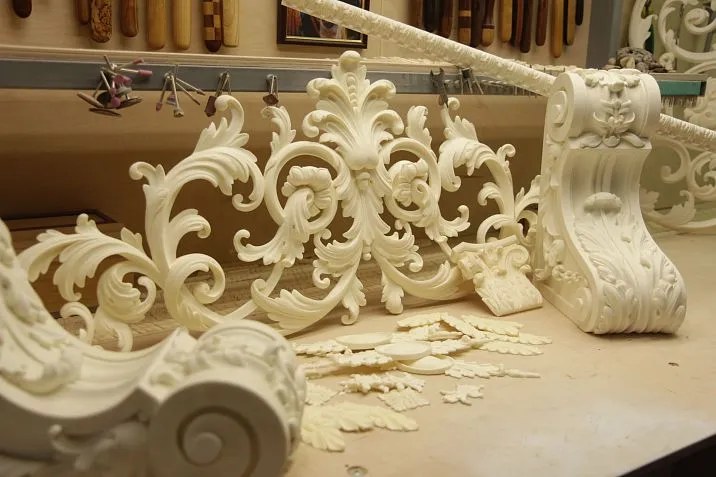
Modern injection molding technologies allow reproducing ornaments with jewelery precision. The pressure in molds reaches 100-150 bar, ensuring perfect filling of the finest relief details. Computer modeling guarantees mathematical accuracy of proportions and conformity to historical prototypes.
Temperature control system during polymerization eliminates internal stresses and deformations. Multi-stage quality control includes checking linear dimensions to the nearest tenth of a millimeter, ensuring perfect assembly fit of components.
Automated production lines guarantee stability of characteristics for each item. Robotic complexes eliminate human factor influence on critical production stages.
Get Consultation
Variety of solutions for every home
Trimming Items: Foundation of Architectural Composition
Polyurethane trim Forms the architectural skeleton of the house, creating clear lines and defining proportions of both interior and exterior spaces. These universal elements can radically transform the perception of any structure.
Ceiling moldings are not just decorative elements, but powerful visual tools. The right profile can visually raise a ceiling in a small room or create a sense of intimacy in a spacious hall. Multi-level molding systems allow integrating hidden lighting, creating striking light compositions.
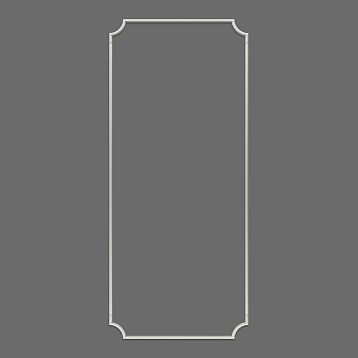
Wall moldings structure vertical surfaces, transforming ordinary walls into elegant panel systems. Horizontal divisions visually expand space, vertical ones increase ceiling height. Diagonal compositions add dynamism to modern interiors.
Baseboards complete the architectural composition, creating a harmonious transition between walls and floor. High baseboards impart the grandeur of classical palaces, low ones emphasize the minimalism of modern design.
Window and door casings accentuate attention to architectural functional elements. Complex profiles with integrated cable channels solve practical communication routing tasks while preserving aesthetic appeal.
Applied elements: details that create character
Applied decorative elements are the very touches that transform a house into a work of art. Rosettes, medallions, garlands, cartouches — each element carries a specific semantic load and creates a unique atmosphere.
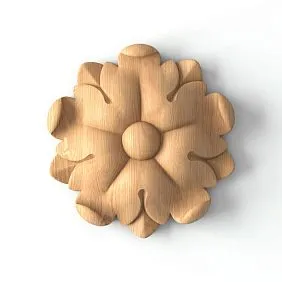
Ceiling rosettes serve as compositional centers, attracting attention and creating focal points. Size gradation from 300 mm to 1.5 meters in diameter allows selecting optimal proportions for any room. Classical vegetal ornaments coexist with geometric abstractions, historical replicas complement modern original interpretations.
Corner elements solve the complex task of decorating plane intersections. Specifically designed profiles ensure perfect linear element joints at any angle, creating visually monolithic compositions.
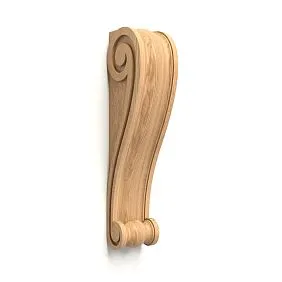
Brackets and consoles not only decorate but also perform functional roles, supporting shelves, moldings, balconies. The combination of decorative and functional qualities is a hallmark of quality architectural decoration.
Facade solutions: the face of your home
The exterior appearance of a house forms the first impression and influences the perception of the entire architectural ensemble. Facade molding allows creating a unique building image, distinguishing it from standard construction.
Moldings and eaves perform a dual function — protecting walls from atmospheric precipitation and creating expressive horizontal divisions on the facade. Properly designed water drainage elements can significantly extend the lifespan of the entire building.
Window and door casings transform functional openings into decorative accents. Sills, sills, lock stones create rhythmic compositions that enliven the wall surface.
Pilasters and half-columns impart monumentality and grandeur to the facade. Different orders — Doric, Ionic, Corinthian — allow creating facades in any historical style.
Balustrades and railings combine decorative and functional qualities. They can imitate classical stone balustrades or create entirely new artistic images.
Style directions: from classic to avant-garde
Neoclassical harmony
Neoclassical style is experiencing a true renaissance in modern architecture. Strict proportions, symmetrical compositions, vegetal ornaments in the spirit of antiquity find new embodiment in polyurethane products.
Symmetry is the foundation of neoclassical aesthetics. Each element must be strictly aligned with other composition details. The central axis determines the placement of all decorative elements, creating a sense of order and harmony.
Neoclassical vegetal ornaments are characterized by stylization and graphic quality. Laurel wreaths, oak garlands, rosettes, and palmettes are reproduced with characteristic restraint. Excessive ornamentation is avoided in favor of refined elegance.
Color solutions lean toward monochromaticity. White, cream, ivory — traditional palette of neoclassical molding. Gold is applied sparingly, only to highlight the most important elements.
Baroque luxury in modern interpretation
Baroque remains unmatched in richness and expressiveness of decorative forms. Modern technologies allow recreating the full complexity of baroque ornaments while preserving their emotional intensity.
Asymmetrical compositions create a sense of movement and dynamism. Spirals, scrolls, volutes intertwine into complex ornamental compositions. Each element flows into the next, creating a continuous rhythm of decorative narrative.
Relief multi-planarity ensures rich play of light and shadow. Deep recesses, high protrusions, complex transitions between planes require virtuoso craftsmanship in master model production.
Natural motifs acquire a fantastical character. Realistic leaves and flowers intertwine with mythological creatures, creating fairy-tale compositions rich in symbolism.
Modern minimalism: beauty of simplicity
Minimalism imposes special requirements for execution quality. In the absence of complex ornaments, purity of lines, precision of proportions, and flawless surfaces take precedence.
Geometric forms dominate in minimalist aesthetics. Straight lines, perfect circles, sharp angles create a sense of order and calm. Every element must be mathematically precise.
Functionality becomes the primary criterion for evaluation. Every detail must have a practical justification — concealing communications, ensuring transitions between materials, creating visual accents.
Color restraint is characteristic of minimalist interiors. White, gray, black — the primary palette, complemented by natural tones. Moldings are usually painted to match the wall color.
Practical aspects of selection and application
Decorative finishing planning
Successful implementation of a decorative finishing project begins with careful planning. Analysis of architectural features of the building, determination of stylistic concept, calculation of required materials — each stage requires a professional approach.
Architectural analysis includes assessment of building proportions, placement of window and door openings, roof configuration. These factors determine the selection of type and size of decorative elements. Classical proportions require adherence to canonical ratios.
Stylistic concept must consider both architectural features of the building and the owner's personal preferences. It is important to avoid eclectic mixing of styles in favor of a cohesive artistic image.
Material calculation is performed based on detailed measurements and project documentation. Accuracy of calculations is critically important — errors may lead to material shortages or unnecessary expenses.
Climate-specific features and their consideration
Russian climate imposes special requirements on facade materials. Temperature fluctuations from -40°C to +40°C, high humidity, intense ultraviolet radiation — all these factors must be considered when selecting decorative elements.
Polyurethane's frost resistance is confirmed by laboratory tests. The material retains elasticity even at extremely low temperatures, preventing crack formation. Coefficient of thermal expansion is minimal.
Water resistance is critically important for the longevity of facade decoration. Water absorption of quality polyurethane does not exceed 0.5%, eliminating destructive processes associated with freeze-thaw cycles.
UV stability is ensured by special additives in the polymer composition. Even under prolonged exposure to sunlight, products retain color and mechanical properties.
Installation and technical maintenance
Ease of installation is one of the main advantages of polyurethane decorative elements. Most items are attached using special adhesives without mechanical fasteners, preventing damage to wall structures.
Foundation preparation includes cleaning from contaminants, old coatings, dust. The surface must be dry and strong. Humidity should not exceed 4% to ensure reliable adhesive bonding.
Installation technology requires precision and care. Adhesive is applied evenly across the entire contact surface. After installation, the element must not be moved — this compromises the integrity of the joint.
Operational maintenance is minimal. Polyurethane elements require no special care, regular painting, or protective treatment. Cleaning is performed using standard cleaning agents.
Economic advantages of modern solutions
Cost comparison analysis
The economic efficiency of polyurethane moldings becomes evident upon analyzing total ownership cost. Initial investments, operational expenses, maintenance costs — all factors favor modern polymer materials.
Initial cost of polyurethane items is significantly lower than prices of analogs made from natural stone, carved wood, or wrought metal. At the same time, the quality of detail work remains at the highest level.
Transportation costs are minimized due to low weight. Delivery cost per cubic meter of polyurethane elements is significantly lower than transportation cost of equivalent volume of stone items.
Installation work does not require hiring highly skilled specialists or complex equipment. This significantly reduces overall project cost and shortens completion time.
Operational expenses are practically nonexistent. Service life is measured in decades without loss of quality. Absence of need for regular repairs and maintenance ensures long-term savings.
Return on investment
Quality decorative finishing significantly increases property market value. Investments in architectural decoration are recouped upon sale with significant surplus.
Uniqueness and individuality become important competitive advantages. In an era of standard solutions, original decoration attracts special attention from buyers.
The prestige of well-finished housing ensures higher liquidity. Time spent on the market is reduced, and the number of potential buyers increases.
The energy-saving effect of an additional thermal insulation layer contributes to reduced operational expenses. Even a small reduction in heat loss provides noticeable savings at current energy prices.
Regional characteristics and adaptation
Northern regions: challenges of harsh climate
Extreme Northern conditions require special attention to material selection. Polyurethane elements demonstrate exceptional resistance to low temperatures, maintaining elasticity even at -60°C.
The long heating season makes thermal insulation properties of decorative elements especially relevant. Additional insulation provided by polyurethane decor contributes to energy savings.
Polar night and intense summer insolation create extreme conditions for photochemical processes. UV-stabilized compositions guarantee colorfastness under any conditions.
Logistical features of northern regions require planning of deliveries taking into account the seasonality of transportation accessibility. The compact packaging of polyurethane products facilitates delivery to remote areas.
Southern regions: adaptation to hot climate
High temperatures and intense solar radiation require the use of special heat-resistant compositions. Polyurethane products maintain stability when heated up to +80°C.
Dustiness in arid zones requires the use of anti-static coatings. The smooth surface of polyurethane is easily cleaned by rainwater or washing.
Intense insolation dictates the choice of light tones to reduce surface heating. Special reflective pigments further reduce thermal loads.
Architectural traditions of southern regions are reflected in corresponding decorative elements. Eastern motifs and Mediterranean styles are embodied in modern polyurethane products.
Coastal zones: combating aggressive environment
Increased humidity and high salt content in the atmosphere require the use of particularly durable materials. Chemical inertness of polyurethane ensures resistance to salt corrosion.
Wind loads in coastal areas may reach extreme values. The calculation of decorative element mounting must take into account local climatic features.
Fog and drizzle create conditions of increased humidity. Fast-drying coatings and effective ventilation of structures become critically important.
Biological activity in warm humid climates requires the use of biocidal additives to prevent microbial growth on the surface of decor.
Technological innovations and development prospects
Digital technologies in production
The revolution in digital technologies affects all spheres of production, including the manufacture of architectural decor. 3D modeling allows creating and testing complex ornaments before their physical realization.
Parametric design opens opportunities for creating adaptive decorative systems. Changing one parameter automatically adjusts the entire composition, ensuring proportional harmony.
Additive technologies — 3D printing of master models — accelerate the development of new products and reduce costs for creating unique elements. The possibility of rapid prototyping revolutionizes the creative process.
Automation of production increases quality and stability of characteristics. Robotic complexes ensure ideal repeatability of operations and eliminate human factor influence.
Integration of "smart" technologies
The concept of "smart home" is penetrating into the field of decorative finishing. Modern moldings can integrate various technological solutions while remaining aesthetically appealing.
Hidden lighting systems transform decorative elements into functional lighting solutions. LED technologies allow creating striking contour lighting with minimal energy consumption.
Climate systems are integrated into architectural decor unnoticed by the eye. Ventilation grilles, masked by ornamental overlays, ensure air exchange without compromising aesthetics.
Multimedia solutions find a place even in classic interiors. Hidden speakers provide high-quality sound accompaniment without disrupting visual harmony.
Security systems are integrated into decorative compositions. Motion sensors and surveillance cameras are camouflaged within ornamental details, ensuring protection without compromising design.
Ecological trends and sustainable development
Environmental responsibility has become a mandatory requirement for modern production. Safety for human health, absence of harmful emissions, and recyclability — criteria for evaluating materials.
Biodegradable polymers are being studied as an alternative to traditional polyurethane compositions. However, their operational characteristics currently lag behind proven solutions.
Energy efficiency of production affects the overall ecological assessment of the product. Use of renewable energy sources and process optimization — priorities for responsible manufacturers.
Circular economy implies the possibility of material reuse. Development of technologies for recycling polyurethane products — an important research direction.
Psychology of perception and influence on well-being
Emotional impact of architectural decor
The architectural environment has a strong impact on a person's psycho-emotional state. Quality decoration creates a sense of harmony, comfort, boosts self-esteem and life energy.
Proportionality and symmetry are subconsciously perceived as signs of order and stability. Well-designed decorative compositions contribute to psychological comfort.
The complexity of ornaments stimulates visual perception and activates creative thinking. The richness of details creates visual interest and prevents boredom from monotony.
The quality of execution affects the overall impression of the interior. Flawless surfaces, sharp edges, absence of defects create a sense of reliability and prestige.
Social aspects of decorative design
The appearance of a house forms the social status of its owner in the eyes of others. Quality decorative design indicates good taste and financial well-being.
The uniqueness of an architectural solution distinguishes a house from standard construction, highlighting the owner's individuality. This is especially important in the era of standardization and uniformity.
Historical continuity in architecture links modernity with cultural heritage. Classical ornaments create a sense of stability and rootedness in traditions.
Aesthetic education of the younger generation occurs through daily interaction with beautiful architectural environments. Quality decoration shapes artistic taste from childhood.
Conclusion: Choosing professionals
In the world of architectural decoration, where beauty must combine with functionality, and traditions with innovation, STAVROS has remained an unquestionable leader of the Russian market for a quarter of a century. Choosing STAVROS means choosing unparalleled quality, advanced technologies, and boundless creative possibilities.
The history of STAVROS began with a simple idea — to make beauty accessible to everyone. Today, this idea is embodied in thousands of completed projects across Russia, from modest country houses to luxurious mansions, from modern office centers to historical architectural landmarks.
The STAVROS production complex is equipped with the most modern European equipment. Automated injection molding lines, computerized process control systems, laboratory complexes for quality control — all this ensures consistently high product quality and compliance with international standards.
The STAVROS research and development center continuously works to improve technologies and create new products. Collaboration with leading European chemical corporations ensures access to the most advanced materials and technologies.
The STAVROS design school unites talented artists, sculptors, and designers who create unique collections of decorative elements. Each item is the result of creative exploration and technical perfection.
STAVROS's quality management system, certified to the international ISO 9001 standard, guarantees that all processes meet the highest global requirements. Multi-level control — from incoming raw material inspection to final testing of finished products — ensures the flawless quality of every item.
STAVROS's ecological responsibility is demonstrated through the use of only certified safe materials, implementation of energy-saving technologies, and minimization of production waste. The company actively participates in sustainable development programs.
Choosing STAVROS, you get more than decorative elements — you gain access to decades of experience, advanced technologies, and boundless creative possibilities. Technical support, professional consultations, and individualized approach to each project make STAVROS the ideal partner for creating your dream home.