Article Contents:
- What to actually buy: flexible slats or flexible slat panels
- Individual slat: molding without base
- Slat panel on flexible base: ready-made module
- Why this is important when buying
- When it's really worth buying flexible slat panels
- Column: from budget cladding to architectural image
- Arch: wooden cladding without trimming
- Radius wall: monolithic wooden form
- Rounded corner: no additions
- Niche with rounded edges
- Curved furniture fronts
- Wavy partitions and complex geometry
- When to buy a rigid slat panel instead of a flexible one
- What flexible solutions are available: breakdown by type
- PAN-001: flexible slatted panel made of oak, beech or MDF
- PAN-002: primed slatted panel made of MDF
- Interior slats for self-assembly
- How to choose flexible slats before purchase: algorithm
- Step 1. Determine the surface type
- Step 2. Select the material of the slats
- Step 3. Determine the decorative effect
- Step 4. Calculate the volume
- Step 5. Specify readiness for finishing
- Step 6. Fill out the technical specification
- How to check the product before ordering
- Quality of the fabric base
- Slat spacing and tolerance
- Profile quality and sanding
- Primer (for MDF versions)
- Batch consistency
- Packaging
- Sample
- How to install purchased flexible slats: a brief guide
- Surface Preparation
- Marking and the first panel
- Adhesive and Fixation
- Joining and cutting
- Corner finishing
- What determines the price of flexible slat panels
- Slat material
- Priming
- Slat profile
- Module size
- Volume
- Logistics
- Installation
- Common mistakes when buying flexible slats
- Buying flexible where rigid is sufficient
- Not specifying the fabric base
- Not checking if the panel is primed for painting
- Do not consider radius when selecting a model
- Do not check joint alignment
- Not ordering a sample
- Ignore batch consistency
- FAQ — answers to frequently asked questions
- Where to buy flexible slats?
- What is better to buy: flexible slats or rigid panels?
- Are flexible slats suitable for columns?
- Can flexible slats be purchased for painting?
- Which flexible slats are best to buy for an arch?
- How to buy flexible slats without mistakes?
- How much do flexible slats cost?
- Can I buy flexible slats for furniture?
- Are the joints visible on flexible slat panels?
- Is lathing needed under flexible slat panels?
- Can flexible slats be glued to drywall?
- How quickly does the order arrive from the manufacturer?
- Can I order a sample before purchasing?
- How to choose flexible slats for a radius wall?
- What are PAN-001 and PAN-002?
- Summary: how to buy flexible slats correctly
- About the Company STAVROS

When a person searches for 'buy flexible slats' — they have typically already seen slatted finishing in a real space or in a project photo and thought: I want that. Then the zone of uncertainty begins: what exactly to buy, in what format, for what task, what material.
And here is the first important point: in professional interior practice, 'flexible slats' is a colloquial term. The actual product behind it is correctly called a flexible slatted panel on a fabric base. These are not individual slats that can be bent — it is a ready-made module with several battens fixed on an elastic backing with precise spacing. Understanding this difference is the first step to making the right purchase.
The second point is no less important: 'flexible' does not mean 'better than rigid'. It means 'for a different purpose'. Flexible slatted panels are needed where there is a curve: a column, an arch, a radius wall, a rounded corner, a curved furniture facade. For a straight wall — a rigid panel will provide the same texture, the same play of light and shadow, but at a lower price and with simpler installation.
This article is not an overview of 'what slats are'. It is a practical guide for those who have already decided to buy and want to do it without mistakes: choose the right format, the right material, the right model — for a specific surface and a specific interior task.


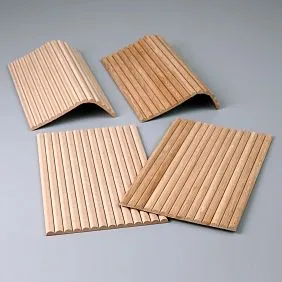
What to actually buy: flexible slats or flexible slatted panels
Let's break down the terminology, because in the market, the word 'slat' sells fundamentally different things.




Individual slat: batten without a base
This is simply a wooden or MDF profile of a given cross-section and length. You can buy such a slat individually or in a pack and nail/glue it to the wall yourself — maintaining the spacing using spacer inserts. The result can be good, but the work is labor-intensive: each slat must be leveled, the gap maintained, and checked for verticality. On a straight wall — quite feasible. On a column or arch — practically impossible without a qualified carpenter.
The assortment of wooden slats for decorative wall finishing is in theSTAVROS wooden slats sectionBeech, oak, various sections, custom sizes.
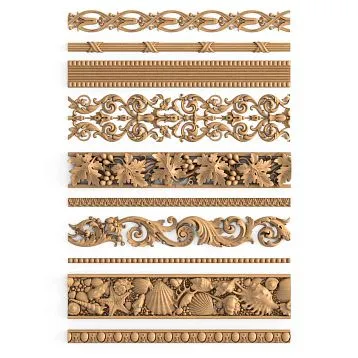
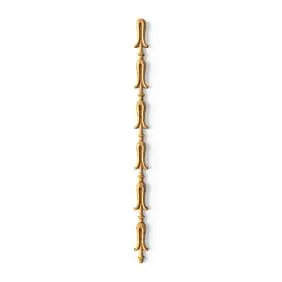
Our factory also produces:





Slatted panel on a flexible base: ready-made module
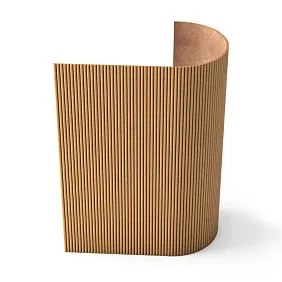
This is a fundamentally different format. Several slats with a set pitch are already fixed on a fabric or fiberglass backing — as a ready-made module. You take the panel, apply it to the surface, apply adhesive to the backing, and press. The slat spacing is maintained with an accuracy of ±0.2 mm, and the level is set by the first panel. Joining the next module is slat-to-slat, without breaking the rhythm.
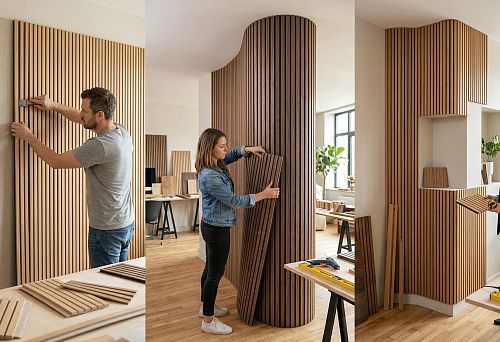
This format is many times faster to install and is the only possible option on curved surfaces — because the fabric backing bends to the shape of the base, maintaining the parallelism of the slats.Buy flexible slatted panels— in the STAVROS slatted panel catalog, which features both rigid and flexible modules.
Get Consultation
Why this is important when buying
If you search for 'buy flexible slats' and come across individual slats — that's not the right product for cladding a column. If you come across roll vinyl strips — that's a decorative imitation, not a wooden slatted panel. The correct query for your task: 'buy flexible slatted panels' or 'buy flexible slatted panel on fabric backing'.
When you really should buy flexible slatted panels
This is the central question on which the entire choice depends.
Column: From Budget Cladding to Architectural Statement
A column with wooden slat cladding used to be an expensive look: custom carpentry, curved templates, individual assembly. Today, it's a task of a few hours with the right material.
Buy Flexible Slat Panels for Columns— means getting a ready-made module that wraps around the column's entire perimeter. The 300 mm panel width allows wrapping a column 30–35 cm in diameter in 3–4 passes. The slat rhythm is uninterrupted, neither at the joint nor on the curve.
Minimum bending radius: from 100–150 mm, depending on the slat's width and thickness. To clarify the minimum radius for a specific model — ask the manufacturer before ordering.
Arch: Wooden Cladding Without Cutting
The inner surface of an arch is a curve for which there are no rigid solutions without cutting into short sections. Sectional cutting always results in visible joints. A flexible slat panel follows the opening's curve as a single sheet — slats run horizontally along the reveal, the rhythm is continuous, and the tunnel depth of the arch is enhanced by the wooden texture.
Radius Wall: Monolithic Wooden Form
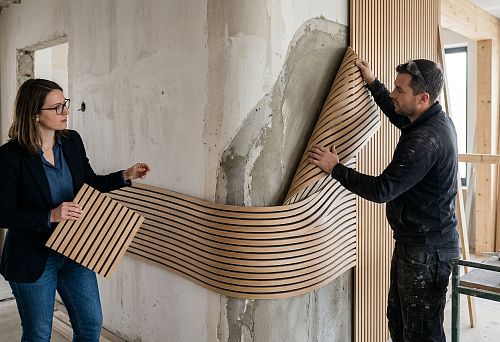
A smoothly curved wall with slat finishing is a spatial statement that needs no explanation. Flexible slats follow the curve without breaks, steps, or additional elements. The result is a monolithic wooden surface that reads as part of the architecture.
Rounded Corner: No Add-ons
Rounded corners are a common architectural detail in corridors, children's rooms, and restaurants. Hard materials require corner trim. Flexible slat panels don't need trim: the panel wraps around the curve—the rhythm of battens continues seamlessly.
Niche with rounded edges
A niche with right angles is a task for any panel. A niche with rounded transitions is only for flexible panels. Here, the depth of the niche creates a 'wooden cocoon': three surfaces in a unified slat rhythm are perceived as interior sculpture.
Curved furniture fronts
Bar counter with a radius front, kitchen island with rounded corners, cabinet with a curved front—all these are solved with flexible slat panels without custom joinery. Important to clarify: MDF slats glued to an MDF furniture frame is the standard option. For fronts with mechanical load (opening doors)—coordinate the construction with the manufacturer.
Wavy partitions and complex geometry
Sinusoidal wooden partition in an open office, arched opening in a living area, dome in a niche—all these are scenarios where flexible slat panels are the only available material.Detailed guide to flexible wall panels for complex surfaces—a complete breakdown of non-standard architectural tasks.
When it's better to buy a rigid slat panel rather than a flexible one
This is an honest question, and an honest answer to it is part of proper consultation.
A rigid slat panel on an MDF backing is not an outdated solution. It's the right choice for a specific range of tasks:
-
A flat accent wall: a rigid panel provides maximum geometric precision and a perfect plane. Where the absolute levelness of the slat horizon is important, a rigid construction is more accurate.
-
A straight bed headboard: a standard flat surface where flexibility is not needed and offers no advantages.
-
TV zone on a straight wall: the same thing — the visual result is identical, the construction is rigid, the price is lower.
-
Straight partitions: without a radius, rigid panels on a frame are simpler to assemble.
-
Flat furniture fronts: higher rigidity, less risk of deformation.
Rule: if the surface is straight — first look at rigid solutions. Switch to flexible ones only where there is a curve.
What flexible solutions are available: breakdown by type
Before buying flexible slats — you need to understand what exactly is in the product line and how the options differ.
PAN-001: flexible slat panel made of oak, beech, or MDF
Slat panel PAN-001— is a basic flexible fabric-based model. Available in three slat material options:
-
Natural oak: live wood grain texture, finished with oil, wax, or lacquer. For interiors where natural texture is important.
-
Tinted oak: natural oak with applied tint — for precise matching to the project's color palette.
-
MDF for painting: perfectly smooth surface for applying any enamel from RAL or NCS.
Technical parameters of PAN-001:
-
Module dimensions: 950×1000 mm, 2400×1000 mm, 2700×1000 mm
-
Total thickness: 8 mm
-
Slat width: 14 mm
-
Semi-round beading profile
-
Fabric base — polyester
PAN-002: Primed MDF Slatted Panel
Slatted Panel PAN-002— is an MDF version with two layers of polyurethane primer-insulator. The difference from PAN-001 in MDF is fundamental: PAN-002 is already ready for final painting without additional on-site priming.
Why is this important? Unprimed MDF actively absorbs paint, creates uneven color, and requires multiple coats on-site. PAN-002 with factory primer receives the final enamel evenly from the first pass. Time savings on-site — several hours. Material savings — significant. Risk of "patchy" coating — eliminated.
Interior slats for self-assembly
Individual wooden slats made of oak and beech — for projects where installation is done piece by piece on a prepared frame or according to markings. This is a more labor-intensive approach, but it offers maximum freedom in spacing, profile, and layout.
How to choose flexible slats before purchase: an algorithm
Not 'what looks good in the picture,' but what suits the specific task. Step by step.
Step 1. Determine the surface type
Is there a curve? If yes — only a flexible slatted panel. If no — compare rigid and flexible options by price and installation logic.
For bending: measure the radius (or column diameter). Radius = diameter ÷ 2. Check with the manufacturer for the minimum working radius of the selected model.
Step 2. Choose the material of the slats
| Material | What for | Finish |
|---|---|---|
| MDF for painting (PAN-001) | Exact color, monochrome interior | Any enamel after priming on site |
| Primed MDF (PAN-002) | Quick readiness for painting | Any enamel immediately without preparation |
| Natural oak (PAN-001) | Living texture, natural interior | Oil, wax, varnish |
| Tinted oak (PAN-001) | Precise oak shade | Coating applied at the factory |
| Beech | Uniform light texture | Oil, tinting |
Step 3. Determine the decorative effect
Slat width and gap spacing are not technical but design choices. Narrow slats (14 mm) with small gaps (5 mm) create a dense, warm surface. Wide slats with large gaps (10 mm) create an airy, "breathing" rhythm. For compact spaces — finer rhythm. For high ceilings — larger.
Step 4. Calculate the volume
Measure the surface area in square meters. Add 10–15% for cutting and technological waste. For columns — calculate using the circumference (π × diameter) × height.
Step 5. Specify readiness for finishing
If you plan to paint the panel on site — choose PAN-002 (already primed) or order PAN-001 MDF and prime it yourself. If you want natural wood — oak or beech with oil coating applied at the manufacturer or on site.
Step 6. Fill out the technical specification
For non-standard projects, the technical specification is not a formality, but a tool for controlling the result. What to specify:
-
Glazing bead material: MDF for painting / natural oak / tinted oak (tone code) / beech
-
Batton profile: semicircular / rectangular / trapezoidal
-
Molding width: 14 / 20 / 25 / 30 / 40 mm
-
Gap: 5 / 8 / 10 mm
-
Module size: width × length
-
Finish coating (for MDF): for painting / with finish color RAL / NCS
-
Finish coating (for oak): none / oil / wax / varnish
-
Number of modules or area in m²
How to check the product before ordering
This is the practical part that is often overlooked—and later regretted.
Quality of the fabric base
This is the most important parameter. Ask for a description or sample of the substrate. It must: maintain shape without residual deformation in a flat state, not delaminate when bent to the working radius, and securely hold battens during transportation.
Signs of a poor substrate: battens have shifted or have uneven spacing right in the packaging; the substrate looks like a thin film or soft non-woven material without reinforcement.
Batten spacing and tolerance
The spacing must be consistent along the entire length of the panel. Tolerance: ±0.2 mm for quality production. Spacing deviation leads to mismatched rhythm at the joint and a visible 'break' in the texture.
Profile and sanding quality
The side edges of the batten must be clean—without nicks or tears. For MDF: the surface is smooth, without pores. The semi-circular profile must be symmetrical. An uneven profile creates chaotic, not structural, light and shadow.
Primer (for MDF versions)
For PAN-002: the primer must cover the surface evenly, without stains or gaps. Apply a control coat of paint to a test sample: the color should lay evenly on the first try.
Batch consistency
Especially important for large orders. Multiple deliveries from the same batch must provide an identical shade—particularly critical for tinted oak and any painted MDF. Check with the manufacturer about the batch control system.
Packaging
Panels must be transported in a horizontal position, with cushioning material between layers. Improper transportation creates a 'memory' bend that interferes with installation on flat surfaces.
Sample
Always request a sample before placing a large order. A good manufacturer provides material samples—this is standard. The sample allows you to verify color, profile, base quality, and bending behavior under real conditions.
How to install purchased flexible slats: a quick guide
This is a practical block for those planning to install independently or wanting to supervise the contractor.
Surface preparation
The substrate must be: dry (moisture up to 14%), strong (no peeling areas), primed (drywall—no additional requirements, concrete and aerated block—with mandatory priming). Flatness—within adhesive tolerance: ±2–3 mm per linear meter.
Marking and the first panel
The first vertical line—with a laser level. This is the foundation of the entire rhythm. A deviation of even 2 mm at the start accumulates over the entire wall height. On columns: level according to the first slat of the first module.
Adhesive and fixation
Apply adhesive to the fabric backing with a notched trowel. Recommended compounds: polyurethane mounting adhesive or acrylic. On flat surfaces—roll with a rubber roller. On curved surfaces—secure with painter's tape at 5–8 points for 20–40 minutes until polymerization.
Joining and Cutting
Slat-to-slat joining: the last slat of the previous module and the first slat of the next must be separated by a gap equal to the standard spacing. Only then does the rhythm continue uninterrupted. Cutting: cross-cut—with a utility knife on a backing, longitudinal—with a jigsaw or miter saw.
Corner finishing
-
Rounded corner: panel wraps without additional elements
-
External right angle: 45° cut on both adjacent modules
-
Transition from curve to plane: adhesive with long open time on transition area
What determines the price of flexible slat panels
Transparent pricing structure is respect for the buyer. Let's break it down by factors.
Material of the slats
MDF — basic price level. Solid oak — 30–60% more expensive, depending on grade and tinting. Beech — intermediate position. Rare wood species — individual calculation.
Priming
Factory primer with two layers of polyurethane (PAN-002) — markup relative to unprimed MDF. But considering the cost of on-site priming — final cost is typically comparable or lower.
Profile of the slat
Standard semicircular — serial production, optimal price. Non-standard profile — custom milling, corresponding markup.
Module size
Standard sizes (2400×1000, 2700×1000 mm) — serial products. Non-standard sizes — custom production, manufacturing calculation.
Volume
For large orders — discounts per square meter. For commercial projects: calculate the entire volume at once and order in one batch — this is both more cost-effective and ensures batch uniformity.
Stavros organizes delivery within Moscow using its own transport or partners with logistics providers for delivery to regions. Packaging ensures the preservation of even delicate carved elements.
Panels 2700 mm long are long-length cargo. For regions — a separate budget item. Always request the final cost including delivery to the site.
Installation
If installation is included in the cost — clarify what exactly is included: base preparation, marking, installation, corner finishing. Installation on curved surfaces is more labor-intensive and costs more than on flat ones.
Common mistakes when buying flexible slats
These are real customer mistakes — not theoretical.
Buying flexible where rigid is sufficient
A flexible panel on a straight wall is acceptable, but it's an overpayment. A rigid structure on a flat surface is stiffer, more geometrically precise, and cheaper. Buy flexible only where the surface is curved.
Not specifying the fabric base
"Flexible panel" is a broad concept. A base made of reinforced polyester and a base made of thin non-woven material are different products with different bending behavior. Always specify the type and characteristics of the substrate.
They don't check if the panel is primed for painting
Bought MDF panel, gave it to a painter — and got a spotty surface. Unprimed MDF absorbs paint unevenly. PAN-002 with factory primer eliminates this problem. If you buy unprimed MDF — budget for priming separately.
They don't consider the radius when choosing a model
Minimum working radius depends on the width and thickness of the slat. For a narrow column 15–20 cm in diameter — check specific parameters. Not all flexible panels bend the same way: a 40 mm wide slat and a 14 mm slat have different minimum radii.
They don't check the joining
Ask the manufacturer or in the product card: how exactly do the modules join? Slat-to-slat with preserved spacing is the only correct answer. If joining involves an insert profile or gap — it breaks the rhythm.
Not ordering a sample
For a large project, a sample is mandatory. For an apartment — it's advisable. Color, profile, base quality — all of this needs to be felt, not just seen on a screen.
They ignore batch consistency
For a project with multiple deliveries — coordinate batch tone control with the manufacturer. Tone discrepancy between the first and second batch on final finishing is a disaster that can't be fixed without replacing all material.
FAQ — answers to frequently asked questions
Where to buy flexible slats?
Directly from the manufacturer is the only way to guarantee quality, batch consistency, and get an exact technical solution for the project. In theSTAVROS slatted panels catalogall available flexible and rigid models are presented.
What is better to buy: flexible slats or rigid panels?
Depends on the surface. If there is curvature — flexible. No curvature — rigid ones are more economical and geometrically precise.
Are flexible slats suitable for columns?
Yes. This is one of the key tasks. The module wraps around the column along the perimeter without seams and rhythm deformation.
Can I buy flexible slats for painting?
Yes. PAN-001 MDF — for painting after priming. PAN-002 — ready for final painting without additional preparation.
Which flexible slats are better to buy for an arch?
For arches with a small radius — clarify the minimum radius of the specific model. PAN-001 with a 14 mm slat — works well on small radii.
How to buy flexible slats without mistakes?
Six steps: determine the surface type (whether there is a curve), choose the slat material (MDF or wood), determine the decorative effect (pitch and width), calculate the volume with a margin, request a sample, clarify batch consistency.
How much do flexible slats cost?
Price depends on material (MDF is cheaper than oak), presence of priming, module size, and order volume. Request a calculation from the manufacturer taking all parameters into account.
Can I buy flexible slats for furniture?
Yes. Curved furniture fronts are a standard application scenario. For fronts with mechanical load — coordinate the design with the manufacturer.
Are joints visible on flexible slatted panels?
With proper joining — no. Slat-to-slat joining, maintaining the standard pitch. The first module — strictly level. The joint is visually unnoticeable.
Is lathing needed under flexible slatted panels?
No. Installation is done with adhesive on a prepared base. Battens are only needed for rigid panels on uneven surfaces.
Can flexible slats be glued to drywall?
Yes. Drywall is one of the best bases for installing slatted panels with adhesive.
How quickly does an order arrive from the manufacturer?
Standard models from stock — depending on warehouse and logistics. Non-standard sizes and materials are produced to order; check lead times when placing your order.
Can I order a sample before purchasing?
Yes — this is standard practice for the manufacturer for corporate and large orders.
How to choose flexible slats for a radius wall?
Determine the wall radius, check the minimum working radius for the selected model, choose the material and slat profile for the decorative task.Detailed breakdown of scenarios— in a special guide on purchasing flexible slat panels.
What are PAN-001 and PAN-002?
PAN-001 is a flexible slat panel on a fabric base, made of oak, beech, or MDF. PAN-002 is a primed MDF version, ready for final painting. Both are flexible, fabric-based, and designed for columns, arches, and complex surfaces.
Conclusion: how to buy flexible slats correctly
The correct purchase of flexible slatted panels is not about choosing 'the prettiest in the picture.' It's an algorithm: surface → material → profile → volume → sample → order.
If the surface is curved — only a flexible slatted panel on a fabric base. If straight — compare with a rigid structure.
Regarding materials: MDF with factory primer (PAN-002) — for speed and color accuracy on site. Oak — for natural texture and material warmth. Beech — for a uniform, light texture.
Regarding formats — always a module on a fabric base, not individual battens, if the task is a column, arch, or radius wall. Individual slats only make sense for mounting on a straight surface using markings.
The entire range is in STAVROS slatted panels catalog. To choose between PAN-001 and PAN-002 — Detailed analysis of models and purchase scenariosFor complex objects and non-standard parameters — a request to the manufacturer with technical specifications.
About the company STAVROS
STAVROS is a Russian manufacturer of decorative products made from solid wood and MDF for residential and commercial interiors. The company's specialization is custom slatted panels: both rigid modular ones on an MDF backing and flexible ones on a fabric base for columns, arches, radius walls, niches, and curved furniture fronts.
STAVROS produces panels from solid oak, beech, and MDF — including primed modules, ready for final painting without on-site preparation. The company works directly with designers, architects, construction contractors, and private clients across Russia, ensuring quality control for each batch, color consistency, and geometric accuracy. Custom sizes, non-standard profiles, and project deliveries — all within the standard production cycle.