Article Contents:
- Revolution in understanding interior aesthetics
- Psychology of choice: why carved decor changes life
- Evolution of taste: from consumption to collecting
- Anatomy of quality: what determines the value of carved decor
- Material Science: The Soul of Wood in the Master’s Hands
- Technological Chain: From Raw Material to Masterpiece
- Stylistic navigation: choosing a direction
- Classic tradition: beauty proven over centuries
- Modernist trends: revolution of forms
- Ethnic directions: wisdom of ancestors
- Functional typology: decor tailored for each room
- Living room: theater of representation
- Children's Room: Fairy Tale in Details
- Kitchen: the heart of the home
- Investment mathematics: calculating benefits
- Impact on property value
- Long-term perspective: antique value
- Return on investment calculation
- Technological innovations: the future of traditional craftsmanship
- Digital technologies in carving
- Production automation
- New protective coatings
- Buyer's practical guide
- Criteria for quality craftsmanship
- Interaction with the manufacturer
- Logistics and installation
- Maintenance and servicing: preserving beauty
- Regular procedures
- Seasonal maintenance
- Professional Maintenance
- Regional market characteristics
- Moscow premium segment
- Saint Petersburg academic school
- Regional centers
- Industry development trends
- Ecological awareness
- Product Personalization
- Globalization and Localization
- Conclusion: investment in eternal values
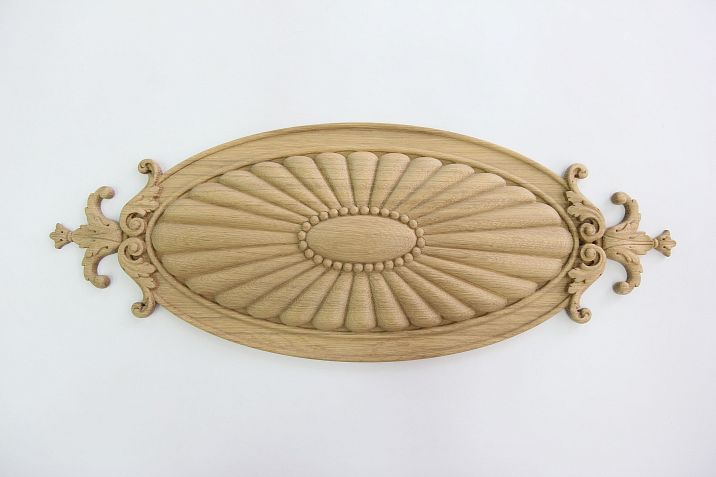
Imagine the moment when you enter a home where every detail speaks of the owner's impeccable taste. Where walls are adorned with exquisite panels, and furniture impresses with the nobility of its lines. That is exactly the atmosphere this solution creates buy wooden carved decor — choose not just decoration, but a philosophy of life, where beauty and quality are priorities.
In an era of mass production and standardized solutions, wooden carving remains an island of authentic craftsmanship. Each element carries a fragment of the creator's soul, the history of wood fibers, and centuries-old artisan traditions. But how to make the right choice among countless offers? How to distinguish genuine art from imitation?





Revolution in understanding interior aesthetics




Psychology of choice: why carved decor changes life
Modern neuro-psychological research proves an amazing fact: the beauty surrounding us directly affects the production of serotonin — the happiness hormone. Carved wooden inlays do not create just a visual effect; they form a special energy of space that affects the subconscious.
When you touch the relief surface of a carved element, thousands of nerve endings are activated. This tactile interaction with natural material brings us back to our primal connection with nature, which urban dwellers so desperately lack.
Our factory also produces:




Evolution of taste: from consumption to collecting
Choosing quality carved decor is a step to a new level of consumer culture. You stop buying things and start investing in works of art. Hand-carved wooden elements only increase in value over time, becoming family heirlooms.
Imagine: in twenty years, your children will consider these elements as antiques, telling their children the story of how their grandparents valued true beauty.
Get Consultation
Anatomy of Quality: What Determines the Value of Carved Decor
Material science: the soul of wood in the master's hands
Choosing wood is the first and decisive step in creating a masterpiece. Carved items from solid wood require a special approach to material selection.
Oak — the emperor among species. Its density of 650–720 kg/m³ allows creating the finest details that will preserve line clarity for centuries. Tannins contained in oak wood provide natural protection against pests.
Ash attracts with its contrasting texture and high strength. Its fibers create natural patterns that masters skillfully incorporate into ornament composition.
Walnut — the choice for creating elite items. Its noble brown color with dark veins does not require additional staining, and its density allows performing the most complex carvings.
Technological chain: from raw material to masterpiece
Modern production of carved decor is a symphony where each tool plays its part. The process begins with kiln-drying wood according to special regimes. Moisture is brought to 8±2% — a figure guaranteeing the stability of the item.
CNC machining ensures mathematical precision of basic forms. Modern multi-axis centers create complex spatial surfaces with deviations no more than 0.1 mm.
But true magic happens at the hand-finishing stage. The master carver takes chisels — tools whose shape has not changed for millennia. Each strike is precise, every movement is thought out. It is here that the dead machine precision comes alive.
Stylistic Navigation: Choosing a Direction
Classical Tradition: Time-Tested Beauty
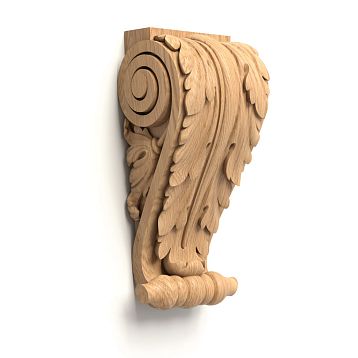
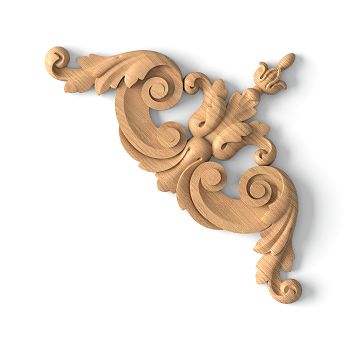
Baroque remains the flagship of decorative art. Its recognizable features — opulence, dynamism, emotion — create an atmosphere of solemnity. Baroque carved wooden panels abound in cartouches, acanthus leaves, putti, each element of which tells its own story.
Neoclassicism offers another aesthetic — harmony of proportions and noble restraint. Palmettes, meanders, laurel wreaths create a sense of eternity and stability. This is the choice for those who value intellectual beauty.
Empire — the style of victors and rulers. Eagles, fasces, wreaths of glory embody ideas of greatness and power. Empire elements are ideally suited for representative interiors.
Modernist Trends: Revolution of Forms
Art Nouveau brought to decorative art a cult of nature, but nature reinterpreted by the artist. Stylized irises, dragonflies, sea waves create a sense of movement and growth. Carved moldings in the modern style differ by the absence of straight lines — everything curves and flows.
Art Deco combined luxury with the geometry of the industrial era. Sun rays, zigzags, stylized skyscrapers reflect the spirit of the jazz and technical progress era.
Ethnic Directions: Wisdom of Ancestors
Russian folk carving is experiencing a second birth. Traditional motifs — solar signs, tree of life, phoenix birds — acquire a modern sound. Carved casings in folk style create an atmosphere of authenticity and connection to roots.
Scandinavian motifs bring to decor the philosophy of hygge — coziness and harmony. Simple, yet expressive forms highlight the beauty of natural material.
Functional Typology: Each Room Has Its Own Decor
Living Room: Theater of Representation
The living room is the home’s calling card, where guests are received and family celebrations are held. Carved capitals of columns create a festive atmosphere, organize space, and set an architectural rhythm.
Ceiling rosettes not only conceal light fixture mounting points but also become compositional centers. Multi-level rosettes create a dome effect, visually increasing room height.
The fireplace — the heart of the living room — requires special framing. Carved portals transform the heating appliance into a hearth altar of the home. Classical motifs emphasize the significance of this place for family traditions.
Bedroom: intimacy and tranquility
The bedroom requires a special approach to decor selection. Here, Baroque opulence is inappropriate — better to choose elements that promote relaxation and rest.
The headboard of the bed is the main decorative accent in the bedroom. Carved panels with plant motifs create a sense of protection and coziness. Soft, flowing lines soothe the nervous system and promote healthy sleep.
Carved mirror frames in the bedroom should reflect the intimate character of the room. Elegant compositions with floral motifs will emphasize femininity, while strict geometric forms will convey masculinity of the interior.
Kitchen: The Heart of the Home
The kitchen is a special place in the home where functionality must combine with beauty. Carved furniture facades transform utilitarian space into a cozy family dining area.
Plant motifs are especially appropriate in the kitchen — grapevines symbolize abundance, wheat ears — prosperity, oak leaves — strength of family traditions.
Carved cornices and moldings create architectural completeness in the kitchen space, unifying scattered elements into a single ensemble.
Investment mathematics: calculating benefits
Impact on property value
Quality carved decoration is not an expense, but an investment with guaranteed return. Real estate agency statistics show: the presence of unique decorative elements increases property value by 15-25%.
In the premium segment, this figure is even higher. Buyers of luxury housing are willing to pay extra for exclusivity, for what distinguishes their home from dozens of similar apartments.
Long-term perspective: antique value
buy wooden carved decor Handmade — means acquiring potential antiques. Works by recognized masters only increase in value over time.
Carved elements from the 19th century are now in museums and private collections. Their price is hundreds of times higher than their original cost. High-quality modern pieces will follow this path in several decades.
Return on investment calculation
The average service life of quality carved decoration is 50-100 years with minimal maintenance. Simple arithmetic shows: the daily cost of beauty is literally pennies.
However, one should not forget about the psychological effect. A beautiful environment improves quality of life, enhances mood, stimulates creative activity. How to evaluate these advantages in monetary terms?
Technological innovations: the future of traditional craftsmanship
Digital technologies in carving
Modern CAD/CAM systems have revolutionized the creation of carved decoration. 3D modeling allows creating complex compositions, calculating every detail, simulating the behavior of the item under various conditions.
Parametric design allows quickly adapting basic ornaments to specific dimensions and customer requirements. The designer can see in real time how changing one parameter affects the entire composition.
Production automation
Modern industrial robots can perform carving operations with precision unattainable by human hands. Multi-axis manipulators process details of any spatial configuration.
However, robots do not replace the master — they free him from routine operations, allowing him to focus on creative tasks. Final finishing and artistic interpretation remain the prerogative of humans.
New protective coatings
Advances in polymer chemistry have led to the creation of fundamentally new protective compositions. Nanocomposite coatings provide unprecedented protection against all types of exposure.
Self-healing coatings can seal minor scratches under the influence of heat. This extends the lifespan of items, preserving their original appearance for decades.
Practical buyer's guide
Criteria for quality products
When choosing carved decoration, it is important to pay attention to several key points. The quality of wood — the first and most important criterion. The material must be properly dried, have a uniform structure, and contain no hidden defects.
Technical execution determines the longevity of the item. All edges must be clean, without chips or burrs. The geometry of elements — perfectly aligned. The coating — even, without streaks or pooling.
Artistic value — a subjective but important criterion. The ornament must be harmonious, proportional, and match the declared style.
Interaction with the manufacturer
A serious manufacturer is always ready to provide maximum information about their products. Quality certificates, technical drawings, material samples — all of this should be accessible for study.
The ability to order custom pieces is an indicator of a high level of workshop craftsmanship. Willingness to adapt standard items to specific requirements speaks to the professionalism of the team.
Logistics and installation
Carved decoration requires special care during transportation and installation. Specialized packaging protects items from damage during transit.
Professional installation is the guarantee of the decoration’s longevity. Incorrect installation can ruin even the highest-quality item. It is better to entrust this work to specialists.
Maintenance and care: preserving beauty
Regular procedures
Wooden carved decoration requires attentive, but not complicated, care. Weekly cleaning of dust with a soft brush or special brush — the main procedure for maintaining cleanliness.
Controlling the microclimate is especially important during the heating season. Sudden changes in humidity can cause wood to crack. Using humidifiers solves this problem.
Seasonal maintenance
Twice a year — in spring and autumn — a more thorough inspection of all decorative elements should be conducted. Renewing protective coatings extends the lifespan of items.
Local restoration of minor damage prevents its development. Modern repair compositions allow eliminating defects almost invisibly.
Professional Maintenance
It is recommended to conduct comprehensive professional maintenance of carved decoration once every five years. Deep cleaning, restoration of coatings, replacement of worn elements — all of this extends the life of the decoration for decades.
Regional market specifics
Moscow Premium Segment
The capital's market for carved decoration is characterized by high quality requirements and willingness to pay for exclusivity. Custom orders constitute a significant portion of the market.
Design studios actively use carved decoration in projects for affluent clients. This stimulates the development of new stylistic directions, experiments with forms and materials.
Saint Petersburg Academic School
Saint Petersburg preserves the traditions of classical carved art. Here, workshops established as early as the 19th century operate, where the secrets of craftsmanship are passed down from generation to generation.
Restoration workshops of the Hermitage and other museums set the highest quality standards, which are disseminated throughout the city's market.
Regional Centers
Regional centers are developing their own schools of carved craftsmanship, often based on local folk traditions. Kostroma, Vologda, and Arkhangelsk schools each have their distinctive features.
Industry development trends
Ecological Awareness
Growing consumer environmental awareness stimulates demand for products made from natural wood. FSC certification is becoming a mandatory requirement for serious manufacturers.
Waste recycling is transforming from an environmental necessity into an additional income source. Sawdust is used to produce pellets, while shavings are used for packaging materials.
Product personalization
Modern consumers increasingly value individuality. Personalized ornaments, including family symbols, monograms, and commemorative dates, are becoming increasingly popular.
Interactive elements — a new direction of development. Carved decoration may include hidden lighting, smart home elements, even augmented reality.
Globalization and Localization
Paradoxically, but globalization stimulates interest in local traditions. Consumers seek authenticity, uniqueness, and connection to cultural roots.
Ethnic motifs in modern interpretation are becoming a trend not only within countries but also on the international market.
— is a choice in favor of eternal values. In a world where everything becomes disposable, quality wood carving remains a symbol of solidity and intergenerational continuity.
Solution buy wooden carved decor — is a choice in favor of genuine values. In a world where everything becomes disposable and standardized, carved decoration remains a symbol of individuality, craftsmanship, and connection to traditions.
Each element of carved decoration is not merely decoration, but an investment in beauty that pays off every day through the appreciation of the beautiful. It is a connection to cultural traditions, the transmission of aesthetic values to future generations.
Wooden carved inlays, wooden carved elements, carved items from solid wood — each of these terms denotes a small miracle capable of transforming space, endowing it with character and soul.
In the modern world, quality carved decoration is no longer a luxury, but a necessity for those who understand the difference between a home and a dwelling, between interior and ambiance, between an object and a work of art.
Choosing carved decoration means investing not only in the beauty of your home, but also in supporting traditional crafts, preserving cultural heritage, and creating a beautiful environment for future generations.
For many years, STAVROS has remained the benchmark of quality in the field of carved decoration. By combining centuries-old craftsmanship traditions with modern technologies, using only the finest materials, and attracting talented artisans, STAVROS creates items that become family heirlooms. Every item from the company is a guarantee of quality, durability, and unique beauty that will delight owners for many years and be passed down from generation to generation as a precious legacy.