Article Contents:
- Wood moisture: invisible threat to quality
- How to check moisture when purchasing
- Geometry: when a millimeter decides everything
- Flatness: test on a flat surface
- Wood grade: classification of quality
- How to check grade when purchasing
- End grain: mirror of technology
- Presence of defects: what is acceptable, what is not
- Packaging: protection during transport and storage
- Storage conditions: how the store handles the material
- Check before purchase: step-by-step algorithm
- Species-specific characteristics: what to pay attention to
- Additional criteria: accessories and service
- Price and value: when saving turns into losses
- Frequently asked questions: practical answers
- Conclusion: conscious purchase is the key to flawless result

PurchaseSolid Wood Skirting Board— not an impulsive decision, but a considered choice requiring knowledge, attention, and the ability to distinguish quality products from defective ones. In the store, dozens of boards look identical: smooth, flat, neatly packaged. But after installation, the difference becomes painfully obvious: some skirting boards serve for decades, retaining their shape and color, while others warp and crack within half a year, detaching from the wall. The secret to longevity lies in details invisible to an untrained eye but critically important for the result. Wood moisture, geometric accuracy, material grade, end grain quality, presence of hidden defects, packaging and storage conditions — each parameter matters. This material is a practical guide for those who wantbuy wooden skirting boardto purchase consciously, understanding what to pay attention to, what questions to ask the seller, and how to independently assess quality before payment.




Wood Moisture: The Invisible Threat to Quality
Start with the main thing — moisture. This parameter determines everything: whether the skirting board will be stable, retain its shape, develop cracks, warp, or mismatch at joints. Wood is hygroscopic — it constantly exchanges moisture with the surrounding environment. Freshly cut wood contains 40–80% moisture (relative to dry mass). To produce qualitySolid Wood Skirting Boardwood, it must be dried in chambers to 8–12% moisture — so-called furniture moisture, matching the air humidity in heated rooms.
What happens if the skirting board is made from under-dried wood (moisture 15–20% and higher)? After installation in a heated room, the material begins to lose moisture, primarily in width and thickness. The board warps, bends, detaches from the wall. Cracks appear on the surface, gaps form at joints. If the skirting board is painted or varnished before installation, the coating cracks and flakes off. Visually perfect installation becomes a source of problems.
The opposite situation — over-dried wood (moisture 4–6%). It is brittle, easily cracks when nails are driven or self-tapping screws are screwed in, may break under a light impact. Over-dried wood is also unstable: upon entering a room with normal humidity, it begins to absorb moisture, expanding and creating stress at the points of attachment.




How to Check Moisture When Buying
Ideal option — the seller provides a certificate confirming the material's moisture. Serious manufacturers indicate this parameter in documentation for each batch. But what if there is no certificate or you want to check it yourself?
Visual methods provide an approximate assessment, but better than nothing. The color of wood changes depending on moisture: wet wood is darker, dry wood — lighter. Compare skirting boards from the same batch: if the shades differ significantly (by more than one tone), the moisture is likely uneven. Run your hand over the surface: dry wood is rough, slightly sticks to the skin. Wet wood is smooth, feels cold to the touch, may leave a sticky sensation.
Acoustic test: tap the board with your knuckles. Dry wood produces a clear, resonant sound, like tapping a drum. Wet wood — dull, muffled. The difference is obvious when comparing several samples. If the entire stack of skirting boards sounds dull, the moisture level is likely above normal.
Chemical pencil test: run a chemical (copying) pencil over an inconspicuous area (end or back surface). On dry wood, it leaves a pale, barely noticeable mark. On wet wood, it leaves a bright, purple or blue mark, clearly visible. This works because chemical pencil pigments react with water. The more water in the wood, the brighter the color.
Shaving method: ask the seller to shave a thin shaving with a knife or plane (usually they agree if you are a serious buyer). Squeeze the shaving in your hand. Dry shaving cracks and breaks with a snap. Wet shaving bends, compresses, and does not break. Rub the shaving between your fingers: if you feel moisture or coolness, the wood is not fully dried.
Instrumental method: if you regularly work with wood, it makes sense to buy a contact moisture meter (price from 1500 to 5000 rubles). This device has two pin sensors that are inserted into the wood. A weak electric current passes between the sensors, and the device measures resistance, converting it into moisture percentage. Accuracy ±2%, which is quite sufficient for control. Insert the pins not into the end (which is always drier), but into the side surface, to a depth of 5–8 millimeters, along the grain. If the reading is 8–12% — excellent, 13–15% — acceptable, over 16% — high risk of deformation.
Some stores prohibit invasive tests (inserting pins leaves small holes). In this case, use a non-contact moisture meter (from 5000 rubles), which measures moisture using radio frequency without damaging the material. Place the device on the surface and read the display. Accuracy is lower (±3–5%), but it is sufficient for quick checks.
Our factory also produces:
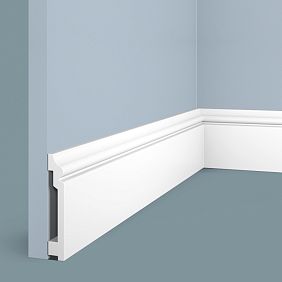
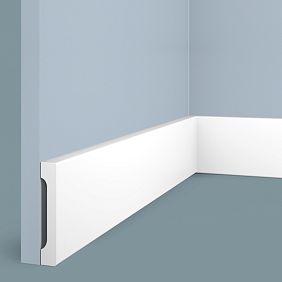
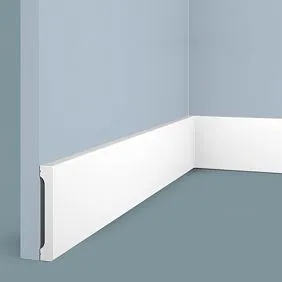
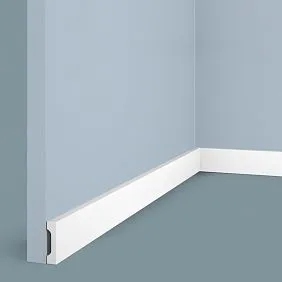

Geometry: when a millimeter decides everything
Accuracy of geometric parameters — the second critical quality indicator.buy wooden skirting boardWith ideal moisture content but poor geometry — means condemning yourself to suffering during installation and an imperfect result.
Straightness — checked visually and tactilely. Take the board by both ends, lift it to eye level, and look along its length. A straight board appears as a straight line, without waves, bends, or dips. A curved board shows an S-shape or arc. The allowable deviation from straightness is no more than 2 millimeters over a 2-meter length. You can check it precisely by placing the board on a known flat surface (e.g., a steel ruler or a 2-meter level). Gaps exceeding 2 millimeters are unacceptable.
If the baseboard is curved, it cannot be installed tightly against the wall. Gaps form, which must be filled with sealant — an aesthetically unacceptable solution. Curvature is often due to improper drying (too fast or uneven) or improper storage (stack without spacers, uneven load).
Dimensional accuracy: all boards from one package must have identical dimensions — height, width, length. Check with a caliper or ruler: height variation should not exceed ±0.5 millimeters. If one board is 70 mm, another 69 mm, and another 71 mm — it’s defective. When installing boards of different sizes, the top edge of the baseboard forms a wavy line, especially noticeable on long walls.
Profile: if the baseboard is profiled (classic profile), all relief elements must be clear, symmetrical, without bulges or blurred edges. Run your finger along the profile: it should feel like a smooth sequence of protrusions and recesses, without roughness, burrs, or scratches. An unclear profile is the result of worn or improperly adjusted routers, poor sanding. Such a baseboard looks cheap, even if made from expensive wood.
Back surface flatness: the back (wall-facing) surface must be perfectly flat or have special grooves to compensate for wall irregularities. Place the board back-side down on a flat surface, check for gaps. If the back surface is concave or convex, the baseboard will not fit tightly against the wall, requiring stronger fastening and possibly shims.
Get Consultation
Flatness: test on a flat surface
Professional flatness check method: place several boards on a known flat surface (e.g., a glass display case or a metal workbench). Gently press each board in the center. A flat board will lie flat against its entire back surface, not wobble, and not form gaps. A non-flat board will wobble like a table with uneven legs, or form visible gaps at the edges.
Pay special attention to boards longer than 2.5 meters. The longer the board, the higher the likelihood of warping due to insufficient profile stiffness or improper storage. If you purchase long boards (3 meters and longer), check each one individually.
Wood grade: quality classification
Wood for baseboard production is classified by grade depending on the presence and nature of natural defects: knots, cracks, color changes, resin pockets. Understanding classification helps make an informed choice between quality and price.
Extra (highest grade, knot-free): wood without visible knots, cracks, resin pockets, insect holes, rot areas, or significant color changes. Minor natural variations in texture and tone are allowed, as long as they do not disrupt overall uniformity. This is the most expensive grade, used for premium interiors where visual purity is important.wooden skirting board purchaseExtra grade — means investing in flawless aesthetics.
First grade (select, A): allows healthy, fused knots up to 10 mm in diameter, no more than two per linear meter. Knots must be light-colored, without darkening, tightly fused with surrounding wood. Cracks, resin pockets, insect holes are not allowed. Minor color variations (heartwood in conifers, natural variation in hardwoods) are acceptable if they do not disrupt overall harmony. First grade — optimal price-to-quality balance for most interiors.
Second grade (rustic, B, AB): allows healthy, fused knots up to 25 mm in diameter, including dark ones contrasting with the wood’s base color. Knot quantity is unlimited if they do not compromise product strength. Minor cracks (non-penetrating, non-expanding), small resin pockets, heartwood areas, and natural color changes are allowed. Insect holes, rot, penetrating cracks are not allowed. Second grade has a pronounced texture, suitable for country, rustic, or Provence-style interiors where naturalness is more important than uniformity.
Third grade (C, economical): allows any defects that do not compromise strength or functionality: large knots (up to 40 mm), loose knots (knot holes), penetrating cracks (not affecting integrity), resin pockets, significant color changes, mechanical damage marks (provided they do not worsen performance). Third grade is inexpensive but requires additional work: filling knot holes, sealing cracks, intensive staining to mask defects.
How to check grade when purchasing
Visual inspection — primary method. Remove several boards from the package (if the seller allows), inspect the front surface. Knots are easy to identify: they are round or oval areas differing in color and texture. A healthy knot is dense, does not compress, and has no cracks around it. A loose or dead knot is surrounded by a dark halo and can be easily scraped out with a knife or screwdriver. Such a knot is a sign of low grade or defect.
Cracks are checked visually and tactilely. Run your fingernail across a suspicious area: if it catches and digs in — it’s a crack. Minor surface cracks (up to 1 mm deep) are not critical for second grade. Deep or penetrating cracks (visible gap) — sign of poor quality.
Resin pockets (characteristic of coniferous wood) appear as elongated depressions or bulges filled with resin. Fresh resin is sticky and may protrude onto the surface, staining hands. Old resin hardens, forming amber-like deposits. Individual small resin pockets are acceptable in second grade. Multiple or large (over 10 mm) — sign of third grade.
Insect holes — signs of activity by wood-boring insects. Appear as small holes 1–3 mm in diameter, sometimes surrounded by sawdust. The presence of insect holes is unacceptable in any grade of quality baseboard — it indicates infested wood that will continue to deteriorate.
End cuts: window into manufacturing technology
Baseboard ends — a window into manufacturing technology. An experienced buyer determines the level of care taken in material production based on the quality of end cuts.
End cut perpendicularity: the end must be strictly perpendicular to the board’s longitudinal axis. Check with a square: place one side against the front surface, the other against the end. There should be no gap between the square and the end. A non-perpendicular cut creates problems during jointing: boards do not fit tightly, gaps form.
Cut edge cleanliness: the end should be smooth, without chips, scratches, delamination. Run your finger along the end: it should be flat, slightly rough (wood is porous), but without burrs. A torn or delaminated end indicates a dull or improperly adjusted saw, poor-quality processing. Such an end is difficult to fit during installation: it additionally splinters during trimming, resulting in an imperfect joint.
Cut edge uniformity: the end shows wood grain — growth rings, texture, possible defects. A uniform light cut without dark spots, rot areas, resin pockets indicates healthy wood. Dark spots, especially at the periphery, may indicate early rot. Blue stain (fungal discoloration, typical for pine) appears as gray-blue streaks. Blue stain does not always affect strength, but is aesthetically unacceptable, especially in light interiors.
End grain moisture: end cuts dry faster than longitudinal surfaces. If the board has been stored for a long time, ends may be over-dried, covered with fine cracks (end grain cracking). This is not always critical, but indicates improper storage (without end protection) or long storage duration. Fresh, crack-free ends indicate recently manufactured or properly stored material.
Defects: what is acceptable, what is not
In addition to grade, it is important to check for defects that are not always considered in classification but affect quality and durability.
Chips: small chips on edges (where the profile has sharp edges) are acceptable in quantity of 1–2 per board, if their size does not exceed 2–3 millimeters. Large chips (over 5 millimeters), especially on the face surface — defect. Chips on the back surface (adjacent to the wall) are not critical, as they are not visible after installation, but their abundance indicates careless handling.
Dents: dented areas formed by impacts. On softwoods (pine), dents appear easily. Small dents can be removed: moisten with water, place a damp cloth, iron with a hot iron — fibers steam and the dent disappears. Deep dents (over 1 millimeter) on the face surface — reason to refuse purchase.
Scratches: areas where wood fibers are raised and not fully cut. Typical for poorly sanded products. Scratches catch the hand when running your palm over the surface. They are not only unpleasant tactilely, but also cause problems when painting: paint or varnish lays unevenly, scratches remain visible.
Resin stains: on coniferous species (pine, spruce, larch) resin stains — hardened resin on the surface. Fresh resin is sticky and smears. Old resin hardens but may melt when heated (e.g., from a radiator located close to the baseboard). Resin stains are removed with solvent (white spirit), but their abundance indicates insufficient material processing.
Blue stain and mold: blue stain (fungal discoloration) appears as gray-blue, blue, or greenish spots. It does not always reduce strength, but is aesthetically unacceptable. Mold (white or black mold) — sign of storage in high humidity conditions. Mold is easily wiped off, but the fungus penetrates into the wood, continuing to grow. Affected material is not recommended for use in living spaces — mold spores are harmful to health.
Packaging: protection during transport and storage
Proper packaging is not just convenient transportation, but a guarantee of material integritySolid Wood Skirting Boardfrom manufacturer to installation. Poor packaging leads to mechanical damage, contamination, and moisture changes.
Packaging material: quality baseboards are packaged in shrink-wrap (polyethylene), protecting against moisture, dust, and mechanical damage. The film tightly covers the bundle, creating a sealed cocoon. Some manufacturers additionally use cardboard corner protectors on ends to prevent chipping. Baseboards in simple cardboard packaging or without packaging are more susceptible to damage.
Quantity per package: usually 5–10 boards stacked. Too large bundles (over 15 boards) create excessive pressure on lower boards, possible deformation. Too small (2–3 boards) are uneconomical, require more packaging material, increase damage risk during transport.
Labeling: the package must have a label with information: manufacturer, wood species, grade, dimensions (height × width × length), quantity, linear footage (total length), batch (number or production date), storage conditions. Full labeling is a sign of a responsible manufacturer. Absence of labeling or unreadable label — reason to be cautious.
Package condition: the package must be intact, without tears, contamination, or water marks. Damaged packaging indicates the material may have been exposed to moisture, contamination, or mechanical impacts. Open the package (if the seller allows), check the boards inside: they must be clean, dry, without condensation marks.
Storage conditions: how the store handles the material
Even perfectly packaged baseboards can deteriorate with improper storage. Pay attention to conditions in the store or warehouse.
Room humidity: warehouses or retail spaces must be heated, with relative humidity 40–60%. Storage in damp, unheated spaces increases wood moisture, causes mold and blue stain. If the room is cold (below +15°C) or visibly humid (moldy smell, condensation on windows), better look for another supplier.
Storage method: baseboards must be stored horizontally, on flat racks or pallets, with spacers between layers. Stack height — no more than 1.5 meters to avoid excessive pressure on lower packages. Vertical storage (baseboards standing on ends) is acceptable for short boards (up to 1.5 meters), but long boards deform under their own weight when stored vertically. Storage in piles, without packaging, leaning against walls at an angle — sign of unprofessional handling.
Sun protection: direct sunlight causes wood discoloration, especially in light species. Baseboards must be stored away from windows or protected from sunlight by curtains or racks. If you notice that packages on display have faded (color change of labels or film), the wood inside likely has been exposed to UV radiation.
Turnover of goods: ask the seller how long this batch has been in storage. Fresh batch (less than 3 months since production) is preferable. Material stored over a year may have experienced temperature and humidity cycles, even if stored properly. Ends of old baseboards often crack, and moisture becomes uneven.
Check before purchase: step-by-step algorithm
You’ve arrived at the store, selected the species, grade, and size. Before payment, perform a final check that takes 10–15 minutes but can save thousands of rubles and months of stress.
Step 1: Visual inspection of packaging. Check integrity, labeling, film condition. If packaging is damaged, request another.
Step 2: Opening the package. Ask the seller to open the package (if sealed). Remove 2–3 boards from different parts of the bundle (top, middle, bottom).
Step 3: Moisture check. If you have a moisture meter — measure. If not — use visual and acoustic tests: color, sound when tapping, chemical pencil test.
Step 4: Geometry check. Place the board on a flat surface, check fit, absence of gaps. Lift to eye level, inspect along — no warping.
Step 5: Size check. Measure board height with a ruler or caliper at several points. Tolerance should not exceed ±0.5 mm. Check several boards from the same package — sizes should match.
Step 6: Surface Inspection. Run your hand over the face surface — it should be smooth, without scratches or burrs. Inspect the profile (if present) — all elements should be clear and symmetrical.
Step 7: End Inspection. Examine both ends of each plank. The cut should be perpendicular, clean, without chips, delamination, dark spots, or cracks.
Step 8: Defect Detection. Inspect the face surface for knots, cracks, resin pockets, blue stain, mold, dents, chips. Match the quantity and nature of defects to the declared grade.
Step 9: Batch Uniformity Check. Lay out 5–7 planks side by side and compare color. Planks from the same batch should have a similar tone (natural texture variations are allowed, but overall tone should be consistent). If one plank noticeably differs in shade from the others, it is from a different batch or has different moisture content.
Step 10: Documentation. Request quality certificates, moisture documentation (if available), warranty card. Serious manufacturers provide documentation.
If any point raises doubt, refuse the purchase or request another batch.buy wooden skirting board— a serious decision requiring careful attention.
Species Specifics: What to Pay Attention To
Different wood species have their own characteristics that affect selection criteria.
Oak: Dense, hard wood. When buying oak skirting, pay attention to the presence of medullary rays (light or dark radial stripes) — they highlight the nobility of oak. Check for absence of cracks: oak tends to crack if improperly dried. Moisture is critical — over-dried oak is brittle, under-dried — warps. Optimum 8–10%.Wooden baseboardOak — an investment for decades.
Ash: Light-colored wood with clear grain. When selecting ash skirting, color uniformity is important — ash varies widely from nearly white to yellowish-brown. Planks from the same batch should be close in tone. Ash is less prone to cracking than oak, but requires precise geometry — due to its hardness, it is difficult to fit during installation.
Beech: Uniform pinkish wood. Beech is more hygroscopic than oak or ash, and reacts more strongly to humidity. When buying beech skirting, moisture must be precisely controlled (8–10%), otherwise deformation is inevitable. Check for absence of blue stain — beech is susceptible to fungal damage if improperly stored.
Spruce: Soft, lightweight wood. When selecting spruce skirting, pay attention to the number and size of knots — spruce is a knotty species. First-grade spruce is rare, usually sold as second-grade. Check knots for strength: healthy knots are firm, dead ones easily fall out. Resin pockets are characteristic of spruce, occasional ones are acceptable. Spruce is soft and easily deforms if improperly stored — check geometry especially carefully.
Larch: Dense coniferous wood, resistant to moisture. When buying larch skirting, pay attention to color — larch has an amber-golden hue with distinct annual rings. Resin content is high, resin pockets occur more frequently than in spruce. Larch is heavy and hard; when checking geometry, note that it is harder to bend — curvature is less likely.
Additional Criteria: Accessories and Service
Besides the quality of the skirting itself, accessories and service level are important.
Accessories: Installing skirting requires internal and external angles, connectors, and plugs. Ensure the seller offers a complete set from the same collection. Angles and connectors must match the main planks exactly in profile, color, and size. Incompatible accessories cause installation problems, require fitting, and look sloppy.
Fasteners: Quality fasteners (stainless steel finish nails, concealed-head screws, clips) ensure secure installation. Ask if the seller offers appropriate fasteners. Cheap fasteners made of ordinary steel rust and leave stains on the wood.
Delivery: Skirting is long-length material (2–3 meters) requiring special transport. Ask about delivery conditions: how planks are packaged, how they are secured in the vehicle, whether damage insurance is provided. Skirting carelessly tossed into the cargo area may arrive damaged.
Warranty: Serious manufacturers and sellers provide warranty (usually 6–12 months) against manufacturing defects. Warranty does not cover deformations caused by improper storage or installation, but protects against hidden defects that manifest after installation.
Consultations: The seller should be able to answer questions about species, grade, moisture, and installation specifics. If the seller doesn’t know basic things (e.g., can’t explain the difference between first and second grade), this is reason to doubt the product’s quality.
Price and Value: When Savings Turn into Losses
wooden skirting board purchaseCheap is tempting, but savings often result in additional costs and disappointment. Understanding what makes up the price helps distinguish real value from illusion.
Species: Oak, ash, beech cost 2–4 times more than spruce. This is due to slower growth of hardwoods, less accessible raw material, and greater processing complexity. Exotic species (wenge, teak, merbau) cost 5–10 times more than local ones. A low price for oak skirting should raise suspicion — it may be low grade, under-dried wood, or counterfeit (veneer MDF disguised as solid wood).
Grade: Extra grade costs 30–50% more than first grade, first grade costs 20–40% more than second. The price difference corresponds to labor intensity of selection and percentage of rejection. Skirting sold as first grade at second-grade price is likely second grade with inflated labeling.
Finishing: Skirting with factory finish (lacquer, oil, enamel) costs 20–50% more than unfinished. Multi-layer lacquering, hand tinting, patination increase cost. Low price for lacquered skirting may indicate poor finish that will peel off within half a year.
Manufacturer: Brands with reputation (e.g., STAVROS) cost 15–30% more than unnamed manufacturers, but this markup includes quality control, warranties, and stable characteristics. Cheap unnamed skirting is a gamble — you may get lucky, or you may not.
Certification: skirting board made of wood with FSC or PEFC certificates (sustainable forestry) costs 5–10% more. For many, this is essential — supporting responsible forest management.
Smart choice formula: define your budget, select the optimal species and grade, compare offers from 3–5 suppliers, check quality personally before purchase. The cheapest option is rarely the best, and the most expensive is not always justified. The middle ground — products from reputable manufacturers, with transparent specifications, fair pricing, and warranties.
Frequently Asked Questions: Practical Answers
How to determine the moisture content of a skirting board if there is no moisture meter?
Use visual methods: color (dry wood is lighter), sound when tapped (dry wood sounds crisp), chemical pencil test (leaves a faint mark on dry wood). Ask the seller to provide a certificate indicating moisture content. Serious manufacturers measure each batch.
Which grade to choose: first or second?
It depends on the interior and budget. For modern minimalist interiors where clean lines are important, choose the first grade or extra. For country, rustic, or Provence styles, the second grade with knots and texture is ideal, creating a natural atmosphere. The second grade is 20–40% cheaper, and savings are significant for large volumes.
Can you buy skirting board in winter if it was stored in a cold warehouse?
Yes, but with the condition of acclimatization. Bring the skirting board into a heated room (where installation will take place), leave it in packaging for 48–72 hours. The wood will gradually warm up, and its moisture content will equalize with the room’s air humidity. Only after acclimatization can you unpack and install it.
What to do if you discover defects after purchase, at home?
Contact the seller with a complaint, providing the receipt, photos of defects, and an explanation of the problem. If the defect is manufacturing-related (cracks, geometry, under-drying), the seller must replace or refund the product. If the defect occurred due to improper storage by you (leaving skirting board on a balcony where it got wet), the complaint is unjustified.
Do you need to buy skirting board with a reserve?
Yes, definitely. It is recommended to have a 10% reserve for trimming, correcting mistakes, and possible damage during installation. If you run short of one board during work, buying an identical one may be difficult (the batch is sold out, or a new batch has a different shade). It’s better to have a small surplus than to search for the missing meter.
How to store skirting board until installation?
Store horizontally on a flat surface in a dry, heated room (humidity 40–60%, temperature +18…+25°C). Do not store vertically — long boards will deform. Do not store on a balcony, in a garage, or basement — fluctuations in humidity and temperature are destructive. Keep in factory packaging until installation.
What tools are needed to check the quality of skirting board?
Minimum: tape measure or ruler (checking dimensions), square (checking end perpendicularity), flat surface 2–3 meters (checking geometry). Recommended: caliper (precise height measurement), contact or non-contact moisture meter (moisture measurement), chemical pencil (moisture test). The full set costs 2000–5000 rubles and pays for itself when purchasing even one batch.
Can you return skirting board if it doesn’t match the color?
According to consumer rights protection law, you can return a product of good quality within 14 days if it has not been used, retains its original appearance, packaging, and receipt. However, many sellers refuse to accept returns for timber products, citing their specific nature. Clarify return conditions before purchase. To avoid problems, take samples, lay them against your floor and walls, and evaluate under natural lighting.
How does solid wood skirting board differ from veneered?
Solid wood skirting board — solid wood from edge to edge. Veneered — base made of MDF or cheaper wood, covered with thin veneer (0.6–3 mm) of valuable species. Visually, veneered may look like solid wood, but differs in weight (lighter), ends (visible layered structure), sound when tapped (duller). Veneered is cheaper but less durable and not suitable for multiple restorations.
Is it worth buying used skirting board?
Only if it is in excellent condition, made of quality wood, significantly cheaper than new. Check for absence of deformations, cracks, damage to mounting holes. Keep in mind that used skirting board has already been acclimatized to another room and may behave unpredictably in yours. Savings rarely justify the risks.
Conclusion: Conscious purchase — guarantee of flawless result
buy wooden skirting boardIt’s not difficult. Buying quality skirting board that will last decades, maintaining its shape, color, and functionality — a task requiring knowledge, attention, and willingness to spend time on inspection. Moisture, geometry, grade, end cuts, presence of defects, flatness, packaging — each parameter matters. Skipping even one may result in receiving material that disappoints after installation.
Checking moisture content guarantees stability: skirting board won’t warp, crack, or separate at joints. Controlling geometry ensures easy installation and tight fit against walls. Assessing grade helps match price and quality, selecting material that matches interior concept. Inspecting end cuts reveals the manufacturer’s technical discipline. Searching for defects prevents buying substandard material. Checking flatness eliminates problematic boards. Evaluating packaging and storage conditions guarantees that material retained quality from production to you.
Don’t hesitate to ask the seller questions, request to open packaging, inspect boards, and demand certificates. A serious seller is interested in satisfied customers, ready to provide all information and allow thorough inspection. If the seller refuses inspection, citing store policy, or gets annoyed by questions — this is a reason to be cautious.
STAVROS specializes in manufacturing solid wood skirting boards from premium-grade oak, ash, beech, and larch. Each batch undergoes multi-stage quality control: moisture measurement (guaranteed 8–10%), geometry check (tolerance ±0.3 mm), visual inspection for defects, quality control of end cuts and finish. STAVROS skirting boards are packaged in shrink-wrap with cardboard corners, stored in climate-controlled warehouses, and delivered with full documentation.
Buying STAVROS skirting boards means you receive quality guaranteed by certificates, professional advice on selection and installation, and a full set of matching accessories.wooden baseboards for floorSTAVROS — an investment in durability, aesthetics, and comfort.
STAVROS also offerswooden planks on the wall, Moldings, Crown Molding, balusters for staircases, Furniture legs, Furniture Handles— all elements for creating a harmonious interior from natural wood. Each item is crafted with love for the material, respect for traditional joinery craftsmanship, and attention to detail that defines quality.
Choose consciously, inspect carefully, and buy from trusted manufacturers.