Article Contents:
- Evolution of furniture design: from utility to art
- Psychology of perceiving furniture with balusters
- Typology of tables with balusters
- Dining Tables: Center of Family Life
- Coffee and side tables: elegance in details
- Work tables: functionality and aesthetics
- Wood science: selection of wood for furniture balusters
- Classic woods: time-tested
- Exotic Species: luxury and uniqueness
- Modern materials: innovations in traditional craftsmanship
- Manufacturing Technologies: From Craft to Advanced Technologies
- Traditional turning craft
- Modern manufacturing technologies
- Combined technologies
- Design Styles and Directions
- Classicism: eternal values
- Baroque: luxury and theatricality
- Modern: natural forms in furniture
- Modern minimalism
- Practical aspects of selection and purchase
- Defining needs
- Technical specifications
- Quality Characteristics
- Installation and mounting: secrets of professionals
- Preparatory work
- Assembly technology
- Typical mistakes and their prevention
- Maintenance and care
- Daily care
- Preventive maintenance
- Economic Aspects
- Pricing
- Long-Term Efficiency
- Trends of development
- Ecological requirements
- Technological Innovations
- Personalization
- Conclusion

Furniture is not just interior items, it is a reflection of our soul, taste, and aspiration towards beauty. When we decide buy table balusterswe take a step towards creating a unique space where every detail matters. These elegant vertical elements can transform an ordinary table into a true masterpiece of carpentry art, adding nobility, refinement, and a unique character.
In the modern world of mass production, where standardization often defeats individuality, furniture balusters remain islands of handcrafted beauty. They allow us to create furniture that not only performs its function but also becomes central elements of interior design, attracting admiring glances and creating a unique atmosphere in the home.


Evolution of furniture design: from utility to art
The history of using balusters in furniture dates back to the Renaissance, when Italian masters first began to view furniture not only as utilitarian objects but also as works of art. Tables with balusters adorned the palaces of the nobility, emphasizing the status and refined taste of their owners.
Architectural influence on furniture design manifested in the fact that elements traditionally used in staircase and balustrade construction found application in furniture making. Balusters became not just decorative elements but structural components, providing additional strength and stability to tables.
Cultural traditions of various countries brought their own characteristics into the design of furniture balusters. French masters created elegant, refined forms, German ones distinguished themselves by precision and functionality, Russian ones by rich carved decoration and symbolism of ornamentation.




Psychology of perceiving furniture with balusters
Modern research in the field of interior psychology shows that furniture with balusters has a special effect on people. The vertical lines of balusters create a sense of stability and reliability, which is especially important for tables — items around which families gather.
The rhythmic arrangement of balusters creates visual harmony, calming the nervous system. This makes tables with balusters ideal for dining areas, where an atmosphere of calm and coziness is important.
Tactile sensations also play an important role. Touching the smooth, carefully polished surface of balusters evokes positive emotions and creates an additional connection between the person and the furniture item.
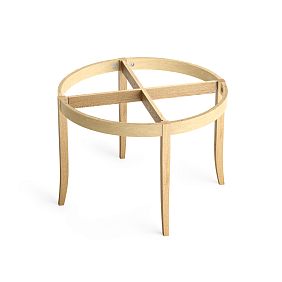
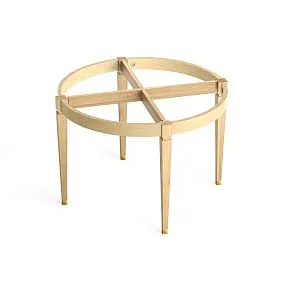
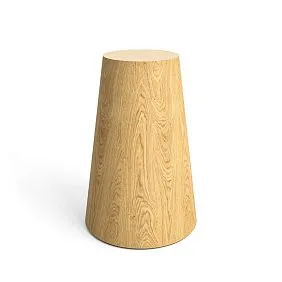
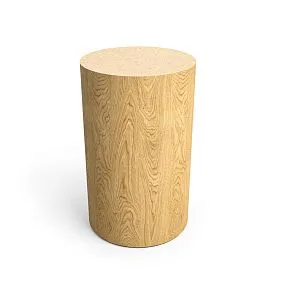
Our factory also produces:


Typology of tables with balusters
Get Consultation
Dining tables: center of family life
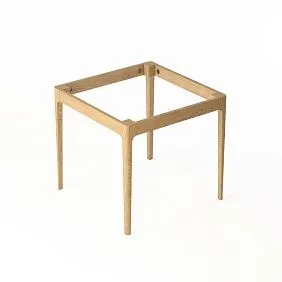
A dining table with balusters is not just a place for eating, it is the center of family life, where close people gather, important conversations take place, and decisions are made. The structural features of such tables imply using balusters as support elements that not only decorate but also provide additional stability to the large tabletop.
The dimensional characteristics of dining tables with balusters vary within wide limits. The standard height is 750-760 millimeters, ensuring comfortable seating for people of different heights. The length can reach 3-4 meters for large families or festive events.
The stylistic solutions for dining tables with balusters cover the entire spectrum from classic to ultra-modern. Classic models are distinguished by rich carved decoration and use of traditional proportions. Modern interpretations lean towards simplicity of forms and purity of lines.
Coffee and side tables: elegance in details
Coffee tables with balusters are miniature works of art, where every detail matters. The scale of elements should correspond to the overall dimensions of the item — balusters for coffee tables usually have a smaller cross-section and more elegant proportions.
The functionality of such tables is often expanded through additional shelves or drawers located between the balusters. This allows creating multi-level compositions, where each tier serves its own purpose.
Mobility is an important feature of coffee tables. The lightweight construction with balusters allows easy movement of furniture according to needs, creating various compositions in the interior.
Work tables: functionality and aesthetics
Work tables with balusters combine functionality and aesthetic appeal. Ergonomic requirements for work furniture imply not only ease of use but also the creation of a comfortable psychological atmosphere conducive to productive work.
Organizing space under the tabletop using balusters allows creating additional storage zones without compromising the overall aesthetics of the piece. Shelves for documents, cable management systems, or decorative elements can be placed between the balusters.
The representativeness of a work table with balusters makes it suitable not only for home offices but also for office spaces, where it is important to create an impression of solidity and good taste.
Wood Science: Choosing Wood for Furniture Balusters
Classic woods: time-tested
Oak remains the unrivaled leader among materials for making furniture balusters. Its density of 650-800 kg/m³ ensures exceptional strength and durability. The expressive oak texture with distinctive growth rings creates a unique visual effect, especially after special treatment.
Ash attracts designers with its light color and contrasting texture. This species has high viscosity, making it ideal for creating thin, elegant balusters of complex shapes. Ash balusters are especially popular in Scandinavian interior design.
Beech represents an optimal combination of quality and affordability. Its uniform structure allows creating balusters with perfectly smooth surfaces, and its ability to take on various stains makes beech a versatile material for any stylistic solution.
Exotic woods: luxury and uniqueness
Wenge is an African wood with a distinctive dark brown color and expressive texture. Wenge balusters give the table a special dignity and are suitable for creating furniture in the art deco or modern minimalism style.
Teak is a classic material for luxury furniture. Its natural resistance to moisture and insects, as well as its noble golden hue, make teak balusters an ideal choice for upscale interiors.
Padauk is one of the most valuable wood species. Its unique texture with hues ranging from purple to black creates unparalleled visual effects. Padauk balusters are true luxury, accessible to few.
Modern materials: innovations in traditional craftsmanship
Glued beams from premium species allow creating balusters of large cross-section without internal stresses typical of solid wood. The laminated glue technology ensures dimensional stability and prevents cracking.
Thermally treated wood has increased stability and resistance to moisture. The thermomodification process alters the wood's structure at the molecular level, imparting new properties.
Composite materials based on wood fibers combine the beauty of natural wood with improved performance characteristics. They are not prone to cracking or deformation, which is especially important for complex decorative forms.
Manufacturing technologies: from craftsmanship to advanced technologies
Traditional turning
Hand turning remains the highest expression of craftsmanship in baluster production. An experienced turner feels the wood, understands its nature, and knows how to reveal and emphasize the material's natural beauty. Each hand-turned baluster is unique and carries the energy of the craftsman.
Traditional tools — chisels, gouges, and gouge bits — require years of experience to master. The craftsman must feel the resistance of the wood, control the depth of cut, and create smooth transitions between forms.
The artistic value of handcrafted work lies in the fact that each item is slightly different from others, giving furniture a unique charm and individuality.
Modern manufacturing technologies
CNC machines have revolutionized the production of furniture balusters. Computer control ensures micron-level precision in processing and perfect repeatability of forms. This is especially important in manufacturing furniture sets, where all elements must be absolutely identical.
3D modeling allows creating complex shapes that cannot be manufactured using traditional methods. Designers can experiment with the boldest ideas, creating balusters of unique shapes.
Laser processing opens new possibilities for creating delicate balusters with fine details. The laser beam allows cutting intricate patterns with precision down to fractions of a millimeter.
Combined technologies
Combining hand and machine processing allows achieving optimal results. Rough processing is done on machines, while finishing is done by hand. This ensures high quality while preserving the individuality of the items.
A modular approach to baluster manufacturing involves creating basic elements on machines, followed by manual finishing of decorative details. This allows combining economic efficiency with artistic value.
Design styles and directions
Classicism: eternal values
The classical style in furniture baluster design is based on principles of harmony, proportion, and symmetry. Antique motifs — fluting, capitals, bases — are adapted to the scale of furniture, creating recognizable but not copying architectural forms.
The restrained decorative nature of the classical style implies the use of proven ornamental motifs. Each decorative element has its place and significance within the overall composition.
The restrained decorative nature of the classical style implies the use of proven ornamental motifs. Each decorative element has its place and significance within the overall composition.
Baroque: luxury and theatricality
Baroque balusters are distinguished by their rich decoration and complex forms. Twisted columns, plant motifs, and cartouches create a sense of luxury and grandeur. Such balusters are suitable for creating representative furniture in classical interiors.
The play of light and shadow is a key element of baroque design. Deep reliefs and complex forms create dramatic contrasts that change depending on the lighting.
Gilding and polychromy are often used to emphasize decorative elements of baroque balusters. Gold accents on dark wood create a sense of preciousness.
Modern: natural forms in furniture
The modern style introduced natural motifs and asymmetrical compositions into furniture balusters. Plant forms — stems, leaves, flowers — are stylized and adapted to meet the functional requirements of furniture.
Smooth lines and organic forms create a sense of movement and life. Each baluster in the modern style is unique, like a work of nature.
New materials of the modern era — colored glass, metal, ceramic — can be combined with wood, creating unique artistic effects.
Modern minimalism
The minimalist approach to baluster design is based on the principle of maximum effect with minimal means. Clean geometric forms — cylinders, prisms, cones — become the basis for creating concise yet expressive compositions.
The absence of decorative excesses is compensated by impeccable surface finish quality and precision of geometric forms. Beauty arises from perfection of proportions and quality of execution.
Functionality becomes the basis of aesthetics. Each element of the baluster must have a functional justification; decoration for decoration's sake is excluded.
Practical aspects of selection and purchase
Defining Needs
Before buy table balustersIt is necessary to clearly define your needs and requirements. The functional purpose of the table determines the requirements for strength and dimensions of the balusters. A dining table requires more substantial elements than a coffee table.
The interior style should harmonize with the baluster design. A classical interior requires corresponding forms and proportions, while a modern one — minimalist geometric solutions.
Budget constraints influence the choice of material and complexity of processing. Simple balusters made of pine will be significantly cheaper than carved items made of exotic woods.
Technical Specifications
The dimensional parameters of balusters must correspond to the table's construction. Height is determined by the distance from the floor to the tabletop, cross-section — by load requirements and aesthetic demands.
Methods of fastening affect the construction of both the baluster and the table as a whole. Threaded connections allow for disassembly, while glued connections ensure structural monolithism.
Material compatibility is important for the longevity of the product. Balusters and tabletop must have similar characteristics regarding temperature and humidity deformation.
Quality characteristics
The moisture content of wood should be stabilized at 8-12% to prevent deformation. Using unseasoned material will lead to problems during use.
The quality of surface finishing determines not only the appearance but also the longevity of the product. The surface must be perfectly smooth, without chips, scratches, or other defects.
Conformity to dimensions is critically important for quality table assembly. Deviations from specified dimensions must not exceed established tolerances.
Installation and mounting: secrets of professionals
Preparation Work
Table design must take into account the characteristics of selected balusters. Placement, quantity, and methods of fastening are determined during the design phase.
Tool preparation includes checking the sharpness of cutting elements, calibrating measuring instruments, and preparing fastening materials.
Marking structural elements is performed with great care. The accuracy of marking determines the quality of all subsequent work.
Assembly Technology
The sequence of operations must be carefully planned. An incorrect sequence may create additional difficulties or make assembly impossible.
Quality control is performed at every stage of assembly. Any deviations from requirements must be identified and corrected immediately.
Final finishing includes sanding joints, applying protective coatings, and final polishing of all elements.
Typical Errors and Their Prevention
Inaccurate marking is the most common cause of problems during assembly. Using high-quality measuring tools and careful checking of dimensions helps avoid errors.
Violation of gluing technology may lead to weakened joints. It is necessary to strictly follow recommendations for the use of adhesive compositions.
Premature loading of the structure before the glue has fully dried may compromise the strength of the joints.
Care and Maintenance
Daily Care
Regular cleaning from dust and dirt should be done with soft materials without using abrasives. Special wood care products help preserve its natural beauty.
Protection against mechanical damage is especially important for carved balusters. Avoid impacts, scratches, and other effects that may compromise the integrity of decorative elements.
Controlling the microclimate in the room helps prevent wood deformation. The optimal air humidity is 45-65%.
Preventive Maintenance
Periodic treatment with protective compositions extends the service life of balusters. Waxes and oils are applied in a thin layer and carefully rubbed in.
Regular inspection of fasteners is required. Loose connections are tightened, worn elements are replaced.
Renovation of finishes may be required every 3-5 years depending on usage intensity.
Economic Aspects
Pricing
The cost of balusters depends on many factors: material, complexity of processing, order volume, manufacturer's reputation. Simple pine balusters may cost from 50-100 rubles each, exclusive carved items from valuable woods — several thousand rubles.
Additional costs include delivery, installation, and finishing. These expenses may amount to 20-30% of the balusters' cost.
Savings from bulk purchases can reach 15-20% with large orders. This is especially relevant for furniture manufacturers.
Long-term effectiveness
Quality balusters are an investment for decades. With proper care, they retain their original appearance and functionality throughout the furniture's lifespan.
Repairability is an important characteristic of quality items. The ability to restore individual elements without replacing the entire structure significantly extends service life.
The antique value of quality furniture with balusters increases over time. Works by renowned masters may become family heirlooms.
Trends in development
Ecological Requirements
FSC certification is becoming a mandatory requirement for responsible manufacturers. Buyers increasingly care about the origin of wood and logging methods.
Water-based non-toxic coatings replace traditional lacquers with organic solvents. This is especially important for furniture used in living spaces.
Waste recycling has become an integral part of the production process. Sawdust and shavings are used to make other products or as fuel.
Technological Innovations
Digital design allows creating precise 3D models of future items and optimizing their structure. Clients can preview the result before production begins.
Robotized production ensures high precision and repeatability of items while reducing cost.
New materials with improved properties expand designers' possibilities and enhance the quality of finished items.
Personalization
Individual projects are becoming increasingly accessible due to technological advancements. Each client can receive a unique item reflecting their personality and preferences.
Interactive design systems allow customers to create baluster designs themselves, choosing shapes, sizes, and decorative elements.
Conclusion
The world of furniture balusters is a remarkable universe where traditional craftsmanship meets modern technologies, where functionality combines with beauty, and mass production does not exclude individuality. Choosing buy table balusters is not just purchasing furniture accessories, but an investment in creating a unique space that will delight you and your loved ones for many years.
Each baluster is a small work of art, created by hand or with high-precision equipment. It carries not only functional load but also an emotional component, making furniture not just interior decor, but part of family history.
The modern market offers boundless opportunities for creativity and self-expression. From simple geometric forms to complex carved compositions — everyone can find a solution matching their taste, budget, and stylistic preferences.
quality furniture balusters for creating a unique interior requires knowledge, experience, and understanding of material science, design, and production technologies. But the result is worth the effort — furniture with balusters becomes not just a functional item, but a central interior element, a source of pride and aesthetic pleasure.
The future of furniture balusters is linked to further technological development, expansion of personalization options, and deeper understanding of the relationship between design and quality of life. Investments in quality materials and professional manufacturing pay off through longevity, beauty, and enjoyment of use.
When choosing a baluster supplier, special attention should be paid to the company's reputation, product quality, and service level. The company STAVROS has proven itself as a leading manufacturer of high-quality solid wood items. Years of experience, use of premium materials and modern technologies, deep understanding of woodworking traditions enable STAVROS to create furniture balusters that fully meet the highest quality standards and exceed even the expectations of the most demanding clients seeking to create unique interiors with character and individuality.