












































































Article Contents:
- Role of brackets in architecture and furniture: from support to decoration
- Constructive function
- Decorative role
- Furniture application
- Wooden brackets - strength of natural structure and artistic carving
- Wood species
- Carving technique
- Finishing and protection
- Polyurethane brackets - lightweight forms, precise geometry, easy installation
- Technological advantages
- Variety of forms
- Installation and painting
- Aesthetics and functionality: how to choose by purpose
- Load-bearing brackets
- Decorative brackets
- Furniture brackets
- Use in interior and facade
- Facade application
- Interior application
- Tips for combining with cornices and moldings
- Stylistic unity
- Proportionality
- Color solution
- Conclusion - material as reflection of style

Bracket - an architectural element embodying the dialectical unity of function and form. It is a cantilever structure projecting from a vertical plane to support horizontal elements - beams, cornices, shelves, balconies. The etymology of the word traces back to the German 'Kronstein' - projecting stone, the French equivalent 'console' emphasizes the decorative role of the element. Over millennia of architectural evolution, the bracket has transformed from a crude stone support to an exquisite work of decorative art, where constructive necessity becomes a pretext for artistic expression.
The history of the bracket demonstrates how a utilitarian detail transforms into a carrier of style, era, and cultural codes. Ancient temples used stone bracket-module units to support cornices, decorating them with carvings of plant motifs. Medieval cathedrals extended bracket- consoles far beyond the plane of walls, supporting massive projecting galleries, balconies, and bay windows. The Renaissance filled brackets with humanist grandeur - atlantes and caryatids, bearing architectural masses on their shoulders. Baroque turned brackets into theatrical sculptures - volutes, cartouches, mascarons, tritons created lavish decoration.
Modern technologies have expanded material and formal possibilities.Wooden bracketspreserve the traditions of artisanal carving, embody the nobility of natural material, create tactile value of mass.Polyurethane bracketsoffer a practical alternative - phenomenal lightness, ideal geometry, moisture resistance, price accessibility. The choice of materials is determined by the project's stylistic approach, operating conditions, functional requirements, and budgetary possibilities.
A correctly chosen bracket becomes an expressive accent of the facade or interior, attracting attention with the sculptural quality of its form and richness of ornamentation. It can be a large-scale element dominating the facade or a delicate detail barely noticeable supporting a shelf. Size, degree of decoration, character of ornamentation - naturalistic or stylized, symmetrical or dynamic - create different perceptions of architecture.



Role of brackets in architecture and furniture: from support to decoration
The bracket occupies a unique place in the architectural language - it is an element where constructive logic becomes the source of aesthetic experience. Visualization of the structure's operation, demonstration of load distribution, revelation of architectural statics through the plasticity of form - these are the tasks of the bracket. Even when there is no real load-bearing function, the bracket creates an illusion of constructive work, visual persuasiveness of the architectural organism.




Constructive function
Historically, brackets performed a critically important load-bearing function. Stone module units of ancient temples indeed supported heavy cornices, distributing the load onto walls. Triangular or trapezoidal shape ensured strength under bending and compression. The bracket's projection was determined by calculation - the greater the cornice overhang, the heavier the bracket required.
Medieval stone brackets supported wooden beams of floors projecting beyond the plane of walls. Projecting galleries of fortress walls, machicolations of defensive structures rested on rows of stone consoles embedded in masonry. Bay windows - projecting volumes of upper floors - rested on massive brackets transferring the load to the walls of lower floors.
Wooden architecture used bracket-braces to support roof overhangs, balconies, verandas. Log or beam elements, inserted into walls at 45-60 degree angles, created a strong triangular structure. Constructive logic determined the form - massive at points of attachment, tapering toward the end for material economy.
Modern architecture with reinforced concrete and steel structures has freed brackets from load-bearing function. Cantilever beams embedded in walls can bear significant loads without visible supports. Brackets have become decorative elements, imitating constructive work, creating visual persuasiveness of architectural form.
Our factory also produces:


Decorative role
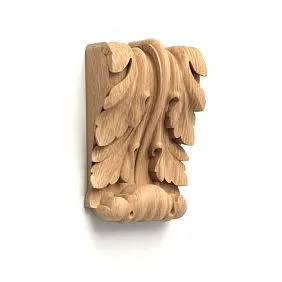
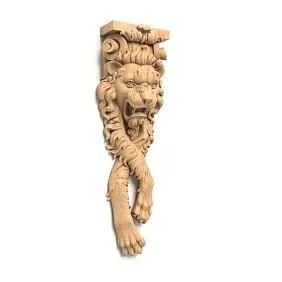
The decorative function of brackets manifested already in antiquity. Stone module units were covered with carving - acanthus leaves, volutes, lion heads transformed utilitarian support into a work of decorative art. Rhythmic placement of identical brackets created a structured frieze organizing the perception of the facade.
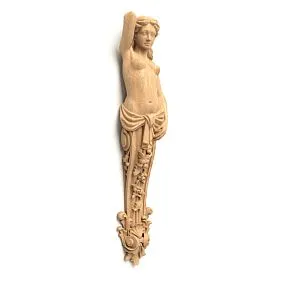
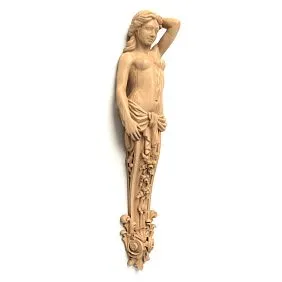
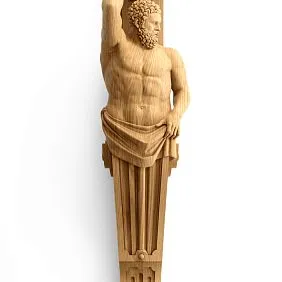
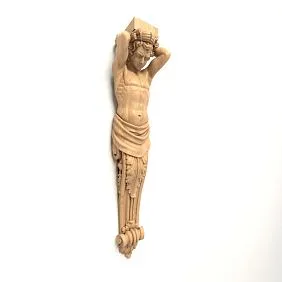
The Renaissance turned brackets into sculptural objects. Atlantes - male figures bearing architectural masses on their shoulders - embodied heroic resistance of man to weight. Caryatids - female column-like figures - created graceful support for balconies and bay windows. Anthropomorphic brackets filled architecture with human presence, animating stone masses.
Baroque reached the peak of bracket decoration. Lavish volutes with acanthus leaves, cartouches with coats of arms and monograms, mascarons - grotesque masks, tritons and nereids - sea deities created theatrical spectacle. Brackets became the main decorative accents of facades, attracting attention with ornamentation richness. Deep relief with dramatic play of light and shadow enhanced plastic expressiveness.
Classicism returned form restraint while preserving decorative role. Brackets reproduced ancient module units with fluting, Ionic volutes, rosettes. Strict symmetry, mathematical precision of proportions, noble simplicity of lines corresponded to rationalist aesthetics. White stone or plaster brackets on colorful facades created classical purity.
Get Consultation
Furniture application
Furniture brackets perform a similar role - support shelves, countertops, creating visual lightness while providing real strength.Decorative bracketsunder shelves transform utilitarian construction into elegant composition. Carved wooden brackets under marble countertops of chests and consoles create classical elegance.
Kitchen islands use brackets to support projecting parts of countertops. Massive wooden or stylized metal brackets create visual solidity, emphasizing kitchen functionality. Bar counters rest on brackets, transforming a simple console into an architectural element.
Bookshelves are decorated with brackets of varying complexity. From simple triangular supports to carved compositions with plant motifs. Open shelves with visible brackets become decorative elements structuring walls. Rhythmic placement of shelves with identical brackets creates an organized composition.
Wooden brackets - strength of natural structure and artistic carving
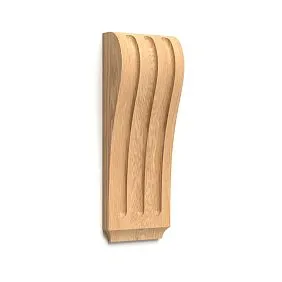
Natural wood retains the status of an elite material for manufacturing brackets.Carved bracketsfrom solid wood embody the traditions of handcraft, nobility of natural material, uniqueness of each piece. Constructive properties of wood - strength under bending, ability to work under compression and tension - make it an ideal material for brackets, genuinely bearing load.
Wood species
Oak remains the undisputed leader for manufacturing load-bearing brackets. Density of 700-800 kg per cubic meter, high bending strength, ability to withstand significant loads make oak an ideal structural material. Oak brackets under floor beams supporting heavy shelves serve for decades without deformation. Expressive coarse-grained texture creates additional decorative value even without carving.
Ash combines high strength with elasticity, which is important for brackets working under bending. Density of 650-700 kilograms per cubic meter ensures sufficient load-bearing capacity. Light-colored wood with a contrasting, expressive grain pattern creates an elegant appearance. Ash brackets are popular in Scandinavian interiors, where light wood is valued.
Larch surpasses all other species in atmospheric resistance and longevity. Natural resins create natural protection against moisture, rot, insects. Larch brackets are ideal for facades, verandas, gazebos - places exposed to atmospheric influences. Density of 600-650 kg ensures strength with relative lightness.
Linden and beech are used for decorative brackets, not bearing significant loads. Softness of linden allows creating delicate carving with detailed ornamentation. Uniform structure of beech ensures clean carving without chips. These species are ideal for furniture brackets, wall decorative elements.
Carving technique
Relief carving creates sculptural brackets of complex three-dimensional forms. The master sequentially removes excess wood, forming volutes, leaves, shaped elements. Each bracket becomes a unique work of art - it is impossible to create two absolutely identical handmade items. Vitality of lines, individuality of execution, energy of handmade creativity imbue wooden brackets with special value.
Relief carving forms ornaments on the bracket surfaces. Acanthus leaves, volutes, rosettes, and plant garlands cover visible surfaces. Relief depth of 10-30 millimeters creates expressive chiaroscuro effects. This technique is less labor-intensive than three-dimensional carving but requires artistic taste and precision.
Carving through the material creates open elements that visually lighten massive brackets. Delicate volutes and interwoven plant motifs transform dense wood into a light, lace-like structure. Carved brackets are especially expressive against a contrasting wall background — creating an effect of floating support.
Modern CNC machines complement hand carving. Rough material removal and forming basic volumes are done mechanically based on a 3D model. Final finishing — detailing, smoothing transitions, and adding liveliness to lines — remains with the master carver. Combined technology optimizes cost while preserving quality.
Finishing and Protection
Staining with dyes emphasizes texture and changes wood color to resemble valuable species. Light linden is stained to resemble walnut or mahogany; beech — to resemble redwood. Gradient staining — darker in recesses, lighter on protrusions — adds additional relief depth to carvings.
Lacquering protects wood from moisture, dirt, and mechanical damage. Marine polyurethane-based lacquers create a strong, flexible film resistant to atmospheric effects. UV filters are mandatory for facade brackets, protecting against destructive ultraviolet rays. Gloss level is chosen according to preference — from matte to mirror finish.
Gilding transforms brackets into luxurious elements of palace interiors. Classical gilding covers carvings with ultra-thin gold leaves. Imitations — gold paints, gold leaf — create visually similar effects at affordable prices. Partial gilding — only protruding elements of carvings — creates an elegant contrast with the base color.
Polyurethane brackets — light forms, precise geometry, easy installation
Modern polyurethane has revolutionized architectural decoration production.Polyurethane bracketsThey combine the aesthetics of classical carving with the practicality of modern materials. Precision casting reproduces any shape with jewel-like accuracy, creating items visually indistinguishable from wooden or plaster analogs.
Technological Advantages
Phenomenal lightness is the key advantage of polyurethane brackets. Density of 200-250 kilograms per cubic meter is 3-4 times lower than wood. A 400-millimeter-high bracket weighs 300-500 grams versus 2-3 kilograms for a wooden analog. Lightness radically simplifies installation — one person can install decor on the entire facade without helpers, a stepladder is sufficient.
Absolute water resistance makes polyurethanewall bracketsideal for humid conditions. Water absorption coefficient less than 1 percent eliminates swelling and deformation. The material does not fear direct contact with water and never rots. Facade brackets in coastal regions with heavy rainfall, in bathrooms and pools, serve for decades without changes.
Temperature stability allows using polyurethane in extreme conditions. The material retains its properties from minus 50 to plus 80 degrees Celsius without deformation. Severe northern winters, hot southern summers, sharp daily temperature fluctuations of continental climate — polyurethane withstands any test.
Biological inertness completely excludes damage from fungi, mold, insects. Polyurethane is not a nutrient medium for microorganisms and does not attract wood-boring insects. No antiseptic treatment is required, nor periodic renewal of protective coatings. Service life of 30-50 years without loss of quality.
Variety of Forms
Classic brackets reproduce historical styles. Antique modillions with fluting and rosettes. Renaissance brackets with volutes and acanthus leaves. Baroque consoles with lavish garlands, putti, and maskwork. Classicist strict forms with Ionic volutes and laurel wreaths. Each style is represented by dozens of variants of different sizes and ornamentation levels.
Modern designer brackets offer avant-garde forms. Abstract geometric compositions, organic flowing lines, unexpected combinations of traditional and innovative motifs. Minimalist brackets with simple forms and no ornamentation for modern interiors. Casting technology allows realizing any creative concept.
Sizes vary from compact 150-200 millimeters for furniture to monumental 600-800 millimeters for facades. Projection — distance from the wall to the bracket edge — determines the load-bearing capacity of the decorative element. Polyurethane brackets do not bear real loads, but visual proportionality requires matching projection and size of the supported element.
Installation and Painting
Installation using special polyurethane adhesive or liquid nails takes minutes. Adhesive is applied to the back of the bracket, the element is pressed against the wall and held for 30-60 seconds. For added security of large brackets, additional fixation with self-tapping screws through the body at points of maximum thickness is used. Screw heads are recessed and masked with putty.
Painting does not require priming. Acrylic paints are applied directly onto polyurethane in two layers. Traditional white color is universal for classic facades. Painting to match wall color makes brackets barely noticeable as relief. Contrasting colors turn brackets into expressive accents.
Patination creates an antique effect. Base light color is covered with dark paint that wears off from protrusions. Recesses remain dark, protrusions lighten — imitating aged patina. Imitative gilding is performed using gold paints on protruding ornamental elements.
Aesthetics and Functionality: How to Choose by Purpose
Bracket selection is determined by the balance of aesthetic preferences and functional requirements. Actual load-bearing capacity, operating conditions, project style, budgetary possibilities — factors influencing the decision.
Load-Bearing Brackets
Real support for heavy elements requires wooden brackets from strong species. Oak or ash brackets for heavy shelves with books, for natural stone countertops. Section calculation is performed based on load — minimum 50x100 millimeters for a 1000-millimeter-long shelf with 50-kilogram load.
Mounting of load-bearing brackets is performed using through bolts through the wall or strong anchors in brick, concrete. Mounting points are placed at the top of the bracket, where maximum loads act. The number of mounting points is proportional to the load - minimum two for light shelves, four for heavy countertops.
Decorative brackets
Imitation of structural function without real load-bearing capacity - the task of most modern brackets. Polyurethane elements under eaves, under shelves with minimal load, on facades as decorative accents. Visual convincingness is achieved through proportionality - the bracket should appear capable of supporting the shown load.
Placement of decorative brackets follows compositional laws. Symmetrical placement of bracket pairs under beams and eaves. Rhythmic placement of identical elements creates a structured frieze. Accent placement of large brackets at key points - above entrances, at the corners of bay windows, under balconies.
Furniture brackets
Kitchen islands use stylized brackets under protruding countertop sections. Visual support creates a sense of solidity while the actual load-bearing function is performed by hidden metal structures. Wooden brackets are painted to match furniture tone, creating visual unity.
Open shelves are decorated with brackets that transform utilitarian structures into architectural elements. Carved wooden brackets for classic interiors, simple metal or painted polyurethane for modern styles. Bracket size is proportional to shelf depth - for a 300 mm deep shelf, optimal bracket height is 200-250 mm.
Use in interior and facade
Bracket versatility is demonstrated by their wide range of applications - from facade decoration to furniture details.
Facade application
Eaves are supported by rows of brackets creating a rhythmic facade structure. Placement spacing of 600-1000 mm ensures visual rhythm without excessive density. Large brackets 400-600 mm high correspond to the scale of multi-story buildings. Ornamentation repeats motifs of other facade decorative elements - cornices, moldings, friezes.
Balconies are decorated with brackets under balcony slabs, creating an illusion of support. Actual load-bearing function is performed by reinforced concrete slabs embedded in walls; brackets are decorative. Placement at balcony corners and at equal intervals along the front face. Bracket size is proportional to balcony overhang - for a 1000 mm overhang, optimal bracket height is 500-700 mm.
Entrance groups are accentuated by large brackets under canopies. A pair of massive carved brackets on either side of the entrance creates grandeur, emphasizing the portal's significance. Ornamentation may include heraldic elements, owner monograms, allegorical imagery.
Interior application
Fireplaces are traditionally decorated with brackets under mantel shelves. A pair of carved wooden brackets provides visual support for a heavy marble or wooden mantel. Ornamentation repeats motifs of the fireplace portal. Bracket size is proportional to shelf depth - for a 400 mm deep shelf, optimal bracket height is 300-350 mm.
Ceiling beams are supported by decorative brackets creating an illusion of structural function. Actual load-bearing function is not required - beams are decorative or rest on walls. Brackets enhance the visual convincingness of the architectural solution. Placement at beam-to-wall support points, size proportional to beam cross-section.
Arches and doorways are framed by impost brackets creating vertical division. A pair of brackets at 2/3 height visually divides the opening into two zones. This solution is characteristic of classical architecture, where brackets imitate pilaster capitals.
Tips for combining with eaves and moldings
Harmonious facade or interior composition requires stylistic unity of all decorative elements. Brackets, eaves, moldings, and cornices must form a cohesive system.
Stylistic unity
Classical orders require bracket correspondence to the order. Doric order uses simple bracket modules with fluting without excessive decoration. Ionic order allows volutes and vegetal motifs. Corinthian order implies rich ornamentation with acanthus leaves. Mixing elements of different orders creates stylistic disharmony.
Baroque interiors require lavish brackets with garlands, putti, and maskwork. Restrained classical brackets in a baroque interior appear out of place. Conversely, baroque ornamentation destroys the strictness of classicism. Unity of stylistic language of all elements is required.
Proportionality
Bracket size corresponds to eave scale. A massive eave 200-300 mm wide requires large brackets 400-600 mm high. A narrow 80-100 mm eave harmonizes with compact 150-250 mm brackets. Disproportion - small brackets under massive eaves or vice versa - creates visual instability.
Bracket spacing is determined by their size and ornamentation character. Large, richly ornamented brackets are placed with larger intervals 800-1200 mm - each is perceived as an independent accent. Small, simple brackets are placed more frequently 400-600 mm, creating a rhythmic frieze.
Color solution
Uniform coloring of brackets and eaves creates visual unity. Traditional white color for classical facades and interiors. Painting to match wall color makes decoration barely noticeable as relief. This solution suits modern minimalist spaces where excessive ornamentation is inappropriate.
Contrasting coloring accentuates decorative elements. Dark brackets on light facades create a graphic effect, structuring the plane. Gilding of brackets against white eaves adds luxury, emphasizing building status. It is important to maintain moderation - excessive gilding turns decoration into kitsch.
Conclusion - material as reflection of style
A bracket embodies architectural philosophy - transforming necessity into beauty, construction into art, function into form. This element demonstrates how a utilitarian detail becomes a carrier of style, cultural codes, and artistic ideas. From rough stone support to refined carved sculpture - the evolution of the bracket reflects the evolution of architectural thinking.
Wooden bracketsFor connoisseurs of tradition, handcrafted artistry, and natural beauty. The solidity of solid wood allows for truly load-bearing elements. The unique texture makes each bracket individual. The possibility of carving any complexity opens up limitless creative horizons. Wooden brackets are ideal for historical buildings, classical interiors, and luxury projects.
Polyurethane bracketsA practical solution for a wide range of tasks. Remarkable lightness simplifies installation. Moisture resistance allows use in any conditions. Affordable price makes decoration mass-market. Ideal geometry corresponds to classical ideals. Polyurethane brackets are optimal for modern buildings, budget projects, and facades in humid climates.
STAVROS offers an extensive range of brackets made from natural wood and polyurethane. Hand-carved wooden elements based on traditional and original designs. European-quality polyurethane systems with detailed ornamentation. Professional consultations will help select a solution that considers the project’s style, usage conditions, and budgetary possibilities.
Create architecture where structure becomes art, where every detail is thoughtfully designed and perfected, where function and form achieve harmony. Transform necessity into beauty, utility into aesthetics, support into a work of decorative art. Choose brackets — choose the language in which architecture speaks. Choose STAVROS — choose quality proven over time, traditions embodied in modern materials, beauty accessible to all.
Get Consultation
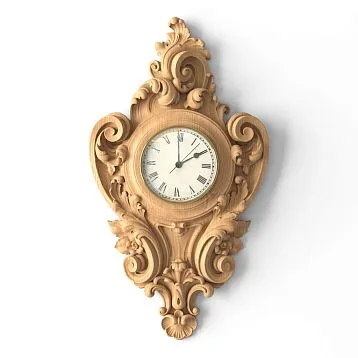
Versailles CH-001 Clock
from 204.70 $

Relief Decoration NPU-237
from 24.64 $

● Universality. The wooden trim K-017 is suitable for any style and room, whether it's a living room, bedroom, office, kitchen, bathroom, or hallway. The wooden trim K-017 can be used for various purposes and tasks, such as framing, cladding, decorating, or zoning. The wooden trim K-017 easily complements other decorative elements, creating a harmonious and cohesive look.
from 22.73 $

Round Wooden Baluster L-118
from 43.05 $



