












































































Article Contents:
- Origins and traditions of wooden art
- Applications of wooden patterns
- 1. Inlays and decorative panels
- 2. Handles and hardware
- 3. Rosettes and medallions
- 1. Hand carving
- 2. Machine carving and laser engraving
- 3. Inlay
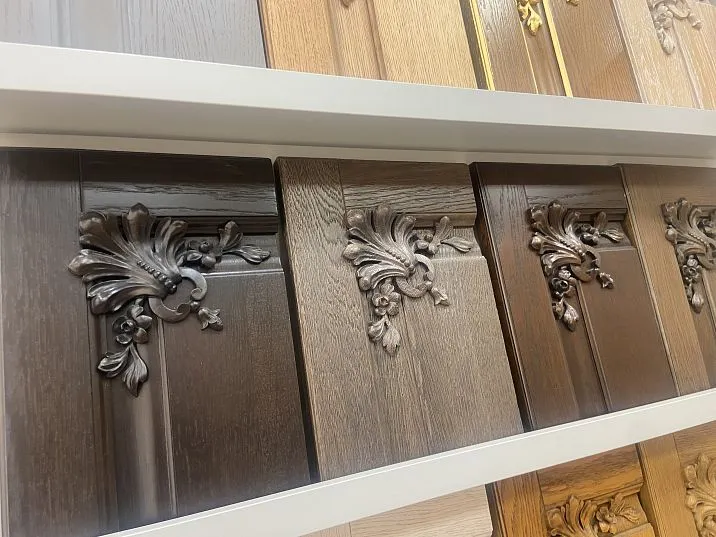
Wood has always been valued for its natural beauty, strength, and versatility. Its texture, tones, and ability to be artistically shaped allow for the creation of true masterpieces. A beautiful wooden pattern is not just a decorative element, but the result of meticulous craftsmanship, where the artisan infuses every detail with soul and love for the craft. In this article, we will discuss how exquisite wooden patterns are created, their applications, and why they continue to remain popular for centuries.


Origins and traditions of wooden art
The art of wood carving has deep historical roots. Since ancient times, people have adorned their homes with carved elements reflecting cultural traditions and religious motifs. Different regions of the world developed their own carving styles: some favored floral ornaments, others geometric patterns, while in other places — narrative compositions.
Over time, traditions enriched themselves through mutual cultural influences, and today a beautiful wooden pattern may combine several styles simultaneously. Yet one thing remains common — uniqueness and irreplicable aesthetics that wood imparts to every item.




Applications of wooden patterns
Modern interior design actively uses wood in various forms. Carved elements are not only used in classic settings but also in contemporary, minimalist interiors, where they become a striking accent and highlight the owner's taste.
Our factory also produces:


1. Inlays and decorative panels
Carved inlays help quickly and effortlessly transform furniture or walls. They can be used to decorate cabinets, doors, chests, and other interior items. View the variety of options onthe inlays page. Such elements add depth, volume, and luxury to surfaces, and can be crafted in both classic floral patterns or more abstract styles.
Get Consultation
2. Handles and hardware
Often, small details become the very touch that completes the look. Wooden handles for cabinets, doors, and bedside tables can be adorned with delicate carving and unique patterns. Choose the right model onthe handles page. This solution is especially popular in vintage and classic interiors, as well as when creating a cozy atmosphere in country homes.
3. Rosettes and medallions
Decorative rosettes, or medallions, are elements traditionally used in decorating ceilings, walls, or furniture. They can serve as a base for hanging chandeliers or other lighting fixtures, or as standalone ornaments. The variety of shapes and styles can be seen onthe rosettes pageSuch details are often crafted as an elegant wooden pattern, highlighting the interior's sophistication and creating a handcrafted effect.
Advantages of wooden patterns in interior design
- Natural beauty. The texture and tones of wood create a warm and cozy atmosphere.
- Ecological safety. Wood is a renewable resource, and when properly processed, it is safe for health.
- Uniqueness. Each pattern and wood texture is unique, making every item exclusive.
- Durability and longevity. With proper care, wooden elements last for decades, retaining their original appeal.
Techniques for creating beautiful wooden patterns
1. Hand-carving
A classic method where the craftsman manually carves patterns into wooden surfaces. There are several types of carving:
● Relief — the pattern protrudes above the surface.
● Through-cut — the design is cut completely through, forming holes.
● Blind — carving occurs inward without holes.
Hand-carving is a complex and meticulous process requiring great experience and artistic sense from the craftsman.
2. Machine carving and laser engraving
With technological advancements, methods have become available to create complex patterns faster and more accurately. Laser engraving allows detailed designs with high precision, while CNC routers can carve three-dimensional elements according to a programmed design. This is especially convenient for producing large batches of decorative elements, where uniformity is important.
3. Inlay
Inlay is a technique of decorating wooden surfaces with inserts made of other materials: metal, stone, bone, or contrasting wood. This method allows creating bright, contrasting compositions and intricate wooden patterns.
Harmony with wooden elements
To enhance the decorative effect, craftsmen often combine wood with other materials:
● Glass. Carved wooden frames or panels with glass inserts look elegant and airy.
● Metal. Inserts made of brass, copper, or steel give the item a modern look and emphasize the contrast between the warmth of wood and the cool sheen of metal.
● Fabric. Upholstery or wall drapery can complement patterns, creating a harmonious ensemble.
Care and longevity
A beautiful wooden pattern will delight the eye for a long time if it receives proper care:
- Regular cleaning. Wipe surfaces with a soft cloth to remove dust and dirt.
- Use of special products. Oils, waxes, and wood polishes preserve the sheen and protect the surface from moisture and mechanical damage.
- Humidity control. Wood is sensitive to changes in humidity and temperature. Avoid placing items near heating appliances and prevent excessive moisture.
- Restoration and renewal of finish. If the pattern has faded or the finish is damaged, timely restoration will restore its original beauty.
How to choose the perfect pattern
- Interior style. It is important that carved elements harmoniously fit into the overall design. Classic interiors prefer floral and geometric motifs, while modern minimalism favors abstract forms and clean lines.
- Wood species. Each species has its own texture, density, and color. For detailed carving, wood with a uniform structure, such as linden or birch, is suitable. For more expressive patterns, oak, beech, walnut, or exotic species can be used.
- Sizes and proportions. If referring to large decorative panels or inserts, they must match the dimensions of furniture or walls. Too small patterns may disappear in large spaces, while too large ones may overwhelm them.
Ideas for inspiration
Decorative panels in the living room. Carved panels on walls or ceilings create an effect of luxury and depth.
Door and cabinet decoration. Even simple furniture can be transformed with carved inlays andfurniture handles.
Fireplace area decoration. A carved wooden fireplace surround highlights the status and taste of the owners.
Hand-carved patterns on mirror frames make them works of art.
Conclusion
A beautiful wooden pattern is not just a decorative detail, but a true symbol of craftsmanship, traditions, and natural harmony. In any interior, such elements attract attention and evoke admiration, creating an atmosphere of coziness and elegance. Whether you choose ready-madeapplique, Furniture Handles orOutlets decor items, or decide to consult a craftsman for a custom project — the result will speak for itself. Wooden patterns bring warmth, aesthetics, and a touch of living nature into the space, which are so cherished in modern life.





