Article Contents:
- Aesthetic revolution of modern housing
- Technological evolution of materials
- Polyurethane: the material of the future serving beauty
- Innovative production solutions
- Ceiling solutions: creating celestial architecture
- Wall decor: the art of creating accents
- Facade solutions: the exterior beauty of the house
- Installation mastery: secrets of professionals
- Color solutions: playing with color and light
- Style directions and their interpretation
- Neoclassicism: a modern interpretation of timeless values
- Art Deco: luxury and geometry
- Modern: natural plasticity and organic forms
- Modern eclecticism: freedom of creativity
- Practical aspects of selection and application
- Lighting as a means of expressiveness
- Maintenance and servicing: preserving beauty
- Economic aspects and long-term benefits
- Trends and innovations
- Russian traditions of wooden architecture
- International Experience and Trends
- Professional education and craftsmanship
- Individual Approach and Personalization
- Psychology of perception and emotional impact
- The future of molding art
In an era of rapid technological changes and urbanization, when standard solutions fill our homes, elements capable of transforming an ordinary dwelling into a work of art become especially valuable. Beautiful moldings — this is not just a decorative solution, it is a philosophy of creating space where every detail is imbued with deep meaning and refined aesthetics. The modern world demands constant movement from us, but it is in the home environment that we seek peace, harmony, and beauty that quality molding can provide.
Imagine a room where ceilings are adorned with exquisite ornaments, walls framed by elegant moldings, and every corner thoughtfully detailed down to the smallest elements. Such a space is not merely functional — it lives, breathes, and creates a unique atmosphere in which a person feels protected from external hustle. molding in interiortransforming the home into a true oasis of beauty and tranquility.


Aesthetic revolution of modern housing
Modern Decorative stucco is experiencing a true rebirth, but now on a qualitatively new level. If in the past such decorative elements were accessible only to the elite, today they have become a tool for democratizing beauty. Technological breakthroughs in materials science have enabled the creation of products that combine classical aesthetics with modern practicality.
The secret to the popularity of modern molding lies not only in its external attractiveness but also in its remarkable ability to transform the perception of space. Properly selected elements can visually increase ceiling height, expand a room, or, conversely, create a more intimate, cozy atmosphere. This is a kind of magic of proportions that works on a subconscious level, forming in a person a sense of comfort and security.
The psychological impact of molding decor cannot be underestimated. Soft curves and smooth lines soothe the nervous system, clear geometric forms structure space and thought, while complex ornaments stimulate creative perception. This is confirmed by numerous studies in neuroaesthetics — the science studying the impact of beauty on the human brain.




Technological evolution of materials
Our factory also produces:


Polyurethane: the material of the future serving beauty
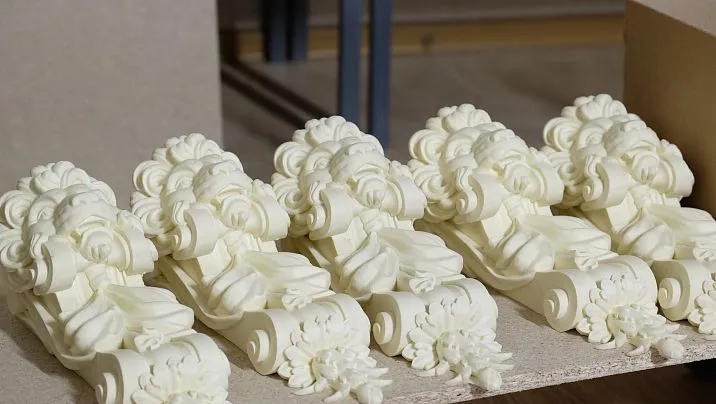
polyurethane moldings has brought about a true revolution in the world of decorative art. This unique material combines all the best qualities: the lightness of polystyrene, the durability of natural stone, and plasticity that allows recreating the most complex artistic forms. The water resistance of polyurethane opens up limitless possibilities for its application in any climatic conditions and in rooms with high humidity.
The technological process of producing polyurethane items is based on precise control of chemical reactions, allowing for ideal repeatability of elements while maintaining the highest surface quality. Each detail undergoes a multi-stage quality control system, ensuring flawless geometry and absence of defects.
The ecological safety of modern polyurethane makes it an ideal choice for residential spaces, including children's rooms and bedrooms. The material does not emit harmful substances, does not absorb odors, and is easily cleaned with household cleaners. This is especially important in today's world, where ecological and health concerns are paramount.
Get Consultation
Innovative production solutions
Modern production lines allow for the creation of items with stunning detail, where every swirl of ornament and each leaf is crafted with jewel-like precision. Three-dimensional modeling and digital technologies enable the realization of even the boldest design fantasies in polyurethane, creating unique works of decorative art.
The color solution system for polyurethane items has also undergone significant changes. Modern dyes penetrate deeply into the material structure, ensuring even coloring and colorfastness for many years. This opens up unlimited possibilities for interior color design.
Ceiling solutions: creating celestial architecture
Ceiling molding Ceiling molding is a special direction in decorative art, requiring a deep understanding of architectural proportions and compositional principles. The ceiling is the fifth wall of a room, and its proper decoration can dramatically alter the perception of the entire space.
Cornices play the role of a connecting element between vertical and horizontal planes, creating a smooth transition and visually unifying the interior into a single whole. A properly selected cornice profile can optically increase the height of a room, create an illusion of additional space, or, conversely, make overly high ceilings more cozy and proportionate.
Ceiling rose fixtures are miniature works of art that not only decorate the mounting points of lighting fixtures but also become independent decorative elements. From simple geometric shapes to intricate floral ornaments — each rose fixture carries a specific mood and style, creating a compositional focal point in the room.
Coffered ceilings with molded decoration create a sense of museum grandeur and impart a special significance to the room. Such a solution is especially effective in reception areas, where it is important to emphasize status and create an atmosphere for important meetings and negotiations.
Wall decoration: the art of creating accents
Moldings Wall moldings are a powerful tool for zoning and accenting, allowing the creation of unique "picture frames" on monotonous surfaces. Within such frames, one can place wallpapers with special patterns, decorative plaster, works of art, or simply contrasting color solutions. This technique adds depth and structure to flat surfaces, creating visual interest and dynamism.
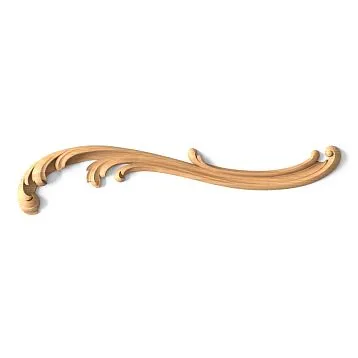
decorative elements Molded decorations in various forms and sizes allow for the creation of unique compositions on walls, transforming them into true works of art. Appliqués, panels, and reliefs — each element can tell its own story and create a specific mood in the interior.
Molded panel decorations create an effect of expensive finishing and give the room an aristocratic appearance. They can imitate classical wooden panels but surpass them in durability, ease of maintenance, and moisture resistance. The height of the panels affects the perception of space: low panels make the room more cozy, while high panels create a more solemn atmosphere.
Facade solutions: the external beauty of the house
Facade molding Facade molding is a special direction of architectural decoration, where aesthetic functions are combined with practical tasks of protecting the building from adverse environmental influences. The exterior appearance of a house is its business card, forming the first impression and reflecting the taste of the owner.
Facade cornices not only decorate the building but also perform an important protective function, diverting rainwater from walls and preventing their premature deterioration. Modern polyurethane cornices possess all the necessary characteristics for long-term operation in harsh climatic conditions.
Pilasters and half-columns on the facade create an impression of monumentality and classical beauty, transforming an ordinary house into an architectural masterpiece. These elements are especially effective when combined with other decorative details — window sills, sills, balustrades.
Corner elements and rusts allow highlighting the architectural logic of the building, emphasizing its constructive features and creating a rhythmic structure of the facade. Properly placed accents can visually alter the proportions of the building, making it appear more slender or, conversely, more substantial.
Craftsmanship of installation: secrets of professionals
Quality installation of molding is an art requiring not only technical skills but also a deep understanding of architectural principles and artistic sensitivity. Proper surface preparation is the foundation of the longevity and beauty of decorative elements. Walls and ceilings must be perfectly flat, clean, and dry, as any irregularities or contamination may lead to improper fitting of the molding and subsequent detachment.
Marking is the foundation of quality installation. Professional craftsmen use laser levels, special templates, and measuring tools to ensure ideal geometric composition. Special attention is paid to corner joints, where even the slightest inaccuracy becomes noticeable and spoils the overall impression of the work.
The choice of adhesive depends on the molding material, surface type, and operating conditions. For interior work, special mounting adhesives are used, ensuring strong bonding without the risk of yellow stains or deformation of elements. When working with heavy elements, additional mechanical fasteners — self-tapping screws, anchors, and dowels — are applied.
Final finishing includes careful sealing of joints, sanding of irregularities, and surface preparation for painting. Properly installed molding, after final finishing, should appear as a single cohesive unit, without visible seams or transitions. This requires high craftsmanship and attention to detail.
Color solutions: play of color and light
The color solution of molding significantly affects the perception of the interior and the creation of a specific mood. The classic white finish remains the most popular due to its versatility and ability to visually enlarge space. White color creates a sense of freshness and cleanliness, suits any stylistic solution, and serves as an ideal background for other interior elements.
Toning molding to match wall colors creates a bas-relief effect, where decorative elements are perceived as a three-dimensional pattern on the surface. This technique is especially effective under side lighting, where the interplay of light and shadow highlights every detail of the ornament and creates a picturesque scene of changing shadows.
Contrasting color solutions make molding the main accent of the interior, drawing maximum attention to it. Dark molding on light walls creates a dramatic effect and gives the room a special expressiveness. Such a solution requires caution and good sense of proportion, as it may visually reduce the space.
Metallic finishes — gold, silver, bronze — give molding a luxurious and solemn appearance. Such solutions are especially appropriate for reception interiors, where it is important to emphasize status and create an atmosphere of festivity. Modern technologies allow creating various metallic effects — from bright gloss to subdued matte sheen.
Patination is a technique of artificial aging that adds molding a noble antiquity and creates an impression of expensive antique decoration. Various types of patina — from light traces of time to deep aging — allow achieving diverse artistic effects.
Stylistic Directions and Their Interpretation
Neoclassicism: Modern Interpretation of Eternal Values
The neoclassical style in modern interpretation requires strict adherence to proportions and canons of beauty, but allows for a certain freedom in interpreting traditional forms. Beautiful moldings In neoclassical interiors, it is characterized by restraint, elegance, and flawless execution. Key elements include cornices with a classical profile, rosettes with antique motifs, moldings that create a clear spatial structure.
Ornaments draw inspiration from ancient art: meanders, palmettes, acanthus, laurel wreaths, but are interpreted in a modern context, taking into account current trends. Each element has its place and significance in the overall composition, creating a harmonious and balanced space.
Art Deco: luxury and geometry
Art Deco style in stucco decoration is characterized by bold geometric forms, richness of materials, and striking contrasts. Here, clear lines, stepped forms, sun motifs, and stylized floral ornaments are welcomed. Stucco in the Art Deco style should make a strong impression and demonstrate the owner's wealth.
Color solutions include rich tones — deep black, noble gold, rich blue, emerald green. The combination of contrasting colors creates dynamic and memorable compositions that become true works of decorative art.
Modern: Natural Plasticity and Organic Forms
Stucco decoration in the modern style is characterized by the predominance of natural motifs: flowers, leaves, branches, figures of animals and women. Lines are smooth and asymmetrical, creating a sense of movement and life. Special attention is paid to transitions and connections between elements, which should appear natural and organic.
The color palette of modernism includes muted, natural tones — ochre, terracotta, green and brown shades. Such colors create a calm, soothing atmosphere and harmoniously combine with natural materials — wood, stone, metal.
Modern eclecticism: freedom of creativity
The modern approach to stucco decoration allows for mixing of styles and eras, creating unique compositions that reflect the owner's individuality. Here, classical rosettes can be combined with modern geometric forms, traditional ornaments with abstract elements.
The main rule of modern eclecticism — sense of measure and artistic taste. It is important to find a unifying idea that will link diverse elements into a harmonious whole. This may be a common color palette, repeating motifs, or a unified scale of elements.
Practical aspects of selection and application
When choosing stucco decoration, it is necessary to take into account many factors that affect the final result. The size of the room dictates the scale of decorative elements: in small rooms, large stucco will look inappropriate and visually reduce the space, while in spacious halls, small details will be lost and fail to create the desired effect.
The height of the ceiling also plays an important role in choosing the type and size of stucco decoration. In rooms with low ceilings, it is advisable to avoid massive cornices and large rosettes, which visually "press" on the space. It is better to use thin, elegant profiles that create an illusion of additional height.
The functional purpose of the room affects the choice of material and type of decoration. For humid rooms — bathrooms, kitchens, pools — polyurethane items are preferable, resistant to moisture and temperature fluctuations. For living rooms and bedrooms, ecological safety and comfort are more important, so any materials can be used here.
The interior style determines the character and complexity of stucco decoration. Minimalist spaces require restrained, concise solutions, while classical interiors allow for ornamental richness and complex compositions.
Lighting as a Means of Expression
Properly organized lighting plays a key role in perceiving stucco decoration, transforming static elements into living, dynamic compositions. Proper backlighting highlights relief, creates play of light and shadow, making the decoration volumetric and expressive.
Hidden backlighting of cornices creates an effect of a "floating" ceiling and visually increases the height of the room. LED strips built into special grooves of cornices provide soft, diffused light that evenly illuminates the ceiling and creates a sense of lightness.
Targeted lighting of individual elements — rosettes, panels, bas-reliefs — turns them into artistic accents of the interior. Small spotlights or wall-mounted fixtures directed at decorative elements create an effective chiaroscuro effect and draw attention to the most significant details.
Color lighting allows creating different moods and atmospheres depending on the time of day or occasion. Modern RGB systems allow changing the color of lighting with one button press, transforming a strict classical interior into a romantic ambiance or a festive hall.
Maintenance and care: preserving beauty
Proper care of stucco decoration ensures its beauty and functionality for many years. Polyurethane items require no complex maintenance, but following simple rules will help extend their service life.
Regular dry cleaning prevents dust accumulation in ornament recesses. For this purpose, it is best to use soft brushes or vacuum cleaners with brush attachments. Special attention should be paid to hard-to-reach areas — inner corners, deep reliefs, element joints.
Periodic inspection of fasteners and joints will help promptly identify and eliminate possible problems. Upon detecting peeling or cracks, it is necessary to immediately contact specialists for repair work.
Periodic inspection of connections and joints will help to promptly identify and resolve potential issues. If delamination or cracks are detected, immediate consultation with specialists for repair work is required.
Economic Aspects and Long-Term Benefits
Investments in quality stucco decoration are not just spending money on beauty, but also a wise investment in real estate. Properly executed stucco significantly increases the status and market value of property, making it more attractive to potential buyers or tenants.
The durability of quality polyurethane items makes them economically advantageous in the long term. Unlike many other types of decoration that require periodic renewal or replacement, good stucco retains its appearance for decades without requiring significant maintenance costs.
The possibility of restoring and repairing individual elements allows maintaining the decoration in ideal condition without full replacement, which is also an important economic advantage. Minor damage can be easily repaired locally, and if necessary, only damaged elements can be replaced.
The energy-saving effect of some types of stucco decoration should also be considered when calculating economic efficiency. Cornices and moldings can conceal insulation and soundproofing systems, helping to reduce heating and air conditioning costs.
Trends in development and innovation
Modern technologies open new horizons for the development of stucco art. 3D printing allows creating elements of unprecedented complexity and detail, embodying the most daring design fantasies in material. This paves the way for mass production of unique, individual compositions.
Integration with "smart home" systems makes stucco not only beautiful but also functional. LED strips with remote control, motion and presence sensors, climate control systems can be embedded into cornices. This combination of classical beauty with modern technologies creates interiors of the future.
Nanotechnologies in polymer material production allow creating coatings with special properties — self-cleaning, antibacterial, color-changing depending on temperature or lighting. These innovations open new possibilities for creating interactive interiors.
Ecological requirements stimulate the development of biodegradable materials and recycling technologies. Reuse of polymers and creation of closed production cycles become important factors when choosing decorative materials.
Regional characteristics and cultural traditions
Different regions of Russia have their unique traditions in stucco decoration, shaped by historical, climatic, and cultural characteristics. The Petersburg school is distinguished by strict forms and an academic approach, reflecting the imperial traditions of the northern capital. The Moscow school is characterized by a wide variety of styles and rich ornamentation.
Climate conditions of different regions require adaptation of materials and installation technologies. In northern areas, special attention is paid to frost resistance and resistance to sharp temperature fluctuations. In southern regions, protection against ultraviolet radiation and high temperatures is more important.
National traditions and ornaments find expression in modern stucco decoration, creating unique regional styles. These may include folk art motifs, traditional patterns, historical symbols, adapted to modern technologies and materials.
International experience and trends
Studying global experience in stucco decoration enriches the domestic school with new ideas and technologies. European traditions of classicism and baroque serve as a source of inspiration for creating modern collections. Asian motifs introduce exoticism and philosophy of harmony with nature.
The American approach to mass production of decorative elements demonstrates the possibilities of industrialization without loss of quality. Scandinavian minimalism shows how simple forms can create maximum aesthetic effect.
International exhibitions and competitions facilitate experience exchange and stimulate innovation development. Participation of Russian manufacturers in global forums increases competitiveness of domestic products and facilitates access to international markets.
Professional education and craftsmanship
The art of creating and installing stucco decoration requires deep knowledge and years of experience. Modern educational programs combine study of traditional techniques with mastering new technologies and materials. Students learn not only practical skills but also art history, architectural styles, and principles of composition.
The system of continuous professional development includes regular seminars, master classes, internships at leading industry enterprises. This ensures constant improvement of specialists' qualifications and implementation of advanced technologies in production.
Certification and standardization of stucco decoration professions contribute to improving work quality and protecting consumer interests. Professional associations develop quality standards and ethical codes ensuring high service levels.
Individual approach and personalization
Modern consumers value individuality and uniqueness, therefore Polyurethane Decor it provides limitless opportunities for creating personalized interiors. From family crests and monograms to original ornaments — each element can tell the story of its owners and reflect their inner world.
Modern technologies allow to realize any fantasies in stucco: from precise reproduction of historical samples to creation of completely new, avant-garde forms. It is important to maintain a sense of proportion and artistic taste, avoiding overloading space with excessive details.
Collaboration between designers, architects, and stucco decoration manufacturers allows creating comprehensive solutions where each element is organically integrated into the overall project concept. Such an approach ensures maximum harmony and aesthetic perfection of the final result.
Psychology of perception and emotional impact
Stucco decoration exerts a deep psychological impact on people, forming certain emotional states and moods. Symmetrical, proportional forms create a sense of stability and confidence, while asymmetrical compositions stimulate creative thinking and imagination.
Surface texture also plays an important role in emotional perception. Smooth, polished surfaces are associated with modernity and technology, while relief, textured surfaces create a sense of warmth and coziness.
Color psychology applied to stucco decoration requires special attention. Warm tones — gold, ochre, terracotta — create a sense of comfort and security. Cool tones — silver, blueish, greenish — promote concentration and mental activity.
Correct use of psychological features of stucco decoration perception allows creating interiors that are not only beautiful but also functional in terms of human comfort and well-being.
The future of stucco art
Development of digital technologies and artificial intelligence opens new opportunities for stucco art. Machine learning algorithms can analyze user preferences and automatically generate personalized designs, taking into account individual needs and tastes.
Virtual and augmented reality allow clients to see the result even before work begins, make adjustments, and choose the optimal solution. This significantly reduces risks and increases satisfaction with the final result.
The Internet of Things makes it possible to create "smart" stucco that can respond to changes in the surrounding environment, user mood, time of day. Such systems open the way to creating truly interactive interiors of the future.
In a world where standardization and mass production become the norm, Beautiful moldings it remains a bastion of individuality and artistic taste. It transforms an ordinary dwelling into a work of art, creating an atmosphere where one wants to live, create, and develop.
Choosing quality stucco decoration means choosing not just beauty, but a philosophy of life where quality is valued over quantity, durability over immediacy, aesthetic perfection over primitive functionality. This is an investment in one's own well-being and comfort, which will delight not only us, but future generations.
Stavros Company has been a recognized leader in the creation and implementation of high-quality decorative molding for many years. By combining traditional craftsmanship with modern technologies, STAVROS offers solutions for the most discerning clients, helping to bring any design concept to life and create interiors that will inspire and bring pride for years to come.