Article Contents:
- History of Wrought Wooden Columns: From Antiquity to the Present Day
- Origins of the Spiral Form in Architecture
- Golden Age in the Baroque and Gothic Eras
- Wrought Wooden Columns in Russian Architecture
- Modern revival of traditions
- Technical Features and Varieties of Wrought Wooden Columns
- Structural Elements of a Wooden Column
- Types of Wrought Columns by Spiral Character
- Wood Species for Manufacturing Wrought Columns
- Technologies for Manufacturing Wrought Wooden Columns
- Application of Wrought Wooden Columns in Modern Interior Design
- Functional Roles of Wrought Columns
- Stylistic Directions Using Wrought Columns
- Practical Examples of Using Wrought Columns
- Selection and Installation of Wrought Wooden Columns
- Criteria for Choosing a Quality Column
- Installation and Mounting Process
- Maintenance and Care of Wooden Columns
- Custom Manufacturing of Wrought Wooden Columns
- Advantages of Custom Design
- Stages of Working on a Custom Project
- Collaboration with Professional Workshops
- Economic Aspects of Using Wrought Wooden Columns
- Factors Affecting Cost
- Investment attractiveness
- Comparison with alternative solutions
- Psychological and Emotional Impact of Wrought Columns in Interior Design
- Symbolism of the Spiral Form
- Impact on perception of space
- Creating Atmosphere Using Wrought Columns
- Conclusion: The Wrought Wooden Column as an Investment in Beauty and Quality
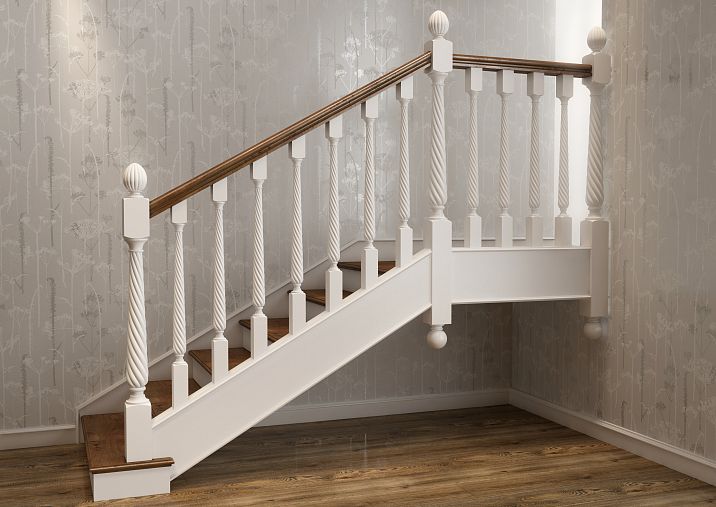
In the world of architectural design, there are elements capable of transforming space simply by their presence. Among such elements, special attention is given to wrought wooden column — embodiment of centuries-old traditions of craftsmanship, elegance, and functionality. This architectural element, inherited from ancient times, is currently experiencing a true revival, becoming a central accent in modern interiors. A wrought column is not merely a support—it is a work of art, telling the story of humanity’s pursuit of beauty and perfection in form.
Spiral lines gently wrapping around the vertical wooden column create a remarkable play of light and shadow, adding dynamism to static spaces and introducing an element of mystery and depth. Each wrought wooden column is a unique creation where the craftsman's skill, the natural beauty of wood, and the mathematical precision of the spiral form converge.
In this article, we will delve into the wonderful world of twisted wooden columns, uncovering their historical significance, technical features, applications in modern design, and secrets for choosing the perfect column for your interior. Whether you are a professional designer, architect, or simply an admirer of beautiful things, this information will help you view the possibilities of using this classic element in contemporary spaces in a new light.

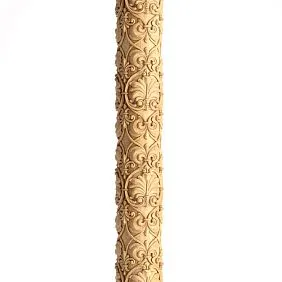
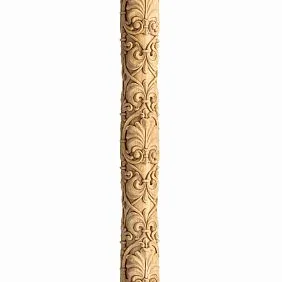


History of twisted wooden columns: from antiquity to the present day




Origins of the spiral form in architecture
Twisted columns have a rich history dating back to deep antiquity. The earliest mentions of spiral columns appear in descriptions of Solomon's Temple in Jerusalem. However, this architectural element gained true fame during the late antiquity and early Christian periods. The spiral form of the column symbolized the ascent from the earthly to the heavenly, from the material to the spiritual, making it especially popular in sacred architecture.
Twisted columns are often called "Solomonic" — named after King Solomon, whose temple, according to legend, housed the first such columns. This term has remained in architectural terminology and is still used today, emphasizing the ancient origins and symbolic significance of the spiral form.
Our factory also produces:


Renaissance in the Baroque and Gothic eras
The true heyday of twisted columns came during the Baroque era, when the desire for dynamic, sculptural forms and rich ornamentation made spiral supports an ideal expressive tool. The famous Baldacchino by Bernini in St. Peter's Basilica in Rome, supported by four massive twisted bronze columns, became the epitome of Baroque opulence and grandeur.
Twisted columns also found application in Gothic architecture, albeit with certain characteristics. In churches such as Saint-Séverin in Paris, Saint-Germain-des-Prés in Jizore, and Saint-Nicolas in Saint-Nicolas-de-Port, constructed from the late 15th century to the 1520s, twisted columns were always installed in pairs and placed in intermediate spatial zones, corresponding to the principles of Gothic architecture in its first century of development.
Get Consultation
Twisted wooden columns in Russian architecture
In Russia, twisted wooden columns have a special history. In the wooden architecture of northern regions, spiral elements were used to decorate verandas, galleries, and interior spaces of churches and wealthy homes. Russian craftsmen created astonishingly beautiful twisted columns, combining spiral forms with traditional carving — floral and geometric ornaments.
In the 18th-19th centuries, with the rise of Classicism and Neoclassicism, twisted columns temporarily receded into the background, yielding to strict straight forms. However, during the Modern and Eclectic periods, interest in spiral supports revived, and they once again became actively used in architecture and furniture design.
Modern revival of traditions
Today wrought wooden column is experiencing a true rebirth. Modern designers and architects are rediscovering the expressive potential of this classic element, adapting it to contemporary interiors. Twisted columns fit organically into various stylistic directions — from Neoclassicism and Neo-Baroque to modern eclectic interiors, where they create an interesting contrast with minimalist forms.
Advances in wood processing technology today allow for the creation of twisted columns with incredible precision and complexity of pattern, while still preserving traditional hand-carving methods to produce unique original works. This makes twisted wooden columns accessible to a wide range of admirers of beautiful interiors.
Technical features and varieties of twisted wooden columns
Structural elements of a wooden column
A classical architectural column consists of three main parts: the base (lower part), the shaft (fust), and the capital (upper part). In a twisted column, it is specifically the shaft that takes on a spiral form, while the base and capital can be either classical or stylized.
The base of the column ensures the stability of the structure and provides a smooth transition from the horizontal plane of the floor or podium to the vertical shaft. Traditionally, the base has a circular or square shape with profiled elements — flutes, rounded edges, or ledges.
The capital is the finishing part of the column, which distributes the load from the supported elements. In wooden twisted columns, capitals are often decorated with carving in accordance with the overall interior style — from strict Doric forms to ornate Corinthian capitals with floral motifs.
Types of twisted columns by spiral character
Depending on the nature of the spiral movement, twisted columns can be divided into several types:
- Simple spiral — the most common variant, where the spiral evenly wraps around the cylindrical shaft of the column.
- Double spiral — a more complex form, where two spirals intertwine with each other, creating a braid or cord effect.
- Spiral with variable pitch — a dynamic form where the pitch of the spiral changes along the height of the column, creating an effect of acceleration or deceleration of movement.
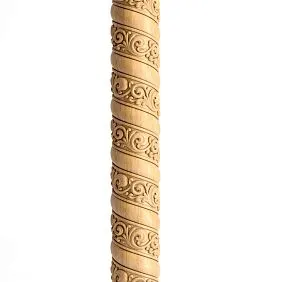
- Spiral with relief decoration — a variant where spiral lines are supplemented with relief carving — floral, geometric, or zoomorphic motifs.
Wood species for making twisted columns
Choosing the wood species for making a twisted column is of fundamental importance, as it affects not only the aesthetic qualities of the product but also its durability, resistance to loads, and environmental influences.
Oak — one of the best materials for making columns. It has high strength, resistance to moisture and rot, and an attractive texture. Oak columns can serve for decades, retaining their qualities and acquiring a noble hue over time.
Pine and spruce — more affordable coniferous species that are easy to process. They have good water resistance and a long service life. Columns made of pine and spruce are often used in interiors in Scandinavian style or in Russian wooden architecture.
Larch is a unique species combining ease of processing with high strength and moisture resistance. Larch contains natural resins that protect the wood from decay and insects.
Ash is a hard species with a beautiful, distinct grain, well-suited for carving and polishing. Ash columns look elegant and modern.
Exotic species (mahogany, teak, wenge) are used to create exclusive twisted columns with unusual texture and color. These species have high strength and moisture resistance but require special craftsmanship for processing.
Manufacturing Technologies for Twisted Wooden Columns
Creating a twisted wooden column is a complex technological process requiring high craftsmanship and specialized equipment. Several main manufacturing methods exist:
Turning followed by carving — a traditional method where a cylindrical blank is first created on a lathe, then a spiral pattern is carved manually or with special fixtures.
Segment assembly — a method where the column is assembled from individual wooden segments, pre-cut according to a template and glued together. This method allows creating columns of large diameter and complex shapes.
CNC milling — a modern technology ensuring high precision and repeatability. Computer modeling allows creating complex spiral forms with perfect geometry.
Combined methods - combining machine processing with manual finishing and carving, allowing for unique items with individual character.
Applications of Twisted Wooden Columns in Modern Interior Design
Functional Roles of Twisted Columns
Twisted wooden columns in modern interiors perform several important functions:
Structural function — columns can serve as supports for floors, staircases, arches, and other architectural elements. Despite their decorative nature, properly manufactured wooden columns can withstand significant loads.
Space zoning — columns effectively divide a room into functional zones without using solid walls, preserving visual continuity and free airflow.
Decorative function — twisted columns serve as expressive vertical accents, drawing attention and establishing spatial rhythm. They can become a central element of interior composition or effectively complement existing design.
Framing architectural elements — columns are often used to frame doorways, niches, fireplaces, creating a portal or frame effect that emphasizes the significance of the framed object.
Stylistic Directions Using Twisted Columns
Twisted wooden columns fit organically into various interior design stylistic directions:
Classic style — twisted columns with clear proportions and traditional capitals emphasize the grandeur and harmony of classic interiors.
Baroque and Rococo — lavish, richly decorated columns with dynamic spirals and carved ornamentation create an atmosphere of luxury and theatricality.
Neo-Gothic — slender twisted columns, often paired, with pointed capitals evoke medieval architecture and create a romantic, elevated mood.
Russian style — columns with carvings inspired by folk motifs bring warmth and uniqueness of Russian traditions into the interior.
Modern Eclecticism — twisted columns in minimalist execution, without excessive decoration, but with expressive spiral forms, create an interesting contrast with modern furniture and finishes.
Practical Examples of Using Twisted Columns
In staircase design — twisted columns can serve as supports for stair treads, balustrades, or as decorative elements at staircase turns. They add elegance and visual lightness to the structure.
In living room zoning — a pair of columns between the living and dining areas creates a portal effect, marking the transition between functional spaces without fully separating them.
In fireplace design — columns placed on either side of the fireplace emphasize its central position in the interior and create compositional completeness.
In library and office design — twisted columns between bookshelves or at the corners of a desk add an academic and intellectual atmosphere to the space.
In canopy bed design — columns at the corners of the bed serve as supports for the textile canopy, creating a romantic and luxurious look.
Selection and Installation of Twisted Wooden Columns
Criteria for Choosing Quality Columns
When selecting a twisted wooden column, attention should be paid to several key parameters:
Material quality - the wood should be well-dried (moisture no more than 8-12%), free of cracks, chips, and other defects. Annual rings should be dense and uniform.
Manufacturing accuracy - the spiral should be uniform, with equal pitch and thread depth. Transitions between spiral elements should be smooth, without burrs or irregularities.
Finish quality - the column surface should be carefully sanded, and the coating (varnish, oil, wax) should be applied evenly, without drips or stains.
Dimensional conformity - it is important that the column precisely matches the project dimensions and proportions of the interior. A column that is too massive or, conversely, too thin will appear out of place.
Stylistic conformity - the column's design (spiral character, base and capital decoration) should harmonize with the overall interior style and other decorative elements.
Installation and mounting process
Installing a twisted wooden column requires careful preparation and a professional approach:
- Foundation preparation - the surface on which the column will be installed must be flat, strong, and horizontal. Additional reinforcement or a foundation may be installed if necessary.
- Base mounting - the column base is secured to the floor using anchors, bolts, or special fasteners ensuring reliable fixation.
- Installing the column shaft - the shaft is placed on the base and aligned vertically using a level. Hidden metal rods or special connecting elements are used for securing.
- Capital installation - the capital is mounted on the top of the shaft and secured to the load-bearing structures of the ceiling or decorative elements.
- Final finishing - after installation, the column surface undergoes final finishing, joints are touched up, and a protective coating is applied.
Care and maintenance of wooden columns
To preserve the beauty and longevity of twisted wooden columns, the following care rules must be observed:
Regular dust cleaning - use a soft dry cloth or special brushes to remove dust from the spiral pattern recesses.
Moisture protection - avoid installing columns in areas with high humidity or provide additional surface protection using special compounds.
Periodic renewal of protective coating - depending on the type of coating (varnish, oil, wax) and usage intensity, the protective layer should be renewed every 3-5 years.
Control of temperature and humidity regime - sudden temperature and humidity fluctuations may cause wood deformation, so it is important to maintain stable conditions in the room.
Protection from direct sunlight - prolonged exposure to ultraviolet rays may cause color changes in the wood, so it is recommended to use protective compounds with UV filters.
Custom manufacturing of twisted wooden columns
Advantages of individual design
Ordering twisted wooden columns according to an individual project has several significant advantages:
Exact dimensional and proportional conformity - columns are manufactured taking into account specific architectural features of the room, ensuring their ideal integration into the interior.
Unique design - the opportunity to create an exclusive spiral pattern, original base and capital decoration, which will become exclusive elements of your interior.
Material selection - the client can choose the wood species matching their preferences in color, texture, and performance characteristics.
Coordination with other elements - twisted columns can be designed in harmony with staircases, doorways, furniture, and other wooden interior elements.
Consideration of functional requirements - during individual design, specific functional tasks the column must perform (load-bearing capacity, integration of utilities, etc.) are taken into account.
Stages of work on an individual project
Creating twisted wooden columns according to an individual order includes several sequential stages:
- Consultation and concept development - discussion with the client regarding their preferences, stylistic inclinations, and functional requirements for the columns.
- Sketching and 3D modeling - development of preliminary sketches and 3D models of future columns, allowing to assess their appearance in the interior.
- Project approval - client's confirmation of the final design, materials, finishes, and manufacturing timelines.
- Material preparation - selection and preparation of wood of the required species, quality, and dimensions, its acclimatization in workshop conditions.
- Manufacturing - creation of columns using the selected technology (hand carving, turning, CNC milling).
- Finishing and coating - sanding, toning (if necessary), application of protective coatings according to the project.
- Delivery and installation - transportation of finished columns to the site and their professional installation.
Collaboration with professional workshops
For creating high-quality turned wooden columns, it is recommended to contact specialized workshops with experience in working with architectural wooden elements. When selecting an executor, pay attention to the following aspects:
Portfolio and work experience - review previously completed projects, evaluate the quality and variety of work.
Technical capabilities - presence of modern equipment and skilled craftsmen capable of executing complex projects.
Client reviews - information about the workshop's reputation, quality of work, and adherence to deadlines.
Warranty obligations - reliable manufacturers provide warranties on their products and are ready to address any possible defects.
Comprehensive approach - possibility of executing the entire cycle of work, from design to installation, "turnkey".
Economic aspects of using turned wooden columns
Factors Affecting Cost
The cost of turned wooden columns depends on several key factors:
Wood species - columns made from premium species (oak, beech, walnut) cost significantly more than those made from pine or spruce.
Dimensions and complexity of shape - the larger the diameter and height of the column, the higher its cost. Complex spiral patterns, double or triple spirals also increase the price.
Manufacturing technology - hand carving is valued higher than machine processing, but also costs significantly more.
Decorative elements - presence of intricate carving on the base and capital, inlay, gilding, and other decorative techniques increase the cost of the item.
Finishing and coating - use of expensive varnishes, oils, patina, and other finishing materials affects the final price.
Design uniqueness - exclusive projects, individually developed, cost more than standard solutions.
Investment Appeal
Despite the relatively high initial cost, turned wooden columns can be considered a worthwhile investment for several reasons:
Durability - high-quality columns made from hardwoods can last for decades without losing their aesthetic and functional qualities.
Increase in property value - using high-quality architectural elements increases the status and market value of the property.
Timeless aesthetics - unlike trendy but quickly outdated solutions, classic turned columns retain their appeal regardless of changing design trends.
Restoration possibility - wooden columns can be restored and updated, extending their service life and preserving their investment value.
Comparison with alternative solutions
When selecting architectural elements for interior design, it is useful to compare turned wooden columns with alternative solutions:
Polyurethane columns - more affordable, easy to install, but lack the natural texture and warmth of wood, are less durable and eco-friendly.
Gypsum columns - allow creation of complex shapes, but are brittle, fear moisture and mechanical damage.
Metal columns - strong and durable, but create a completely different aesthetic impression, often appearing cold and industrial.
Stone columns - durable and prestigious, but significantly more expensive than wooden ones, and more difficult to install due to their greater weight.
Straight wooden columns - easier to manufacture and cheaper than twisted ones, but do not possess the same expressiveness and decorative effect.
Psychological and emotional impact of twisted columns in interior design
Symbolism of the spiral shape
The spiral shape has deep symbolic meaning in various cultures and traditions:
Movement and development - the spiral symbolizes constant movement, evolution, development from simple to complex.
Infinity and cyclicity - the coiling spiral reflects the idea of time's cyclicity, repetition, but on a new level.
Connection between earthly and heavenly - the ascending spiral is traditionally associated with movement from the material to the spiritual, from earthly to heavenly.
Harmony and the golden ratio - many natural spirals (shells, plants) are constructed according to the golden ratio, making them visually harmonious and pleasing to the eye.
Influence on Spatial Perception
Twisted columns have a significant impact on the perception of interior spaces:
Vertical accent - columns visually increase the height of a room, creating a sense of spaciousness and airiness.
Dynamism and movement - the spiral shape gives a static interior a sense of motion, making it more lively and interesting.
Play of light and shadow - twisted columns create a complex interplay of light and shadow, which changes throughout the day, adding depth and multifacetedness to the interior.
Focal point - an expressive twisted column naturally becomes a center of attention, organizing the space around it.
Tactile interest - the texture of a wooden twisted column invites touch and exploration by hand, adding a sensory dimension to the interior.
Creating atmosphere with twisted columns
Depending on design, size, and placement, twisted columns can create various emotional effects:
Grandeur and majesty - massive columns with classical proportions create a sense of monumentality and significance of the space.
Romance and elegance - slender, graceful columns with smooth spirals introduce notes of romance and refinement into the interior.
Coziness and warmth - wooden columns in warm tones with soft texture create an atmosphere of home comfort and coziness.
Exoticism and uniqueness - columns with non-standard spiral design or unusual finish add an exotic character and originality to the interior.
Conclusion: twisted wooden column as an investment in beauty and quality
wrought wooden column It is not just an architectural element, but a work of art capable of transforming any space. Combining functionality and aesthetics, tradition and modernity, twisted columns become central elements of interior compositions, imparting them depth, character, and individuality.
Choosing twisted wooden columns for your interior is an investment in enduring beauty that will delight you and your guests for many years. Natural wood, handcrafted by artisans, carries the warmth and energy of nature, creating a unique atmosphere of authenticity and quality that cannot be achieved with artificial materials.
Modern woodworking technologies combined with traditional carving methods allow creating twisted columns of any complexity and design, adapting this classic element to various stylistic directions - from historical reconstructions to avant-garde interiors.
STAVROS company specializes in creating high-quality wooden products, including twisted columns, combining the long experience of master carpenters with modern production technologies. Each column created in STAVROS workshops is a unique work of art embodying the beauty of natural materials and craftsmanship.
By contacting STAVROS professionals, you receive not just a wooden column, but a comprehensive solution for your interior - from developing an individual design to professional installation and subsequent maintenance. This guarantees perfect alignment of the product with your expectations and many years of flawless operation.
Twisted wooden column - an element proven over centuries, never going out of style. Investing in quality architectural details today creates an interior that will remain relevant and attractive always, regardless of changing design trends and fashion currents.