Article Contents:
- 1. Why Furniture Material Characteristics Matter
- 2. Main Characteristics of Wooden Panels (MDF, HDF, Plywood)
- 2.1. Laminated chipboard (MDF)
- 2.2. MDF (fine particle board)
- 2.3. Plywood
- 4.1. Wear Resistance (Martindale)
- 4.2. Fabric Density
- 4.3. Fiber Composition
- 4.4. Additional Coatings (Easy Clean, Anti-Vandal)
- 5.1. Springs (Characteristics)
- 5.2. Polyurethane Foam (PU)
- 5.3. Latex
- Example 1: Kitchen Cabinet Set
- Example 2: Living Room Sofa
- Example 3: Hallway Sliding Wardrobe
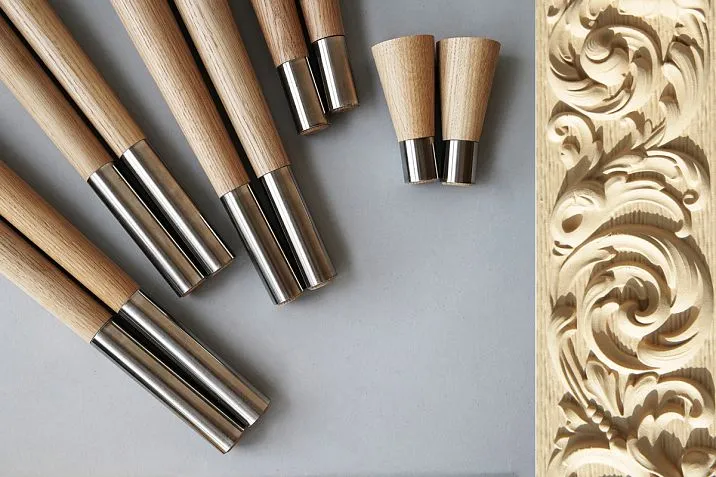
The development of the furniture industry has led to the emergence of numerous new materials and technologies competing with traditional options such as solid wood. MDF, HDF, plywood, composites, metals, glass, various types of upholstery fabrics — all of this presents us with the task: how to navigate this diversity and choose the optimal option. In this regard, the characteristics of furniture materials are extremely important: density, water resistance, formaldehyde emission class, wear resistance, as well as external qualities (texture, color, machinability). In this article, we will thoroughly examine the key parameters of various furniture materials and provide recommendations for properly assessing their properties, so you can choose durable, reliable, and aesthetically pleasing furniture.


1. Why Furniture Material Characteristics Matter
- Durability and Repairability
By understanding structural features (for example, MDF density, HDF emission level, solid wood hardness), we can predict how long a product will last without losing its function or appearance. - Comfort and Functionality
For example, in soft furniture, elasticity, upholstery wear resistance, and filler resilience are important. For case furniture — frame rigidity, water resistance, and resistance to mechanical impacts. - Appearance
The veneer texture, acrylic shade and depth, matte or glossy enamel — all these characteristics determine the furniture’s style. - Safety
Some panels may emit formaldehyde above the norm (E2 or uncertified), paints — volatile organic compounds. By correctly understanding environmental indicators, we reduce health risks. - Budget Compatibility
Knowing that solid oak or complex hardware is expensive, while MDF or budget fabrics are cheaper, you can plan an optimal balance between quality and cost.




2. Main characteristics of wooden panels (MDF, plywood, particleboard)
Our factory also produces:


2.1. Particleboard (laminate particleboard)
● Composition: pressed wood chips bonded with resins, top layer laminated with decorative film.
● Key parameters:
1. Density (approximately 550–750 kg/m³) — affects screw-holding strength and resistance to twisting.
2. Formaldehyde emission class (E0, E1, E2). For residential use, recommend E1 (or E0).
3. Thickness (usually 16, 18, 25 mm). The thicker, the stronger and more expensive.
4. Moisture resistance: resistant with hydrophobic additives, but vulnerable at the edges.
● Where used: cabinet furniture (cabinets, shelves), office furniture, kitchens (cabinet parts).
Get Consultation
2.2. MDF (fine particle board)
● Production: wood fibers (finer than in particleboard) pressed under pressure.
● Characteristics:
1. High density (700–900 kg/m³) => stronger screw-holding, allows routing.
2. Emission class (E0/E1) — safe for residential use.
3. Thickness: often 16–19 mm for fronts, may be 22–25 mm for countertops.
● Where used: kitchen fronts, door panels, decorative panels, including routed ones.
2.3. Plywood
● Composition: glued sheets of veneer (birch, coniferous species), layers oriented perpendicularly.
● Key parameters:
1. Grade (E, I, II, III, IV) — the higher, the fewer knots and voids.
2. Moisture resistance (grades FK, FSP): FK — moisture-resistant, FSP — enhanced moisture resistance.
3. Thickness: 3–24 mm.
● Where applied: sofa and chair frames, "Scandinavian" furniture, DIY projects. Offers excellent strength-to-weight ratio.
3. Characteristics of solid wood
- Species: pine, birch, beech, oak, etc. Each has its own density, hardness, and resistance to external factors (oak and beech are denser, pine is softer).
- Moisture content: optimal 8–12%. If higher, may warp or crack.
- Grading: presence of knots, cracks, sapwood affects aesthetic level and mechanical properties.
- Finishing: varnishes, oils, stains. Quality of finish determines longevity of appearance and moisture resistance.
4. Important characteristics of upholstery materials
4.1. Wear resistance (Martindale)
● What it is: indicator showing how many friction cycles fabric can withstand before showing signs of wear.
● Values:
○ 15–20 thousand cycles: household level (living room sofas, infrequent use).
○ 20–30 thousand cycles: moderate wear, suitable for more intensive use.
○ 40,000 and above: commercial or premium level, offices, restaurants.
4.2. Fabric density
● Density indicates the mass of the yarn in g/m². The higher the density, the stronger and heavier the fabric usually feels.
4.3. Fiber composition
● Natural (cotton, linen, wool): pleasant to the touch, breathable, but may wear out faster and are harder to clean.
● Synthetic (polyester, nylon): better resistance to wear, stains, and cheaper. Sometimes they do not allow air to pass and may squeak.
● Blended: a balance of natural and synthetic advantages.
4.4. Additional coatings (Easy Clean, anti-vandal)
● Protective impregnations against moisture, dirt, and animal claws. Significantly increase cost, but convenient for daily use.
5. Cushioning materials in soft furniture
5.1. Springs (characteristics)
- Type: Bonnel, serpentine, independent springs.
- Spring density: number of springs per m² (the higher, the better support).
- Metal quality: cheap spring blocks may suffer from premature corrosion and squeaking.
5.2. Polyurethane foam (PU)
- Density (20–40+ kg/m³). Average option: 25–30 kg/m³ for seating. Below 20 quickly “sags”.
- Stiffness: may vary (HS, HR foams). Choose according to desired comfort level.
- Certification: cheap PU may emit odors.
5.3. Latex
● Natural: dense, elastic, antibacterial, but expensive.
● Blended (synthetic): cheaper, but slightly less “breathable”.
6. Formaldehyde and emission class: key to health
● E0/E1: acceptable formaldehyde levels for residential spaces. E0 — minimal emission, E1 — standard.
● E2: higher emissions, restricted use in residential areas in some countries.
● When purchasing panels (MDF, HDF) and fillers (PU), ask for certificates. Honest manufacturers indicate emission class on labels or in documentation.
7. Tips for evaluating characteristics and purchasing
- Compare density and thickness
MDF is thicker (16–19 mm) and more reliable for facades, HDF 16 mm is sufficient for internal shelves, plywood 15–18 mm may suffice for a sofa frame. - Request documentation
Certificates (emission class, strength indicators). - Assess the surface
For laminate: check for chips, bubbles, and flatness of the film. For fabric: weave density, color uniformity, and absence of defects. - Consider usage conditions
If the apartment is humid, use moisture-resistant plywood/MDF. For children or pets — fabrics with 'anti-scratch' protection or easy-to-clean (eco-leather) materials. - Price and quality balance
Very cheap materials risk failing quickly, while unnecessarily expensive ones are not always needed if the furniture is used infrequently.
8. How to check material quality in a finished product
- Inspect cross-sections: if possible, examine inner edges. In good Laminated Board/MDF, there are no delaminations, and the structure is clearly visible. The edge is smooth and tightly fitted.
- Press and sit: if it's soft furniture, evaluate the springiness, absence of sagging or squeaking.
- Smell: a sharp chemical odor may indicate high formaldehyde levels or poor-quality impregnation in the fabric.
- Touch: fabric or leather should be uniform, without 'hard' spots or stickiness.
9. Material combinations and examples
Example 1: Kitchen set
● Cabinet: Laminated Board E1, 16–18 mm.
● Doors: MDF 19 mm, covered with PVC film (milling, classic look).
● Countertop: HPL plastic on moisture-resistant particleboard (28–38 mm).
● Hardware: concealed hinges, ball-bearing drawer slides.
Example 2: Living room sofa
● Frame: 15–18 mm plywood + pine or birch timber.
● Fill: independent springs or 'snake' + 30 kg/m³ polyurethane foam, topped with soft batting or hollofibre.
● Upholstery: flock or microvelvet with protective impregnation.
● Mechanism: 'European book' or 'accordion'.
Example 3: Hall wardrobe
● Frame: 16 mm Laminated Board (Egger, Kronospan) emission class E1.
● Doors: aluminum profile, insert of Laminated Board or mirror-glass.
● Slides: quality ball-bearing rollers.
10. Conclusion
When discussing furniture material characteristics, it's important to consider:
● Density and structure (affects strength).
● Thickness (16–18 mm for cabinets, 19–22 mm for doors if needed).
● Emission class (E0/E1 for safety).
● Moisture resistance (especially in kitchens and bathrooms).
● Outer layer (veneer, film, laminate, lacquer, acrylic).
● Upholstery fabrics (durability, density, ease of cleaning).
● Fillers (for soft furniture: foam, springs, latex).
When you analyze materials properly and understand their key properties, you will be able to select furniture that will last long and please the eye. Do not hesitate to ask sellers and manufacturers for details and demand certificates. After all, the quality of the base (whether it is a board, solid wood, or upholstery) largely determines how the furniture will behave in daily life: will it creak, wear out quickly, or become a reliable support for your interior for many years.