Article Contents:
- Philosophy of Reliable Fastening: Understanding Loads
- Vectors of Force Application
- Material Properties of Wood
- Fastening Solutions Arsenal: Choosing the Optimal Method
- Threaded Studs: Benchmark of Technological Efficiency
- Wooden Dowels: Eco-Friendly Classic
- Self-Tapping Screws: Balance of Simplicity and Reliability
- Technological Nuances of Various Bases
- Solid Wooden Steps: Ideal Compatibility
- Glued Steps: Characteristics of Multi-Layer Structure
- Stringer Structures: Working with Inclined Surfaces
- Step-by-step installation technology: from marking to finishing
- Precision Marking: Foundation of Accuracy
- Precision Drilling: Guarantee of Quality
- Installing Fastening Elements: Precision and Care
- Specifics of Fastening to Different Staircase Structures
- Spiral Staircases: Direct Fastening to Steps
- Spiral Staircases: Complex Geometry
- Staircases with Landings: Transition Zones
- Installing handrails: final stage
- Handrail Support Bracket: Connecting Element
- Installing Handrail: Final Touch
- Quality Control: Guarantee of Safety
- Visual Inspection
- Functional tests
- Common Mistakes: Learning from Others' Experience
- Planning mistakes
- Technological violations
- Modern Innovations: Looking to the Future
- Hidden Fastening Systems
- Composite materials
- Conclusion
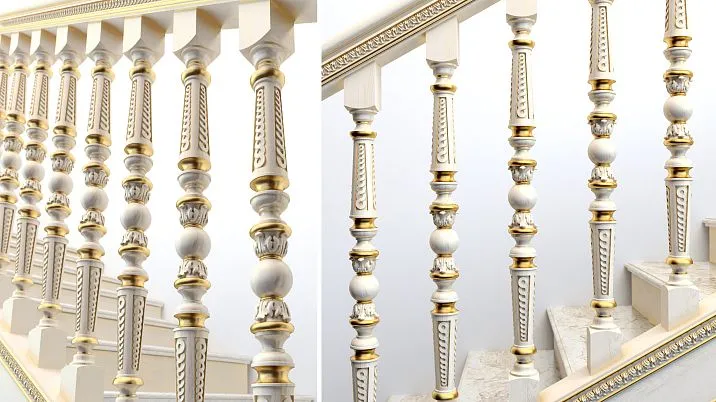
Imagine a staircase where every step gives you confidence, and touching the handrail evokes a feeling of absolute reliability. The secret to such a construction lies in how to properly and professionally secure balusters on a wooden staircase. It is an art that requires not only technical knowledge but also an understanding of the subtleties of working with living material — wood, which breathes, expands, and contracts depending on the season and humidity.
Balusters are not just decorative elements, but crucial structural components of the staircase railing. The quality of their installation affects the safety of the entire family, the longevity of the structure, and the aesthetic appeal of the interior. Improperly installed posts will loosen over time, creating danger and disrupting the harmony of the space.
In this detailed guide, we will reveal all the secrets of professional installation, from selecting fastening elements to final finishing of connections. Each fastening method has its advantages and specific applications, and understanding these nuances will help create a railing that will serve for decades.


Philosophy of Reliable Fastening: Understanding Loads
Before picking up the tools, it is important to understand the physics of the staircase railing's operation. Each baluster is a vertical support that withstands various types of loads and transfers them to the staircase base.




When a person leans on a handrail, a horizontal force arises, creating a bending moment in the baluster. This moment tends to overturn the post, and it is the attachment to the base that must resist this force. Modern standards require that railings withstand a horizontal load of at least 100 kilograms per linear meter.
Vertical loads from the structure's own weight create compressive stresses in the balusters. Although these loads are relatively small, they must be considered in calculating the strength of the fastening, especially for tall railings.
Dynamic loads occur during movement on the stairs and may cause resonant vibrations. Quality fastening must provide not only static strength but also vibration damping.
Wood material properties
Our factory also produces:


Wood is a living material that continues to change even after processing. Seasonal fluctuations in humidity cause changes in the dimensions of components, creating additional stresses at the fastening joints. Fastening balusters on a wooden staircase must account for these natural processes.
Different wood species behave differently under changing operating conditions. Oak, due to its density of 700-800 kg/m³, provides reliable retention of fastening elements, but requires pre-drilling of holes. Pine is more flexible but prone to cracking with improper fastening.
The direction of wood grain is critically important for joint strength. Fastening elements installed across the grain have significantly lower load-bearing capacity compared to longitudinal installation.
Fastening solutions arsenal: choosing the optimal method
Get Consultation
Modern practice offers numerous ways to fasten balusters, each with its own advantages and applications. The choice of a specific method depends on the staircase's structural features, the material of the base, and aesthetic requirements.
Modern practice offers numerous ways to attach balusters, each with its own advantages and areas of application. The choice of a specific method depends on the structural features of the staircase, the material of the base, and aesthetic requirements.
Threaded rods: the standard of technological efficiency
Metal threaded rods with a diameter of 6-10 millimeters represent the most technologically advanced solution for fastening balusters. This method ensures exceptional joint strength and allows for precise adjustment of element positions.
Installation technology begins with precisely drilling a central hole in the baluster. The hole depth should be 50-70 millimeters, ensuring secure fixation of the rod. The hole diameter is chosen 0.5 millimeters smaller than the rod's outer diameter to create a tight fit.
The rod is installed into the baluster using a special wood glue. Polyurethane glues provide waterproof joints that do not degrade with changes in wood moisture. The protruding part of the rod should be 30-40 millimeters to ensure secure fastening to the base.
Wooden dowels: ecological classic
Dowel joints are a traditional carpentry solution valued for their ecological nature and ability to create disassemblable structures. Wooden dowels with a diameter of 8-16 millimeters are made from the same wood species as the balusters.
The quality of the dowel joint largely depends on the precision of hole manufacturing. They must be precisely coaxial and of equal depth. Special drill guides ensure the required positioning accuracy.
The dowel length is calculated so that it extends 20-30 millimeters into the baluster and 15-25 millimeters into the base. The glued joint creates a monolithic structure capable of withstanding significant loads.
Self-tapping screws: balance of simplicity and reliability
Construction screws 80-120 millimeters long allow creating a sufficiently strong joint with minimal labor. This method is especially popular among novice craftsmen due to its simplicity.
Angled fastening with self-tapping screws involves installing them at a 30-45 degree angle to vertical. This arrangement ensures maximum joint strength and prevents screw extraction under load. Three to four screws are required for one baluster.
Hidden fastening with self-tapping screws is performed through pre-drilled holes at the baluster's end. Screw heads are recessed into the wood and covered with wooden plugs, ensuring an aesthetically pleasing joint appearance.
Technological nuances of various bases
The material and construction of the base determine the choice of fastening method and installation technology. Each type of base requires a specific approach.
Solid wooden treads: ideal compatibility
Wooden treads 40-60 millimeters thick provide the best conditions for fastening balusters on a wooden staircase. Material uniformity ensures even load distribution and eliminates stress concentration.
Through fastening with bolts ensures maximum joint reliability. A bolt with a diameter of 8-10 millimeters passes through the entire tread thickness and is secured with a nut and wide washer on the opposite side. The bolt head is recessed into the wood and covered with a decorative cap.
Blind fastening with threaded bushings is used when access to the underside of the tread is limited. A hole 40-50 millimeters deep is drilled into the tread, and a metal bushing with internal threads is installed on glue.
Glued treads: features of multi-layer structure
Glued laminated treads require special attention to drilling direction. The hole must run parallel to the glue joints to avoid compromising the integrity of the layer connections.
The depth of fastening in glued steps can be increased to 50-60 millimeters due to the high strength of the material. This allows using longer bolts and increasing the reliability of the connection.
Pre-treatment of holes with a primer prevents wood delamination and improves adhesive bonding. This is especially important for steps made of coniferous species with high resin content.
Stringer constructions: working with inclined surfaces
Stringer staircases require the use of intermediate elements — baluster supports. These wooden strips, 40×60 or 50×70 millimeters in cross-section, are mounted to the stringer and serve as a base for installing balusters.
The baluster support is profiled according to the shape of the stringer. The bottom edge replicates the contour of the load-bearing beam, while the top has grooves for installing balusters. This construction ensures vertical positioning of posts on an inclined base.
The baluster support is fastened to the stringer using 60-80 millimeter screws driven into the gaps between balusters. Additionally, the connection is reinforced with carpentry glue.
Step-by-step installation technology: from marking to finish
Proper installation of balusters requires strict adherence to the technological sequence. Each stage affects the strength and durability of the connection.
Precision marking: the basis of accuracy
Marking begins with determining the position of the end support posts. These robust elements are installed at the beginning and end of the stair run and define the geometry of the entire railing.
A control string is stretched between the support posts, serving as the baseline for marking intermediate balusters. According to safety requirements, the distance between baluster axes should not exceed 150 millimeters center-to-center.
Baluster installation points are marked on the steps using a square and pencil. Each point should be equidistant from the front edge of the step, typically 80-120 millimeters depending on tread width.
Precision drilling: guarantee of quality
Drilling holes for fasteners requires using quality tools and following technological parameters. Tapered drill bits ensure clean holes without chips at the exit.
Drilling depth is controlled by a drill stop or marking. For threaded connections, depth is 40-50 millimeters at the base; for dowel connections, 20-30 millimeters. Exceeding calculated depth may weaken the step structure.
Cleaning holes of chips and dust ensures quality bonding. Compressed air or special brushes are used to remove wood particles from deep holes.
Installation of fasteners: precision and care
Threaded bolts are installed into the base using special glue. Polyurethane compounds provide waterproof connections and compensate for minor dimensional inaccuracies in hole size.
The glue polymerization time is 24 hours at 20°C and 60% humidity. The connection should not be loaded until fully cured. Vertical alignment of bolts is checked using a square.
Dowels are installed similarly but require more careful handling. They should enter the hole with light pressure, without misalignment or jamming. Excess glue is immediately wiped away with a damp cloth.
Specifics of fastening to different staircase constructions
Structural features of staircases determine the fastening technology for balusters. Each type requires a specific approach and consideration of load characteristics.
Stringer staircases: direct fastening to steps
Stringer staircases offer the greatest opportunities for baluster fastening due to direct access to the underside of steps. Baluster fastening on such wooden staircases can be performed in various ways.
Through-bolt connection provides maximum strength. The bolt passes through the entire thickness of the step and is secured with a nut on the opposite side. This fastening allows tightening the connection as needed without removing the baluster.
Fastening using threaded bushings is used when access to the underside of steps is limited. Bushings are installed into pre-drilled holes using glue and provide secure fixation of bolts.
Helical staircases: complex geometry
Helical staircases present special complexity due to variable curvature radius and different step rotation angles. Each baluster has individual dimensions and cut angles.
Baluster positions are marked using special templates. It is important to ensure even distribution of posts around the circle while maintaining required distances between them.
Baluster fastening to landing steps is performed using the same methods as on straight staircases, but requires more careful fitting. Special attention is paid to end cut angles to ensure vertical post positioning.
Staircases with landings: transition zones
Landing platforms require special attention when installing balusters. Here, attachment through sub-baluster brackets — special boards installed on the platform floor — is often used.
A sub-baluster bracket is a wooden strip with grooves for installing balusters. It is secured to the platform floor with screws or self-tapping screws and ensures even load distribution.
Balusters are installed into the grooves of the sub-baluster bracket using glue or with additional screw fastening. This construction allows individual elements to be dismantled if necessary without compromising the integrity of the railing.
Installing handrails: final stage
Installing handrails is the final step in creating a staircase railing. The quality of this work affects not only the appearance of the structure but also its usability.
Sub-baluster bracket: the connecting element
The sub-baluster bracket serves as an intermediate element between balusters and the handrail. It is made from the same type of wood and has a thickness of 8–12 millimeters depending on the size of the groove in the handrail.
The strip is fastened to balusters using 25-30 mm screws driven into the ends of the posts. Screw heads are countersunk 2-3 mm and covered with wooden plugs.
The plank must be perfectly straight and positioned strictly horizontally. Any deviations will be noticeable after installing the handrail and will spoil the appearance of the railing.
Installing the handrail: the final touch
The handrail is installed on the sub-baluster bracket so that the bracket fully fits into the groove. The connection is made using carpenter’s glue and screws driven from below the bracket.
The ends of the handrail are cut at angles ensuring tight contact with support posts or walls. Complex angular connections may be required for turning sections.
Final finishing includes sanding all joints with fine-grit sandpaper and applying a protective-decorative coating. Quality finishing highlights the beauty of the wood and ensures the longevity of the structure.
Quality control: guarantee of safety
Completing the installation requires careful inspection of the quality of all joints. Comprehensive inspection allows identifying and eliminating possible defects.
Visual inspection
External inspection includes checking for cracks in the wood, correct positioning of all elements, and surface finish quality. Special attention is given to joints and fastening nodes.
Geometric control involves checking the verticality of balusters, the horizontal alignment of the handrail, and the uniformity of distances between elements. Levels, squares, and measuring rulers are used.
Connection strength is checked by applying test loads. Each baluster must withstand a horizontal force of 30–50 kilograms without deformation or play.
Functional tests
Dynamic tests involve rhythmic loading on the structure at a frequency matching normal walking rhythm. Absence of resonant vibrations indicates correct installation.
Usability testing includes evaluating handrail height, profile, and absence of sharp edges. The handrail should be comfortably graspable by an adult of any height.
Long-term observations during the first months of operation allow identifying possible weakening of connections due to wood shrinkage.
Typical mistakes: learning from others’ experience
Analyzing common mistakes helps avoid problems and ensures high-quality work. Most defects are due to violation of technology or insufficient qualifications of workers.
Planning errors
Inaccurate marking is the source of many problems. Dimensional deviations accumulate and lead to inability to assemble properly. Using poor-quality measuring tools worsens the situation.
Incorrect choice of fastening method may lead to premature failure of connections. It is necessary to consider the material of the base, expected loads, and operating conditions.
Ignoring regulatory requirements creates safety risks. Exceeding allowable distances between balusters or insufficient fastening strength may result in injuries.
Technological violations
Using low-quality fasteners is a false economy. Corrosion of metal parts and destruction of plastic anchors lead to weakened connections and costly repairs.
Violating drilling regimes may cause wood chips or poor holes. Excessive rotational speed causes overheating and charring of the material.
Failure to observe technological pauses when using glued joints may lead to their failure. Each type of glue has specific requirements for holding time.
Modern innovations: looking to the future
Technological development leads to new fastening methods and materials. Innovative solutions combine traditional reliability with modern capabilities.
Modern technologies offer innovative solutions for attaching balusters to handrails, providing ideal aesthetics with maximum reliability. Concealed fastening systems allow creating an impression of monolithic construction, where connections are practically invisible.
Magnetic connections based on neodymium magnets allow creating disassemblable structures with an ideal appearance. Powerful magnets embedded in structural elements ensure secure fixation.
Quick-release locking systems simplify maintenance and repair of railings. Special profiles allow installing and removing balusters without tools.
Composite materials
Carbon and fiberglass elements are resistant to rotting and deformation. They combine high strength with low weight and require no special maintenance.
Hybrid constructions combining wood and composites open new design possibilities. Wooden cladding provides a traditional appearance, while composite framing ensures strength and durability.
Conclusion
The skill of attaching balusters to a wooden staircase is a complex art requiring deep knowledge of materials, understanding of mechanical principles, and mastery of modern technologies. Each connection is the result of careful planning, quality preparation, and flawless execution of all operations.
Properly installed fasteners form the foundation of safety and durability of the staircase structure. They must withstand not only calculated loads but also unforeseen impacts while maintaining aesthetic appeal.
Modern technologies offer new possibilities for creating reliable and beautiful connections, but the fundamentals of craftsmanship remain unchanged. Understanding the physics of processes, attention to detail, and use of quality materials — these are what distinguish professional work from amateur efforts.
Investments in quality baluster fastening pay off many times over due to the longevity of the structure and the absence of frequent repairs. Cutting corners on fasteners or violating technology may lead to serious problems in the future.
For those striving for perfection in every detail, we recommend studying detailed information about fastening balusters on a wooden staircase, where time-tested methods and modern technological solutions are presented.
Remember: every fastener is not just a technical necessity, but an opportunity to create something beautiful and long-lasting. Proper installation approach ensures not only safety, but also aesthetic perfection of the staircase structure, which will delight the eye and serve faithfully for many years.
For many years, STAVROS has helped professionals and enthusiasts create unique staircase structures that combine traditional quality with modern technologies. Our experience and knowledge are always at your service to bring to life the most daring architectural concepts.