Article Contents:
- What is included in furniture fittings and what is most often searched for in St. Petersburg
- Furniture handles
- Hinges
- Drawer guides
- Supports and legs
- Fasteners and mounting elements
- Decorative and front fittings
- How to choose furniture fittings for a specific task
- For Kitchen
- For a Wardrobe
- For a Dresser
- For a side table
- For case furniture
- For Solid Wood Furniture
- Which furniture handles to choose
- Bracket handles
- Button Handles
- Long handles
- Wooden Handles
- Metal Handles
- How to select size and style
- Which hinges and guides are suitable for daily load
- Hinges for kitchen fronts
- Hinges for cabinets
- Drawer guides
- What matters for smooth operation
- When a soft-close mechanism is needed
- How to account for opening frequency
- Supports, legs, and hardware for furniture legs
- Where supports are needed
- How to choose the height
- How to account for load
- When glides are needed
- What is important for furniture stability
- How to choose hardware according to furniture style
- Modern Interior
- Classic
- Minimalism
- Neoclassicism
- Solid wood furniture
- What to look for before buying furniture fittings in St. Petersburg
- Material
- Finish
- Sizes
- Compatibility with the facade
- Mounting type
- Delivery Terms
- Wholesale or Retail
- Ability to Select as a Set
- How to Avoid Mistakes When Choosing Furniture Hardware
- Ignoring Dimensions
- Not Checking the Material
- Ignoring Load Capacity
- Not Planning the Installation
- Choosing Based Only on Appearance
- Not Matching Hardware to Furniture Style
- What to choose for kitchen, cabinet, and case furniture
- For Kitchen
- For a Wardrobe
- For case furniture
- For intensive daily load
- For decorative solutions
- Who is this furniture hardware suitable for
- For private customers
- Furniture makers
- Designers
- Workshops
- Furniture manufacturers
- FAQ: answers to popular questions about furniture fittings in St. Petersburg
- Where to buy furniture fittings in St. Petersburg?
- What is better to choose for the kitchen: handles, hinges, or as a set?
- Which handles are suitable for cabinets?
- What's better: wooden or metal handles?
- How to choose drawer slides?
- Which supports are better for case furniture?
- Is it possible to buy furniture fittings in St. Petersburg wholesale and retail?
- Is there delivery in St. Petersburg and the Leningrad region?
- Conclusion

St. Petersburg is a city that takes details seriously. It is not customary here to skimp on things that work every day. And furniture fittings in St. Petersburg are no exception: they either serve for years, unnoticed and reliably, or start reminding you of themselves with squeaks, play, a loose handle, or a sagging door just a few months after renovation. Buying furniture fittings in St. Petersburg today can be quick and easy—but choosing correctly the first time is far from achievable for everyone.
This is precisely where the main difficulty lies: the market is huge, there are many offers, and the selection criteria are not clear to everyone. Furniture fittings in St. Petersburg are needed by a wide variety of people—from a private customer replacing handles on kitchen fronts to furniture manufacturers purchasing hinges and drawer slides in batches. And for each of them, the requirements for fittings are fundamentally different. This article is a sequential expert breakdown: what exactly to choose, for which furniture, according to what criteria—and how to avoid mistakes that cost more than the fittings themselves.


What is included in furniture fittings and what is most often searched for in St. Petersburg
Before opening the catalog and browsing items, it's worth understanding what Furniture hardware as a category actually represents. It's not a single product—it's an entire system of elements, each performing its own role. Some are immediately visible—handles, legs, decorative overlays. Others are hidden inside the construction—hinges, slides, fasteners. But both are equally important for the furniture to function as intended.




Furniture handles
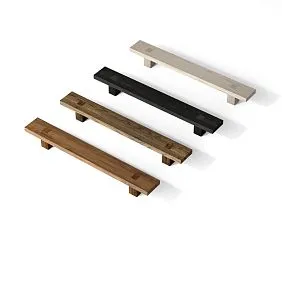
Handles are the most visually significant element of furniture fittings. They set the tone for the entire piece of furniture, are the first to be noticed, and create the impression of quality. Handles come in the form of brackets, knobs, profile rails, rings, and decorative designs. Materials include metal, wood, and combined solutions. Furniture handles in St. Petersburg are among the most frequent queries in the fittings category—and this is logical: handles are the easiest to replace without disassembling the entire structure.
Our factory also produces:




Hinges
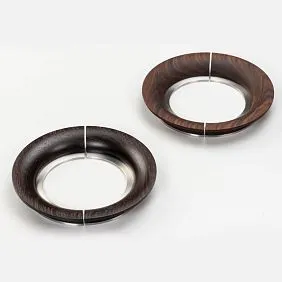
Hinges determine how a cabinet or kitchen cabinet door opens and closes. Overlay, half-overlay, inset, corner, with a soft-close mechanism—each type suits a specific construction. A hinge with a soft-close mechanism is a separate story: it ensures smooth, silent closing, which is especially valuable in the kitchen, where doors slam most often.
Get Consultation
Drawer guides
The quality of a drawer's movement is always about the slide. Roller, ball-bearing, telescopic with soft-close—each option differs in smoothness of movement, permissible load, and lifespan. Properly chosen drawer slides in St. Petersburg make the drawer light, quiet, and reliable for thousands of opening cycles.
Supports and Legs
Furniture legs bear direct load. Adjustable plastic supports for kitchen cabinets, metal conical legs for tables and consoles, wooden turned supports for classic nightstands—these are different tasks and different solutions. Glides protect floor coverings from damage and allow for compensation of floor level variations.
Fasteners and mounting elements
Confirmat screws, eccentric connectors, dowels, furniture bolts, corner brackets—all this 'invisible' hardware holds the construction together. Incorrectly chosen fasteners lead to loosening, pull-out, and ultimately, to the destruction of the carcass.
Decorative and front-facing hardware
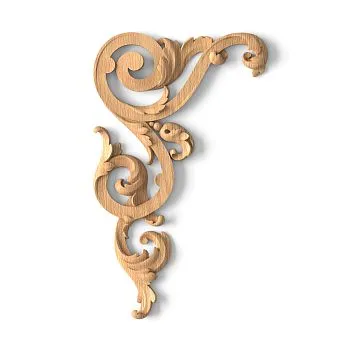
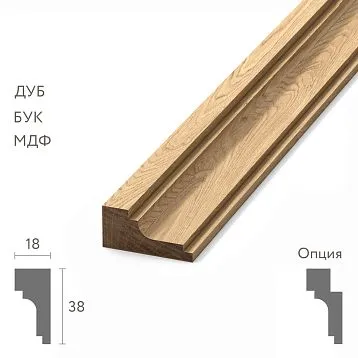
Decorative overlays, moldings, rosettes, capitals, corbel holders, rod holders—all this belongs to decorative hardware. It is especially relevant for classic furniture, solid wood products, and custom kitchens, where every detail is part of the design concept.
How to choose furniture hardware for a specific task
Asking yourself the question 'what exactly is the hardware for?' is not rhetoric, but a practical necessity. Each type of furniture is used in its own way, and the hardware must match these conditions.
For Kitchen
The kitchen is the zone of maximum trials for any hardware. Steam, grease, cleaning agents, daily multiple openings—all of this requires a special approach.Hardware for kitchen furniture in St. Petersburgmust be, first and foremost, moisture-resistant. Handles—made of stainless steel or chrome-plated metal with a protective coating. Hinges—with a soft-close mechanism, with a service life reserve of at least 50,000 cycles. Drawer slides—ball-bearing with a load capacity from 25 kg. Feet—adjustable plastic, allowing the cabinet to be leveled.
A separate nuance: kitchen fronts often have non-standard thickness—18, 19, 22 mm. The bolts for the handles must match this thickness. Before ordering, always check the parameters of the included fasteners.
For a cabinet
A wardrobe is furniture whose hinges and handles work for the entire life of the product. Here, an error in choosing a hinge means a sagging door after a year. For heavy wardrobe fronts weighing over 8–10 kg, hinges with a reinforced mechanism and mandatory three-axis adjustment are needed. Handles are selected considering the height of the wardrobe: for a tall cabinet, long rail handles look more proportional than a small pull.
For a chest of drawers
For dressers, the focus is on drawers and handles. Dresser drawers are opened every day, often under load: it's clothing, linens, accessories. The drawer slides must withstand not only the weight of the contents but also side loads from uneven filling. Dresser handles are an area for a design statement: here you can choose a more expressive shape and finish than on strict kitchen fronts.
For a side table
Bedside and hallway cabinets—furniture where the proportionality of the hardware decides everything. A small button or a concise pull, organic to the scale of the piece. Decorative legs are part of the visual image: classic wooden turned legs, modern metal conical legs, or simply a plinth base.
For case furniture
Furniture made from particleboard (chipboard) and MDF requires precise matching of fasteners to the material. Confirmat screws, dowels, and eccentric connectors are the basis of assembly. Hinges and drawer slides are selected based on functional parameters, handles—based on the style of the front.
For solid wood furniture
Hardware for solid wood furnitureSolid wood furniture is a separate topic. Wood is alive: it expands and contracts with changes in humidity and temperature. The fasteners must allow for this without splitting the fibers or stripping the threads. Handles for such furniture—wrought metal or wooden from the same or a contrasting species—create an organic unity of materials.
Which furniture handles to choose
The handle is the first thing your hand touches. That's why choosing one requires attention to several parameters: shape, material, size, style, and mounting method.
Pull handles (bail handles)
Staples are the most versatile type. Two-point mounting, arched shape, wide range of center-to-center distances: 32, 64, 96, 128, 160, 192 mm. A staple with a 96 or 128 mm center-to-center distance is the standard for most kitchen fronts. The main rule: always measure the existing holes in the front before ordering. Mixing up the center-to-center distance means drilling new holes, which is undesirable for painted or veneered fronts.
Button Handles
Knobs are mounted at a single point. Compact, concise, suitable for small fronts, drawers, hanging shelves. A wooden knob with a natural wood grain pattern is a perfect choice for Scandinavian and eco-interiors. A matte metal disc knob is for modern minimalism. It's better not to use knobs on heavy doors: a single mounting point doesn't provide a comfortable grip under significant load.
Long handles
Long horizontal rail handles are a trend that remains relevant. They create a horizontal rhythm on fronts, visually expand the kitchen space, and give it a designer look without extra effort. Length — from 300 mm to 600 mm and more. Mounting requires precision: the slightest horizontal misalignment on a long handle is visible to the naked eye.
Wooden handles
Wooden furniture handles in St. Petersburg— a product with soul. Tactile warmth, the unique pattern of each piece, natural aesthetics — something no metal can convey. Wooden handles are made from oak, ash, beech, walnut, and other species. The finish — varnish, oil, wax — protects the wood without killing its character. For bathrooms and kitchens, wooden handles are chosen with enhanced moisture-resistant coating.
Metal handles
Metal handles are leaders in practicality. Stainless steel, chrome-plated or nickel-plated zamak, aluminum, cast brass with coating — each material has its strengths. Stainless steel is optimal for kitchens and bathrooms: doesn't rust, doesn't tarnish, easy to clean. Zamak with quality coating is an affordable option for residential furniture under moderate load. Brass is for neoclassical and classic styles.
How to choose the size and style
A few practical rules that save time and money:
-
Write down the center-to-center distance before ordering, not after;
-
Check the length of the bolts in the kit — they must match the thickness of your front;
-
Coordinate the finish of handles with other metal interior elements: faucets, outlets, light fixtures;
-
Do not mix handle styles on a single piece of furniture.
Which hinges and slides are suitable for daily load
Hinges and drawer slides are the 'heart' of functional hardware. They are not visible, but they determine how furniture performs day in and day out.
Hinges for kitchen fronts
For kitchens, surface-mounted hinges with an integrated soft-close mechanism are suitable. Opening angle is 100–110° for standard cabinets, 165–170° for corner and hard-to-reach units. Lifespan should be at least 50,000–80,000 cycles. Hinges with three-way adjustment allow for fine-tuning the door position after installation, which is especially convenient for aligning doors in a straight line.
Cabinet hinges
In wardrobes, the load on the hinge is higher due to the weight of the door and its length. Hinges with a reinforced mechanism, double spring, and wide mounting plate are the choice for heavy doors. For built-in wardrobes with framed doors, specialized frame hinges are used.
Get Consultation
Drawer guides
The choice of drawer slide depends on the load and requirements for the travel:
| Type | Smoothness | Load | Application |
|---|---|---|---|
| Roller side | Medium | up to 15 kg | Budget furniture |
| Ball-bearing with full extension | High | up to 30 kg | Kitchens, walk-in closets |
| Ball-bearing with soft-close | Maximum | Up to 35 kg | Premium kitchens |
| Telescopic reinforced | High | up to 60 kg | Work zones, archives |
What matters for smooth operation
Smoothness is not only about the quality of the slide itself, but also the precision of its installation. A misalignment of 1–2 mm during mounting causes the drawer to run stiffly or jam. Always check the level with a spirit level — it takes a minute but saves you from redoing the work.
When a soft-close is needed
A door closer is needed where quietness and soft closing are important: kitchen cabinets, children's furniture, office cabinets. An integrated door closer in a hinge or runner is the most reliable solution: it doesn't get lost, doesn't fall out, and works as a unified system.
How to account for opening frequency
For furniture in active areas — kitchen, hallway, home office — choose hinges and runners with a durability margin. If the manufacturer specifies 30,000 cycles, and your furniture is opened 20 times a day, this will last about 4 years. For a durability of 80,000 cycles — up to 11 years. The price difference between these options is often insignificant.
Supports, legs, and furniture leg hardware
Supports and legs are an element that simultaneously bears the load and shapes the visual appearance of the furniture. Properly chosen supports make furniture stable, easy to maintain, and visually cohesive.
Where supports are needed
Adjustable plastic supports are installed under floor-standing kitchen cabinets: they allow leveling the unit horizontally, provide ventilation for the lower part of the cabinet, and make cleaning under the furniture easier. Decorative legs are used where the support is visible: under tables, consoles, bedside tables.
How to choose the height
The support height is calculated based on the desired working height of the furniture. For a kitchen unit, the standard is 850–870 mm from the floor to the countertop. If the floor has unevenness, adjustable supports compensate for a difference of several millimeters without visible impact on the appearance.
Guidelines for typical heights:
-
Kitchen cabinets: support 100–150 mm;
-
Dining table: leg 700–730 mm (accounting for the thickness of the tabletop);
-
Consoles and cabinets: height as per the project;
-
Bedside tables: 200–350 mm depending on the bed height.
How to account for load
Each support is designed for a specific load. Plastic adjustable supports for kitchen cabinets in a set can withstand 200–300 kg. Metal decorative legs — from 50 to 300+ kg depending on diameter, wall thickness, and base design. Do not install decorative legs made of thin sheet metal on heavy furniture: they bend under load.
When glides are needed
Glides solve two problems at once: they protect the floor covering from scratches and allow furniture to slide when necessary. Felt glides — for parquet and laminate. Silicone — for tile. Adjustable plastic with rubber pad — a universal option for any covering. If furniture stands on an uneven floor, adjustable glides level the difference without visible tilting of the body.
What's important for furniture stability
Stability is not just about the quality of the support. It's about the uniformity of its placement under the body, the accuracy of installation, and compliance with the load. All support points must touch the floor simultaneously. If one leg hangs in the air, the body works in bending — this accelerates wear on joints and deformation.
How to choose hardware according to furniture style
Hardware is a detail that either enhances the furniture's style or ruins it. A mismatch between the handle style and the facade style is one of the most common mistakes in interior finishing. Let's break it down by main directions.
Modern interior
Modern style is minimum decor, maximum function. Handles: long rails, flat brackets without ornament, disc buttons. Finishes: matte chrome, matte black nickel, anodized aluminum. No baroque castings, no curls or gilding.
Classic
Classic interiors follow different rules. Here, handles are an independent decorative element: cast bronze with ornament, aged gold with curls, wooden handles with a turned profile. The material is heavy, rich, with a pronounced texture.
Minimalism
In minimalism, the handle often disappears as a visible element. Milled grooves in the edge, integrated profiles, edge grips — these are solutions for those who want to 'remove the unnecessary'. If a handle is still needed — maximally neutral: a thin bracket without relief, a matte button.
Neoclassicism
Neoclassicism is a style of restrained nobility. Handles here should be elegant but not overloaded: brass brackets with a soft curve, matte gold, satin bronze. The shape is smooth, without coarseness, but without excessive flamboyance.
Solid wood furniture
Solid wood requires an organic environment.wooden furniture handlesHandles from the same or contrasting wood species are an impeccable choice. Forged metal handles with a rough texture on a smooth oak facade create a striking contrast. Cast brass brackets with light decoration are for classic case furniture made of walnut or cherry.
What to look for before buying furniture hardware in St. Petersburg
Placing an order is simple. But preparing for it correctly is more important. Here's a checklist that will save you from unpleasant surprises.
Material
Clarify what exactly the hardware is made of. Stainless steel, zamak, aluminum, brass — these are fundamentally different materials with different lifespans. For kitchens and bathrooms — only moisture-resistant options.
Finish
Chrome plating, nickel plating, powder coating, PVD coating, galvanization — each has its own resistance to wear, moisture, and chemicals. Specify not only the color but also the type of coating — especially for areas with intensive use.
Dimensions
Center-to-center distance of handles, diameter of hinge mounting cups, length of drawer slides, diameter of leg mounting holes — all of this needs to be known in advance. Make a size table for each item before opening the catalog.
Compatibility with the facade
The thickness of the bolts in the kit must match the thickness of your door/drawer front. Standard bolts are designed for 16–19 mm. Non-standard thickness — 22 mm or a double front — requires separate fasteners.
Type of mounting
Handles — through-mounting with bolts; hinges — screws into the cabinet; drawer slides — screws into the sides; legs — threaded sockets or mounting plate. Make sure you have the right tools and fasteners for each type of hardware.
Delivery Terms
When ordering, clarify: availability of items in stock, assembly and shipping times, possibility of delivery within St. Petersburg and Leningrad Oblast, delivery cost for different order volumes.
Wholesale or Retail
If you are a furniture maker, designer, or workshop owner — clarify the terms for wholesale purchases. A manufacturer-supplier typically offers more stable conditions than a distributor.
Ability to select as a kit
Purchasing handles, hinges, drawer slides, legs, and fasteners in one place is not just convenient, it's a guarantee of part number compatibility, style unity, and savings on logistics.
How to avoid mistakes when choosing furniture hardware
Mistakes when choosing hardware always mean loss: of time, money, and nerves. I've gathered the most typical blunders so you don't repeat them.
Not considering dimensions
Buying handles without checking the center-to-center distance is a classic story. A beautiful handle arrives, but the holes in the facade don't match. Result: either new holes in the facade or a product return. Always measure the distance between hole centers before ordering.
Not checking the material
"Metal handle" is not a characteristic, it's a marketing phrase. It could hide stainless steel, aluminum, zamak, or painted plastic. Their durability varies. Clarify the material and finish with the supplier.
Not considering the load
A hinge is designed for a specific door leaf weight. A runner is designed for a specific load weight. If the load exceeds the calculated one, the hardware quickly fails. Choose with a load margin, especially for kitchens and work areas.
Not planning the installation
The installation scheme differs for different types of hardware. Clarify the mounting method before ordering. A drilling jig for handle holes is a simple tool that saves time and prevents misalignment.
Choosing based only on appearance
A photo in a catalog is not always an accurate representation of color and texture. The shade "matte gold" can differ noticeably between manufacturers. Request samples when choosing expensive or designer hardware.
Not matching the hardware to the furniture style
A decorative Baroque handle on a flat minimalist facade is not boldness, it's a mistake. The style of the hardware should match the style of the furniture. Always determine the interior style before you start choosing specific models.
What is better to choose for kitchens, cabinets, and case furniture
Let's summarize everything said into specific recommendations by furniture type — no fluff, just the essentials.
For Kitchen
-
Handles: stainless steel or chrome-plated metal brackets, center-to-center 96–128 mm; wooden — with moisture-resistant coating;
-
Hinges: overlay with soft-close, angle 100–110°, lifespan from 50,000 cycles;
-
Drawer slides: ball-bearing with full extension, load capacity 25–35 kg;
-
Feet: adjustable plastic 100–150 mm with glides.
For a cabinet
-
Handles: rail-type or brackets with center-to-center 128–192 mm; decorative — for classic cabinets;
-
Hinges: with reinforced mechanism, three-axis adjustment, lifespan from 80,000 cycles;
-
Runners: ball-bearing with full extension for drawers.
For case furniture
-
Handles: in accordance with the facade style;
-
Fasteners: confirmat screws for 5 mm diameter, eccentric connectors, dowels 8×30 mm;
-
Feet: adjustable or decorative — according to design.
For intensive daily use
Children's room, hallway, home office — areas where hardware is under heavy wear. Hinges with maximum cycle lifespan, stainless handles without sharp edges, ball-bearing runners with load capacity reserve — that's the formula for durability.
For decorative solutions
When furniture is part of a design project, hardware becomes a full-fledged element of the concept. Wooden handles with texture, forged metal brackets, brass knobs with patterns — it's not just function, it's a statement.
Who is this furniture hardware suitable for
Furniture hardware from STAVROSis designed for a wide range of customers — and this is not a marketing phrase, but a real feature of the assortment that meets tasks of different scales.
Private clients
For those doing renovations or updating furniture at home, important factors are availability of needed sizes, a clear catalog, and the ability to buy small quantities. Here you can choose a single pair of handles or a full kitchen set.
For furniture makers
Craftsmen and furniture manufacturers value assortment stability: the ability to reorder the same items without the risk of receiving substitutes. The manufacturer — that's stability.
For designers
Designers need choice: different styles, different finishes, wooden and metal options, custom sizes. A wide catalog allows you to perfectly match the concept of each project.
For workshops
Carpentry workshops work with solid wood. For them, wooden handles made from natural wood species and forged metal brackets are basic items in every project.
For furniture manufacturers
For those who produce custom furniture, clear delivery times, a wide range, and the ability to work with both small and large batches are important — this is exactly what the supplier-manufacturer offers.
FAQ: answers to popular questions about furniture fittings in St. Petersburg
Where to buy furniture fittings in Saint Petersburg?
You can order furniture fittings in Saint Petersburg with delivery from the online store STAVROS. The catalog includes handles, hinges, supports, fasteners, and decorative fittings for any type of furniture and interior style.
What is better to choose for a kitchen: handles, hinges, or as a set?
For a kitchen, it's ideal to order as a set: handles, hinges with a soft-close mechanism, ball-bearing slides, and adjustable supports in a unified style and from a single supplier. This simplifies selection, reduces the risk of incompatibility, and saves time.
Which handles are suitable for cabinets?
For cabinet doors, brackets with a center-to-center distance of 128–192 mm or long rail handles are recommended. For classic solid wood cabinets — decorative metal or wooden handles with a turned profile.
What is better: wooden or metal handles?
Wooden handles are warmer, more organic in natural and classic interiors. Metal ones are stronger, more resistant to moisture, and more versatile in style. The choice is determined by operating conditions and furniture design.
How to choose drawer slides?
Focus on load and travel requirements. For kitchens — ball-bearing slides with full extension, load capacity 25–35 kg. For budget furniture — roller slides. For premium kitchens — with integrated soft-close mechanisms.
What are the best supports for cabinet furniture?
For floor-standing cabinets in kitchen lines — adjustable plastic feet 100–150 mm high. For consoles and tables — decorative metal feet with load calculation. Glides are mandatory on any hard surface.
Can you buy furniture hardware in St. Petersburg wholesale and retail?
Yes.STAVROS works with both private retail customers and wholesale clients: furniture manufacturers, carpentry workshops, design studios. Wholesale cooperation terms should be clarified with managers.
Is there delivery to St. Petersburg and Leningrad Region?
Yes, delivery is available to St. Petersburg, Leningrad Region, and other regions of Russia. Please check current delivery times and costs when placing your order.
Conclusion
Furniture hardware in St. Petersburg is not just a market with thousands of items. It's a selection system where every decision has consequences: the right hinge lasts ten years, the wrong one will sag within a year. The right handle makes furniture complete and stylish, the wrong one ruins the entire design. The right fastener holds the structure for decades, the wrong one loosens at the first active use.
Start your selection with the task, not the catalog. Determine the furniture type, operating conditions, interior style — and only then move to specific items. Measure, check the material, clarify the finish and mounting scheme. And purchase everything in one place — this saves time, reduces risks, and ensures result consistency.
The company STAVROS offers a wide catalog offurniture hardware with delivery to St. Petersburg, Leningrad Region, and all of Russia. Wooden and metal handles, feet, glides, decorative and front hardware — all in one catalog, with the ability to match any project: from one pair of handles for home renovation to wholesale batches for furniture production. STAVROS is a manufacturer with real understanding of the task, working for results for every client: private customer, designer, carpenter, or furniture enterprise.