Article Contents:
- Key Criteria for Choosing Skirting Boards for Apartment Conditions
- Operating conditions analysis
- Compatibility with Floor Coverings
- Architectural Features of the Apartment
- Skirting Board Materials for Apartment Use
- Solid Wood Skirting Boards: Premium Solution
- MDF Skirting Boards: Optimal Balance for an Apartment
- PVC Skirting Boards: Practicality for a Modern Apartment
- Skirting Board Dimensions for Apartments
- Skirting Board Height and Spatial Perception
- Skirting Board Profiles and Apartment Styling
- Skirting Boards for Different Rooms in an Apartment
- Living Room: The Focal Point
- Bedroom: Comfort and Harmony
- Kitchen: practicality above all
- Children's Room: Safety and Eco-friendliness
- Entryway and Corridor: First Impression
- Bathroom: Moisture Resistance as Priority
- Style Compatibility of Skirting Boards in an Apartment
- Classic style: traditions and nobility
- Modern Style: Minimalism and Functionality
- Scandinavian Style: Naturalness and Light
- Loft Style: Brutality and Contrasts
- Economic Aspects of Choosing a Skirting Board
- Budget planning
- Additional Costs
- Long-Term Economic Efficiency
- Technical Aspects of Installation in an Apartment
- Features of Apartment Installation
- Preparatory work
- Corner and Junction Treatment
- Modern trends in skirting board design
- Innovative Solutions for Apartments
- Color trends
- Ecological innovations
- Maintenance and Care of Skirting Boards in an Apartment
- Regular maintenance
- Protection against damage
- Seasonal maintenance
- Frequently Asked Questions
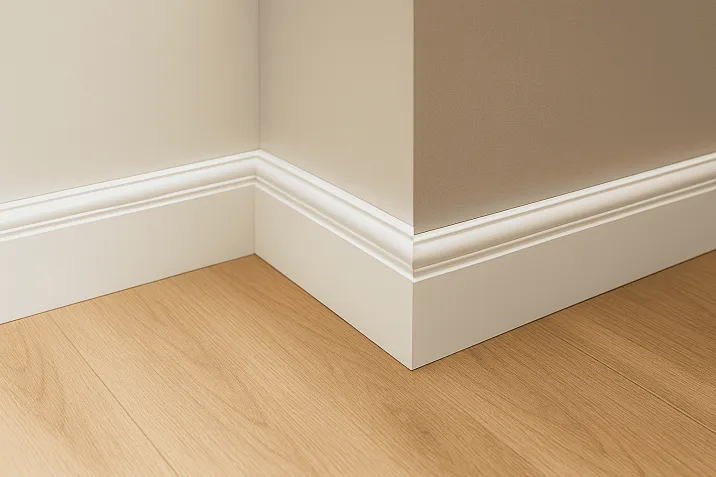
Choosing skirting boards for apartment Choosing skirting boards for apartments presents a complex task requiring consideration of multiple factors: from the type of flooring to the overall interior style. A properly selected skirting board not only completes the room's appearance but also performs important functional tasks: protects walls from damage, conceals expansion gaps, and creates a harmonious transition between the floor and the wall.
In modern apartments, where every interior element must combine practicality with aesthetic appeal, choosing skirting boards becomes especially important. The variety of materials, sizes, profiles, and color options opens up wide possibilities for implementing any design ideas, but simultaneously complicates the decision-making process.


Key criteria for selecting baseboards for apartment conditions




Analysis of operating conditions
Apartment conditions differ from private houses by a stable microclimate, but have their own features that must be considered when selecting material. Central heating creates moderate air humidity of 40-60%, which is favorable for most materials. However, in some rooms, conditions may differ significantly.
In bathrooms and kitchens, humidity can reach 70-80%, requiring the use of moisture-resistant materials. Hallways and corridors are subjected to increased mechanical loads from shoes, bags, and strollers. Living rooms usually have the most favorable conditions for any type of skirting board.
Our factory also produces:


Compatibility with floor coverings
What skirting board for wooden floors Selection depends on the type of floor covering. Each floor material imposes specific requirements on the skirting board regarding expansion coefficient, moisture resistance, and appearance.
Laminate - the most popular covering in apartments - is compatible with any type of skirting board. It is important to note that laminate has significant thermal expansion, so the skirting board must cover a compensatory gap of 8-10 mm.
Parquet and solid wood planks traditionally combine with skirting board for parquet woodenwhich harmonizes in color and texture. However, modern trends allow for contrasting solutions using painted skirting boards.
Ceramic tiles in hallways and kitchens require skirting boards with enhanced moisture resistance. Ceramic skirting boards create a unified ensemble, but wooden and PVC options can also be successfully used.
Vinyl flooring - a practical solution for kitchens and children's rooms. Wooden skirting board on linoleum creates an interesting contrast, adding nobility and warmth to the interior.
Get Consultation
Architectural features of the apartment
Ceiling height determines the optimal skirting board proportions. In standard apartments with ceilings of 2.5-2.7 m, skirting boards of 60-80 mm height are recommended. In apartments with improved layouts and ceilings of 3.0-3.2 m, one can use Wide Wooden Skirting Board height of 100-120 mm.
Room configuration affects the choice of profile and installation method. Rooms with complex shapes and numerous corners require skirting boards with pre-fabricated corner elements or flexible profiles.
Wall condition determines installation requirements. Uneven walls are better concealed by wide skirting boards, which visually level imperfections. Perfectly flat walls allow using thin minimalist profiles.
Materials for skirting boards for apartment use
Solid wood skirting boards: premium solution
Wooden baseboard made from natural solid wood represents the optimal solution for creating a luxurious interior. Natural wood possesses unique properties: the ability to "breathe" and regulate air humidity, natural antiseptic action, and unparalleled texture beauty.
Advantages of solid skirting boards in apartments:
Ecological purity is especially important in enclosed apartment spaces. Solid wood does not emit harmful substances, creating a healthy microclimate. Natural phytoncides in some wood species have antibacterial properties.
The durability of solid skirting boards reaches 50 years with proper use. Unlike composite materials, solid wood can be restored multiple times: sanded, repainted, and coated with new protective finishes.
Versatility of application allows using wooden skirting boards in any room of the apartment. Wooden skirting boards in an apartment create a sense of coziness and nobility.
Choosing wood species for apartment conditions:
Coniferous species (pine, spruce) are suitable for living rooms with moderate load. Resin provides natural protection against moisture and insects. Light shades visually increase space.
Hardwood species (oak, beech, ash) are recommended for high-traffic areas: hallways, corridors, kitchens. High density ensures resistance to mechanical damage.
Color solutions for apartments:
Natural wood tones create a warm atmosphere and harmonize with most interior color schemes. Dark species (walnut, wenge) add sophistication, while light ones (birch, maple) add lightness and freshness.
White Wooden Baseboard becomes a universal solution for modern interiors. White color visually increases room height and harmonizes with any color palette.
MDF baseboards: optimal balance for apartments
Solid wood MDF skirting board Represents a compromise solution between the naturalness of solid wood and the practicality of artificial materials. The base made of medium-density fiberboard is covered with a decorative layer imitating various wood species.
Features of MDF skirting boards in apartment conditions:
Dimensional stability is ensured by the manufacturing technology. MDF is less susceptible to temperature and humidity deformation compared to solid wood, which is important with central heating.
The variety of finishes allows for precise selection of skirting boards to match any floor covering. High-quality films accurately reproduce the texture of expensive wood species at significantly lower cost.
Ease of processing simplifies installation. MDF is easy to cut, drill, and does not splinter, which is important when installing independently in an apartment.
Limitations of using MDF:
Moisture resistance is limited, so in bathrooms and areas with high humidity, it is recommended to use special moisture-resistant grades or alternative materials.
Repairability is less than with solid wood. A damaged decorative layer cannot be restored and requires replacement of the entire element.
PVC skirting boards: practicality for modern apartments
Plastic skirting boards have gained popularity due to their versatility and ease of use. In apartment conditions, they demonstrate their maximum advantages.
Advantages of PVC skirting boards in apartments:
Absolute moisture resistance makes them ideal for bathrooms, kitchens, and children's play areas. The material does not deform from water and is not affected by mold and mildew.
Ease of maintenance is critically important in today's fast-paced lifestyle. PVC skirting boards can be cleaned with any household cleaner, require no special care, and retain their original appearance for years.
The functionality of modern PVC skirting boards includes cable channels for wiring, which is especially relevant in multimedia zones of apartments.
Affordability allows their use in budget projects without compromising on quality.
Modern PVC skirting board finishes:
Printing technologies have reached a high level of realism. High-quality PVC skirting boards accurately imitate the texture of wood, stone, and metal.
The color palette is virtually limitless: from classic wood tones to bright designer solutions.
Skirting board size parameters for apartments
Skirting board height and spatial perception
Wooden Skirting Board Sizes Height significantly affects the visual perception of an apartment. The right height can correct the proportions of the room.
Low skirting boards (40-60 mm) for compact apartments:
In small apartments, low skirting boards create the impression of more space. They do not visually 'eat up' the wall and are suitable for minimalist interiors.
Especially effective in studio apartments, where visual lightness of all elements is important. They pair well with light walls and ceilings.
Medium skirting boards (60-80 mm) as a universal solution:
Wooden Skirting Board 60 mm is considered optimal for most urban apartments. This height provides a balance between functionality and aesthetics.
Sufficient height to protect walls from damage during cleaning and furniture rearrangement. Effectively conceals unevenness at the junction of floor and wall.
High skirting boards (100+ mm) for spacious apartments:
In apartments with improved layouts, high skirting boards emphasize the scale of rooms. They create a sense of luxury and solidity.
Wooden skirting board 100 mm and above are appropriate for living rooms, dining rooms, and offices with high ceilings.
Based on the profile, the interior design style is determined.
Wooden skirting board options The absence of decorative elements simplifies maintenance and creates a sense of order.
Simple profiles for modern apartments:
Rectangular and flat profiles are suitable for minimalist, Scandinavian, and high-tech interiors. Clear lines emphasize the geometric nature of modern design.
The absence of decorative elements simplifies maintenance and creates a sense of order.
Decorative profiles for classic interiors:
Profiles with grooves, protrusions, and rounded edges are suitable for classic, neoclassical, and country-style interiors. They create play of light and shadow, adding depth.
Functional profiles:
Wooden Skirting Board with Cable Channel Solves the problem of cable routing in modern apartments filled with electronics.
Baseboards for different rooms in an apartment
Living room: the focal point
As the main room in the apartment, the living room requires special attention when choosing baseboards. Here, premium solutions are appropriate, highlighting the owner's status and taste.
Wooden Skirting Boards in Interior Design In the living room, they create an atmosphere of coziness and respectability. The choice of wood species depends on the overall color scheme.
For classic interiors, oak baseboards with rich texture are suitable. Modern styles require more minimalist solutions: whitewashed oak, beech, or painted variants.
The height of the baseboard in the living room can be increased to 100-120 mm to create a more formal appearance. Decorative profiles add visual appeal.
Bedroom: comfort and harmony
In the bedroom, priority is given to creating a calm, relaxing atmosphere. Baseboards should harmonize with the overall mood of the room.
Natural materials are preferred for healthy sleep. Solid wood creates a favorable microclimate, regulating air humidity.
The color palette should be calm: natural wood tones, pastel shades. Avoid contrasting solutions that may disrupt tranquility.
Baseboard height is medium (60-80 mm), profile simple or slightly decorative. Silence is important, so quality installation eliminates squeaks and creaks.
Kitchen: practicality above all
Wooden skirting board in the kitchen Requires special attention to protective coatings. High humidity, temperature fluctuations, risk of grease and acid exposure create challenging operating conditions.
When choosing wooden baseboards, a quality protective coating is necessary: polyurethane lacquer, oil-wax, or special impregnations. An alternative is PVC baseboards with realistic wood imitation.
Baseboard height increases to 80-100 mm for better wall protection from splashes. The profile should be simple, without deep grooves where dirt can accumulate.
Children's room: safety and eco-friendliness
In children's rooms, ecological purity of materials is critically important. Types of wooden baseboards Natural solid wood is preferred.
Safety is ensured by rounded edges and absence of sharp corners. The surface should be smooth, without burrs or irregularities.
Ease of maintenance is important for hygiene. The coating must withstand frequent wet cleaning with disinfectants.
Color solutions can be brighter and more cheerful than in other rooms. White and colorful baseboards create a positive mood.
Hallway and corridor: first impression
The hallway experiences maximum loads from outdoor dirt, moisture, and mechanical impacts. The skirting board material must be especially strong.
Hardwood species (oak, beech, ash) or quality PVC skirting boards are best suited for these areas. Dark colors are more practical than light ones, as they show less dirt.
The height of the skirting board can be increased for better wall protection. A simple profile makes cleaning easier.
Bathroom: moisture resistance as a priority
The bathroom presents the greatest challenge for wooden materials. Constant high humidity and direct water exposure require exceptional moisture resistance.
Wooden skirting boards are possible only with moisture-resistant species (teak, larch) and quality protective treatment. Alternatives are PVC or ceramic skirting boards.
If you choose wood, regular treatment with protective compounds and quality room ventilation are necessary.
Style coordination of skirting boards in an apartment
Classic style: traditions and elegance
Classic interiors require appropriate skirting boards. Height of 100 mm, rich decorative profile, natural wood tones or white finish.
Oak wooden skirting board Perfectly suited for classic interiors. Elegant texture and natural color create an atmosphere of luxury.
Details matter: cornices, grooves, moldings emphasize belonging to the classic style.
Modern style: minimalism and functionality
Modern interiors prefer minimalism. Skirting boards 60-80 mm high, simple rectangular profile, neutral colors.
White skirting boards are versatile and visually enlarge the space. They match any wall and floor colors.
Functional features of modern skirting boards include cable channels, hidden fasteners, integrated lighting.
Scandinavian style: naturalness and light
Scandinavian design implies using light wood species and simple forms. Spruce baseboard In natural form or with white paint.
Skirting board height is low (50-70 mm), profile is maximally simple. Matte surfaces are preferable to glossy ones.
Loft: brutality and contrasts
Industrial style allows both rough-sawn wooden skirting boards with emphasized texture and metal options.
Dark colors (wenge, black, dark brown) create contrast with light walls. Artificial aging emphasizes the authenticity of the style.
Economic aspects of skirting board selection
Budget Planning
Wooden baseboard price Varies depending on wood species, profile complexity, and treatment quality.
Economic segment:
- PVC skirting boards: 150-300 rubles per linear meter
- MDF skirting boards: 200-500 rubles per linear meter
- Spruce skirting boards: 300-600 rubles per linear meter
Mid-range segment:
- Beech skirting boards: 600-1200 rubles per linear meter
- Premium MDF: 500-800 rubles per linear meter
Premium segment:
- Oak skirting boards: 1200-2500 rubles per linear meter
- Exotic species: from 2500 rubles per linear meter
Additional expenses
Installation of wooden baseboards Professionals charge 200-500 rubles per linear meter depending on the complexity of work.
Trim elements (angles, caps, connectors) add 10-15% to the total cost.
Protective coatings and stains for wooden skirting boards: 50-150 rubles per square meter of treated surface.
Long-term Economic Efficiency
When assessing total costs, consider the lifespan of materials:
- PVC skirting boards: 10-15 years
- MDF skirting boards: 15-20 years
- Solid wood skirting boards: 30-50 years
The possibility of restoring solid wood skirting boards makes them economically advantageous in the long term, despite their high initial cost.
Technical aspects of installation in an apartment
Features of apartment installation
How to install wooden skirting boards In an apartment, installation has its own nuances related to the type of walls and floors.
Installation to gypsum board walls:
Special anchors for hollow walls or mounting to a metal frame are required. Pre-drilling is mandatory to prevent material damage.
Installation to concrete walls:
Use impact anchors or concrete screws. High-quality drilling is required for accurate fastener placement.
Installation to brick walls:
Mounting is done into mortar joints or brick body. It is important to avoid hitting voids.
Preparatory Work
Acclimating wooden skirting boards in an apartment for 24-48 hours prevents deformation after installation.
Checking wall flatness and local leveling if necessary. Minor irregularities up to 3-5 mm are compensated by the skirting board’s flexibility.
Marking the installation line using a laser or water level ensures even placement around the entire perimeter.
Corner and junction processing
How to Cut Wooden Baseboard Corner installation requires precision and the right tools.
Internal corners are mitered at 45 degrees using a miter gauge or circular saw. Minor adjustments may be needed for non-ideal angles.
External corners also require precise trimming. Alternatively, pre-made corner pieces simplify installation.
Modern trends in baseboard design
Innovative solutions for apartments
Wooden skirting board with lighting Creates a 'floating' floor effect and adds a futuristic touch to the interior. LED strips are installed into special grooves.
Smart baseboards with built-in motion, temperature, and humidity sensors become part of the "smart home" system.
Color Trends
The trend toward naturalness brings back popularity of natural wood tones. Especially relevant are light species: birch, maple, whitewashed oak.
Contrasting solutions are gaining popularity: dark floor - light baseboards, and vice versa. This allows creating accents and visually altering the room's proportions.
Ecological Innovations
Using fast-growing wood species (bamboo, paulownia) reduces ecological load.
Formaldehyde-free binders in composite materials make them safe for health.
Recycled materials (WPC - wood-plastic composites) combine the practicality of plastic with the appearance of wood.
Care and Maintenance of Baseboards in an Apartment
Regular Maintenance
Dry cleaning with a vacuum cleaner using a soft brush removes dust and small debris from profile grooves.
Wet cleaning with slightly damp cloth refreshes the surface. For wooden baseboards, use special wood care products.
Protection from Damage
Installing protective caps at potential impact zones (corridor corners, doorways) extends service life.
Using felt pads under furniture legs prevents scratches during rearrangement.
Seasonal Maintenance
Check the condition of protective coating on wooden baseboards twice a year. Refresh locally if necessary.
Monitor joints and fasteners. Timely removal of minor defects prevents serious problems.
Frequently Asked Questions
Which baseboard to choose for laminate?
Baseboards suitable for laminate are available in any type, but PVC and MDF options are most popular due to wide range of decor choices that accurately mimic laminate finishes. It is important to consider that laminate has significant thermal expansion, so the baseboard must provide a compensatory gap of 8-10 mm. A height of 60-80 mm is optimal for most laminate interiors.
Can wooden skirting be installed in a bathroom?
Wooden baseboards in the bathroom are possible under certain conditions. Choose moisture-resistant species (teak, larch) and ensure quality protective treatment with special moisture-resistant compounds. Good ventilation and regular application of protective treatments are mandatory. In most cases, it is more practical to use PVC or ceramic baseboards, which are not afraid of moisture.
How to choose the height of baseboards for an apartment?
Baseboard height depends on ceiling height and overall room proportions. For standard apartments with ceilings of 2.5-2.7 m, a height of 60-80 mm is optimal. In compact spaces, it is better to use baseboards 40-60 mm high to visually enlarge the space. In apartments with high ceilings (3.0+ m), baseboards 100-120 mm high can be used to create a more formal appearance and correct proportions.
Choosing the ideal baseboard for an apartment requires a comprehensive approach, considering usage conditions, interior style, practical needs, and budget. A correctly selected baseboard not only completes the room's appearance but also serves for many years, delighting owners with its beauty and functionality. Investments in quality materials pay off through longevity, restorability, and increased overall interior value.