Article Contents:
- How to Properly Choose Wood for a Staircase
- How to Design a Wooden Staircase
- How to Build a Wooden Staircase Yourself
- How to Build a Wooden Staircase for a Terrace
- How to Build a Folding Wooden Staircase
- How to Decorate a Staircase Using Balusters, Posts, and Moldings
- Various Styles of Wooden Staircases
- 1. Classic Style
- 2. Modern Style
- 3. Scandinavian Style
- 4. Loft
- Creative Ideas for Decorating Wooden Staircases
- 1. Combining materials
- 2. Built-in Lighting
- 3. Use of Decorative Trim
- 4. Unique Step Shapes
- 5. Wall Gallery Along the Staircase
- Decorating Staircases: Wooden Decor, Moldings, and Cornices
A wooden staircase is not only a structure for moving between floors, but also a key design element that can highlight the style of your home. Building a staircase yourself is not only an opportunity to save on professional services, but also a chance to create a unique piece that fully matches your tastes and needs. In this article, we will consider how to properly choose materials, how to design and assemble a staircase, as well as how to decorate it using decorative elements such as balusters, posts, handrails, and newel posts.
All necessary elements for a staircase can be purchased on the website Stavros, where a wide range of components suitable for any type of staircase is presented.


How to Properly Choose Wood for a Staircase
One of the key aspects when building a staircase yourself is choosing the material. What kind of wood is best for a staircase? The answer to this question depends on several factors: the location (inside the house or outdoors), the load on the staircase, and the overall interior style.
- Oak is one of the strongest and most durable materials. A staircase made of oak will be an excellent choice for a home where reliability and aesthetics are important. Oak is characterized by high resistance to wear and strength, making it an ideal choice for a sturdy and long-lasting staircase.
- Ash is also suitable for staircases, as this wood has high strength and elasticity. Ash has an expressive texture and adds elegance to the interior.
- Beech is a wood with medium density and easy to work with. Beech staircases look modern and suit light interiors with an emphasis on natural materials.
- Pine is a more economical option. Pine staircases are better suited for terraces or porches, as this material requires additional treatment to protect against moisture and mechanical damage. Pine is easier to work with, making it a popular choice for DIY construction.
Each type of wood has its own characteristics and is suitable for different types of staircases. For example, if you plan to build a wooden staircase for a porch, pine may be the best option due to its accessibility and ease of processing. However, for staircases inside the house, it is better to choose oak or ash, which have greater strength and durability.




How to design a wooden staircase
Before starting to build a staircase, it is important to design it properly. Designing includes calculating key parameters: height, width, depth of steps, and angle of inclination. Proper calculation will allow you to create a comfortable and safe structure.
- Staircase height. Measure the distance from the floor of the first floor to the level of the second floor. This parameter determines how many steps you will need. The standard step height is from 15 to 18 cm.
- Step depth. For comfortable movement along the staircase, the step depth should be at least 25 cm. This will ensure a comfortable stride and prevent possible injuries.
- Angle of inclination. The optimal angle of inclination for a staircase is from 30 to 45 degrees. The greater the angle, the steeper the staircase, but it will also occupy less space. More gradual staircases require more space but are easier to use.
- Staircase width. The staircase width should be at least 80 cm to ensure comfortable movement along it. If the staircase is used actively, for example, in a two-story house, it is better to make it wider — around 100 cm.
When planning a staircase, you also need to consider decorative elements that will highlight its style and give it uniqueness. During the design phase, you can choose and calculate the number of balusters, handrails, posts, and newel posts, which will add elegance and a finished look to the staircase.
Our factory also produces:


How to make a wooden staircase by yourself
Now that the staircase project is ready, you can proceed to its construction. Let's consider the step-by-step process of how to make a wooden staircase by yourself.
- Manufacturing stringers. Stringers are load-bearing elements on which the steps rest. They are made from dense wood, such as oak or beech. On prepared boards, you need to mark out notches for the steps using a square and ruler. After marking, cut the stringers using a jigsaw.
- Installing treads and risers. Treads and risers are mounted on the stringers. For this, use carpenter's glue and screws. The treads must be securely fastened to prevent shifting or creaking during walking. Risers serve as vertical supports between treads and reinforce the structure.
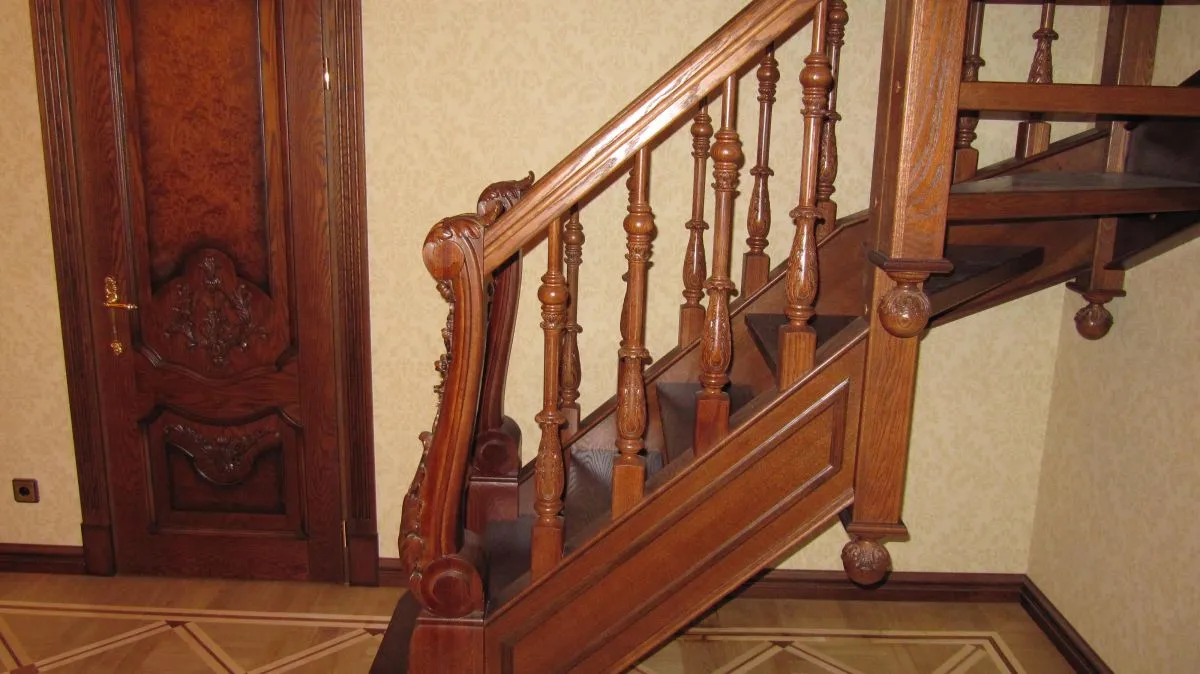
- Installing handrails and balusters. Handrails and balusters for staircases play an important role both in safety and in the staircase's decor. Balusters are vertical posts that support the handrail. They can be simple or carved, depending on the staircase's style. You can choose and buy balusters for staircaseswhich will highlight the beauty of your staircase.
- Handrails for staircases. Handrails are the upper part of the handrail, which you hold onto while ascending or descending the staircase. They can be made from different materials, but for a wooden staircase, wooden handrails are the best option, which you can buy heresecurely fastened to balusters and posts to ensure safety.
- Installing posts for staircases. Posts for staircases are installed at staircase turns or at the beginning of the structure. They are an important structural element supporting the handrails and also serve as a decorative part. You can choose various options staircase posts depending on the style of your home.
- Newel posts for staircases. The final touch in installation is mounting newel posts for staircases. These elements are installed on top of posts and can have various shapes — from simple geometric forms to intricate carved designs. Newel posts add a finished look to the staircase and highlight its style. You can buy newel posts for staircases and choose those that suit you best.
Get Consultation
How to make a wooden staircase to a terrace
For a terrace or porch, wooden staircases are often used. Making a wooden staircase to a terrace can be done using a similar technology as for an interior staircase, but with several key features:
- Choosing wood. For a terrace, it is important to choose wood that is resistant to weather conditions. Larch, oak, or thermally treated pine are suitable for creating an outdoor staircase.
- Protection from moisture. It is important to treat the wood with special moisture-protective agents to prevent rotting and deformation due to precipitation.
- Anti-slip coatings. For an outdoor staircase, it is desirable to use anti-slip coatings on the treads to increase safety during rain or snow.
- Using cornices and skirting boards. To finish a terrace staircase, you can use staircase cornices, which will give the structure a finished look. Cornices can be installed along the staircase landing, creating a smooth transition between the staircase and the terrace. Staircase skirting boards will help protect the lower parts of the structure from dirt and moisture, and also add aesthetic appeal.
How to make a lean-to staircase from wood
A lean-to staircase is a convenient solution for attics, garden areas, or access to elevated areas in a house. Such a staircase can be made quite easily by following basic steps:
- Choosing wood. For a lean-to staircase, suitable woods are light but strong, such as pine or spruce. It is important that the wood is strong and reliable, as a lean-to staircase requires stability.
- Tread attachment. Treads must be securely fastened to the side posts of the extension ladder to prevent slipping and breakage during use.
- Use of protective coatings. If the ladder will be located outdoors, it is important to treat it with antiseptics and varnishes to protect against moisture and insects.
How to decorate a staircase using balusters, posts, and moldings
After installing the main staircase structure, it is important to pay attention to its decoration. Elements such as staircase balusters, posts, moldings, and cornices will help you here. These decorative details will emphasize the staircase's style and add individuality.
- Baluster for staircases. Balusters can be simple or carved, depending on the style of your staircase. Use balusters for staircases to add elegance and refinement to the structure. You can buy balusters for staircases, choosing the appropriate style and design.
- Staircase posts. Posts play an important role in supporting handrails and give the staircase a finished look. Choose staircase posts that harmonize with the overall interior design. They can be carved or simple, depending on the style of your home. You can buy staircase posts.
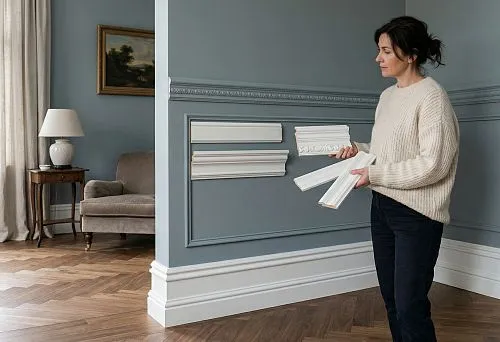
- Moldings and cornices for staircases. Moldings and cornices will help complete the staircase's design and add elegance. These elements can be used to decorate treads or to decorate walls alongside the staircase. You can buy moldings and cornices for staircases and choose those that best suit your interior.
- Finials for staircases. Install finials on posts to give the staircase a finished and stylish look. Finials can be simple geometric shapes or intricate carved figures. You can buy newel posts for staircases and choose the most suitable ones for your project.
Creative ideas for decorating wooden staircases and various styles
Creating and decorating a wooden staircase yourself is not just a question of functionality, but also an opportunity to show a creative approach. Staircase decoration can become an accent in the interior or exterior of your home, and the right choice of style and decorative elements plays a key role here. In this article, we will consider creative ideas for decorating staircases, discuss various styles that will help make your staircase unique, and explain how to use decorative elements such as staircase balusters, handrails, staircase posts, and finials.
All necessary decorative elements for staircases can be found on the website Stavros.
Various styles of wooden staircases
The staircase can be made in various styles depending on the architecture of your home and your preferences. Below we will consider several popular staircase styles and suggest creative ideas for their decoration.
1. Classic style
Classic style is a choice for those who prefer luxury, elegance, and tradition. Staircases in the classic style are often adorned with complex decorative elements and carvings. Characteristics of this style include:
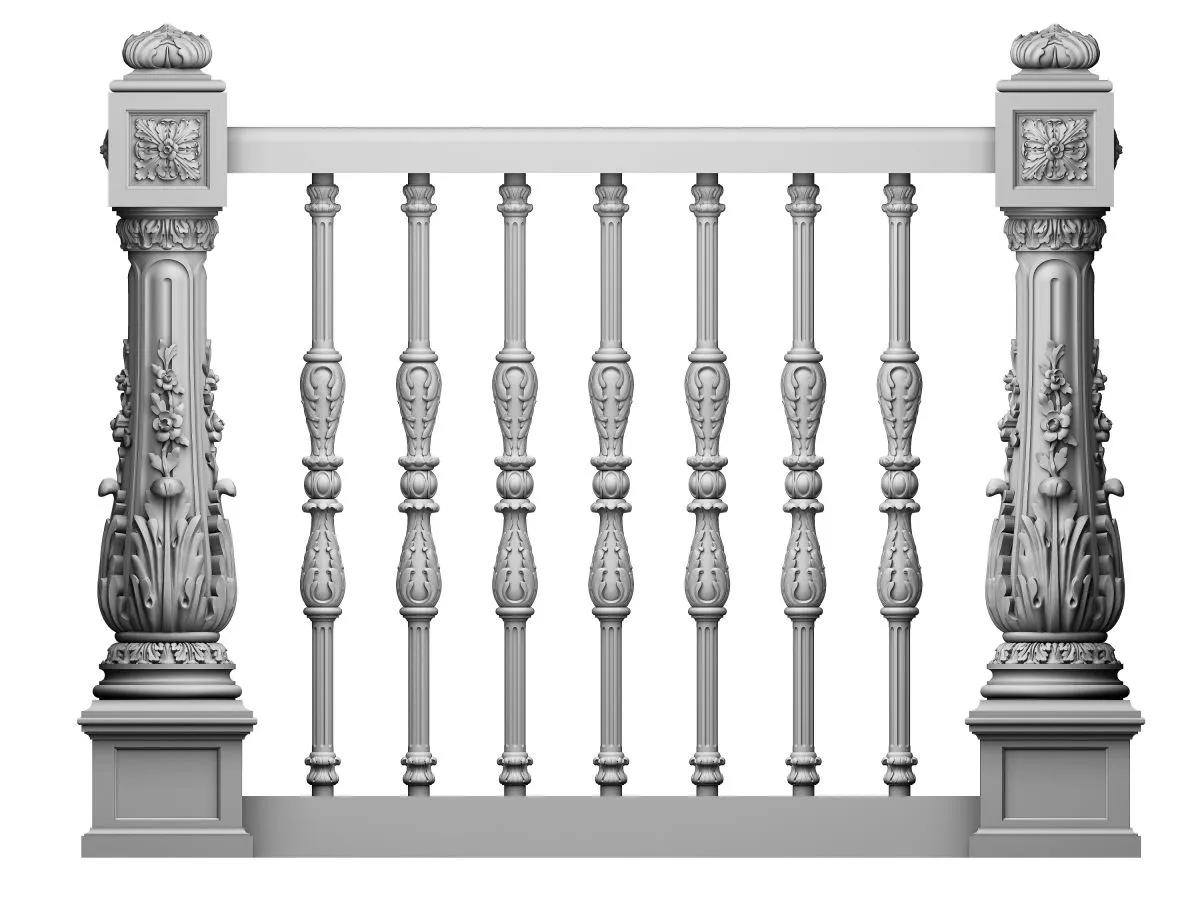
● Carved balusters for staircases, which give the staircase elegance and grandeur. In a classic interior, such balusters are a central decorative element. Browse the selection balusters for staircases, to choose suitable models.
● Carved staircase posts. The classic style requires the use of massive and carved posts, which will complete the overall picture. Posts are not only structural elements but also an important part of the decor. You can buy staircase posts, which will suit your staircase.
● Finials for staircases, which decorate the tops of posts. These can be carved spheres, pyramids, or other shapes. Finials add a finished look to the staircase and emphasize its style. Select Staircase finials for your project.
● Moldings and cornices. In the classic style, moldings and cornices are often used to decorate walls alongside the staircase. This allows for a smooth transition between the staircase and the walls. Moldings for staircases — are decorative elements that give the interior a finished look.
A creative idea for a classic staircase could be using gilded elements or decorative inserts of marble or glass in combination with wood.
Modern Style
Modern staircases are characterized by minimalism and clear lines. Unlike classic style, here fewer decorative elements are used, and emphasis is placed on simplicity and functionality. Main features of the style:
● Simple balusters for staircases. Modern style requires concise solutions. Balusters can be smooth, straight, and without complex decorative elements. Choose balusters for staircaseswhich will emphasize the minimalism of your interior.
● Handrails for staircases. In modern style, handrails are often made of metal or combined with wood to create contrast. If you want to use wooden handrails for staircases, choose models with smooth surfaces and without unnecessary decoration. Browse the selection handrails for staircases.
● Cornices and moldings in modern style can be minimalist and strict. Use moldings for staircases to emphasize the simplicity of lines and purity of forms. You can buy moldings for staircaseswhich will suit your interior.
A creative idea for modern style could be using hidden lighting under steps or built-in niches along the staircase, which can be decorated with paintings or decor.
3. Scandinavian Style
Scandinavian style is a combination of simplicity, functionality, and natural materials. Staircases in Scandinavian style are usually made of light wood and have minimal decorative elements. Main characteristics:
● Simple wooden balusters. In Scandinavian style, light wood species such as pine or birch are used. Balusters should be simple, without carving, with emphasis on the natural wood texture. Browse the options balusters for staircaseswhich will suit your interior.
● Handrails from light wood. Handrails for staircases in Scandinavian style are often made of wood with transparent lacquer to preserve the natural color and texture. You can buy handrails for staircaseswhich will emphasize Scandinavian style.
● Moldings and skirting boards from light wood. In this style, it is important that moldings and cornices look natural and emphasize the purity of lines. Choose suitable Moldings for staircaseswhich will help create a feeling of coziness and spaciousness.
A creative idea for Scandinavian style could be using white or pastel colors for walls along the staircase, as well as adding soft lighting that will create a cozy atmosphere.
4. Loft
Loft is an industrial style that combines rough textures and minimalism. Staircases in loft style are often made of wood combined with metal. Characteristics of this style:
● Metal and wooden balusters. Balusters can be made of metal to contrast with wooden steps. But if you prefer wood, choose simple balusters for staircaseswhich will harmonize with the industrial ambiance.
● Handrails of wood and metal. In loft style, different materials are often combined. For handrails, you can use wood or metal, creating contrast between textures. Choose stair railingswhich will suit your project.
● Cornices and moldings can be minimalist, with emphasis on functionality. For loft style, simple Moldings for staircases made of natural wood.
A creative idea for loft style could be using open metal structures, as well as adding elements of raw wood and concrete that will emphasize the industrial character of the interior.
Creative ideas for decorating wooden staircases
Decorating a staircase can be a creative process where you can combine different materials, decor, and textures to make your staircase unique. Below are several creative ideas for decorating wooden staircases.
1. Combining materials
Use a combination of wood and metal to create an interesting contrast. Wooden steps and metal balusters for staircases create a stylish and modern look. You can choose metal or combined balusters for staircaseswill add an industrial or modern look to the staircase.
2. Built-in Lighting
Adding built-in lighting under the steps will create a "floating" staircase effect. This is not only aesthetically pleasing but also functional, as illuminated steps provide additional safety during nighttime.
3. Use of Decorative Appliqués
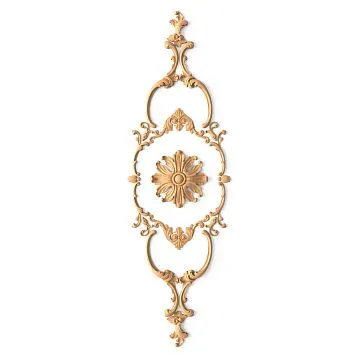
Decorative wooden appliqués are a way to give the staircase individuality. You can adorn balusters, staircase posts, and handrails with carved appliqués that add elegance and highlight the style of your interior. See options decorative elements for staircasesto choose suitable solutions for your project.
4. Unique Step Shapes
To create a creative and unconventional solution, try using unusual step shapes, such as rounded or beveled edges. This will make the staircase visually interesting and draw attention to its design.
5. Wall Gallery Along the Staircase
Create a gallery on the wall along the staircase, decorating it with paintings, photographs, or decorative elements. This will make the staircase the focal point of the interior and add individuality to it.
Staircase Decoration: Wooden Decor, Molding, and Cornices
Proper decoration is an important part of creating a beautiful and harmonious staircase. Decorative elements such as staircase moldings, staircase cornices, and post finials help give the structure a finished look.
● Staircase Moldings. Moldings can be used to decorate walls along the staircase run or for decorative treatment of steps. Choose Moldings for staircasesthat harmonize with your style, whether classic, minimalist, or Scandinavian style.
● Staircase Cornices. Cornices can be installed along the steps or on walls to create a smooth transition between different elements. Select suitable staircase cornicesthat will add elegance to your project.
● Post Finials. Finials are the final touch in staircase decoration. Install carved or simple finials on the tops of posts to complete the look. See the selection of staircase finialsthat will help add an accent to the decoration.
Thus, proper decoration and style selection for the staircase will help you create a unique structure that is not only functional but also a true work of art.
Conclusion
Creating a wooden staircase yourself is not only a functional process but also an opportunity to demonstrate a creative approach, using various stylistic solutions and decorative elements. It is important not only to design the staircase but also to properly select decorative details that will highlight its uniqueness and harmoniously fit into the interior of your home.
Choosing suitable decorative elements, such as balusters for staircases, handrails for staircases, posts for staircases, and finials for staircases, is key to creating a stylish and durable structure. See the wide range of staircase components available on the website Stavroswhere both classic and modern solutions for staircase decoration are presented.
Do not forget about moldings and cornices, which add elegance and completeness to your staircase. These elements can be used to decorate steps or to create a smooth transition between the staircase and the wall. Properly selected Moldings for staircases will help give your home coziness and style.
For those seeking original solutions, you can use additional decorative elements such as polyurethane appliqués and wooden appliqués. They allow you to add unique accents to staircases or furniture, making them more expressive. See the selection of polyurethane appliqués and wooden appliquésto find suitable decor for furniture and staircases.
If you wish to add additional accents to the interior, pay attention to furniture decor, which allows you to create harmony between the staircase and other elements of the house. decor for furniture may include carved appliqués, moldings, and other elements that will help complement the overall style of your home.
Thus, properly chosen decorative elements and staircase style can transform your home, making it unique and harmonious. Regardless of the style you choose—classic, Scandinavian, modern, or loft—it is important to remember the details that will give your project individuality and completeness.