Article Contents:
- Philosophy of Individual Approach: The Heart of Successful Sales
- Client as Co-Creator of the Project
- Emotional Engagement as a Sales Driver
- Architecture of Successful Sales: From Contact to Implementation
- Primary Needs Assessment
- Techniques of Active Listening in Custom Production
- Presenting Possibilities Instead of Ready Solutions
- Pricing in Custom Production: The Art of Balance
- Psychology of Perceived Value of Individual Solutions
- Flexible Payment Models
- Technological Solutions for Custom Production
- 3D Modeling as a Sales Tool
- Augmented Reality in Project Presentations
- Sales Specifics of Different Categories of Custom Furniture
- Custom Kitchens: Functionality Above All
- Custom Soft Furnishings: Comfort and Individuality
- Children's Furniture: Safety and Growth Prospects
- Project Management: From Order to Delivery
- Design as a Service
- Quality and Timeline Control
- After-Sales Service: Foundation of Long-Term Relationships
- Warranty Service for Custom Furniture
- Loyalty Programs for Customers
- Marketing Strategies for Custom Production
- Positioning Uniqueness
- Collaboration with Designers and Architects
- Digital Transformation of Custom Production
- Online Furniture Configurators
- CRM systems for order management
- Risk management in custom production
- Legal aspects of working with clients
- Quality control at all stages
- Staff training for custom production
- Specific competencies of sales consultants
- Continuous development programs
- International experience and best practices
- European standards for custom production
- Asian innovations in production
- Ecological trends in custom production
- Sustainable materials and technologies
- Energy-efficient production
- Frequently Asked Questions
- Conclusion: the art of creating the client's dream

The custom furniture industry is experiencing a golden age. In the era of mass production and standardized solutions, consumers increasingly seek exclusivity, individuality, and the ability to turn their own ideas into reality. This is why the question ofsell custom furniturebecomes critically important for entrepreneurs striving to carve out their niche in this profitable segment.
Custom furniture is not just a product — it is the embodiment of the client's dream of a perfect space. Each project is unique, every decision requires an individual approach, and every deal is built on a deep understanding of the client's needs. Under such conditions, traditional sales techniques work only partially, requiring a radical rethinking and adaptation.


Philosophy of individual approach: the heart of successful sales




Client as co-creator of the project
In the field of custom furniture, the client ceases to be merely a buyer — they become an active participant in the creative process. A successful specialist understands that they are not selling a ready-made item, but the opportunity to create a unique solution. This fundamentally changes the approach to communication and service presentation.
A traditional furniture seller demonstrates ready-made samples and talks about the features of existing models. A specialist in custom furniture must be able to visualize the non-existent, turn ideas into concrete projects, and find a balance between the client's desires and the technical capabilities of production.
The psychology of the client fundamentally differs from the psychology of a buyer of ready-made furniture. The client is willing to wait, willing to pay extra for uniqueness, but in return expects exceptional attention to their needs. They want to feel not like a client, but like a partner in creating something special.
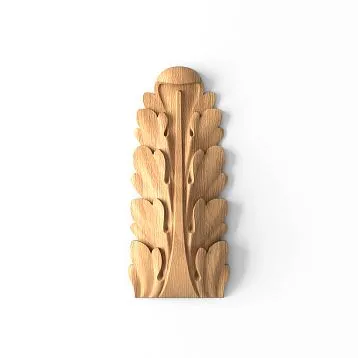
Our factory also produces:


Emotional engagement as a sales driver
How to sell furniture properlyon custom? The key lies in the ability to create emotional engagement of the client in the development process. The client should not merely agree to purchase — they should fall in love with the future result even at the design stage.
Emotional engagement begins with the first meeting. A skilled specialist does not ask 'what furniture do you want,' but is interested in the client's lifestyle, their dreams of an ideal home, memories of favorite interiors. Every detail of the conversation becomes a brick in the foundation of the future project.
Visualization plays a critical role in creating an emotional connection. 3D modeling, sketches, mood collages — all these tools help the client not only understand how the custom furniture will look, but also feel what emotions it will evoke in daily life.
Get Consultation
Architecture of successful sales: from contact to implementation
Initial diagnosis of needs
Working with the client begins long before discussing specific models and prices. The first stage — a deep diagnosis of needs, which includes not only functional requirements but also psychological motivations, aesthetic preferences, and budget constraints.
Professional diagnosis includes an analysis of the space for which the furniture is being ordered. Room dimensions, layout features, natural lighting sources, existing interior elements — all these factors influence the final decision. Understanding thatWhat new-generation furniture is made of — a question customers must receive comprehensive answers to. Eco-friendliness, durability, ease of care — specific advantages speak louder than abstract 'innovation'.of different categories helps to recommend optimal materials for specific usage conditions.
Analysis of the client's lifestyle is equally important. A family with young children has different requirements for furniture, while a single young professional has completely different ones. An older couple furnishing a country house thinks about comfort and practicality. Newlyweds creating their first family home seek beauty and romance.
Techniques of active listening in custom production
The ability to listen to the client is a fundamental skill for a custom furniture sales specialist. But listening in this context goes beyond simple perception of words. It is a comprehensive process of analyzing verbal and non-verbal information, identifying hidden needs, and understanding the true motivations behind the order.
Active listening begins with creating a trusting atmosphere. The client must feel that their opinion is valued, their ideas are taken seriously, and their budget constraints are respected. Only in such an atmosphere is the client willing to open up and share their true desires and concerns.
The paraphrasing technique is especially effective when working with furniture clients. By repeating in their own words what the client said, the specialist not only demonstrates attentiveness but also clarifies details, identifies potential misunderstandings. 'If I understood correctly, you need a cabinet that is spacious but won't clutter a small bedroom?' — such an approach helps structure information and move toward specific solutions.
Presenting possibilities instead of ready-made solutions
Traditional product presentation in the field of custom furniture does not work. You cannot show what does not yet exist. Instead of demonstrating ready-made items, the specialist presents possibilities — the creative potential of the workshop, the flexibility of production processes, the breadth of material resources.
A portfolio of completed projects becomes the primary presentation tool. However, it must be presented skillfully — not as a catalog of ready-made solutions to copy, but as a demonstration of diverse possibilities. Each project in the portfolio should illustrate a specific competence: working with complex shapes, using unusual materials, solving non-standard tasks.
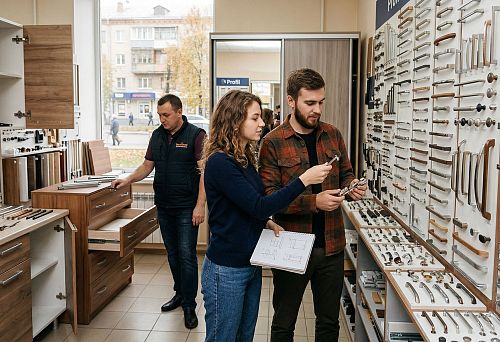
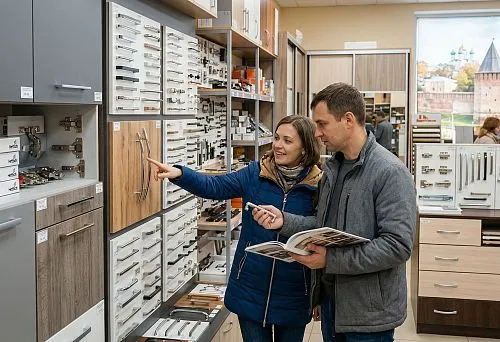
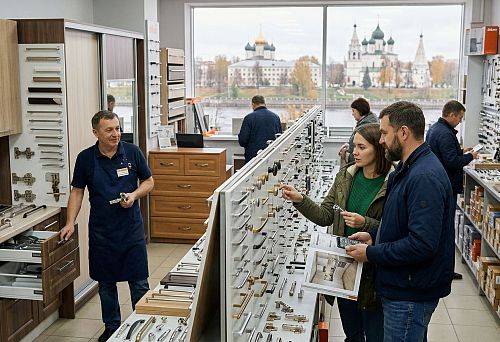
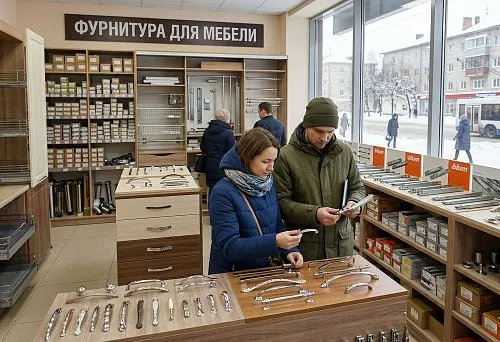
Material samples, hardware, and finishes acquire special importance in custom production. The client must have the opportunity to touch, feel, and assess the quality of all components of the future item. Knowledge of the quality,where to buy furniture decorhigh-quality, allows offering the client exclusive elements that will distinguish their furniture from mass-market solutions.
Pricing in custom production: the art of balance
Psychology of perceiving the value of individual solutions
Pricing for custom furniture is a delicate art requiring understanding of client psychology and market specifics. Clients are willing to pay a premium for individuality, but the size of this premium must be perceived as fair and justified.
The cost of custom furniture consists of multiple components: design, materials, masterwork, uniqueness of the solution, complexity of implementation. Each of these components must be understandable to the client and justified in terms of the value created.
An effective pricing presentation strategy includes step-by-step disclosure of the cost structure. First, the client sees the total amount, then its breakdown by main items. This approach allows the client to understand the pricing logic and make an informed decision.
Flexible payment models
Custom furniture requires significant initial investments from the client, which may become a barrier to decision-making. Flexible payment schemes help reduce financial burden and make the order more accessible.
Installment payment is the most common model in custom production. It usually includes an advance payment upon signing the contract, an intermediate payment at a certain stage of production, and final payment upon delivery of the finished item. This scheme reduces risks for both the client and the executor.
Installment programs are especially relevant for large orders. The ability to spread payments over several months makes expensive projects accessible to a broader range of clients.how to sell furniture quicklyon order? Flexible payment terms significantly accelerate the decision-making process.
Technological solutions for custom production
3D modeling as a sales tool
Modern technologies have fundamentally changed the process of selling custom furniture. 3D modeling allows the client to see the result even before production begins, significantly reducing risks and increasing confidence in the correctness of the choice.
High-quality 3D visualization should be as realistic as possible. Accurate material colors, proper lighting, realistic textures — all these details affect how the client perceives the project. The ability to virtually 'walk around' future furniture and view it from different angles creates a sense of presence and emotional engagement.
Interactive capabilities of 3D modeling are especially valuable when working with clients. The ability to change colors, materials, and configurations in real time helps find the optimal solution through iterations. The client becomes an active participant in the design process, increasing their satisfaction with the result.
Augmented reality in project presentations
Augmented reality technologies open new possibilities for presenting custom furniture. Using a mobile app, the client can 'place' a virtual model of future furniture in their real space, assess its fit with the interior, and check proportions.
AR technologies are especially effective when working with clients who find it difficult to mentally visualize the future result. The ability to see ordered furniture in their own apartment via a smartphone screen removes many doubts and accelerates decision-making.
Specifics of selling different categories of custom furniture
Custom kitchens: functionality above all
Custom kitchen furniture is the most complex and responsible category. Here, functionality is critically important; any error in design can significantly affect the client's daily comfort. Understanding the,What materials are used for kitchen furniturehelps offer optimal solutions for various usage conditions.
Ergonomics of kitchen space requires deep specialized knowledge. Correct height of work surfaces, optimal placement of storage systems, proper organization of the 'work triangle' — all these aspects must be considered during design.
Kitchen furniture materials must have special properties: moisture resistance, resistance to temperature fluctuations, ease of maintenance. Clients often underestimate the importance of selecting the right materials, and the specialist's task is to explain these nuances in an accessible manner.
Custom soft furniture: comfort and individuality
how to sell soft furnitureCustom-made — a special art. Here, not only aesthetic qualities but also comfortable characteristics, which are difficult to assess during the design stage, are important.
Choosing fillers, transformation mechanisms, upholstery materials requires detailed discussion with the client. Each person has individual preferences regarding firmness, seat height, and seat depth. The specialist's task is to identify these preferences and implement them in a specific product.
Fabric and leather samples take on special importance when ordering soft furniture. The client must have the opportunity not only to see the material but also to evaluate its tactile qualities, durability, and ease of care.
Children's furniture: safety and growth prospects
Custom children's furniture requires a special sales approach. Parents have higher requirements for safety, eco-friendliness, and functionality. At the same time, they think ahead, understanding that the child will grow, and the furniture must adapt to changing needs.
"Growing" furniture — a popular trend in the children's segment. Tables with adjustable height, beds with extendable options, modular storage systems — such solutions are especially valued by parents for their practicality and cost-effectiveness.
Safety of children's furniture should never be compromised. Rounded corners, reliable mechanisms, eco-friendly materials — all these requirements must be met unconditionally, regardless of the project budget.
Project management: from order to delivery
Design as a service
In custom furniture production, design becomes a separate service with its own independent value. A quality project is not just drawings and specifications — it is a comprehensive solution that takes into account all nuances of the space and the client's needs.
Phased design helps structure work with the client. The initial sketch allows assessing the overall concept, working drawings — to refine details, 3D visualization — to see the final result. Each stage requires client approval and may include adjustments.
Author supervision of project implementation ensures the finished product matches the original concept. The specialist must monitor manufacturing quality, adherence to dimensions, and correct assembly and installation.
Quality and timeline control
Managing timelines in custom production requires special attention. Clients often underestimate the time needed to manufacture quality furniture, and it is important to set realistic expectations from the very beginning.
Step-by-step production control allows identifying problems early and adjusting the process. Intermediate reports to the client on progress keep them engaged in the project and reduce anxiety about waiting.
Pre-fitting is especially important for complex projects. The opportunity to see the furniture during manufacturing, check dimensions and seating, allows making final adjustments before completion.
After-sales service: the foundation of long-term relationships
Warranty service for custom furniture
Warranty service for custom furniture has its own specifics. Unlike mass production, here each item is unique, and the approach to service must be individual.
Extended warranty for custom furniture — a competitive advantage valued by clients. The manufacturer's willingness to take responsibility for the quality of work over a long period builds trust and encourages clients to place an order.
Warranty service regulations must be clearly specified in the contract. What cases are covered by warranty, what procedures are provided for defect elimination, what repair timelines are allocated — all these questions must be resolved in advance.
Loyalty programs for clients
Clients of custom furniture are highly valuable to the business. They are willing to pay a premium for individuality, often order furniture for different rooms in stages, and recommend the manufacturer to friends and acquaintances.
Loyalty programs for clients may include discounts on repeat orders, priority service, free interior design consultations.What to give a cabinetmakerOn professional holidays — such gestures of attention strengthen relationships with clients.
The client contact database becomes one of the company's main assets specializing in custom furniture. Regular communication with former clients, informing them about new opportunities and services helps generate repeat sales.
Marketing strategies for custom production
Positioning uniqueness
Custom furniture marketing is built on positioning uniqueness and exclusivity. Each project is an artwork created specifically for a particular client. Such an approach requires appropriate promotional tools.
The portfolio of completed projects becomes the main marketing tool. High-quality photos of finished interiors, stories of creating unique projects, and feedback from satisfied clients — all of this builds the workshop’s image and attracts new clients.
Participation in interior design and architecture exhibitions allows demonstrating craftsmanship to a broad professional audience. Such events attract designers and architects who can become sources of regular orders.
Cooperation with designers and architects
Professional designers and architects are an important channel for attracting clients for custom furniture manufacturers. Interior specialists regularly encounter the need to order unique furniture items for their projects.
Partner programs for designers may include special pricing conditions, priority service, technical support during the design phase. Understanding how to createUnique Interiors, unites the interests of designers and furniture manufacturers.
Joint projects with renowned designers enhance the status of the furniture workshop and attract attention from affluent clients. Such projects often become reference cases and are used in marketing materials.
Digital transformation of custom production
Online furniture configurators
Modern online configurators allow clients to independently create custom furniture projects. Such tools expand the sales geography and enable working with clients from remote regions.
A quality configurator should be intuitive and include all necessary options: selection of sizes, materials, colors, hardware. Real-time automatic cost calculation helps the client make informed decisions.
Integration of the configurator with the design system and production processes increases efficiency. The client’s order automatically converts into a technical specification for production, reducing the likelihood of errors and speeding up manufacturing.
CRM systems for order management
Custom production specifics require using specialized CRM systems adapted to long sales cycles and complex projects. Such systems must track the entire client interaction history, project status, and deadlines.
Automating communication with clients helps maintain their engagement throughout the project. Automatic notifications about order progress, reminders about key stages, requests for feedback — all of this improves service quality.
Analytical capabilities of CRM systems allow identifying the most profitable project types, effective client acquisition channels, and optimal pricing strategies.
Risk management in custom production
Legal aspects of working with clients
A contract for custom furniture manufacturing must detail the rights and obligations of both parties. Special attention should be paid to technical requirements, deadlines for completion, procedures for changes, and acceptance procedures.
Intellectual property protection becomes an important aspect in the era of 3D modeling and digital design. Copyrights for unique projects must be protected by appropriate legal tools.
Liability insurance for clients helps minimize financial risks in case of claims. This is especially relevant for expensive projects, where potential damage may be significant.
Quality control at all stages
A multi-level quality control system is especially important in custom production, where each error may lead to serious financial losses and reputational risks.
Incoming control of materials and components must be especially thorough. Any defective material in custom production can ruin the entire project, so cutting corners on control is unacceptable.
Operational control at each production stage allows identifying problems early and correcting the process. Special attention should be paid to maintaining dimensions and geometry — in custom furniture, every millimeter may be critical.
Training staff for custom production
Specific competencies of sales consultants
Selling custom furniture requires staff with special competencies beyond traditional sales skills. The consultant must understand design basics, comprehend manufacturing technologies, and be able to read blueprints.
Spatial thinking is a critically important skill for a custom furniture specialist. The ability to visualize how the finished product will look in a specific space helps avoid design errors and increases client satisfaction.
Communication skills when working with clients have their own specifics. The consultant must be able to identify hidden needs, manage client expectations, and explain complex technical solutions in simple terms.
Continuous Development Programs
The furniture industry is constantly evolving: new materials, technologies, and design solutions emerge. A continuous learning system for staff is a mandatory element of a successful business in the custom manufacturing sector.
Technical training should include studying new materials and technologies, updating knowledge about hardware and mechanisms, mastering modern design systems.
Developing soft skills is equally important for specialists in custom furniture sales. Training in sales psychology, project management, and conflictology increases efficiency in working with clients.
International experience and best practices
European Standards for Custom Production
The European custom furniture market is characterized by high standards of quality and service. German manufacturers are renowned for technical precision and reliability, Italian manufacturers for design and creativity, Scandinavian manufacturers for eco-friendliness and functionality.
The European quality certification system includes not only control of finished products but also audits of production processes, environmental standards, and the manufacturer's social responsibility.
Customer service in European companies often includes designer services, delivery and installation, warranty and post-warranty maintenance. Such a comprehensive approach increases the value of the offer and allows setting premium prices.
Asian Innovations in Production
Asian custom furniture manufacturers actively implement digital technologies and production automation. Using robotic systems allows combining the individuality of custom production with the efficiency of mass production.
Online platforms for ordering furniture have gained widespread popularity in China and South Korea. Such systems allow customers to design furniture themselves, track the manufacturing process, and receive finished products without visiting the manufacturer's office.
Eco-Trends in Custom Production
Sustainable Materials and Technologies
Consumer eco-awareness is growing, and this is especially noticeable in the custom furniture segment. Customers are willing to pay extra for the use of eco-friendly materials and technologies.
FSC-certified wood with labeling has become a standard for the premium segment of custom furniture. The use of formaldehyde-free adhesives and water-based finishes is also highly valued by eco-conscious consumers.
Waste recycling and circular economy open new opportunities for custom production. Restoration of antique furniture, use of recycled materials, trade-in programs — these directions are actively developing.
Energy-efficient production
Energy efficiency of production processes is becoming an important competitive advantage. Using renewable energy sources, optimizing production processes, minimizing waste — all this affects product cost and the company's ecological image.
Carbon-neutral production is a new trend that is still forming but already attracts attention from advanced consumers. Compensating for carbon footprint through reforestation programs or investments in "green" technologies may become a significant marketing tool.
Frequently asked questions
How long does it take to manufacture custom furniture?
The manufacturing time for custom furniture varies from 2-3 weeks for simple projects to 2-3 months for complex solutions. Time includes design, approval, manufacturing, and installation. Large furniture requires more time due to the specific processing of wood.
Can the project be changed during manufacturing?
Changes can be made, but they must be agreed upon at an early stage of production. Major changes after manufacturing has begun may require additional payment and extended timelines. Therefore, it is important to thoroughly plan all details during the design stage.
What does the warranty for custom furniture cover?
The warranty typically covers manufacturing defects, hardware failure, and structural geometry deviations. It does not cover damage from improper use, natural wear, or changes in material appearance due to time and operating conditions.
How to choose materials for custom furniture?
Material selection depends on the furniture's functional purpose, operating conditions, budget, and aesthetic preferences. For kitchens, moisture resistance is important; for children's rooms, eco-friendliness; for offices, practicality and sophistication. The consultant should thoroughly explain the properties of various materials.
Is it worth ordering furniture online?
Online ordering is possible, but requires a high level of trust in the manufacturer. It is important to study the portfolio, customer reviews, and warranty terms. For expensive projects, it is recommended to meet personally with a consultant and inspect material samples.
How to control the quality of manufacturing?
A reputable manufacturer provides the opportunity for intermediate quality control at key production stages. You can request photo reports, visit the workshop to inspect the item, or conduct a preliminary fitting before final assembly.
Custom furniture is an investment in the comfort and individuality of your space. Choosing the right manufacturer and properly planning the project are the keys to a successful result that will bring joy for many years.
Conclusion: The art of creating a client's dream
The art of selling custom furniture requires a combination of multiple competencies: technical knowledge, design intuition, psychological insight, entrepreneurial savvy. In an era of mass production and standardized solutions, the ability to create a unique product becomes a source of sustainable competitive advantage.
A successful custom furniture sales specialist is not just a seller, but a consultant, designer, and psychologist rolled into one. He must be able to extract the client's true needs, translate them into technical solutions, create emotional engagement in the project, and bring it to successful completion.
sell custom furnitureIn modern conditions, this is a comprehensive task requiring continuous development and refinement. Digital technologies open new possibilities for visualization and design, but the human factor remains the key element of success.
The market for custom furniture continues to grow and evolve. Consumers are becoming more demanding, yet simultaneously willing to pay for quality and individuality. Ecological trends, technological innovations, and changes in lifestyle create new niches and opportunities for entrepreneurs.
STAVROS understands the specifics of custom production and offers a wide range of materials, hardware, and decorative elements to create unique furniture. Partnering with STAVROS means access to high-quality materials, technical project support, and the opportunity to create furniture that surpasses even the most discerning clients' expectations and becomes a realization of their dream of an ideal space.