Article Contents:
- Philosophy of proper installation: understanding the system
- Anatomy of loads: what happens inside the structure
- Material science nuances: wood as a living organism
- Normative base: safety requirements above all
- Geometric parameters: mathematics of safety
- Strength characteristics: tensile test
- Master's tool arsenal: precision above speed
- Measuring Instruments: The Foundation of Accuracy
- Cutting tool: cut quality determines quality
- Fastening Technologies: From Classics to Innovations
- Threaded connections: standard of reliability
- Dowel Connections: Traditional Elegance
- Self-tapping screws: the balance of simplicity and efficiency
- Step-by-step installation technology: symphony of precision
- Preparation stage: planning as the foundation of success
- Baluster processing: preparation for perfection
- Installation of support posts: foundation of the railing
- Specifics of Fastening to Different Bases
- Mounting to wooden treads: working with live material
- Mounting on stringers: accounting for structure inclination
- Working with concrete foundations: maximum strength
- Installing handrails: final chord
- Handrail preparation: precision to the millimeter
- Fastening technology: hidden connections
- Quality control: tested over time
- Visual assessment: the master's eye
- Load tests: checking for strength
- Typical mistakes: learning from others' errors
- Planning errors: underestimating the importance of preparation
- Technological violations: the price of haste
- Modern trends: looking toward the future
- Smart systems: technology serving safety
- Ecological Aspects: Care for the Planet
- Conclusion
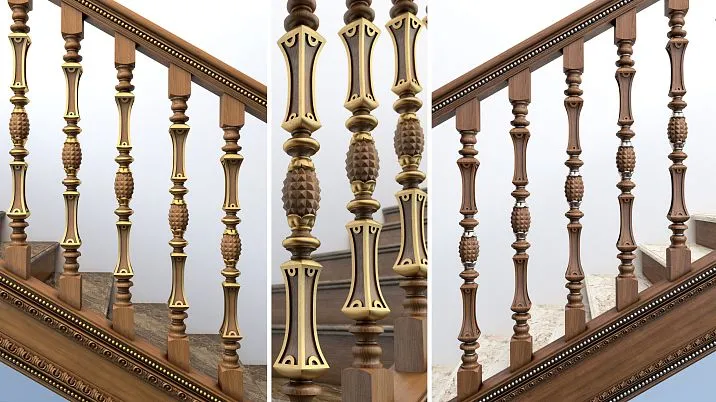
Stand before the stairs and wonder why some railings look like works of art, while others look like clumsy DIY projects? The secret lies in how to properly install balusters on stairs, considering every detail—from material selection to final polishing. After fifty years in woodworking, I’ve seen thousands of staircases, and I can confidently say: the devil is in the details.
Imagine a symphony orchestra where every instrument must play in harmony. Similarly, a stair railing works—each baluster, each fastening, each millimeter of distance between elements creates the overall harmony of the structure. A wrongly installed post can ruin the entire composition, turning an elegant staircase into a constant source of irritation.
Modern regulations require stair railings not only to be aesthetically pleasing but also to have the strength of reinforced concrete. The structure must withstand a horizontal load of 100 kilograms per linear meter—this means that even the heaviest family member can lean heavily on the handrails without fear of them breaking. Achieving such strength is possible only through flawless installation technology.


Philosophy of proper installation: understanding the system
Before handling the tool, it is necessary to understand: stair railing is not just a set of decorative sticks, but a complex engineering system. Each baluster acts as a miniature column, receiving loads from the handrail and transferring them to the stair base.




Anatomy of Loads: What Happens Inside the Structure
When a person leans on the handrail, a complex pattern of stresses arises. The horizontal force creates a bending moment in the baluster, which seeks to overturn it. This moment must be reliably absorbed by the connection to the tread or stringer. Simultaneously, the vertical component of the load compresses the post, testing its stability.
Dynamic loads complicate the picture. The rhythmic movement along the stairs creates vibrations that may enter into resonance with the structure's natural oscillations. That is why professional craftsmen pay special attention to the stiffness of connections — any play can become a source of unpleasant creaking and gradual degradation of fasteners.
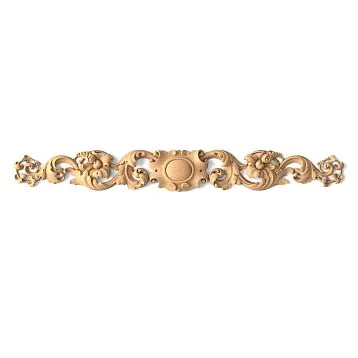
Our factory also produces:


Material Science Nuances: Wood as a Living Organism
Wood is not a dead material, but a living substance that continues to 'breathe' even after processing. Seasonal fluctuations in humidity cause changes in the dimensions of components, creating additional stresses at connection joints. Proper installation of balusters on a staircase must account for these natural processes.
Different wood species behave differently. Oak, with a density of 700-800 kg/m³, practically does not deform, but requires pre-drilling all holes. Pine is more flexible but prone to cracking with careless handling. Ash combines the strength of oak with ease of processing, but requires moisture protection.
Get Consultation
Regulatory Basis: Safety Requirements Come First
Modern construction is governed by strict regulations that define not only the dimensions of railing elements but also requirements for their strength. Knowledge of these requirements is the foundation of a professional approach to installation.
Geometric Parameters: The Mathematics of Safety
The height of handrails in residential buildings is a minimum of 900 millimeters from the tread level. For families with children, it is recommended to increase this value to 1000-1100 millimeters. This height ensures comfortable support for adults and safety for young children.
The distance between balusters in clear span should not exceed 150 millimeters — this is the golden rule of safety. In homes with small children, this dimension is reduced to 100-120 millimeters. Remember: a child must not be able to fit their head between the posts.
The width of the handrail is calculated based on the ergonomics of the human hand. Optimal sizes are 40-60 millimeters for round rails and 50-70 millimeters for rectangular ones. A too thin handrail is inconvenient to grip, while a too thick one cannot be grasped with one hand.
Strength Characteristics: Tensile Testing
Horizontal load on the railing is regulated at 100 kg/m for residential buildings. This load is applied to the handrail at a height of 900 millimeters and simulates the situation when a person leans heavily on the railing. The structure must not exhibit residual deformations after the load is removed.
Vertical load is 100 kg/m and simulates leaning on the handrail while ascending the stairs. These tests are especially critical for cantilevered sections of the railing, where there is no intermediate support.
Impact tests involve the application of a soft body weighing 50 kilograms. This simulates accidental impact on the railing. The structure must withstand such an impact without damaging critical elements.
Master's Tool Arsenal: Precision Over Speed
Quality installation of balusters is impossible without appropriate tooling. Over the years of my work, I have learned: cutting corners on tools results in lost time and quality.
Measuring instruments: the foundation of accuracy
A laser level is the master's eyes in the modern world. It allows creating an ideally level marking line at any distance, which is critically important for ensuring parallelism of all balusters. The accuracy of modern models is ±1 millimeter per 10 meters.
A digital protractor is necessary for precise measurement of the staircase's incline angle and the beveling of baluster ends. An accuracy of 0.1 degrees ensures perfect fit. Remember: an error of one degree per meter of length results in a deviation of nearly 18 millimeters.
A caliper with 0.1 millimeter accuracy is used to measure the diameters of fastening elements and corresponding holes. Tight fit of fasteners is the guarantee of long-lasting connections.
Cutting Tools: Clean Cut Determines Quality
A circular saw with a laser guide is the heart of the workshop. A disc with fine teeth (80-100 teeth) ensures a clean cut without chipping. The ability to precisely set the cutting angle is critically important for fitting balusters to the staircase's incline.
A router opens up limitless possibilities for creating grooves, tenons, and decorative elements. A set of routers with different profiles allows implementing the most daring design solutions.
A belt sander with adjustable speed provides final surface finishing. Properly selected speed eliminates burning of wood and ensures uniform processing.
Connection technologies: from classics to innovations
There are many ways to connect balusters to the staircase's load-bearing elements. The choice of a specific method depends on the material of the elements, strength requirements, and aesthetic preferences.
Threaded connections: the standard of reliability
Metal bolts with a diameter of 6-8 millimeters provide the strongest connection. This method is especially effective for heavy oak structures, where each baluster may weigh several kilograms.
The technology begins with precisely drilling coaxial holes in the baluster and base. The hole diameter must match the bolt's thread outer diameter to ensure a tight fit. The embedment depth in the baluster is 50-70 millimeters, and in the base — at least 30 millimeters.
The spikes are made of stainless steel or galvanized metal to prevent corrosion. The threaded portion embedded in the wood is additionally treated with sealant to improve adhesion.
Dowel Connections: Traditional Elegance
Wooden dowels with a diameter of 8-12 millimeters represent a classic carpentry solution. This method is valued for its eco-friendliness and ability to create disassemblable joints.
Manufacturing high-quality dowels is a separate art. The wood must be absolutely dry, with moisture no more than 8%. The fibers are aligned strictly along the dowel's axis, ensuring maximum shear strength.
Adhesive bonding plays a key role in the durability of dowel connections. Modern polyurethane adhesives create a water-resistant bond that does not degrade with changes in wood moisture.
Self-tapping screws: a balance of simplicity and efficiency
Construction screws with a diameter of 6-8 millimeters allow creating a sufficiently strong connection with minimal labor. This method is popular among beginners due to its simplicity.
The key point is selecting the correct screw length. For attaching to a 40-millimeter-thick tread, a screw 80-90 millimeters long is required. Pre-drilling is necessary for hardwoods.
The screw entry angle is 30-45 degrees from vertical. This angle ensures maximum connection strength and prevents fastener pull-out under load.
Step-by-step installation technology: symphony of precision
How to properly install balusters on a staircase? This process requires strict adherence to technological sequence. Each stage affects the quality of the final result.
Preparation stage: planning as the foundation of success
Work begins with creating a detailed plan for baluster placement. The distance between posts is calculated according to regulatory requirements and aesthetic considerations. Uniform spacing ensures visual harmony of the structure.
Marking is performed using a laser level. Each installation point is marked with precision to 1 millimeter. Even minor deviations in marking will disrupt the geometry of the entire railing.
Checking the readiness of the staircase structure includes assessing the strength of tread attachment, absence of deflections, and surface quality. The moisture content of wooden elements must not exceed 12%.
Baluster treatment: preparation for perfection
Balusters are milled on a circular saw with a fine-toothed disc. The cut quality must be perfect — without chips, scratches, or deviations from perpendicularity. Inspection is performed with a square to 0.1 millimeter precision.
Trimming ends at an angle matching the staircase slope requires special precision. The angle is measured with a digital protractor and transferred to the miter saw fence. All balusters on the same flight must have the same trimming angle.
Sanding is performed in several stages with gradually decreasing abrasive grit. Initial processing — 120-150 grit, final — 220-320 grit. Special attention is paid to areas of future joints.
Installation of support posts: foundation of the railing
Installation begins with setting support posts — strong balusters defining the geometry of the entire railing. These elements are installed at the beginning and end of the staircase run.
Support posts are attached to the staircase's load-bearing structures using bolted connections or chemical anchors. The strength of these joints is critically important for the overall stability of the railing.
Verticality is controlled using a level and plumb bob. Deviations exceeding 1 millimeter per meter of height are unacceptable and require immediate correction.
Specifics of fastening to different bases
The technology of baluster attachment depends significantly on the staircase's construction and the material of the base. Each type requires a specific approach.
Attachment to wooden treads: working with live material
Wooden treads offer the greatest possibilities for attachment due to their ease of processing. However, wood is susceptible to moisture-induced deformation, requiring special attention to joint design.
Through bolted attachment ensures maximum reliability. The bolt passes through the entire tread thickness and is secured with a nut and wide washer. This connection allows tightening the attachment as needed without removing the baluster.
Blind attachment using spikes is used when access to the underside of the tread is limited. A hole is drilled into the tread, and a threaded sleeve is installed using adhesive.
Installation on stringers: accounting for slope
Stringer staircases require trimming the lower ends of balusters at an angle matching the slope of the load-bearing beam. This ensures vertical posts after installation.
Using a baluster spacer — an intermediate plank — simplifies installation and ensures even load distribution. A 40×60 millimeter plank is attached to the stringer, and balusters are mounted on it.
Hidden attachment of the baluster spacer to the stringer is performed using screws driven into the gaps between balusters. Screw heads are concealed with decorative planks.
Working with concrete bases: maximum strength
Concrete staircases require special fasteners. Chemical anchors provide the highest connection strength, creating a monolithic bond with the base.
The technology of installing chemical anchors requires strict adherence to instructions. The hole is carefully cleaned of dust, and the adhesive is applied using a special gun. Polymerization time ranges from several hours to a full day.
Spread anchors represent a simpler solution but require high-quality concrete with density not less than 20 MPa. The accuracy of drilling the hole is critically important for the reliability of the connection.
Installing handrails: final chord
Installing handrails — the final stage of creating a stair railing. The quality of this work affects not only the appearance but also the usability of the structure.
Handrail preparation: precision to the millimeter
Handrails are supplied as straight blanks, which are custom-fitted to the specific staircase. The length is measured from the top ends of installed balusters, taking into account overhangs beyond the outer supports.
Ends are milled at angles ensuring tight fit against support posts. For spiral staircases, complex angled joints may be required.
Milling the groove for the handrail support strip — a critical operation. The groove depth is 8–12 millimeters, width corresponds to the strip thickness with a 0.5-millimeter clearance.
Mounting technology: hidden joints
The handrail support strip serves as an intermediate element between balusters and the handrail. It is made from the same wood species and has a thickness of 8–10 millimeters.
The strip is fastened to balusters using 25–30 mm self-tapping screws driven into the ends of posts. Screw heads are countersunk and covered with wooden plugs.
Mounting the handrail onto the strip is done using carpenter’s glue and screws driven from below. This connection is hidden and ensures high strength.
Quality control: tested over time
Completion of installation is only the beginning of the staircase railing’s life. Careful quality control allows identifying and eliminating potential defects.
Visual assessment: the master’s eye
Visual inspection of all elements is performed under good lighting. Checks for chips, scratches, uneven coating are conducted. Special attention is given to connection points.
Geometric control includes checking baluster verticality, handrail parallelism to the staircase slope, and uniform spacing between elements. High-precision measuring tools are used.
Connection quality is assessed by absence of play, squeaks, or vibrations under load. Each connection must be absolutely rigid.
Load testing: checking strength
Functional tests are conducted by applying standard loads. A horizontal force of 100 kilograms is applied to various handrail sections for 5 minutes.
Dynamic tests include rhythmic loading at the frequency of normal walking. Absence of resonant vibrations indicates correct calculation and installation.
Usability check includes evaluating handrail height, profile, and absence of sharp edges. The handrail should comfortably fit an adult’s hand.
Typical mistakes: learning from others’ errors
Over fifty years of work, I’ve seen many errors that turn beautiful staircases into sources of problems. Analyzing these mistakes will help avoid repeating others’ errors.
Planning errors: underestimating the importance of preparation
Inaccurate marking is the source of most problems. Dimensional deviations accumulate and lead to inability to assemble properly. Especially critical are errors in determining the spacing between balusters.
Insufficient consideration of material properties may lead to operational problems. Different coefficients of expansion, moisture-induced deformations must be considered during design.
Ignoring regulatory requirements creates safety risks. Exceeding allowable baluster spacing or insufficient railing height may lead to accidents.
Technological violations: the cost of rushing
Using low-quality fasteners is a false economy that will result in serious problems. Corrosion of metal elements or destruction of plastic anchors leads to weakening of connections.
Violating wood processing regimes causes defects. Excessive cutting speed leads to chipping, insufficient speed — to uneven surfaces.
Failure to observe technological pauses when using glued joints may lead to their failure. Each type of glue has specific requirements for holding time.
Modern trends: looking to the future
Technological advancements lead to new installation methods and materials. Modern solutions combine traditional reliability with innovative approaches.
Smart systems: technology serving safety
Integrating sensors into railing structures allows real-time monitoring of their condition. Information about overload or defect detection is transmitted to mobile devices.
Automatic lighting systems enhance the safety of staircase use. LED strips are integrated into handrails, creating directional lighting.
Wireless technologies simplify the integration of smart systems into existing structures without the need to lay additional communications.
Ecological aspects: care for the planet
Growing demands for ecological safety encourage the use of natural materials. Water-soluble adhesives replace formulations based on organic solvents.
Wood certification guarantees its origin from sustainably managed forests. This is becoming an important factor for environmentally conscious consumers.
Recycling technologies allow the use of production waste to manufacture fasteners and auxiliary parts.
Conclusion
How to properly install balusters on a staircase — this is a question that requires a comprehensive approach, combining deep theoretical knowledge with practical experience. After fifty years of work, I have realized: there are no minor details in this craft — every detail affects the final result.
A well-executed staircase railing serves not only as a functional element but also as a decoration for the home. Properly installed balusters will delight the eye and ensure safety for decades, becoming a source of pride for homeowners.
Modern technologies open new possibilities, but the fundamentals of craftsmanship remain unchanged. Understanding materials, mastering tools, attention to detail — these are what distinguish a true professional from an amateur.
Remember: every staircase is unique, and there are no universal solutions. However, the principles outlined in this article will help you avoid typical mistakes and create a railing that will serve faithfully for many years.
For those who wish to deepen their knowledge, I recommend studying detailed information about proper baluster installation on a staircase, where time-tested methods and modern technological solutions are presented.
For many years, STAVROS has been a recognized leader in creating exclusive staircase structures. Our craftsmen possess unique experience and are ready to share professional secrets with those striving for perfection in every detail.