Article Contents:
- Anatomy of materials: understanding as the foundation of synthesis
- Physics of oak: strength and character
- Beech as balance: average properties and universality
- Polyurethane as a technological detail: synthetic freedom
- Principle of base and accent: hierarchy of materials
- Wood as a structural base of space
- Polyurethane as architectural ornament
- Zones of special purpose: rational distribution
- Compatibility of finishes: the art of color harmony
- Principle of tonal harmony
- Contrasting solution: play with opposites
- Techniques of Patination and Artificial Aging
- Lacquering and oiling: choosing a finish
- Working with scale: proportions as the language of space
- High walls: vertical division
- Wide baseboards: foundation of monumentality
- Relief moldings: the third dimension of the wall
- Balance of mass and void
- Combination errors: how to avoid dissonance
- Color chaos: mixing incompatible tones
- Scale incompatibility: large with small
- Stylistic eclecticism: incompatible ornaments
- Functional inadequacy: material out of place
- Absence of transitions: abrupt material change
- Ready-made schemes: three typical scenarios
- Minimalism: purity of lines and natural accents
- Neoclassical: light elegance
- Tradition: completeness of classical decoration
- Practical implementation: from project to realization
- Design stage: visualization and planning
- Procurement Stage: Supplier and Quality Selection
- Preparation Stage: Processing and Acclimatization
- Installation Stage: Sequence and Precision
- Finishing Stage: Final Coatings and Detailing
- Conclusion: Symphony of Materials

Creating a harmonious interior where three materials with different physical properties, aesthetics, and functional purposes are combined requires a deep understanding of each material's nature.Oak and Polyurethane, Beech and Polyurethane, Oak and BeechNot just material combinations, but a thoughtfully designed system where each element occupies its optimal position, fulfills its role, and complements other ensemble members. Oak brings monumentality, expressive texture, dark noble tone. Beech provides lightness, uniform structure, flexibility of form. Polyurethane ensures architectural expressiveness, practicality, and accessibility to complex decoration. Together, they create a multi-layered space where traditions meet technologies, naturalness harmonizes with functionality, and beauty does not contradict budgetary reason.




Material Anatomy: Understanding as the Foundation of Synthesis
Successful material combination begins not with color selection or element placement, but with a deep understanding of the physical, chemical, and aesthetic properties of each compositional element. Only by knowing how a material behaves under temperature and humidity changes, how it reacts to mechanical stress, and what processing possibilities it offers, can one make reasoned decisions about its application.




Oak Physics: Strength and Character
Oak is a hardwood with density 690-750 kg/m³ at standard moisture content of 12%. High density determines hardness of 3.7-4.0 on Brinell scale — oak does not dent under furniture legs, does not wear from constant contact, holds fasteners for decades. The ring-porous structure with large vessels in early wood creates a characteristic contrasting pattern — dark stripes on a lighter background.
Tannins, whose content in oak reaches 6-8%, provide natural protection against rot, mold, fungi, and insects. Oak elements last longer than other hardwoods in humid conditions. Tannins impart a characteristic odor, which weakens over time. Reaction with iron in the presence of moisture produces bluish-black spots — this is taken into account when selecting fasteners.
Oak has significant shrinkage — tangential 8-9%, radial 4-5%. After drying and stabilization, oak is relatively stable due to tannins, partially blocking pores. Hygroscopicity is lower than other hardwoods — oak swells less with increased humidity and shrinks less with decreased humidity. This makes oak elements predictable and stable in use.
Freshly cut oak has a yellowish-brown color with a greenish tint in the sapwood. After drying, it acquires a golden-brown warm tone. Over time, it darkens naturally — after 10-20 years of use, it becomes rich brown with a honey undertone. This noble aging process is valued; oak products become more beautiful with age. Heartwood is 2-4 tones darker than sapwood, creating natural color variation in products.
Oak's workability is moderate. High hardness requires sharp tools and powerful equipment. Sawing, planing, and routing are possible, but tools wear faster than with softer woods. Glues well, but tannins may slow the setting of some adhesives. Oil finishing provides a matte warm surface, highlighting texture. Lacquering creates gloss and deepens color. Staining is uneven due to large vessels — early wood absorbs more, requiring multi-layer application.
Our factory also produces:


Beech as Balance: Moderate Properties and Universality
Beech is a hardwood with density 710-730 kg/m³, 3-5% denser than oak. Structure is diffuse-porous with small, evenly distributed vessels. Texture is uniform, calm, without the dramatic contrasts of oak. Annual rings are visible but less contrasting. Heartwood rays are narrow and numerous, creating a characteristic fine checkered pattern on radial cuts.
Beech has high hygroscopicity — it actively reacts to air humidity changes, swelling more and shrinking more than oak. Tangential shrinkage 11-12%, radial 5-6% — the highest among common woods. This requires especially careful drying to 8-10% moisture and acclimatization before processing. Stabilized beech behaves predictably at constant humidity, but humidity fluctuations cause noticeable size changes.
Freshly cut beech has a white color with a slight pink or yellowish tint. After drying, it acquires a characteristic pinkish-yellow color, lighter and more neutral compared to oak. The difference between heartwood and sapwood is minimal — beech has no distinct heartwood, and the wood is nearly uniform in color. It darkens more slowly than oak, acquiring a warm honey tone. Uniformity of color — key advantage for products where visual monolithism is important.
Beech workability is excellent. Dense, uniform structure without large vessels allows for perfectly smooth surfaces when planed or routed. Carving on beech provides fine detail without chipping. Bendability after steaming is higher than oak — beech is the primary material for Vienna bent furniture. Glues excellently, joints are stronger than wood. Oil finishing provides even honey tone. Lacquering creates amber color. Staining is uniform due to uniform structure — any shade is predictable.
Beech strength is high, hardness 3.5-3.8 on Brinell scale — slightly softer than oak, but still belongs to hardwoods. Wear resistance is good. Shortcoming — lower biostability compared to oak. Without protective treatment, beech is more susceptible to fungi in humid conditions. Treated with modern compositions, it lasts for decades.
Get Consultation
Polyurethane as a Technological Detail: Synthetic Freedom
Polyurethane is a synthetic polymer obtained by the reaction of polyisocyanates with polyols. For architectural decoration, rigid foam polyurethane with a density of 300-500 kg/m³ is used — lighter than wood by 1.5-2.5 times at comparable flexural strength. Its porous structure creates lightness, while closed cells provide rigidity. Polyurethane is non-hygrosopic — it does not absorb water and does not change dimensions with humidity fluctuations.
Polyurethane's chemical inertness is absolute — does not react with household substances, does not corrode, does not support microbial growth. Biostability is maximum — mold, fungi, insects do not affect polyurethane. Water resistance is complete — element can be submerged in water for years without consequences. Temperature stability from minus 50 to plus 80 degrees without property changes.
Molding in silicone or polyurethane molds allows reproduction of any shapes with detail down to 0.1 millimeter. Complex botanical ornaments, multi-figure compositions, architectural orders — all are accessible. Reproducibility is ideal — a million castings from one mold are visually identical. Flexible polyurethane variants allow finishing curved surfaces.
Polyurethane processing is simplest — cut with a regular knife or saw, does not require powerful tools. Sanded with fine-grit sandpaper. Glues with special polyurethane adhesives to any surface. Painted with acrylic, latex, or alkyd paints. Surface after priming is perfectly flat, paint lays evenly. Any material — wood, stone, metal — can be imitated through painting and patination.
Polyurethane longevity is measured in decades. Does not age, does not lose strength, does not deform. UV stabilizers in composition prevent fading and degradation from sunlight. Properly installed element serves the entire building's service life. Cost is 3-10 times lower than comparable wooden analogs. Installation is 2-3 times faster than wood.
Principle: Base and Accent — Material Hierarchy
A successful combination of three materials requires a clear distribution of roles — who creates the base, who adds accents, who solves specific tasks.Oak polyurethane interiorandBeech polyurethane interiorare built upon understanding this hierarchy.
Wood as the structural base of space
Wooden elements form the material base of the interior — what a person interacts with daily, defining tactile experience, creating a sense of quality and reliability. Baseboards around the entire perimeter of the room — a wooden frame enclosing the floor, protecting the lower part of walls, creating a visual transition between vertical and horizontal planes.
Oak baseboards 12-15 cm high with a classic profile in common-use rooms — living rooms, dining rooms, offices — create a monumental base. The expressive oak texture is visible under any lighting, the dark tone creates a clear outline, high hardness ensures resistance to vacuum cleaner, mop, and foot impacts. Beech baseboards in bedrooms and children’s rooms provide a lighter, airier base, the pinkish hue creates warmth.
Door casings — zone of regular visual and tactile contact. Wooden casings 70-100 mm wide create a solid frame for openings. Oak for entrance doors and doors in common areas. Beech for bedroom, children’s, and wardrobe doors — light framing does not overload the space. Matching the wood species of baseboards and casings creates a system of frames unifying the interior.
Furniture — wooden base of the interior arrangement. Tables, chairs, wardrobes, chests made of solid oak or beech create durable, high-quality furniture. Oak for formal furniture in living rooms, dining rooms, offices — its dark tone and expressive texture create a sense of respectability. Beech for bedroom and children’s furniture — lightness, uniformity, ability to form curved shapes create lightness and airiness.
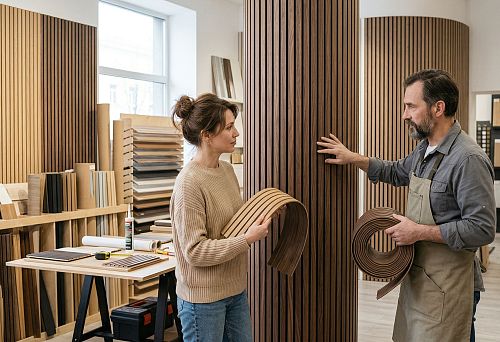
Wall panels — wooden cladding of the lower part of walls 100-150 cm high creates a tactilely pleasant, warm surface in contact zones. Oak panels in classic interiors, offices, libraries. Beech panels in modern and Scandinavian interiors. Panels made ofoak beech woodform the material base on which further decoration is built.
Polyurethane as architectural ornament
Polyurethane elements do not compete with wood for the role of base — they create architectural expressiveness, decorative complexity, visual richness at heights and in zones where material naturalness is secondary. Ceiling cornices — polyurethane is practically always used. At a height of 2.5-3 meters, wood grain texture cannot be seen, and contact with the surface is impossible — only shape and color matter.
Cornices 10-20 cm wide depending on room height frame the ceiling, create a visual boundary, may conceal LED strips for hidden lighting. Profile ranges from simple single- or double-oval for modern interiors to complex with botanical ornament for classic styles. Coloring in white, cream, matching ceiling or contrasting — polyurethane accepts any color perfectly evenly.
Ceiling rose fixtures around chandeliers — decorative accents drawing the eye upward. Diameter 40-120 cm depending on room size and chandelier. Design ranges from minimalist rings for minimalism to elaborate multi-figure compositions for baroque. Polyurethane allows creating complex reliefs with minimal weight — critical for ceiling decoration.
Wall moldings at 1.5-2.5 meters height form frames, frame panels, create divisions. Polyurethane moldings are easy to install, precisely fit at corners, create ideal geometry. Painted in contrasting colors relative to walls, they structure space. In wall tones — they create relief panels where play of light and shadow matters more than color contrast.
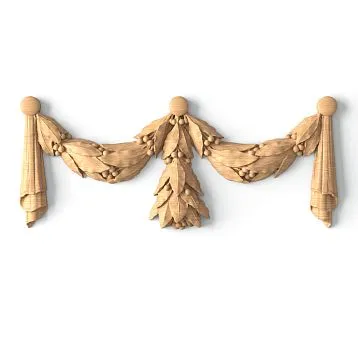
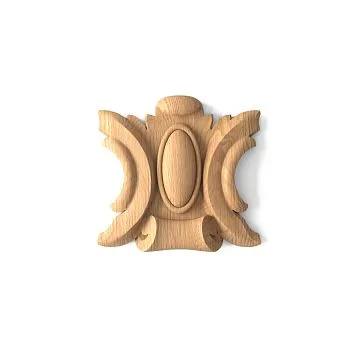
Decorative elements — corner caps, central rose fixtures on molding frames, consoles, cartouches — polyurethane due to lightness, detail, and accessibility. These elements add elegance, complexity, individuality without overloading the budget. A single polyurethane cartouche above a door opening for 1500-3000 rubles creates an accent that would cost 15000-30000 rubles for wooden carving.
Special-purpose zones: rational distribution
Wet areas — territory of polyurethane. Bathrooms, toilets, kitchens near sinks require materials absolutely indifferent to moisture. Polyurethane baseboards, cornices, mirror frames in wet zones serve for decades without changes. Even with special treatment, wood in wet conditions requires regular maintenance.
High spaces — stair landings, hallways with two-story zones, rooms with ceilings over 3.5 meters — are optimal for polyurethane decoration. Easy installation at great heights, no risk of heavy elements falling, possibility of creating large-scale compositions without excessive load on structures. Wooden decoration at 5-6 meters height is not only expensive but also dangerous without sufficient mounting.
Curved surfaces — arches, columns, bay windows, coffered ceilings — are easier to finish with flexible polyurethane. Wood requires complex fitting, multiple joints, special bending technologies. Polyurethane is soaked, bent, and fixed — after drying, it holds the shape perfectly.
Temporary accents — seasonal decoration, thematic arrangements for events, experimental elements — are executed in polyurethane due to accessibility and ease of removal. Wooden decoration is perceived as permanent, its installation and removal are labor-intensive. Polyurethane elements can be glued and dismantled within hours.
Finish compatibility: art of color harmony
Combining three materials creates a risk of color dissonance — oak, beech, and polyurethane have different base colors, react differently to finishes, age at different rates. Creating visual unity requires thoughtful selection of finishing materials and techniques.
Principle of tonal harmony
Monochromatic solution — all elements in one tonality, differing only in saturation — a safe path to harmony. Oak baseboard in natural golden-brown tone. Beech furniture stained with a close brown shade. Polyurethane moldings painted with acrylic paint in warm cream color — a light relative of the brown spectrum. All elements from one color temperature — warm.
Gradation from dark to light vertically — a classic technique visually stabilizing space. Dark oak skirting at the floor — foundation, grounding. Medium-toned beech panels or furniture at eye level. Light polyurethane decor on top — cornice, moldings — creates lightness, visual height increase. The eye moves from dark bottom to light top, making space appear higher and airier.
Unity through color repetition — one dominant color is chosen, present in all three materials in various shades. For example, gray-brown: oak stained gray-brown, beech painted in a similar gray-brown, polyurethane painted light gray-brown. Repetition creates rhythm, linking disparate materials.
Contrasting solution: play of opposites
White polyurethane against dark wood — classic contrast creating clear graphics. Dark oak skirting, dark oak or beech furniture, dark wooden panels. White polyurethane moldings, white cornice, white moldings. Walls in neutral light tones — beige, light gray. Wood creates mass, dark accents, polyurethane — light lines structuring space.
Inversion — light wood, dark polyurethane — modern, less traditional solution. Light beech skirting, light beech furniture, possibly light beech wall panels. Polyurethane elements painted dark gray, graphite, black. Walls white or light gray. Dark polyurethane decor lines on light background, light wood adds warmth.
Color accent — neutral base of natural wood and white polyurethane, one vivid color in polyurethane elements as accent. Oak or beech skirting in natural tone, most polyurethane moldings white. One or two polyurethane moldings or decorative inserts painted in saturated color — emerald, sapphire, burgundy. Color accent draws attention, creates focus.
Techniques of patination and artificial aging
Patina — applying contrasting tone to raised relief parts followed by partial sanding — creates effect of noble aging, unifies different materials through common visual technique. Oak elements patinated with dark stain followed by sanding raised parts to light tone. Beech elements patinated with medium tone. Polyurethane painted base color, then patina applied.
Brushing wood — removing soft fibers with brush, emphasizing hard annual rings — enhances oak texture, making it more expressive. Brushed oak gains relief, tactile interest. Polyurethane elements are not brushed, but can be painted to imitate brushed wood — applying base tone, then contrasting stripes creating illusion of texture.
Thermo-treatment of wood — heating in oxygen-free environment to 180–230 degrees — changes color to uniform dark brown throughout thickness, reduces hygroscopicity. Thermooak and thermobeech have identical dark tone while preserving texture differences. Polyurethane painted in thermowood tone — dark brown, chocolate. Unity of dark tone despite texture differences creates complex, multi-layered visual composition.
Finishing: choosing surface treatment
Wood oil preserves natural appearance — matte surface, visible texture, tactile warmth. Oil deepens color, making it richer. Oak under oil becomes golden-brown, beech — honey-yellow. Polyurethane is usually not oiled, but can be painted with matte paints creating visual closeness to oiled wood.
Lacquer creates glossy surface, protective film, isolation from environment. Oak under lacquer darkens, texture emphasized by contrast of glossy and matte areas. Beech under lacquer acquires amber tone. Polyurethane is usually painted with semi-gloss or satin paints — light sheen without mirror gloss, closeness to lacquered wood.
Wax over oil gives light sheen while preserving naturalness. Wax finish on oak and beech creates silk-like surface, pleasant to touch. Polyurethane can be coated with wax finishes to create tactile closeness to wood — cool synthetic surface becomes slightly warmer.
Different finishes on different materials create hierarchy: oiled wood for skirting and furniture, lacquered wood for doors and moldings, painted polyurethane for wall and ceiling decor. Visual variety while preserving tonal harmony.
Working with scale: proportions as language of space
Successful combination of three materials requires not only color harmony but proportional correspondence of elements. Height of skirting, width of moldings, scale of decorative elements determine visual impression no less than material and color.
High walls: vertical division
Rooms with ceilings 3–3.5 meters and higher require large-scale elements proportional to height. Oak skirting 15–20 cm high creates powerful foundation, visually grounding space. Less massive skirting will disappear, appear short. Skirting profile complex — multiple curves, possibly carved detail at top.
Horizontal molding at 100–120 cm height separates plinth zone from main wall field — three-part division characteristic of classical architecture. Oak or beech panels below molding, painted walls or wallpaper above. Polyurethane molding 8–12 cm wide creates clear boundary, sufficiently scaled for high room.
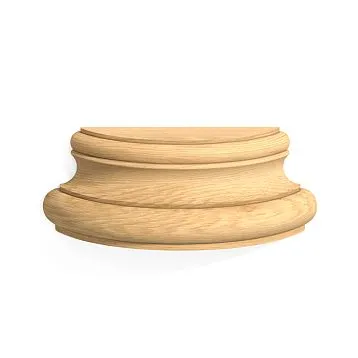
Vertical elements — pilasters, flutes — full height of wall create rhythm, structure space. Wooden verticals in room corners 12–18 cm wide, possibly carved capital at top and base at bottom. Or polyurethane pilasters painted in contrasting color. Distance between verticals 2.5–4 meters depending on room size.
Ceiling cornice 15–25 cm wide is scaled for high ceiling. Narrower cornice will disappear at height. Complex profile with multi-level relief, plant ornament creates rich crown of room. Polyurethane allows creating such complexity at affordable budget and easy installation.
Wide skirting: foundation of monumentality
Skirting — not just technical detail covering gap between wall and floor, but architectural element defining space character. High skirting 12–20 cm creates classic monumentality, references palace architecture, visually increases room significance.
Oak skirting of such height — investment in quality. Cost 2000–5000 rubles per linear meter means 30,000–90,000 for room with 18-meter perimeter. But visual and tactile effect justifies cost — massive oak skirting creates sense of solidity, reliability, tradition. Expressive oak texture makes skirting not technical element, but decorative accent.
Beech skirting of similar height is cheaper — 1500–3500 rubles per meter, total 24,000–63,000 for room. Light beech tone does not create dark heavy perimeter contour, visually lighter than oak. Uniform structure gives clean lines, calmness. For modern and Scandinavian interiors beech is preferable to oak.
Profile of wide skirting can be classic multi-step or modern minimalist. Classic profile with curves, astragals, shelves creates play of light and shadow, visual complexity. Modern profile — rectangle with slight bevel or rounded top corners — purity of form, minimalism. Profile choice depends on overall interior style.
Relief moldings: third dimension of wall
Relief of moldings determines strength of their visual impact. Flat molding 8 cm wide creates line, division, but no volume. Relief molding of same width with protruding elements 1–2 cm creates play of light and shadow, transforming flat wall into three-dimensional composition.
Polyurethane allows creating deep relief with minimal weight. Molding with plant ornament where leaves protrude 1.5 cm weighs 1–2 kg per meter — adheres with standard construction glue. Wooden molding of similar relief weighs 8–12 kg per meter — requires mechanical fastening with self-tapping screws or nails.
The combination of smooth wooden elements and relief polyurethane creates a contrast between flat and three-dimensional. A smooth oak skirting board without relief, smooth beech strips on the wall — basic geometry. Relief polyurethane moldings framing the strips, relief rose sockets as accents — a layer of volume built atop the flat base.
Directed lighting reveals the relief of moldings. Side light from a wall-mounted fixture, directed along the wall, creates long shadows from protruding elements. Relief transforms into a dynamic composition of light and dark areas. Smooth wooden elements remain evenly lit, contrasting with the play of light and shadow on relief moldings.
Balance of mass and void
An interior overloaded with decoration, where every centimeter is covered with elements, creates visual fatigue and suppresses. The balance between decorated and clean surfaces is critical. Wooden panels occupy the lower third of the wall, polyurethane moldings create frames in the middle and upper thirds — between them remain areas of clean painted wall or wallpaper.
These voids are no less important than the filled zones — they give the eye a rest, allow decoration to breathe, create context for perceiving elements. A ratio of decorated to clean surfaces of approximately 40 to 60 percent creates balance — enough interest without overload.
The rhythm of alternating decorated and clean zones creates visual music. Vertical wooden pilasters every 3 meters create a regular rhythm. Polyurethane rose sockets at the centers of the sections they form — accents. Clean walls between pilasters — pauses. The eye follows the rhythm, space is perceived as structured but not monotonous.
Combination errors: how to avoid dissonance
Practice shows typical errors in combining oak, beech, and polyurethane, leading to visual and functional mismatch. Knowing these pitfalls helps avoid them.
Color chaos: mixing incompatible tones
Error: oak skirting board in cool gray tone, beech furniture in warm honey tone, polyurethane moldings painted white with cool bluish undertone. Three materials from three different color temperature ranges create fragmentation, lack of unity.
Solution: choose a single color temperature for all materials. Warm palette: oak in natural golden-brown or toned warm brown, beech oiled or toned honey, polyurethane painted warm cream or white with yellow undertone. Or cool palette: oak toned gray-brown, beech painted beige-gray, polyurethane in cool white or light gray.
Control tool — color wheel. All selected shades must lie within one sector of the wheel — warm or cool. Mixing temperatures is permissible only with high design competence to create specific effects; beginners should avoid it.
Scale incompatibility: large with small
Error: massive oak skirting board 20 cm high with complex profile, thin polyurethane cornice 5 cm wide, small beech strips 2 cm thick. Elements of different scales do not form an ensemble, appear randomly selected.
Solution: harmonize scales of all elements. A massive skirting board requires a scale cornice 15–20 cm, large moldings 8–12 cm, sufficiently thick strips 4–6 cm. Or the entire interior is built on minimalist scales: skirting board 8 cm, cornice 7 cm, moldings 5 cm, strips 3 cm. A unified scale series creates harmony.
Rule: the largest element determines the scale of the entire composition. If an 18 cm skirting board is chosen, all other elements scale proportionally. Cornice is not narrower than skirting board, moldings 60–80% of skirting board, strips 30–50%. These proportions create visual hierarchy while maintaining consistency.
Stylistic eclecticism: incompatible ornaments
Error: oak panels with baroque carving — lush vegetal motifs, polyurethane moldings in art deco style — geometric stepped forms, beech furniture in minimalist style — smooth planes without decoration. Three different stylistic languages create visual cacophony.
Solution: choose a single stylistic key for all elements. Classic: carved oak panels, polyurethane moldings with classical motifs — acanthus, palmettes, meander, beech furniture with carved classical proportions. Or minimalism: smooth oak panels without carving, polyurethane moldings with simple profiles without ornament, beech furniture with geometric forms.
Mixing similar styles — classicism and neoclassicism, modern and art deco — is acceptable. But baroque with minimalism, rococo with loft creates dissonance. Stylistic purity or deliberate eclecticism, where mixing styles is a conscious artistic technique, not a coincidence.
Functional inadequacy: material out of place
Error: oak cornice on a 3.5-meter-high ceiling — heavy, expensive, complex to install element where its advantages are not needed. Polyurethane skirting board in a classic study, where tactile solidity matters. Beech strips in a humid bathroom zone, where high hygroscopicity of beech creates risk of deformation.
Solution: place materials according to their properties. Wood low, in contact zones, in dry conditions. Polyurethane high, in humid zones, on large surfaces. Oak where hardness, dark tone, expressive texture are needed. Beech where lightness, uniformity, bendability matter. Polyurethane where lightness, moisture resistance, complexity of forms are critical.
Test of adequacy: can the material be replaced with another from the trio without loss of functionality or with improvement? If oak skirting board is replaced with polyurethane — loss of tactile quality, but no loss of functionality. If polyurethane cornice is replaced with oak — increased complexity of installation, higher cost without improvement of result. Each replacement is analyzed, optimal option is chosen consciously.
Lack of transitions: abrupt material change
Error: oak panels end at 120 cm height with abrupt cut, polyurethane moldings begin at 160 cm — 40 cm of clean wall between them without transition. Visually, the composition breaks into disconnected parts.
Solution: create transitional elements connecting different zones. Horizontal polyurethane molding at the upper edge of wooden panels creates a finish, framing. From it, vertical polyurethane elements may rise to upper moldings. Or wooden verticals continue to the ceiling, polyurethane horizontals intersect them, creating a visual grid.
Color transition is also important. If oak panels are dark, the wall above them should not be bright white — sharp contrast breaks the composition. Medium tone — beige, light brown — creates smooth transition from dark wood to light polyurethane. Gradation of tones from top to bottom connects elements.
Ready-made schemes: three typical scenarios
Theory acquires practical sense in specific implementations. Three ready-made schemes for different stylistic directions demonstrate principles of combining oak, beech, and polyurethane.
Minimalism: purity of lines and natural accents
Concept: maximum clean surfaces, minimum decoration, precise geometric forms, natural materials as warm accents in a neutral space.
Walls: painted in white or light gray solid color. No wallpapers, decorative plaster, or ornamentation. Smooth matte surface. One accent wall clad with vertical birch planks 4 cm thick, spaced 10 cm apart. Planks are coated with natural-tone oil, revealing a pinkish-yellow birch texture.
Baseboards: birch, 8 cm high, simple rectangular profile with slight rounding of upper corners. Painted white while preserving visible texture or coated with natural-tone oil — depending on preference for naturalness or neutrality. Uniform baseboards around the entire apartment create unity.
Ceiling trim: 7 cm wide polyurethane cornice with simple smooth profile, no ornament — one rounded corner and straight strip. Painted white or light gray. Cornice creates a clear boundary between wall and ceiling, but does not draw attention. Light switch surrounds around chandeliers are absent or minimal — smooth 30 cm diameter ring.
Furniture: made of light birch or oak with simple geometric forms. Table on four conical legs, cube-shaped cabinets without visible handles, platform bed. Wood is coated with oil, revealing natural texture. Furniture facades without carving, appliqués, or unnecessary details. No polyurethane used in furniture — purity of materials.
Doors and door casings: birch, painted white or in natural tone. Door casings narrow, 6-7 cm, flat without relief. Doors with concealed installation and no visible casings — even more minimalist solution. Door panel becomes continuation of the wall.
Doors and door casings: birch, painted white or in natural tone. Door casings are narrow, 6-7 centimeters wide, flat without relief. Hidden-mount doors without visible casings — an even more minimalist solution. The door panel becomes an extension of the wall.
Color palette: white, light gray, natural birch (pinkish-yellow). One accent color in textiles or small items — black, graphite for contrast or pastel for softness.
Example room: living room 20 sq. meters, ceiling height 2.7 meters. Three walls white, one wall behind sofa with birch planks. Birch baseboard 8 cm around perimeter. 7 cm white polyurethane cornice. Birch coffee table, birch shelves. Minimalism with warmth of wood.
Neoclassicism: light elegance
Concept: classical principles of symmetry, proportion, and ornamentation in modern interpretation — lighter tones, simplified forms, less ornament, more air.
Walls: lower third 100 cm high clad with birch panels — vertically oriented boards 12 cm wide with small 5 mm gaps between them. Panels coated with natural-tone oil or painted light beige. Horizontal polyurethane molding 8 cm wide at top edge of panels creates finish.
Above panels, wall painted light beige, peach, or pale blue — pastel tones of neoclassicism. Polyurethane moldings 6 cm wide form three to five vertically oriented rectangular frames 120 cm high, 70 cm wide. Inside frames same wall color or contrasting — light gray on beige background.
Baseboards: oak, 12 cm high, classic profile with two to three rounded corners. Painted light tone — beige, gray-brown — or coated with natural-tone oak oil with slight lightening. Baseboard solid, creates foundation but not heavy dark outline — neoclassicism avoids gloom.
Ceiling trim: 12 cm wide polyurethane cornice with medium-complex profile — alternating rounded corners and straight elements, simple geometric ornament without botanical motifs. Painted white or cream. Central rose around chandelier 60-80 cm diameter with restrained ornament — concentric circles, simple petals. Possible corner elements — small triangular appliqués in ceiling corners.
Wall moldings: polyurethane, 5-8 cm wide, form rectangular frames on walls above birch panels. Number of frames odd — three or five for central axis of symmetry. Equal spacing between frames. Moldings painted white or wall tone to create relief panel, where play of light and shadow is important.
Furniture: combined — structure of oak or birch, painted facades. Cabinets with birch door frames and pastel-toned panels. Table on classic-proportioned turned oak legs, top painted or natural wood. Chairs with bent birch backs, painted seats, upholstered in fabric.
Doors and door casings: oak latticed doors painted light tones or natural color. Door casings 8-10 cm wide, classic profile with rounded corners. Horizontal element above door — polyurethane pediment 12-15 cm wide, protruding 3-5 cm beyond vertical casings. Polyurethane consoles under pediment create illusion of load-bearing structure.
Color palette: light beige, cream, peach, pale blue, mint as base wall colors. Natural oak and birch in light tones. White or cream for polyurethane decor. Possible gold or silver accents on polyurethane elements — light gilding of rose centers, appliqués.
Lighting: chandelier with classic proportions and crystal pendants or multi-armed candelabra. Wall sconces symmetrically placed on either side of mirrors or paintings. Concealed lighting behind ceiling cornice creates soft glow around ceiling perimeter, visually lifting it.
Example room: bedroom 18 sq. meters, ceiling height 3 meters. Birch panels around perimeter 100 cm high. Walls above pale blue with white molding frames. Light beige oak baseboard 12 cm. White cornice 12 cm, rose 70 cm. Bed with white-painted birch headboard, bedside tables oak. Neoclassical elegance without heaviness.
Tradition: fullness of classical decor
Concept: maximum adherence to classical canons — three-part wall division, rich decoration, symmetry, hierarchy of elements, dark noble wood tones, white or gilded moldings.
Walls: three-part vertical division. Lower zone 90-100 cm high — dark oak panels, stained brown or coated with dark lacquer. Panels latticed — frames and panels with slight relief. Horizontal polyurethane molding 10 cm wide, complex profile with botanical ornament at zone boundaries.
Middle zone up to 2.2-2.5 meters — wall painted rich color (burgundy, emerald, dark blue) or covered with classic damask wallpaper. Polyurethane moldings 8-10 cm wide form vertically oriented frames. Number of frames three to five depending on wall width. Inside frames wallpaper with ornament or contrasting color.
Upper frieze zone under ceiling 30-50 cm high separated by horizontal polyurethane frieze 12-15 cm wide with rich ornament. Frieze zone painted lighter than main wall field or covered with small-pattern wallpaper. Vertical polyurethane pilasters at corners and every 2.5-3.5 meters across wall height create rhythmic division.
Baseboards: oak, 15-20 cm high, complex multi-step profile. Dark color — stained oak, wenge, walnut. Baseboard creates strong dark foundation, visually grounding space, contrasting with lighter walls above. Profile with grooves, rounded corners, shelves demonstrates classical detailing.
Ceiling trim: 18-25 cm wide polyurethane cornice with very complex profile and botanical motifs — acanthus leaves, rosettes, intertwined stems. Multi-level relief with protrusions up to 3 cm creates deep shadows. Painted white with possible gilding of protruding elements or fully gilded for maximum luxury.
Wall moldings: polyurethane, 8-12 cm wide, complex profiles with ornament. Form system of frames surrounding oak panels at bottom, creating divisions in middle zone. Corner frame elements — polyurethane rosettes or corner appliqués with rich decoration. Central elements on horizontal sections of moldings add accents.
Wall moldings: polyurethane, 8-12 cm wide, complex profiles with ornament. Form system of frames surrounding oak panels at bottom, creating divisions in middle zone. Corner frame elements — polyurethane rosettes or corner appliqués with rich decoration. Central elements on horizontal sections of moldings add accents.
Furniture: made of dark oak, maximally classical. Cabinets with carved facades, pilasters at the corners, cornices on top. A massive table on carved legs with a solid oak top, possible inlay. Chairs with high carved backs and armrests, upholstered in velvet or leather. Carved furniture elements correspond with the ornamentation of the polyurethane decor.
Doors and door casings: dark oak double doors with carved panels, possibly with glass in the upper part. Door casings 12-15 cm wide with complex profiles and carving. A polyurethane pediment above the door, 20-30 cm wide, protruding 5-8 cm beyond the casings. Polyurethane consoles under the pediment, 15-20 cm high, with carved capitals. Above the pediment, a cartouche — a decorative polyurethane shield of oval shape.
Color palette: dark oak (brown, wenge), rich wall colors (burgundy, emerald, dark blue, terracotta), white for polyurethane with gilded protruding elements. Rich, saturated, contrasting palette without pastel tones.
Lighting: a massive crystal chandelier with 8-12 arms as the main light source. Wall sconces with crystal pendants symmetrically placed. Table lamps on oak or bronze bases. Warm light 2700-3000K, creating a cozy atmosphere, highlighting gilding and the depth of dark wood.
Textiles: heavy drapes in velvet or brocade with gold threads, tassels. Rugs with classical ornaments. Upholstery of furniture in velvet, jacquard, natural leather. Cushions with gold tassels and fringe. Textiles enhance luxury and add tactile richness.
Room example: office 25 square meters, ceilings 3.2 meters high. Dark brown oak panels along the perimeter, 100 cm high. Walls above are burgundy with gold wallpaper within molding frames. Dark 18 cm oak skirting. White with gold cornice 22 cm, rose 120 cm. Massive oak desk, bookshelves to the ceiling. Full classical decor, respectability, tradition.
Practical implementation: from project to realization
Theoretical understanding of combination principles requires practical implementation — a sequence of actions from concept to finished interior.
Design stage: visualization and planning
Start of work — measuring the room to the centimeter. Perimeter, ceiling height, location of door and window openings, outlets, switches, radiators. All is recorded on a plan with scale accuracy. Photographing the room from various points creates a visual representation.
Creating a sketch — drawing or computer model of the future interior. Placement of wooden panels, molding frames, furniture. Color solution — wood tones, wall color, polyurethane finish. Several sketch variants allow comparison and selection of the optimal one.
Material calculation — linear meters of skirting, molding, cornices, area of wooden panels, number of corner elements, outlets. Cost estimate for materials, labor, delivery. Project adjustment if budget exceeds — replacing part of wood with polyurethane, simplifying profiles, reducing decorative elements.
Procurement stage: supplier and quality selection
Material suppliers are critical.Oak and BeechRequire quality drying to 8-10% humidity, proper storage. Supplier must guarantee material parameters and provide certificates. Opportunity to inspect before purchase — checking for cracks, knots, warping.
Polyurethane elements also vary in quality. Density 300-500 kg/m³ ensures strength; lighter polyurethane is brittle. Relief detail — quality elements have clear fine details without blurring. Presence of factory primer facilitates painting. Geometry check — elements must not be warped.
Purchase with 10-15% reserve for defects, cutting errors, damage during installation. Especially critical for wood — buying the exact shade a month later may be impossible, batches differ. Polyurethane is more stable, but reserve is still useful.
Preparation stage: processing and acclimatization
Wooden elements after delivery must acclimatize in the room for at least one week. Wood equilibrates with ambient humidity, undergoing micro-size changes. Installation immediately after delivery may result in gaps or swelling after a month.
Pre-processing of wood — sanding with fine-grit sandpaper, dust removal, application of primer or first coat of oil. These operations are easier to perform before installation. End pieces are processed especially carefully — they absorb more and require additional protection.
Polyurethane elements are inspected, defects are filled with acrylic putty. Minor irregularities, mold marks, burrs are sanded. Priming improves paint adhesion, but many modern elements come with factory primer.
Installation stage: sequence and precision
Installation begins with skirting — they define the lower boundary, from which the entire vertical composition is built. The first skirting in the corner is installed with verification of verticality and horizontality. Subsequent pieces are joined at 45-degree angles for internal corners. Lightweight skirting is glued; heavy oak skirting is glued and screwed.
Wooden panels are installed after skirting. Lathing from beams or directly on the wall if sufficiently flat. Panels are secured with screws through hidden areas or glued. The upper edge of panels must be strictly horizontal — checked with a laser level.
Polyurethane moldings are installed top-down. First, the ceiling cornice — it defines the upper boundary. Laser level marking, glue application, gluing with painter’s tape. Then wall moldings — horizontal zone boundaries, vertical divisions, panel framing. Corner elements or 45-degree bevels.
Outlets, decorative plates, consoles are glued after moldings. Precise positioning is critical — outlet must be exactly centered on the ceiling, plates symmetrically relative to axes. Painter’s tape holds until glue sets.
Finishing stage: final coatings and detailing
Acrylic putty in wood tone fills joints of wooden elements. White acrylic putty fills joints of polyurethane elements. After drying, sand to smoothness. Goal — invisibility of joints.
Final wood finish — application of oil or varnish according to chosen technology. Oil is applied generously, excess removed after 20-30 minutes, second layer after 24 hours. Varnish applied in thin layers with roller or brush, intermediate drying and light sanding between layers. Two to three layers for sufficient protection.
Polyurethane painting — priming if needed, then two to three layers of acrylic paint. First layer is base, may be uneven. Second layer is main, applied carefully. Third layer if needed. Relief areas painted with brush, flat areas with roller. Gilding or patination performed with special compounds after base color application.
Final cleaning - removal of protective films, painter's tape, construction dust. Cleaning floors, wiping all surfaces. Interior ready for move-in and use.
Conclusion: Symphony of Materials
Combining oak, beech, and polyurethane in one project - not a mechanical mixing of disparate elements, but creating a symphony where each instrument plays its part, complementing others to form a cohesive work.Oak polyurethane interiorandBeech polyurethane interiorFormulas for successful synthesis, tested by thousands of implemented projects.
Understanding material properties - physical, chemical, aesthetic - is the foundation of conscious decisions. Oak provides monumentality, hardness, expressive contrasting texture, dark noble tone, natural biostability. Beech brings lightness, structural uniformity, flexibility, even coloring, smooth finish. Polyurethane ensures lightness, moisture resistance, limitless forms, accessibility of complex decoration, practicality of use.
The principle of base and accent distributes roles - wood creates the material base, the tactile interaction with which defines the sense of quality. Polyurethane forms architectural expressiveness and decorative complexity at heights and in zones where visual impact outweighs tactile. Each material is placed where its advantages are most needed.
Finish compatibility is achieved through thoughtful selection of colors, tones, techniques. Monochromatic solutions create tonal unity while preserving textural diversity. Contrasting solutions structure space through play of light and dark. Patination, thermo-treatment, various finish coatings expand the palette of possibilities.
Working with scale - coordinating skirting height, molding width, decorative element sizes - creates proportional harmony. Massive elements in high spaces, minimalist in compact ones. Balance of mass and void prevents overload, allowing space to breathe.
Avoiding typical errors - color chaos, scale incompatibility, stylistic eclecticism, functional inadequacy, absence of transitions - is the path to successful implementation. Each error is studied, solutions found, application of knowledge saves time and money.
Ready-made schemes - minimalism, neoclassicism, tradition - provide concrete examples of implementing principles for various stylistic directions. Each scheme is detailed to a level allowing independent reproduction or transfer to executors.
Practical implementation is structured as a sequence of stages - design, procurement, preparation, installation, finishing. Following this sequence minimizes errors, ensures predictable results, and optimizes timelines.
Create interiors where every material is in its place, every element performs its function, and the overall composition delights the eye and soul.Oak and Beechfrom STAVROS ensure wood quality, proper drying, and wide assortment.Oak and Polyurethanein a single catalog simplify element selection and guarantee stylistic compatibility.
Your home deserves a thoughtful approach, where tradition meets innovation, naturalness complements practicality, beauty aligns with reason. Oak, beech, and polyurethane - not competitors for space in the interior, but partners in creating a space where it’s comfortable to live, pleasant to be, and to be proud of. The symphony of materials plays for you.