Article Contents:
- Anatomy of the ideal joint
- Physics of loads in stair structures
- Preparation Stage: The Foundation of Success
- Precise marking — the key to success
- Selection of tools and materials
- Traditional fastening methods
- Connection using wooden dowels
- Attachment using metal bolts
- Modern fastening technologies
- Hidden fastening systems
- New-generation adhesive connections
- Attachment using a handrail support rail
- Principles of system operation
- Installation Technology
- Direct attachment of handrail to balusters
- Preparation of top ends of balusters
- Marking and drilling holes
- Features of working with different types of wood
- Hardwoods: oak, beech, ash
- Softwoods: pine, spruce, linden
- Quality control and final finishing
- Connection Strength Testing
- Sanding and fitting
- Protective and decorative coatings
- Lacquered finishes
- Oil finishes
- Common Mistakes and How to Avoid Them
- Errors in marking and measurements
- Technological violations
- Innovative solutions for handrail attachment
- Magnetic mounting systems
- Pneumatic and hydraulic systems
- Features of attachment under various operating conditions
- Interior staircases
- Exterior staircases
- Economic aspects of choosing a mounting method
- Initial costs
- Maintenance costs
- Conclusion

Creating a reliable and aesthetically pleasing connection between the handrail and balusters — this is the final note in the symphony of staircase craftsmanship. Indeed, how to attach a handrail to balusters of a wooden staircase, not only affects the safety of each step, but also the overall impression of the entire structure. This process requires special attention to details, understanding of material properties, and mastery of proven techniques passed down from generation to generation of craftsmen.
The handrail is not just a functional element providing support while moving up the stairs. It is the final touch that unifies all balusters into a single composition, creating a smooth line that guides the viewer's gaze upward along the stair flight. Proper attachment of the handrail to wooden balusters requires a deep understanding of load mechanics, wood characteristics, and the subtleties of carpentry.
In the world of modern technologies and innovative materials, wooden staircases remain a symbol of classic elegance and natural beauty. Every joint in such a structure must be not only strong but also aesthetically perfect. For it is the details that create the overall impression, and a properly executed handrail attachment becomes an invisible yet critically important element of the entire system.


Anatomy of the Ideal Connection
Before delving into the technical nuances of installation, it is necessary to understand what constitutes an ideal connection between the handrail and balusters. This is not merely a mechanical link between two wooden elements — it is an engineering solution that must withstand various types of loads over decades of service.
The handrail is subjected not only to vertical loads from its own weight, but also to horizontal forces from people leaning on it. Dynamic loads arise during rapid movement along the stairs, while static loads occur during prolonged leaning on the handrail. All these forces must be evenly distributed along the entire length of the structure and reliably transmitted through the balusters to the stair base.




Physics of loads in stair structures
Understanding the mechanics of loads is key to creating a reliable connection. The handrail functions as a beam supported at multiple points — the upper ends of the balusters. When a load is applied at any point along the handrail, it is distributed between the nearest supports, creating bending moments and transverse forces.
Particularly critical are the stress concentration points — the locations where the handrail is attached to the balusters. Here, the material experiences maximum loads, and it is precisely here that failures most often occur with improper connections. Therefore, the choice of fastening method and the quality of its execution are of paramount importance.
Wood, as a material, has anisotropic properties — its strength along and across the grain differs significantly. This must be taken into account when designing connections, orienting fastening elements to maximize the material's strength characteristics.
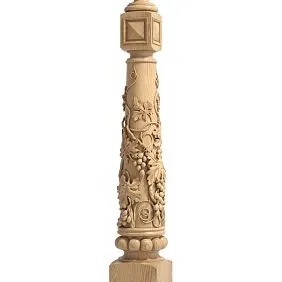
Our factory also produces:



Preparation stage: the foundation of success
Quality handrail fastening begins long before the actual installation. The preparatory stage includes precise measurements, marking, tool and material preparation. Any error at this stage may lead to serious problems later.
Get Consultation
Accurate marking — the key to success
The first step is checking the geometry of installed balusters. All of them must be strictly vertical and equally spaced. Even minor deviations can cause problems during handrail installation, so all inaccuracies must be identified and corrected at this stage.
The height of the balusters should be uniform, but their upper ends must lie in a plane parallel to the stair incline. A long straight board or laser level is used for verification. Any protruding balusters are trimmed, and missing height is compensated with shims or by adjusting the fastening.
Special attention is paid to marking the fastening locations. The central axis of the handrail must pass precisely through the center of the balusters, ensuring even load distribution. Any misalignment leads to additional stresses and reduced connection reliability.
Tool and Material Selection
The quality of fastening largely depends on the proper selection of tools and materials. Working with wood requires sharp, high-quality tools that provide clean, precise cuts without chips or scratches.
Drills must be specifically designed for wood and have sharp cutting edges. Dull drills not only complicate the work but can also damage the material, creating uneven holes or chips. Different types of drills and processing modes may be required for different wood species.
Fastening elements are selected based on the connection method and wood characteristics. They must be made from high-quality materials, have anti-corrosion coatings, and meet the load requirements they will be subjected to.
Traditional fastening methods
Carpentry art encompasses numerous time-tested methods of connecting wooden elements. Each method has its advantages and areas of application, and the choice of a specific method depends on multiple factors.
Connection Using Wooden Dowels
Dowel connection is a classic of carpentry craftsmanship, providing a strong and aesthetically pleasing connection without visible fasteners. Wooden dowels are made from the same wood species as the main elements, ensuring material uniformity and identical behavior under humidity changes.
Creating a dowel connection requires high precision. Holes of precisely specified diameter and depth are drilled into the handrail and balusters. Even minor deviations can cause handrail misalignment or weaken the connection. Dowel diameters are typically 8–12 mm, and their length is 40–60 mm.
Special attention is paid to the quality of carpentry glue. Modern PVA or polyurethane-based glues provide connection strength exceeding the strength of the wood itself. Glue is applied to both the dowel and the holes, ensuring maximum bonding surface area.
Fastening with Metal Screws
Metal screws provide a stronger connection and allow for adjustment. This method is especially effective when working with hardwoods, where driving wooden dowels may be difficult.
Metric-threaded screws with a diameter of 8–12 mm allow for disassemblable connections, which is especially important when repair or replacement of elements is needed. Combination screws with metric threads on one side and self-tapping threads on the other greatly simplify installation.
Screw length is calculated to ensure secure fixation in both components. Typically, this is 2/3 of the length in the baluster and 1/3 in the handrail. This distribution ensures optimal connection strength while minimizing weakening of structural elements.
Modern Fastening Technologies
Technological advancements have introduced new materials and methods into carpentry, enabling the creation of stronger and more durable connections. Modern fastening systems combine traditional principles with innovative solutions.
Hidden Fastening Systems
Modern hidden fastening systems allow for an ideally clean exterior appearance without visible fasteners. Special brackets and clamps are fully concealed within the structure, yet still provide high connection reliability.
Stainless steel corner brackets allow the handrail to be mounted at any angle, which is especially important for stairs with complex configurations. Adjustable elements compensate for minor manufacturing and installation inaccuracies, ensuring perfect alignment.
Quick-release connections facilitate disassembly for repair or replacement of components. Special locking mechanisms provide secure locking, preventing accidental disconnection, yet allowing rapid disassembly when necessary.
Modern structural adhesives
Modern structural adhesives are capable of creating bonds stronger than the wood itself. Two-component epoxy formulations provide high adhesion and resistance to various environmental influences.
Polyurethane adhesives retain elasticity after curing, which is especially important for wooden structures. They compensate for minor wood movements due to humidity changes, preventing cracks and weakening of the joint.
Special fillers allow selecting the adhesive color to match the wood, making the joints virtually invisible. This is especially important for high-quality products where aesthetics are paramount.
Mounting using a handrail rail
One of the most common and reliable methods is mounting the handrail through a handrail rail. This method ensures even load distribution and simplifies installation, especially when working with a large number of balusters.
System operation principles
A handrail rail is an intermediate element mounted to the upper ends of balusters and serves as the base for installing the decorative handrail. Such a system allows dividing functions: the rail ensures the connection's strength, while the handrail provides aesthetics and usability.
The rail is made from the same material as the balusters, ensuring structural uniformity. Its cross-section is calculated based on the loads and spacing between balusters. Typically, a 40×60 mm or 50×70 mm timber is used.
The rail is mounted to the balusters using screws, dowels, or bolts. The choice of method depends on requirements for strength and aesthetics. Dowels or bolts are used for concealed mounting, while screws with subsequent covering of mounting points are used for quick assembly.
Installation technology
The installation process begins with precise marking of the rail's position on the balusters. All mounting holes must be strictly perpendicular to the surface and equidistant from the edges. This ensures even load distribution and prevents material cracking.
Drilling holes is performed in two stages: first, with a small drill bit for precise positioning, then with a drill bit of the required diameter. This approach prevents drill bit displacement and ensures hole accuracy.
After installing the rail, the decorative handrail is mounted onto it. A groove matching the rail's dimensions is pre-cut into the handrail. The groove depth must ensure secure seating while maintaining sufficient handrail strength.
Direct handrail mounting to balusters
Direct mounting of the handrail to balusters without intermediate elements ensures maximum joint strength and creates a monolithic structure. This method requires high precision in manufacturing and installation, but the result justifies the effort.
Preparation of upper ends of balusters
The quality of the joint largely depends on the precision of preparing the upper ends of balusters. All ends must be cut at the same angle corresponding to the staircase slope and lie in a single plane. Even minor deviations can lead to uneven load distribution and weakening of the joint.
Cutting is performed after final installation and alignment of all balusters. A taut string or laser level is used for marking the cut line. The cut must be strictly perpendicular to the baluster's axis and have a smooth surface without chips.
After cutting, the baluster ends are sanded to remove tool marks and create a perfectly smooth surface. This is especially important when using adhesive joints, where surface quality directly affects bond strength.
Marking and drilling holes
Precise marking of mounting locations is a critical stage of work. The centers of holes must be strictly along the baluster axis and equidistant from their edges. Any misalignment leads to additional stresses and reduced joint reliability.
Marking is done using special templates or guides, ensuring accurate positioning. In their absence, marking is performed using measuring tools, but this requires special care and experience.
Drilling holes in the handrail must be done with great care. The handrail usually has a complex profile, and inaccurate drilling may disrupt its geometry or strength. Guide bushings or guides are used to ensure hole perpendicularity.
Features of working with different wood species
Each wood species has its own characteristics that must be considered when selecting the mounting method and technology. Density, hardness, grain direction, and tendency to crack—all these factors influence the choice of the optimal solution.
Hardwoods: oak, beech, ash
Hardwood species are characterized by high density and strength, but require a special approach during processing. Drilling holes in such materials must be done with sharp drill bits at low speeds, with periodic withdrawal to remove chips and cool the material.
Preliminary drilling with a small drill bit prevents bit displacement and ensures hole accuracy. The diameter of the preliminary hole should be 1/3 of the diameter of the main hole. This is especially important when working with oak, which is prone to cracking.
Fasteners for hardwoods must have sharp threads and special coatings that reduce friction during installation. Using lubricant or soap on the threads facilitates installation and prevents fastener binding.
Softwoods: pine, spruce, linden
Softwoods are easier to work with but require careful fastening. Excessive tightening force may cause fiber compression and weaken the joint. Fasteners must have a wide bearing surface to evenly distribute the load.
When working with softwoods, it is especially important to control the material's moisture content. Over-dried wood becomes brittle and prone to cracking, while overly wet wood may shrink significantly after installation.
For softwoods, it is recommended to use partially threaded fasteners, which reduce the risk of cracking and provide more secure fixation. Holes for fasteners should be 1-2 mm smaller than the thread diameter to ensure a tight fit.
Quality control and finishing
Quality handrail mounting is not only about strong connections but also about flawless appearance. Final finishing includes eliminating all visible defects, sanding, fitting components, and applying protective-decorative coatings.
Checking connection strength
After completing the installation, each joint must be tested for strength. The handrail must not have any play or movement when subjected to load. Testing is performed by applying force in various directions and points.
Special attention is given to stress concentration points — attachment points to balusters, corners, and connections between different handrail sections. Any signs of weakening or deformation require immediate correction.
Visual inspection reveals installation defects: unevenness, gaps, fastener marks, chips. All detected defects must be corrected before applying the final coating.
Sanding and fitting
Final sanding ensures a perfectly smooth surface and removes all traces of processing. Start with coarse grit abrasive 120-150, gradually moving to finer grits — 220, 320, and 400.
Special attention is given to connection points where minor height differences or unevenness may occur. All transitions must be smooth, without steps or dips. Wood putty is used as needed to fill minor defects.
Final sanding is performed with abrasive grit 400-600, ensuring a perfectly smooth surface ready for coating application. After sanding, the surface is thoroughly cleaned of dust using a vacuum cleaner and a lint-free cloth.
Protective-Decorative Coatings
Properly selected and applied coatings not only protect wood from external influences but also highlight its natural beauty. The choice of coating type depends on the wood species, usage conditions, and aesthetic preferences.
Lacquer Coatings
Lacquers provide a strong protective film on the wood surface while preserving its natural appearance and texture. Modern polyurethane lacquers are distinguished by high wear resistance and resistance to mechanical impacts.
Lacquer application is performed in multiple layers with intermediate sanding. The first layer acts as a primer, filling wood pores and creating a base for subsequent layers. Intermediate sanding with fine abrasive removes raised fibers and creates a rough surface for better adhesion of the next layer.
The final layer is applied particularly carefully, without drips or runs. The quality of the final layer determines the final appearance of the product, so special attention is given to this stage.
Oil finishes
Oil-based coatings penetrate deeply into the wood structure, highlighting its texture and creating a natural, matte finish. They are especially suitable for hardwoods with pronounced grain.
The advantage of oil-based coatings is the possibility of local repair. When scratches or damage occur, it is sufficient to sand the damaged area with sandpaper and apply a new layer of oil.
Oils require more careful maintenance compared to lacquers, but they create a more natural and pleasant-to-touch surface. They are ideal for eco-style or Scandinavian interiors.
Typical errors and ways to avoid them
Even experienced craftsmen sometimes make mistakes when installing handrails. Knowing the most common problems and ways to prevent them will help avoid serious issues and ensure a high-quality result.
Errors in marking and measurements
Inaccurate marking is one of the most common causes of problems during installation. Accumulated errors may result in the handrail not fitting in the designated space or having incorrect geometry. To prevent this error, marking must be done from reference points and dimensions must be constantly checked.
Using low-quality measuring tools can also cause errors. The tape measure must be accurate and not stretched, the square must be strictly rectangular, and the level must be properly calibrated. Regular tool inspection is a mandatory procedure for professional craftsmen.
Technological violations
Violating drilling technology is another common error. Using dull drill bits, incorrect rotational speed, or lack of cooling may cause material overheating, chipping, or inaccurate holes.
Incorrect application of adhesives can also compromise joint strength. Each adhesive type has specific application requirements: open time, temperature regime, air humidity. Violating these conditions renders the adhesive ineffective.
Rushing work is the enemy of quality. Each stage must be performed carefully, adhering to all technological requirements. Attempts to speed up the process by skipping intermediate operations inevitably lead to reduced quality.
Innovative solutions for handrail mounting
Modern technologies offer new possibilities for handrail mounting, combining traditional reliability with innovative solutions. These methods are especially relevant for complex projects or non-standard constructions.
Magnetic fastening systems
Modern neodymium magnets have exceptional holding power and can be used to create removable joints. Magnetic systems are especially convenient for temporary structures or when frequent disassembly is required.
Magnetic mounting provides instant fixation without tools. Special magnetic inserts, embedded in the handrail and balusters, create a strong connection that can be easily disengaged when needed.
However, magnetic systems have load limitations and are not suitable for primary load-bearing connections. They are used as additional fastening elements or for decorative purposes.
Pneumatic and hydraulic systems
Pneumatic and hydraulic fastening systems are developed for particularly critical structures. They ensure even load distribution and allow for precise adjustment of tightening force.
Such systems are especially relevant for public buildings with high usage intensity. They enable the creation of connections that automatically compensate for load changes and thermal deformations.
The cost of such systems is significantly higher than traditional methods, but their use is justified in cases where higher requirements for reliability and longevity are needed.
Features of fastening under various operating conditions
The operating conditions of stairs significantly affect the choice of handrail fastening method. Humidity, temperature fluctuations, and usage intensity — all these factors must be considered when designing connections.
Pine balusters are ideal for interior staircases in residential homes, offices, and public buildings. Stable operating conditions — constant temperature, controlled humidity, absence of direct exposure to precipitation — ensure longevity and preservation of the appearance of the products.
Internal staircases operate under relatively stable conditions, allowing the use of a wide range of materials and technologies. Main requirements — strength, durability, and aesthetics.
For internal staircases, any type of wood and fasteners can be used. Special attention is paid to the appearance of connections, as they are visible and affect the overall impression of the interior.
Regular maintenance of internal staircases is usually limited to cleaning and periodic renewal of finishes. This allows using more complex but aesthetically pleasing fastening methods.
Outdoor staircases
Outdoor staircases are exposed to atmospheric precipitation, temperature fluctuations, and ultraviolet radiation. This requires the use of special materials and technologies resistant to external influences.
Fasteners must have anti-corrosion coatings or be made of stainless materials. Adhesives must be water-resistant and retain their properties over a wide temperature range.
Special attention is paid to sealing connections to prevent moisture ingress. Special sealants and gaskets are used, which maintain elasticity under thermal deformations.
Economic aspects of choosing a fastening method
The cost of handrail fastening includes not only material and labor costs, but also long-term expenses for maintenance and repairs. The correct choice of fastening method can significantly reduce overall staircase operating costs.
Initial costs
Different fastening methods have different implementation costs. Simple methods, such as screw fastening, require minimal material costs but may require additional work to conceal fastening points.
Complex methods, such as dowel joints or concealed fastening systems, require significant time and material investment but provide better appearance and longevity.
When choosing a fastening method, it is necessary to consider not only initial costs but also long-term prospects. More expensive but quality solutions are often more economically advantageous in the long run.
Maintenance costs
Different fastening methods require different levels of maintenance. Mechanical connections may require periodic tightening, while adhesive connections may require complete replacement upon failure.
Accessibility of fastening points for maintenance also affects operating costs. Concealed connections may be more aesthetically pleasing, but their maintenance requires partial disassembly of the structure.
Maintenance planning should be considered at the design stage. Providing inspection hatches, removable elements, or other access means can significantly reduce maintenance costs.
Understanding that, How to properly fasten a handrail to wooden balustersopens the way to creating not only beautiful, but also reliable staircase structures that will serve for many years.
Conclusion
The skill of fastening a handrail to balusters of a wooden staircase is a symphony of precision, where each note must sound perfectly. From selecting the right method to final quality control, every stage requires a professional approach and deep understanding of materials. Properly executed fastening not only ensures safety and functionality, but also creates the foundation for aesthetic perfection of the entire staircase structure.
Modern technologies open new possibilities, but the fundamentals remain unchanged — quality of materials, precision of execution, and the master’s professionalism. Investments in proper mounting pay off through the longevity of the structure, safety of operation, and aesthetic perfection.
The choice of the optimal fastening method depends on many factors: type of wood, operating conditions, aesthetic requirements, and budget constraints. The key is to understand the principles of operation of different systems and be able to adapt them to specific project conditions.
STAVROS Company represents a benchmark of quality in the field of wooden staircase structures. Decades of experience, use of advanced technologies, and strict quality control make STAVROS products a choice of professionals. Every STAVROS product is a guarantee of reliability, beauty, and longevity, proven by time and thousands of satisfied customers. Choosing STAVROS means choosing a partner who understands the importance of every detail in creating a perfect staircase and is ready to provide not only high-quality products, but also professional support at every stage of project implementation.