Article Contents:
- Engineering principles of load distribution
- Analysis of force vector impact
- Material science aspects of connections
- Classification of fixation methods by base types
- Wooden floors: traditional and modern solutions
- Concrete foundations: specialized technologies
- Composite and polymer coatings
- Technological methods of mounting: from simple to complex
- Surface mounting on flanges
- In-floor mounting
- Anchor mounting with chemical fixation
- Step-by-step installation technology
- Preparation Stage: Planning and Marking
- Preparation of balusters for installation
- Drilling holes and installing fasteners
- Final assembly and quality control
- Specifics of working with different baluster materials
- Wooden balusters: traditions and innovations
- Metallic balusters: strength and durability
- Composite and glass balusters
- Quality Control and Testing
- Visual inspection of connections
- Load testing
- Long-term monitoring
- Typical Errors and Ways to Prevent Them
- Errors in Choosing Fastening Elements
- Technological violations
- Errors in operation
- Modern Trends and Innovations
- Smart mounting systems
- Ecologically clean technologies
- Personalization and customization
- Conclusion
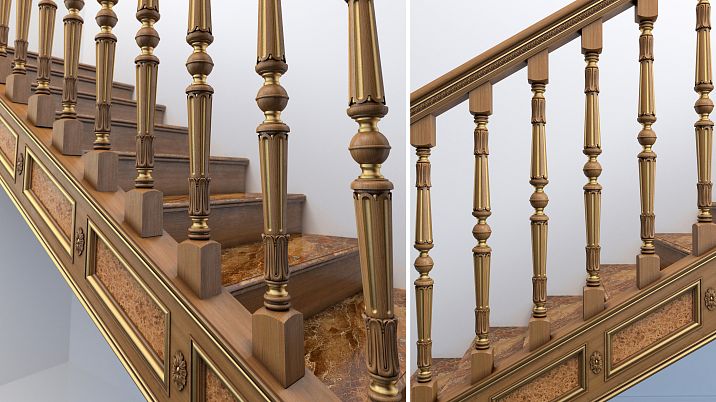
Imagine a staircase where every step gives you confidence, and touching the handrails evokes a feeling of absolute reliability. The secret of such a structure lies in how to mount balusters to the floor — a process that requires not only technical knowledge but also an understanding of load physics, materials science, and aesthetic principles. Proper fixation of vertical posts determines the longevity of the entire stair railing and its operational safety.
Modern construction imposes strict requirements on stair structures. The railing must withstand a horizontal load of at least 100 kilograms per linear meter, equivalent to the weight of an adult person leaning on the handrails. Achieving such strength is possible only under the condition of flawless mounting of each element of the system.
Balusters serve a dual function: they ensure the structural integrity of the railing and create visual completeness of the architectural composition. The quality of their installation affects not only user safety but also the aesthetic appeal of the entire staircase structure. Improperly mounted posts will loosen over time, creating danger and disrupting interior harmony.


Engineering principles of load distribution
Understanding the mechanics of stair railings is the foundation of a professional approach to installation. Each baluster acts as a vertical column that receives loads from the handrail and transfers them to the base. In doing so, various types of stresses arise: compression from vertical loads, bending from horizontal forces, and torsion under uneven loading.




Analysis of force vectors
Horizontal loads create the greatest stresses at baluster mounting nodes. When a person leans on the handrail, a moment of force arises that tends to overturn the post. This moment must be reliably resisted by the floor mounting, which works in tension and shear.
Dynamic loads complicate the loading picture. Rhythmic movement on the stairs creates vibrations that may lead to fatigue failure of the fasteners. Resonant oscillations are especially critical, occurring when the step frequency coincides with the structure's natural frequency.
Thermal deformations also affect the performance of fasteners. Different linear expansion coefficients of baluster and floor materials create additional stresses that must be compensated by the connection node design.
Our factory also produces:


Material aspects of connections
The choice of baluster material determines the technology of their mounting to the floor. Wooden posts require consideration of wood anisotropy — differences in properties along and across the grain. Metal balusters have isotropic properties but require corrosion protection at mounting nodes.
Moisture-induced deformations of wood create variable loads on fasteners. Seasonal changes in air humidity cause dimensional changes in wooden elements, which must be considered in connection design.
Material strength characteristics determine allowable loads on fastening elements. Hardwood species allow the use of stronger fasteners but require pre-drilling of holes.
Get Consultation
Classification of mounting methods by foundation types
The technology of baluster mounting depends significantly on the material and construction of the floor. Each type of foundation requires a specific approach, taking into account its physical and mechanical properties and processing characteristics.
Wooden floors: traditional and modern solutions
Wooden floors provide the greatest opportunities for mounting balusters to the floor due to ease of processing and good adhesion with fastening elements. However, the floor wood is also subject to moisture-induced deformations, requiring special attention to node design.
Through bolt mounting provides maximum connection reliability. The bolt passes through the entire floor thickness and is secured with a nut and wide washer on the opposite side. Such a connection allows tightening the fastening if necessary without dismantling the baluster.
Bolt diameter is selected based on loads and floor thickness. For standard wooden floors 40-50 mm thick, M8-M10 bolts are used. Bolt length must ensure that the threaded portion extends 15-20 mm for secure nut fixation.
Mounting on threaded rods with threaded sleeves represents a more technologically advanced solution. A metal sleeve with internal threads is embedded into the floor, into which a rod screwed into the baluster is inserted. Such a connection provides high strength with the possibility of disassembly.
Concrete foundations: specialized technologies
Concrete floors require the use of special fasteners capable of reliable operation in the alkaline environment of concrete. High foundation strength allows creating very reliable connections, but complicates the installation process.
Chemical anchors provide the highest strength connection in concrete. A special epoxy or polyester-based adhesive creates a monolithic connection with concrete. Such anchors withstand loads comparable to the strength of the concrete itself.
Installation technology of chemical anchors requires strict adherence to manufacturer instructions. The hole in the concrete must be carefully cleaned of dust and moisture. The adhesive is introduced using a special gun ensuring even filling of the cavity.
Expansion anchors represent a simpler but less reliable solution. They work by expanding within the hole and creating friction forces with the concrete. The quality of the connection depends on concrete density and accuracy of hole drilling.
Composite and polymer coverings
Modern composite floor coverings require a special approach to baluster mounting. The multi-layer structure of such floors complicates the creation of reliable connections.
Through mounting through all layers ensures load transfer to the load-bearing base. The fastening element passes through the decorative covering, underlayment, and is secured to the load-bearing structure of the floor.
Sealing of fastener penetration points through the covering is critically important to prevent moisture ingress into the floor structure. Special sealants compatible with the covering material are used.
Technological mounting methods: from simple to complex
The choice of a specific mounting method depends on multiple factors: type of balusters, floor material, required strength, aesthetic requirements, and project budget. We will consider the main technologies in order of increasing complexity.
Surface mounting on flanges
The simplest and fastest way to install balusters is using metal flanges, which are mounted to the floor with dowels or self-tapping screws. The baluster is secured to the flange with screws or welding.
Advantages of the method: ease of installation, possibility of quick baluster replacement, no need for special tools. Disadvantages: visible fastening elements, limited strength, possibility of corrosion at connection points.
Flanges are made of stainless steel or galvanized metal to prevent corrosion. Flange size is selected based on the baluster diameter and required mounting strength.
Built-in mounting in the floor
A more aesthetic solution involves partially embedding the baluster into the floor. An opening is cut into the flooring, into which the lower part of the post is installed. The mounting is done with concealed elements.
Built-in mounting of balusters to the floor requires high precision marking and careful cutting of holes. The gap between the baluster and the edges of the hole should be minimal to ensure an aesthetic appearance.
The depth of embedding is determined by the floor construction and strength requirements. For wooden floors, a depth of 20-30 millimeters is sufficient; for composite coverings, the entire length may need to pass through the decorative layer.
Chemical anchor mounting
The most reliable method involves using chemical anchors, creating a monolithic connection between the baluster and the floor base. This method ensures maximum strength and durability of the mounting.
Coaxial holes are drilled in the baluster and floor, into which a chemical adhesive anchor rod is installed. The polymerization time of the adhesive ranges from several hours to a full day, depending on the type of compound and ambient temperature.
Chemical anchors ensure even load distribution along the entire length of the installation, eliminating stress concentration and increasing the reliability of the connection.
Step-by-step installation technology
Quality installation of balusters requires strict adherence to the technological sequence of operations. Each stage affects the strength and durability of the connection, so deviations from the proven methodology are not permitted.
Preparation Stage: Planning and Marking
Work begins with creating a detailed plan for baluster placement. According to safety requirements, the distance between posts should not exceed 150 millimeters center-to-center. Uniform spacing between balusters ensures visual harmony of the structure.
Marking is performed using a laser level or a taut string. Installation points of balusters are marked on the floor with precision to 1 millimeter. Any deviations in marking will result in disruption of the railing's geometry.
Checking the floor's levelness is critically important for correct baluster installation. Height differences exceeding 2 millimeters per meter length require leveling or compensation during installation.
Preparation of balusters for installation
The lower ends of balusters must be perfectly flat and perpendicular to the post axis. Processing is done using a miter saw with a fine-toothed disc or a hand plane with a sharp blade.
When using wooden balusters, it is necessary to control the material's moisture content. It should not exceed 12% for interior structures. More humid wood will deform after installation.
Pre-treatment with protective compounds extends the service life of wooden balusters. Special attention is given to end surfaces, which are most susceptible to moisture exposure.
Drilling holes and installing fasteners
Drilling holes in the floor requires using quality tools and selecting appropriate processing modes. For concrete bases, hammer drills with carbide bits are used; for wooden floors, drills with twist drills are used.
The hole diameter must exactly match the fastener size. An oversized hole reduces mounting strength, while an undersized hole may cause material cracking.
Drilling depth is controlled by a stop on the tool or by marking on the drill bit. Insufficient depth will not ensure secure fixation, while excessive depth may damage the floor structure.
Final assembly and quality control
Baluster installation is performed with continuous verticality control. Each post is checked with a level in two mutually perpendicular planes. Deviations exceeding 1 millimeter per meter of height are not permitted.
Fastener tightening is performed with force control. Insufficient tightening will not ensure a secure connection, while excessive tightening may damage the baluster or floor material.
Connection strength is checked by applying a test load. A horizontal force of 30-50 kilograms is applied to each baluster. Absence of deformation or play indicates quality installation.
Specifics of working with different baluster materials
Each baluster material has its own characteristics that must be considered when selecting the mounting method and technology. Understanding these characteristics allows achieving optimal results.
Wooden balusters: traditions and innovations
Wood remains the most popular material for manufacturing balusters due to its eco-friendliness, workability, and aesthetic appeal. However, mounting wooden balusters to the floor requires consideration of this material's specific properties.
Wood's anisotropy manifests in different strength characteristics along and across the grain. Fasteners must be positioned according to the grain direction to prevent cracking.
Wood moisture deformations create variable loads on fasteners. The connection design must allow for minor movements without loss of strength.
Different wood species require different fastening approaches. Hardwood species (oak, beech, maple) have high strength but require pre-drilling all holes. Coniferous species (pine, spruce) are more flexible but prone to cracking.
Metal balusters: strength and durability
Metal posts provide maximum strength for stair railings and allow construction with minimal cross-sections of elements. However, their attachment to the floor has specific features.
Welded connections provide the highest strength but require corrosion protection. Welded areas must be thoroughly cleaned and coated with protective compounds.
Bolted connections allow for disassemblable structures but require regular tightening checks. Using self-locking nuts prevents accidental loosening of connections.
Galvanic corrosion may occur when dissimilar metals come into contact. To prevent it, insulating washers or coatings are used.
Composite and glass balusters
Modern composite materials combine the strength of metal with the lightness and corrosion resistance of polymers. Glass balusters create a sense of lightness and transparency in the structure.
Mounting composite balusters requires using special fasteners compatible with the post material. Ordinary metal fasteners may cause localized damage to the composite.
Glass balusters are mounted using special clamps that evenly distribute loads across the glass surface. Stress concentration is unacceptable due to the material's brittleness.
Quality control and testing
Completion of installation does not mean the end of work. Careful quality control and testing ensure the reliability of the constructed structure and reveal possible defects.
Visual inspection of connections
External inspection of all connection nodes allows detection of visible defects: cracks in the material, deformation of fasteners, damage to protective coatings. Special attention is given to stress concentration areas.
Geometric inspection of the structure includes checking the verticality of balusters, uniformity of distances between them, and compliance with project dimensions. High-precision measuring tools are used.
The condition of protective coatings is assessed visually and with specialized instruments. Damage to coatings may lead to corrosion of metal elements or biological degradation of wood.
Load testing
Functional tests are conducted by applying standard loads to balusters. A horizontal load of 100 kilograms is applied to the top of each post for 5 minutes.
Dynamic tests include rhythmic loading on the structure at a frequency matching normal walking rhythm. Absence of resonance phenomena indicates correct calculation and assembly.
Fatigue tests are conducted for structures with high usage intensity. Repeated application of loads allows assessment of connection durability.
Long-term monitoring
Periodic inspection of fasteners during operation allows timely detection and elimination of emerging problems. Special attention is given to the first months after installation, when the structure stabilizes.
Maintaining an observation log helps track changes in the structure's condition and plan preventive measures. All detected defects and corrective actions taken are recorded.
Seasonal inspections are especially important for wooden structures susceptible to moisture deformation. The condition of fasteners is monitored after periods of high or low humidity.
Typical errors and ways to prevent them
Analysis of the most common errors in baluster fastening helps avoid problems and ensures high-quality work. Most defects are due to violations of technology or insufficient qualifications of workers.
Errors in selecting fasteners
Using inappropriate fasteners is one of the most serious errors. Insufficient strength of fasteners leads to their failure under load. Excessive fastener strength may damage the baluster or floor material.
Mismatch of fastener material to operating conditions may also cause problems. Using ordinary steel in humid conditions leads to corrosion and weakening of connections.
Incorrect selection of fastener length reduces connection reliability. Too short fasteners do not provide sufficient contact area; too long fasteners may damage the structure.
Technological violations
Inaccurate marking is the source of many problems. Deviations in dimensions and angles accumulate and lead to the inability to assemble the structure properly.
Violating drilling modes may result in material damage or poor holes. Excessive rotational speed causes overheating and melting of polymer materials.
Insufficient cleaning of holes from dust and chips reduces the strength of adhesive joints. Residual cutting fluids may also negatively affect adhesion.
Operation Errors
Exceeding calculated loads may lead to failure of fasteners. Impact loads are especially dangerous, creating peak stresses several times higher than static loads.
Lack of regular maintenance leads to accumulation of defects and reduced structural reliability. Timely identification and elimination of minor issues prevent serious accidents.
Incorrect use of ladders may also lead to damage. Handrails are not intended for suspending heavy objects or serving as supports during work.
Modern trends and innovations
Advancements in technology and materials lead to the emergence of new baluster mounting methods. Modern solutions combine traditional reliability with innovative approaches to design and functionality.
Smart Mounting Systems
Integrating electronic components into mounting structures opens new possibilities for monitoring stair railings. Load and deformation sensors allow real-time monitoring of stresses in critical nodes.
Wireless data transmission systems enable remote monitoring of structural condition. Information about exceeding allowable loads or defects is transmitted to the building's central control panel.
Predicting structural lifespan based on monitoring data allows planning preventive maintenance and preventing emergency situations.
Ecologically clean technologies
Growing requirements for ecological safety of construction materials stimulate the development of new fastening systems. Biodegradable polymers replace traditional synthetic materials in non-critical structures.
Recycling of fastening elements is becoming an important factor in technology selection. Detachable connections allow reusing expensive components.
Reducing the carbon footprint of fastener production is achieved through the use of renewable energy sources and optimization of technological processes.
Personalization and Customization
Modern technologies enable creating unique fastening systems tailored to specific customer requirements. 3D printing of metal parts allows manufacturing of complex-shaped fasteners in single units.
Parametric design allows optimizing fastener structures for specific operating conditions. Computer modeling ensures accurate calculation of stresses and deformations.
Integration with smart home systems allows automatic adjustment of fastening system parameters based on operating conditions.
Conclusion
The art of mounting balusters to the floor is a complex craft requiring deep knowledge of materials science, understanding of mechanical principles, and mastery of modern technologies. Each connection is the result of careful planning, quality preparation, and flawless execution of all technological operations.
Properly installed fasteners form the foundation of safety and durability of the staircase structure. They must withstand not only calculated loads but also unforeseen impacts while maintaining aesthetic appeal.
Modern technologies open new possibilities for creating reliable and beautiful connections, but the fundamentals of craftsmanship remain unchanged. Understanding the physics of processes, attention to detail, and use of quality materials — these are what distinguish professional work.
Investments in quality baluster mounting pay off multiple times due to the longevity of the structure and the absence of frequent repairs. Saving on fastening elements or violating installation technology may lead to serious problems in the future.
For those striving for perfection in every detail, we recommend studying detailed information about mounting balusters to the floor, where time-tested methods and modern technological solutions are presented.
Remember: each mounting is not just a technical necessity, but an opportunity to create something beautiful and long-lasting. Proper installation approach ensures not only safety, but also aesthetic perfection of the staircase structure.
For many years, STAVROS has helped professionals and enthusiasts create unique staircase structures that combine traditional quality with modern technologies. Our experience and knowledge are always at your service to bring to life the most daring architectural concepts.