Article Contents:
- Evolution of craftsmanship: from primitive tools to digital technologies
- Origins of woodworking art
- Industrial Revolution and new horizons
- Scientific foundations of working with wood
- Anatomy of wood and its influence on processing
- Physical and chemical processes during processing
- Modern Technologies and Traditional Methods
- Digital design and virtual modeling
- High-Precision Mechanical Processing
- Preservation of traditional craftsmanship
- Material selection: the foundation of quality craftsmanship
- Classification and properties of wood species
- Exotic species and their characteristics
- Production process: from idea to finished product
- Pre-production preparation
- Main production stages
- Quality control at every stage
- Final finishing: protection and aesthetics
- Surface Preparation
- Types of finishing coatings
- Decorative finishing techniques
- Specialized directions in woodworking
- Restoration of antique furniture
- Wood carving and sculpture
- Manufacture of musical instruments
- Ecological aspects of modern woodworking
- Sustainable forestry
- Zero-waste technologies and waste recycling
- Ecologically clean technologies
- The future of woodworking: trends and prospects
- Production digitization
- New materials and technologies
- Personalization and Mass Customization
- Conclusion: Art Tested by Time
When you hold a piece made of natural wood, you feel not just an object — you touch history. Every wood fiber carries memories of decades of growth, of seasonal changes, of winds and rains. Crafted from natural wood — is the oldest art of humanity, which in the modern world has acquired new dimensions of perfection, combining centuries-old traditions with innovative technologies.
In the era of synthetic materials and mass production, master carpenters remain keepers of a unique craft. They do not merely create furniture or decor — they embody the soul of wood in functional works of art. Every wood slice reveals unique natural patterns, and every finished surface radiates the warmth of living material.


Evolution of craftsmanship: from primitive tools to digital technologies




Origins of woodworking art
The path from a simple piece of wood to an exquisite product began thousands of years ago. Our ancestors intuitively understood the potential of this remarkable material. The first tools, primitive furniture, ritual objects — all this laid the foundations of modern craftsmanship.
Ancient Egyptians elevated the art of working with wood to incredible heights. Their furniture still impresses with its elegance and craftsmanship even today. Greeks and Romans developed jointing technologies and created the first lathes. Medieval master carpenters transformed the craft into true art, passing down secrets of craftsmanship from generation to generation.
Our factory also produces:


The Industrial Revolution and New Horizons
The 19th century fundamentally changed approaches to wood processing. The emergence of machine tools allowed for increased productivity and precision. However, true masters understood the key point: the machine is merely a tool in the artist's hands. It can accelerate the process, but the soul of the product still lies with the human being.
Modern production of furniture from natural wood represents a unique synthesis of traditions and innovations. Computer-aided design, CNC machines, laser processing — all these technologies serve one goal: to fully reveal the beauty and potential of the natural material.
Get Consultation
Scientific Foundations of Woodworking
Anatomy of Wood and Its Influence on Processing
Wood is a living material with a complex internal structure. Understanding the anatomy of wood is critically important for successful work with it. Each species has unique characteristics: density, grain direction, moisture content, presence of resins and tannins.
Coniferous species have a straight-grained structure and high resin content. This makes them relatively easy to process, but requires special approaches to drying and finishing. Broadleaf species have a more complex structure with distinct pores and vessels, which affects their processing methods.
Annual rings tell the story of the tree's life. Rapid growth creates wide rings with less dense wood, slow growth — narrow, high-density rings. An experienced craftsman reads this information like an open book, planning optimal processing methods for each piece.
Physico-Chemical Processes in Processing
Modern Production from Natural Wood Based on a deep understanding of the physico-chemical processes occurring in wood. Drying is not simply removing moisture — it is a complex process of changing the internal structure of the material.
Controlled drying in special chambers allows achieving optimal moisture content of 8–12% without creating internal stresses. Gradient modes with gradual changes in temperature and humidity preserve all valuable properties of the wood, preventing cracking and deformation.
Thermal modification of wood is an innovative technology that changes material properties at the molecular level. At temperatures of 160–230°C in a steam environment, partial degradation of hemicellulose and modification of lignin structure occur. The result is a material with increased dimensional stability and improved performance characteristics.
Modern Technologies and Traditional Methods
Digital Design and Virtual Modeling
The revolution in woodworking began with the introduction of computer technologies. 3D modeling allows creating an exact replica of the future product even before work begins. The designer can experiment with shapes, proportions, and materials, obtaining immediate visualization of the result.
Parametric design automatically recalculates the entire structure when individual elements are changed. This is especially important in custom furniture production, where each item is adapted to the specific needs of the client.
Virtual and augmented reality systems allow "trying on" furniture in a real interior. The client can assess how the item will fit into their space and make necessary adjustments before production begins.
High-Precision Mechanical Processing
CNC machines have brought a true revolution in the precision of wood processing. Milling complex profiles, creating ideal joints, processing curved surfaces — all this is performed with precision down to hundredths of a millimeter.
Multi-axis machining centers are capable of creating items of the most complex shapes. A single setup of the blank allows performing all necessary operations: milling, drilling, cutting slots and tenons. This not only increases precision but also significantly reduces production time.
Laser processing opens unlimited possibilities for decorating wooden items. Engraving of any complexity, creating delicate patterns, personalization — the laser can realize the most daring design ideas.
Preserving Traditional Craftsmanship
Despite technological progress, manual work by the craftsman remains indispensable. Finishing, assembling complex structures, artistic carving — these operations require human hands, eyes, and intuition.
Traditional joinery — mortise and tenon, dovetail, lap joints — remain the standard for strength and durability. Modern adhesives make such joints even more reliable, but the principles established centuries ago remain unchanged.
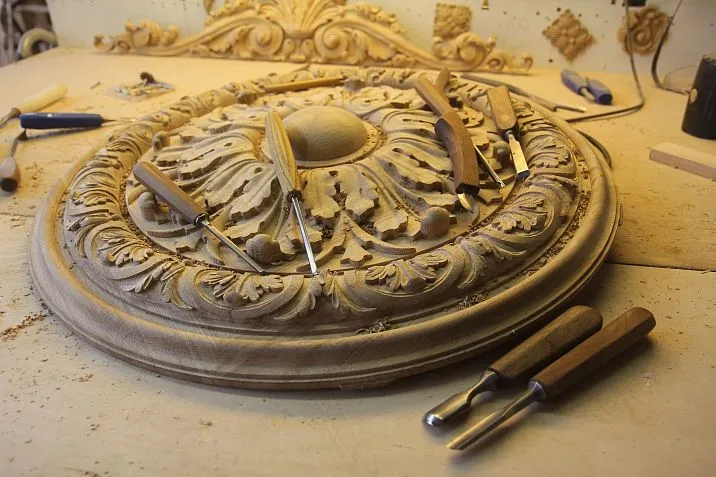
Hand carving in wood is the highest form of craftsmanship, requiring years of training and continuous refinement. Each carver develops their own style, recognizable signature, making their work unique.
Material Selection: The Foundation of Quality Product
Classification and Properties of Wood Species
Choosing the wood species is a critically important stage of any project. Each species has unique properties that determine its areas of application and processing methods.
Oak remains the king of furniture production due to its exceptional strength and beauty. Density up to 700 kg/m³ ensures the longevity of products, while high tannin content provides natural protection against biological damage. The color range of oak varies from light yellow to rich brown tones.
Ash combines strength with an attractive appearance. Light-colored wood with contrasting dark stripes creates a dynamic texture. Exceptional impact resistance makes ash ideal for making bent furniture elements.
Walnut is valued for its decorative qualities and dimensional stability. Its rich color palette, ranging from light brown to chocolate tones, combined with wavy wood grain, creates unique decorative effects.
Exotic species and their characteristics
Mahogany, teak, wenge, zebrawood — these exotic species require a special approach to processing. Each has unique properties: high density, specific oil and resin content, and structural characteristics.
Working with exotic species requires deep knowledge and experience. Incorrect processing can ruin expensive material. But the result is worth the effort — products made from exotic species become true works of art.
Sustainable forestry is becoming an increasingly important factor when selecting wood. FSC certification guarantees that the material comes from responsibly managed forests. This is not only ecological responsibility, but also care for future generations.
Production Process: From Idea to Finished Product
Pre-production preparation
Quality Manufacturing items from natural wood It begins long before the first cut. Detailed project planning includes analyzing the structure, selecting optimal technological solutions, and calculating material requirements.
Creating accurate drawings and technological plans — the foundation of successful production. Each detail must be calculated with consideration of the selected wood species, grain direction, and possible deformations.
Wood preparation includes not only drying, but also stabilization, selection, and sorting of material. Each piece undergoes careful evaluation to meet the project's technical requirements.
Main production stages
Material cutting — the first and one of the most important stages. Proper cutting planning allows minimizing waste and obtaining parts with optimal grain direction. Modern cutting optimization programs consider all nuances and provide the best results.
Mechanical processing of parts includes planing, milling, drilling, and sanding. Each operation is performed in strict sequence, following technological regimes. The quality of mechanical processing largely determines the quality of the finished product.
Assembly — the final production stage requiring high skill from the operator. Correct assembly sequence, precise fitting of parts, and adhesive quality — all of these affect the strength and appearance of the product.
Quality control at every stage
The quality control system permeates the entire production process. Incoming material inspection, operational control at each processing stage, and final inspection of finished products — all ensure consistently high product quality.
Modern measuring instruments allow controlling geometric parameters with high precision. Moisture meters, thickness gauges, profilometers — the arsenal of measuring equipment is constantly improving.
Visual inspection remains the most important element of the quality system. An experienced craftsman can detect even the slightest defects that may affect the appearance or performance of the product.
Finish: protection and aesthetics
Surface preparation
The quality of the final finish largely depends on surface preparation. Sanding is not just surface leveling — it is an art requiring understanding of wood structure and properties of different species.
Gradually reducing the grit of abrasive material allows achieving ideal smoothness without damaging wood fibers. Each species requires an individual approach: soft species are sanded more delicately, while hard species require intensive processing.
Dust removal after sanding — a critically important operation. Even the smallest particles can ruin the finish appearance. Modern dust extraction and cleaning systems ensure perfect surface cleanliness.
Types of finish coatings
The choice of finish type depends on the product's purpose, usage conditions, and aesthetic requirements. Natural finishes — oils and waxes — highlight the natural beauty of wood, preserving its ability to 'breathe'.
Oil finishes penetrate into the wood structure, creating a protective layer from within. They emphasize the natural texture and give the surface a velvety finish. Modern oil-based formulations contain UV filters that protect against fading.
Varnish finishes create a strong protective film on the wood surface. Polyurethane varnishes provide high wear resistance, water resistance, and chemical resistance. Modern formulations practically do not alter the natural color of the wood.
Decorative finishing techniques
Patination — a technique of artificial aging, creating an effect of noble antiquity. Special formulations highlight the wood's relief, creating light and shadow play in grooves and protrusions.
Brushing reveals the natural wood structure by removing soft fibers and emphasizing hard annual rings. This technique is especially effective on coniferous species and oak.
Staining allows changing the color of wood while preserving its natural texture. Water-based and spirit-based stains provide various effects, from light tinting to radical color change.
Specialized directions in woodworking
Antique furniture restoration
Restoration — a special direction requiring not only technical skills but also deep understanding of historical styles and techniques. Each era had its own characteristics in wood processing, types of joints, and finishing methods.
A modern restorer must be proficient in both traditional and latest methods. Sometimes it is necessary to recreate lost details using the same wood species and processing techniques as the original craftsmen.
The scientific approach to restoration includes studying the composition of old coatings, analyzing the structure, documenting each stage of work. This allows preserving the historical value of the object while restoring its functionality.
Woodcarving and Sculpture
Woodcarving is the highest form of craftsmanship, transforming utilitarian material into a work of art. Each carver develops their own style, recognizable signature.
Geometric carving is based on precise mathematical constructions. Floral ornaments require artistic vision and understanding of natural forms. Narrative carving is a true challenge to craftsmanship, requiring knowledge of anatomy, perspective, and composition.
Modern tools expand the carver's capabilities, but do not replace their skill. Electric chisels, miniature routers, pneumatic tools speed up work, but the soul of the artwork still lies with the master.
Manufacture of Musical Instruments
Creating musical instruments is a special field of woodworking, where acoustic properties of wood are of primary importance. Each species gives its own unique sound, affecting the instrument's timbre and volume.
For string instruments, spruce should have perfectly even annual rings and no defects. Maple is prized for its density and beautiful grain for soundboards and back panels. Ebony for fingerboards provides hardness and stability.
Master craftsmen pass down secrets from generation to generation. Material selection, preparation methods, and processing techniques all affect the instrument's sound quality.
Ecological Aspects of Modern Woodworking
Sustainable Forestry
Responsible attitude toward forest resources is becoming an increasingly important aspect of modern woodworking. Certification systems FSC and PEFC guarantee that wood is sourced from managed forests in compliance with ecological standards.
Modern forestry is based on principles of sustainable development. Harvest volume does not exceed natural growth, biodiversity is preserved, and interests of local communities are taken into account.
Using local wood species reduces transportation costs and the carbon footprint of products. Developing regional woodworking centers contributes to the economic development of forested areas.
Zero-waste technologies and waste recycling
Modern production from natural wood strives to minimize waste. Sawdust is used for producing heating pellets, shavings are used in composite materials, offcuts are used for making small items.
Cascade use of wood allows extracting maximum benefit from each tree. The best parts go to furniture and construction materials, less quality parts go to technical applications.
Secondary processing of wooden items is becoming increasingly relevant. Old furniture can be dismantled and used to create new items, reducing the need for fresh wood.
Ecologically clean technologies
Development of environmentally friendly technologies in woodworking proceeds in several directions. Water-based varnishes and formaldehyde-free adhesives ensure safety for human health and the environment.
Energy-efficient drying technologies reduce energy consumption and greenhouse gas emissions. Using renewable energy sources makes production carbon-neutral.
Closed water circulation systems minimize water consumption and prevent water body pollution. Modern wastewater treatment facilities ensure complete purification of process effluents.
The Future of Woodworking: Trends and Prospects
Digitalization of production
Industry 4.0 has not bypassed woodworking. The Internet of Things enables fully automated production with minimal human involvement. Sensors control all process parameters, and artificial intelligence systems optimize technological regimes.
Digital twins of production processes allow modeling various scenarios, optimizing material usage, predicting possible problems. This increases production efficiency and product quality.
Blockchain technologies ensure traceability of wood from forest to finished product. This is especially important in combating illegal logging and ensuring sustainable forestry.
New materials and technologies
Modified wood opens new opportunities for designers and engineers. Therm modification, acetylation, and furfurylation alter wood properties, making it more stable, durable, and resistant to biological damage.
Wood-based composite materials combine the advantages of natural material with improved technical properties. Wood-polymer composites do not rot, do not absorb moisture, but retain the appearance and tactile qualities of wood.
3D printing with wood composites allows creating items of complex shapes, impossible with traditional processing. Although the technology cannot yet fully replace classical methods, it opens new creative horizons.
Personalization and mass customization
Modern consumers value uniqueness and individual approach. Mass customization systems allow creating personalized items without significant increase in production cost.
Online configurators allow customers to create the design of future items themselves, choose materials, sizes, finishes. The system automatically generates technical documentation for production.
Virtual and augmented reality allow users to 'try on' furniture in a real interior, assessing how it will fit into the existing space. This reduces the risk of errors and increases customer satisfaction.
Conclusion: art tested by time
Crafting from natural wood is a remarkable synthesis of ancient traditions and modern technologies, where each piece becomes a unique work of art. In a world of rapidly changing technologies and synthetic materials, natural wood remains a symbol of authenticity, quality, and connection to nature.
Modern craftsmen do not merely process wood — they engage in a dialogue with the living material, revealing its hidden potential. Each wood fiber carries the story of the tree’s growth, and the craftsman’s task is to preserve this story, embodying it in a functional object.
Technological progress does not negate the significance of handcrafting, but rather emphasizes its uniqueness. CNC machines ensure precision, but the soul of the piece comes from the human touch. Laser equipment creates intricate patterns, but the artist designs the composition. Computer programs optimize the process, but the experienced craftsman makes the decisions.
Environmental responsibility has become an indispensable part of modern production. Using certified wood, waste-free technologies, and energy efficiency — all of this makes woodworking not only beautiful but also ethical.
Production of items from natural wood The future will be even more personalized, eco-friendly, and technologically advanced. But the core values will remain unchanged: respect for the material, pursuit of perfection, and creation of objects that will delight people for decades.
STAVROS embodies the finest traditions of woodworking craftsmanship in every project. The combination of deep knowledge of the properties of various wood species, mastery of both classical and modern processing technologies, and an individual approach to each order makes STAVROS a reliable partner in creating unique interior solutions.
STAVROS masters understand: working with natural wood is not merely a manufacturing process, but a creative interaction with living material. Each piece is created with an understanding of its role in people’s lives, with respect for nature and a pursuit of perfection.
Choosing STAVROS means choosing quality proven over time, ecological responsibility, and limitless possibilities for realizing the boldest design ideas. This partnership with artisans who transform ordinary wood into works of art, creating pieces capable of serving generations and becoming part of family history.