Article Contents:
- History of Window Sill Framing Development
- From Antiquity to the Middle Ages
- Renaissance and Baroque
- Classicism and Historicism
- Modernism and Contemporary Design
- Materials for Window Sill Framing
- Wood – Classic for All Eras
- Plaster – Traditional Approach
- Gypsum Board – Universal Solution
- PVC Panels and Sandwich Panels
- Stone and Artificial Stone
- Metal and Composite Materials
- Technology of Manufacturing and Installing Window Sill Framing
- Preparatory work
- Insulation of Window Sills
- Working with Wood
- Working with Plaster
- Installing Gypsum Board Window Sills
- Installing Plastic Panels
- Stylistic Solutions in Window Sill Framing
- Classic style
- Modern minimalism
- Rustic and Country Styles
- Ethnic Styles
- Eclecticism and Fusion
- Practical Aspects of Choosing and Using Window Sill Framing
- Considering Climatic Features
- Extending service life and preventive measures
- Integration with Curtain and Blinds Systems
- Restoration and renewal
- Innovative Solutions in Window Sill Framing
- Integrated lighting
- Smart technologies
- Eco-Friendly Materials and Solutions
- Conclusion
In the world of architectural design and construction, there are no small details. Every element of the interior or exterior of a building plays an important role in creating a harmonious space. A special place in this system is occupied by window sill framing – an element that not only completes the finishing of window and door openings, but also significantly affects the functionality, thermal insulation, and aesthetic perception of the room.
Properly executed window sill framing can transform the interior, highlight the architectural style of the room, and create a sense of completion. In this article, we will delve into the multifaceted world of window sill framing, examining various materials, technologies, stylistic solutions, and practical aspects of their creation.






History of the development of window casing trim
The tradition of decorative window and door frame treatment has a multi-century history. In ancient buildings, windows and doors often became objects of special attention for craftsmen, who sought to emphasize their significance in the architectural ensemble of the building.




From antiquity to the Middle Ages
In ancient architecture of Greece and Rome window sill framing Often executed in stone and represented complex architectural compositions with columns, pilasters, and pediments. These elements not only adorned the building but also carried a certain symbolic meaning, reflecting the status of the owner and the purpose of the structure.
In medieval Europe, especially during the Gothic period, window openings became increasingly complex and refined. Pointed arches, stained glass, and stone tracery appeared. window sill framing During this period, it was often executed in the form of deep niches with rich carving and sculptural elements.
Our factory also produces:


Renaissance and Baroque
The Renaissance brought a return to classical forms of antiquity. Window and door openings were framed using the order system, and sashings, keystone stones, and cartouches appeared. window sill framing Became an important element of facade composition, emphasizing the rhythm and proportions of the building.
During the Baroque period, ornamentation reached its peak. The framing of window sills became lavish, dynamic, and rich with sculptural elements. Scrolls, cartouches, plant motifs, figures of atlantes and caryatids were widely used.
Get Consultation
Classicism and Historicism
Neoclassicism restored strictness and order to architecture. window sill framing During this period, it was executed according to ancient canons, but with greater restraint and rationality. Popular elements became triangular and semi-circular sashings, pilasters, and keystone stones.
The 19th century, with its enthusiasm for historical styles, brought diversity to the design of openings. Depending on the chosen style – Gothic Revival, Renaissance Revival, Baroque Revival – window sill framing it could imitate the forms of the corresponding era.
Modernism and Contemporary
The Art Nouveau style introduced new forms into architecture at the turn of the 19th and 20th centuries. The framing of window sills acquired smooth, flowing lines, often inspired by natural motifs. Plant ornaments and asymmetrical compositions were widely used.
Contemporary architecture offers numerous approaches to window sills framing – from minimalist solutions in the high-tech style to historical reconstructions and eclectic compositions combining elements of various styles and eras.
Materials for framing window sills
The choice of material for framing window sills depends on many factors: interior style, budget, climatic conditions, functional requirements. Let's consider the main options, their advantages, and specifics of application.
Wood – classic for all times
Wood remains one of the most popular materials for window sill framingIts natural beauty, eco-friendliness, and warmth make it indispensable in creating cozy, harmonious interiors.
For manufacturing wooden framing, various types of wood are used:
- Oak – distinguished by high strength, durability, and noble texture. Oak elements can serve for decades, acquiring an even more expressive appearance over time.
- Spruce – a more affordable option, possessing good operational characteristics and a pleasant light shade.
- Larch – exceptionally resistant to moisture and decay, making it an ideal choice for sills in rooms with high humidity.
- Beech – a hard wood with a uniform structure, easily processed and painted.
- Ash – features an attractive grain and high strength.
Wooden window sill framing Requires regular maintenance – treatment with protective compounds, painting, or varnishing. However, these efforts are rewarded with the unique coziness and warmth that wood brings to the interior.
Plaster – traditional approach
Plaster is one of the most traditional and economical methods of finishing window sills. Modern plaster mixes based on gypsum or cement allow creating smooth, durable surfaces that can be painted in any color.
The plastering process for window sills includes several stages:
- Surface preparation – cleaning from dust and dirt, priming.
- Installation of guides or leveling strips to ensure surface flatness.
- Application of plaster in several layers.
- Surface leveling and filling.
- Final finishing – spackling, priming, painting.
When plastering, it is important to maintain a small angle from the window casing to the wall, creating so-called "sunset" window reveals. This improves room lighting and gives the window a more aesthetic appearance.
Gypsum board – a universal solution
Gypsum board is a convenient material for window sill framing, especially in cases when it is necessary to hide significant unevenness or create complex geometry. It is easy to install, well-suited for processing, and allows achieving a perfectly flat surface.
The technology of installing gypsum board reveals includes:
- Installation of a frame made of metal profiles.
- Attaching gypsum board sheets to the frame.
- Processing joints and corners using reinforcing tape and spackling.
- Final finishing – spackling, sanding, priming, painting.
Gypsum board reveals have good thermal insulation properties, especially if an insulation layer is included in the construction. They also offer wide possibilities for decorative finishing – from simple painting to wallpapering or decorative plastering.
PVC panels and sandwich panels
Plastic panels represent a modern solution for window sill framing, especially popular when installing plastic windows. They are characterized by ease of installation, moisture resistance, and do not require additional finishing.
Sandwich panels, consisting of plastic layers with insulation between them, provide additional thermal insulation. They are especially convenient because they allow avoiding the installation of a separate insulation layer.
Main advantages of plastic panels:
- Ease and speed of installation.
- Moisture resistance and resistance to temperature fluctuations.
- Easy maintenance – simply wipe with a damp cloth.
- Wide range of colors and textures.
However, it should be noted that plastic panels have a limited service life, may fade in sunlight, and do not always harmonize with classic interiors.
Stone and artificial stone
Natural stone – marble, granite, limestone – is primarily used for window sill framing in luxurious interiors or on building facades. It possesses unparalleled durability, strength, and aesthetic value.
Artificial stone represents a more affordable alternative to natural stone. It is lighter, easier to process and install, but can still imitate the texture and color of various stone types.
Stone reveals require professional installation and special tools for processing. However, the result is worth the effort – such window sill framing looks luxurious and can serve for decades without losing its aesthetic qualities.
Metal and composite materials
in modern architecture, especially in high-tech and loft styles, popularity is gained window sill framing using metal – aluminum, steel, copper, brass. Metallic elements can have various finishes – from polished to aged, with patina.
Composite materials, combining properties of various components, are also used in revealing trim. They can imitate wood, stone, metal, but also have improved operational characteristics – moisture resistance, strength, and lightness.
Technology of manufacturing and installing reveal trim
Process of creating quality window sill framing requires certain knowledge, skills, and tools. Let's consider the main stages of work with different materials.
Preparatory Work
Regardless of the selected material, surface preparation is a critically important stage. It includes:
- Protection of surrounding surfaces – glass, frames, window sills – from contamination and damage. For this purpose, painter's tape and polyethylene film are used.
- Demolition of old trim if necessary. This may require using a hammer drill with a "chisel-adaptor" attachment to remove old plaster or other materials.
- Cleaning the surface of dust, dirt, old paint, or wallpaper. The surface must be clean and strong to ensure good adhesion of new materials.
- Treating with antiseptics to prevent mold and fungal growth, especially in rooms with high humidity.
- Priming to improve the adhesion of finishing materials to the substrate and reduce its absorbency.
Insulating trim
In most cases, especially in cold-climate regions, it is recommended to insulate trim. This improves room insulation, prevents condensation, and avoids freezing.
Insulation materials used include:
- Polystyrene foam (penoplastic) – lightweight, accessible material with good thermal insulation properties.
- Extruded polystyrene (penoplex) – a stronger and more moisture-resistant variant of polystyrene foam.
- Mineral wool – has good thermal and sound insulation properties, but requires moisture protection.
- Polyurethane foam (construction foam) – used to fill gaps and voids between window frames and walls.
Insulation is attached to the surface using special adhesive or anchors, then covered with reinforcing mesh and adhesive to create a base for finishing.
Woodworking technology
Creating wooden window sill framing – is an art requiring precision and attention to detail. The process includes the following stages:
- Selection and preparation of material – the wood must be well-dried (moisture not exceeding 12-15%), without visible defects.
- Cutting – manufacturing blanks of the required size with allowances for processing.
- Creating profile – using milling or hand tools, a decorative profile is formed according to the selected design.
- Sanding – careful surface treatment to remove irregularities and create a smooth surface.
- Assembly – joining individual elements using glue, dowels, screws, or other fasteners.
- Final finishing – priming, toning (if necessary), varnishing or painting to protect the wood and achieve the desired appearance.
Wooden window sill framing can be simple and functional, or complex with carved elements, inlays, or gilding – depending on interior style and client preferences.
Plastering work
Plastering trim – a labor-intensive process requiring specific skills and patience. Main stages of work:
- Preparing the mix – mixing dry mix with water according to the manufacturer's instructions.
- Installing guides or leveling strips – to ensure surface flatness. Wooden battens or metal profiles are fixed to the top and side edges of the trim.
- Applying plaster – the mixture is applied in several layers, each subsequent layer applied after the previous one dries. The thickness of one layer usually does not exceed 5–7 mm.
- Leveling – using a straightedge or special trowel, the plaster is smoothed to create a flat surface.
- Forming corners – special attention is paid to forming sharp, straight corners between trim and walls, as well as between trim and window frames.
- Finishing – after the plaster dries, the surface is spackled, sanded, primed, and painted.
When plastering, it is important to create a slight slope from the window frame toward the wall (rassvet), which improves room lighting and gives the window a more aesthetically pleasing appearance.
Installing gypsum board trim
Gypsum board is a convenient material for window sill framing, especially when significant irregularities need to be concealed or complex geometry is required. The installation process includes:
- Creating a frame – from metal profiles or wooden beams. The frame must provide structural rigidity and correct geometry for the trim.
- Attaching gypsum board – sheets are cut to size and secured to the frame using self-tapping screws.
- Sealing joints and corners – joints between gypsum board sheets are filled with spackling compound using reinforcing tape. Corners are reinforced with perforated corner brackets.
- Final finishing – the surface is spackled in several layers, sanded, primed, and painted or covered with wallpaper.
Gypsum board casings allow hiding utilities, integrating additional lighting, creating niches and other architectural elements.
Installation of plastic panels
Installing plastic panels – one of the fastest and simplest methods window sill framingThe process includes:
- Creating a grid – from wooden beams or metal profiles. The grid serves as a base for mounting panels.
- Installation of start and finish profiles – special profiles are mounted around the casing perimeter, into which panels will be inserted.
- Panel installation – panels are cut to size and inserted into profiles. If necessary, they are secured with adhesive or self-tapping screws.
- Installation of corners and end caps – for creating a neat appearance and protecting panel ends.
Plastic panels require no additional finishing and are ready for use immediately after installation. They are easy to clean, resistant to moisture and mechanical damage.
Stylistic solutions in casing trim
window sill framing plays an important role in creating a cohesive architectural image of the room. The choice of design style depends on the overall interior concept, architectural features of the building, and the owner's personal preferences.
Classic Style
Classical window sill framing is characterized by symmetry, proportionality, and use of traditional architectural elements. It features:
- Profiled casings with cornices and sashings.
- Pilasters, columns, capitals.
- Carved elements, rosettes, medallions.
- Use of natural materials – wood, stone, plaster.
The color palette of the classical style is usually restrained – white, beige, pastel tones, imitation of valuable wood or natural stone.
Modern minimalism
Modern minimalist style implies simplicity of forms, absence of unnecessary details, functionality. window sill framing This style is characterized by:
- Simple geometric shapes.
- Absence of decorative elements.
- Use of modern materials – metal, glass, composites.
- Monochromatic color palette – white, gray, black, with possible bright accents.
Minimalist window sill framing often integrated into the overall wall plane, creating the impression of a single space.
Rustic and country styles
Rustic, country, Provence styles – imply use of natural materials, simple forms, creating an atmosphere of coziness and warmth. window sill framing in these styles may include:
- Roughly finished wood with visible texture.
- Natural stone or its imitation.
- Simple, functional forms without excessive decoration.
- Warm color palette – shades of brown, beige, green.
In rustic style, shutters are often used as a functional and decorative element, complementing window sill framing.
Ethnic styles
Different cultural traditions offer unique approaches to trimming:
- Mediterranean style – arched openings, light plaster, terracotta tones, ceramic tiles.
- Eastern style – carved wooden elements, complex geometric or floral ornaments, bright colors.
- Scandinavian style – light wood, simple forms, white or pastel color palette.
Ethnic styles allow creating a unique, distinctive space reflecting cultural traditions and history.
Eclecticism and Fusion
Modern interiors often combine elements of various styles, creating unique, personalized spaces. window sill framing In an eclectic interior, one may combine classical forms with modern materials, traditional techniques with innovative solutions.
In eclecticism, the key is to create a harmonious image where different elements complement each other, rather than conflict. This requires good taste and understanding of design principles.
Practical aspects of selecting and using trim for window casings
When choosing window sill framing It is necessary to consider not only aesthetic preferences, but also practical aspects – functionality, durability, ease of use.
Consideration of climatic features
Climate conditions of the region significantly influence the choice of materials and construction window sill framing:
- In cold-climate regions, special attention should be paid to insulation of window casings to prevent freezing and condensation.
- In hot climates, material resistance to UV radiation and high temperatures is important.
- In high-humidity regions, materials resistant to moisture and mold growth are preferred.
Correctly chosen materials and construction window sill framing can significantly improve the microclimate in the room and reduce heating or air conditioning costs.
Features of maintenance for different materials
Each material requires a specific approach to maintenance and care:
- Wood requires regular treatment with protective compounds – varnish, paint, oil – to prevent cracking, drying out, and insect damage.
- Plaster may require periodic repainting or renewal, especially in areas of intensive use.
- Plastic panels are easy to clean with regular cleaning agents, but may fade in sunlight and require replacement after several years.
- Stone requires almost no maintenance, only periodic cleaning from dust and dirt.
Proper care of trim for window casings allows maintaining its aesthetic and functional qualities for many years.
Integration with curtain and blind systems
When designing window sill framing it is necessary to consider the method of mounting curtains, blinds, or other shading systems. Possible options include:
- Mounting the curtain rod to the ceiling above the window.
- Mounting the cornice to the wall above the window.
- Integration of the cornice into the window casing structure.
- Installation of hidden cornices in the niche above the window.
Each option has its advantages and limitations that must be considered during design.
Restoration and Renewal
Over time window sill framing may require restoration or updating. This may be due to natural wear, changes in interior style, or damage.
Restoration of wooden elements may include:
- Removal of old paint finish.
- Repair of damaged areas using wood putty or matching wood inserts.
- Surface sanding.
- Application of new protective and decorative finish.
Restoration of plastered window casings usually includes:
- Removal of damaged sections.
- Filling cracks and hollows.
- Surface leveling.
- Painting or application of decorative finish.
In some cases, complete replacement may be advisable window sill framing, especially if it is made of short-lived materials or does not match the new interior style.
Innovative solutions in window casing trim
Modern technologies and materials open up new possibilities for decorating window and door openings. Let's consider some innovative solutions that are becoming increasingly popular.
Integrated lighting
Built-in window sill framing lighting allows creating interesting lighting effects, highlighting architectural features of the room, providing additional functional lighting. Possible variants:
- LED strips hidden in niches or behind cornices.
- Spotlights built into the upper part of the casing.
- Lighting panels integrated into the casing structure.
Modern lighting control systems allow adjusting brightness, color temperature, and creating various lighting scenes.
Smart technologies
Integration window sill framing with smart home systems opens up new possibilities for managing microclimate, security, and comfort:
- Temperature and humidity sensors integrated into the casing structure can automatically regulate the operation of heating, ventilation, and air conditioning systems.
- Motion and presence sensors can control lighting and security systems.
- Sensory panels built into window sill framing, can be used to control various home systems.
Eco-friendly materials and solutions
The trend toward eco-friendliness and sustainability is also reflected in the design of window casings:
- Use of wood from responsibly managed forests, certified by FSC or PEFC.
- Use of natural finishing materials – clay plaster, lime-based solutions, natural paints and oils.
- Use of recycled or recyclable materials.
- Creation of structures that improve building energy efficiency.
Eco-friendly solutions not only reduce negative impact on the environment, but also create a healthy microclimate indoors.
Conclusion
window sill framing – is an important architectural element that serves not only a decorative but also a functional role. Properly designed and high-quality executed casing protects window or door openings from moisture, temperature fluctuations, mechanical damage, improves thermal and sound insulation of the room.
Choice of materials, manufacturing technology, and stylistic solutions window sill framing depends on numerous factors – architectural style of the building, functional purpose of the room, climatic conditions, budget, personal preferences of the owner. It is important that all these factors are considered during the design phase, which will allow creating a harmonious, functional, and long-lasting solution.
Modern technologies and materials open up new possibilities in designing window and door openings, allowing to create unique, personalized solutions that meet the highest requirements for aesthetics, functionality, and eco-friendliness.
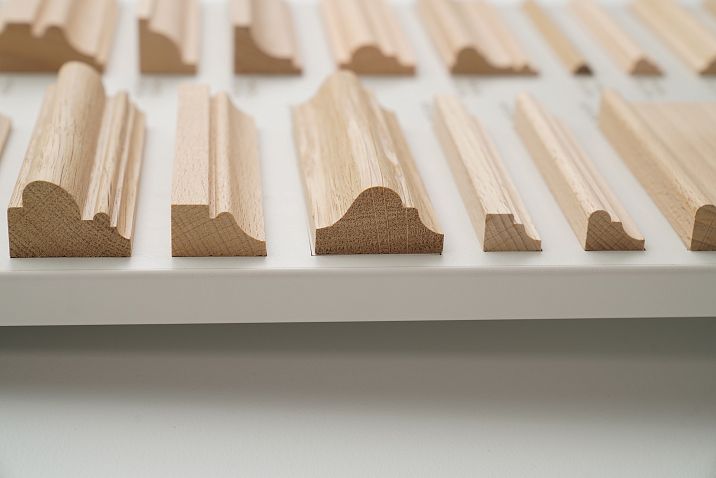
Company "Stavros" offers a wide range of solid wood products for window sill framing – moldings, cornices, baseboards, window casings, and other decorative elements. High quality of materials, precision of manufacturing, and adherence to technological processes guarantee durability and aesthetic appeal of the products. Professional consultants will help select the optimal solution, taking into account all specifics of your interior and preferences.