Article Contents:
- Historical Development of Framing Art
- Elements of Architectural Framing
- Framing of Window Openings
- Doorway Framing
- Framing of Arches and Openings
- Materials for Creating Framings
- Wood – a traditional material with unlimited possibilities
- Stone – eternal classic
- Modern Materials – New Possibilities
- Stylistic Features of Framings
- Classical styles
- National Traditions
- Modern trends
- Technical Aspects of Creating Framings
- Design and Calculations
- Manufacturing technology
- Installation and mounting
- Practical Recommendations for Choosing Framing
- Considering Architectural Style
- Material and Technology Compatibility
- Proportions and scale
- Framing in Different Types of Buildings
- Residential Houses
- Public buildings
- Historical and Religious Buildings
- Maintenance and Restoration of Framings
- Regular Maintenance
- Restoration Methods
- Replacement and Reconstruction
- Economic Aspects of Choosing Trim
- Price-to-Quality Ratio
- Impact on property value
- Long-term investments
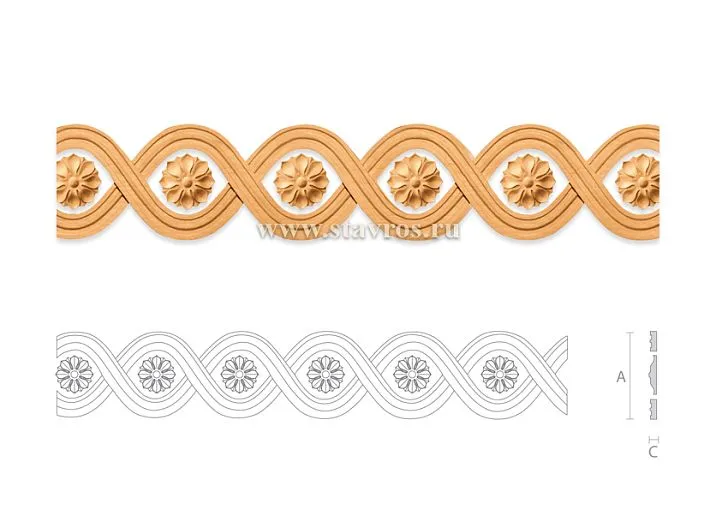
In the world of architecture and interior design, there are elements capable of transforming space, giving it completeness and a unique charm. One such element is beautiful framing – the art of framing various structural elements of a building, combining both aesthetic and practical functions. From elegant window openings to graceful door and arch framing – every detail plays an important role in creating a cohesive architectural image.




The historical development of framing art
In ancient times, architects paid special attention to the decoration of openings, understanding that beautiful framing not only highlights the significance of the building but also structures the space, making it more harmonious.
In Ancient Greece, columns with capitals served not only as supports for ceilings but also created a visual framing of temple spaces. The Romans developed this tradition, adding arches with keystones and richly decorated cornices to the architectural language.
Medieval architecture brought new forms of framing—pointed arches of Gothic cathedrals were framed by complex profiles, creating play of light and shadow. Stained-glass windows were framed by stone tracery, forming whimsical patterns.
The Renaissance returned to classical forms but enriched them with new details. Windows and doors of palazzi were framed by cornices with pediments, pilasters, and sashings. Each framing element had its symbolic meaning and adhered to strict proportions.
Baroque and Rococo took the art of framing to incredible opulence. beautiful framing During these periods, framing elements became self-valuable, often overshadowing what they framed. Scrolls, cartouches, shells, garlands — all these elements created an impression of movement and theatricality.
Neoclassicism restored restraint and order to the art of framing. Symmetrical compositions, clear lines, strict proportions — these principles defined the character of window and door framing and other architectural elements.
In the modern era beautiful framing it acquired new, flowing forms inspired by natural motifs. Asymmetry, smooth lines, vegetal ornamentation — all this created a unique look for buildings of this style.
Modern architecture often rejects decorative framing in favor of clean lines and open spaces. However, many architects and designers today still turn to traditional framing forms, adapting them to modern materials and technologies.




Architectural Framing Elements
Our factory also produces:





Window Opening Framing
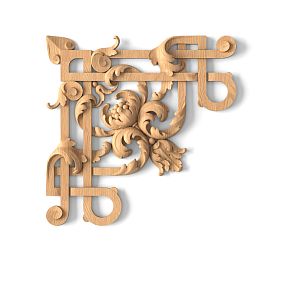
Windows are not just functional openings in walls — they are the 'eyes' of a building through which it interacts with the surrounding world. beautiful framing Framing of window openings can radically change the perception of the entire facade.
Main elements of window framing include:
- Cornices — profiled strips placed around the window opening. They not only serve a decorative function but also cover the gap between the window frame and the wall, protecting it from moisture and drafts.
- Sashings — decorative cornices above the window, often supported by brackets or consoles. Sashings protect the window from precipitation and give it a finished appearance.
- Sills — horizontal elements below the window, which serve practical purposes and are also an important part of the overall framing composition.
- Keystone stones — central elements of arched windows, often adorned with carving or relief. Historically, keystone stones performed a structural function, holding the arch from collapse, but over time they became primarily decorative elements.
- Brackets and consoles — supporting elements that hold sashings and sills, often richly decorated and an important part of the overall composition. beautiful framing.
Get Consultation
Door Opening Framing
Doors are not just entrances to a building — they are symbolic portals separating the external world from the interior space. Framing of door openings has always played a special role in architecture, emphasizing the status of the building and its owners.
Main elements of door framing include:
- Portals — architecturally styled entrances, often including columns or pilasters, an entablature, and a pediment. Portals can be restrained and elegant or richly decorated, depending on the building's style.
- Cornices — like in the case of windows, door cornices frame the opening, concealing the joint between the door frame and the wall.
- Pediments — triangular or semicircular finishes above the door, often adorned with sculpture or relief.
- Imposts — horizontal elements separating the door from the upper window (lintel).
- Pilasters and columns — vertical elements flanking the door opening and supporting the entablature or pediment.
beautiful framing Framing of door openings often contains symbolic elements reflecting the building's function or the status of its owners. For example, entrances to public buildings may be adorned with coats of arms or allegorical figures, while residential doors feature more restrained but no less refined details.
Arch and Opening Framing
Arches — one of the oldest architectural elements, combining constructive logic with aesthetic expressiveness. beautiful framing The form of an arch can vary depending on the building's style and the room's purpose.
The main elements of arch framing include:
- Archivolts – profiled elements following the arch contour and emphasizing its shape.
- Imposts – horizontal elements from which the arch begins to curve.
- Keystone stones – central arch elements, often protruding beyond its plane and decorated with carving or sculpture.
- Pinnacles – lower supporting points of the arch, often shaped as consoles or capitals.
Arch openings may have various shapes – semicircular, pointed, horseshoe, elliptical – and each shape requires a specific approach to framing. beautiful framing Arch framing not only emphasizes their shape but also creates a smooth transition between different spaces.
Materials for creating frames
Wood – a traditional material with unlimited possibilities
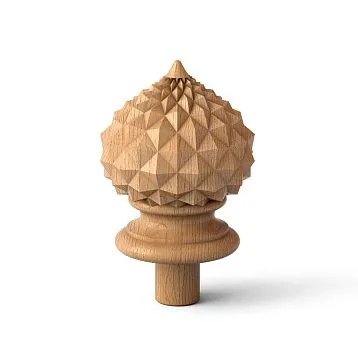
Wood – one of the oldest and most versatile materials for creating beautiful framingIts natural beauty, warmth, and pliability allow creating both simple, minimalist forms and intricate carved compositions.
For manufacturing wooden frames, various types of wood are used, each with its own characteristics:
- Oak – a hard, durable wood with a distinctive texture. Oak frames are known for their longevity and elegant appearance. Oak is easy to carve and develops an even deeper, richer color over time.
- Spruce – a soft wood with a clearly visible grain pattern. Spruce frames are more affordable but require careful protection from moisture and insects.
- Larch – one of the strongest and most rot-resistant woods. Larch frames can last for decades even in high humidity conditions.
- Ash – a hard wood with an attractive texture, easy to work with. Ash frames are distinguished by their elegance and strength.
- Walnut – a noble dark-colored wood with a rich texture. Walnut frames were traditionally used in high-class interiors.
The technology of manufacturing wooden frames includes several stages:
- Material preparation – selection of high-quality wood without defects, drying to optimal moisture content.
- Cutting – cutting out blanks of the required shape and size.
- Profiling – creating complex profiles using milling or hand planing.
- Carving – applying decorative elements if specified in the design.
- Sanding – careful surface treatment to achieve perfect smoothness.
- Finishing – application of protective and decorative coatings (varnish, paint, stain, wax).
beautiful framing Wooden frames require regular maintenance – cleaning from dust, renewing protective coatings, but with proper care, they can retain their beauty for many decades.
Stone – eternal classic
Stone – a material associated with monumentality and durability. beautiful framing Stone frames give buildings solidity and prestige, and also provide maximum protection for openings from atmospheric effects.
For manufacturing stone frames, various types of stone are used:
- Limestone – relatively soft and easy-to-work stone, allowing creation of complex profiles and carved details. Limestone frames are commonly found in classical and Renaissance architecture.
- Marble is a noble stone with a distinctive pattern and the ability to be polished to a mirror finish. Marble moldings have traditionally been used in grand interiors of palaces and mansions.
- Granite is an extremely strong and durable stone, resistant to atmospheric effects. Granite moldings are often used in monumental architecture and public buildings.
- Sandstone is a stone with a warm, natural tone, well-suited to brickwork. Sandstone moldings are popular in historicism and neo-Gothic architecture.
The technology of manufacturing stone moldings includes:
- Selection and extraction of stone – selection of blocks without cracks or inclusions.
- Cutting – dividing blocks into blanks of the required size.
- Processing – creating profiles and decorative elements using cutting, milling, and polishing.
- Installation – mounting stone elements onto special fixtures using mortars or adhesives.
beautiful framing Stone requires virtually no maintenance, but its installation is a complex and labor-intensive process requiring professional skills and specialized equipment.
Modern materials – new possibilities
Modern technologies offer a wide range of materials for creating beautiful framing, combining the aesthetic qualities of traditional materials with improved technical characteristics.
- Polyurethane – a lightweight, moisture-resistant material allowing the creation of complex profiles and decorative elements. Polyurethane moldings do not rot, do not deform over time, and are easy to install. They can imitate the texture of wood, stone, or plaster.
- Extruded polystyrene with protective coating – an affordable material with good thermal insulation properties. Extruded polystyrene moldings are especially popular for exterior facade cladding.
- Fiber cement – a composite material based on cement, reinforced with fibers. Fiber cement moldings are resistant to atmospheric effects, non-combustible, and have a long service life.
- Composite materials – modern developments combining the advantages of various materials. For example, wood-polymer composites combine the aesthetics of wood with resistance to moisture and rot.
The technology of manufacturing moldings from modern materials often includes:
- Casting – pouring material into molds to create elements of complex configuration.
- Extrusion – extruding material through a profiled opening to create linear products.
- Milling – mechanical processing of blanks to create the required profile.
- Final finishing – applying protective and decorative coatings.
beautiful framing Moldings made from modern materials usually require no complex maintenance or special servicing, making them an attractive choice for modern construction.
Stylistic features of moldings
Classic styles
Classical architectural styles – antiquity, Renaissance, Baroque, Classicism – have developed their own distinctive language of moldings, based on the order system and strict proportions.
The ancient style is characterized by simple, harmonious forms. beautiful framing Window and door casings in this style often include simple moldings with minimal decoration, sometimes supplemented by triangular or semi-circular pediments.
Renaissance enriched the language of moldings by adding new elements to classical forms. Windows and doors were framed by pilasters supporting an entablature and pediment. Popular decorative motifs included vegetal ornamentation, maskwork, and garlands.
Baroque transformed moldings into complex, dynamic compositions. Characteristic features of Baroque moldings include broken pediments, volutes, cartouches, and ornate moldings. beautiful framing In the Baroque style, moldings are often asymmetrical and create an impression of movement and tension.
Classicism returned to more strict, orderly forms. Moldings in this style are symmetrical, restrained, based on classical prototypes, but with greater strictness and rationality.
National traditions
Different cultures have developed their unique traditions of framing architectural elements, reflecting local materials, climatic conditions, and aesthetic preferences.
The Russian style is characterized by rich wood carving. Russian izba cornices are true works of art, combining geometric, vegetal, and zoomorphic motifs. beautiful framing Windows in the Russian style often include 'towels' – vertical carved elements descending from the top of the cornice, and 'kokoshniks' – decorative finishes above the window.
The Moorish style is characterized by the use of horseshoe arches, complex geometric patterns, and delicate carving. Framings in this style often include multicolored mosaics and calligraphic inscriptions.
The Gothic style is characterized by the use of pointed arches, complex stone tracery, and vertical elements emphasizing upward reach. beautiful framing In the Gothic style, it often includes rosettes, crockets (decorative leaves on arch ribs), and finials (decorative finishes).
Eastern styles (Chinese, Japanese) are distinguished by the use of wooden lattices with complex geometric patterns and minimal use of carved decoration.
Modern trends
Modern architecture and design offer new approaches to framing, combining traditional forms with innovative materials and technologies.
Minimalism rejects decorative elements in favor of clean lines and forms. beautiful framing In the minimalist style, it may be simply marked by contrasting color or material, without using profiled elements.
High-tech uses metal, glass, and composite materials to create technologically advanced, futuristic frames. Key features include clear geometric forms, exposed structural elements, and lighting.
Eco-style turns to natural materials and forms. beautiful framing In eco-style, it may include untreated wood, stone with natural texture, and live plants.
Fusion combines elements of different styles and cultures. Framings in fusion style may combine classical profiles with modern materials or traditional ornaments with minimalist forms.
Technical aspects of creating frames
Design and calculations
Creation beautiful framing It begins with careful design, taking into account not only aesthetic but also technical aspects.
Main stages of design include:
- Measurements – precise measurement of the opening for which the frame is being created, taking into account all features and deviations from geometry.
- Style and material selection – defining the overall concept of the frame, corresponding to the architectural style of the building and functional requirements.
- Drawing development – creating detailed drawings of all frame elements with indications of dimensions, profiles, and decorative details.
- Load calculation – especially important for heavy materials such as stone and complex structures with protruding elements.
- Selection of fastening elements – determining the method of attaching the frame to the wall, taking into account the wall material and the weight of the frame.
- Development of installation technology – planning the sequence of installing frame elements.
Modern technologies allow using computer modeling to visualize the future frame and check its conformity to the overall architectural solution.
Manufacturing technology
Manufacturing technology beautiful framing depends on the selected material and design complexity.
For wooden frames:
- Selection and preparation of wood – selection of quality material, drying to optimal moisture (8-12%).
- Cutting – cutting blanks to the required size with allowances for machining.
- Profiling – milling or planing to give the blank the desired shape.
- Carving – applying decorative elements manually or using CNC machines.
- Polishing – surface treatment to achieve smoothness.
- Assembly – joining individual elements using glue, tenons, or nails.
- Finishing – applying protective and decorative coatings.
For stone frames:
- Stone selection – selecting blocks without defects.
- Cutting – dividing blocks into blanks.
- Rough processing – giving blanks an approximate shape.
- Fine processing – creating precise profiles and decorative elements.
- Grinding and polishing – surface treatment to achieve the desired texture.
- Preparation for installation – creating mounting holes, grooves, etc.
For frames made of modern materials:
- Mold preparation – for cast elements.
- Mixing components – for polymer materials.
- Casting or extrusion – forming elements.
- Processing – removing flash, grinding.
- Finishing – applying protective and decorative coatings.
Modern technologies such as CNC milling and 3D printing allow creating beautiful framing complex shapes with high precision and repeatability.
Installation and mounting
Correct installation of the frame is the key to its longevity and aesthetic appeal.
Main stages of installation include:
- Surface preparation – cleaning, leveling, priming the wall around the opening.
- Marking – drawing lines for precise positioning of frame elements.
- Mounting – installing elements using appropriate fasteners (adhesive, anchors, bolts, mounting foam).
- Joint sealing – covering connections between elements with putty, sealant, or decorative covers.
- Final finishing – painting, varnishing, or other treatment of the installed frame.
For heavy materials such as stone, additional support structures may be required. For wooden frames, it is important to consider the material's potential for expansion and contraction due to changes in humidity.
beautiful framing must be installed in accordance with all technical requirements to ensure its longevity and safety.
Practical recommendations for choosing a frame
It is important to consider the overall architectural style of the building to create a harmonious, cohesive appearance.
When choosing beautiful framing For buildings in the classical style, suitable framing includes clear proportions, symmetrical composition, and traditional decorative elements—pilasters, sills, and pediments.
For buildings in the modern style, framing with smooth, flowing lines, botanical motifs, and asymmetrical compositions is appropriate.
For modern buildings in the minimalist or high-tech style, it is better to choose concise framing with clear geometric forms and without excessive decoration.
For buildings in ethnic styles (Russian, Eastern, Scandinavian), it is important to consider traditional motifs and techniques characteristic of the given culture.
For buildings in ethnic styles (Russian, Eastern, Scandinavian), it is important to consider traditional motifs and techniques characteristic of the given culture.
Material and Technology Compatibility
Material Selection for beautiful framing should consider not only aesthetic preferences but also practical aspects:
- Climate conditions – for regions with high humidity or sharp temperature fluctuations, materials resistant to these factors should be selected.
- Location – for exterior framing, resistance to atmospheric effects is important; for interior framing, ecological safety and fire resistance are important.
- Load on the structure – heavy materials, such as stone, require a strong foundation and special fastening elements.
- Compatibility with other materials – the framing should harmoniously match the materials of walls, floors, and ceilings.
- Maintenance and repair feasibility – some materials require regular maintenance, while others practically require no care.
Proportions and Scale
Correct proportions – key factor for creating beautiful framing. The framing should correspond to the size of the opening and the overall scale of the building.
Too heavy framing may visually 'weigh down' the facade and make the opening appear smaller than it actually is. Too thin and light framing may 'disappear' against the wall and fail to fulfill its decorative function.
Classical architectural styles have developed certain proportional relationships for various framing elements, which can be used as a reference:
- The width of the casing is usually 1/6 - 1/8 of the opening width.
- The height of the sill is 1/5 - 1/7 of the opening height.
- The sill projection is 1/3 - 1/4 of the casing width.
These proportions can be adapted depending on the specific situation and stylistic preferences.
Framing in Different Types of Buildings
Residential Houses
In residential houses beautiful framing windows and doors serve not only a decorative but also a practical function, protecting openings from atmospheric effects and improving thermal insulation.
For private homes, wooden framing is traditionally used, creating a warm, cozy atmosphere. Depending on the architectural style of the house, this may include simple casings or complex compositions with sills, pilasters, and other decorative elements.
For multi-family buildings, more durable and low-maintenance materials such as stone, fiber-cement, and polymer composites are often selected. Framing in such buildings is usually more restrained but may include decorative elements matching the overall facade style.
Interior framing of door and window openings in residential spaces is often made of wood or MDF and includes casings, cornices, and sills. beautiful framing Interior openings should harmonize with the overall interior style and other wooden elements – furniture, floors, staircases.
Public Buildings
In public buildings – theaters, museums, libraries, administrative institutions – framing architectural elements often plays an important role in creating a specific image and atmosphere.
For representative buildings, traditionally monumental, richly decorated frames made of stone or plaster are used. beautiful framing The main entrance often includes columns, pilasters, gables, sculptural elements, emphasizing the significance of the building.
Internal framing of openings in public buildings can be very diverse – from restrained and functional in modern office buildings to ornate and decorative in historical interiors. Materials also vary from traditional (wood, stone, plaster) to modern (metal, glass, composites).
Special attention is paid to framing functional elements – information boards, signs, display cases, which must be integrated into the overall architectural solution.
Historical and Religious Buildings
In historical and religious buildings, framing architectural elements often has not only aesthetic but also symbolic significance.
In churches and cathedrals beautiful framing portals, windows, niches often include religious symbolism, scenes from sacred texts, images of saints. Materials and execution techniques reflect the era of building construction and local traditions – from Romanesque stone carving to Baroque stucco and stained glass.
In historical palaces and estates, framing of openings is an important part of the overall decorative treatment and reflects the stylistic preferences of the era and the tastes of the owners. Here one can encounter all the variety of materials and techniques – from simple wooden casings to complex compositions of marble, bronze, gilded stucco.
Restoration of historical frames requires a special approach, combining respect for original materials and techniques with modern conservation and reinforcement methods.
Maintenance and Restoration of Frames
Regular maintenance
Proper care of beautiful framing – a guarantee of its longevity and preservation of decorative qualities.
For wooden frames, regular maintenance includes:
- Cleaning from dust and dirt using a soft brush or vacuum cleaner.
- Checking for damage, cracks, paint or varnish peeling.
- Renewing protective coatings (varnish, paint, oil, wax) as they wear out.
- Treating with antiseptics to prevent fungal and insect damage.
For stone frames:
- Cleaning from dust and dirt using a soft brush or water without aggressive cleaning agents.
- Checking for cracks, chips, efflorescence.
- Treating with hydrophobic agents to protect against moisture (for porous stone types).
- Restoring grout between blocks.
For frames made of modern materials:
- Cleaning from dust and dirt using a damp cloth with a mild cleaning agent.
- Checking the reliability of fastening elements.
- Renewing sealing at joints as needed.
Regular inspection and timely repair of minor damages prevent serious problems and expensive repairs in the future.
Restoration Methods
Restoration is a complex process requiring specialized knowledge and skills, especially when dealing with historical objects. beautiful framing Restoration methods for wooden frames include:
For wooden framing, restoration methods include:
- Cleaning from old coatings and contaminants.
- Strengthening weakened wood with special compounds.
- Replacing lost elements using inserts made of similar wood.
- Restoring carved elements based on preserved samples or historical analogs.
- Applying protective and decorative coatings matching the historical appearance.
For stone frames:
- Cleaning from contaminants and biological damage.
- Strengthening weakened stone with special compounds.
- Replacing lost elements using inserts made of similar stone or restoration mortars.
- Restoring relief elements based on preserved fragments or analogs.
- Protective surface treatment.
For plaster and sculptural frames:
- Strengthening the base and removing weak sections.
- Restoring lost fragments based on preserved samples.
- Recreating texture and decorative elements.
- Painting according to the historical appearance.
Modern technologies such as 3D scanning and printing, laser cleaning, and the use of special conservation compounds significantly expand restoration capabilities and allow historical frames to be preserved for future generations.
Replacement and recreation
In cases where the original beautiful framing has been completely lost or its condition does not allow restoration, replacement or recreation becomes necessary.
Recreating historical frames requires careful study of:
- Archival materials — photographs, drawings, descriptions.
- Similar preserved elements on the same building or buildings of the same period and style.
- Historical technologies and materials.
The recreation process includes:
- Developing a project based on historical data.
- Creating templates and models.
- Selecting materials as close as possible to historical ones.
- Manufacturing new elements using traditional or modern technologies.
- Installation and finishing in accordance with historical analogs.
When replacing historical frames with modern ones, it is important to preserve the overall character and proportions of the original, even if new materials and technologies are used. This allows maintaining the architectural integrity of the building.
In some cases, it is possible to create a modern interpretation of a historical frame that reflects its main features but is not an exact copy. Such an approach allows combining respect for historical heritage with modern functional requirements.
Economic aspects of choosing molding
Price-to-quality ratio
When choosing beautiful framing It is important to find the optimal price-to-quality ratio, taking into account not only initial costs but also long-term prospects.
Factors affecting the cost of framing:
- Material – natural materials (wood of valuable species, stone) are usually more expensive than synthetic analogs.
- Design complexity – presence of carved or relief elements, complex profiles increases the cost.
- Size and quantity – large elements and a large number of decorative details increase the overall cost.
- Individuality – standard elements are usually cheaper than custom-made ones.
- Installation – installation complexity affects the overall project cost.
When assessing the quality of framing, attention should be paid to:
- Manufacturing accuracy – straight lines, clear profiles, neat joints.
- Material quality – absence of defects, uniformity of structure and color.
- Finishing quality – even coating, absence of drips, bubbles, roughness.
- Fastening strength – secure mounting, absence of play and gaps.
Investments in quality beautiful framing may pay off through its longevity, lower maintenance and repair costs, as well as increased overall value of the building.
Impact on property value
Quality beautiful framing Investments in architectural elements can significantly increase the market value of real estate, especially if they are executed in accordance with the building's overall style and using quality materials.
Factors through which framing affects the cost of real estate:
- Improving the building's appearance, enhancing its aesthetic appeal.
- Creating an impression of a quality, sturdy construction.
- Highlighting the architectural style, especially valuable for historical buildings.
- Improving technical characteristics – insulation, soundproofing, protection against atmospheric effects.
- Creating a distinctive appearance that sets the building apart from similar structures.
Market research shows that investments in quality facade framing elements can increase the property's value by 5–15%, depending on the region, type of real estate, and overall market conditions.
Especially significant influence beautiful framing on the cost of historical buildings, where preserving or recreating original architectural details is an important pricing factor.
Long-term investments
Choice of quality beautiful framing are a long-term investment that may bring significant economic benefits in the future.
Advantages of long-term investment in quality framing:
- Durability – quality materials and professional installation ensure a long service life without the need for replacement.
- Low maintenance costs – properly selected materials require minimal upkeep.
- Energy efficiency – well-designed framing can improve window and door insulation, reducing heating and air conditioning costs.
- Protection against damage – quality framing protects openings and adjacent surfaces from weather exposure, preventing more serious damage.
- Preservation and increase in property value over time.
When planning a budget for framing, it is important to consider not only initial costs but also long-term economic benefits. Sometimes higher initial investments in quality materials and professional execution may prove more cost-effective in the long run.