Article Contents:
- Newel Posts: More Than Just a Support for Handrails
- Functional Purpose of Newel Posts
- The Anatomy of a Newel Post: What Makes the Ideal Support
- Types of Wooden Newel Posts: Variety of Forms and Styles
- Classification by shape: from simple to complex
- Manufacturing Methods: Technologies of Creating Beauty
- Materials: Choosing the Ideal Wood for Newel Posts
- Exotic Woods: Beauty and Durability
- Affordable Solutions: Practicality Without Compromise
- Technical Specifications: Dimensions and Proportions
- Standard Dimensions: What You Need to Know
- Calculating Quantity and Spacing Between Newel Posts
- Advantages of wooden balusters: why wood is unmatched
- Ecological Safety and Healthy Microclimate
- Aesthetic Perfection: Unique Beauty of Nature
- Practical Advantages: Ease of Installation and Maintenance
- Installing Newel Posts: From Theory to Practice
- Mounting Methods: Choosing the Optimal Option
- Preparation and Treatment: Secrets of Longevity
- Design Solutions: Newel Posts as a Style Element
- Classic solutions: timeless and beyond trends
- Modern trends: minimalism and functionality
- Ethnic motifs: returning to roots
- Maintenance and Care: Preserving Beauty for Years
- Protective Coatings: Choosing the Optimal Solution
- Regular maintenance: simple rules
- Economic Aspects: Investment in Beauty and Comfort
- Factors Affecting Cost
- Long-term advantages of quality balusters
- How to choose ideal balusters: practical recommendations
- Matching Style and Architecture
- Considering room-specific features
- Material quality and manufacturing
- Conclusion: create your dream staircase
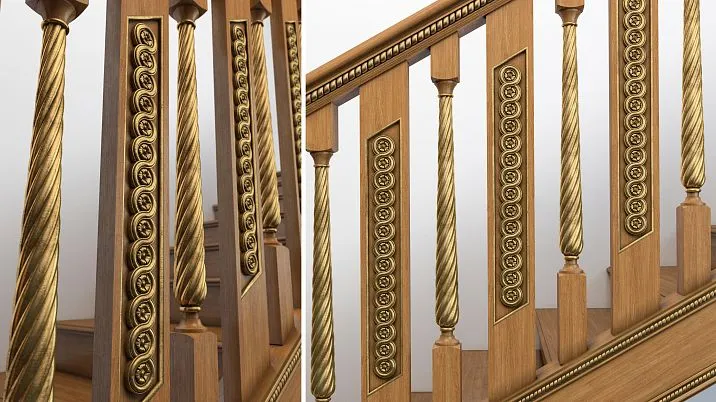
Have you ever noticed how an interior transforms when it features a wooden staircase with elegant newel posts? As if by a magic wand, ordinary space fills with warmth, coziness, and elegance. In this incredible transformation, the newel posts play the main role — these very vertical supports that not only hold the handrails but also create a unique architectural ensemble.
Solution buy wooden balusters for the staircase This is the first step toward creating a truly impressive interior. But how to avoid getting lost in the variety of forms, materials, and styles? How to choose exactly the newel posts that will perfectly fit your home and delight your eyes for years?
In this article, we will reveal all the secrets of choosing ideal newel posts — from understanding their functional purpose to the nuances of installation. You will learn about the advantages of different wood species, design features, and quality criteria. Ready to dive into the wonderful world of wooden staircases? Then let’s begin our journey!


Newel Posts: More Than Just a Support for Handrails
Before deciding buy wooden balusters for the staircaseIt is important to understand that these elements perform not only a practical function but are also a key decorative accent of the entire staircase structure.




Functional Purpose of Newel Posts
Newel posts are vertical support posts that connect handrails to the base of the staircase. They perform three key functions:
- Safety — they create a reliable barrier preventing falls while ascending or descending the stairs. This is especially important in homes with children or elderly people.
- Structural rigidity – ensures the stability of the entire staircase system, evenly distributing load between the handrails and the base.
- Aesthetic appeal – shapes the architectural appearance of the staircase, giving it completeness and stylistic expressiveness.
Interestingly, the reflex to hold onto the handrail while moving up the stairs is almost automatic in humans. That is why balusters are not merely decorative elements, but a vital part of a safe staircase.
Our factory also produces:


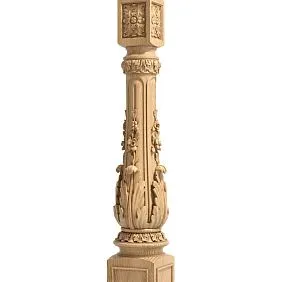
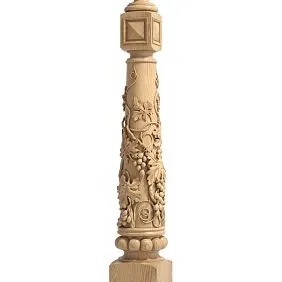

Baluster anatomy: what makes up the ideal support
In a classic baluster, three main parts can be distinguished:
- Base – the lower part that is attached to the stair tread or stringer. It ensures the stability of the entire structure.
- Central part – the most expressive zone of the baluster, where decorative elements, patterns, or carved shapes are located. It is precisely this part that determines the stylistic affiliation of the baluster.
- Upper part – serves as support for the handrail and is often manufactured with a margin to allow precise height adjustment during installation.
Knowing these features will help you make an informed choice when purchasing balusters and correctly assess their quality.
Get Consultation
Types of wooden balusters: variety of shapes and styles
The modern market offers an incredible variety of balusters, differing in shape, manufacturing method, and decorative elements.
Classification by shape: from simple to complex
Flat balusters – made from plywood or solid wood and decorated with patterns and ornaments. They are distinguished by their affordable price and ease of installation, while still being able to create original visual effects. They are ideally suited for modern minimalist interiors.
Round balusters – have a strictly cylindrical shape with a cross-section of 2.5–4 cm. Made exclusively from natural wood, they give the staircase a classic look. This is a universal solution that harmoniously fits into any interior.
Square balusters – distinguished by strict geometric forms and often used in interiors in the modern or high-tech style. Decorative patterns can be applied to the side faces of such balusters, adding additional expressiveness.
Figurative balusters – true works of art with refined curves and recesses. They are produced both manually and using special equipment. Their complex shape with numerous decorative elements creates a unique artistic effect.
Manufacturing methods: technologies of creating beauty
Turned balusters – made on a lathe by turning and creating radial grooves and recesses. This method allows creating symmetrical, perfectly flat elements with smooth lines.
Milled balusters – distinguished by original decorations created using longitudinal or helical cutting on milling equipment. Their attractive appearance makes them especially popular among buyers.
Balusters with carved elements – true works of art, where hand or machine carving creates unique patterns and ornaments. Such balusters become the central design element of the entire interior.
CNC balusters – manufactured using computer modeling and automated production, allowing the creation of the most complex patterns with the highest precision and repeatability.
When choosing a manufacturing method, remember that handcrafted work is valued higher but also costs more, while modern technologies allow achieving high quality at a more affordable price.
Materials: choosing the ideal wood for balusters
When you decide buy wooden balusters for the staircaseChoosing the wood species becomes one of the key factors. Each type of wood has its unique characteristics that affect the appearance, strength, and durability of the balusters.
Luxury species: beauty and longevity
Oak – the king among wood species. Oak balusters are distinguished by exceptional strength and durability, withstanding significant loads without deformation. The noble texture with pronounced growth rings and warm honey-brown hue makes oak balusters especially attractive. The only drawback is their high cost, due to the superior characteristics of the material.
Beech – a universal material for creating elegant balusters. Its uniform structure with fine pores provides a smooth surface and allows creating complex decorative elements. Beech is easy to process and paint, offering wide design possibilities. In terms of strength, it slightly lags behind oak, but it has a more affordable price.
Ash – a resilient beauty among wood species. It withstands significant loads, is resistant to rot, and has high elasticity. Ash’s appeal is enhanced by its variety of color tones – from light straw to rich brown with a pinkish hue. This allows creating unique design solutions.
Affordable solutions: practicality without compromise
Spruce – the most popular and affordable material for balusters in Russia. It is distinguished by ease of processing, resistance to fungal damage, and a pleasant pine aroma. The resins contained in spruce create natural protection against moisture and insects. Spruce balusters have a beautiful golden hue and an expressive texture with visible growth rings.
Birch – light-colored wood with a uniform structure, which is well-suited for staining and tinting. Birch balusters are distinguished by a smooth surface and pleasant light tone, making them an ideal choice for modern interiors. With proper treatment and protection, birch can last for decades.
Larch is a unique species that only hardens over time. It features high density, moisture resistance, and a beautiful amber tone. Larch balusters are practically immune to deformation and are ideal for rooms with high humidity.
When selecting wood species, it is important to consider not only aesthetic preferences but also usage conditions, budget, and overall interior style. Remember that all wooden elements of the staircase must be made from the same wood species, as different species react differently to changes in microclimate.
Technical parameters: dimensions and proportions
Correctly chosen dimensions and proportions of balusters are essential not only for aesthetic appeal but also for the safety of the entire staircase structure.
Standard dimensions: what you need to know
The standard height of balusters for residential spaces is 800-900 mm. This parameter ensures optimal safety when ascending and descending the staircase.
The cross-section of balusters can vary from 30 to 80 mm depending on design and style. For round balusters, the optimal diameter is 40-50 mm, for square ones – 40x40 or 50x50 mm.
The thickness of material for flat balusters is usually 20-30 mm. This ensures sufficient strength while maintaining the lightness of the structure.
Calculating the number and spacing between balusters
The optimal distance between balusters is no more than 15 cm for residential wooden staircases. This is a safety requirement, especially important in homes with children.
For staircases with combined or screen railings, the allowable distance may reach 30 cm.
The number of balusters is calculated by the formula:
N = (L - D) / (S + D) + 1,
where L – length of the handrail section, S – distance between balusters, D – diameter or width of the baluster.
For added reliability, it is recommended to make end balusters more substantial, especially if they serve as support posts.
Advantages of wooden balusters: why wood is unmatched in competition
Solution buy wooden balusters for the staircase has many advantages over using other materials.
Ecological safety and healthy microclimate
Wooden balusters are an eco-friendly product that does not emit harmful substances and does not cause allergic reactions. Moreover, natural wood contains essential oils and organic resins that have healing properties and positively affect the indoor microclimate.
Wood 'breathes,' naturally regulating the humidity of the air in a room. This creates a comfortable atmosphere and promotes healthy sleep and rest.
Aesthetic perfection: unique beauty of nature
Each wooden baluster is unique due to the distinctive grain pattern that cannot be precisely replicated. This makes your staircase truly exclusive.
The natural texture of wood creates a sense of warmth and coziness that cannot be achieved with artificial materials. Even the simplest staircase with wooden balusters becomes exclusive due to the unique patterns gifted by nature.
Over time, wooden balusters acquire an even more noble appearance, further increasing their value.
Practical advantages: ease of installation and maintenance
Wooden balusters have negligible weight compared to stone or metal counterparts, significantly simplifying their transportation and installation.
Wood is easy to work with, allowing you to adjust baluster sizes directly at the installation site if needed.
Maintenance of wooden balusters is extremely simple – it is enough to regularly wipe them with a damp cloth and periodically renew the protective coating.
With proper treatment and care, wooden balusters can serve for decades, retaining their beauty and functionality.
Installing balusters: from theory to practice
Correct installation of balusters is essential not only for aesthetic appeal but also for the safety of the entire staircase structure.
Methods of attachment: choosing the optimal option
Dowel joint – a classic and most reliable method of attachment. Special holes are drilled into the treads and railings, into which the baluster dowels are inserted. This method ensures maximum structural rigidity and an aesthetically pleasing appearance without visible fasteners.
Attachment using self-tapping screws – a simpler method that allows for quick installation of balusters. Screws are screwed in at an angle through the baluster into the tread and railings. After installation, the fastening points are covered with wooden plugs or spackled and painted.
Use of special fasteners – a modern method that combines ease of installation with structural reliability. Special metal fasteners allow for quick and precise installation of balusters, while also permitting their replacement if necessary.
Preparation and Processing: Secrets of Longevity
All wooden elements must be acclimated in the room where the staircase will be installed to avoid deformation after installation.
Thorough sanding of all surfaces is a mandatory preparation step. It not only makes balusters pleasant to the touch but also ensures better adhesion with protective coatings.
Priming and protective treatment are key to ensuring longevity. Modern formulations protect wood from moisture, ultraviolet rays, mold, and insects while preserving its natural beauty.
Design Solutions: Balusters as a Style Element
Design Solutions: Balusters as a Style Element
The design of balusters should harmonize with the overall interior style and architectural style of the house.
Classic solutions: timeless and unfashionable
Classic balusters with symmetrical shapes and smooth lines are a safe choice for traditional interiors. They are distinguished by elegance, harmonious proportions, and meticulously crafted details.
In classical styles, balusters with a "barrel-shaped" central section, complemented by elegant rings and moldings, are often used. Such elements create a sense of solidity and nobility.
For classical interiors, balusters made from premium wood species — oak, ash, or mahogany — with natural finishes that highlight the beauty of the grain are ideal.
Modern trends: minimalism and functionality
In modern interiors, minimalist balusters with simple geometric shapes — cylindrical, square, or rectangular — are popular. They create a sense of lightness and airiness.
An interesting trend is combining wooden balusters with elements made from other materials, such as metal or glass. Such combinations allow for unique design solutions.
For modern interiors, light-colored wood species — birch, maple, or ash — with matte finishes that emphasize the naturalness of the material are often chosen.
Ethnic motifs: returning to roots
Balusters with carved patterns inspired by folk motifs create an atmosphere of coziness and uniqueness. These may include floral ornaments, geometric patterns, or symbolic imagery.
In Russian style, balusters with elements of traditional carving — "sunbursts," "stars," "cityscapes," and other characteristic motifs — are popular.
To create an ethnic atmosphere, contrasting combinations are often used — dark balusters with light railings or vice versa, as well as combinations of different wood species.
Maintenance and care: preserving beauty for years
Proper care of wooden balusters is the key to their longevity and preservation of aesthetic appeal.
Lacquers create a durable protective film on the wood surface, protecting it from moisture, dirt, and mechanical damage. Modern lacquers can be glossy, semi-matte, or matte, allowing you to choose the optimal option for a specific interior.
Oils penetrate deeply into the wood structure, highlighting its natural beauty and protecting from within. Oil finish creates a "breathable" surface that regulates humidity and prevents cracking.
Waxes create a water-repellent layer on the wood surface and give it a pleasant silkiness. Wax finish is easy to renew without requiring complete removal of the previous layer.
Regular cleaning of dust using soft cloth or special cleaning cloths for wooden surfaces prevents the accumulation of dirt in the wood's texture.
Regular Maintenance: Simple Rules
Periodic inspection of fasteners and tightening loose connections ensures the reliability of the entire structure and prevents squeaking.
It is recommended to renew protective coatings every 3-5 years, depending on usage intensity and type of coating. This helps maintain the attractive appearance and protective properties.
Small damages (scratches, chips) should be immediately addressed to prevent further degradation of the protective layer and moisture penetration into the wood structure.
This is not just a waste of money, but a long-term investment in the beauty and functionality of your home.
Economic aspects: investment in beauty and comfort
Solution buy wooden balusters for the staircase This is not just a money expense, but a long-term investment in the beauty and functionality of your home.
Factors Affecting Cost
Wood species is one of the key factors determining the price of balusters. Items made from premium species (oak, ash) cost significantly more than those made from pine or birch, but they also last longer.
Complexity of shape and decoration — the more complex the shape and the richer the decorative elements, the higher the cost. Simple cylindrical or square balusters will be significantly cheaper than ornate or carved ones.
Method of manufacture — handcrafted items are valued higher than machine-made ones, which affects the price. However, modern technologies allow creating high-quality items at a more affordable price.
Quality of processing and finishing — careful sanding, priming, and application of protective coatings increase the cost but significantly extend the lifespan of the items.
Long-term benefits of quality balusters
Durability – high-quality balusters made from good wood can serve for decades without needing replacement, making them an economically advantageous solution in the long term.
Increased property value – a beautiful wooden staircase with elegant balusters increases the market value of a house or apartment, making them more attractive to potential buyers.
Savings on maintenance and repairs – properly manufactured and installed balusters require minimal upkeep and rarely need repair, reducing long-term maintenance costs.
Energy efficiency – wooden interior elements, including balusters, have natural insulating properties, contributing to a comfortable microclimate and potentially reducing heating costs.
How to choose ideal balusters: practical recommendations
Choosing balusters – a responsible step requiring consideration of many factors. Here are some practical recommendations to help you make the right choice.
Style and architecture compatibility
Balusters should harmonize with the overall interior style and architecture of the house. For classic interiors, elegant carved balusters with rich ornamentation are suitable; for modern interiors, minimalist forms with minimal decoration are appropriate.
It is important to consider other interior elements – furniture, wall finishes, flooring. Balusters should create a unified composition with them, rather than standing out from the overall style.
If the house already has wooden elements (doors, windows, furniture), balusters should match them in wood species and finish type.
Room-specific considerations
The size of the room is crucial when selecting balusters. In smaller spaces, it is better to use slender, elegant balusters that will not visually 'weigh down' the interior. In spacious rooms with high ceilings, more substantial elements are appropriate.
Lighting also affects the perception of balusters. Under bright natural lighting, all details and wood texture are clearly visible, while under artificial lighting, some nuances may be lost. This should be considered when choosing the complexity of decoration.
The functional purpose of the room is also important. For a child’s room or a home with small children, it is better to choose balusters without sharp corners and small details that may break off.
Material quality and craftsmanship
When choosing balusters, pay attention to the quality of the wood – it should be well-dried (moisture 8–12%), free of visible defects (cracks, knots, resin pockets at joints).
Check the quality of processing – the surface should be smooth, without burrs or roughness. All joints should be precisely fitted, without gaps or voids.
Learn about the protective treatment method – quality balusters should be treated with antiseptics and protective compounds that prevent rot, insect damage, and mold.
Conclusion: create the staircase of your dreams
Wooden balusters are not just a functional element of the staircase, but a true work of art capable of transforming your home and creating a unique atmosphere of warmth and coziness.
Solution buy wooden balusters for the staircase This is a step toward creating a unique interior that will delight you and your loved ones for many years. The variety of shapes, materials, and styles allows you to find the perfect option for any home and any budget.
Remember that quality balusters are an investment in the beauty, safety, and comfort of your home. They not only perform an important practical function, providing reliable support for handrails, but also become a key decorative element defining the style of the entire interior.
STAVROS Company offers a wide range of high-quality wooden balusters in various shapes and sizes. Years of experience, use of premium materials, and modern technologies allow us to create products that combine beauty, reliability, and longevity. Entrust the creation of your dream staircase to STAVROS professionals, and the result will exceed all your expectations!